Yule Travel Blog

Posted in Uncategorized on December 24, 2013 by telescoper

10.30. So here I am, then, in Brighton on the morning of Christmas Eve. I have a flight from Gatwick Airport to Newcastle later this afternoon. The problem is that after last night’s storm there are no trains from Brighton to Gatwick. Today may therefore turn out to be something of an adventure. On the other hand the railway network does seem to be gradually recovering from flooding and fallen trees so perhaps all will be well before I have to leave. If not, I suppose I’ll just have to get a taxi to the airport, which may prove a tad expensive…

I’ll update this during the day in moments of heightened tedium.

11.50 Brighton station. The only way to get to Gatwick from here is to get a train to Haywards Heath, then a bus to Three Bridges, then another bus to Gatwick Airport. I told you it would be an adventure..

12.15 So the train to Haywards Heath was cancelled. A hastily-arranged taxi share ensued, and I’m now en route to Gatwick in a cab.

13.15 Made it to Gatwick. Some massive queues around the place probably because of problems at the North Terminal. The South Terminal isn’t particularly busy and I got through security quickly. Now having a beer and a spot of lunch!

14.45 Why do you have to show your boarding pass to buy a newspaper in Gatwick Airport?

21.15 Well, my battery went flat so I couldn’t update about how FlyBe sent us to a gate but didn’t provide and personnel to process us onto the plane, thus resulting in an hour’s delay while the plane and flight crew sat outside on the tarmac. Or the white knuckle landing in strong cross winds. Anyhow, I arrived just an hour late and have had a nice meal and a drink so am now filled with Christmas cheer..

So I wish you all a very Merry Christmas as I sign off for a couple of days of food and festivities!

23:43 And only now have I realised that I’ve left all the presents I bought in my flat in Brighton…

A Brief History of Portland Place, Brighton

Posted in Biographical, Brighton on December 23, 2013 by telescoper

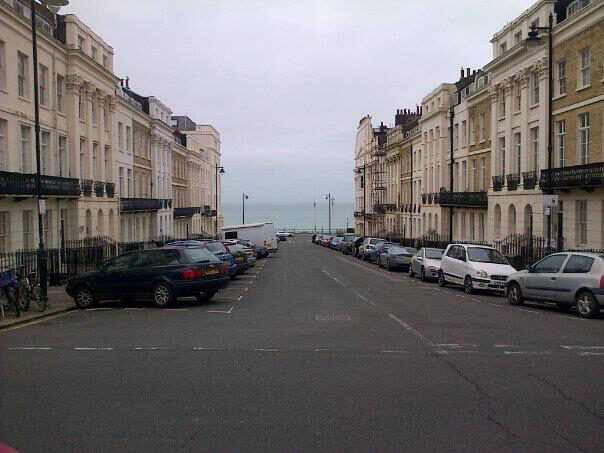
Tidying up the flat before my Christmas travels, I found a little piece of paper in a drawer with the following potted history of Portland Place.

The development of Portland Place commenced around 1824, when Major Villeroy Russell commissioned Charles Augustus Busby as architect for the design of the street and houses. There was a most unfortunate incident on the night of 12th September 1825, during the building of the street, when the principal house caught fire and was totally destroyed. As it was not insured, Major Russell had to bear the estimated £12,000 loss himself. The first occupant moved into Number 11 in 1827 but the buildings to replace the one destroyed by fire were not completed until 1829. Building work continued in the street until almost up to the 1850s, so the dates of individual buildings may vary considerably.

That all explains why this street lacks the homogeneity of style possessed by some its grander neighbours, though the houses are still looking pretty good for their age!

Blue Christmas

Posted in Jazz with tags , , , on December 23, 2013 by telescoper

It’s the fifth Christmas season for this blog but I’ve not yet posted this festive (?) classic by Miles Davis. The rest of the band consists of Frank Rehak (trombone), Wayne Shorter (tenor sax), Paul Chambers (bass), Jimmy Cobb (drums), and Willie Bobo (bongos); the arrangement is unmistakeably Gil Evans. The vocalist is the legendary Bob Dorough who also wrote the lyrics. “Bah Humbug” never sounded so cool!

Elsevier’s Confidentiality Clauses

Posted in Open Access with tags , on December 22, 2013 by telescoper

I came across this a little while ago (here, where the context is explained in more detail). It comes from a conference about the future of scientific publishing, and features David Tempest of Elsevier responding to a question from Dr Stephen Curry.

I hadn’t realised before this question that Elsevier not only charges eye-wateringly expensive subscription rates for its journals but also often requires institutional libraries to sign a confidentiality clause under which they are forbidden from revealing how much the subscription costs. Here Mr Tempest attempts to explain this policy:

So there you have it. If people actually knew what other people were being charged there’s a danger that prices would be driven relentlessly downward. Shocking.

You have to feel some sympathy for Elsevier, struggling along on a profit margin of a mere 36%. It must be so difficult for them to make ends meet…

Winterreise

Posted in Music with tags , , , on December 21, 2013 by telescoper

I spent this morning doing the crosswords as usual and then had a decidedly wintry journey to the shops and then to campus. It’s not snowing, but cold and windy and pouring with rain. All of which convinced me that it would be appropriate to post something from the recording of Schubert‘s  Winterreise made by Benjamin Britten and Peter Pears in the year of my birth, 1963. Looking on Youtube, though, I found that some wonderful person has posted the entire song cycle, so here it is.

If you haven’t got time to listen to the whole thing then here are the timings of the various songs together with their catalogue numbers.
0:005:46 Gute Nacht (« Fremd bin ich eingezogen »…) D.911-1
5:477:47 Die Wetterfahne (« Der Wind spielt mit der Wetterfahne ») D. 911-2
7:4810:00 Gefrorene Tränen (« Gefrorne Tropfen fallen ») D. 911-3
10:0113:10 Erstarrung (« Ich such im Schnee vergebens ») D. 911-4
13:1118:18 Der Lindenbaum (« Am Brunnen vor dem Tore ») D. 911-5
18:1922:06 Wasserflut (« Manche Trän aus meinen Augen ») D. 911-6
22:0725:41 Auf dem Flusse (« Der du so lustig rauschtest ») D. 911-7
25:4228:02 Rückblick (« Es brennt mir unter beiden Sohlen ») D. 911-8
28:0330:20 Irrlicht (« In die tiefsten Felsengründe ») D. 911-9
30:2133:38 Rast (« Nun merk ich erst, wie müd ich bin ») D. 911-10
33:3938:17 Frühlingstraum (« Ich träumte von bunten Blumen ») D. 911-11
38:1841:09 Einsamkeit (« Wie eine trübe Wolke ») D. 911-12
41:1043:12 Die Post (« Von der Straße her ein Posthorn klingt ») D. 911-13
43:1346:02 Der greise Kopf (« Der Reif hatt einen weißen Schein ») D. 911-14
46:0348:20 Die Krähe (« Eine Krähe war mit mir ») D. 911-15
48:2150:22 Letzte Hoffnung (« Hie und da ist an den Bäumen ») D. 911-16
50:2354:33 Im Dorfe (« Es bellen die Hunde, es rasseln die Ketten ») D. 911-17
54:3455:31 Der stürmische Morgen (« Wie hat der Sturm zerrissen ») D. 911-,18
55:3256:39 Täuschung (« Ein Licht tanzt freundlich vor mir her ») D. 911-19
56:401:00:29 Der Wegweiser (« Was vermeid ich denn die Wege ») D. 911-20
1:00:301:04:58 Das Wirtshaus (« Auf einen Totenacker ») D. 911-21
1:04:591:06:32 Mut (« Fliegt der Schnee mir ins Gesicht ») D. 911-22
1:06:331:09:31 Die Nebensonnen (« Drei Sonnen sah ich am Himmel stehn ») D. 911-23
1:09:321:12:49 Der Leiermann (« Drüben hinterm Dorfe ») D. 911-24

Winter Heavens

Posted in Poetry with tags , , on December 21, 2013 by telescoper

Sharp is the night, but stars with frost alive
Leap off the rim of earth across the dome.
It is a night to make the heavens our home
More than the nest whereto apace we strive.
Lengths down our road each fir-tree seems a hive,
In swarms outrushing from the golden comb.
They waken waves of thoughts that burst to foam:
The living throb in me, the dead revive.
Yon mantle clothes us: there, past mortal breath,
Life glistens on the river of the death.
It folds us, flesh and dust; and have we knelt,
Or never knelt, or eyed as kine the springs
Of radiance, the radiance enrings:
And this is the soul’s haven to have felt.

by George Meredith (1828-1909)


Top Ten Gaia Facts

Posted in Astrohype, The Universe and Stuff with tags , , , on December 20, 2013 by telescoper
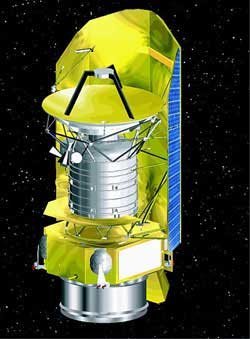
Gaia looks nothing like the Herschel Space Observatory shown here.

Gaia looks nothing like the Herschel Space Observatory shown here.

Since yesterday’s successful launch of the European Space Agency’s Gaia mission I have been inundated with requests for more information about this impressive satellite and the science behind it. As a service to the community, and for the edification of the public at large, I therefore thought I’d share my list of top ten Gaia facts via the medium of this blog:

  1. The correct pronunciation of GAIA is as in “gayer”. Please bear this in mind when reading any press articles about the mission.
  2. The GAIA spacecraft will orbit the Sun at the Second Lagrange Point, the only place in the Solar System where the  effects of cuts in the UK science budget can not be felt.
  3. The data processing challenges posed by GAIA are immense; the billions of astrometric measurements resulting from the mission will be analysed using the world’s biggest Excel Spreadsheet.
  4. To provide secure backup storage of the complete GAIA data set, the European Space Agency has commandeered the world’s entire stock of 3½ inch floppy disks.
  5. As well as measuring billions of star positions and velocities, GAIA is expected to discover thousands of new asteroids and the hiding place of Lord Lucan.
  6. GAIA can measure star positions to an accuracy of a few microarcseconds. That’s the angle subtended by a single pubic hair at a distance of 1000km.
  7. The precursor to GAIA was a satellite called Hipparcos, which is not how you spell Hipparchus.
  8. The BBC will be shortly be broadcasting a new 26-part TV series about GAIA. Entitled WOW! Gaia! That’s Soo Amaazing… it will be presented by Britain’s leading expert on astrometry, Professor Brian Cox.
  9. Er…
  10. That’s it.

The Conundrum Conundrum

Posted in Uncategorized with tags , , on December 19, 2013 by telescoper

Last week I attended a talk here at Sussex by Andrew Liddle who came back from Edinburgh especially fro the event (and not at all  in order to attend the Astronomy Centre Christmas Party, coincidentally later the same day). When he circulated the details of his talk, the title he gave was Cosmological Conundrums. Not being at all pedantic I naturally suggested that it should be Cosmological Conundra. Somewhat to my surprise he made that correction on the title slide of his talk. Later on, at the dinner, colleagues of mine argued that conundrum isn’t a Latin word so shouldn’t have a Latin plural; in much the same way that the plural of “bum” is not “ba”.

Actually the origin of the word “conundrum” is a bit of a puzzle in its own right. For one thing it certainly isn’t a word having an origin in Latin; the trusty Oxford English Dictionary says “Origin Lost” and Chambers says “Etymology Unknown”. Interestingly there are many variant spellings (such as quonundrum and quadundrum) and no less than 5 different definitions, given here in order of first recorded occurrence in written English (the first in 1596).

1. Applied abusively to a person. (? Pedant, crotchet-monger, or ninny.)

2.  A whim, crotchet, maggot, conceit

3.  A pun or word-play depending on similarity of sound in words of different meaning.

4. a. A riddle in the form of a question the answer to which involves a pun or play on words: called in 1769 conundrumical question. b. Any puzzling question or problem; an enigmatical statement.

5.  A thing that one is puzzled to name, a ‘what-d’ye-call-it’. rare.

It is 4b that represents the most common modern usage; that first came into English as late as 1790. The OED also argues quite strongly that 1 is not the first  use in English and probably doesn’t convey the original meaning; it’s just the first example of the word having been found in a written document.

So does the fact that “conundrum” is not a Latin word mean that its plural should be “conundrums” rather than “conundra”?

Maybe. But probably not. The best theory the OED gives for its etymology is “originating in some university joke, or as a parody of some Latin term of the schools, which would agree with its unfixed form in 17–18th cent”. I would argue that if conundrum is a made-up word meant to imitate or parody a Latin term then it should in fact be treated in the same way when forming its plural. The last thing anyone wants is a half-hearted parody and, in any case, I’m sure that the students who coined the term would have used the appropriate plural form.

Anyway, in the course of this investigation I discovered the word “crotchet-monger”, which I simply must try to get into my next public lecture.

Countdown to GAIA

Posted in The Universe and Stuff with tags , , , on December 18, 2013 by telescoper

Just a quick post to point out that tomorrow morning at 9.12am GMT will see the launch of the European Space Agency’s Gaia mission.  You can watch the launch live here from about 8.50 GMT. I’ll be in a meeting at 9am tomorrow morning, so I’m probably going to miss it.

Gaia arrives on the Launchpad at Kourou, French Guyana, on 13th December

Gaia arrives on the Launchpad at Kourou, French Guyana, on 13th December

I remember first hearing about Gaia about 15 years ago when I was on a PPARC advisory panel and was simultaneously amazed  by the ambition of its objectives and sceptical that it would ever get off the ground. Now its almost ready to go, so fingers crossed for a successful launch tomorrow.

Coincidentally, Gaia is among the various telescopes and observatories featured in the STFC Roadshow we put on  viewfor an Astronomy Master Class we have been putting on for local schools over the last couple of days here at the University of Sussex:

IMG-20131218-00248

Gaia is a global space astrometry mission, which will make the largest, most precise three-dimensional map of our Galaxy by surveying more than a thousand million stars. In some sense it is the descendant of the Hipparcos mission launched in 1989, but it’s very much more than that. Gaia will monitor each of its target stars about 70 times over a five-year period. It is expected to discover hundreds of thousands of new celestial objects, such as extra-solar planets and brown dwarfs, and observe hundreds of thousands of asteroids within our own Solar System. The mission is also expected to yield a wide variety of other benefits, including new tests of the  General Theory of Relativity.

Gaia will create an extraordinarily precise three-dimensional map of more than a thousand million stars throughout our Galaxy (The Milky Way) and beyond, mapping their motion, luminosity, temperature and chemical composition as well as any changes in such properties. This huge stellar census will provide the data needed to tackle an enormous range of important problems related to the origin, structure and evolutionary history of our Galaxy. Gaia will do all this by repeatedly measuring the positions of all objects down to an apparent magnitude of 20. A thousand million stars is about 1% of the entire stellar population of the Milky Way.

For the brighter objects, i.e. those brighter than magnitude 15, Gaia will measure their positions to an accuracy of 24 microarcseconds, comparable to measuring the diameter of a human hair at a distance of 1000 km. Distances of relatively nearby stars will be measured to an accuracy of 0.001%. Even stars near the Galactic Centre, some 30 000 light-years away, will have their distances measured to within an accuracy of 20%.

It’s an astonishing mission that will leave an unbelievably rich legacy not only for the astronomers working on the front-line operations of Gaia but for generations to come. I have a feeling that there might be  a few sleepless nights tonight waiting for the launch, but I suppose astronomers should be used to that!

UPDATE: 19/12/2013 Success! Launch went smoothly, separation of the Gaia spacecraft achieved. Now we have to wait for a month or so for it to get to L2, settle itself down, and then start doing science. The first data release isn’t due for 22 months…Bon Voyage!

Viva Elsewhere…

Posted in Biographical, Education with tags , , on December 18, 2013 by telescoper

I just came back from a meeting of the Heads of  the science Schools here at the University of Sussex where, among other things, we discussed PhD completion rates across the University. I sat there smugly because ours in the School of Mathematical and Physical Sciences are pretty good. The meeting started at 10am which also happens to have been the starting time for a PhD examination in at Cardiff University involving my (former) student Ian Harrison. I would have liked to have been there, but unfortunately I have several appointments today in Sussex so couldn’t make it.

It’s not normal practice for the supervisor of a PhD to be present at the examination of the candidate. The rules allow for it – usually at the request of the student – but the supervisor must remain silent unless and until invited to comment by the examiners. I think it’s a very bad idea for both student and supervisor, and the one example that I can recall of a supervisor attending the PhD examination of his student was a very uncomfortable experience.

I always feel nervous when a student of mine is having their viva voce examination, probably because I’m a bit protective and such an occasion always brings back painful memories of the similar ordeal I went through twenty-odd years ago. Although I have every confidence in Ian, I can’t help  sitting in my office wondering how it is going. However, this is something a PhD candidate has to go through on their own, a sort of rite of passage during which the supervisor has to stand aside and let them stand up for their own work. Usually, of course, I would be there for the event (if not actually present in the examination room), but now I’m a considerable distance away it feels a bit strange.

I’ve actually blogged about a paper of Ian’s already. He finished his thesis well within the usual three-year limit and has moved to the Midlands (Manchester, to be precise) to take up a postdoctoral research position there.  He’s not technically allowed to call himself Doctor Harrison yet, but I’m sure it’s just a matter of time. In the words of Miss Jean Brodie, my students are, without doubt, la crème de la crème.

It’s now 11.45. Fingers crossed for some news soon…

UPDATE: 13.00. Still no news…

UPDATE: 13.07. Congratulations, Dr Harrison!