A Long Day’s Journey into Brighton

Posted in Biographical on January 3, 2014 by telescoper

Just time for a quick post before I have my Ovaltine. I travelled back to Brighton today by train from Cardiff, where I’d spent a few days either side of New Year.

The journey back to Brighton was a bit of a struggle, courtesy of heavy overnight rain and a later, more mysterious, problem with “lightning damaging equipment” – which must be an impressive piece of kit! Anyway, trains could only move at a crawl between Cardiff and Newport while a temporary signalling system was in place, ie a man standing on a ladder waving a flag. I think he’s still there as I write this.

An hour after leaving Cardiff the train made it to Newport (a distance of about 15 miles) and then gave up. We all got out and waited another half an hour for a train to London Paddington.

After that it all went reasonably well, and I got to London Victoria a mere four and a half hours after leaving my Cardiff residence. I was relieved to see a Brighton train due to leave at 19.36 which I got on, but since it was only four carriages long it was packed. I managed to find a seat in the section marked “Priority” which, naturally, applies to me.

Anyway I got back to the flat about 9pm, so the journey was six hours door-to-door. Not too bad, really, given the inclement weather, though I can’t help wondering why our railway network is so terribly vulnerable to the effects of rain? It’s not exactly a rare occurrence in Britain, is it?

Could we not divert just a small fraction of the money spent on glitzy new stations towards better flood protection and/or more robust signalling equipment?

Anyway, back to work tomorrow – much to do before next week when I’ll be travelling again, a tad further this time..

In Place of Fear

Posted in Politics with tags , , on January 2, 2014 by telescoper

An extract from the fifth chapter, In Place of Fear, of Nye Bevan’s book of essays, published in 1952, has been circulating on the internet. I’m taking the liberty of posting it here because it addresses directly (and more cogently than modern politicians seem to be able to manage) the importance of the “civilising principle” behind the National Health Service – that nobody should be denied medical assistance because they can’t afford it. As Bevan himself puts it:

Society becomes more wholesome, more serene, and spiritually healthier, if it knows that its citizens have at the back of their consciousness the knowledge that not only themselves, but all their fellows, have access, when ill, to the best that medical skill can provide. But private charity and endowment, although inescapably essential at one time, cannot meet the cost of all this. If the job is to be done, the state must accept financial responsibility.

Part of this essay could have been written in 2013 rather than 1952, in response to government proposals that “foreigners” or “migrants” (or, as I prefer to call them, “people”) should be denied treatment on the NHS unless they can prove their entitlement. Bevan deals with this suggestion very well, but I think there is a point that he missed. Even if you accept that foreign visitors should be denied access to the NHS on grounds that they don’t contribute by taxation (which of course they do as soon as they buy anything that attracts VAT or earn wages in the UK), then logically you should also ban the unemployed, students, etc from access to free health care. I like to think that as a nation we wouldn’t countenance this, so why do pick out foreign visitors in this way? The answer is, of course, pure xenophobia – the lowest common denominator of British politics now as it was then..

Here is the nub of Bevan’s argument about visitors:

One of the consequences of the universality of the British Health Service is the free treatment of foreign visitors. This has given rise to a great deal of criticism, most of it ill-informed and some of it deliberately mischievous. Why should people come to Britain and enjoy the benefits of the free Health Service when they do not subscribe to the national revenues? So the argument goes. No doubt a little of this objection is still based on the confusion about contributions to which I have referred. The fact is, of course, that visitors to Britain subscribe to the national revenues as soon as they start consuming certain commodities, drink and tobacco for example, and entertainment. They make no direct contribution to the cost of the Health Service any more than does a British citizen.

However, there are a number of more potent reasons why it would be unwise as well as mean to withhold the free service from the visitor to Britain. How do we distinguish a visitor from anybody else? Are British citizens to carry means of identification everywhere to prove that they are not visitors? For if the sheep are to be separated from the goats both must be classified. What began as an attempt to keep the Health Service for ourselves would end by being a nuisance to everybody. Happily, this is one of those occasions when generosity and convenience march together. The cost of looking after the visitor who falls ill cannot amount to more than a negligible fraction of £399,000,000, the total cost of the Health Service. It is not difficult to arrive at an approximate estimate. All we have to do is look up the number of visitors to Great Britain during one year and assume they would make the same use of the Health Service as a similar number of Britishers. Divide the total cost of the Service by the population and you get the answer. I had the estimate taken out and it amounted to about £200,000 a year. Obviously this is an overestimate because people who go for holidays are not likely to need a doctor’s attention as much as others. However, there it is. for what it is worth and you will see it does not justify the fuss that has been made about it.

The whole agitation has a nasty taste. Instead of rejoicing at the opportunity to practice a civilized principle, Conservatives have tried to exploit the most disreputable emotions in this among many other attempts to discredit socialized medicine.

The numbers quoted above are very interesting. The current NHS budget for England is just a shade under £100 billion (c.f. £400 million in the 50s). The estimated current cost to the NHS of treating visitors is (possibly) as high £500 million, ie around 0.5% of the total budget. That’s a larger proportion (by about a factor 10) than in the 50s, presumably because international travel is far easier nowadays, but since migrant workers contribute a net £25 billion to the UK economy it’s hardly excessive. Indeed, the NHS itself could not function at all without the thousands of doctors and nurses who come from other countries to work in it. Neither would our university system, as a matter of fact.

It’s about time some of our politicians had the guts to stand up against the growing tide of foreigner-bashing. The one problem this country has with immigration is that there isn’t enough of it.

Anyway, my New Year message to any potential visitors to these shores, whether they be Bulgarians or Romanians or any other citizens of this planet, is a great big Welcome. And if you get ill while you’re here we’ll look after you. Because we’re like that. At least, I hope we are.

An Astronomical Teaser

Posted in Cute Problems, The Universe and Stuff with tags , , , , on January 1, 2014 by telescoper

For those of you who feel up to a little brain-teaser after last night’s revels, try this little problem which involves the use of everybody’s favourite type of astronomical measurement, the magnitude system. Answers through the comment box please!

A binary star at a distance of 100 pc has such a small separation between its component stars that it is unresolved by a telescope. If the apparent visual magnitude of the combined image of the system is 10.5, and one star is known to have an absolute visual magnitude of 9.0, what is the absolute visual magnitude of the other star?

To make an end is to make a beginning

Posted in Poetry with tags , , , on January 1, 2014 by telescoper

So, it’s New Year’s Day again. I’d like to take the opportunity to convey my very best wishes to everyone who follows this blog and to thank you all for showing an interest in my ramblings.

The beginning of a new year seems an appropriate time to post something from T.S. Eliot’s remarkable poetic meditation on the redemptive nature of time, Four Quartets. This is the last section, Part V, of the last of the four poems, Little Gidding.

What we call the beginning is often the end
And to make and end is to make a beginning.
The end is where we start from. And every phrase
And sentence that is right (where every word is at home,
Taking its place to support the others,
The word neither diffident nor ostentatious,
An easy commerce of the old and the new,
The common word exact without vulgarity,
The formal word precise but not pedantic,
The complete consort dancing together)
Every phrase and every sentence is an end and a beginning,
Every poem an epitaph. And any action
Is a step to the block, to the fire, down the sea’s throat
Or to an illegible stone: and that is where we start.
We die with the dying:
See, they depart, and we go with them.
We are born with the dead:
See, they return, and bring us with them.
The moment of the rose and the moment of the yew-tree
Are of equal duration. A people without history
Is not redeemed from time, for history is a pattern
Of timeless moments. So, while the light fails
On a winter’s afternoon, in a secluded chapel
History is now and England.

With the drawing of this Love and the voice of this
     Calling

We shall not cease from exploration
And the end of all our exploring
Will be to arrive where we started
And know the place for the first time.
Through the unknown, unremembered gate
When the last of earth left to discover
Is that which was the beginning;
At the source of the longest river
The voice of the hidden waterfall
And the children in the apple-tree
Not known, because not looked for
But heard, half-heard, in the stillness
Between two waves of the sea.
Quick now, here, now, always—
A condition of complete simplicity
(Costing not less than everything)
And all shall be well and
All manner of thing shall be well
When the tongues of flame are in-folded
Into the crowned knot of fire
And the fire and the rose are one.

Little Gidding, Part V, the last of the Four Quartets by T.S. Eliot.

2013 in review

Posted in Uncategorized on December 31, 2013 by telescoper

The WordPress.com stats helper monkeys prepared a 2013 annual report for this blog.

Here’s an excerpt:

The Louvre Museum has 8.5 million visitors per year. This blog was viewed about 440,000 times in 2013. If it were an exhibit at the Louvre Museum, it would take about 19 days for that many people to see it.

Click here to see the complete report.

Ring Out, Wild Bells

Posted in Poetry with tags on December 30, 2013 by telescoper

Ring out, wild bells, to the wild sky,
The flying cloud, the frosty light
The year is dying in the night;
Ring out, wild bells, and let him die.
Ring out the old, ring in the new,
Ring, happy bells, across the snow:
The year is going, let him go;
Ring out the false, ring in the true.
Ring out the grief that saps the mind,
For those that here we see no more,
Ring out the feud of rich and poor,
Ring in redress to all mankind.
Ring out a slowly dying cause,
And ancient forms of party strife;
Ring in the nobler modes of life,
With sweeter manners, purer laws.
Ring out the want, the care, the sin,
The faithless coldness of the times;
Ring out, ring out thy mournful rhymes,
But ring the fuller minstrel in.
Ring out false pride in place and blood,
The civic slander and the spite;
Ring in the love of truth and right,
Ring in the common love of good.
Ring out old shapes of foul disease,
Ring out the narrowing lust of gold;
Ring out the thousand wars of old,
Ring in the thousand years of peace.
Ring in the valiant man and free,
The larger heart the kindlier hand;
Ring out the darkness of the land,
Ring in the Christ that is to be.

by Alfred Lord Tennyson (1809-92)

The Jazz Legends we lost in 2013

Posted in Jazz with tags , , , , , , , on December 29, 2013 by telescoper

I’ve become rather slow to find out about things since I gave up buying  newspapers regularly. That’s why I only found out yesterday that Jazz musician Yusef Lateef had passed away on 23rd December, at the age of 93. He had a good innings, but it’s still sad to lose someone who was there at the birth of the modern era of jazz; Lateef played with Dizzy Gillespie’s band way back in the 1940s before going on to carve out his own career as a bandleader and a pioneering figure in the development of world music.

The death of Yusef Lateef got me thinking about all the other great jazz  musicians who also passed away in 2013 to whom I haven’t yet found time to pay tribute. The list I’ve selected is sadly rather long, and I could have included more. I’ve added links to examples of their playing:

  • Cedar Walton (August 19, aged 79).  Terrific piano player in the hard bop tradition, who came to prominence with Art Blakey’s band of the 1960s as pianist and arranger. Listen to him clearly enjoying himself playing Duke Ellington’s Satin Doll here.
  • Chico Hamilton (November 25, aged 92). Drummer and bandleader who, among many other things, sought to merge jazz with classical forms (e.g. by bring a flute and cello into his band). Check out Blue Sands Live , recorded at the Newport Jazz Festival in 1958.
  • Jim Hall (December 10, aged 83). Brilliant jazz guitarist, also played at the Newport Jazz Festival in 1958, with Jimmy Giuffre and Bob Brookmeyer on The Train and the River.
  • Donald Byrd (February 4, aged 80). Began his career as a bebop trumpeter, but later moved towards a more popular jazz funk/rhythm & blues/fusion style. Listen to him on his famous Blue Note recording of Cristo Redentor.
  • Marian McPartland (August 20, aged 95). British born pianist who presented a long-running radio series on piano jazz on US Radio. Here she is playing a duet with Dave Brubeck. You might just recognize the tune!
  • Stan Tracey (December 6, aged 86). Uniquely gifted British pianist with an instantly recognizable style.  House pianist at Ronnie Scott’s Club in London for many years, in which role he earned the respect and admiration of the very best musicians in the world.The one musician on this list that I’ve seen live. I’ve seen him several times, in fact, and could never take my eyes off his hands:

People such as these are irreplaceable, of course, but at least they will live on in our hearts through their music. I hope they all knew how much we loved them.

Von deiner Güt’, o Herr und Gott

Posted in Music with tags , on December 28, 2013 by telescoper

This morning I listened to Building a Library on BBC Radio 3, a programme in which music experts discuss the best available recordings of classic works; the work under consideration this time The Creation, by Joseph Haydn. I won’t comment on the final choice, as I haven’t heard it all the way through, but I do agree with the presenter that there are many superb versions of this wonderful oratorio. All this gives me an excuse to post one of my favourite pieces, Von deiner Güt’, o Herr und Gott from Part III. Here Adam and Eve are singing a prayer of thanks, to music that’s almost childlike in its simplicity. It’s so simple, in fact, that only a genius could have written it. Later a chorus of angels joins in, accompanied by gently rolling timpani, a moment which for some reason always brings me to the edge of tears. If there is music in Heaven, surely it sounds like this.

Like of each thing

Posted in Literature on December 27, 2013 by telescoper

At Christmas I no more desire a rose
Than wish a snow in May’s new-fangled mirth;
But like of each thing that in season grows.

William Shakespeare, in Love’s Labour’s Lost (Act 1, Scene 1)


Boxing Day in Warkworth

Posted in History with tags , , , on December 26, 2013 by telescoper

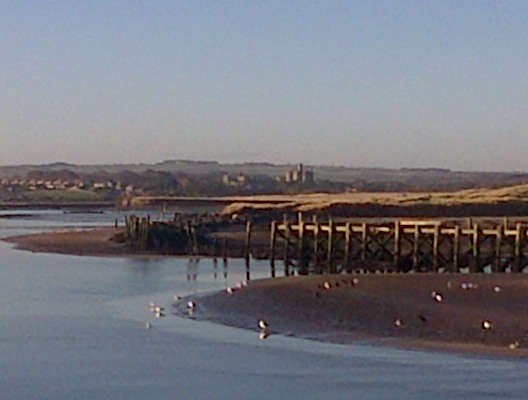
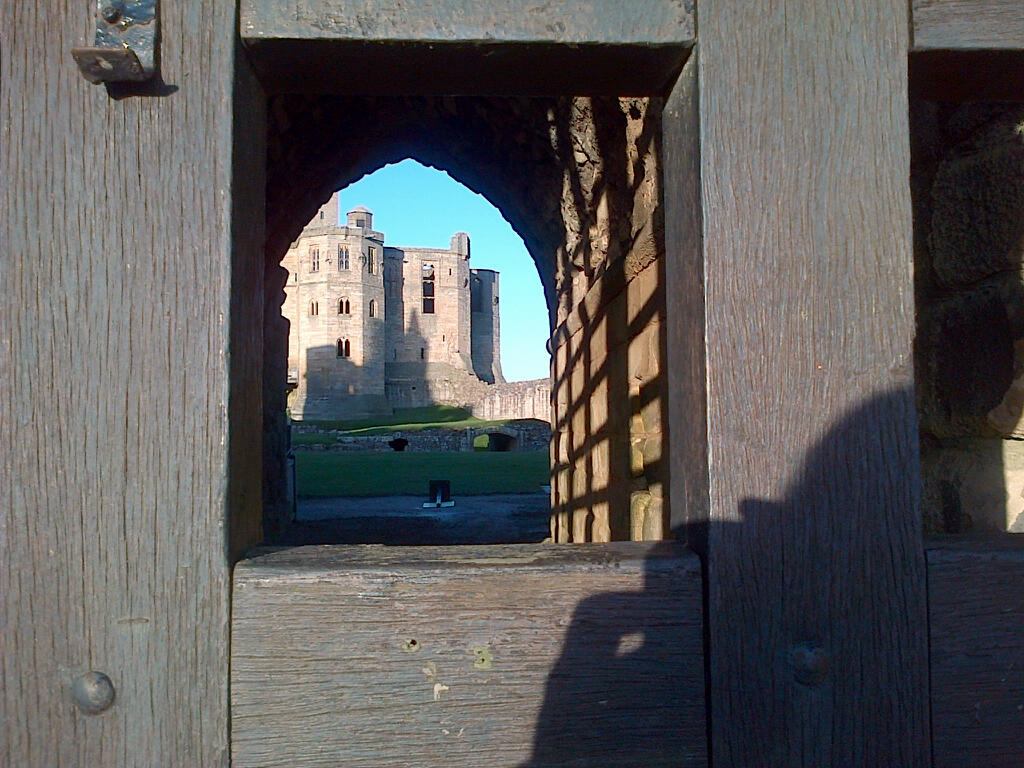
So the traditional Boxing Day spin around Northumberland took place this year in very nice weather (for change). Here are a few pictures of Warkworth Castle..

Incidentally, the decaying wooden structures that you see in the foreground of the last picture are the remains of disused coal staithes that were used to transfer coal onto ships. Amble (where the picture was taken from, with Warkworth Castle in the distance) was once a fairly busy coal port serving numerous local collieries, including Broomhill, Radcliffe, Shilbottle, Widdrington, Whittle, Togston and Hauxley. All are now closed and the harbour at Amble is now only used for fishing and leisure craft.