The End of May

Posted in Poetry with tags , , on May 31, 2012 by telescoper

How the wind howls this morn
About the end of May,
And drives June on apace
To mock the world forlorn
And the world’s joy passed away
And my unlonged-for face!
The world’s joy passed away;
For no more may I deem
That any folk are glad
To see the dawn of day
Sunder the tangled dream
Wherein no grief they had.
Ah, through the tangled dream
Where others have no grief
Ever it fares with me
That fears and treasons stream
And dumb sleep slays belief
Whatso therein may be.
Sleep slayeth all belief
Until the hopeless light
Wakes at the birth of June
More lying tales to weave,
More love in woe’s despite,
More hope to perish soon.

by William Morris (1834-96).

The Transparent Dishonesty of the Research Excellence Framework

Posted in Open Access, Science Politics with tags , , , , , , on May 30, 2012 by telescoper

Some of my colleagues in the School of Physics & Astronomy recently attended a briefing session about the  forthcoming Research Excellence Framework. This, together with the post I reblogged earlier this morning, suggested that I should re-hash an article I wrote some time ago about the arithmetic of the REF, and how it will clearly not do what it says on the tin.

The first thing is the scale of the task facing members of the panel undertaking the assessment. Every research active member of staff in every University in the UK is requested to submit four research publications (“outputs”) to the panel, and we are told that each of these will be read by at least two panel members. The Physics panel comprises 20 members.

As a rough guess I’d say that the UK has about 40 Physics departments, and the average number of research-active staff in each is probably about 40. That gives about 1600 individuals for the REF. Actually the number of category A staff submitted to the 2008 RAE was 1,685.57 FTE (Full-Time Equivalent), pretty close to this figure. At 4 outputs per person that gives 6400 papers to be read. We’re told that each will be read by at least two members of the panel, so that gives an overall job size of 12800 paper-readings. There are 20 members of the panel, so that means that between 29th November 2013 (the deadline for submissions) and the announcement of the results in December 2014 each member of the panel will have to have read 640 research papers. That’s an average of about two a day. Every day. Weekends included.

Now we are told the panel will use their expert judgment to decide which outputs belong to the following categories:

  • 4*  World Leading
  • 3* Internationally Excellent
  • 2* Internationally Recognized
  • 1* Nationally Recognized
  • U   Unclassified

There is an expectation that the so-called QR  funding allocated as a result of the 2013 REF will be heavily weighted towards 4*, with perhaps a small allocation to 3* and probably nothing at all for lower grades. In other words “Internationally recognized” research will probably be deemed completely worthless by HEFCE. Will the papers belonging to the category “Not really understood by the panel member” suffer the same fate?

The panel members will apparently know enough about every single one of the papers they are going to read in order to place them  into one of the above categories, especially the crucial ones “world-leading” or “internationally excellent”, both of which are obviously defined in a completely transparent and objective manner. Not.

We are told that after forming this judgement based on their expertise the panel members will “check” the citation information for the papers. This will be done using the SCOPUS service provided (no doubt at considerable cost) by   Elsevier, which by sheer coincidence also happens to be a purveyor of ridiculously overpriced academic journals. No doubt Elsevier are  on a nice little earner peddling meaningless data for the HECFE bean-counters, but I haven’t any confidence that it will add much value to the assessment process.

There have been high-profile statements to the effect that the REF will take no account of where the relevant “outputs”  are published, including a recent pronouncement by David Willetts. On the face of it, that would suggest that a paper published in the spirit of Open Access in a free archive would not be disadvantaged. However, I very much doubt that will be the case.

I think if you look at the volume of work facing the REF panel members it’s pretty clear that citation statistics will be much more important for the Physics panel than we’ve been led to believe. The panel simply won’t have the time or the breadth of understanding to do an in-depth assessment of every paper, so will inevitably in many cases be led by bibliometric information. The fact that SCOPUS doesn’t cover the arXiv means that citation information will be entirely missing from papers just published there.

The involvement of  a company like Elsevier in this system just demonstrates the extent to which the machinery of research assessment is driven by the academic publishing industry. The REF is now pretty much the only reason why we have to use traditional journals. It would be better for research, better for public accountability and better economically if we all published our research free of charge in open archives. It wouldn’t be good for academic publishing houses, however, so they’re naturally very keen to keep things just the way they are. The saddest thing is that we’re all so cowed by the system that we see no alternative but to participate in this scam.

Incidentally we were told before the 2008 Research Assessment Exercise that citation data would emphatically not be used;  we were also told afterwards that citation data had been used by the Physics panel. That’s just one of the reasons why I’m very sceptical about the veracity of some of the pronouncements coming out from the REF establishment. Who knows what they actually do behind closed doors?  All the documentation is shredded after the results are published. Who can trust such a system?

To put it bluntly, the apparatus of research assessment has done what most bureaucracies eventually do; it has become  entirely self-serving. It is imposing increasingly  ridiculous administrative burdens on researchers, inventing increasingly  arbitrary assessment criteria and wasting increasing amounts of money on red tape which should actually be going to fund research.

Yet another side of the academic journal racket…

Posted in Open Access with tags , , on May 30, 2012 by telescoper

Another illustration of how the Academic Journal Racketeers (in this case one of the usual suspects, Elsevier) have a stranglehold on research. As well as levying huge subscription charges they also supply a service called SCOPUS which the panels in the Research Excellence Framework will use to inform their deliberations. Needless to say, SCOPUS itself is a subscription-only resource. The academic publishing industry is of course very keen on the Research Excellence Framework. It’s certainly an Excellent Framework when it comes to making money. Pity about the actual Research though.

Mike Taylor's avatarSauropod Vertebra Picture of the Week

Scopus bills itself as “the largest abstract and citation database of research literature and quality web sources covering nearly 18,000 titles from more than 5,000 publishers.”

Sounds useful. But it’s useless. Literally.

Because it’s a subscription-only resource:

Now I am an associate researcher at the University of Bristol. UoB is part of the UK Access Management Federation, so I select that in the Shibboleth authentication page:

But the list of member universities doesn’t include Bristol, instead skipping straight from “University of Birmingham” to the intriguingly named “University of Bolton – Do Not Use”:

I can’t use it.

So it’s useless to me. Literally.

This is why it’s frustrating to me when I read statements like this from Elsevier’s Alicia Wise:

Commercial publishers are especially able to command resources to … develop new technologies and platforms to access journal content and improve researcher productivity (e.g., ScienceDirect, Scopus, Scirus, CrossRef, CrossCheck. Article of…

View original post 453 more words

Not a cloud in the sky…

Posted in Uncategorized with tags , , on May 29, 2012 by telescoper

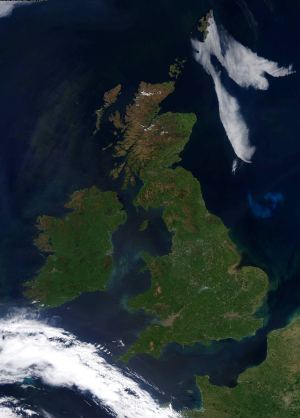
Now here’s something you don’t see every day. Not if you live in the United Kingdom anyway. This satellite picture taken yesterday (which I nicked from the University of Dundee) shows completely clear skies over virtually the whole country…

..but hang on. What’s that coming up from the South West, just in time for the Jubilee celebrations?

Long Long Summer

Posted in Jazz with tags , , on May 28, 2012 by telescoper

I know it’s tempting fate to post something with a title like Long Long Summer, but we’ve had such lovely warm weather for the last week or so I couldn’t resist putting this up while the sun’s still shining. I particularly wanted to share this track (a) because it matches the weather perfectly and (b) because it’s by the great Dizzy Gillespie Quintet of 1962 with Lalo Schifrin on piano, man best known as a prolific composer of film and TV scores. The band also featured Leo Wright, a very under-rated saxophonist and flautist. They all play terrifically on this original composition by Lalo Schifrin. There’s also a chance to see an interesting collection of photographs of Dizzy Gillespie, and his amazing cheeks!

Dracula

Posted in Film, Music with tags , , , , on May 28, 2012 by telescoper

Last night I went with some friends to the Wales Millennium Centre in sunny Cardiff Bay; not, this time, for an Opera but to see a movie. Well, not just to see a movie but to listen to the soundtrack performed live at the same time. It turned out to be a fascinating and memorable evening, enjoyed by a very large audience.

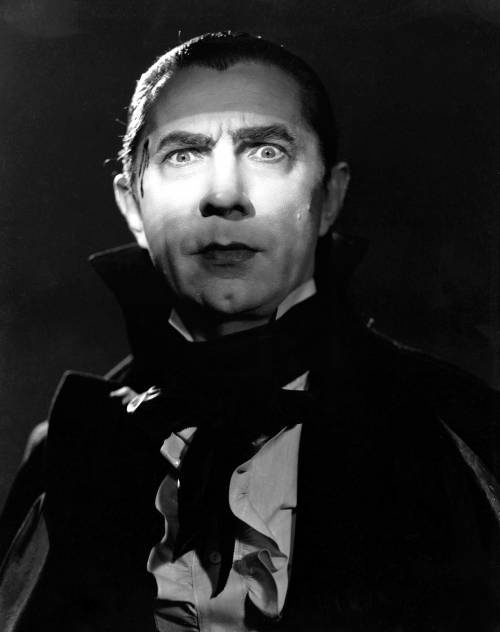
The film was the classic 1931 version of Bram Stoker’s Dracula, starring the great Bela Lugosi as the Count. This version – the first of many variations on the theme – was based very closely on the 1927 Broadway play in which Lugosi also played the title role. The music we heard was specially composed to accompany Dracula by Philip Glass, and the man himself was there to perform it. Philip Glass, I mean, not Count Dracula. The musicians numbered six in total, actually, as Philip Glass was joined by the Kronos Quartet  and together they were directed by Michael Riesman, who sat with his back to the audience watching the film on the big screen.

Although the musicians started a bit ropily, they soon pulled themselves together and it became obvious that the music was going to bring a significant new dimension to this pioneering old horror movie. In fact, as a very early “talkie” the original film had no musical score at all and very few sound effects of any kind. The music composed by Philip Glass brings extra dramatic intensity to some of the movie’s iconic sequences, such as the battle of wills when Dracula tries to mesmerise Professor van Helsing. The insistent repetition which is characteristic of Glass’ minimalist approach adds urgency where needed, but there are also contrasting passages of relaxed beauty. The score is also beautifully understated where it needs to be, simple enough not to distract attention away from the screen.

The passing years have not been particularly kind to the film. The effects are often unconvincing (to say the least), especially the  bats-on-strings, some of the acting very hammy, and the audio quality was so poor that the dialogue was often so muffled as to be barely audible (and not helped by bad mixing with the music).

Once you look past these superficial aspects, however, it’s not difficult to understand why this film is regarded as such a classic, because it is a highly original piece of work. It’s a far cry from a modern gore-fest, of course. The horror is implied rather than made explicit; all the actual blood-sucking happens out of shot. But the unsettlingly disjointed narrative, full of unexpected changes of scene and unexplained goings-on, gives it a dream-like feel and conjures up a unique sense of atmosphere. Although it it is now extremely dated, it doesn’t take that much imagination to understand why it created a sensation way back in 1931, with people apparently fainting in shock in the cinema. It also made a huge amount of money at the box office.

Vampire movies  are replete with their own set of clichés – the crucifixes, the absent reflections, the bats, etc etc – but this is the daddy of them all. The one thing that surprised me was the lack of garlic; the favoured protection against this particular member of the Undead is Wolfsbane (a member of the Aconite family of attractive yet lethally poisonous flowering plants; I used to grow a variety called Monk’s-Hood in my garden when I lived in Nottingham).

In the end, however, Dracula owes it all to the mesmerising screen presence of Bela Lugosi. This film made his name, and he was to spend most of the rest of his career typecast as a horror villain. His later years represented a downward spiral. Trouble with sciatica led doctors to prescribe him with opiates, on which he became hooked.  His drug addiction made him notoriously unreliable and work dried up. His career dwindled away into obscure bit parts in poor quality B-movies.

Although Bela Lugosi had his limitations as an actor, he didn’t deserve his fate. I’ve said before on here that I think people should be judged by their best work rather than by their worst, and so it is with Bela Lugosi. He was, and remains, the  Count Dracula.

The Cat

Posted in Music with tags , , , on May 27, 2012 by telescoper

I can’t believe I haven’t posted anything yet by the legendary  Zoot Money so here he is with the Big Roll Band doing a cover version of Jimmy Smith’s The Cat. This is one for the Oldies, I guess, since it’s from way back in 1966.

I suppose that posting this will reveal that I’m more of a Mod than a Rocker, although if truth be told I’m not really that much of either. Now, where’s my Lambretta?

SKA Site Duel ends in Dual Site for SKA

Posted in Science Politics, The Universe and Stuff with tags , , , , , on May 26, 2012 by telescoper

I wasn’t going to post about this but then I realised nobody seemed to have used the obvious headline so thought I might as well knock out a quickie.

Yesterday, after much to-ing and fro-ing an announcement was finally made  concerning the site of the Square Kilometre Array.  The two contenders for the honour of hosting this superb project were South Africa and Australasia (both Australia and New Zealand get a bit, actually).

So who won?

Well, formally the decision was to split the project between both. At first sight this looks like a political compromise, but wiser heads than me disagree and say that this an excellent outcome on science grounds. I’d be interested to hear  opinions on that, in fact.

In any case, a quick skim through the STFC announcement makes it clear that South Africa actually gets the lion’s share of the actual dishes, which will be operated alongside the  Meerkat facility, and will do what I think is the more exciting science.  Having been to Cape Town just recently I know how much the SKA project means for astronomy in South Africa so I’m delighted for them that the outcome is so positive.

It does, however, remain to be seen what the implications of this decision are for the overall cost and scientific value-for-money, but for the time being the thing I’m most pleased about is that a decision has been reached.  I think the SKA project is by far the most exciting ground-based astronomy project around, and it will be very exciting to watch it grow.

Mike Taylor versus Graham Taylor…

Posted in Open Access on May 26, 2012 by telescoper

Here’s the official complete and unabridged version of Mike Taylor’s excellent point-by-point rebuttal of the Guardian article I posted about yesterday. Read it!

Mike Taylor's avatarSauropod Vertebra Picture of the Week

Today’s Guardian has a piece by Graham Taylor, director of academic, educational and professional publishing at the Publishers Association, entitled Attacking publishers will not make open access any more sustainable.

It’s such a crock that I felt compelled to respond point-by-point in the comments.  I did, but because my response was too long for the Guardian‘s comment field, I had to break it into three parts [part 1, part 2, part 3].

Here is the whole thing — Together At Last!

—

As we discuss the access crisis and Academic Spring, it’s great that the Guardian is allowing a platform to representatives of the academic publishing industry. It gives them a chance to demonstrate how utterly bankrupt their position is, and it’s kind of Graham Taylor to oblige. His article is a catalogue of distortions and mispresentations from start to finish.

I don’t…

View original post 1,541 more words

Shostakovich and Debussy

Posted in Music with tags , , , , , , , on May 26, 2012 by telescoper

With Cardiff likely to be in the grip of Olympic Torch fever I decided yesterday to avoid the crowds as much as possible and take in a  bit of culture in the form of a concert at St David’s Hall. My usual route into work being blocked by the closure of Bute Park to the public I walked into the city centre, paid in a few very welcome royalty cheques at the bank, and went to St David’s in person to book a ticket. I had no problem getting a good seat, but the staff issued dire warnings about getting here in good time for the 7.30 start as the Olympic Torch would be passing right in front of the venue just before the concert.

Despite the crowds I reckoned I had time for a quick pint (or two) in the Poet’s Corner before kick-off. Walking there from my office I saw a few people on Newport Road waiting for the Torch and its entourage, but not all that many. While I drank and chatted with a couple of PC regulars, the noise of a helicopter circling announced the arrival of the flame in our vicinity. I was almost tempted to pop outside for a look, but although the Olympic Torch was outside, the beer was inside and a man must have priorities in life.

So about 6.45 I headed off towards St David’s Hall. There were people out and about, but no more than you’d expect on a sunny Friday evening. Traffic had already re-started and disruption seemed fairly minimal. I don’t know where the Torch had got to by then but I arrived at the Hall at 7.00 to find a crowd watching it on the Big Screen in the Hayes. I went straight in and had a nice glass of wine.

When I got into the auditorium for the evening’s concert I was a bit taken aback, not only by the huge size of the orchestra (particularly the brass section) but also by its unusual arrangement: the strings were divided in two, arranged more-or-less symmetrically with cellos and basses to far left and far right. I was also initially perturbed that my favourite handsome violinist was not in his usual place, but I soon located him and all was well with the world.

The concert, featuring the BBC National Orchestra of Wales conducted by associate guest conductor Francois-Xavier Roth, was broadcast live last night on BBC Radio 3, incidentally, and you can listen to a recording here.

The unusual orchestral arrangement was needed for the first piece of the concert, called Sound and Fury, by contemporary French composer Philippe Manoury. This is a work that’s full of contrasting moods, set against an overall concept relating to the battle between order and chaos. Passages in which stable melodic lines can be identified evolve into savage cacophony and back again; there are also sequences where the two halves of the orchestra act as two independent forces, challenging and responding to each other across the stage. Not exactly easy listening, but fascinating nonetheless.

After the interval we had the two “main pieces” of the evening, played by a more conventional orchestral line-up. First was the First Violin Concerto by Dmitry Shostakovich with soloist Daniel Hope (dressed, I have to say, in a horrible shiny suit). The open movement, entitled Nocturne, is striking for its lightness, and the apparent simplicity of its singing solo lines. The second movement Scherzo, darker and more intense, is followed by a wonderful slow movement marked Passacaglia, the end of which is marked by a fiendishly difficult solo cadenza that bridges into the final Burlesque. Daniel Hope played it with great verve and confidence, but in the context of the overall work I found it a bit gratuitous. Still an impressive piece, though, with many of the hallmarks of Shostakovich’s great symphonies.

The last piece was Images pour Orchestra by Claude Debussy. While the preceding Shostakovich work is perhaps a symphony masquerading as a suite, Images is definitely not a symphony. It’s a series of impressionistic and enigmatic vignettes of very differing mood. It’s in three movements, but the central one is itself divided into three distinct parts, so it is really five movements. The opening one includes, to my surprise, the Northumbrian tune The Keel Row and there are references to Spanish and French folk songs later on.  The whole impression you get listening to this work is similar to walking through an art gallery looking at paintings that relate to each other in some ways, but contrast in others, or perhaps reading an anthology of poems by different poets.

Three different works from the 20th century, each with a very characteristic voice of its own and each with much to enjoy made for an absorbing concert. St David’s Hall was rather sparsely populated – the Cardiff audience is notoriously conservative in its musical tastes, and the Olympic Torch business wouldn’t have helped –  but those that had made the effort were extremely appreciative at the end.

Having got my musical fix for the week I headed home. It must have only been about 9.45, but the concert in Bute Park seemed to have ended already. The city was busy, but not unusually so. The barricades had gone, and the buses were running again. I walked home through Sophia Gardens in the deepening twilight and saw a bat flying nimbly in silhouette against the crescent moon. Whatever happens in the future, that Image will be a treasured memory of Cardiff.