WNO Peter Grimes

Posted in Cardiff, Opera with tags , , , , , , on April 6, 2025 by telescoper

The reason for my flying visit to Cardiff this weekend was to visit the Wales Millennium Centre to catch the opening night of Welsh National Opera’s new production of the Opera Peter Grimes by Benjamin Britten. It was a full house and, being a premiere, there was a fair sprinkling of media types among the crowd. There will no doubt be many reviews but I don’t mind adding to the verbage. I’ve seen this Opera several times and it is one of my favourites in the entire repertoire.
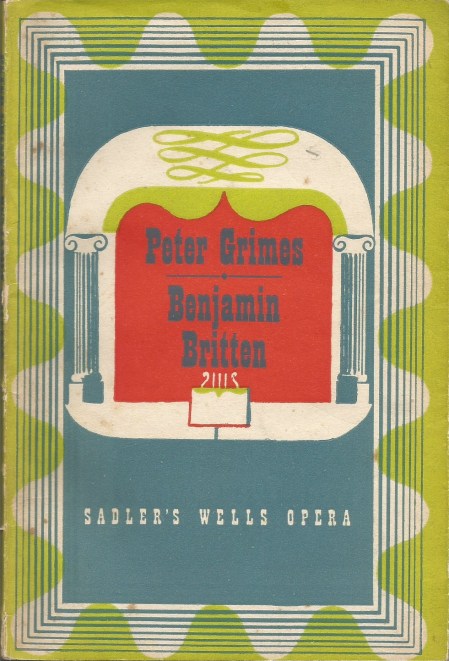
Peter Grimes premiered at Sadler’s Wells in London on 7th June 1945 almost 80 years ago. I wasn’t there – I’m not that old – but I do have an original programme from that season (left), bought in a second-hand bookshop. Perhaps surprisingly, given the grim subject matter and the intense music it was an immediate hit with audiences. Its popularity has not wained. Welsh National Opera gave its first performance in 1946, but is currently facing an uncertain future.

I’ve often heard Peter Grimes described as one of the greatest operas written in English. Well, as far as I’m concerned you can drop “written in English” from that sentence and it’s still true. I think it it’s a masterpiece, fit to rank alongside any by any composer. Searching through the back catalogue on this blog, however, I didn’t find any reviews of it, so the times I’ve seen it must have been before I started blogging back in 2008. I saw an excellent production by Opera North in Nottingham many moons ago, and also remember one at Covent Garden which stuck in my memory for its impressive staging.

Based on a character from the narrative poem The Borough by George Crabbe, the story revolves around the eponymous Peter Grimes, a fisherman, and the inhabitants of a small coastal village in Suffolk. Grimes is by no means a sympathetic character: he is an outcast with no social skills and is prone to fits of violent temper. The Opera begins witha Prologue in which Grimes is in court after the death of his apprentice; he is acquitted of any wrongdoing but the folk of the Borough – apart from the schoolteacher Ellen Orford and retired naval Captain Balstrode – still regard him as guilty. Against all advice, Grimes takes on another apprentice (John) whom he is subsequently suspected of mistreating. When the second boy dies (in accidental circumstances), Grimes flees with the crowd in pursuit. At the end he is given no choice but to take to his boat, sail it out to sea and sink it, taking his own life.

For me the key to the success of this Opera is its treatment of the character of Peter Grimes. In the original poem, Crabbe depicts Grimes is a monstrous figure rather like a pantomime villain. Britten is much more sympathetic: Grimes is misunderstood, a misft who as never been socialised; he just doesn’t know the rules that he should conform to. That’s his tragedy. Britten’s Grimes is not a villain. He’s not a hero either. At one point, shockingly, he even lashes out at Ellen Orford a lady who has shown him nothing but kindness. There’s good and bad in Grimes, like there is in all people. Who of us can say that we don’t share some of the faults of Peter Grimes? And if he’s bad what made him bad? Was he himself abused as a child? Could a little kindness along the way have made him better adjusted?

The Opera not just about Grimes, though. We get a vivid insight into the life of an isolated seaside community: the gossiping hypocrisy of the “good people” of the Borough, the debauchery of the landlady and her two “nieces” who cater to the needs of their male visitors, but above all the importance of the sea in their lives – stressed by Britten’s wonderful interludes describing dawn over the town, moonlight over the sea, and a raging storm. It also sheds light on the common practice of “buying” apprentices from the workhouse, essentially a means of slave labour, a systematic abuse far worse than anything Grimes ever does!

Anyway, to last night’s performance. In short, it was magnificent. The cast was very strong indeed: Nicky Spence shone in the role of Peter Grimes (tenor). Britten wrote the part to suit the characteristics of the voice of his partner, Peter Pears, and it doesn’t suit all tenor voices: the superb arioso When the Great Bear and Pleiades, for example, has dizzying head tones that challenges some singers. Ellen Orford was the excellent Sally Matthews (soprano) and Balstrode was the admirable baritone David Kempster.

I’ll mention three particularly memorable moments, near the end of the opera. The first is after the apprentice John has died; the gorgeous sea interlude Moonlight, which serves as a prelude to the third and final act, is played while the grieving Grimes cradles the lifeless corpse of the boy. The second is when Grimes is on the run, with the chorus calling his name and baying for blood. In fear of his life, he breaks down and is reduced to repeating his own name to himself. I’ve always found that scene unbearably moving and it was that way again last night. Finally, at the very end, the bodies of the two dead apprentices appear, one sprawled on a rock, the other standing eerily in the suspended boat which is tipped up vertically above the stage. When Grimes accepts Balstrode’s advice to drown himself, the two boys come to life; they exchange smiles, hold hands and walk off into the distance. It’s the only time Grimes looks happy in the whole performance. Only in death can he find his peace.

The staging is very spare but cleverly done. The basic set consists of a wet beach sloping up towards the rear above which from time to time a small fishing boat appears, suspended by wires, in a variety of attitudes. Otherwise there is little in the way of scenery. The clever part of this is the use of the dancers of Dance Ensemble Dawns. All the boys’ roles were in fact played by female dancers, including John the second apprentice, a non-speaking role played with great pathos by Maya Marsh whose use of body language was extraordinarily effective. Not only did they portray the boys of the village, often to be found generally misbehaving and taunting Peter Grimes, they also use their movements do evoke the storm in an extraordinarily compelling way. Not content with that they came on from time to time, in stylised fashion, to move scenery and props. The inn, for example, is conjured up by two simple props: a door frame and a window frame, held up by members of the ensemble for other members of the cast to walk or lean through. In all these contributions, the dancers were brilliant.

The simplicity of the staging probably reflects the financial crisis currently engulfing Welsh National Opera. They probably just didn’t have the money to pay for a elaborate sets, but it’s a testament to the skill and creativity of the designers that they were able to pull a triumph out of a financial disaster. I was sitting in the Circle so could see very well into the orchestra pit, where all the musicians of the Orchestra of Welsh National Opera were all wearing “SAVE OUR WNO” t-shirts. They played their hearts out. The WNO Chorus has always been excellent every time I’ve seen them, and last night was no exception.
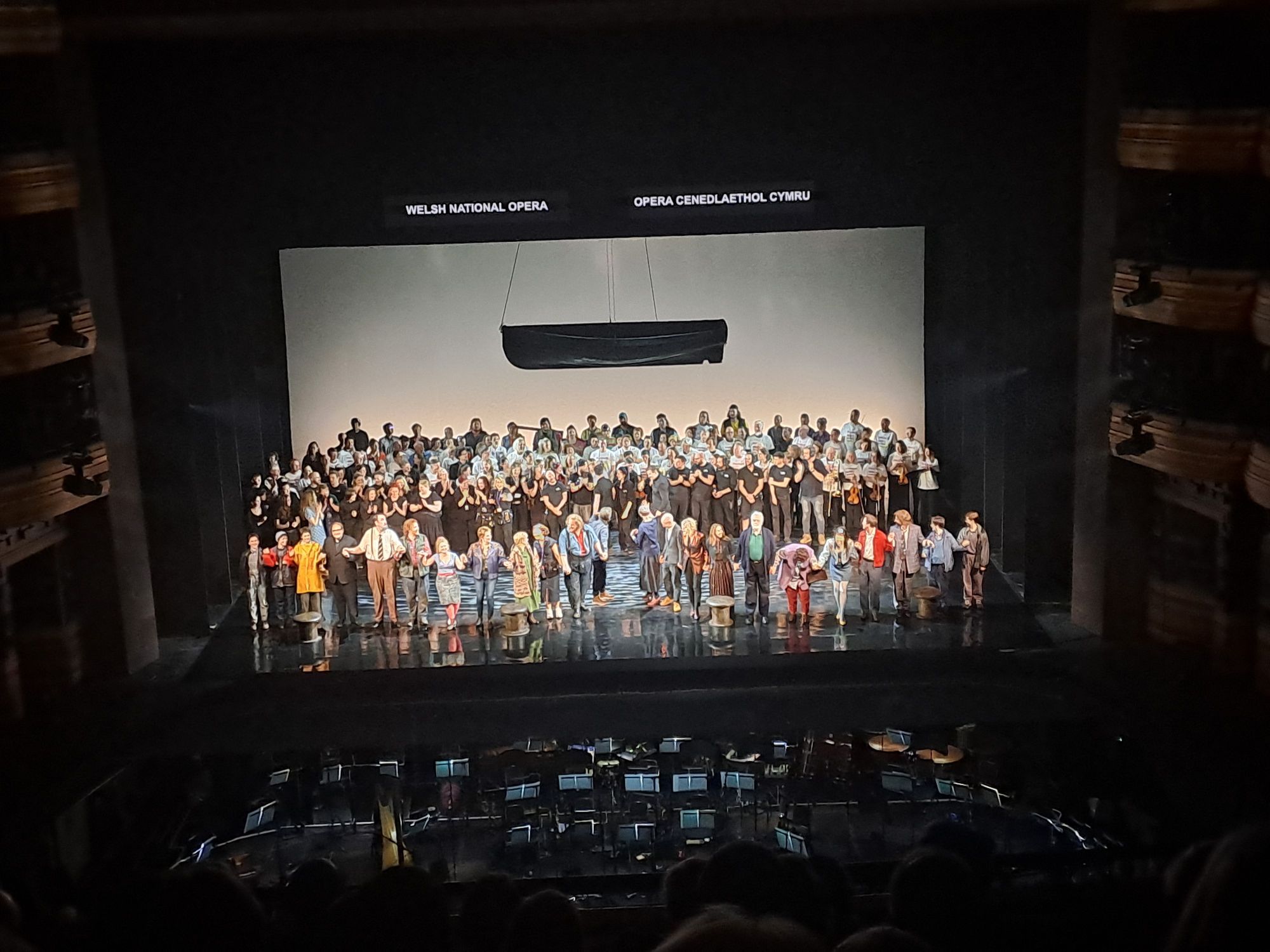
At the end of the opera, the cast, chorus and dancers were joined on stage not only by the entire orchestra (including instruments, where possible) and many members of the technical team. I’ve never seen that happen before! There were speeches by the co-directors of WNO expressing their determination to carry on through the financial turbulence that threatens to drown them. Welsh National Opera is a wonderful part of the artistic and cultural scene not only in Wales but across the rest of the UK and beyond. It just cannot be allowed to wither.

P.S. Last night’s performance was recorded for later broadcast on BBC Radio 3.

A Day in Cardiff

Posted in Art, Biographical, Cardiff, LGBTQ+, Opera, Politics with tags , , , , , on April 5, 2025 by telescoper

I got up at Stupid O’Clock this morning to catch an early morning plane from Dublin to Cardiff. It was very cold when I  arrived but it soon warmed up and turned into a lovely day.

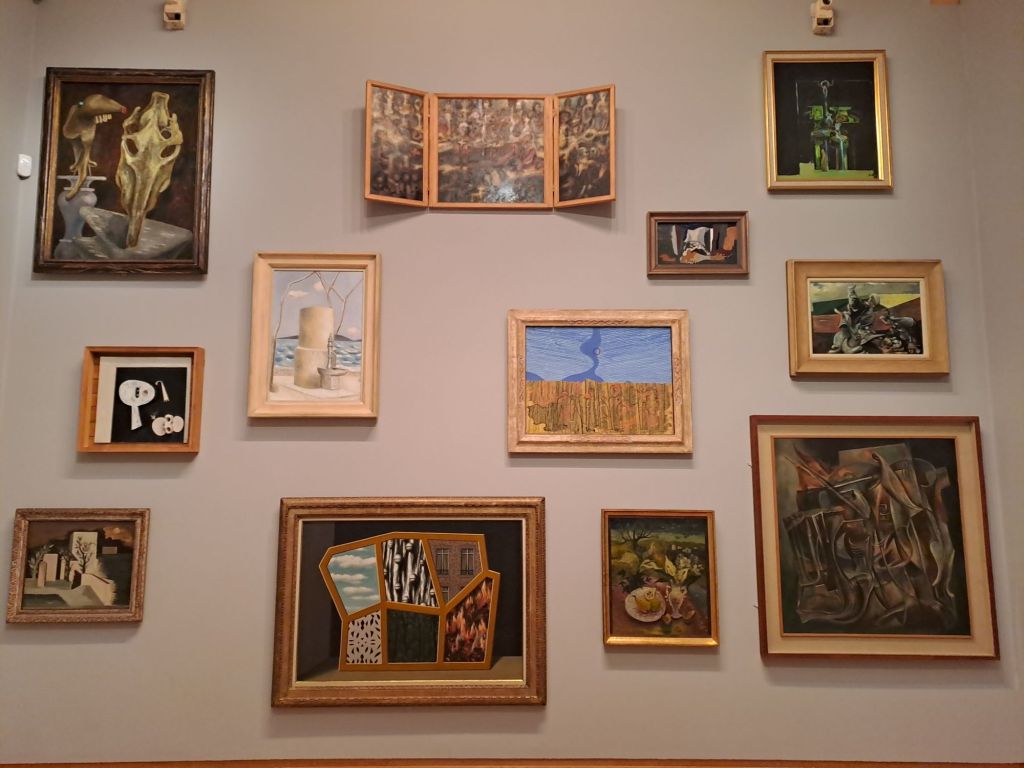
I had a nice breakfast at Bill’s when I arrived in the City then did tour of the National Museum of Wales where there is an exhibition about the Miners’ Strike of 1984/5, from which this display case caught my attention:

I also had time for a round of Name That Artist (scoring a miserable 3/12, for Sutherland, Ernst, and Magritte).

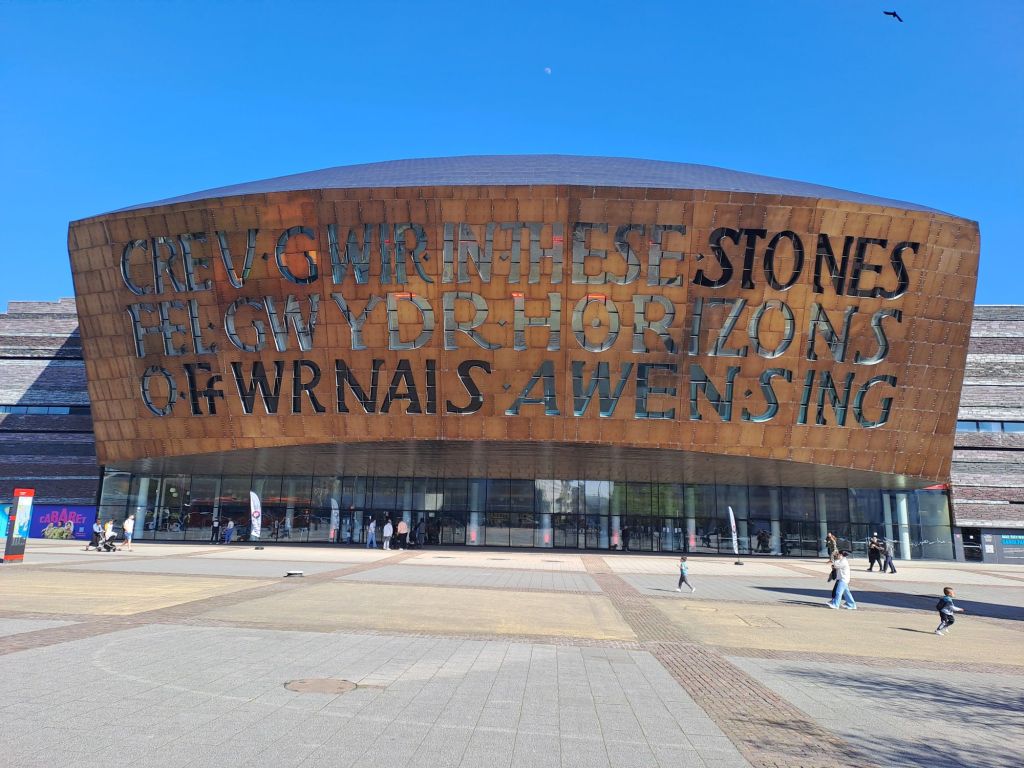
After that, I took a stroll around Bute Park before heading to my hotel in Cardiff Bay to check in and have a rest before the reason for my visit, an event which will take place here at 7pm:

I won’t be able to blog about that until I get back to Maynooth tomorrow afternoon.

Weekly Update from the Open Journal of Astrophysics – 05/04/2025

Posted in OJAp Papers, Open Access, The Universe and Stuff with tags , , , , , on April 5, 2025 by telescoper

It’s time once more for the regular Saturday morning update of papers published at the Open Journal of Astrophysics. Since the last update we have published one new paper. The number of articles in Volume 8 (2025) is now up to 33 and the total so far published by OJAp up to 268.

The paper concerned, published on 2nd April 2025, is “The molecular gas content throughout the low-z merger sequence” by Mark T. Sargent (ISSI, Bern), S. L. Ellison (U. Victoria, Canada), J. T. Mendel (ANU), A. Saintonge (UCL), D. Cs. Molnár & T. Schwandt (U. Sussex), J. M. Scudder (Oberlin College, USA) and G. Violino (U. Hertfordshire). It is published in the folder Astrophysics of Galaxies and it discusses the observed properties of molecular gas in post-merger galaxies and interacting pairs and the physical origin of these properties.

Here is the overlay:

You can read the officially accepted version of this paper on arXiv here.

That’s all for this week. I’ll do another update next Saturday.

The Market-Place – Walter de la Mare

Posted in Poetry with tags , , , on April 4, 2025 by telescoper
My mind is like a clamorous market-place.
All day in wind, rain, sun, its babel wells;
Voice answering to voice in tumult swells.
Chaffering and laughing, pushing for a place,
My thoughts haste on, gay, strange, poor, simple, base;
This one buys dust, and that a bauble sells:
But none to any scrutiny hints or tells
The haunting secrets hidden in each sad face.

The clamour quietens when the dark draws near;
Strange looms the earth in twilight of the West,
Lonely with one sweet star serene and clear,
Dwelling, when all this place is hushed to rest,
On vacant stall, gold, refuse, worst and best,
Abandoned utterly in haste and fear.

by Walter de la Mare (1873-1956)

Trump’s Tariff Tirade

Posted in Finance, mathematics, Politics with tags , , , , , , on April 3, 2025 by telescoper

I didn’t watch the speech tirade by “US President” Donald Trump* last night in which he unveiled his new tariff plan, but people have been talking about this all day so I couldn’t resist a quick comment. There’s a lot I don’t know about economics and trade policy but one thing I do know is that the trad-weighted average tariff on goods from the USA entering the EU is about 3%, not the 39% that Trump alleged. I did therefore wonder where he got this number and all his other “reciprocal tariffs” from. Fortunately a little digging around revealed the answer.

On the left you see part of the chart showing tariffs country-by-country and the second is an extract from the published methodology which would be hilarious were the consequences not so serious.

You will see that the second column on the chart is headed “Tariffs charged on the USA”, with 39% listed for the European Union. This number is calculated using the “formula” on the right which has absolutely nothing to do with tariffs charged. Moreover, the denominator contains the product εφ with the values ε=4 and φ=0.25 given in the text so εφ = 1. The expert mathematician who derived this formulae seems to have missed the fact that ε is not less than zero (first sentence) if it is equal to 4, but we’ll let that pass. In fact I can’t be bothered to point out the other errors because no matter how egregious they are, there is no chance of Trumpty Dumpty reversing his decisions anyway.

To sum up, the notional tariff in column 2 is just the difference between imports and exports (the country’s trade surplus) divided by imports. The numbers in the third column of the chart on the left are just half those in the second column (give or take rounding errors). There is also a minimum of 10%, which applies even to countries with which the USA has a trade surplus. China faces huge tariffs because it has a large trade surplus with the USA. The EU’s 20% tariff is nothing to do with the tariffs it charges but is due to the fact that it has a trade surplus with the USA; the UK has a lower tariff rate than the EU because it has a smaller trade surplus  with the USA. That’s it.

I heard a Trump-supporting numpty attempting to justify the calculation shown in the chart on the grounds that it is really an “unfairness index”, it apparently being unfair and worthy of punishment if a country sells more to the USA than the USA sells to it. Following this line of reasoning, I have decided that all shops are unfair because I always buy more from them than they buy from me.

P.S. I was thinking that in future retaliation I should boycott goods from the USA but this would be an empty gesture because I don’t really buy any anyway. Looking up top imports from the USA to Ireland I find, for example, Bourbon (which I never buy because it is undrinkable) and confectionery (which I don’t buy because I don’t have a sweet tooth). Then I found peanuts, which I do buy occasionally, and will not buy in future. However in the grand scheme of world trade, peanuts are small potatoes.

*I apologize for forgetting to mention that Donald Trump is a convicted felon.

Maynooth University Library Cat Update

Posted in Maynooth with tags , on April 2, 2025 by telescoper
Cat and shadow…

I’ve never thought before that a cat could be used as a sundial…

The Universe from Beginning to End

Posted in Maynooth, The Universe and Stuff with tags , , , on April 2, 2025 by telescoper

It’s not every day that you get the chance to attend a lecture by a Nobel Laureate, but 14th April 2025 will be such a day in Maynooth because the annual Dean’s Lecture for the Faculty of Science and Engineering at Maynooth University will be given by Professor Brian Schmidt who was one of the three winners of the 2011 Nobel Prize for Physics.

The description of his lecture is as follows:

Astronomers have pieced together the story of our Universe that begins more than 13 Billion years ago in a Big Bang. In the 2025 Dean’s Lecture, Nobel Prize Winner Prof Brian Schmidt will describe the journey that science has thus far taken to understand our Universe, describing what we know about the Cosmos and how we know it, as well as reflecting on some of the mysteries that remain. A chance to learn a bit about everything from Dark Energy to Black Holes, and an opportunity for the audience to ask questions at the end of the lecture.

The lecture is intended to be accessible to a wide audience and will be in person. It is free to attend but you need to register because space in the lecture venue is limited. To register and also find out more about the event please visit Eventbrite below:

I am delighted that Brian is taking time out of his busy schedule to visit us in Maynooth and am looking forward not only to his lecture but also for the chance for him to meet and talk to our students.

ResearchFish Again

Posted in Biographical, Science Politics with tags , , , , , , on April 1, 2025 by telescoper

One of the things I definitely don’t miss about working in the UK university system is the dreaded Researchfish. If you’ve never heard of this bit of software, it’s intended to collect data relating to the outputs of research grants funded by the various Research Councils. That’s not an unreasonable thing to want to do, of course, but the interface is – or at least was when I last used it several years ago – extremely clunky and user-unfriendly. That meant that, once a year, along with other academics with research grants (in my case from STFC) I had to waste hours uploading bibliometric and other data by hand. A sensible system would have harvested this automatically as it is mostly available online at various locations or allowed users simply to upload their own publication list as a file; most of us keep an up-to-date list of publications for various reasons (including vanity!) anyway. Institutions also keep track of all this stuff independently. All this duplication seemed utterly pointless.

I always wondered what happened to the information I uploaded every year, which seemed to disappear without trace into the bowels of RCUK. I assume it was used for something, but mere researchers were never told to what purpose. I guess it was used to assess the performance of researchers in some way.

When I left the UK in 2018 to work full-time in Ireland, I took great pleasure in ignoring the multiple emails demanding that I do yet another Researchfish upload. The automated reminders turned into individual emails threatening that I would never again be eligible for funding if I didn’t do it, to which I eventually replied that I wouldn’t be applying for UK research grants anymore anyway. So there. Eventually the emails stopped.

Then, about three years ago, ResearchFish went from being merely pointless to downright sinister as a scandal erupted about the company that operates it (called Infotech), involving the abuse of data and the bullying of academics. I wrote about this here. It then transpired that UKRI, the umbrella organization governing the UK’s research council had been actively conniving with Infotech to target critics. An inquiry was promised but I don’t know what became of that.

Anyway, all that was a while ago and I neither longer live nor work in the UK so why mention ResearchFish again, now?

The reason is something that shocked me when I found out about it a few days ago. Researchfish is now operated by commercial publishing house Elsevier.

Words fail. I can’t be the only person to see a gigantic conflict of interest. How can a government agency allow the assessment of its research outputs to be outsourced to a company that profits hugely by the publication of those outputs? There’s a phrase in British English which I think is in fairly common usage: marking your own homework. This relates to individuals or organizations who have been given the responsibility for regulating their own products. Is very apt here.

The acquisition of Researchfish isn’t the only example of Elsevier getting its talons stuck into academia life. Elsevier also “runs” the bibliometric service Scopus which it markets as a sort of quality indicator for academic articles. I put “runs” in inverted commas because Scopus is hopelessly inaccurate and unreliable. I can certainly speak from experience on that. Nevertheless, Elsevier has managed to dupe research managers – clearly not the brightest people in the world – into thinking that Scopus is a quality product. I suppose the more you pay for something the less inclined you are to doubt its worth, because if you do find you have paid worthless junk you look like an idiot.

A few days ago I posted a piece that include this excerpt from an article in Wired:

Every industry has certain problems universally acknowledged as broken: insurance in health care, licensing in music, standardized testing in education, tipping in the restaurant business. In academia, it’s publishing. Academic publishing is dominated by for-profit giants like Elsevier and Springer. Calling their practice a form of thuggery isn’t so much an insult as an economic observation. 

With the steady encroachment of the likes of Elsevier into research assessment, it is clear that as well as raking in huge profits, the thugs are now also assuming the role of the police. The academic publishing industry is a monstrous juggernaut that is doing untold damage to research and is set to do more. It has to stop.

Last Chance to apply for the Professorial Position in Observational Astrophysics or Cosmology at Maynooth University!

Posted in Maynooth, The Universe and Stuff with tags , , , , on March 31, 2025 by telescoper

A couple of months ago I announced here a vacancy for a Professor of Observational Astrophysics or Cosmology at Maynooth. The position is on the AAS Jobs Register here. The deadline is 31st March 2025 which is today so if you were thinking of applying then this is your last chance! Applications close at 23.30 Irish Time; the clocks went forward yesterday so it’s actually 00.30 tomorrow CEST so you still have time. The application portal is here.

The strategic case for this Chair revolves around broader developments in the area of astrophysics and cosmology at Maynooth. Currently there are two groups active in research in these areas, one in the former Department of Experimental Physics (which is largely focussed on astronomical instrumentation) and the other, in the former Department of Theoretical Physics, which is theoretical and computational. We want to promote closer collaboration between these research strands. The idea with the new position is that the holder will nucleate and lead a research programme in the area between these existing groups as well as getting involved in outreach and public engagement.

It is intended that the position to appeal not only to people undertaking observational programmes using ground-based facilities (e.g. those provided by ESO, which Ireland recently joined), or those exploiting data from space-based experiments, such as Euclid, as well as people working on multi-messenger astrophysics, gravitational waves, and so on.

P. S. For those of you reading this from outside Ireland the job is tenured and includes a defined benefit pension way better than the equivalent UK system.

The KiDS Legacy

Posted in The Universe and Stuff with tags , , , , , , , , on March 30, 2025 by telescoper

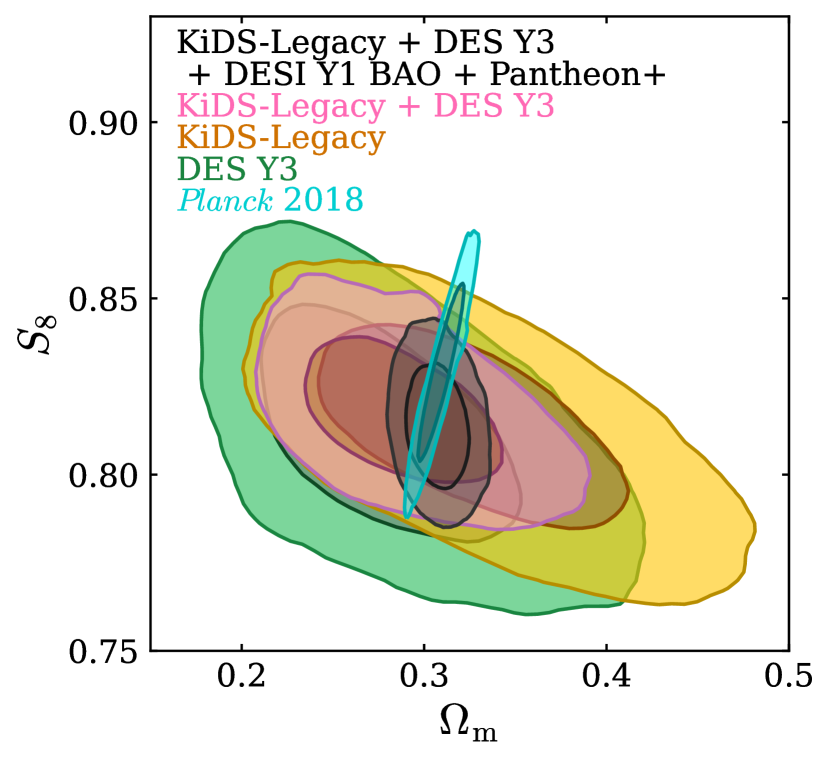
What with all the cosmological goings-on of the past couple of weeks – see here, here and here – I quite forgot to mention another important set of results. These are from the final data release Kilo-Degree Survey known as KiDS for short and represent a final analysis of the complete dataset. For those of you not in the know, KiDs is a weak lensing shear tomography survey and its core science drivers are to map the large scale matter distribution in the Universe and constrain the equation of state of Dark Energy. The results can be found in three papers on arXiv, which you can add to your reading list:

As far as I’m concerned, the main result to leap out from the cosmological analysis, which primarily constrains the clumpiness of matter in the universe, expressed by the density parameter Ωm and a fluctuation amplitude σ8 in the combined parameter “S8“, which is constrained almost independently from Ωm. The value obtained for this parameter by KiDS has previously been “in tension” with values from other experiments (notably Planck) ; see here for a discussion. The new results, however, seem consistent with the standard cosmological model. Here is a figure from the last paper in the above list that illustrates the point:

As is often the case, there’s also one of those nice Cosmology Talks videos that discusses this and other aspects of the KiDS Legacy results to which I refer you for more details!