Hard Decisions, Easy Targets

Posted in Science Politics, The Universe and Stuff with tags , , , , , , on January 25, 2011 by telescoper

Just back from a day trip to London – at the Institute of Physics to be precise – to wrap up the proceedings of this years protracted STFC Astronomy Grants Panel (AGP) business. The grant letters have already gone out, so no real decisions were made relating to the current round, but we did get the chance to look at a fairly detailed breakdown of the winners and losers. Perhaps more significantly we also discussed issues relating to the implementation of the brand new system which will be in place for 2011/12.

I’m not exactly sure at the moment how much of what we discussed is in the public domain, so I won’t write anything about the meeting here. Tomorrow there is a meeting of the RAS Astronomy Forum at which department representatives will also be briefed about these issues. I will, however, in due course, on as much information as I can through this blog in case there is anyone out there who doesn’t hear it via the Forum.

Not being able to blog about AGP business, I thought I’d comment briefly on a couple of recent things that sprang to mind on the train journey into London. Last night there was a programme in the BBC series Horizon called Science under Attack, presented by Nobel laureate Sir Paul Nurse. I didn’t watch all of it, but I was fortunate (?) enough to catch a segment featuring a chap called James Delingpole, whom I’d never heard of before, but who apparently writes for the Daily Torygraph.

My immediate reaction to his appearance on the small screen was to take an instant dislike to him. This is apparently not an uncommon response, judging by the review of the programme in today’s Guardian. I wouldn’t have bothered blogging about this at all had I wanted to indulge in an ad hominem attack on this person, but he backed up his “unfortunate manner” by saying some amazing things, such as

It’s not my job to sit down and read peer-reviewed papers, because I don’t have the time; I don’t have the expertise

Yet he feels qualified to spout off on the subject nevertheless. The subject, by the way, was climate change. I’m sure not even the most hardened climate skeptic would want Mr Delingpole on their side judging by his performance last night or, apparently, his track-record.

Anyway, this episode reminded me of another egregious example of uninformed drivel that appeared in last week’s Times Higher. This was a piece purporting to be about the limits of mathematical reasoning by another person who is quite new to me, Chris Ormell, who appears to have some academic credentials, if only in the field of philosophy.

Ormell’s piece includes a rant about cosmology which is on a par with Delingpole’s scribblings about climate change, in that he has absolutely no idea what he is talking about. Jon Butterworth and Sean Carroll have already had a go at pointing out the basic misunderstandings, so I won’t repeat the hatchet job here. If I had blogged about this at the weekend – which I might have done had my rodent visitor not intervened – I would have been considerably less polite than either of them. Ormell clearly hasn’t even read a wikipedia article on cosmology, never mind studied it to a level sufficiently deep to justify him commenting on it in a serious magazine.

I’m still amazed that such a pisspoor article could have made it through the Times Higher’s editorial procedures but more worrying still is the ract that Ormell is himself the editor of a journal, called Prospero, which is “a journal of new thinking of philosophy for education”. The last thing education needs is a journal edited by someone so sloppy that he can’t even be bothered to acquire a basic understanding of his subject matter.

What’s in common between these stories is, however, in my opinion, much more important than the inadequate scientific understanding of the personalities involved. Rubbishing the obviously idiotic, which is quite easy to do, may blind us to the fact that, behind all the errors, however badly expressed it may be, people like this may just have a point. Too often the scientific consensus is portrayed as fact when there are clearly big gaps missing in our understanding. Of course falsehoods should be corrected, but what science really needs to go forward is for bona fide scientists to be prepared to look at the technical arguments openly and responsibly and be candid about the unknowns and uncertainties. Big-name scientists should themselves be questioning the established paradigms and be actively exploring alternative hypotheses. That’s their job. Closing ranks and stamping on outsiders is what makes the public suspicious, not reasoned argument.

In both climatology and cosmology there are consensus views. Based on what knowledge I have, which is less in the former case than in the latter, both these views are reasonable inferences but not absolute truths. In neither case am I a denier, but in both cases I am a skeptic. Call me old-fashioned, but I think that’s what a scientist should be.


Share/Bookmark

Baby Columbo

Posted in Columbo with tags , on January 24, 2011 by telescoper

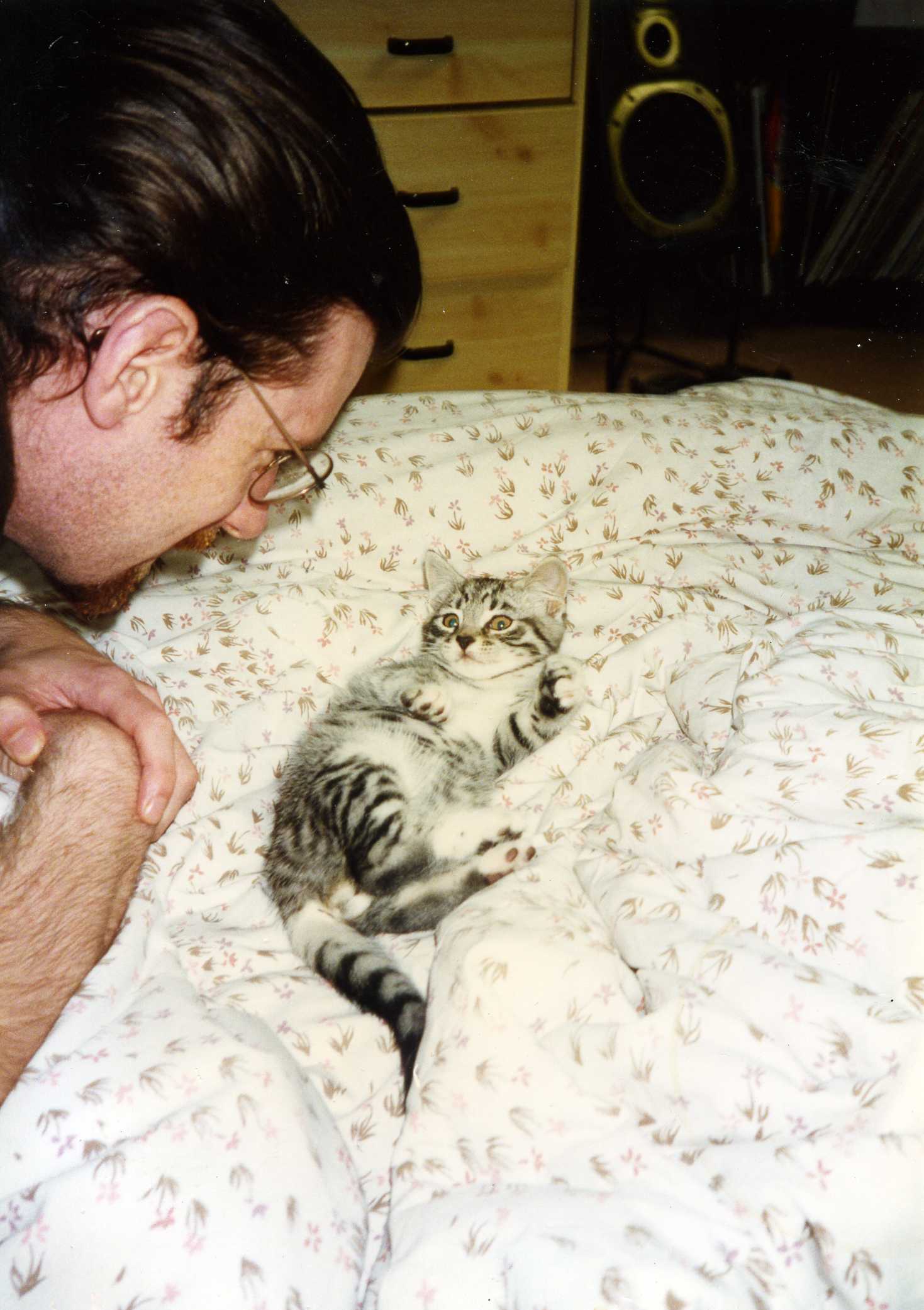
No time for a proper post today, so I thought I’d put up a gratuitously cute picture of my old moggy Columbo, taken when he was a youngster – about 16¾ years ago. Feel free to say “awwww…”. Oh, and the beardy weirdy in the picture is me, also in a younger incarnation.


Share/Bookmark

Astronomy Look-alikes, No. 44

Posted in Astronomy Lookalikes with tags , on January 23, 2011 by telescoper

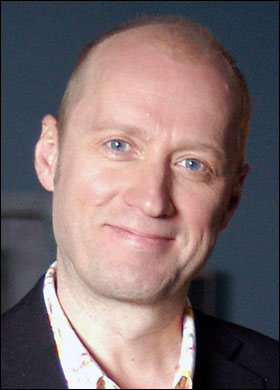
Now that the results of the STFC Astronomy Grants Panel recommendations have been sent out – to the joy of a few and disappointment of many – I thought I’d honour the Chair by making him the first person to receive a second look-alike. The first one is here.

This one was suggested by another member of the Astronomy Grants Panel, who shall remain nameless but who is called Mike Watson. It might seem a strange coincidence that both these look-alikes are comedians but, then again, perhaps not…

Adrian Edmondson

Andy Lawrence


Share/Bookmark

The Rat, a Poem

Posted in Poetry with tags , , on January 23, 2011 by telescoper

As often as he let himself be seen
We pitied him, or scorned him, or deplored
The inscrutable profusion of the Lord
Who shaped as one of us a thing so mean—
Who made him human when he might have been
A rat, and so been wholly in accord
With any other creature we abhorred
As always useless and not always clean.

Now he is hiding all alone somewhere,
And in a final hole not ready then;
For now he is among those over there
Who are not coming back to us again.
And we who do the fiction of our share
Say less of rats and rather more of men.

by Edward Arlington Robinson (1869-1935)


Share/Bookmark

The Day of the Rat

Posted in Biographical, Columbo with tags , , on January 22, 2011 by telescoper

The last two days have been a bit different from usual, owing to the arrival of an unexpected visitor in the Coles residence.

About 5am yesterday (Friday) I woke up suddenly to the sound of something moving downstairs. I thought it might be a burglar, so I switched all the lights on and rushed to the landing just in time to see a large rodent running along the hall on the ground floor. I followed it into the sitting room, but it had vanished somehow. Looking around I found a number of tell-tale holes in the skirting boards and floorboards through which the rat might gone to earth, including one hole which has been there since I moved in but which looked suddenly larger. I blocked them all up as best I could and, there being no further sign of my house guest, went back to bad.

Columbo didn’t seem to be in the slightest bit bothered by the intruder and, although I put him in the sitting room to act as sentry in case the critter appeared again, within a few minutes he was upstairs sleeping on my bed.

I couldn’t get back to sleep, as every little sound I heard made me think of the rat so in the end I got up, had breakfast and got ready to go to work. Thus it was that went into the department bright and early, put a full shift in, and then went along to the Poet’s Corner for a few drinks with the astronomy folks afterwards. This was even more pleasurable than usual because it was an opportunity to celebrate another succesful completion of a PhD; Well done Vanessa!

Anyway, I got home quite late and was pretty tired so went to bed hoping that I wouldn’t woken up in the early hours again by the rat. Unfortunately, about 6.30 I was disturbed by the sound of frantic scuttling and gnawing downstairs. This time the rat wasn’t on the surface, but moving about under the floorboards, trying to find an alternative way up. Clearly I’d managed to block the normal route. I made sure everything was secure and tried to get some more sleep, which didn’t work, and eventually when it seemed a decent hour I called a pest control operative who promised to come about mid-day.

I busied myself with some domestic chores until he arrived, while periodically checking on the sitting room and whether the rat could still be heard. It could. However, about 11.30, the noise grew louder and finally the creature surfaced again. It had made a completely new hole in only a few hours. Rats must have some gnashers on them. I chased it with a sweeping brush and it holed up under the television. There then followed a standoff, only interrupted by the arrival of the rat catcher about ten minutes later.

The guy went for a net – although there isn’t much room to wield such a thing in my house – and we devised a cunning plan to trap it. The plan failed as the rat was much quicker than either of us and its daring escape bid made full use of the element of surprise as it charged straight at us.

The rat vanished again under the floorboards, so we had to settle for plan B which was to lay traps and poison anywhere it might get to. Various forms of rodenticide were deployed, including difenacoum and brodificoum. The traps are baited with a mixture of peanut butter and chocolate, both of which I hate, but which apparently rats adore. With that he gave me the bill and left.

Columbo slept through the whole adventure, but came downstairs to say goodbye to the rat man.

There’s been no more noise from under the floor, but I’m pretty sure the rat is trapped. If it eats any of the poison then it will die there, slowly, and the only way I’ll know about it is when its rotting corpse starts to reek. So I have that to look forward to, unless it hurls itself onto a trap and dies an instant death.

The remaining mystery is how the critter got into the house. It clearly wasn’t through a direct route into the front room, otherwise he could have got out the same way and wouldn’t be trapped. Columbo once caught a rat in the garden, but it wasn’t dead when he brought it into the house. The rat catcher suggested he might have done the same thing with this one, and it managed to escape and roam free. Perhaps guilt is the reason Columbo kept such a low profile through all this?

I’m still kicking myself for not acting quicker when it broke cover. If only I’d had a shovel like when I was little…

That’s enough about the rat. Time to get cracking with my dinner. Followed perhaps by a biscuit.


Share/Bookmark

The Pilgrims’ Chorus

Posted in Jazz, Opera with tags , , , on January 21, 2011 by telescoper

So a long and difficult week ends, with quite a few beers in the Poet’s Corner and me about to collapse into bed. I think this is a good time to wheel out something you hopefully find quite amusing, i.e. a Harlem Stride piano version, by Don Lambert, of the Pilgrims’ Chorus from the Opera Tannhauser by Richard Wagner. I think I can safely say that if Wagner was alive today he’d be turning in his grave to hear such a frontal assault on his music, but I think it’s a blast…

The Galaxy

Posted in Poetry with tags , on January 20, 2011 by telescoper

How’s this for a definition of galaxy?

Torrent of light and river of the air,
Along whose bed the glimmering stars are seen
Like gold and silver sands in some ravine
Where mountain streams have left their channels bare!
The Spaniard sees in thee the pathway, where
His patron saint descended in the sheen
Of his celestial armor, on serene
And quiet nights, when all the heavens were fair.
Not this I see, nor yet the ancient fable
Of Phaeton’s wild course, that scorched the skies
Where’er the hoofs of his hot coursers trod;
But the white drift of worlds o’er chasms of sable,
The star-dust that is whirled aloft and flies
From the invisible chariot-wheels of God

by Henry Wadsworth Longfellow (1807-1882)


Share/Bookmark

NAM 2011

Posted in The Universe and Stuff with tags , , , , on January 20, 2011 by telescoper

Just a quick post to plug this year’s forthcoming Royal Astronomical Society National Astronomy Meeting, incorporating the MIST and UKSP meetings, which will be taking place at the splendid Venue Cymru conference centre, Llandudno, North Wales, from Sunday 17 April to Thursday 21 April.

Registration is now open, and you can now also submit abstracts of either oral or poster presentations to be considered for inclusion in the various sessions described in the science programme.

I’ve been asked to organise a small part of this meeting, namely a session on Recent Developments in Astro-statistics, so if you’d like to give a talk in that session please register and upload an abstract to the website. You can’t do the latter until you have done the former. Astro-statistics will be interpreted widely, so I hope to have a varied programme including as many applications of statistics to astronomy and astrophysics as I can get!

NAM is a particularly good opportunity for younger researchers – PhD students and postdocs – to present their work to a big audience so I particularly encourage such persons to submit abstracts. Would more senior readers please pass this message on to anyone they think might want to give a talk?

If you have any questions please feel free to use the comments box (or contact me privately).


Share/Bookmark

What is a Galaxy?

Posted in The Universe and Stuff with tags , , , , , , on January 19, 2011 by telescoper

An interesting little paper by Duncan Forbes and  Pavel Kroupa appeared today on the arXiv today. It asks what you would have thought was the rather basic question “What is a Galaxy?”. Like many basic questions, however, it turns out to be much  more complicated than you imagined.

Ask most people what they think a galaxy is and they’ll think of something like Andromeda (or M31), shown on the left, with its lovely spiral arms. But galaxies exist in many different types, which have quite different morphologies, dynamical properties and stellar populations.

The paper by Forbes and Kroupa lists examples of definitions from technical articles and elsewhere. The Oxford English Dictionary, for instance, gives

Any of the numerous large groups of stars and other
matter that exist in space as independent systems.

I suppose that is OK, but isn’t very  precise. How do you define “independent”, for example? Two galaxies orbiting in a binary system aren’t independent, but you would still want to count them as two galaxies rather than one. A group or cluster of galaxies is likewise not a single large galaxy, at least not by any useful definition. At the other extreme, what about a cluster of stars or even a binary star system? Why aren’t they regarded as gaaxies too? They are (or can be) gravitationally bound..

Clearly we have a particular size in mind, but even if we restrict ourselves to “galaxy-sized” objects we still have problems. Why is a globular cluster not a small galaxy while a dwarf galaxy is?

To be perfectly honest, I don’t really care very much about nomenclature. A rose by any other name would smell as sweet, and a galaxy by any other name would be just as luminous. What really counts are the physical properties of the various astronomical systems we find because these are what have to be explained by astrophysicists.

Perhaps it would be better to adopt Judge Potter Stewart‘s approach. Asked to rule on an obscenity case, he wrote that hard-core pornography was difficult to define, but ” I know it when I see it”….

As a cosmologist I tend to think that there’s only one system that really counts – the Universe, and galaxies are just bits of the Universe where stars seemed to have formed and organised themselves into interesting shapes. Galaxies may be photogenic, nice showy things for impressing people, but they aren’t really in themselves all that important in the cosmic scheme of things. They’re just the Big Bang’s bits of bling.

I’m not saying that galaxies aren’t extremely useful for telling us about the Universe; they clearly are. They shed light (literally) on a great many things that we wouldn’t otherwise have any clue about. Without them we couldn’t even have begun to do cosmology, and they still provide some of the most important evidence in the ongoing investigation of the the nature of the Universe. However, I think what goes on in between the shiny bits is actually much more interesting from the point of view of fundamental physics than the shiny things themselves.

Anyway, I’m rambling again and I can hear the observational astronomers swearing at me through their screens, so let me move on to the fun bit of the paper I was discussing, which is that the authors list a number of possible definitions of a galaxy and invite readers to vote.

For your information, the options (discussed in more detail in the paper) for the minimum criteria to define a galaxy are:

  • The relaxation time is greater than the age of the Universe
  • The half-light radius is greater than 10 parsecs
  • The presence of complex stellar systems
  • The presence of dark matter
  • Hosts a satellite stellar system

I won’t comment on the grammatical inconsistency of these statements. Or perhaps I just did. I’m not sure these would have been my choices either, but there you are. There’s an option to add your own criteria anyway.

The poll can be found here.

Get voting!

UPDATE: In view of the reaction some of my comments have generated from galactic astronomers I’ve decided to add a poll of my own, so that readers of this blog can express their opinions in a completely fair and unbiased way:


Share/Bookmark

Disturbing Admissions

Posted in Education, Politics with tags , , , on January 18, 2011 by telescoper

In a rare moment of wakefulness during yesterday’s Board of Studies, I listened to a report from our departmental admissions tutor about the state of play with applications for entry onto our physics courses next year. It was good news – applications are up more than 50% on last year – but this was tempered by the fact that our quota has gone down slightly, owing to the presence of a cap on student numbers. I’m not sure whether the increase, perhaps caused by students trying to get into university before the fee  goes up to £9K, is echoed around the country, but it seems likely that competition for places will be intense this year, with the almost certain result that many students  will be disappointed at being unable to get into their first choice university.

Coincidentally, I noticed a story on the BBC at the weekend suggesting that the whole timetable of university admissions might change. What the government is planning remains to be seen, but there’s no doubting the system is far from perfect and if we had the opportunity to design a process for university admissions from scratch, there is no way on Earth we would end up with a system like the current one.

As things stand, students apply for university places through UCAS before they have their final A-level results (which don’t come out until July). Most applications are in by January of the year of intended admission, in fact. The business of selecting candidates and making offers therefore makes use of “predicted grades” as supplied by teachers of the applicant.

According to the BBC news

..under the current system those from poorer backgrounds typically have their grades under-predicted.

I simply don’t know whether there is any information to back this up – in my (limited) experience most teachers systematically overestimate the grades of their pupils – but if it is the case then it would be a good reason for changing the timetable so that potential students could apply once they have their results in the bag. They can do that now, of course, but only if they take a gap-year, applying for admission the year after they have their A-levels.

But the inaccuracy of predicted A-level grades is not the only absurdity in the current system. Universities such as Cardiff, where I work, have to engage in enormous amounts of guesswork during the admissions process. Suppose a department has a quota of 100, defining the target number students to take in. They might reasonably get a minimum of 500 applications for these 100 places, depending on the popularity of university and course.

Each student is allowed to apply to 5 different institutions. If a decision is made to make an offer of a place, it would normally be conditional on particular A-level grades (e.g. AAB). At the end of the process the student is expected to pick a first choice (CF) and an insurance choice (CI) out of the offers they receive. They will be expected to go to their first choice if they get the required grades, to the insurance choice if they don’t make it into the first choice but get grades sufficient for the reserve. If they don’t make either grade they have to go into the clearing system and take pot luck among those universities that have places free after all the CFs and CIs have been settled.

Each university department has to decide how many offers to make. This will always be larger than the number of places, because not all applicants will make an offer their CF. We have to honour all offers made, but there are severe penalties if we under or over recruit. How many offers to make then? What fraction of students with an offer will put us first? What fraction of them will actually get the required grade?

The answers to these questions are not at all obvious, so the whole system runs on huge levels of uncertainty. I’m amazed that each year we manage to get anywhere close to the correct number, and we usually get very close indeed by the end.

It’s a very skilled job, being an admissions tutor, but there’s no question it would all be fairer on both applicants and departments to remove most of the guesswork.

But there is the rub. There are only two ways I can see of changing the timetable to allow what the government seems to want to do:

  1. Have the final A-level examinations earlier
  2. Start the university academic year later

The unavoidable consequence of the first option would be the removal of large quantities of material from the A-level syllabus so the exams could be held several months earlier, which would be a disaster in terms of preparing students for university.

The second option would mean starting the academic year in, say, January instead of October. This would in my opinion be preferable to 1, but would still be difficult because it would interfere with all the other things a university does as well as teaching, especially research.  The summer recess (July-September), wherein  much research is currently done, could be changed to an autumn one (October-December) but there would be a great deal of resistance, especially from the older establishments; I can’t see Oxbridge being willing to abandon its definitions of teaching term! And what would the students do between July and January?

The apply-after-A-level idea has been floated before, about a decade ago, but it sank without trace. I wonder if it will do any better this time around?


Share/Bookmark