Flying Visit(s)

Posted in Biographical, Education, The Universe and Stuff with tags , , , , , , , on June 2, 2024 by telescoper

So here I am, not in Barcelona. On Thursday night I flew to the fine city of Newcastle upon Tyne to act as external examiner for a PhD candidate. Since I knew I would be arriving quite late I stayed in a hotel near Newcastle Airport. It was just as well I did so because, it being Ryanair, I arrived even later than expected. On Friday morning I took the Metro from the Airport to Haymarket and spent the morning in the School of Mathematics, Statistics and Physics at Newcastle University ahead of the viva voce examination.
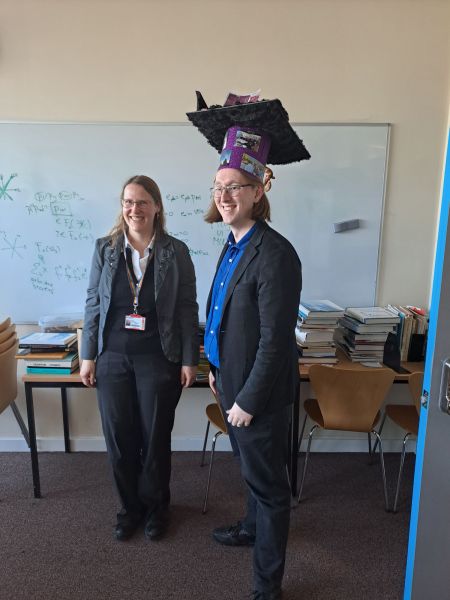
The PhD candidate was Alex Gough (pictured right, after the examination, with supervisor Cora Uhlemann). Cora being German we were treated to the tradition of successful PhD candidates having to wear a elaborate hat, after the examination (fortunately not during it). Some champagne was consumed, followed by dinner at a nice Indian restaurant on Clayton Street.

For those of you not familiar with how the PhD system works in the UK, it involves doing research into a particular topic and then writing up what you’ve done in a thesis. The thesis is a substantial piece of work, often in the region of 100,000 words (200 pages or so), which is then assessed by two examiners (one internal to the university at which the research was done, and one external). They read copies of the thesis and then the candidate has to defend it in an oral examination, which was what happened on Friday, after which they make a recommendation to the university about whether the degree should be awarded.

There aren’t many rules for how a viva voce examination should be conducted or how long it should last, but the can be as short as, say, 2 hours and can be as long as 5 hours or more. The examiners usually ask a mixture of questions, some about the details of the work presented and some about the general background. The unpredictable content of a viva voce examination makes it very difficult to prepare for, and it can be difficult and stressful for the candidate (as well as just tiring, as it can drag on for a long time). However, call me old-fashioned but I think if you’re going to get to call youself Doctor of Philosophy you should expect to have to work for it. Some might disagree.

Obviously I can’t give details of what went on in the examination except that it was quite long primarily because the thesis was very interesting and gave us lots to discuss. At the end internal examiner Danielle Leonard and I agreed to recommend the award of a PhD. In Newcastle as in other UK universities, the examiners simply make a recommendation to a higher authority (e.g. Board of Graduate Studies) to formally award the degree, but they almost always endorse the recommendation. I’ve never been sure exactly when a successful candidate is allowed to call themselves “Doctor”, actually, but congratulations to Dr Gough!

Anyway, the celebratory dinner ended just after Women’s International football match between England and France (which France won) had finished at St James’ Park and the Metro was consequently crammed full, but I got back to the hotel at a reasonable hour. Thank you to everyone in the group, especially Cora and Ian Moss, for being so friendly and making me feel so welcome during this brief visit.

Tomorrow I shall be heading to the part of not-Barcelona known as Oxford, where I believe there is a University of some sort, to give a lecture about which I’ll post more tomorrow.
R.I.P. Jasper Wall

Posted in R.I.P., The Universe and Stuff with tags , , , , on June 1, 2024 by telescoper

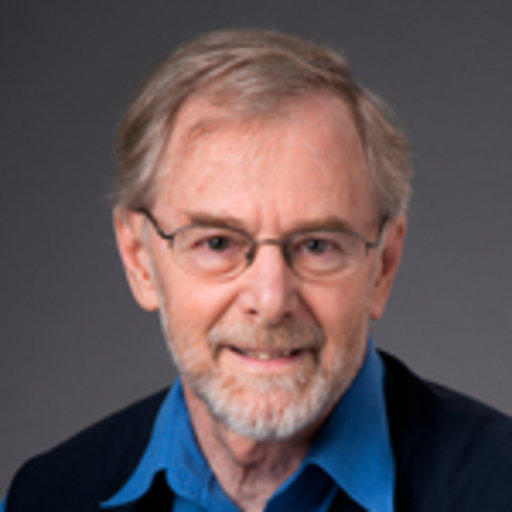
I have been asked to use the medium of this blog to pass on the sad news of the passing of Jasper Wall (left) who died on 28th March at White Rock, British Columbia, Canada.

Jasper Wall (who was Canadian by birth) began his career in Radio Astronomy in Toronto with Alan Yen. This included building a 320-MHz receiver, and carrying out absolute background measurements using a pyramidal horn. He subsequently chose Australia to continue his research, working on a receiver for Parkes Radio Telescope at CSIRO where he and John Bolton began a sky survey at hitherto unprecedented high frequency of 2.7 GHz. Wall’s survey discovered the extensive ‘flat-spectrum’ quasar population, the key to the relativistic beaming model of radio sources. His research at Parkes lasted over eight years and the statistical results of this work strongly favoured a “Big Bang” universe rather than the “Steady State” preferred by John Bolton, Fred Hoyle and Tommy Gold.

Wall was also part of the team which in 1969 brought the Apollo 11 moon landing via the Parkes Radio Telescope to an estimated 650 million TV viewers world wide. In 1974-1978 he was a member of Martin Ryle’s group at the MRAO Cambridge UK, continuing his research in active galaxy systems at both radio and optical wavelengths, plus submm and X-ray observations. He taught statistics to astronomy students at Cambridge, leading to his 2003 book with co-author Charles Jenkins, Practical Statistics for Astronomers.

Later on in his career, he became more involved in science administration. Joining the Royal Greenwich Observatory in 1979 as Head of Astrophysics and Astrometry Division, he continued research in optical and radio astronomy. In 1986 he became Director of the Isaac Newton Group of Telescopes on La Palma for four years, and then Director of the Royal Greenwich Observatory from 1995 until its closure in 1998. He was a Professor at Oxford University from 1998 to 2002, after which he retired, returned to Canada and took up an emeritus position at the University of British Columbia, where he continued to teach and supervise students.

Sub-Stellar Objects in the Euclid Early Release Observations

Posted in Euclid, The Universe and Stuff with tags , , , on May 31, 2024 by telescoper

I have a busy day in front of me here in Not-Barcelona so I thought I’d do a quick post sharing a video about the Euclid Early Release Observations (EROs) that came out last week. The press materials accompanying the release of the EROs and the science paper relating to this work, mention “freely floating planets”, but that doesn’t make sense in terms of the modern definition of a planet so here they are described as sub-stellar objects. The paper describing this work can be found on the arXiv here.

Is machine learning good or bad for the natural sciences?

Posted in The Universe and Stuff with tags , , , , , , , on May 30, 2024 by telescoper

Before I head off on a trip to various parts of not-Barcelona, I thought I’d share a somewhat provocative paper by David Hogg and Soledad Villar. In my capacity as journal editor over the past few years I’ve noticed that there has been a phenomenal increase in astrophysics papers discussing applications of various forms of Machine Leaning (ML). This paper looks into issues around the use of ML not just in astrophysics but elsewhere in the natural sciences.

The abstract reads:

Machine learning (ML) methods are having a huge impact across all of the sciences. However, ML has a strong ontology – in which only the data exist – and a strong epistemology – in which a model is considered good if it performs well on held-out training data. These philosophies are in strong conflict with both standard practices and key philosophies in the natural sciences. Here, we identify some locations for ML in the natural sciences at which the ontology and epistemology are valuable. For example, when an expressive machine learning model is used in a causal inference to represent the effects of confounders, such as foregrounds, backgrounds, or instrument calibration parameters, the model capacity and loose philosophy of ML can make the results more trustworthy. We also show that there are contexts in which the introduction of ML introduces strong, unwanted statistical biases. For one, when ML models are used to emulate physical (or first-principles) simulations, they introduce strong confirmation biases. For another, when expressive regressions are used to label datasets, those labels cannot be used in downstream joint or ensemble analyses without taking on uncontrolled biases. The question in the title is being asked of all of the natural sciences; that is, we are calling on the scientific communities to take a step back and consider the role and value of ML in their fields; the (partial) answers we give here come from the particular perspective of physics

arXiv:2405.18095

P.S. The answer to the question posed in the title is probably “yes”.

On foot of an Irish idiom

Posted in Irish Language, Science Politics with tags , on May 29, 2024 by telescoper

I noticed the following phrasing in the media in connection with the departure of Philip Nolan from his position at Science Foundation Ireland, e.g.

On foot of the investigation, the board of SFI wrote to the five senior staff members with the findings.

Irish Independent, 29th May 2024

The use of the idiomatic phrase “on foot of” (meaning “as a result of” or “following”, etc, as distinct from “on foot”, meaning “by walking”) seems quite commonplace in Hiberno-English, even in judicial proceedings, but I’ve never encountered it at all outside Ireland. This gives me an excuse to direct your attention to this post from elsewhere about this very matter from which I stole the title of this short post. I suspect the phrase in question may be formed by direct translation from a construction in the Irish language, which would explain why it isn’t used outside Ireland, but I’m happy to be corrected if wrong…

Exit Nolan

Posted in Covid-19, Harassment Bullying etc, Maynooth, Politics, Science Politics with tags , , , , on May 28, 2024 by telescoper
Simon Harris and Philip Nolan at the launch of Research Ireland

I just saw the news that Prof. Philip Nolan has left his post as Director General of Science Foundation Ireland (SFI) after allegations of misconduct (including bullying). Prof. Nolan was the previous President of Maynooth University, a post he left at the end of September 2021; for 18 months while still President he was also chair of the the Epidemiological Modelling as part of National Public Health Emergency Team dealing with the Covid-19 pandemic. He moved to SFI in January 2022 when Simon Harris, who is now Taoiseach, was Minister for Further and Higher Education, Research, Innovation and Science. Prof. Nolan was due to take charge of a new entity (Taighde Éireann– Research Ireland) formed by the merger of SFI with the Irish Research Council when the legislation required to create it it passes through the Oireachtas.

It seems there were no fewer than five serious complaints about Prof. Nolan’s conduct made under protected disclosure legislation, and an investigation found that he had displayed “inappropriate behaviour” towards the staff concerned, which was at the “upper level” in respect of two senior staff.

As an outsider I have no idea what has been going on at SFI, so have no dirt to dish, but it must have been rather serious for Prof. Nolan to have been forced out so quickly. I suppose it is reassuring in a way that SFI – unlike many organizations – takes bullying allegations seriously, but it is not at all good for the science ecosystem in Ireland for its main funding agency to be rocked by a scandal of these dimensions. I hope whoever takes over can steady the ship. It’s not an auspicious situation for the embryonic Research Ireland either. The first question that needs to be answered is whether Prof. Nolan will lead it despite being removed from SFI and, if not, who will?

Research Inventy Journal

Posted in Open Access with tags , on May 28, 2024 by telescoper

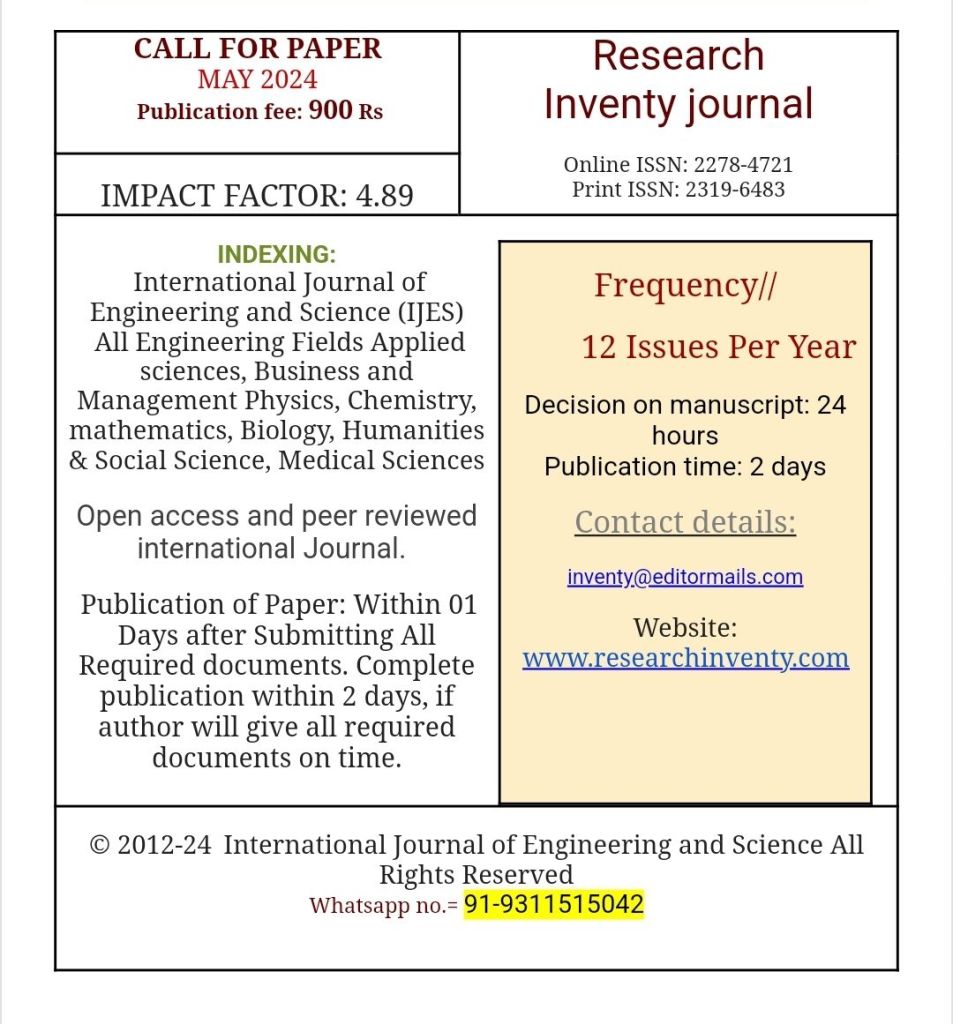
It is great to see the number of open access scientific journals increasing. Just yesterday I was contacted by another one that was previously unknown to me. The style of the advertisement leaves no doubt about the quality of this publication nor of the papers therein; from submission to publication within 24 hours, and all for 900 Rupees (about $10)! Amazing! There’s no question that this journal fills a much needed gap.

An analysis of the effects of sharing research data, code, and preprints on citations

Posted in OJAp Papers, Open Access with tags , , , , , on May 27, 2024 by telescoper

Whenever researchers ask me why I am an advocate of open science the response that first occurs to me is somewhat altruistic: sharing results and data is good for the whole community, as it enables the proper progress of research through independent scrutiny. There is however a selfish reason for open science, demonstrates rather well by a recent preprint on arXiv. The abstract is here:

Calls to make scientific research more open have gained traction with a range of societal stakeholders. Open Science practices include but are not limited to the early sharing of results via preprints and openly sharing outputs such as data and code to make research more reproducible and extensible. Existing evidence shows that adopting Open Science practices has effects in several domains. In this study, we investigate whether adopting one or more Open Science practices leads to significantly higher citations for an associated publication, which is one form of academic impact. We use a novel dataset known as Open Science Indicators, produced by PLOS and DataSeer, which includes all PLOS publications from 2018 to 2023 as well as a comparison group sampled from the PMC Open Access Subset. In total, we analyze circa 122’000 publications. We calculate publication and author-level citation indicators and use a broad set of control variables to isolate the effect of Open Science Indicators on received citations. We show that Open Science practices are adopted to different degrees across scientific disciplines. We find that the early release of a publication as a preprint correlates with a significant positive citation advantage of about 20.2% on average. We also find that sharing data in an online repository correlates with a smaller yet still positive citation advantage of 4.3% on average. However, we do not find a significant citation advantage for sharing code. Further research is needed on additional or alternative measures of impact beyond citations. Our results are likely to be of interest to researchers, as well as publishers, research funders, and policymakers.

Colavizza et al., arXiv:2404.16171

This analysis isn’t based on astrophysics, but I think the relatively high citation rates of papers in the Open Journal of Astrophysics are at least in part due to the fact that virtually all our papers are all available as preprints arXiv prior to publication. Citations aren’t everything, of course, but the positive effect of preprinting is an important factor in communicating the science you are doing.

General Science at Maynooth

Posted in Education, Maynooth with tags , , , , , , , on May 27, 2024 by telescoper

Following on – sort of – from yesterday’s post – here is a little promotional video about the ‘Omnibus’ Bachelor of Science undergraduate course (codename MH201). I have blogged about this course before (e.g. here) but this gives me an opportunity to repeat the salient points.

Currently, most students doing Science subjects here in Maynooth enter on the General Science programme a four-year Omnibus BSc course that involves doing four subjects in the first year, but becoming increasingly specialized thereafter. That’s not unlike the Natural Sciences course I did at Cambridge, except that students at Maynooth can do both Mathematical Physics and Experimental Physics in the first year as separate choices. I’d recommend anyone who wants to do Physics in the long run to do both of these, as they do complement each other. Other possibilities include Chemistry, Computer Science, Biology, etc.

In Year 1 students do four subjects (one of which has to be Mathematics). That is narrowed down to three in Year 2 and two in Year 3. In their final year, students can stick with two subjects for a Joint Honours (Double Major) degree, or specialise in one, for Single Honours.

I like this programme very much because it does not force the students to choose a specialism before they have had a taste of the subject, and that it is flexible enough to accommodate Joint Honours qualifications in, e.g., Theoretical Physics and Mathematics. It also allows us to enrol students onto Physics degrees who have not done Physics or Applied Mathematics as part of the Leaving Certificate.

Anyway, this video features Oisín Davey, who took Mathematical Physics, Experimental Physics, Chemistry and Mathematics in his first year. As a matter of fact I taught him in Year 1 (Mechanics & Special Relativity) and Year 2 (Vector Calculus and Fourier Series) but, despite that, as he explains, he has decided to persist with Mathematical Physics. He will be in the final year next academic year, after he returns from his summer in CERN, and I’ll be back from sabbatical.

Something in the Air..

Posted in Barcelona, Biographical with tags , , , on May 26, 2024 by telescoper

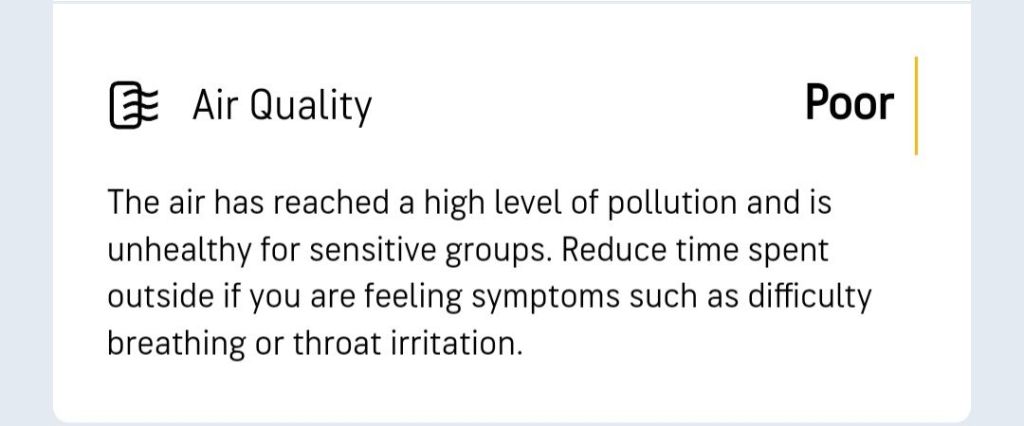
It’s been a warm and rather humid weekend in Barcelona. Yesterday was particularly stifling, with the heat and lack of breeze making things rather uncomfortable. The Air Quality indicator  reached “Poor” largely due to high levels of NO2, no doubt from vehicle exhaust fumes. It surprises me that so many people sit out at the pavement tables outside  restaurants having meals when it’s hot and the air is thick with nasty stuff. Al Fresco is supposed to mean “in the fresh air”! I much prefer to dine indoors, unless it’s very late at night.

Today was a little better except that there was resurfacing work going on  outside my flat on RambladeCatalunya. I knew it was coming, as they’ve been doing other nearby roads over the past few weekends. It was a little noisy, even on the 6th floor, but that didn’t bother me as much as the tar fumes!

Anyway, all this has made me decide not to attempt to extend my stay here beyond my current lease, which expires at the end of June. I’ll take the last two months of my sabbatical somewhere a bit cooler!