Archive for Andrew Jaffe

Remarks after Dinner

Posted in Biographical with tags , on July 1, 2026 by telescoper

As seems to be the case quite often these days on such occasions, I was asked to deliver “some remarks” after the conference dinner this evening at 170 Queen’s Gate. Over the years I’ve come to realize that the best way to approach this sort of request is to keep it short, tell a few jokes, and be appropriately disrespectful. The bit about keeping it short is especially relevant when there are people in the audience who are not in the first flush of youth and who may need to answer a call of nature soon…

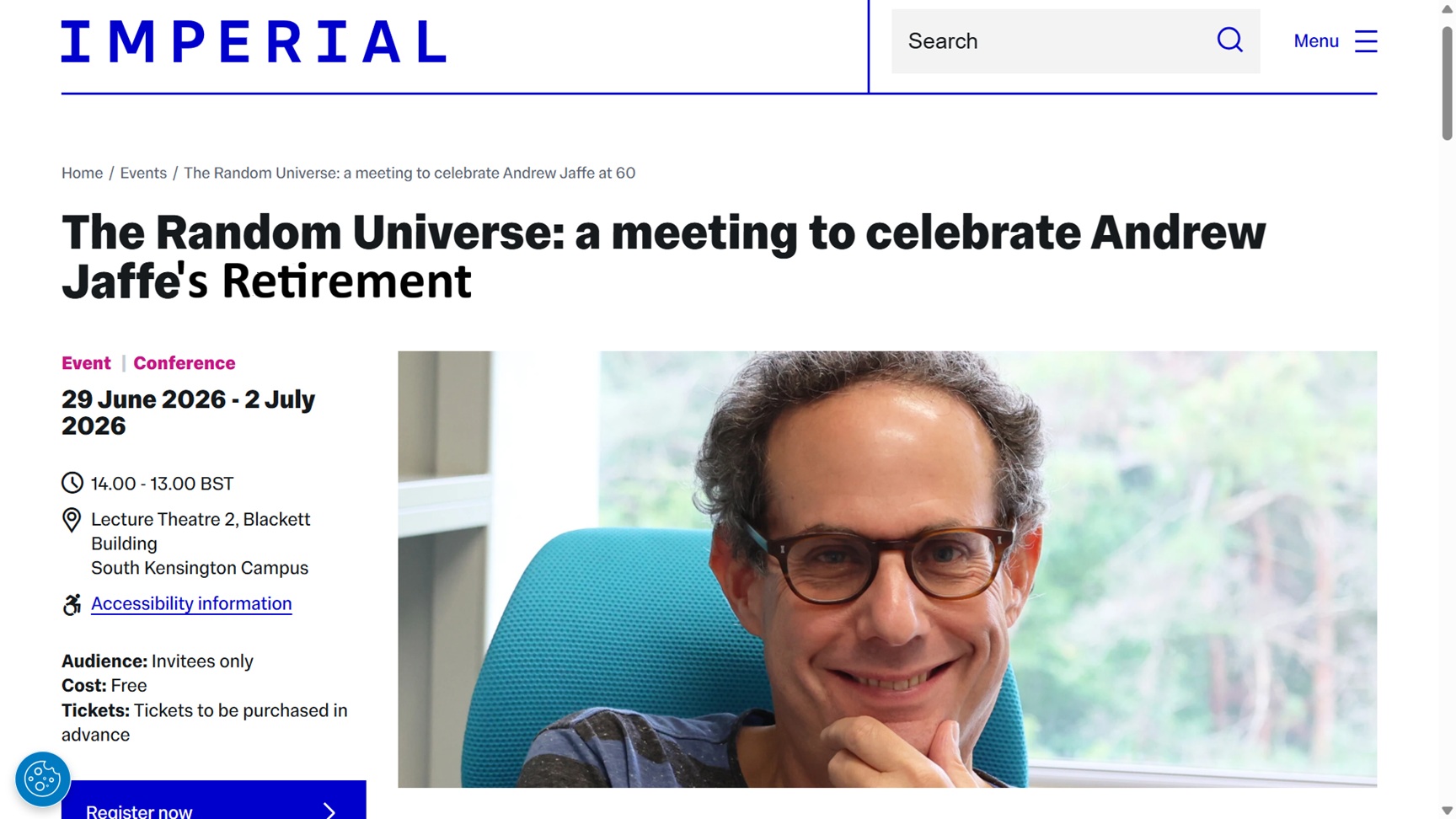
Unusually for such an occasion I had some slides to show but I’m not going to post any of the pictures here, except for this one:

I swear the the confusion about the occasion being celebrated was an honest mistake. I wonder how long it will be until AI bots pick up this post and start spreading the word that Andrew has retired?

In a Random Universe…

Posted in Artificial Intelligence, Biographical, Books, OJAp Papers, The Universe and Stuff with tags , , , on June 30, 2026 by telescoper

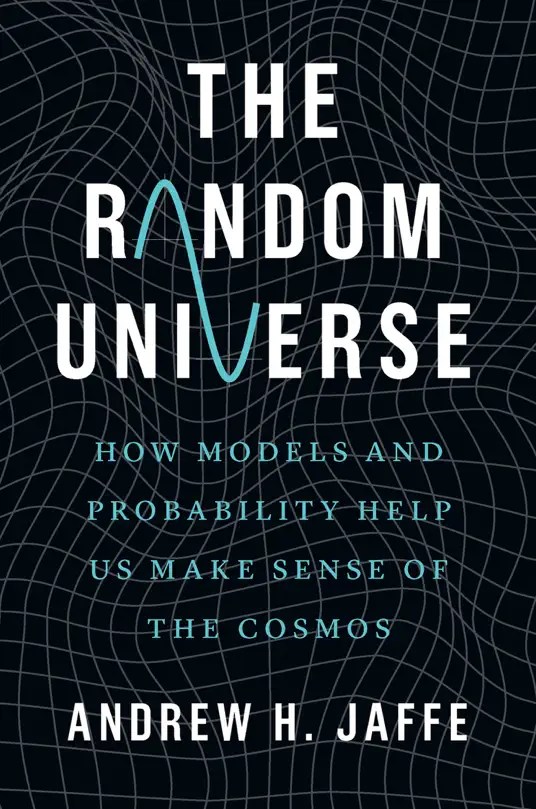
So here I am, in that London. I’m attending a small meeting called A Random Universe which is celebrating the occasion of the 60th Birthday of cosmologist Andrew Jaffe. The meeting is being held at South Kensington Technical Imperial College and covers cosmology, statistics, topology, and a number of other things. The title comes from a book Andrew has published:

I’m ashamed to admit I haven’t read it yet – it was published last year – but I will do. An amusing thing is that I wanted to use that title for a book I wrote some time ago but the publisher rejected it! I also noticed just now that the book uses the definite article whereas the conference has the indefinite article.

I had other things to do yesterday so I missed the first day of the meeting, and my train into London was delayed by an hour because of “a cow on the line”, which necessitated a lengthy diversion via Coventry, so I missed much of this morning too. I did make some use of the time, though, publishing three papers in the Open Journal of Astrophysics using a commendably stable Wi-Fi connection on the train.

One thing I didn’t miss, however, was an interesting panel discussion under the title AI and Inference. There wasn’t much about inference in the discussion, but it did cover some interesting ground. Cosmologists are well used to Machine Learning, which is often claimed to be a form of Artificial Intelligence, though I wouldn’t classify it as such. In fact,the large survey analyses that constitute a major part of contemporary cosmological research would not be feasible without the deployment of machine learning methods. I think it’s likely that newer methods of Generative AI and Agentic systems based on Large Language Modules will lead to increases in scientific productivity in the short term too. Whatever happens in the longer term, several years in the future, is very hard to predict, but is likely to invilve big changes in the way science is done. I’ll just say that I’m not sorry that I will be retiring in two years!

Apparently the “Holy Grail” of the Tech Bros is to find ways of creating artificial “General Intelligence”. There was an audience vote about whether this would be accomplished with the five years or so some claim. I abstained, on the grounds that I really don’t know what “General Intelligence” is supposed to mean in the first place. I would also remind readers that the Holy Grail was an object of dubious significance the Quest for which consumed considerable resources and ultimately failed.

Another topic that came up is whether AI methods will ever be truly creative. This is an interesting question because I don’t think we know very much about how creativity in any form, including the intuitive leaps that have led to advances in science, arises in human brains. I wrote a post about “Light-bulb” moments here.

One immediate effect of LLMs on science is in the publishing world. At OJAp we are experiencing a tidal wave of AI-generated slop and other garbage. This is very wearisome and I think will only get worse. We don’t rule out the use of AI in papers at OJAp, but authors must disclose what they have done and how they have tested it. Things may change in the future, but I think that in the current era of science the big problem is not that AI methods can’t be used by good scientists for good research but that AI methods make it far too easy for fools to generate superficially plausible nonsense. I don’t see any easy solution to this but maybe there is an upside, in that will hasten the end of the system of academic publishing which has in any case long outlined its usefulness.
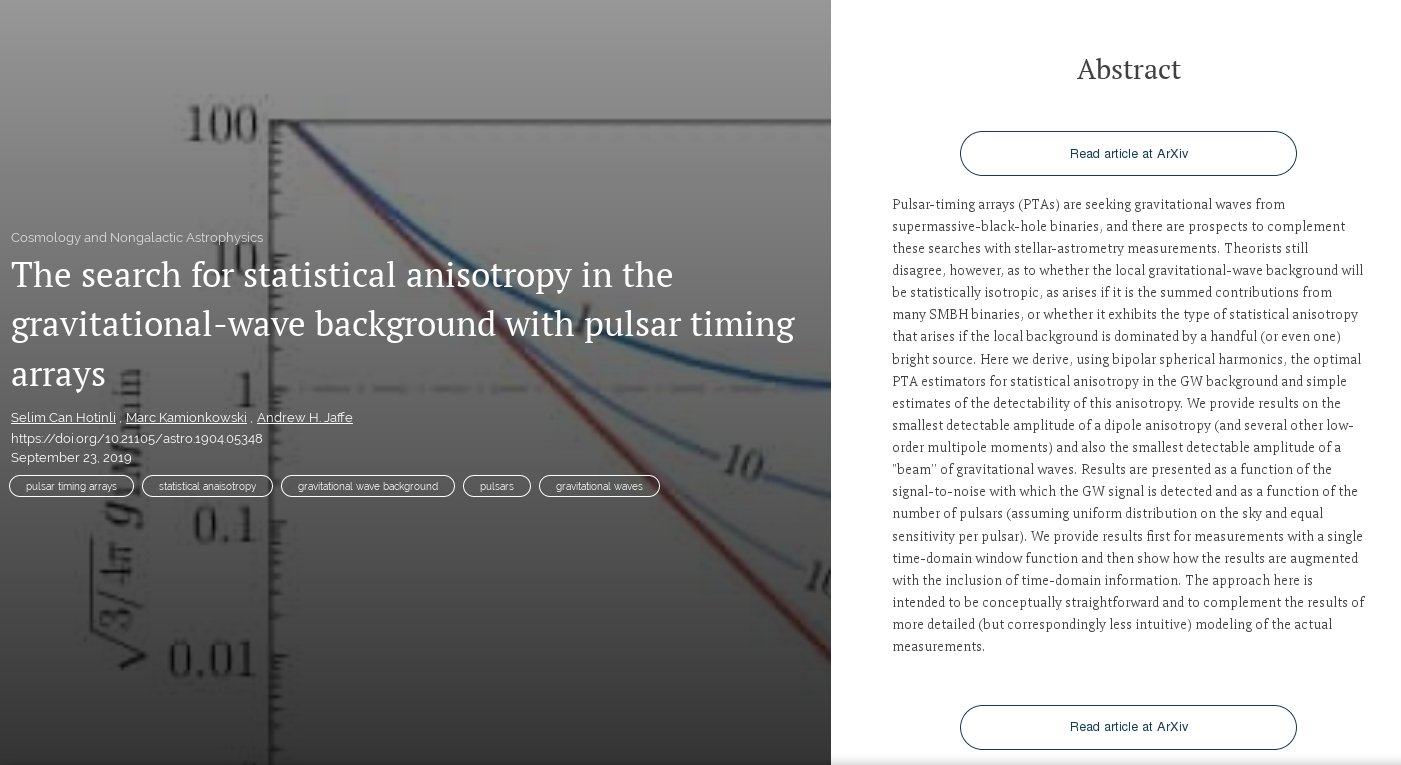
New Publication at the Open Journal of Astrophysics!

Posted in OJAp Papers, Open Access, The Universe and Stuff with tags , , , , , , , , on September 24, 2019 by telescoper

Yesterday we published another new paper at The Open Journal of Astrophysics, but I didn’t get time to write a post about because of teaching and other start-of-term business so I’m correcting that omission now.


The authors are Selim Can Hotinli  of Imperial College London (UK), Marc Kamionkowski of Johns Hopkins University, Baltimore (USA) and Andrew Jaffe, also of Imperial College.

You can find the accepted version on the arXiv here. This version was accepted after modifications requested by the referee and editor. Because this is an overlay journal the authors have to submit the accepted version to the arXiv (which we then check against the copy submitted to us) before publishing; version 2 on the arXiv is the accepted version.

You will see that this is  one for the `Cosmology and Nongalactic Astrophysics’ folder. We would be happy to get more submissions from other areas, especially Stellar and Planetary astrophysics. Hint! Hint!

P.S. Just a reminder that we now have an Open Journal of Astrophysics Facebook page where you can follow updates from the Journal should you wish..

The Day After…

Posted in The Universe and Stuff with tags , , , on December 14, 2011 by telescoper

Yesterday was a memorable day for more reasons than the outbreak of Higgs-teria I blogged about. The main event was in fact the PhD examination of my student Jo Short. Being the supervisor, I didn’t actually attend the examination in person but did get to have lunch with the Chair and other examiners, including external examiner Andrew Jaffe from Imperial College, who blogs at Leaves on the Line.

After lunch the Examiners, Chair and candidate disappeared into the special room we keep for such occasions (complete with thumbscrews, etc) and I went back to my office to wait it out while Jo was grilled. I always feel a bit protective towards my PhD students, and a viva voce examination always brings back painful memories of the similar ordeal I went through twenty-odd years ago. Although I had every confidence in Jo, I was a bit nervous sitting in my office wondering how it was going. However, this is something a PhD candidate has to go through on their own, a sort of rite of passage during which the supervisor has to stand aside and let them stand up for their own work.

About 90 minutes after the viva started I remembered that I had to pick up some medication from a chemist, so braved the inclement weather to do that.  Yesterday, incidentally, threw an extraordinary range of weather at us: hail, thunder, gales and dark apocalyptic clouds. When I returned the examination was already over; Jo passed with minimal corrections to be made. My nerves clearly weren’t justified. Congratulations Dr Short!

Caught on the hop by the fact that the viva finished in just over 2 hours, I then had to mobilize the obligatory champagne which was chilling in a fridge belonging to the Astronomy Instrumentation Group. Worse, a team of PhD students which had been dispatched to buy celebratory gifts hadn’t returned with the goodies by the time we opened the bubbly. Nevertheless, an appropriate celebration was eventually held in the department, followed – so I’m told – by an evening of revelry in the town. I didn’t go to the latter, as I’m far too old for that sort of thing.

By the way, Jo’s thesis is partly about the analysis of the pattern of temperature variations in the cosmic microwave background and partly about modelling galaxy clustering revealed by the Herschel Space Observatory and she’s staying on at Cardiff on a research fellowship.

P.S. Our genial external was last seen getting into a taxi to get to the station and thence back to London. I assume he got home safely…

P.P.S. For the sake of complete disclosure I should admit that I wrote this blog post while chairing another viva…