Archive for Cardiff

WNO Peter Grimes

Posted in Cardiff, Opera with tags , , , , , , on April 6, 2025 by telescoper

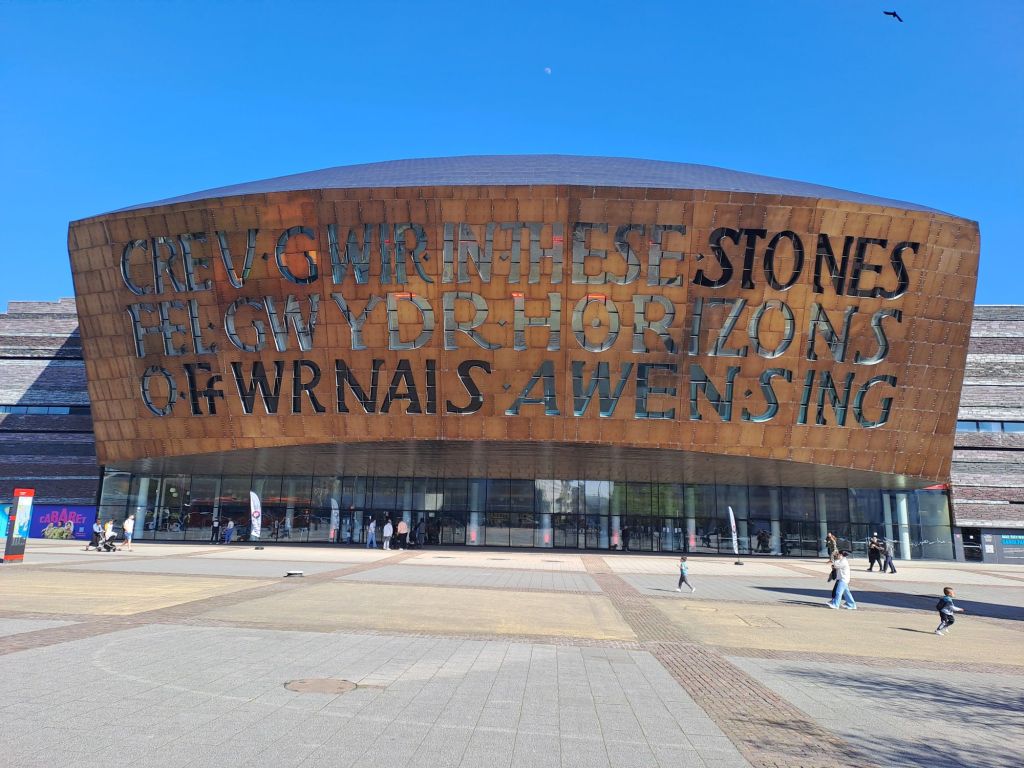
The reason for my flying visit to Cardiff this weekend was to visit the Wales Millennium Centre to catch the opening night of Welsh National Opera’s new production of the Opera Peter Grimes by Benjamin Britten. It was a full house and, being a premiere, there was a fair sprinkling of media types among the crowd. There will no doubt be many reviews but I don’t mind adding to the verbage. I’ve seen this Opera several times and it is one of my favourites in the entire repertoire.
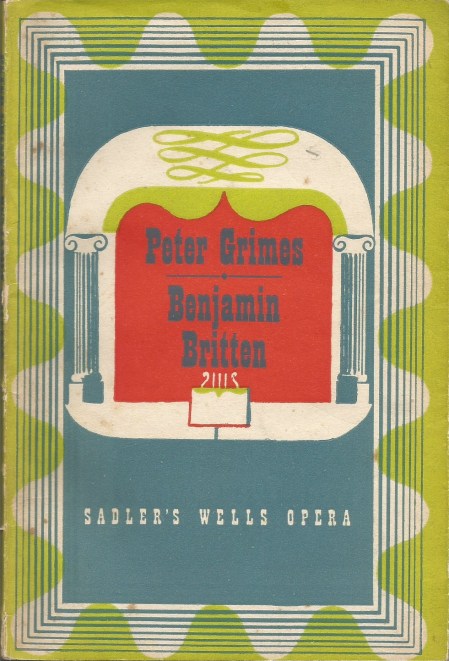
Peter Grimes premiered at Sadler’s Wells in London on 7th June 1945 almost 80 years ago. I wasn’t there – I’m not that old – but I do have an original programme from that season (left), bought in a second-hand bookshop. Perhaps surprisingly, given the grim subject matter and the intense music it was an immediate hit with audiences. Its popularity has not wained. Welsh National Opera gave its first performance in 1946, but is currently facing an uncertain future.

I’ve often heard Peter Grimes described as one of the greatest operas written in English. Well, as far as I’m concerned you can drop “written in English” from that sentence and it’s still true. I think it it’s a masterpiece, fit to rank alongside any by any composer. Searching through the back catalogue on this blog, however, I didn’t find any reviews of it, so the times I’ve seen it must have been before I started blogging back in 2008. I saw an excellent production by Opera North in Nottingham many moons ago, and also remember one at Covent Garden which stuck in my memory for its impressive staging.

Based on a character from the narrative poem The Borough by George Crabbe, the story revolves around the eponymous Peter Grimes, a fisherman, and the inhabitants of a small coastal village in Suffolk. Grimes is by no means a sympathetic character: he is an outcast with no social skills and is prone to fits of violent temper. The Opera begins witha Prologue in which Grimes is in court after the death of his apprentice; he is acquitted of any wrongdoing but the folk of the Borough – apart from the schoolteacher Ellen Orford and retired naval Captain Balstrode – still regard him as guilty. Against all advice, Grimes takes on another apprentice (John) whom he is subsequently suspected of mistreating. When the second boy dies (in accidental circumstances), Grimes flees with the crowd in pursuit. At the end he is given no choice but to take to his boat, sail it out to sea and sink it, taking his own life.

For me the key to the success of this Opera is its treatment of the character of Peter Grimes. In the original poem, Crabbe depicts Grimes is a monstrous figure rather like a pantomime villain. Britten is much more sympathetic: Grimes is misunderstood, a misft who as never been socialised; he just doesn’t know the rules that he should conform to. That’s his tragedy. Britten’s Grimes is not a villain. He’s not a hero either. At one point, shockingly, he even lashes out at Ellen Orford a lady who has shown him nothing but kindness. There’s good and bad in Grimes, like there is in all people. Who of us can say that we don’t share some of the faults of Peter Grimes? And if he’s bad what made him bad? Was he himself abused as a child? Could a little kindness along the way have made him better adjusted?

The Opera not just about Grimes, though. We get a vivid insight into the life of an isolated seaside community: the gossiping hypocrisy of the “good people” of the Borough, the debauchery of the landlady and her two “nieces” who cater to the needs of their male visitors, but above all the importance of the sea in their lives – stressed by Britten’s wonderful interludes describing dawn over the town, moonlight over the sea, and a raging storm. It also sheds light on the common practice of “buying” apprentices from the workhouse, essentially a means of slave labour, a systematic abuse far worse than anything Grimes ever does!

Anyway, to last night’s performance. In short, it was magnificent. The cast was very strong indeed: Nicky Spence shone in the role of Peter Grimes (tenor). Britten wrote the part to suit the characteristics of the voice of his partner, Peter Pears, and it doesn’t suit all tenor voices: the superb arioso When the Great Bear and Pleiades, for example, has dizzying head tones that challenges some singers. Ellen Orford was the excellent Sally Matthews (soprano) and Balstrode was the admirable baritone David Kempster.

I’ll mention three particularly memorable moments, near the end of the opera. The first is after the apprentice John has died; the gorgeous sea interlude Moonlight, which serves as a prelude to the third and final act, is played while the grieving Grimes cradles the lifeless corpse of the boy. The second is when Grimes is on the run, with the chorus calling his name and baying for blood. In fear of his life, he breaks down and is reduced to repeating his own name to himself. I’ve always found that scene unbearably moving and it was that way again last night. Finally, at the very end, the bodies of the two dead apprentices appear, one sprawled on a rock, the other standing eerily in the suspended boat which is tipped up vertically above the stage. When Grimes accepts Balstrode’s advice to drown himself, the two boys come to life; they exchange smiles, hold hands and walk off into the distance. It’s the only time Grimes looks happy in the whole performance. Only in death can he find his peace.

The staging is very spare but cleverly done. The basic set consists of a wet beach sloping up towards the rear above which from time to time a small fishing boat appears, suspended by wires, in a variety of attitudes. Otherwise there is little in the way of scenery. The clever part of this is the use of the dancers of Dance Ensemble Dawns. All the boys’ roles were in fact played by female dancers, including John the second apprentice, a non-speaking role played with great pathos by Maya Marsh whose use of body language was extraordinarily effective. Not only did they portray the boys of the village, often to be found generally misbehaving and taunting Peter Grimes, they also use their movements do evoke the storm in an extraordinarily compelling way. Not content with that they came on from time to time, in stylised fashion, to move scenery and props. The inn, for example, is conjured up by two simple props: a door frame and a window frame, held up by members of the ensemble for other members of the cast to walk or lean through. In all these contributions, the dancers were brilliant.

The simplicity of the staging probably reflects the financial crisis currently engulfing Welsh National Opera. They probably just didn’t have the money to pay for a elaborate sets, but it’s a testament to the skill and creativity of the designers that they were able to pull a triumph out of a financial disaster. I was sitting in the Circle so could see very well into the orchestra pit, where all the musicians of the Orchestra of Welsh National Opera were all wearing “SAVE OUR WNO” t-shirts. They played their hearts out. The WNO Chorus has always been excellent every time I’ve seen them, and last night was no exception.
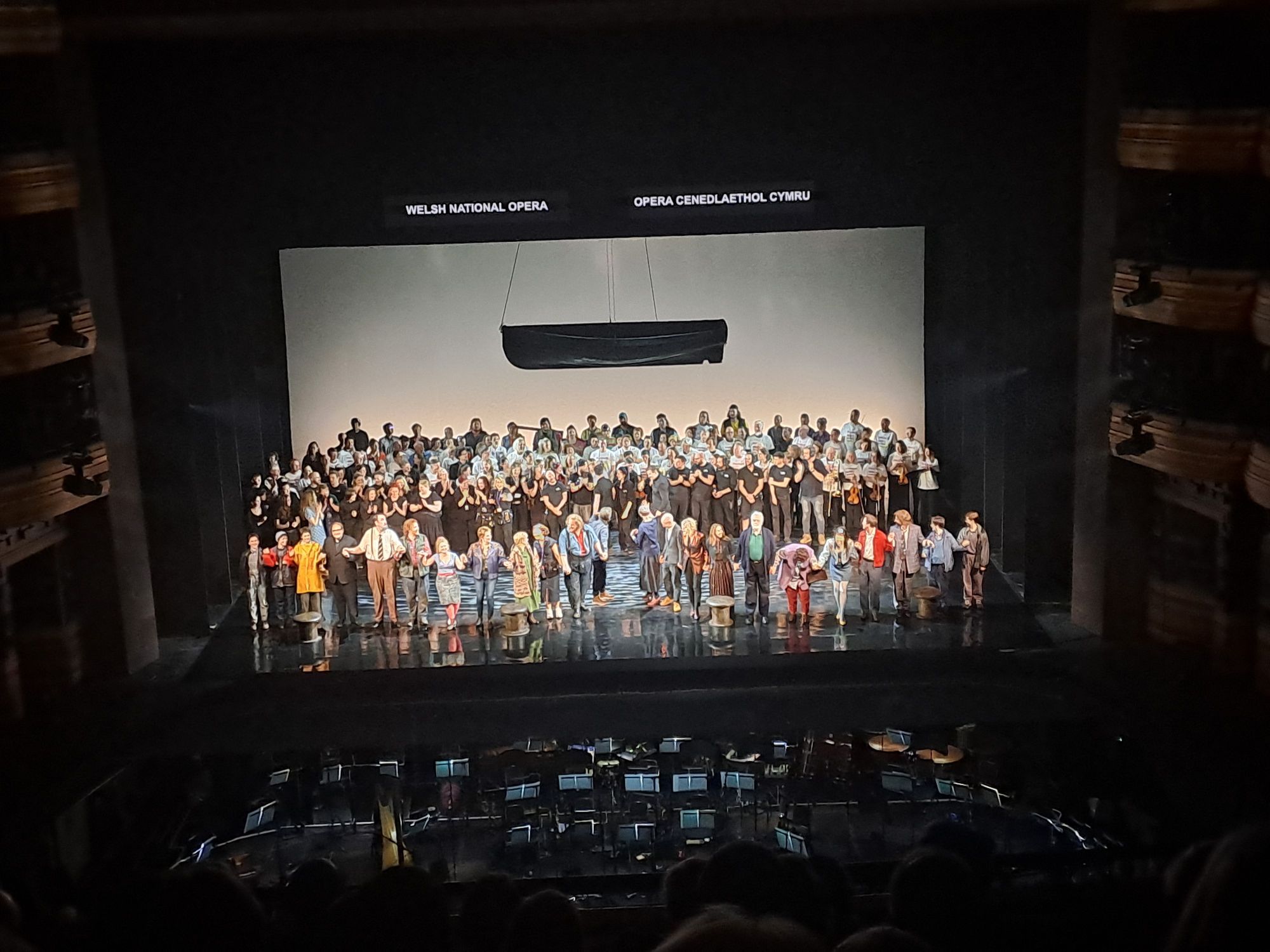
At the end of the opera, the cast, chorus and dancers were joined on stage not only by the entire orchestra (including instruments, where possible) and many members of the technical team. I’ve never seen that happen before! There were speeches by the co-directors of WNO expressing their determination to carry on through the financial turbulence that threatens to drown them. Welsh National Opera is a wonderful part of the artistic and cultural scene not only in Wales but across the rest of the UK and beyond. It just cannot be allowed to wither.

P.S. Last night’s performance was recorded for later broadcast on BBC Radio 3.

A Day in Cardiff

Posted in Art, Biographical, Cardiff, LGBTQ+, Opera, Politics with tags , , , , , on April 5, 2025 by telescoper

I got up at Stupid O’Clock this morning to catch an early morning plane from Dublin to Cardiff. It was very cold when I  arrived but it soon warmed up and turned into a lovely day.

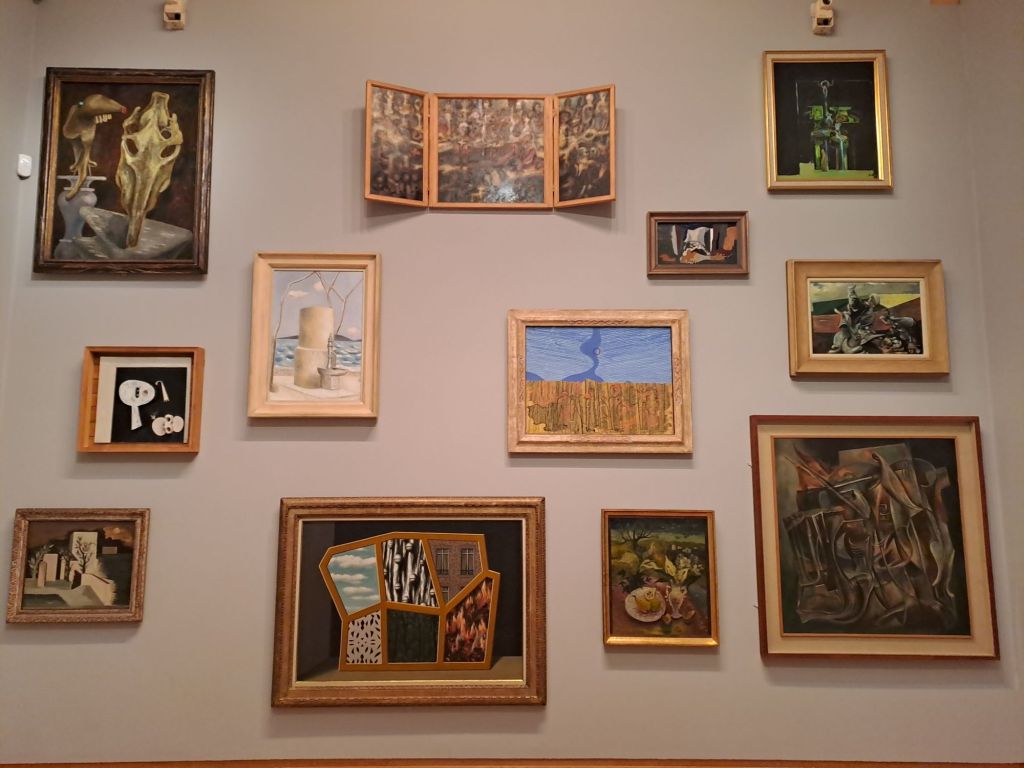
I had a nice breakfast at Bill’s when I arrived in the City then did tour of the National Museum of Wales where there is an exhibition about the Miners’ Strike of 1984/5, from which this display case caught my attention:

I also had time for a round of Name That Artist (scoring a miserable 3/12, for Sutherland, Ernst, and Magritte).

After that, I took a stroll around Bute Park before heading to my hotel in Cardiff Bay to check in and have a rest before the reason for my visit, an event which will take place here at 7pm:

I won’t be able to blog about that until I get back to Maynooth tomorrow afternoon.

Nearly there…

Posted in Biographical, Cardiff, Education, Maynooth with tags , , , on December 19, 2024 by telescoper

Today I completed the lectures for one of my modules, the one on Differential Equations and Transform Methods for Engineering students, and gave the penultimate lecture for Differential Equations and Complex Analysis for final-year Mathematical Physics students. Both were revision lectures. As campus has been very quiet for the last few days I didn’t expect many (if any) students to show up for either of these classes, but some did, although numbers were a long way down on the start of the year.

Campus is always quiet this close to the holiday, but this time there has been a bug going around which has led to a few more absences than usual among students. Some staff have been affected too. I had a mild dose of whatever it was earlier in the week but got over it relatively quickly.

Tomorrow, the last day of Semester 1, I have my last lecture of this term, followed by a couple of final-year project presentations. Then that’s it until 2025. I am already thinking about what to do tomorrow evening to mark the end of term. I haven’t reached any definite conclusions yet, but it will almost certainly involve wine. Then I suppose I’ll have to start my Christmas shopping which will include buying more wine.

I am a bit flush this week because I’ve finally received rebates of overpayment from OVO Energy and Dŵr Cymru Welsh Water relating to my former house in Cardiff. I sold this property months ago, after much tedious to-ing and fro-ing, but getting money back from utility companies is like getting blood out of a stone. OVO Energy were particularly bad, violating their statutory obligations. The offer3d me £60 additional payment in recognition of this but, although they eventually settled the bill, they never paid the compensation. It seems they just lied.

In contrast, and giving credit where it’s due, I am grateful to Cardiff City Council for paying back my overpaid Council Tax very promptly.

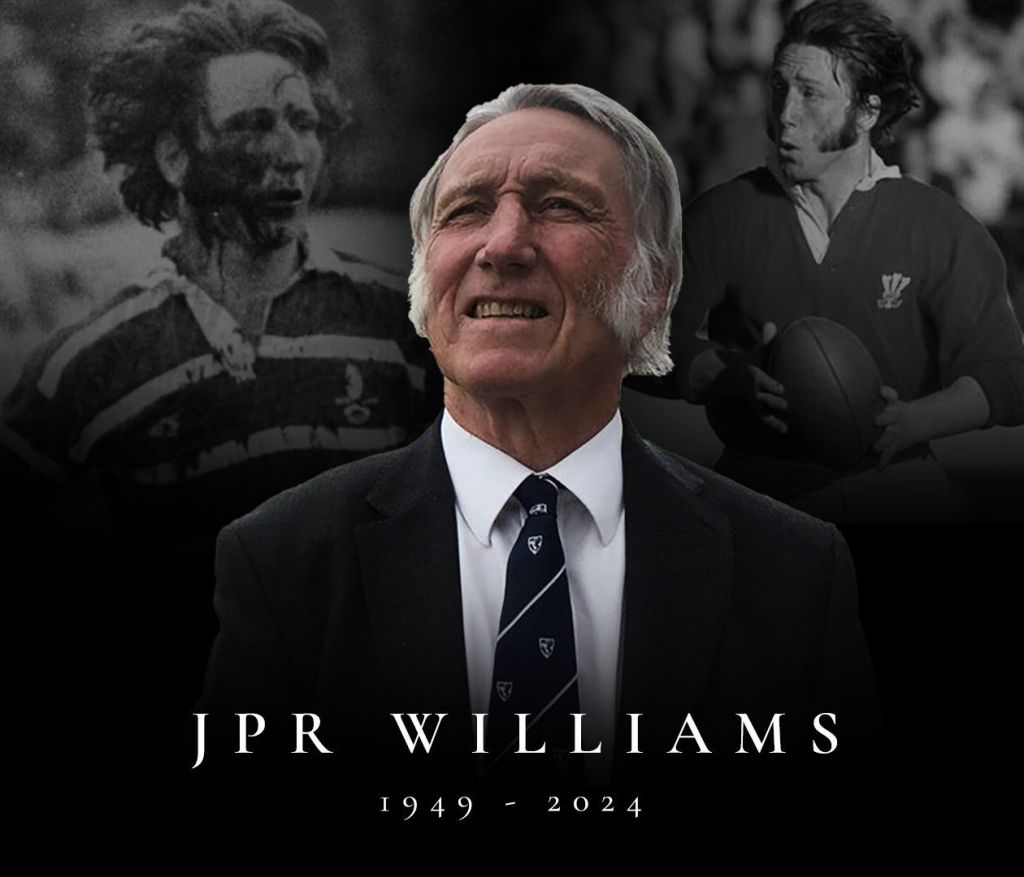
R.I.P. John Peter Rhys (“JPR”) Williams (1949-2024)

Posted in Biographical, Cardiff, R.I.P., Rugby with tags , , , , , , on January 9, 2024 by telescoper

A cold and miserable day in Cardiff yesterday got even sadder when news came out of the death of Welsh rugby legend John Peter Rhys Williams known universally as “JPR” after the winger John James Williams (another great player), joined the national team and became “JJ”. JPR was one of the superb players who dominated Welsh rugby in the 1970s; he stood out even in such exalted company. In my opinion JPR is was the greatest full-back ever.

JPR was instantly recognizable on the field: tall and craggy, with characteristic long hair, prominent sideburns, socks always rolled down around his ankles, he was an imposing figure whether patrolling the defensive lines or stepping up to join the attack. In the famous 1973 match in Cardiff between The Barbarians and New Zealand he was described by commentator Cliff Morgan as “a man who never shirks his responsibility”. Just watch the memorable opening try where you’ll see JPR in the thick of the action, twice shrugging off dangerous tackles around his neck, the second time receiving the ball from Phil Bennett to start the passing move from deep inside his own half.

Many people forget that the man himself scored a great try in that game too:

(Note the involvement of David Duckham in that move; he passed away just a year ago.)

As a full-back, JPR was often the last line of defence. Sometimes, tidying up after a kick from the opposition, he would clear his lines by kicking. More often, though, he would spot a weakness and go charging forward, ball in hand, not afraid to run straight at the opposition. He was quick to spot gaps in his own defence too, rushing to provide cover, often with last-ditch try-saving tackles.

As good as he was at turning defence into attack, he was even better when his side were already in control. Here are two tries he scored for Wales against England in 1976 that demonstrate his superb positional sense in attack as well as his sheer physical strength.

(Wales achieved a Grand Slam in 1976; England got the Wooden Spoon.)

JPR was a tough, aggressive and uncompromising man on the field – players certainly knew when he’d tackled them! – but a gentleman off it, and held in a very high regard throughout the rugby world and beyond. His loss is immeasurable. One by one the legends are leaving us. The world is poorer without them.

Rest in peace, J.P.R. Williams (1949-2024)

P.S. When living in Cardiff years ago I had the pleasure of meeting and talking with two Welsh rugby legends, Gerald Davies and Phil Bennett (the former at a function, the latter at a book-signing). Both were charmingly modest men. I never really met JPR properly but I remember vividly stepping out of my house in Pontcanna on a Six Nations match day and finding myself face-to-face with him in the street. He must have been around 60 then and was still the same imposing figure he was in the 1970s. I recognized him immediately. I wanted to say something and perhaps even shake his hand, but I was too star-struck.

P.P.S. JPR was a fully-qualified orthopaedic surgeon and a Fellow of the Royal College of Surgeons. This is a reminder that back in the 1970s, Rugby Union was still an amateur game.

Among the Travellers

Posted in Biographical, Cardiff, Education, Maynooth with tags , , , , , , on January 7, 2024 by telescoper

With Nollaig na mBan yesterday that’s the festive season over for me, and time to resume my sabbatical. Joining the crowd of post-Christmas travellers at the airport, today I took my first flight of 2024, complete with last-minute change of gate, apart from which all went perfectly to plan. I won’t be returning to Barcelona immediately, however, as I have a things to do in various different parts of not-Barcelona.

I’m in Cardiff now, where it is fine and dry but very cold, and spending a few days in Cardiff to start with. After that I’ll be taking a train to London to attend a meeting at the Royal Astronomical Society, followed by dinner at the R.A.S Club on Friday 12th January.

Coincidentally, Friday’s dinner is rather appropriately at the Travellers Club, rather than the usual Athenaeum (which is unavailable for some reason). I couldn’t attend any of these occasions between October and December as I was in Barcelona, and for a couple of years. In fact I haven’t been able to attend much at all since the bicentennial dinner in 2020 because of the pandemic and subsequent workload issues. I’m not sure if I’ll be able to go to any others this year either, so I’m looking forward to Friday (despite having to pay the arrears on my subscription) because it is the Parish Dinner, when new members are elected. Owing to the arcane complexity of the rules, and the fact that it all happens after the consumption of a great deal of wine, this usually makes for an amusing occasion.

Meanwhile, in Maynooth, preceded by a few days of revision lectures and tutorials, the January examinations start on Friday 12th January too. Students will therefore be returning from their breaks, swapping the Christmas decorations for the austerity of the examination halls. Although I’m not involved in examinations this year, I’d like to take this opportunity to wish all students at Maynooth and elsewhere all the best for the forthcoming ordeals, and the same for all academic staff whose ordeal by marking will come in due course…

Flying visit to Cardiff

Posted in Biographical, Cardiff, Open Access with tags , , , , on November 1, 2023 by telescoper

I got up at 3am this morning to take a bus to an airport, then a flight to Bristol Airport, then another bus to Bristol Temple Meads, and then a train to Cardiff in order to give a seminar. Now I’m in the middle of the reverse process, having a pint in Bristol Airport.

In case you’re thinking of using Bristol Airport at any time in the next 8 weeks, then please bear in mind that there are major roadworks on the approach road, so be sure to allow extra time. It took over an hour from Bristol Temple Meads this evening, more than double the usual time, and it’s only 8 miles…

I’m more than a little tired after all that, but it was still very nice to meet up with friends and former colleagues again. I was particularly delighted to learn that Professor Haley Gomez has been appointed Head of the School of Physics and Astronomy. Congratulations to Haley!

I’ll upload the slides from my talk when I get back to base. For the time being, however, I’m just going to chill in the departure lounge before my return flight.

Update: the return leg ran to schedule so here, as promised, are the slides for the talk I was invited to give:

P.S. I’ll be giving two talks on the same theme later this month in different institutes in France.

Teaching in Base 60

Posted in Barcelona, Cardiff, History, mathematics, Maynooth with tags , , , , on October 27, 2023 by telescoper

Some time ago – was it really over a decade? – I wrote a piece about the optimum size of modules in physics teaching. I was still in the United Kingdom then so my ramblings were based on a framework in which undergraduate students would take 120 credits per year, usually divided into two semesters of 60 credits each. In Cardiff, for instance, most modules were (and still are) 10 credits but some core material was delivered in 20 credit modules. In the case of Sussex, to give a contrasting example, the standard “quantum” of teaching was the 15 credit module. I actually preferred the latter because that would allow the lecturer to go into greater depth, students would be only be studying four modules in a semester (instead of six if the curriculum consisted of 10 credit modules), and there would be fewer examinations. In short, the curriculum would be less “bitty”.

In Maynooth the size of modules is reckoned using the European Credit Transfer System (ECTS) which takes a full year of undergraduate teaching to be 60 credits rather than 120 in the UK, but the conversion between the two is a simple factor of two. In Maynooth the “standard” unit of teaching is 5 credits, with some 10 credit modules thrown in (usually extending over two semesters, e.g. projects). This is similar to the Cardiff system. The exception concerns first-year modules, which are 7.5 credits each because students take four modules in their first year so they have to be 30/4=7.5 credits each. The first year is therefore like the Sussex system. It changes to a five-credit quantum from Year 2 onwards because students do three subjects at that stage.

I find it interesting to compare this with the arrangements here in Barcelona (and elsewhere in Spain). Here the ECTS credit size is used, but the standard module is six credits, not five, and year-long projects here are 12 credits rather than 10. The effect of this is that students generally study five modules at a time (or four plus a project). To add to the fun there are also some 9 credit modules, so a semester could be made up of combinations of 6-credit and 9-credit chunks as long as the total adds up to 30.

Anyway, the main point of all this is to illustrate the joy of the sexagesimal system which derives from the fact that 60, being a superior composite number, has so many integer divisors: 2, 3, 4, 5, 6, 12, 15, 20, and 30. The Babylonians knew a thing or two!

LiteBIRD Update

Posted in Cardiff, The Universe and Stuff with tags , , , , , on October 12, 2023 by telescoper


It was more than four years ago that I passed on the news that the space mission LiteBIRD had been selected as the next major mission by the Japanese Space Agency JAXA and Institute for Space and Astronautical Science (ISAS).
LiteBIRD (which stands for `Lite (Light) satellite for the studies of B-mode polarization and Inflation from cosmic background Radiation Detection’) is a planned space observatory that aims to detect the footprint of the primordial gravitational waves on the cosmic microwave background (CMB) in a form of a B-mode polarization pattern. This is the signal that BICEP2 claimed to have detected nine years ago to muc excitement, but was later shown to be a caused by galactic dust.
At the time, I said that this was great news for a lot of CMB people all round the world that this mission had been selected – include some old friends from Cardiff University. Well, I’ve just seen a news item announcing a grant to Cardiff astrophysicists who will lead the UK involvement and develop the optical design.
The launch date has slipped into the 2030s (no doubt partly because of the pandemic) so I’ll be long retired before it happens, but the mission will last three years and will, like Euclid, be at Earth-Sun Lagrange point known as L2. It will be a very difficult task to extract the B-mode signal from foregrounds and instrumental artifacts but I wish LiteBIRD every success!

NAM Plenarius

Posted in Biographical, Cardiff, Harassment Bullying etc with tags , , , on July 5, 2023 by telescoper
Picture by Renée Hložek

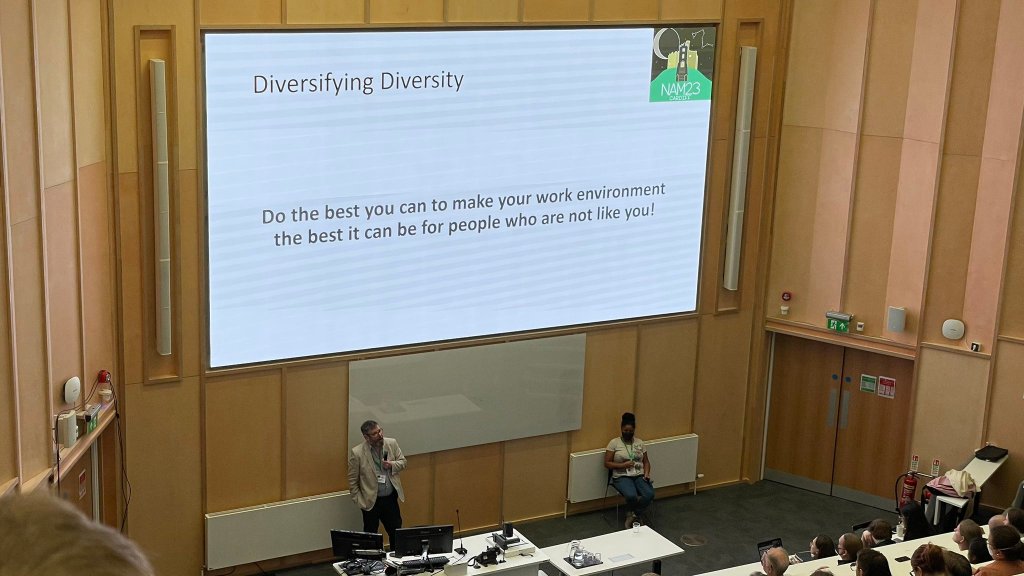
Today I contributed to a Plenary session at the UK National Astronomy Meeting in Cardiff, in the form of a a joint presentation by myself and the wonderful Dr Tana Joseph. It isn’t the first time that there’s been a talk about Equality Diversity and Inclusion at a NAM – there was one in 2017 – but it’s definitely the first one I have done. I wasn’t sure how it would go, but in the end I think it went pretty well.

The word “Plenary”, by the way, is derived from the Latin adjective plenarius (meaning complete) which is in turn derived from plenus (meaning full). I wasn’t sure ahead of the event how full the room would be, as I worried that some people wouldn’t attend this and might leave after the previous plenary talk. Some people did leave at the start, actually, but fortunately they were replaced by a a larger number of new arrivals.

There have been parallel sessions yesterday and the day before on EDI issues, but there’s a tendency for the people attending such sessions to those who are already engaged in related work, while it is important in my opinion for everyone to pay attention. That’s a point I tried to make during the session.

Tana and I agreed beforehand that we would try to stimulate a discussion and I did worry that we might not succeed in provoking questions, but in fact there were many. That, and the nice comments we got after the talk, convinced me that the session had gone well. I was, however, quite nervous as I haven’t given any kind of conference talk for some years now.

One problem was that a meeting of RAS Council was timetabled in such a way as to clash with this morning’s Plenary, so nobody on Council could attend. That was regrettable.

Anyway, that job done, I’m now back at my hotel getting myself ready for the conference dinner. That reminds me that last night I attended the out-of-town dinner of the RAS Club which is usually held at National Astronomy Meetings. This time it was at the Ivy Restaurant in Cardiff. I took my chequebook to pay for the dinner (which is practically the only thing I pay for by cheque) only to discover that they now accept card payments. Looking at the stubs, though, I realized that the last Club Dinner I attended at the Athenaeum in London was on 14th February 2020. The dinner after that was cancelled due to the pandemic, and I haven’t been able to attend any since then.

Update: dinner (in the Principality Stadium) was really excellent, and congratulations to all the award winners. And so to bed.

Opening the National Astronomy Meeting

Posted in Cardiff, Politics, The Universe and Stuff with tags , , , on July 3, 2023 by telescoper

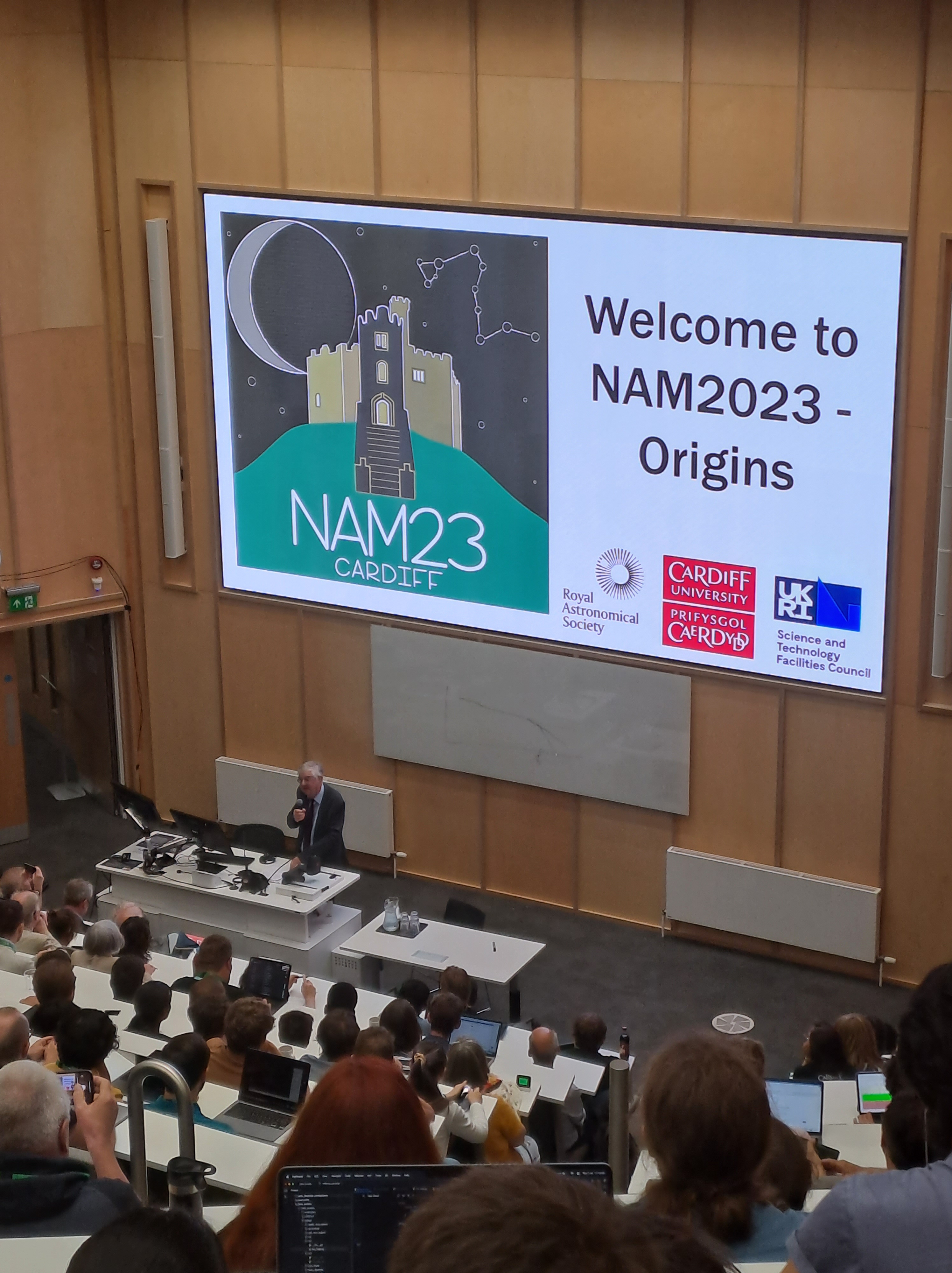
My first impressions of Cardiff after arriving yesterday is that a lot of things have changed. That sadly includes the fact that a number of my favourite places in the city centre have closed. On the other hand, some thing have improved. The Centre for Student Life, for example, is completely new since my days here and is a definite improvement on the previous dingy premises. It also just happens to be where the plenary sessions of the 2023 National Astronomy Meeting are being held:

The first plenary session of the week was opened by the First Minister of Wales, Mark Drakeford, who gave very a nice speech, in which he spoke very knowledgeably of the inspirational nature of astronomy as well as the history of the subject in Wales. It was a very impressive start to the week!

The Vice-chancellor of Cardiff University, Colin Riordan, was also there.