Archive for Cosmic Microwave Background

Weekly Update from the Open Journal of Astrophysics – 22/11/2025

Posted in OJAp Papers, Open Access, The Universe and Stuff with tags , , , , , , , , , , , , , , , , , , , , , on November 22, 2025 by telescoper

It’s Saturday again, so it’s time for the usual update of the week’s new papers at the Open Journal of Astrophysics. Since the last update we have published another five papers, which brings the number in Volume 8 (2025) up to 180, and the total so far published by OJAp up to 415.

The first paper to report this week is “Probing Anisotropic Cosmic Birefringence with Foreground-Marginalised SPT B-mode Likelihoods” by Lennart Balkenhol (Sorbonne Université, France), A. Coerver (UC Berkeley, USA), C. L. Reichardt (U. Melbourne, Australia) and J. A. Zebrowski (U. Chicago, USA). This paper was published on Monday November 17th in the folder Cosmology and Nongalactic Astrophysics. It presents a way of using data from the Souh Pole Telescope (SPT) in the CMB-lite framework to constrain the level of cosmic birefringence.  The overlay is here:
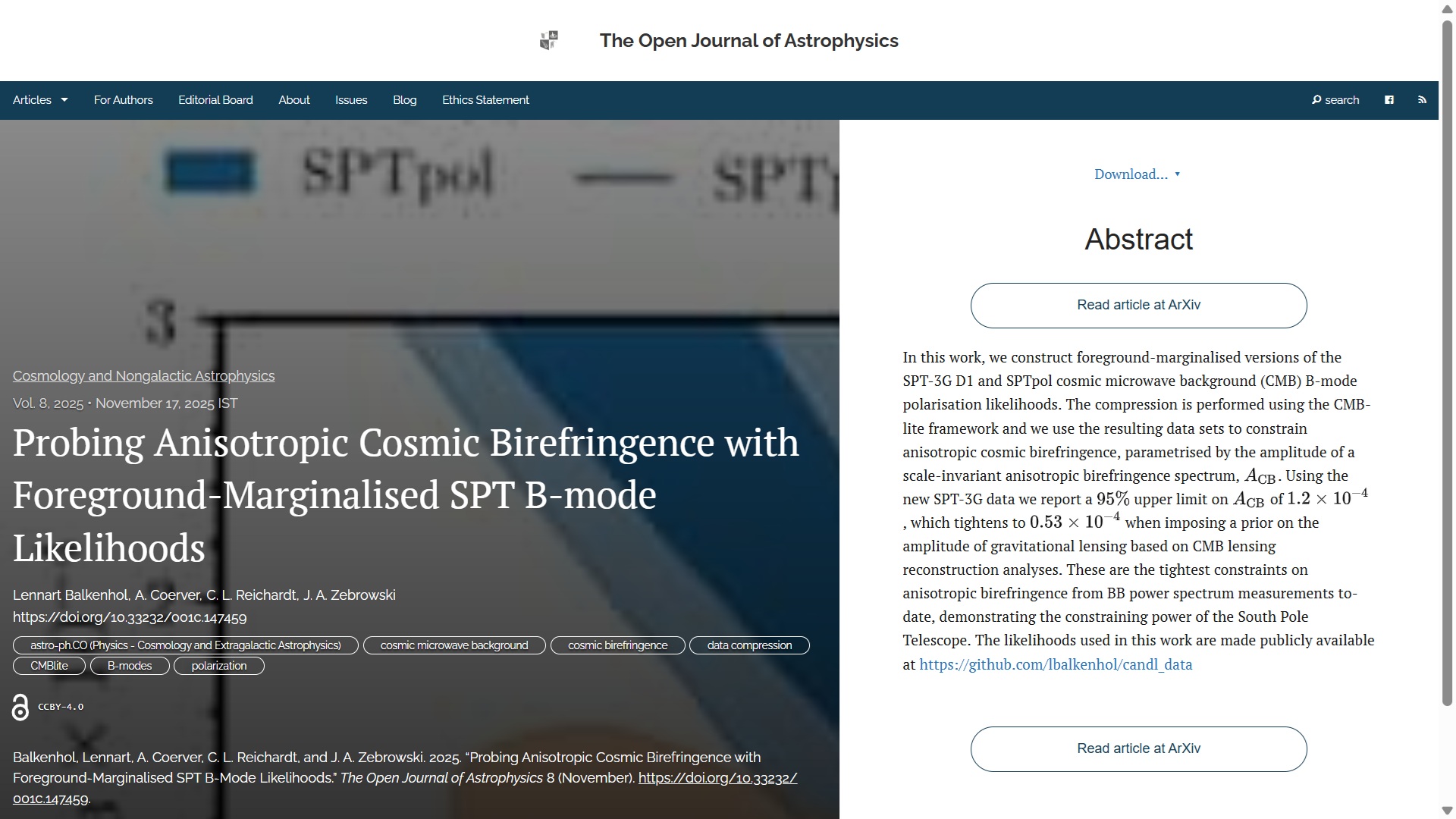
You can find the officially accepted version on arXiv here and the The Fediverse announcement is here:

Open Journal of Astrophysics

New Publication at the Open Journal of Astrophysics: "Probing Anisotropic Cosmic Birefringence with Foreground-Marginalised SPT B-mode Likelihoods" by Lennart Balkenhol (Sorbonne Université, France), A. Coerver (UC Berkeley, USA), C. L. Reichardt (U. Melbourne, Australia) and J. A. Zebrowski (U. Chicago, USA)

doi.org/10.33232/001c.147459

November 17, 2025, 8:43 am 1 boosts 0 favorites

The second paper of the week is “Radio Observations of a Candidate Redback Millisecond Pulsar: 1FGL J0523.5-2529” by Owen. A. Johnson & E. F. Keane (Trinity College Dublin, Ireland), D. J. McKenna (ASTRON, NL), H. Qiu (SKAO, UK), S. J. Swihart (Insitute for Defense Analyses, USA), J. Strader (Michigan State U., USA) and M. McLaughlin (West Virginia U., USA). This one was published on Tuesday November 18th 2025 in the folder marked High-Energy Astrophysical Phenomena and it describes a search for radio emission from a candidate “redback pulsar” J0523.5-2529 resulting in upper limits but no detection.

The overlay is here:
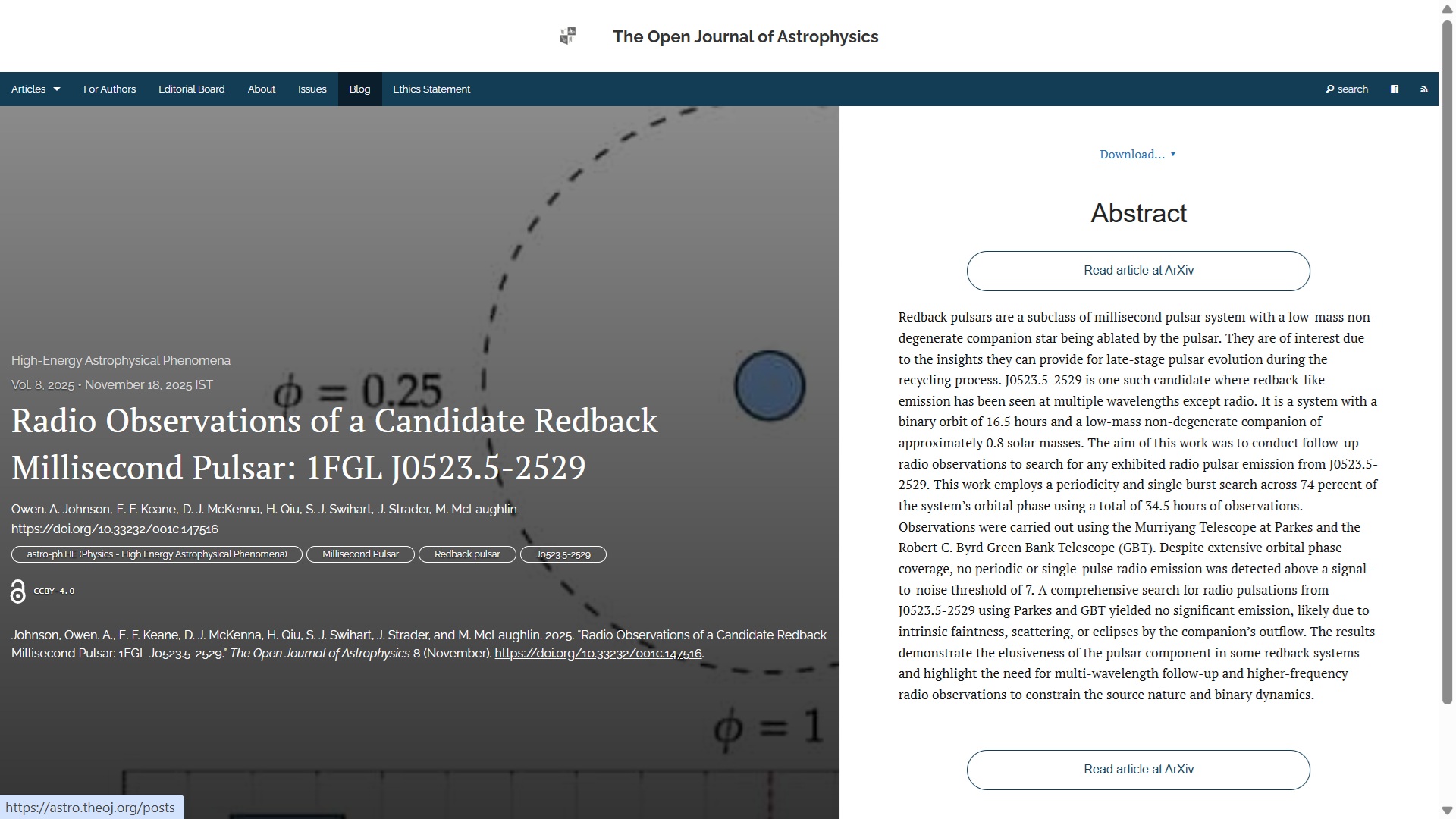
You can find the official version of this one on arXiv here. The federated announcement on Mastodon is here:

Open Journal of Astrophysics

New Publication at the Open Journal of Astrophysics: "Radio Observations of a Candidate Redback Millisecond Pulsar: 1FGL J0523.5-2529" by Owen. A. Johnson & E. F. Keane (Trinity College Dublin, Ireland), D. J. McKenna (ASTRON, NL), H. Qiu (SKAO, UK), S. J. Swihart (Insitute for Defense Analyses, USA), J. Strader (Michigan State U., USA) and M. McLaughlin (West Virginia U., USA)

doi.org/10.33232/001c.147516

November 18, 2025, 8:42 am 1 boosts 0 favorites

Next one up is “The role of turbulence in setting the phase of the ISM and implications for the star formation rate” by Tine Colman (Université Paris-Saclay, France) and 13 others based in France, Germany, Italy and the UK. This was published in the folder Astrophysics of Galaxies on Tuesday November 18th. It descrtibes using a suite of stratified box simulations to explore the link between star formation, turbulence and the thermal state of the multi-phase interstellar medium (ISM).

The overlay is here:
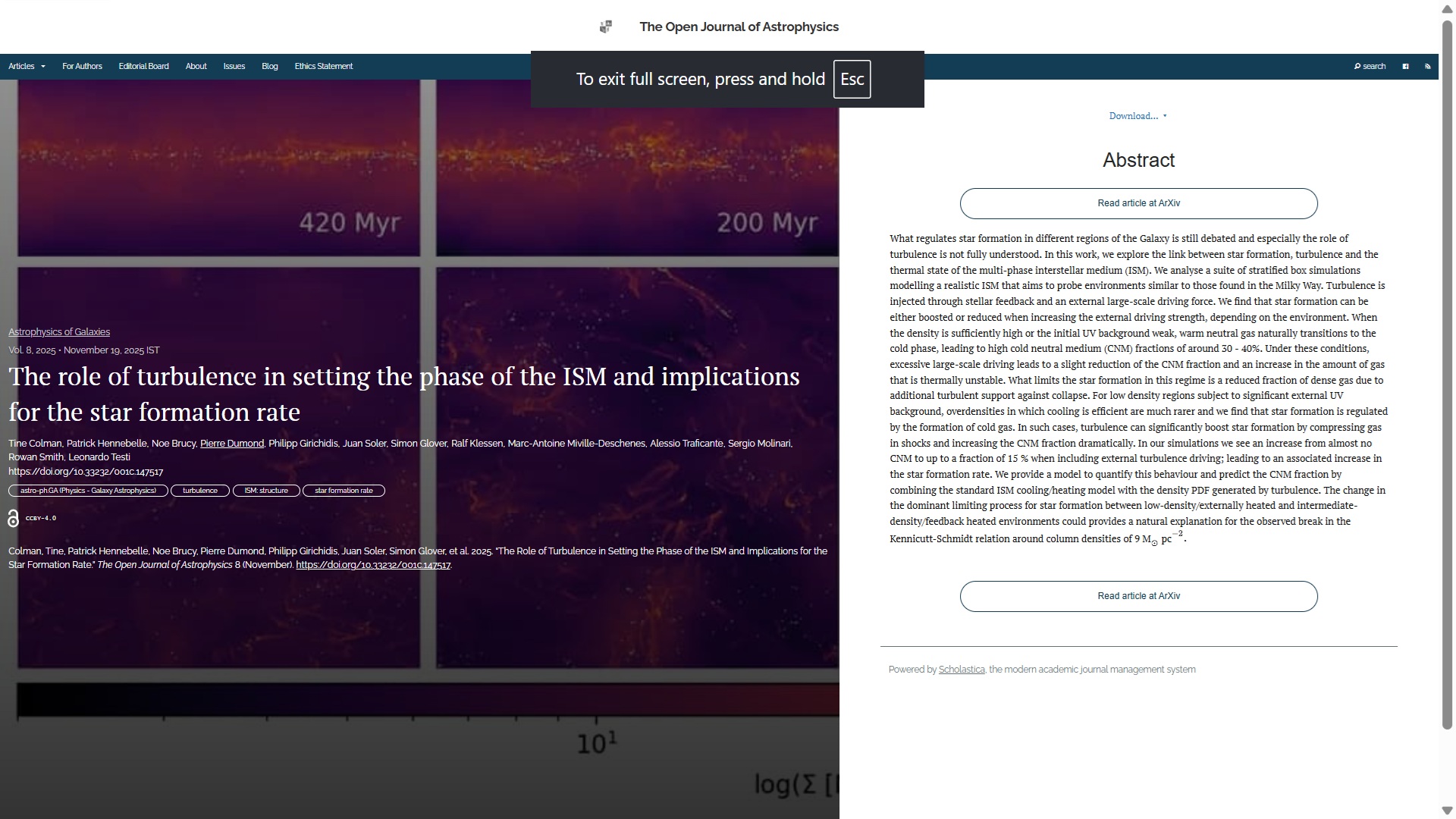
You can find the official accepted version on arXiv here. The fediverse announcement is here:

Open Journal of Astrophysics

New Publication at the Open Journal of Astrophysics: "The role of turbulence in setting the phase of the ISM and implications for the star formation rate" by Tine Colman (Université Paris-Saclay, France) and 13 others based in France, Germany, Italy and the UK.

doi.org/10.33232/001c.147517

November 19, 2025, 8:19 am 0 boosts 0 favorites

The fourth paper of the week is “A Bimodal Metallicity Distribution Function in the Ultra-Faint Dwarf Galaxy Reticulum II” by Alice M. Luna (U. Chicago, USA) and 8 others based in the USA, Korea and Canada. This was published on Wednesday November 19th in the folder Astrophysics of Galaxies. It decribes low-resolution Magellan/IMACS spectroscopy of 167 stars in the ultra-faint galaxy Reticulum II, revealing a clearly bimodal distribution.

The overlay is here:
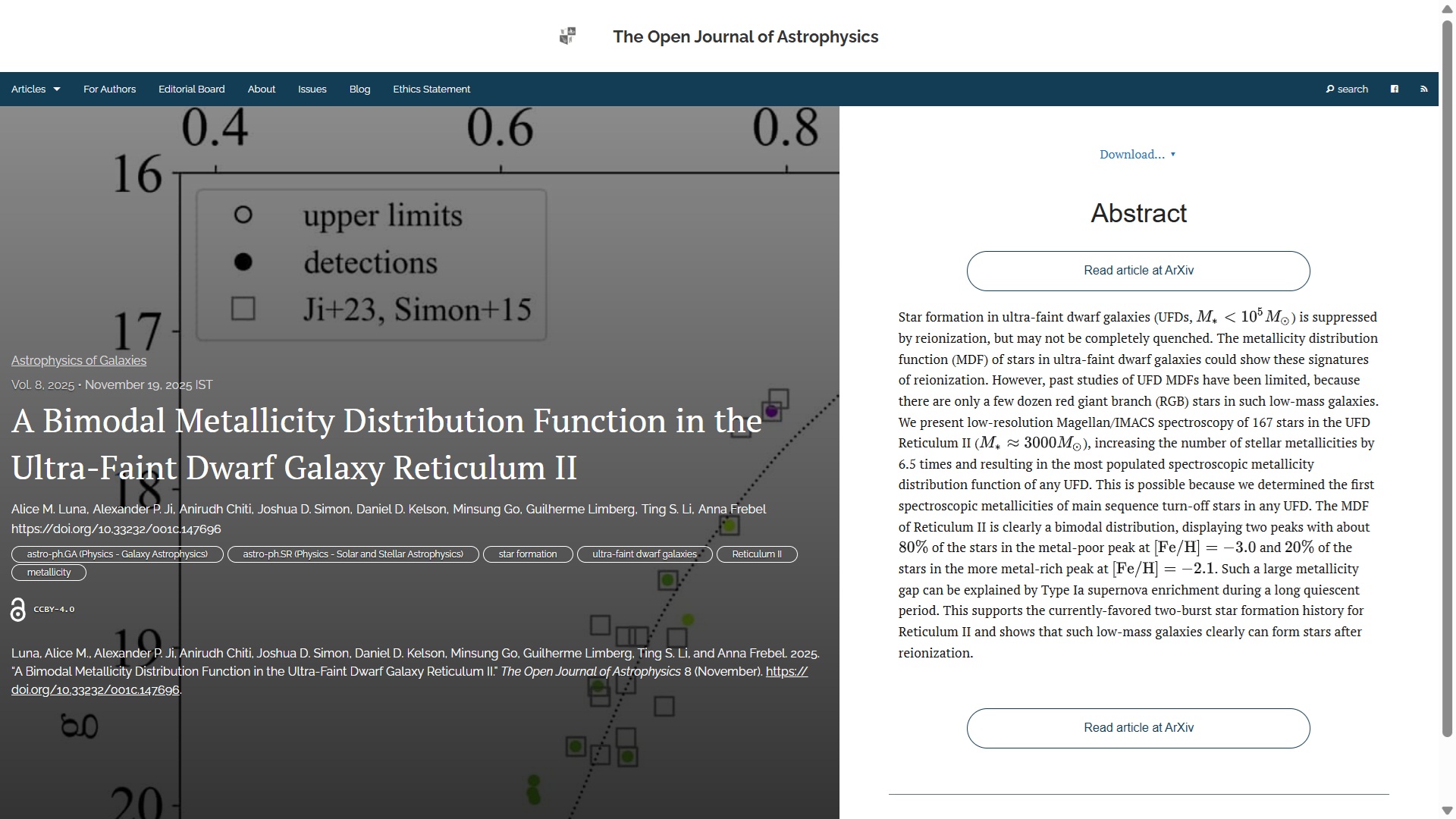
You can find the official published version on arXiv here. The Fediverse announcement follows:

Open Journal of Astrophysics

New Publication at the Open Journal of Astrophysics: "A Bimodal Metallicity Distribution Function in the Ultra-Faint Dwarf Galaxy Reticulum II" by Alice M. Luna (U. Chicago, USA) and 8 others based in the USA, Korea and Canada.

doi.org/10.33232/001c.147696

November 19, 2025, 8:37 am 0 boosts 0 favorites

The fifth and final paper for this week is “Cool Gas in the Circumgalactic Medium of Massive Post Starburst Galaxies” by Zoe Harvey, Sahyadri Krishna, Vivienne Wild & Rita Tojeiro (U. St Andrews, UK) and Paul Hewett (U. Cambridge, UK). This was published on Thursday November 20th in the folder Astrophysics of Galaxies.

The overlay is here:

The officially accepted version can be found on arXiv here. The Fediverse announcement is here:

Open Journal of Astrophysics

New Publication at the Open Journal of Astrophysics: "Cool Gas in the Circumgalactic Medium of Massive Post Starburst Galaxies" by Zoe Harvey, Sahyadri Krishna, Vivienne Wild & Rita Tojeiro (U. St Andrews, UK) and Paul Hewett (U. Cambridge, UK)

doi.org/10.33232/001c.147836

November 20, 2025, 9:02 am 1 boosts 0 favorites

And that concludes the update for this week. I will do another next Saturday.
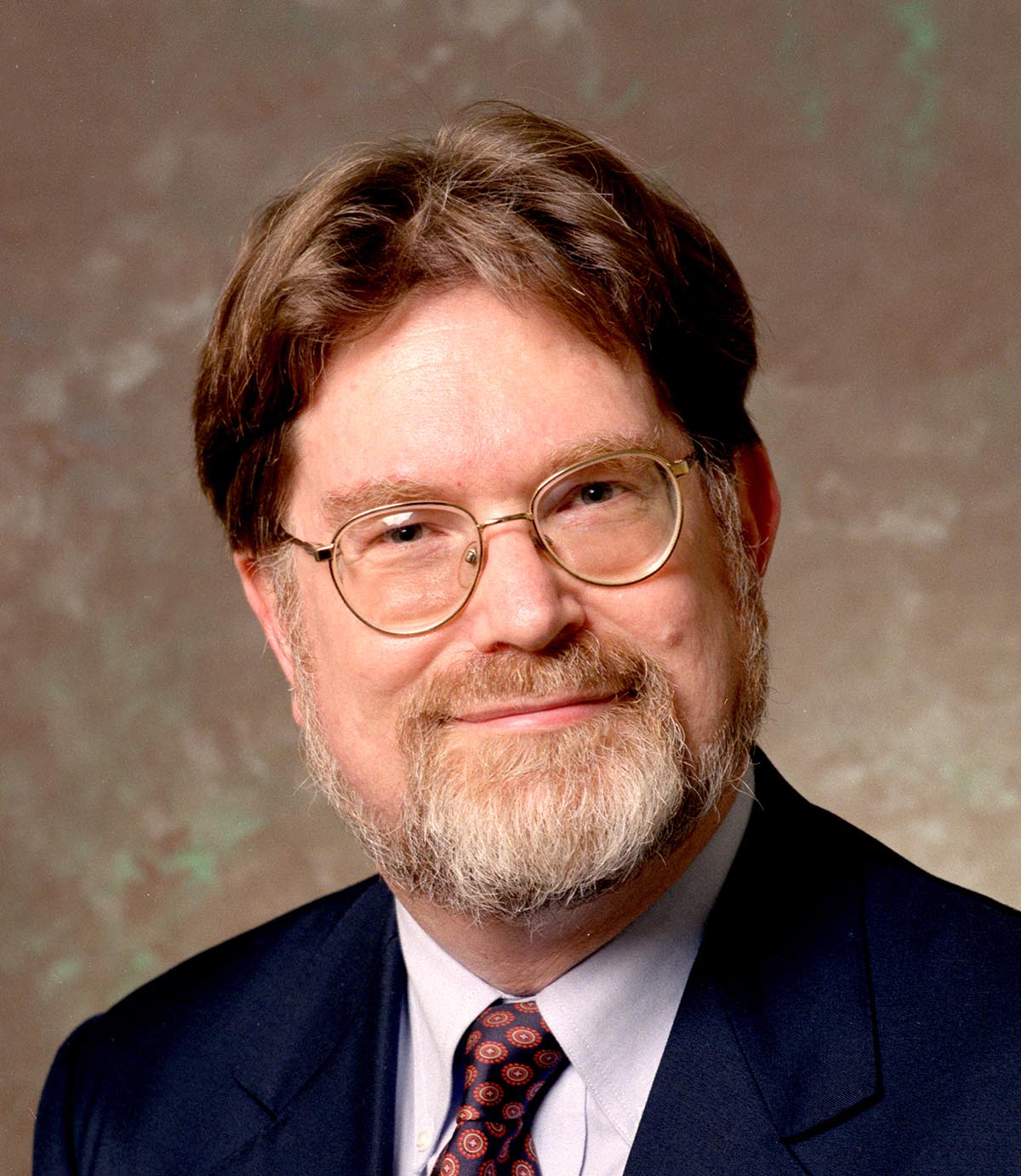
R.I.P. George F. Smoot (1945-2025)

Posted in Biographical, R.I.P., The Universe and Stuff with tags , , , , , , on September 26, 2025 by telescoper
George F. Smoot (1945-2025)

I’m very sad to have to report the death, at the age of 80, of eminent cosmologist George Smoot, who passed away at his home in Paris on 18th September. The news has been reported in France, where George had been living in recent years, but doesn’t seem to have been covered in the international media yet. I thought I would just record some personal relfections and reminiscences here, rather than try to pre-empt the official biographies.

George Smoot was an experimental astrophysicist who is best known for his research in observational cosmology, particularly on the cosmic microwave background. In 2006, jointly with John Mather, he was awarded the Nobel Prize for Physics for measurements made by the COBE satellite that, without exaggeration, ushered in a new era of cosmology. George led the paper Structure in the COBE Differential Microwave Radiometer First-Year Maps that reported the first detection of variations in temperature of the cosmic microwave background across the sky predicted by theories of cosmological structure formation.

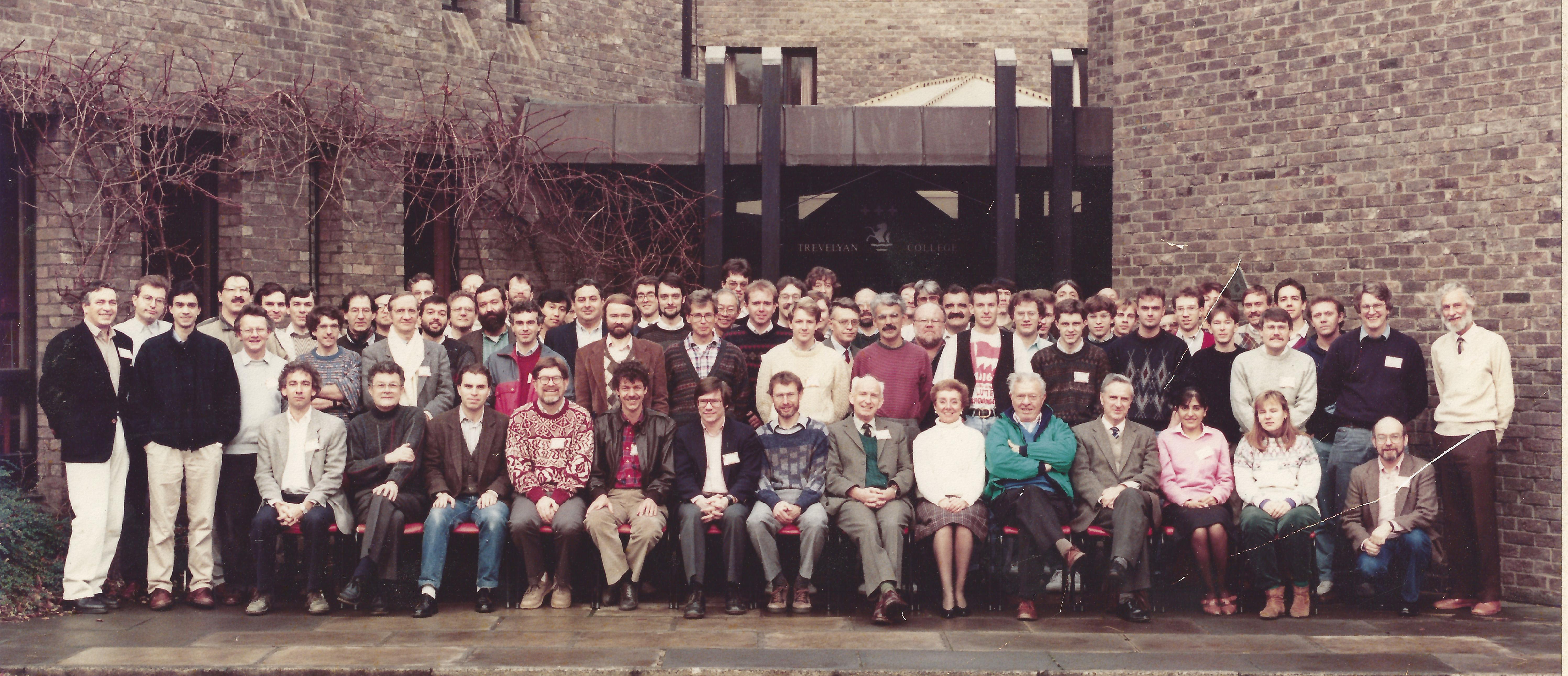
I was fortunate enough to meet George many times over the years and to get to know him quite well. The first time was at a meeting in Durham for which this was the conference photo:

George is just to the left of centre in the front row with the red-and-white sweater.

What I remember about that meeting is that I gave a contributed talk there (a short one, because I was a mere postdoc at the time). Some time after that, George Smoot gave an invited talk during the course of which he mentioned (positively) the work I had spoken about. I was gobsmacked to have my little contribution recognized by someone so eminent, and it did wonders for my scientific self-confidence. I got the chance to have a conversation with George in person some time later at that meeting and found him very good value: he was both interesting and amusing to talk to. He was someone who took mentorship seriously, and didn’t confine it to those people he was working with directly.

Over the years I met George regularly at scientific meetings, including numerous times at the (then) Daniel Chalonge schools in Sicily and in Paris where we often chatted about science and other things over coffee breaks and dinner. I always found him hugely knowledgeable about many things, but he also had an almost child-like curiosity about things he didn’t previously know. He didn’t quite jump up and down with excitement when he learnt something interesting, but almost. He could also be very direct when disagreeing, which meant that some people found him a bit abrasive. He fell out with other members of the COBE time when he threw away the agreed protocol for the announcement of results in 1992. That caused a lot of bad feeling at the time, but it seems that by the time the Nobel Prize was awarded, some degree of reconciliation had been achieved. I was lucky enough to attend the Prize Ceremonies and at the ball afterwards chatted with both George and John Mather who seemed on very amiable terms then.

Anyway, in the early noughties George invited me to spend some time at the Lawrence Berkeley Laboratory, a visit that I enjoyed enormously. He was a very generous and thougtful host and I was looked after very well. One day at LBL he asked me if the hotel was OK. I replied that it was, but one thing I didn’t like about staying in a hotel was that I liked to cook and that was impossible in a hotel room. I thought nothing more of that conversation until the end of the day when George appeared and asked me if I wanted to “do dinner” at his house that evening. I answered in the affirmative so he drove me to his house, which was very fancy, set into the hillside overlooking Berkeley – like the sort of place I imagine a film star would live – and had a very large and well-provisioned kitchen.

It soon became clear that I’d misunderstood the invitation, in that “do dinner” didn’t mean “eat dinner” but “make dinner”. Although I was slightly taken aback I set about finding what he had in the refrigerator and on the shelves. There being a plentiful supply of spices, I decided to make a tandoori-style dish of chicken baked with yoghurt, with a couple of side dishes, none of which took long to cook. When everything was getting ready I wanted to add some lemon juice but couldn’t find any lemons in the fridge. I asked George if he had any lemons, at which point he showed me into the garden where he had several lemon trees in full fruit. I’ve never lived anywhere that this would be possible! I think he enjoyed the dinner because he paid me back a few days later with a dinner at Chez Panisse. He was quite the bon viveur.

(After that short visit, I was planning to spend a sabbatical year in Berkeley in 2005, but the United States Embassy in London put paid to that idea and I went to CITA in Toronto instead.)

The last encounters I had with George were online; he was in the audience when I gave talks in the Chalonge-de Vega series organized by Norma Sanchez in 2021 (here and here). I think he had already moved to Paris by that time. The first of these talks was about open access publishing in astrophysics; George subsequently co-authored a paper in the Open Journal of Astrophysics.

My favourite quote from George came during a discussion we had at Berkeley when I suggested that some methods used for studying the cosmic microwave background could be applied to the distribution of galaxies. His response was “Galaxies are shit”. To avoid offending my friends who work on galaxies, what he meant by that was that he thought galaxies were too messy for any statistical measurements to sufficiently reliable to compete with the CMB. I think he would have preferred a universe in which all galaxies were identical, like electrons.

I’m sure many others will have their own personal reflections on their interactions with George Smoot, but he also had a huge influence on many people who never met him personally, through his enormous contributions to astrophysics and cosmology. We will no doubt read many professionally-written official obituaries in days to come, but all I can say in a personal blog post is that he was a character, a very original thinker, a fine scientist, and a very nice man. Along with many others, I will miss him enormously.

Rest in Peace, George Fitzgerald Smoot III (1945-2025) .

Update: Here is an `In Memoriam’ piece from from the Berkeley Lab.

No More CMB-S4…

Posted in The Universe and Stuff with tags , , , , , , on July 15, 2025 by telescoper

There was some sad news for cosmologists last week in that the Government of the United States of America – specifically the National Science Foundation (NSF) and the Department of Energy (DOE) – has cancelled the next generation of ground-based cosmic microwave background experiments, called CMB-S4. This would have been the fourth generation This would have consisted of several dedicated telescopes equipped with highly sensitive superconducting cameras.

The plan was that these telescopes would spend about seven years listening to the microwave sky at two locations already recognized for their suitability: the South Pole, which was to host several telescopes of varying sizes to observe across a wide range of microwave frequencies; and the Atacama Plateau in Chile, a high-desert site which would have hosted two large telescopes that can also observe several different frequencies. The South Pole telescopes were to conduct an ultra-deep survey of 3% of the sky, while the Atacama telescopes would conduct a complementary ultra-wide and deep survey of 70% of the sky. Together, the two sites promised to provide a dramatic leap forward in our understanding of the fundamental nature of space and time and the evolution of the Universe.

Longstanding readers of this blog will remember that in 2014 the BICEP2 experiment at the South Pole was claimed to have detected the B-mode polarization signal that would be a diagnostic of primordial gravitational waves generated during a burst of cosmic inflation. That result was later shown to be dominated by Galactic dust emission which could not be identified from its spectral properties, as BICEP2 operated at only one frequency. With an order of magnitude more detectors than previous ground-based CMB experiments, wider frequency coverage, and better control of systematic errors, CMB-S4 would have reduced the limits on earlier observations by a factor of five, enabling either the direct detection of primordial gravitational waves or ruling out large classes of inflationary models and dramatically impacting current thought on cosmic inflation.

For more technical information about CMB-S4 see the 2021 White Paper here.

Despite its very strong science case, and the fact that it was ranked as second-highest priority in the 2020 Decadal Survey, it seems that CMB-S4 is no more. Sad.

The Cosmic Poltergeist

Posted in Film, The Universe and Stuff with tags , , on June 8, 2025 by telescoper

Last night I stayed up long past my usual bedtime to watch the film Poltergeist. This film, about the haunting of a family house by malevolent spirits, was a huge hit when it came out in cinemas back 1982, and I was interested to see how well it has endured. I think it stans up pretty well actually. The special effects could be done better nowadays, but it is still credibly scary.

The idea of a poltergeist is not new, but the film cleverly combines the old legends with new technology, in the way that the first manifestation of an evil presence is through a TV set. It is the youngest child of the house in question, Carol Anne, who is able to detect the ghosts when all we can see on the screen is static. The implication is that the young are the most receptive to paranormal phenomena.

Most of the static produced in a TV set when it is not tuned to a broadcast frequency is produced by thermal noise in the receiver, but around 1% of it comes from the cosmic microwave background (CMB). I’ve used static on a TV screen as a gimmick in public lectures on several occasions, with the joke that it may only be 1% but the birth of the Universe is far more interesting than most things you can see on TV!

The CMB is a ghost of the Big Bang. Watching Poltergeist last night, it occurred to me that when cosmologists study this relic radiation, we are all a bit like Carol Anne, trying to make sense of an eery presence that is always with us, but is barely perceptible. Such studies involve extensive use of spectral analysis.

This line of thinking led me to my new theory of the Universe. Perhaps it was built on the remains of an earlier, deceased Universe which is now trying to make contact this one in order to wreak revenge for the violation of its grave…

The Shaw Prize for Astronomy 2025

Posted in The Universe and Stuff with tags , , , , on June 1, 2025 by telescoper
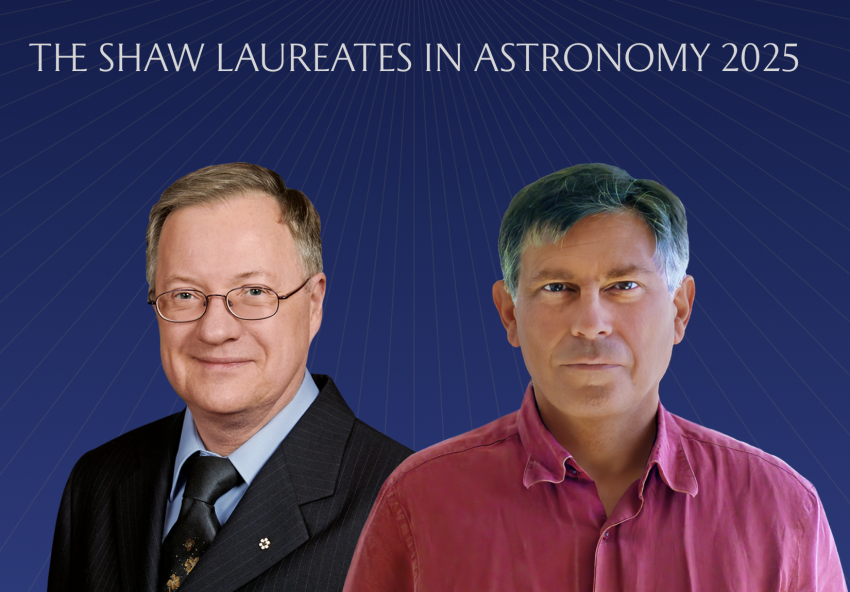
Dick Bond (left) and George Efstathiou (right)

I’m a few days late on this, as the announcement on 27th May came at a very busy time, but it’s a pleasure to pass on the news that the 2025 Shaw Prize for Astronomy has been awarded to Dick Bond and George Efstathiou. Congratulations to both on a very well deserved award!

The full citation can be found here, but the first paragraph reads:

The Shaw Prize in Astronomy 2025 is awarded in equal shares to John Richard Bond, Professor of the Canadian Institute for Theoretical Astrophysics and University Professor at the University of Toronto, Canada and George Efstathiou, Professor of Astrophysics at the University of Cambridge, UK for their pioneering research in cosmology, in particular for their studies of fluctuations in the cosmic microwave background. Their predictions have been verified by an armada of ground-, balloon- and space-based instruments, leading to precise determinations of the age, geometry, and mass-energy content of the universe.

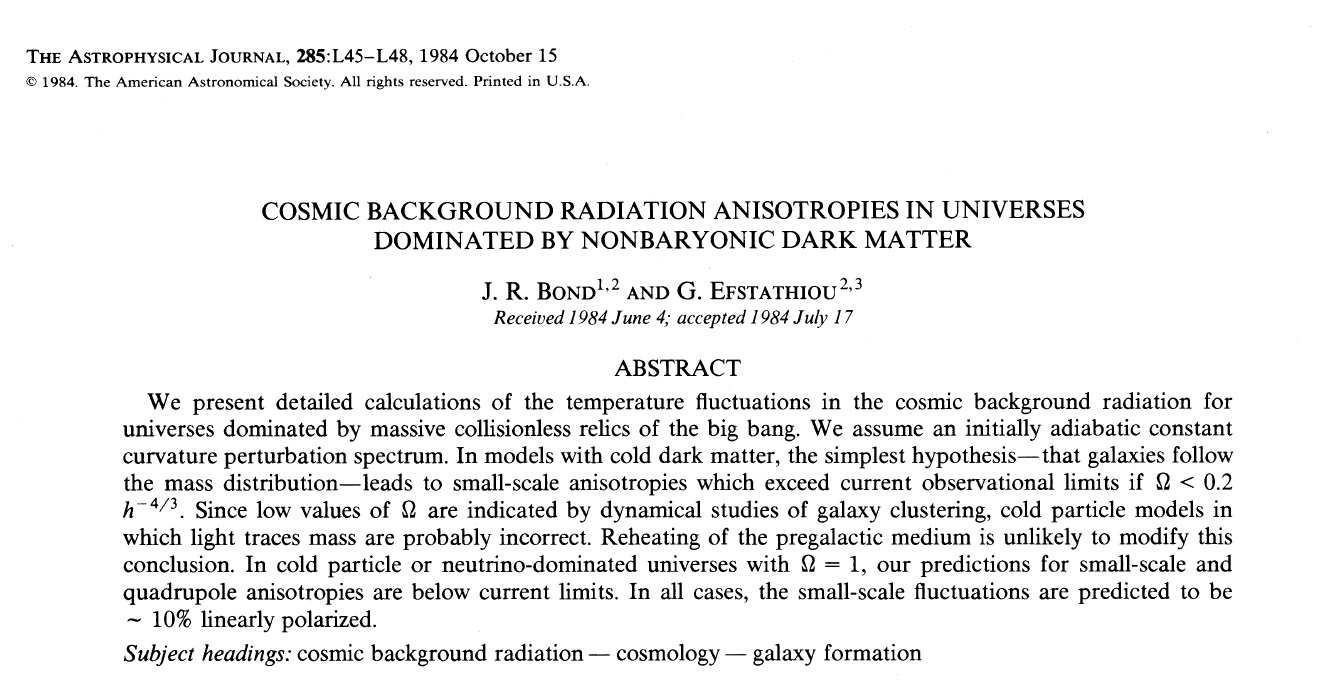
One of the first papers I was given to read when I started my postgraduate studies in 1985 was the pioneering Bond & Efstathiou (1984) “Cosmic background radiation anisotropies in universes dominated by nonbaryonic dark matter”. Here is the abstract:

This work was hugely influential and prescient in many ways. It does remind me, though, that in the 1980s, before the detection of large-scale anisotropies by the Cosmic Background Explorer (COBE) announced in 1992, the prevailing mentality was to find models in which the predicted cosmic microwave background anistropies were as small as possible. The COBE fluctuations turned out to be rather larger than those predicted in the model discussed in the paper, which was one reason why the standard cosmological model now has a lower density of dark matter than then.

On a more technical level, the paper also reminds us that it was to be a while until the angular power spectrum, as opposed to the correlation function, became the standard tool it is now for quantifying the statistical properties of these temperature fluctuations.

The Shaw Prize wasn’t awarded for just this paper, of course, but I think it’s emblematic of the sustained importance and influence of the work of the Laureates over many years.

Results from the Atacama Cosmology Telescope

Posted in Cardiff, The Universe and Stuff with tags , , , , , , , on March 19, 2025 by telescoper

Today is going to be a very busy day on the cosmology front – with the Euclid Q1 Data Release coming out at 11am GMT – but I’ll start off by sharing news of final data release (DR6) by the Atacama Cosmology Telescope. This was announced yesterday and includes former colleagues at Cardiff University, so congratulations to them and all concerned. Here is a pretty picture showing one of the beautiful cosmic microwave background polarization and intensity maps:

Intensity and Polarization maps from ACT: arXiv:2503.14451

There are three related preprints on the arXiv today:

There’s a lot to digest in these papers but a quick skim of the abstracts gives two pertinent points. First, from the second paper:

We find that the ACT angular power spectra estimated over 10,000 deg2, and measured to arcminute scales in TT, TE and EE, are well fit by the sum of CMB and foregrounds, where the CMB spectra are described by the ΛCDM model. Combining ACT with larger-scale Planck data, the joint P-ACT dataset provides tight limits on the ingredients, expansion rate, and initial conditions of the universe.

They also find that, when combined with CMB lensing from ACT and Planck, and baryon acoustic oscillation data from the Dark Energy Spectroscopic Instrument (DESI Y1), the ACT data give a “low” value for the Hubble constant: H0=68.22 ± 0.36 km s-1 Mpc-1.

The third paper also says

In general, models introduced to increase the Hubble constant or to decrease the amplitude of density fluctuations inferred from the primary CMB are not favored by our data.

The “Hubble tension” remains!

Weekly Update from the Open Journal of Astrophysics – 22/02/2025

Posted in OJAp Papers, Open Access, The Universe and Stuff with tags , , , , , , , , , , , , , , , , , , on February 22, 2025 by telescoper

It’s Saturday morning again so it’s time for an update of papers published at the Open Journal of Astrophysics. Things have picked up a bit after a quiet couple of weeks. Since the last update we have published four new papers which brings the number in Volume 8 (2025) up to 18 and the total so far published by OJAp up to 253.

In chronological order of publication, the four papers published this week, with their overlays, are as follows. You can click on the images of the overlays to make them larger should you wish to do so.

The first paper to report is in fact our 250th paper:  “Untangling Magellanic Streams” by Dennis Zaritsky (Steward Observatory), Vedant Chandra (Harvard), Charlie Conroy (Harvard), Ana Bonaca (Carnegie Observatories), Phillip A. Cargile (Harvard), and Rohan P. Naidu (MIT), all based in the USA. This paper is in the folder marked Astrophysics of Galaxies and it reports on spectroscopic study aimed at teasing out the stellar populations of different strands of the Magellanic Stream. It was published on Tuesday 18th February 2025. Here is the overlay:

You can read the officially accepted version of this paper on arXiv here.

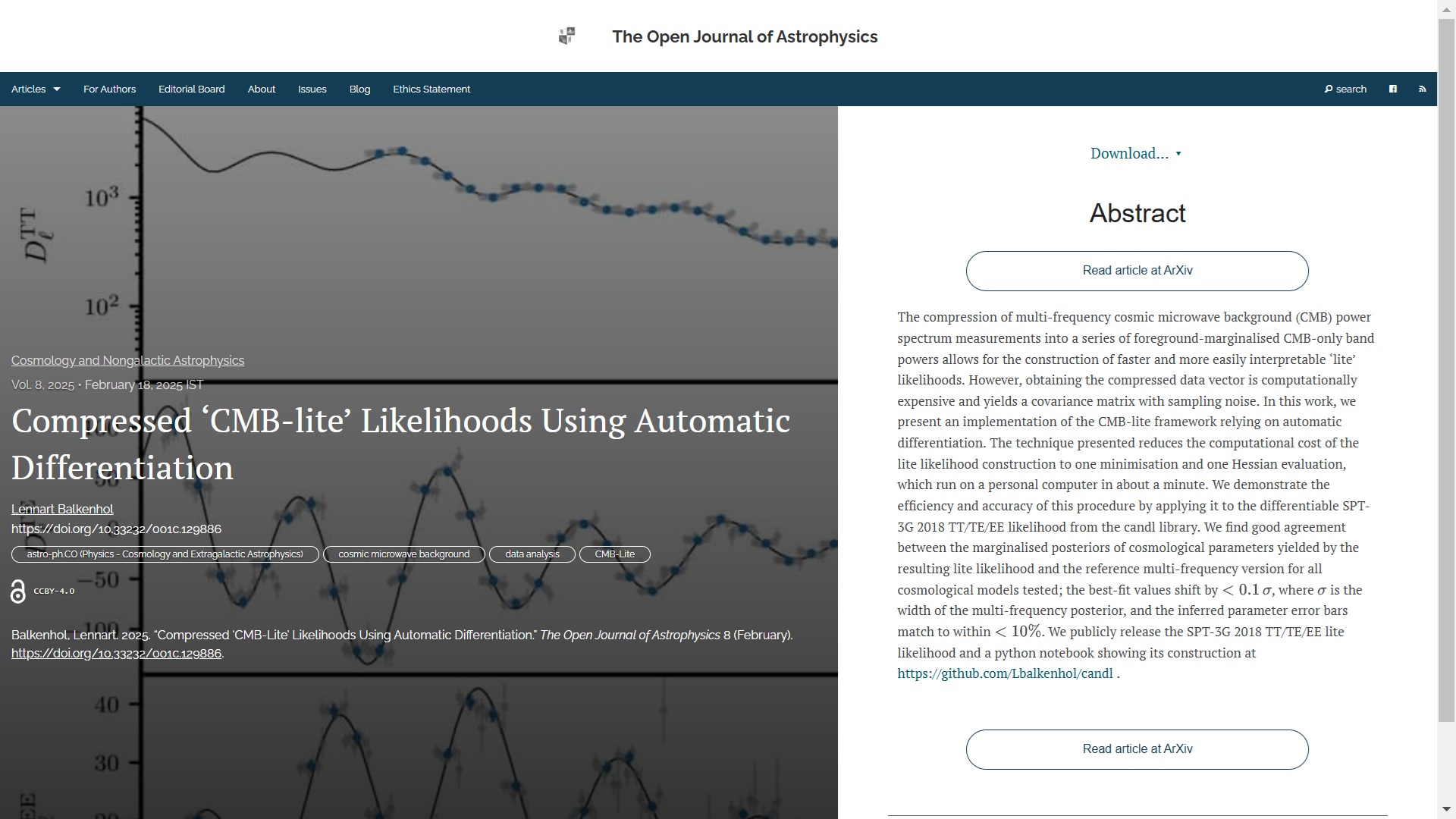
The second paper of the week  is “Compressed ‘CMB-lite’ Likelihoods Using Automatic Differentiation” by Lennart Balkenhol (Institut d’Astrophysique de Paris, France) which was one of two papers published on Wednesday 19th February. It appears in the folder Cosmology and Nongalactic Astrophysics and it describes an implementation of the CMB-lite framework relying on automatic differentiation to reduce the computational cost of the lite likelihood construction.  The overlay is here:

You can find the officially accepted version of this paper on arXiv here.

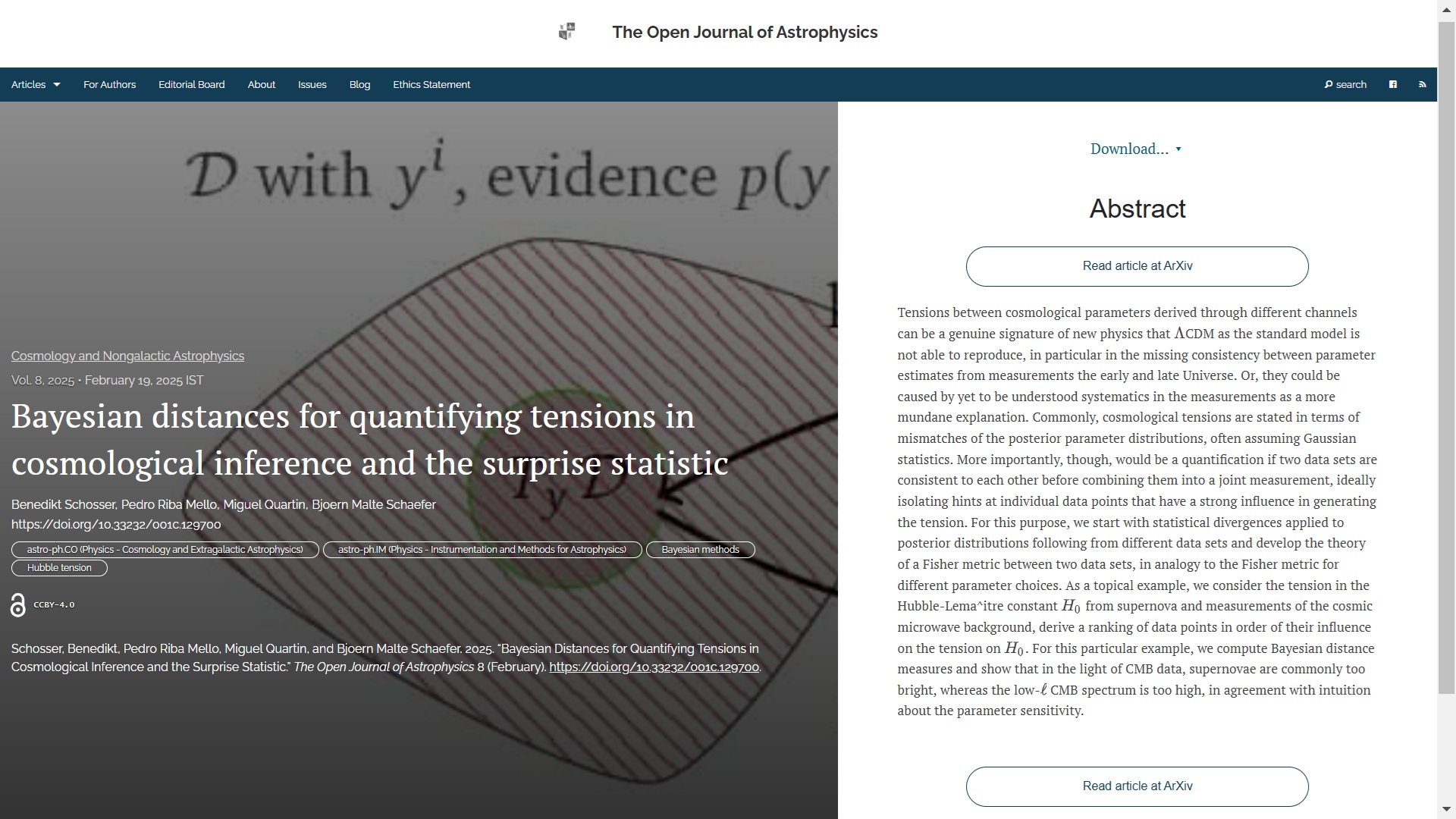
The next paper, also published on Wednesday 19th February in the folder Cosmology and Nongalactic Astrophysics is “Bayesian distances for quantifying tensions in cosmological inference and the surprise statistic” by Benedikt Schosser (Heidelberg, Germany), Pedro Riba Mello & Miguel Quartin (Rio de Janeiro, Brazil) and Bjoern Malte Schaefer (Heidelberg).  It presents a discussion of statistical divergences applied to posterior distributions following from different data sets and their use in quantifying discrepancies or tensions.

Here is the overlay:

The official published version can be found on the arXiv here.

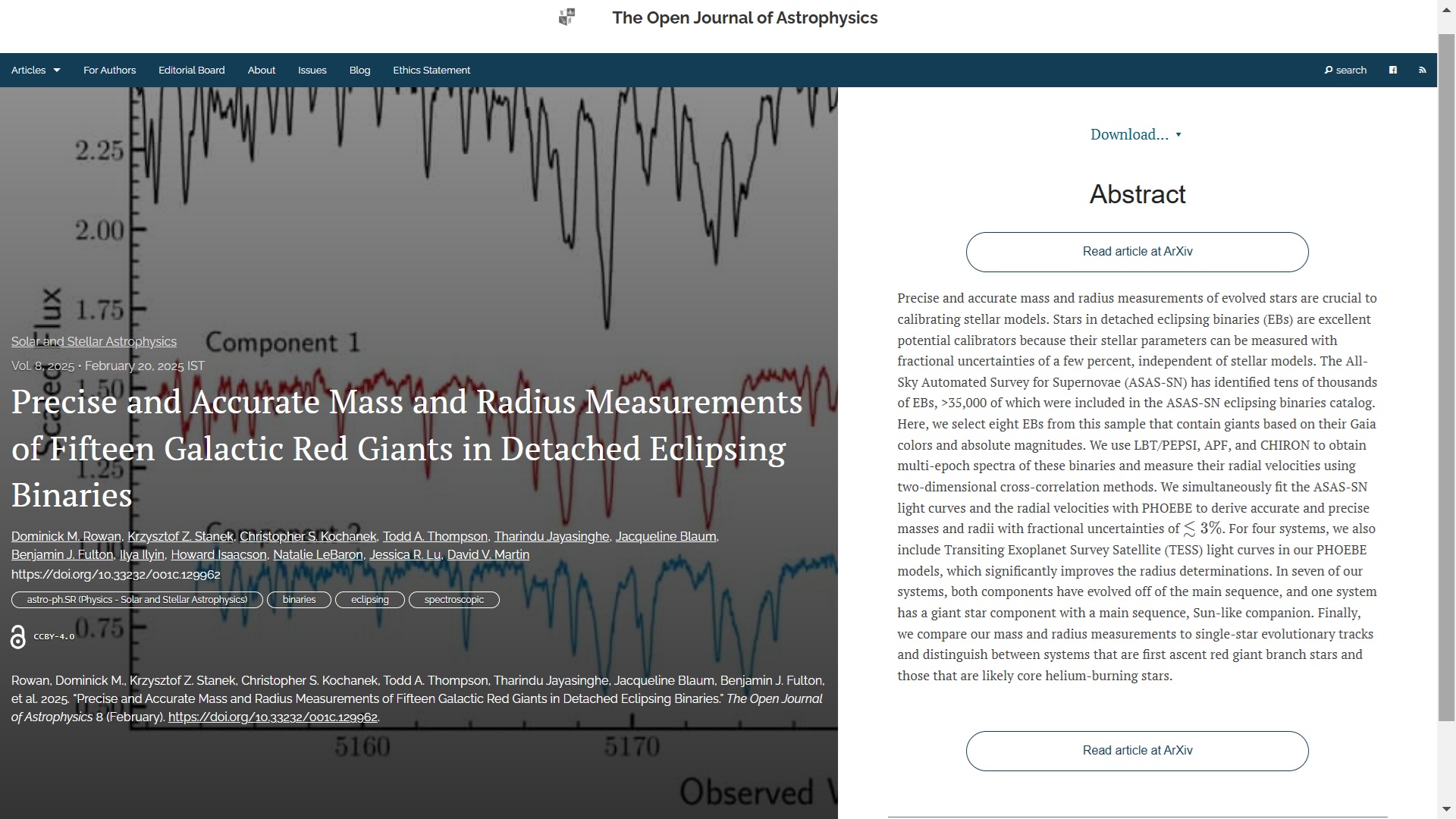
Finally in this batch we have “Precise and Accurate Mass and Radius Measurements of Fifteen Galactic Red Giants in Detached Eclipsing Binaries” by Dominick M. Rowan,  Krzysztof Z. Stanek,  Christopher S. Kochanek & Todd A. Thompson (Ohio State University), Tharindu Jayasinghe (independent researcher),  Jacqueline Blaum (UC Berkeley),  Benjamin J. Fulton (NASA/Caltech),  Ilya Ilyin (AIP Potsdam, Germany),  Howard Isaacson, Natalie LeBaron  &  Jessica R. Lu (UC Berkeley), and  David V. Martin (Tufts University, USA).  This paper was published on Thursday 20th February 2025 in the folder Solar and Stellar Astrophysics and it presents a compilation of mass and readius measurements of red giant stars obtained using spectroscopic measurements together with light curves and the eclipsing binary models obtained using PHOEBE.

The overlay is here:

You can find the “final” version on arXiv here.

That’s all for this week. I’ll do another update next Saturday.

In Search of Stokes V

Posted in The Universe and Stuff with tags , , , , on September 17, 2024 by telescoper

Many moons ago I went to a seminar on the design of an experiment to measure the polarization of the cosmic microwave background. At the end of the talk I asked what seemed to me to be an innocent question. The point of my question was the speaker had focussed entirely on measuring the intensity of the radiation (I) and the two Stokes Parameters that measure linear polarization of the radiation (usually called Q and U). How difficult, I asked, would it be to measure the remaining Stokes parameter V (which quantifies circular polarization)?

There was a sharp intake of breath among the audience and the speaker responded with a curt “the cosmic microwave background is not circularly polarized”. It is true that in the standard cosmological theory the microwave background is produced by Thomson scattering in the early Universe which produces partial linear polarization, so that Q and U are non-zero, but not circular polarization so V=0. I knew that, but had asked my question because I had an idea that it might be worth measuring V (or at least putting an upper limit on it) in order to assess the level of instrumental systematics (which are a serious issue with polarization measurements). It might also help constrain variations from the standard model too.

Well, that thought came back today when I saw a new paper on the arXiv with the abstract:

V-mode polarization of the cosmic microwave background is expected to be vanishingly small in the ΛCDM model and, hence, usually ignored. Nonetheless, several astrophysical effects, as well as beyond standard model physics could produce it at a detectable level. A realistic half-wave plate – an optical element commonly used in CMB experiments to modulate the polarized signal – can provide sensitivity to V modes without significantly spoiling that to linear polarization. We assess this sensitivity for some new-generation CMB experiments, such as the LiteBIRD satellite, the ground-based Simons Observatory and a CMB-S4-like experiment. We forecast the efficiency of these experiments to constrain the phenomenology of certain classes of BSM models inducing mixing of linear polarization states and generation of V modes in the CMB. We find that new-generation experiments can improve current limits by 1-to-3 orders of magnitude, depending on the data combination. The inclusion of V-mode information dramatically boosts the sensitivity to these BSM models.

arXiv:2409.10424

It seems it might be feasible to measure Stokes V after all!

New Publication at the Open Journal of Astrophysics

Posted in OJAp Papers, Open Access, The Universe and Stuff with tags , , , , , , on February 12, 2024 by telescoper

With all the excitement of my first weekend in Sydney I completely forgot to post an update from the Open Journal of Astrophysics. In fact there is only one paper to report from last week, being  the 12th paper in Volume 7 (2024)  and the 127th altogether. This one was published on 9th February 2024 and is the first published from Down Under.

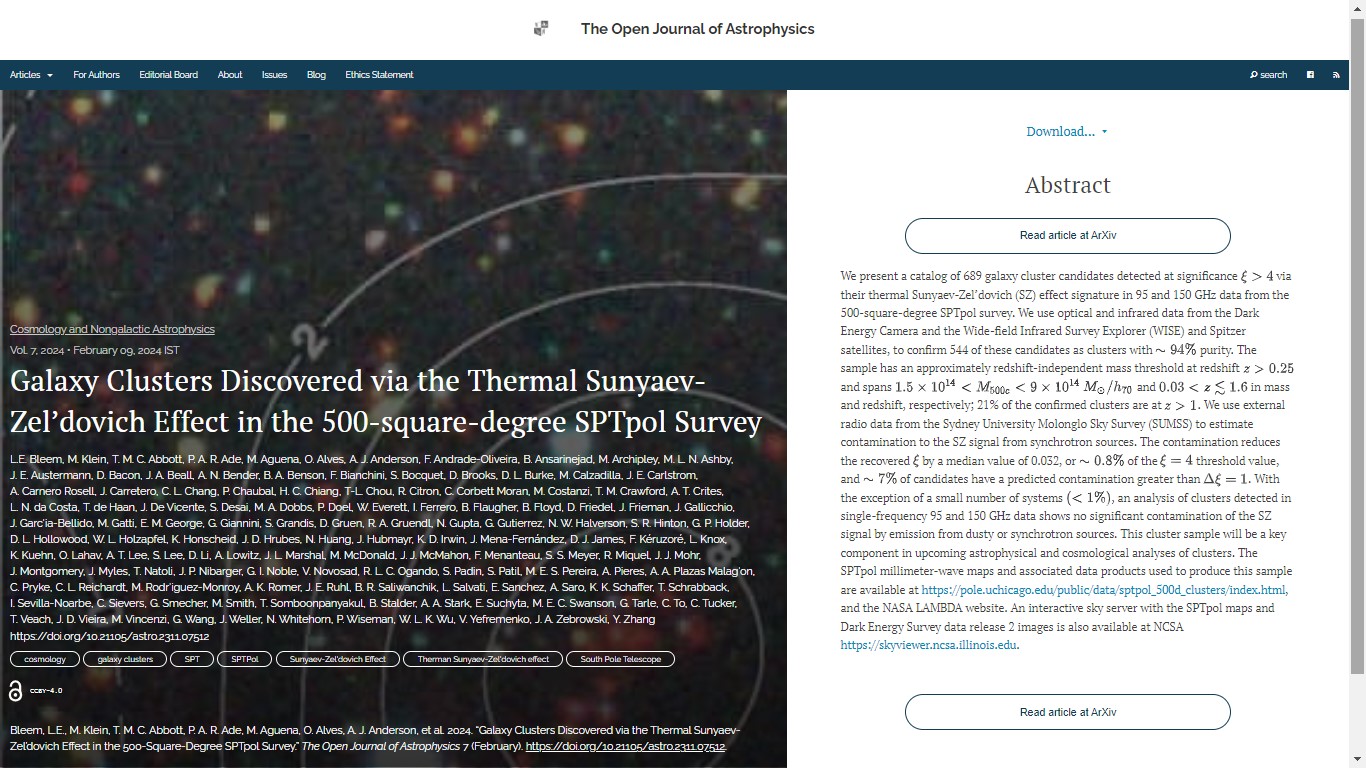
The title is “Galaxy Clusters Discovered via the Thermal Sunyaev-Zel’dovich Effect in the 500-square-degree SPTpol Survey” and it presents a catalogue of 689 galaxy clusters detected through the thermal Sunyaev-Zel’dovich using the dual-frequency polarization-sensitive camera SPTPol on the South Pole Telescope. This one is in the folder called Cosmology and NonGalactic Astrophysics.

This paper has lead author Lindsey Bleem  of the Argonne National Laboratory in the USA and has 127 other authors – too many to list individually here – but you can see them on the overlay below. I see quite a few names of people I know well!

Here is the overlay of the paper containing the abstract:


You can click on the image of the overlay to make it larger should you wish to do so. You can find the officially accepted version of the paper on the arXiv here.

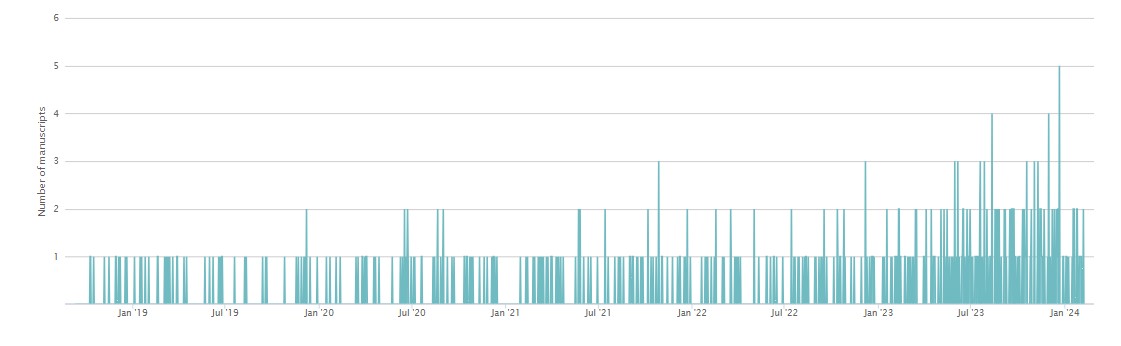
P.S. Incidentally, while I’m here I thought I’d share this little graphic I’ve generated (for other purposes) that shows how the rate of submissions to OJAp has increased over the last 5 years:

Two New Publications at the Open Journal of Astrophysics

Posted in OJAp Papers, Open Access, The Universe and Stuff with tags , , , , , , , , , , , on February 1, 2024 by telescoper

As the first month of 2024 is now over, I thought I’d post an update relating to the  Open Journal of Astrophysics.  Since the last update we have published two papers, taking  the count in Volume 7 (2024) up to 9 (the total for January) and the total published by OJAp up to 124. We will have others soon, but I will be travelling for the first few days of February so the next update will be in a week or so.

Using our sophisticated forecasting algorithm, based on the first month of 2024 as input, I predict that we will publish around 9×12=108 papers in 2024, more than double last year’s total of 50.

Both the current papers discussed here are in the folder marked Cosmology and NonGalactic Astrophysics, our most popular category.

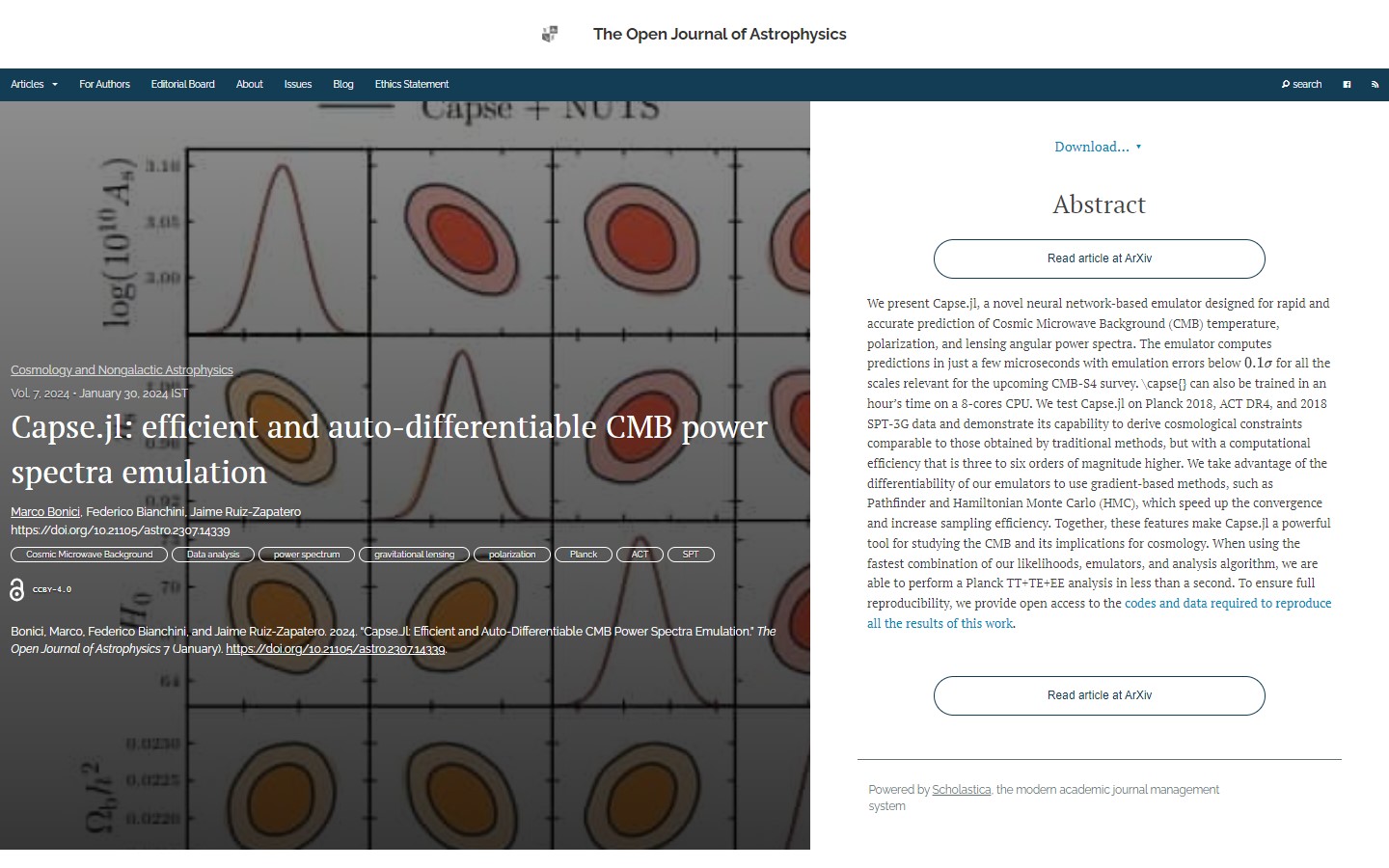
Anyway, the first paper of the most recent pair – published on January 30th – is “Capse.jl: efficient and auto-differentiable CMB power spectra emulation”, by Marco Bonici (INAF Milano, Italy & Waterloo, Canada), Federico Bianchini (Stanford, USA) and Jaime Ruiz-Zapatero (Oxford, UK). This paper presents an emulator for rapid and accurate prediction of Cosmic Microwave Background (CMB) temperature, polarization, and lensing angular power spectra, that works much faster than traditional methods. The code is written in Julia, in which language we are seeing an increasing number of submissions to OJAp.

Here is a screen grab of the overlay which includes the abstract:


You can click on the image of the overlay to make it larger should you wish to do so. You can find the officially accepted version of the paper on the arXiv here.

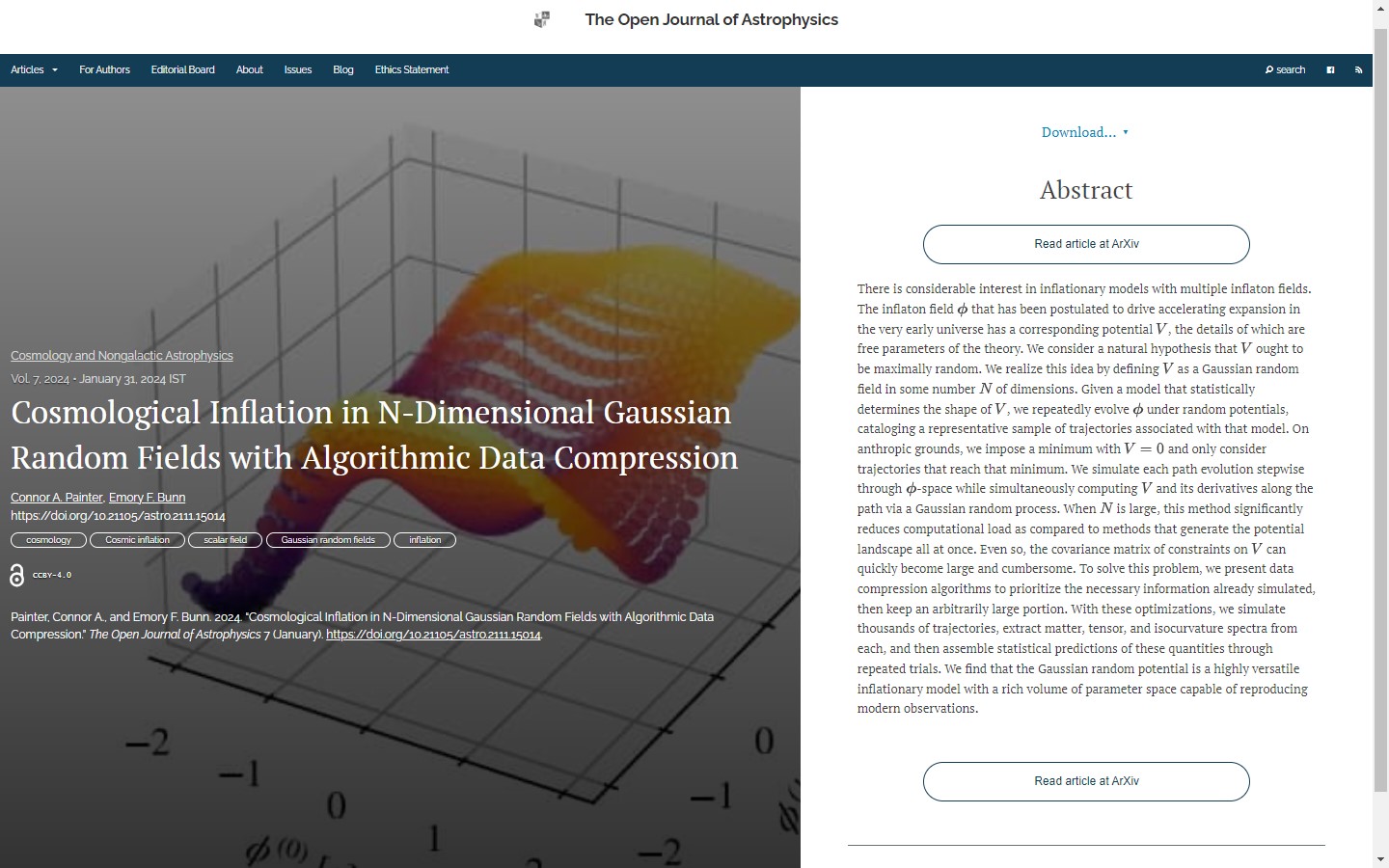
The second paper was published yesterday (31st January 2024) and has the title “Cosmological Inflation in N-Dimensional Gaussian Random Fields with Algorithmic Data Compression” which is a  study of inflationary models with Gaussian random potentials for multiple scalar fields, tracking the evolutionary trajectories numerically. The authors are Connor Painter and Emory Bunn, both the Physics Department at the University of Richmond, Virginia (USA). Ted Bunn (as he is usually known) is a longstanding member of the Editorial Board of the Open Journal of Astrophysics (and was thereby excluded from any involvement in the editorial process for this paper).

Here is a screen grab of the overlay which includes the abstract:


You can click on the image of the overlay to make it larger should you wish to do so. You can find the officially accepted version of the paper on the arXiv here.

Here Endeth the Update.