Archive for James McNeill Whistler

Whistler at Tate Britain

Posted in Art, Jazz with tags , , , , , on July 5, 2026 by telescoper

Back to the hotel for a short siesta after spending most of the day at Tate Britain, where there is a special exhibition of works by and about James McNeill Whistler. The main collection at Tate Britain is free, but the Whistler exhibition costs £24 to see. It’s well worth it though.

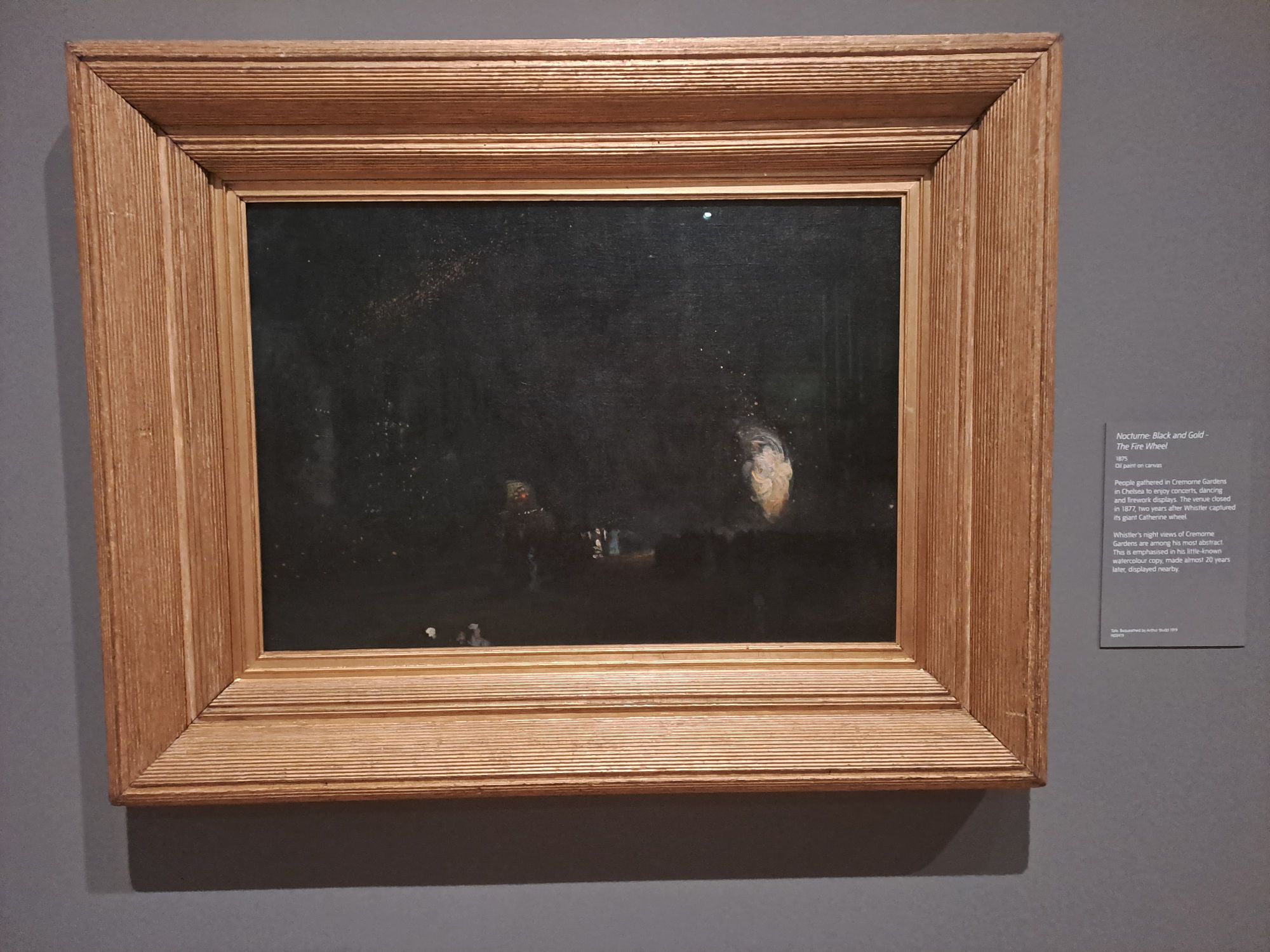
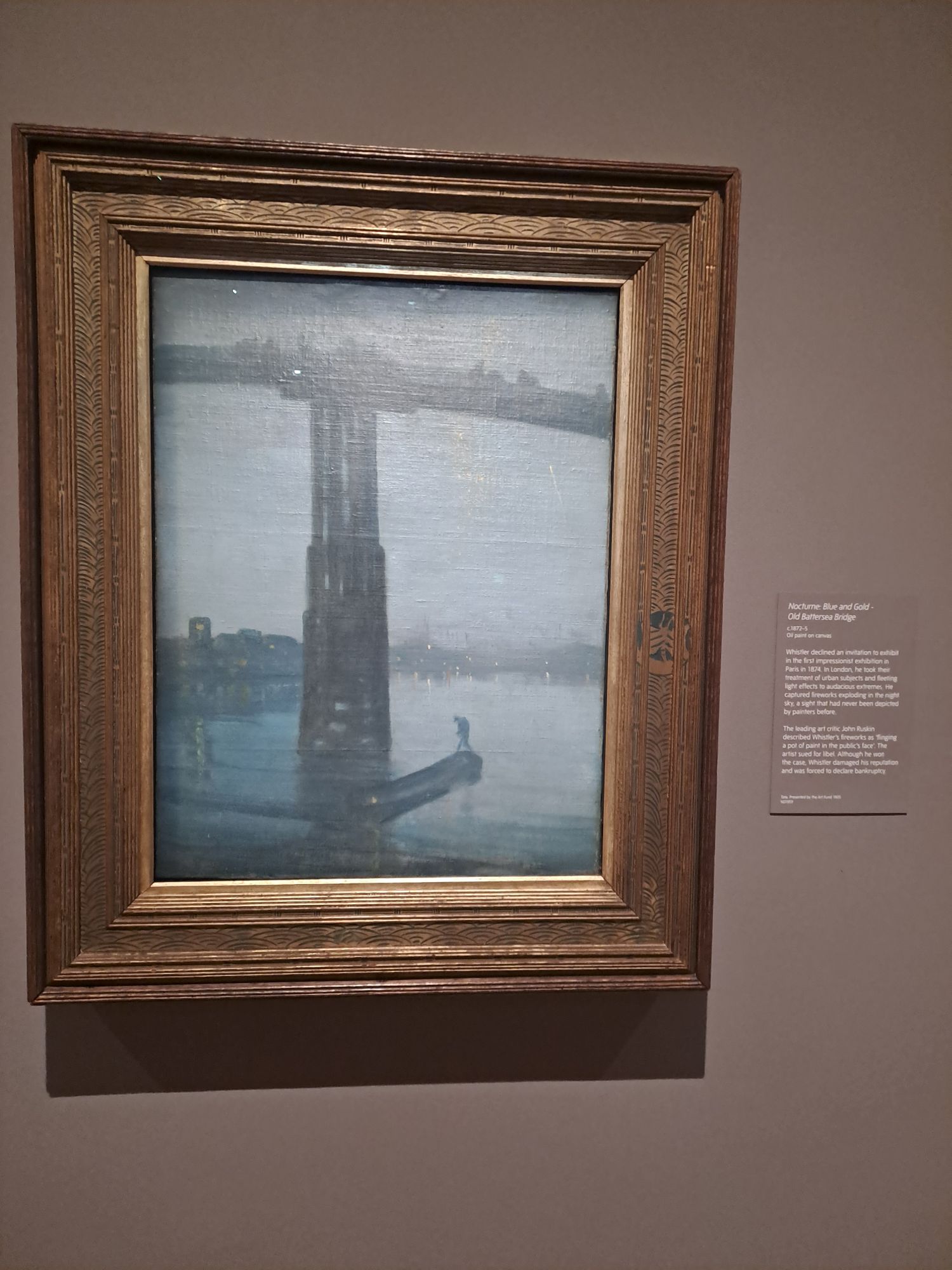
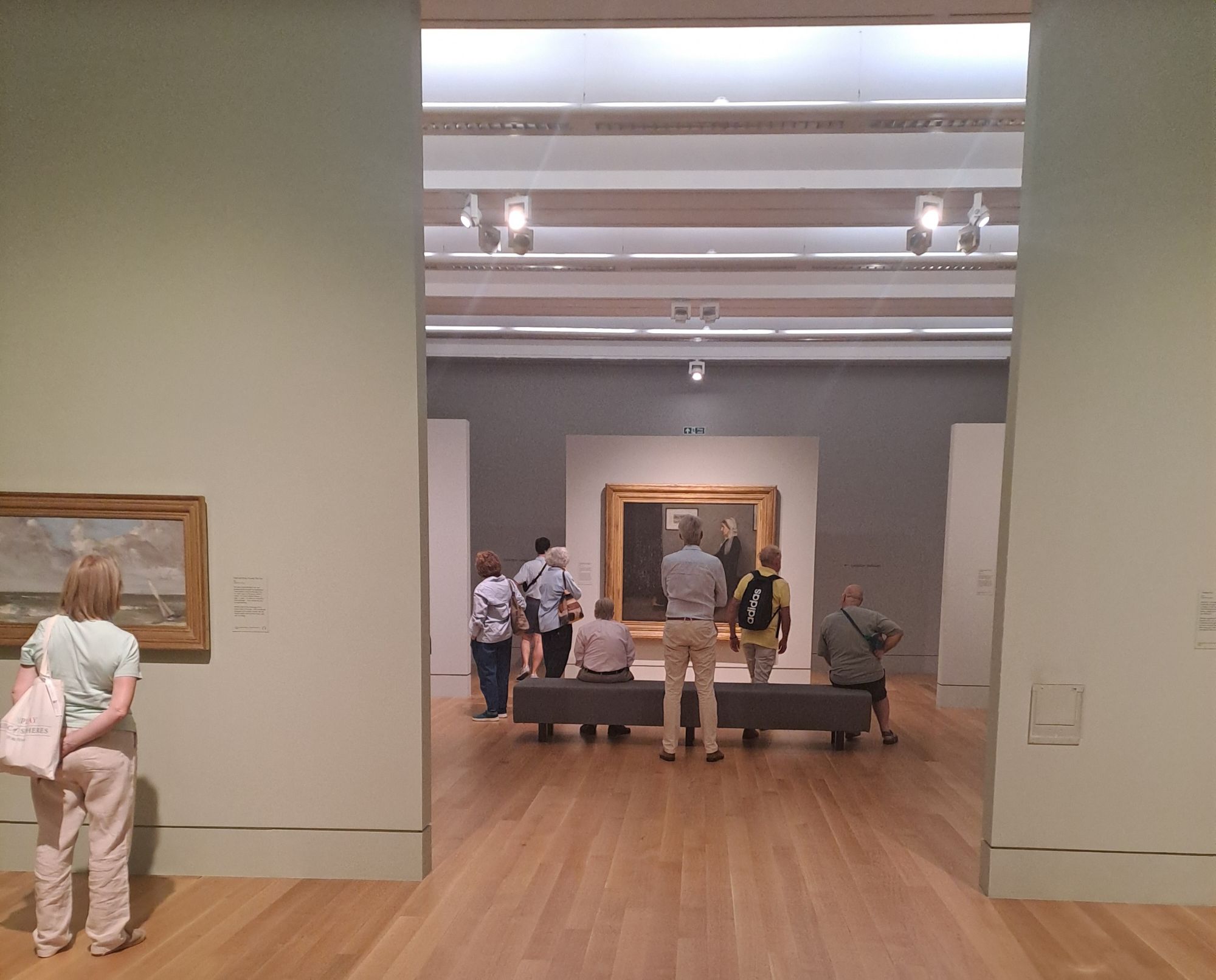
The first picture shows Whistler’s famous portrait of his mother, who seems to be holding court. My favourite pieces, however, the Nocturnes, two of which I have mentioned on this blog before. There are three shown below, but photographs don’t do them justice at all. The appearance of the paint when seen close up is quite remarkable, a sort of translucent quality to it even when the picture is very dark. Whistler was one of the first artists to really master painting in the dark without using moonlight or other obvious illumination.
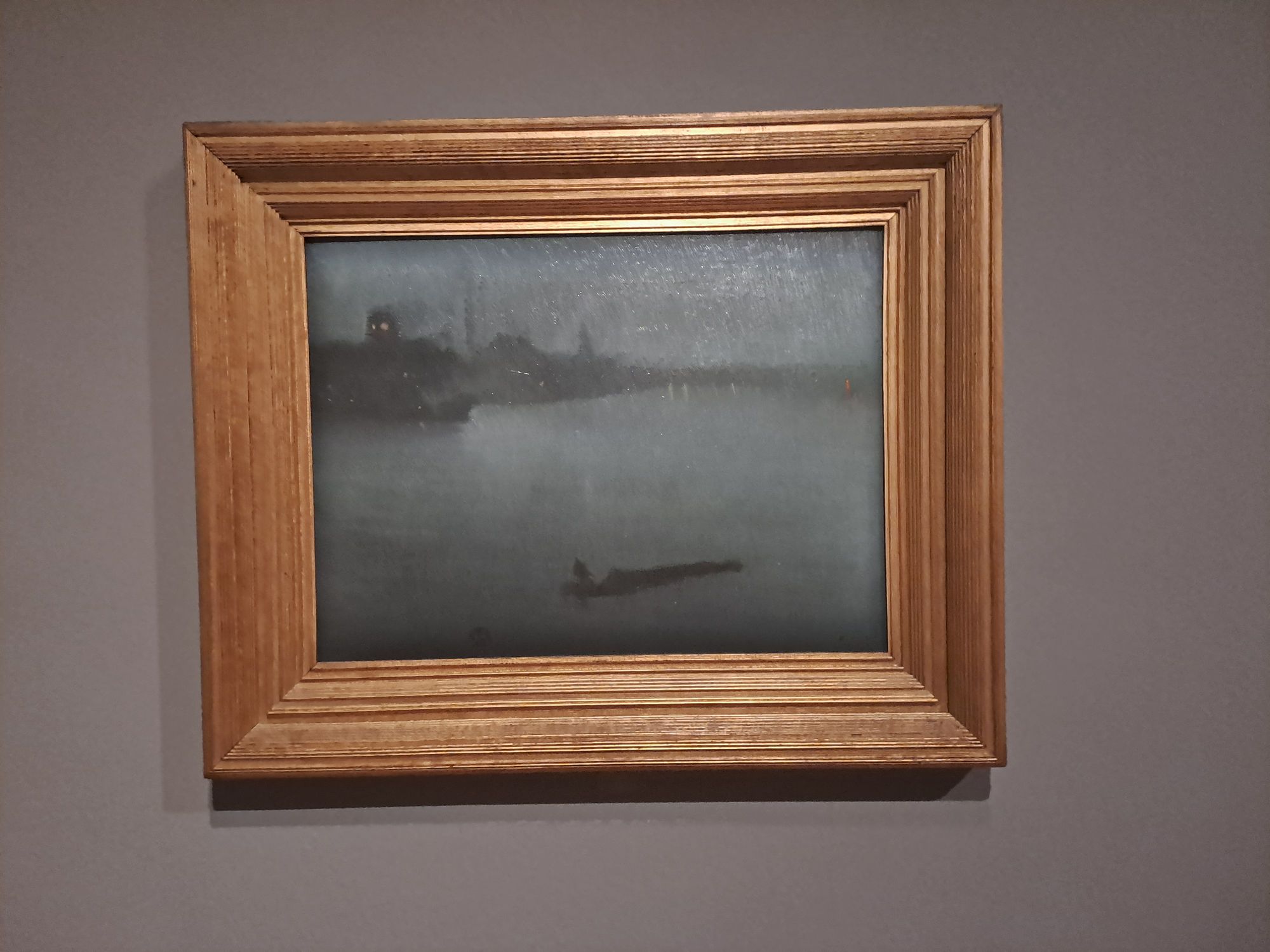
The last of these is particularly interesting to me. When the great American songwriter Billy Strayhorn saw the beautifully evocative painting (above) of one of the bridges over the River Thames, it inspired him to write an equally evocative song to be performed by his longstanding musical collaborator and friend Duke Ellington. The song was written in 1941, but it was only years later that he realized that he had named it after the wrong bridge. The painting was of Battersea Bridge; but he had named the song  Chelsea Bridge, a much less romantic location. Chelsea Bridge is an intriguing tune, based on minor sixth chords voiced via their third inversions, it sounds almost atonal but very evocative, just like the painting.

In one of the video segments played during the exhibition we hear the actor Anton Lesser quoting Whistler with words the effect that he saw colours like notes on a keyboard; he started naming his paintings after musical works, e.g. “Symphony in White” before he got to his masterpieces, the Nocturnes.

I wrote about another of the Nocturnes here. Nocturne in Black and Gold, in the same series as the third picture above, is famous for having been at the centre of a libel case. The influential art critic John Ruskin hated it and accused Whistler of “flinging a pot of paint in the public’s face”. Whistler sued for damages (though he couldn’t really afford to). He won the case against Ruskin, but the outcome was financially disastrous for him because he was awarded only one farthing in damages and was bankrupted.

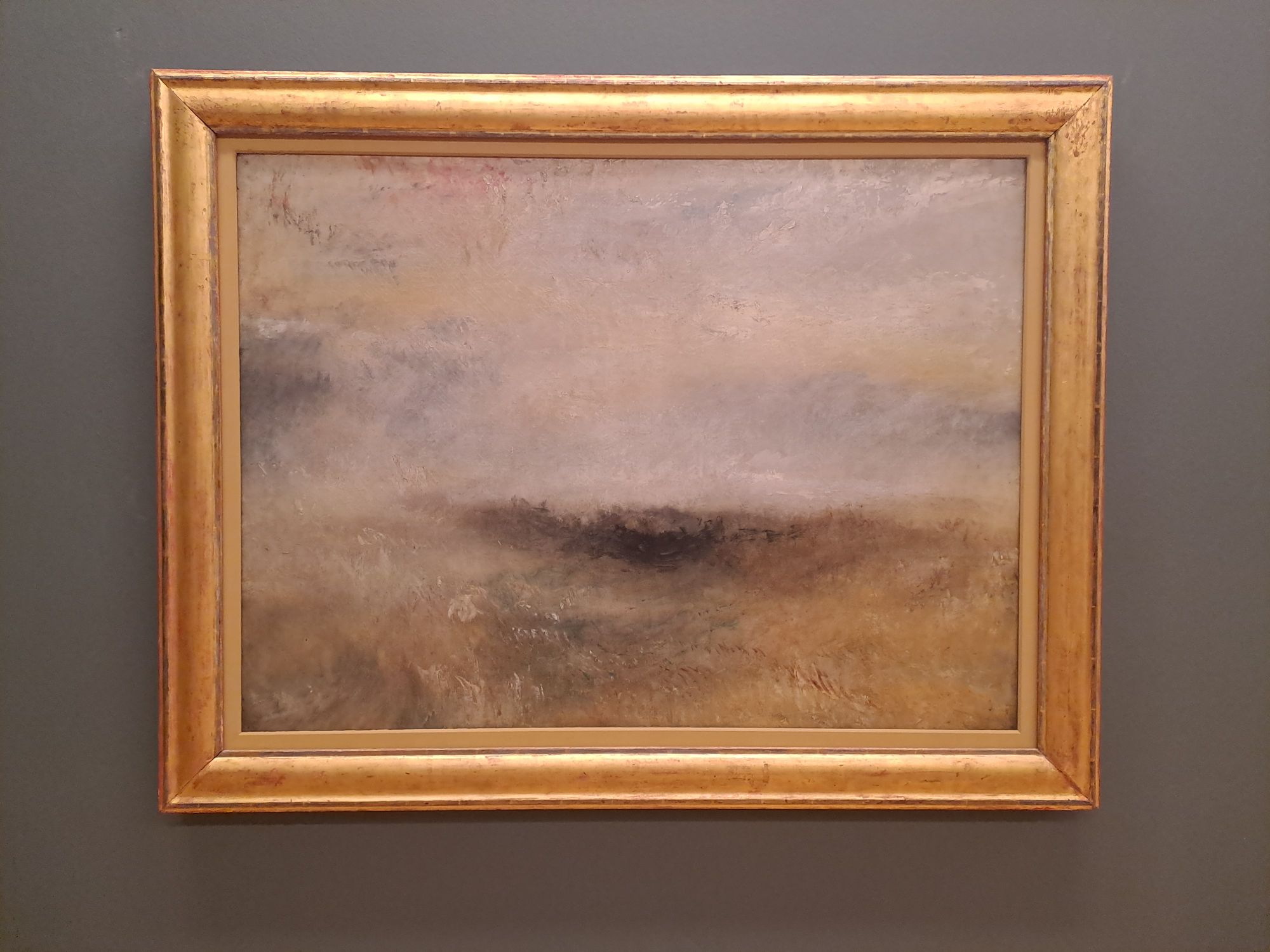
Tate Britain has an extensive permanent collection of primarily English art from about 1600 onwards, not least a huge collection of works by J.M.W. Turner. It’s fascinating to see so many of these together, charting this extraordinary artist’s evolution from brilliant if conventional upstart to pioneering impressionist. Along the way Turner’s interest in conventional themes began to wane in favour of the interplay between sea and clouds, to the extent that his works began to look like abstracts. There is in my mind a strong influence on Whistler. This one, ostensibly a seascape with a distant shore, reminds me of Rothko.
Nocturne in Black and Gold

Posted in Art, Biographical with tags , , on November 5, 2022 by telescoper

`Only Connect’ – the epigraph of the novel Howard’s End by E.M. Forster – was a favourite phrase of one of my English teachers at school, and he invoked it whenever he set us one of his creative writing challenges. We were given two apparently disconnected things (usually news items), asked to think of a possible connection between them and write an story joining them together. From time to time when stuck for a topic for a blog post I’ve resorted to playing the same game.

In that vein: (a) I noticed a story last week about a painting by Piet Mondrian which has been hanging upside down for 75 years and (b) today is November 5th, Bonfire Night in the United Kingdom. The connection between these two things that sprang to my mind is this painting, Nocturne in Black and Gold – The Falling Rocket by James McNeill Whistler.

James Abbott McNeill Whistler, Nocturne in Black and Gold – the Falling Rocket, c1875, oil on panel, 60.3 × 46.7 cm (Detroit Institute of Arts)

This, the last in his wonderful series of paintings of night-time scenes, first displayed in 1877, is set in the Cremorne Gardens, which was a park in Chelsea, though in a manner typical of Whistler’s work of this period it is more a response to the location than a representation of it. The sombre colours – mainly green and blue, except for the grey smoke of the falling rocket and the gold flames and flashes of fireworks – are layered in such a way as to blur the situational context of the composition so that it’s no longer a purely figurative work. It’s certainly an enigmatic painting, but I think the arrangement of colours and textures is very well balanced as well as intriguing. It is historically important too, because it represents one of the first stirrings of modernism in art in England.

The compositional ambiguity is deliberate. The ghostly figures in the foreground are almost transparent. Are they even people? When asked this question himself, Whistler replied “They are just what you like”. Whistler is encouraging viewers of his work to construe their own meaning in, and interpretation of, what he put on the canvas. As an astrophysicist, the filamentary pattern of sparks reminds me of chains of distant galaxies. What does it remind you of?

Nocturne in Black and Gold is also famous for having been at the centre of a libel case. The influential art critic John Ruskin hated it and accused Whistler of “flinging a pot of paint in the public’s face”. Whistler sued for damages (though he couldn’t really afford to). He won the case against Ruskin, but the outcome was financially disastrous for him because he was awarded only one farthing in damages.

Anyway, the connection with the Mondrian story is that Whistler’s case was done no favours when this painting was brought into the courtroom during the Whistler v Ruskin case, as it was was presented for viewing upside down

Chelsea Bridge

Posted in Jazz with tags , , , , , , on March 29, 2009 by telescoper

When the great American songwriter Billy Strayhorn saw the beautifully evocative painting (left) by James McNeill Whistler of one of the bridges over the River Thames, it inspired him to write an equally evocative song to be performed by his longstanding musical collaborator and friend Duke Ellington. The song was written in 1941, but it was only years later that he realized that he had named it after the wrong bridge.


The painting was of Battersea Bridge; but he had named the song  Chelsea Bridge, a much less romantic location. Nevertheless, the tune quickly became a standard, and a feature for the band’s star saxophonist, Ben Webster who carried on playing it after he left Duke Ellington’s orchestra in 1943.

By all accounts Ben Webster was a drunken brute of a man but when he played ballads like this he produced music of great warmth and delicacy. In fact, his technique on the tenor sax would probably be called “wrong” by a teacher: he didn’t use his tongue properly on the reed so his notes had to be produced by much more lung power than “normal” players use. Instead of a clean attack, each note is wafted in on a sort of phoohing sound. The breathiness of his tone  is a consequence of this and, although he produced a huge volume which was good for playing in front of a big band like Ellington’s, it also made him unable to play well at faster tempos. His playing on slow ballads, though, was often exquisitely beautiful. Who says everyone has to be a speed merchant?

Ben Webster moved to Copenhagen in 1964 along with several other great Jazz musicians, to escape the racism and consequent lack of opportunity for black artists in  his homeland. He was buried in the part of Copenhagen called Nørrebro when he died in 1973. 

I am a fairly frequent visitor to Copenhagen – I’m going there again in June, in fact – and I did visit his grave once. There’s also a restaurant named after him in the city centre.

Anyway, here he is in in 1964 playing Chelsea Bridge with the marvellous Stan Tracey on piano who featured in a previous post of mine.