Archive for Billy Strayhorn

Whistler at Tate Britain

Posted in Art, Jazz with tags , , , , , on July 5, 2026 by telescoper

Back to the hotel for a short siesta after spending most of the day at Tate Britain, where there is a special exhibition of works by and about James McNeill Whistler. The main collection at Tate Britain is free, but the Whistler exhibition costs £24 to see. It’s well worth it though.

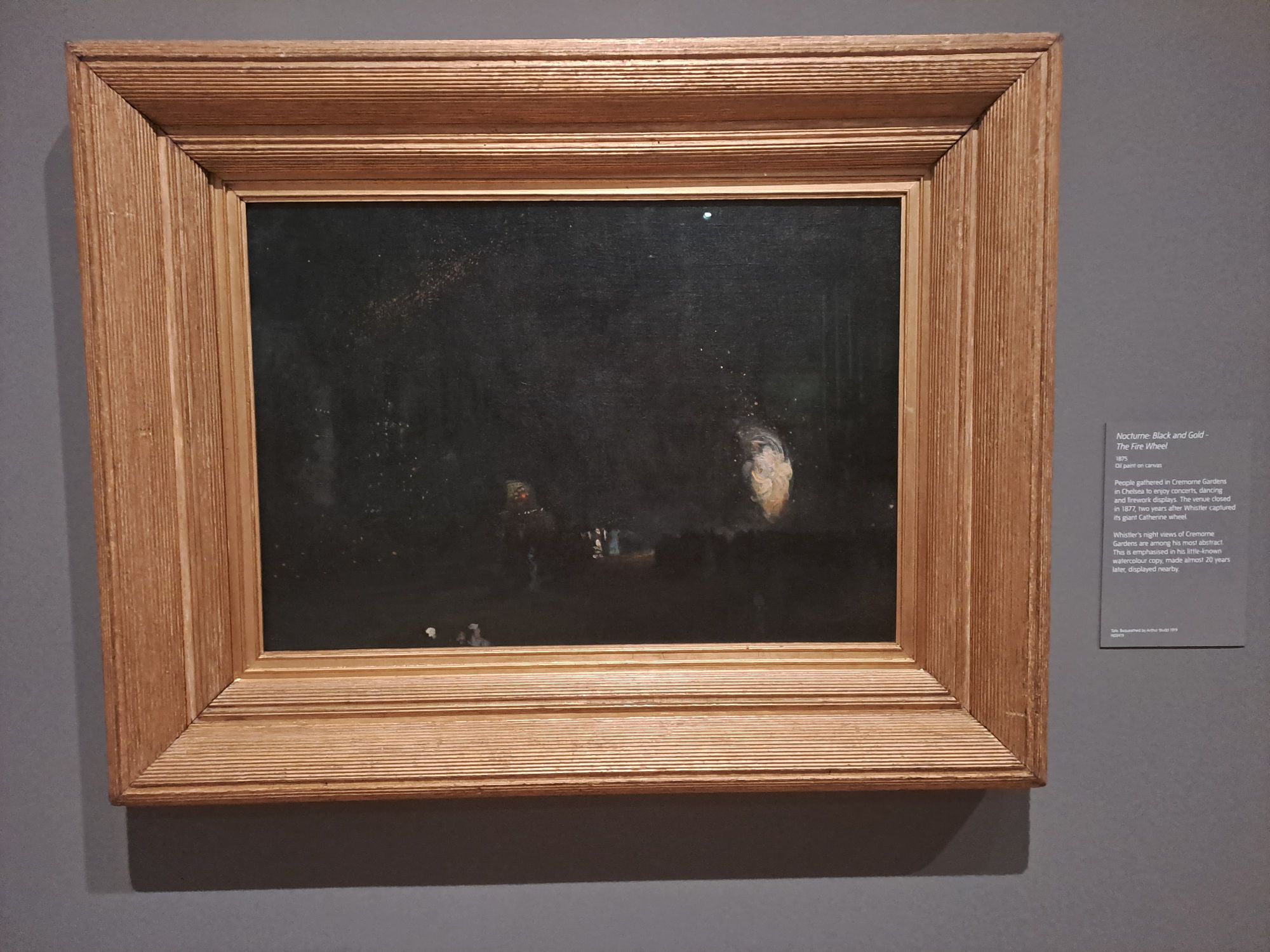
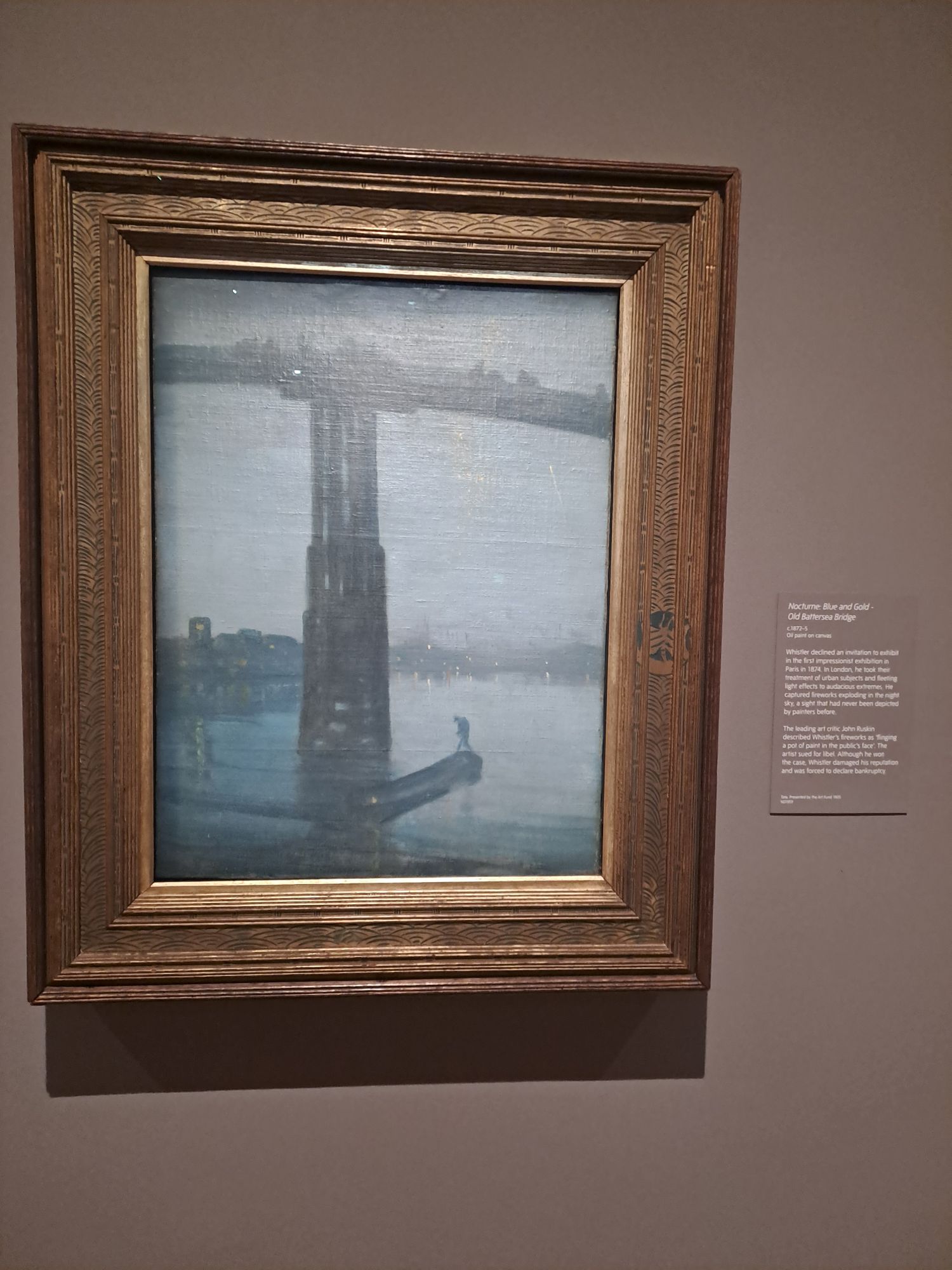
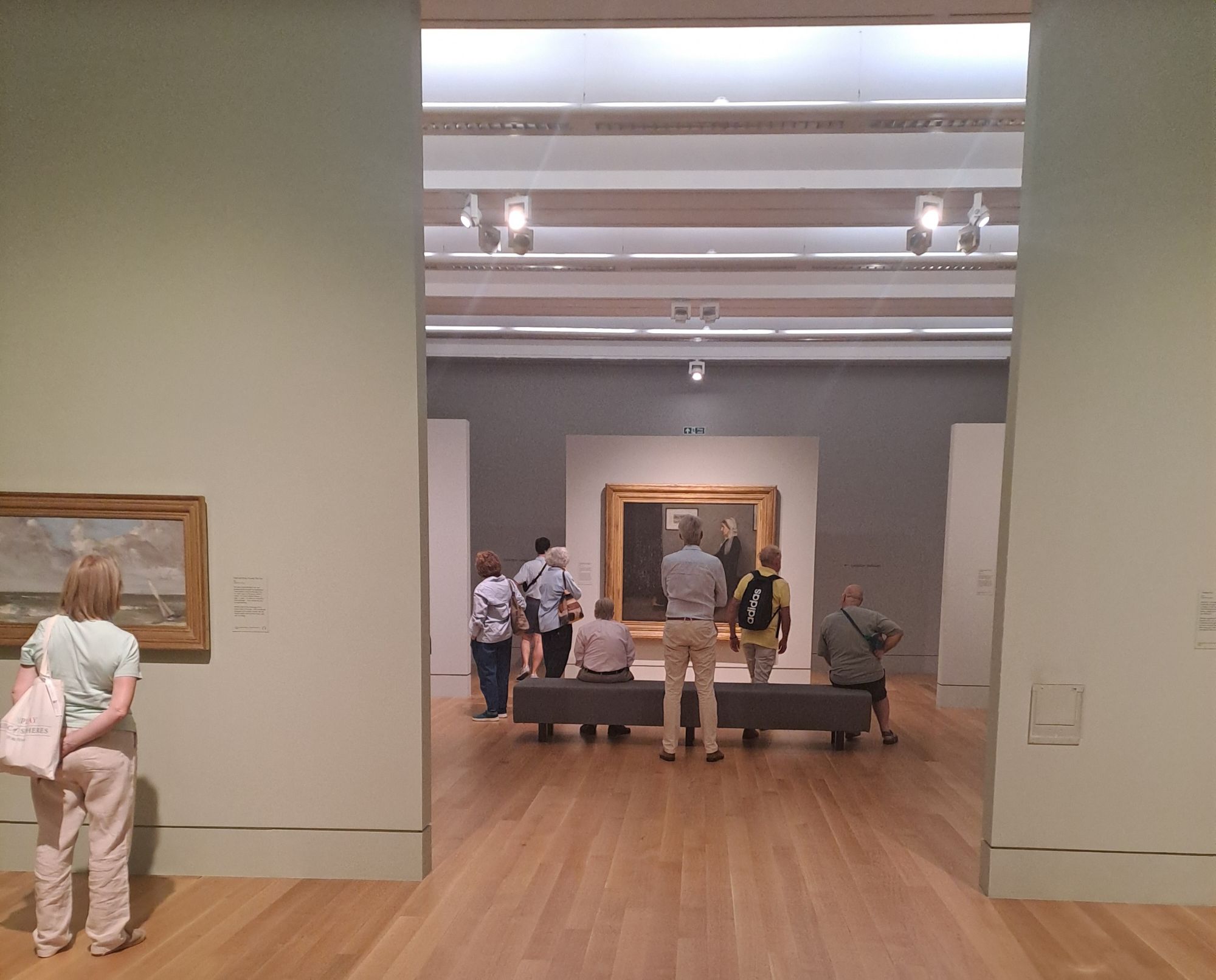
The first picture shows Whistler’s famous portrait of his mother, who seems to be holding court. My favourite pieces, however, the Nocturnes, two of which I have mentioned on this blog before. There are three shown below, but photographs don’t do them justice at all. The appearance of the paint when seen close up is quite remarkable, a sort of translucent quality to it even when the picture is very dark. Whistler was one of the first artists to really master painting in the dark without using moonlight or other obvious illumination.
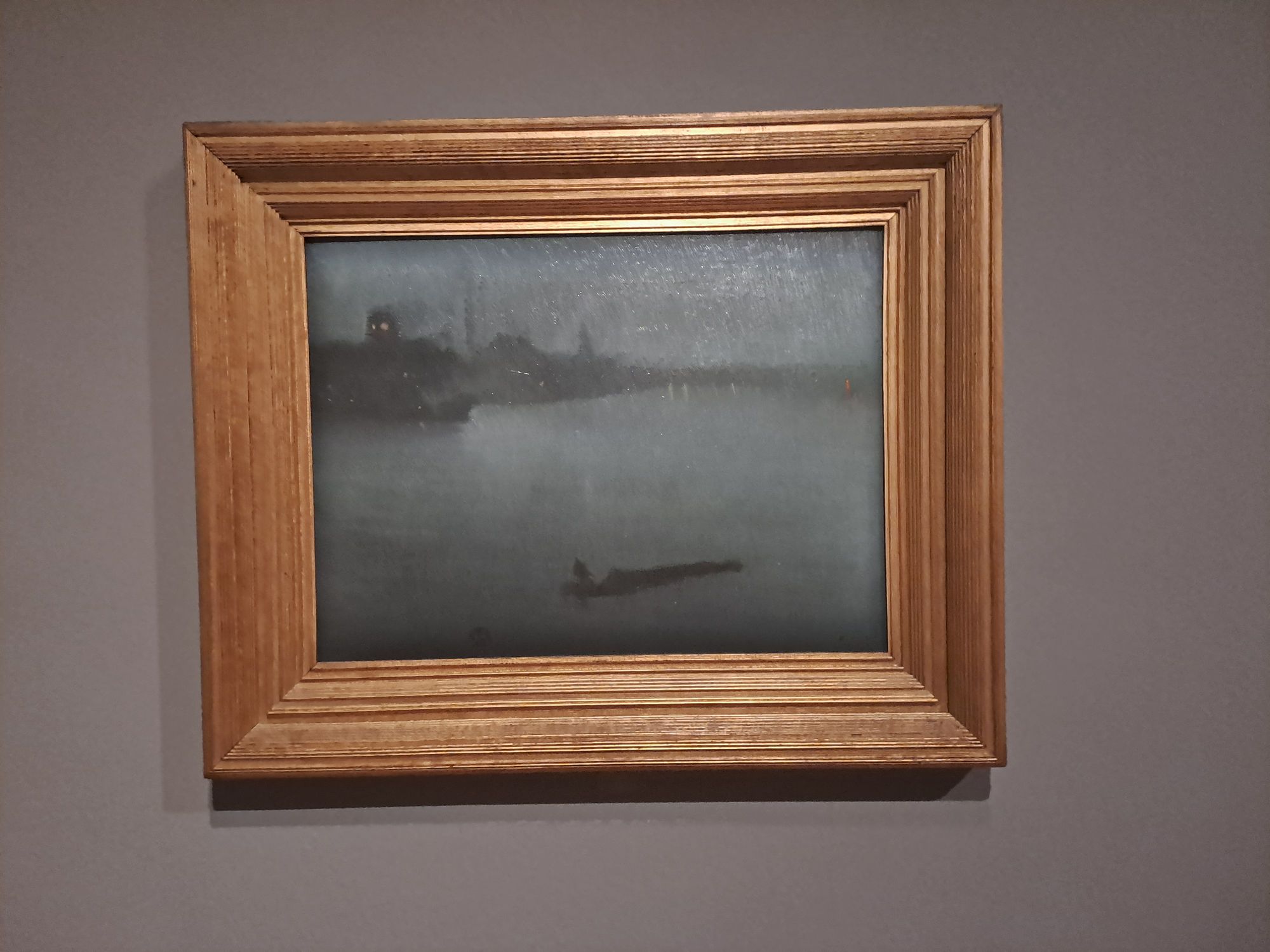
The last of these is particularly interesting to me. When the great American songwriter Billy Strayhorn saw the beautifully evocative painting (above) of one of the bridges over the River Thames, it inspired him to write an equally evocative song to be performed by his longstanding musical collaborator and friend Duke Ellington. The song was written in 1941, but it was only years later that he realized that he had named it after the wrong bridge. The painting was of Battersea Bridge; but he had named the song  Chelsea Bridge, a much less romantic location. Chelsea Bridge is an intriguing tune, based on minor sixth chords voiced via their third inversions, it sounds almost atonal but very evocative, just like the painting.

In one of the video segments played during the exhibition we hear the actor Anton Lesser quoting Whistler with words the effect that he saw colours like notes on a keyboard; he started naming his paintings after musical works, e.g. “Symphony in White” before he got to his masterpieces, the Nocturnes.

I wrote about another of the Nocturnes here. Nocturne in Black and Gold, in the same series as the third picture above, is famous for having been at the centre of a libel case. The influential art critic John Ruskin hated it and accused Whistler of “flinging a pot of paint in the public’s face”. Whistler sued for damages (though he couldn’t really afford to). He won the case against Ruskin, but the outcome was financially disastrous for him because he was awarded only one farthing in damages and was bankrupted.

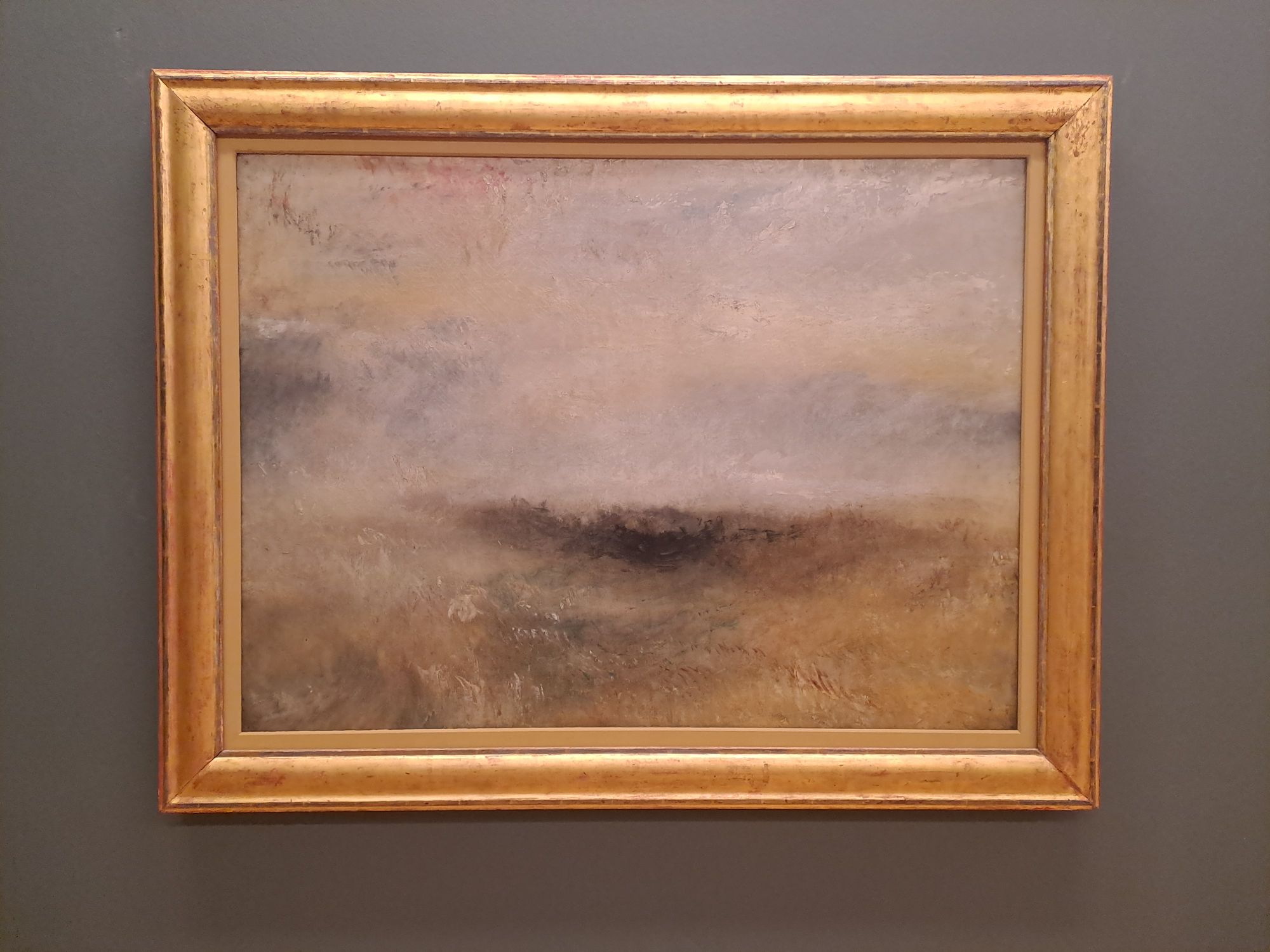
Tate Britain has an extensive permanent collection of primarily English art from about 1600 onwards, not least a huge collection of works by J.M.W. Turner. It’s fascinating to see so many of these together, charting this extraordinary artist’s evolution from brilliant if conventional upstart to pioneering impressionist. Along the way Turner’s interest in conventional themes began to wane in favour of the interplay between sea and clouds, to the extent that his works began to look like abstracts. There is in my mind a strong influence on Whistler. This one, ostensibly a seascape with a distant shore, reminds me of Rothko.
Sugar Rum Cherry – Duke Ellington

Posted in Biographical, Jazz with tags , , , , , on December 3, 2021 by telescoper

Today has been one of those days on which I’ve been quite busy all day but seem to have achieved very little so I eventually retreated home in the rain to have a drink or several before making dinner.

Jazz and classical music don’t always provide a palatable blend, but here’s one cocktail that definitely works, especially as the festive season approaches. It’s from the 1960 album The Nutcracker Suite by Duke Ellington, based on original music for the ballet by Pyotr Ilyich Tchaikovksy. Most of the arranging on the album was done by Duke Ellington’s regular collaborator Billy Strayhorn,  and the result is every bit as witty, elegant and charming as you’d expect.  This is their gorgeous take on The Dance of the Sugar Plum Fairy:

Blood Count

Posted in Jazz with tags , , , on November 29, 2009 by telescoper

Yesterday I was listening to Jazz Record Requests on BBC Radio 3 and a piece cropped up that reminded me that today, 29th November 2009, would have been the 94th birthday of the great composer and arranger Billy Strayhorn.

The piece that came up wasn’t specifically chosen to mark Strayhorn’s birthday but I thought I’d put it up here because it is so beautifully poignant.  Strayhorn collaborated extensively with Duke Ellington over the years, producing some of the most gorgeous music to emerge from the 20th century in any genre.

Although apparently started some time earlier, Blood Count was the last piece completed by Billy Stayhorn who put the final touches to it while he was in hospital suffering from a terminal cancer. It was first performed after his death in 1967 by Duke Ellington’s orchestra as a tribute, with Johnny Hodges‘  alto sax taking the lead. Hodges was never a speed merchant on the alto sax, but his big warm sound, beautiful tone and poised lyricism won him huge admiration from all parts of the jazz spectrum, including John Coltrane who described him as “The World’s Greatest Saxophone Player”. High praise indeed, but listening to this performance it’s hard to disagree! Heartfelt but dignified, it’s not just a fitting eulogy for Strayhorn, but a lovely piece in its own right.

Chelsea Bridge

Posted in Jazz with tags , , , , , , on March 29, 2009 by telescoper

When the great American songwriter Billy Strayhorn saw the beautifully evocative painting (left) by James McNeill Whistler of one of the bridges over the River Thames, it inspired him to write an equally evocative song to be performed by his longstanding musical collaborator and friend Duke Ellington. The song was written in 1941, but it was only years later that he realized that he had named it after the wrong bridge.


The painting was of Battersea Bridge; but he had named the song  Chelsea Bridge, a much less romantic location. Nevertheless, the tune quickly became a standard, and a feature for the band’s star saxophonist, Ben Webster who carried on playing it after he left Duke Ellington’s orchestra in 1943.

By all accounts Ben Webster was a drunken brute of a man but when he played ballads like this he produced music of great warmth and delicacy. In fact, his technique on the tenor sax would probably be called “wrong” by a teacher: he didn’t use his tongue properly on the reed so his notes had to be produced by much more lung power than “normal” players use. Instead of a clean attack, each note is wafted in on a sort of phoohing sound. The breathiness of his tone  is a consequence of this and, although he produced a huge volume which was good for playing in front of a big band like Ellington’s, it also made him unable to play well at faster tempos. His playing on slow ballads, though, was often exquisitely beautiful. Who says everyone has to be a speed merchant?

Ben Webster moved to Copenhagen in 1964 along with several other great Jazz musicians, to escape the racism and consequent lack of opportunity for black artists in  his homeland. He was buried in the part of Copenhagen called Nørrebro when he died in 1973. 

I am a fairly frequent visitor to Copenhagen – I’m going there again in June, in fact – and I did visit his grave once. There’s also a restaurant named after him in the city centre.

Anyway, here he is in in 1964 playing Chelsea Bridge with the marvellous Stan Tracey on piano who featured in a previous post of mine.