Back to the hotel for a short siesta after spending most of the day at Tate Britain, where there is a special exhibition of works by and about James McNeill Whistler. The main collection at Tate Britain is free, but the Whistler exhibition costs £24 to see. It’s well worth it though.
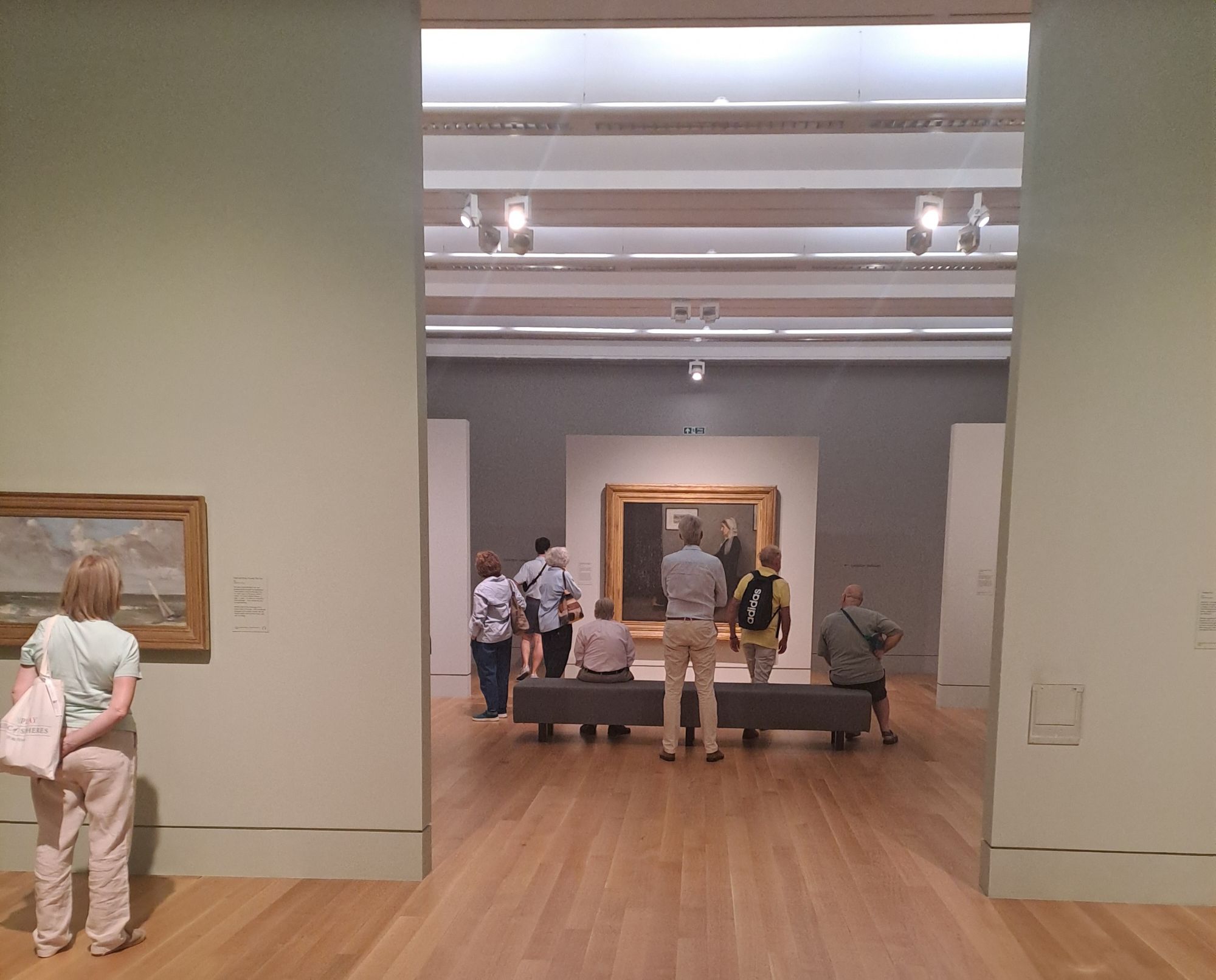
The first picture shows Whistler’s famous portrait of his mother, who seems to be holding court. My favourite pieces, however, the Nocturnes, two of which I have mentioned on this blog before. There are three shown below, but photographs don’t do them justice at all. The appearance of the paint when seen close up is quite remarkable, a sort of translucent quality to it even when the picture is very dark. Whistler was one of the first artists to really master painting in the dark without using moonlight or other obvious illumination.
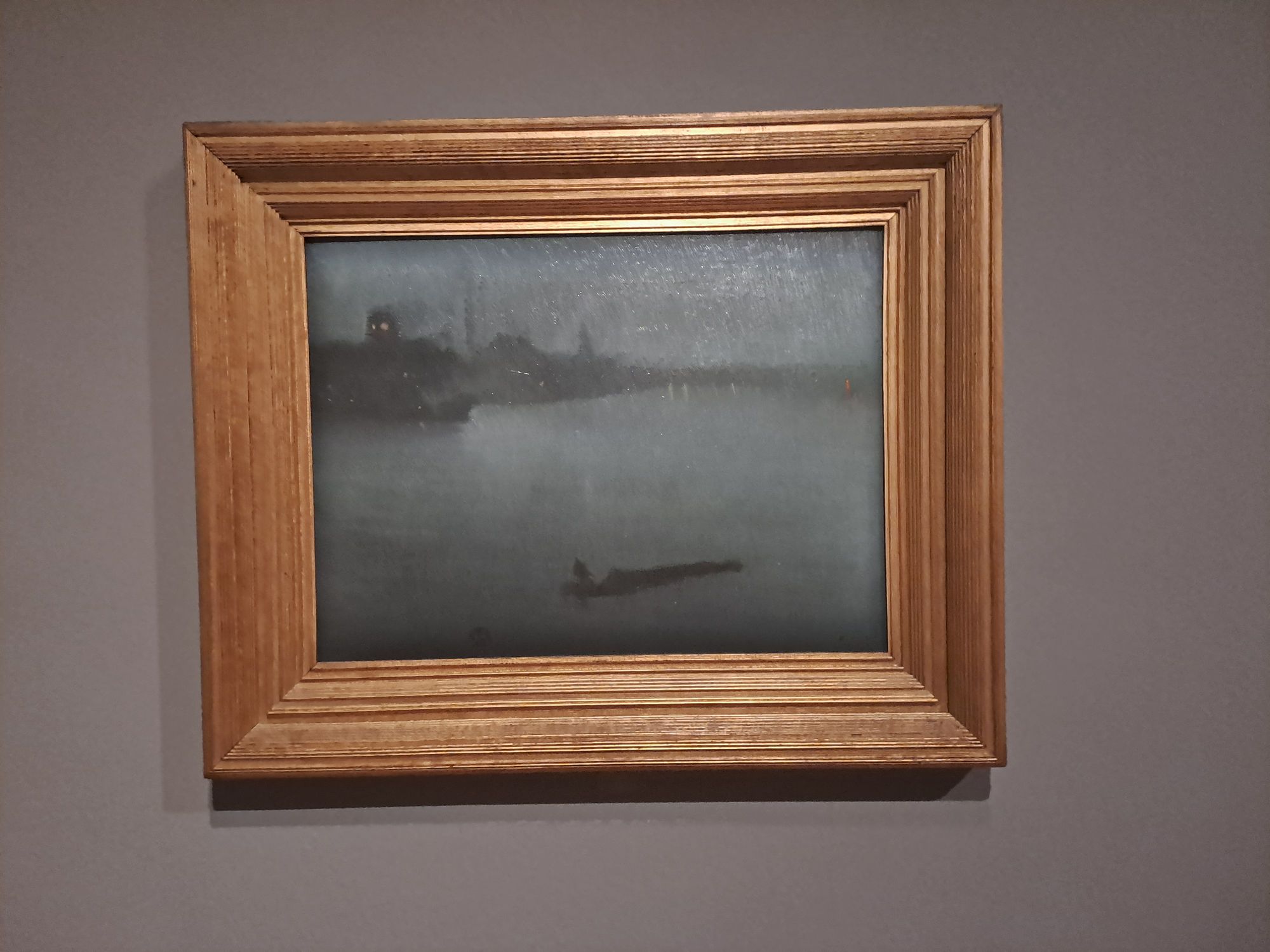
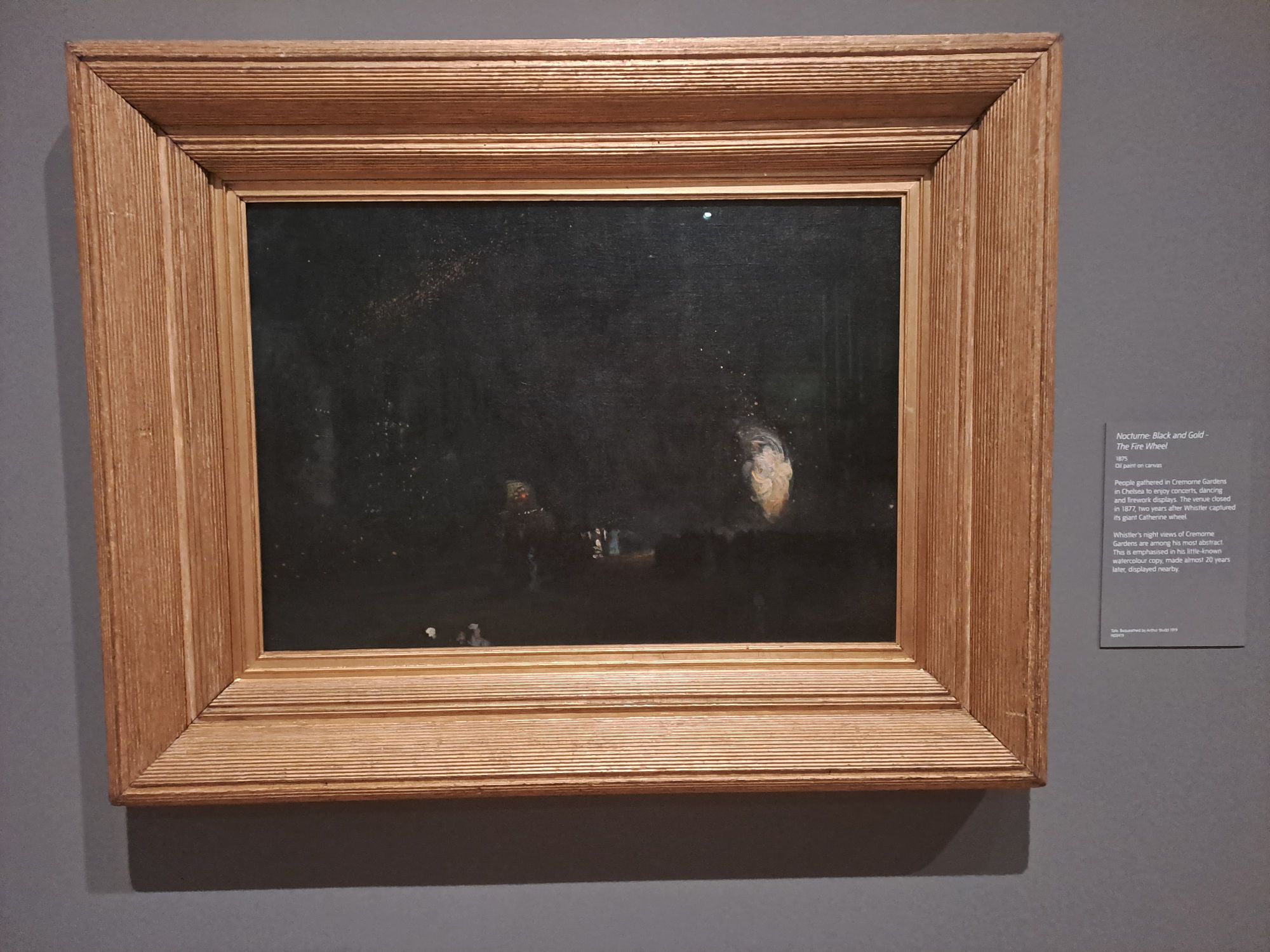
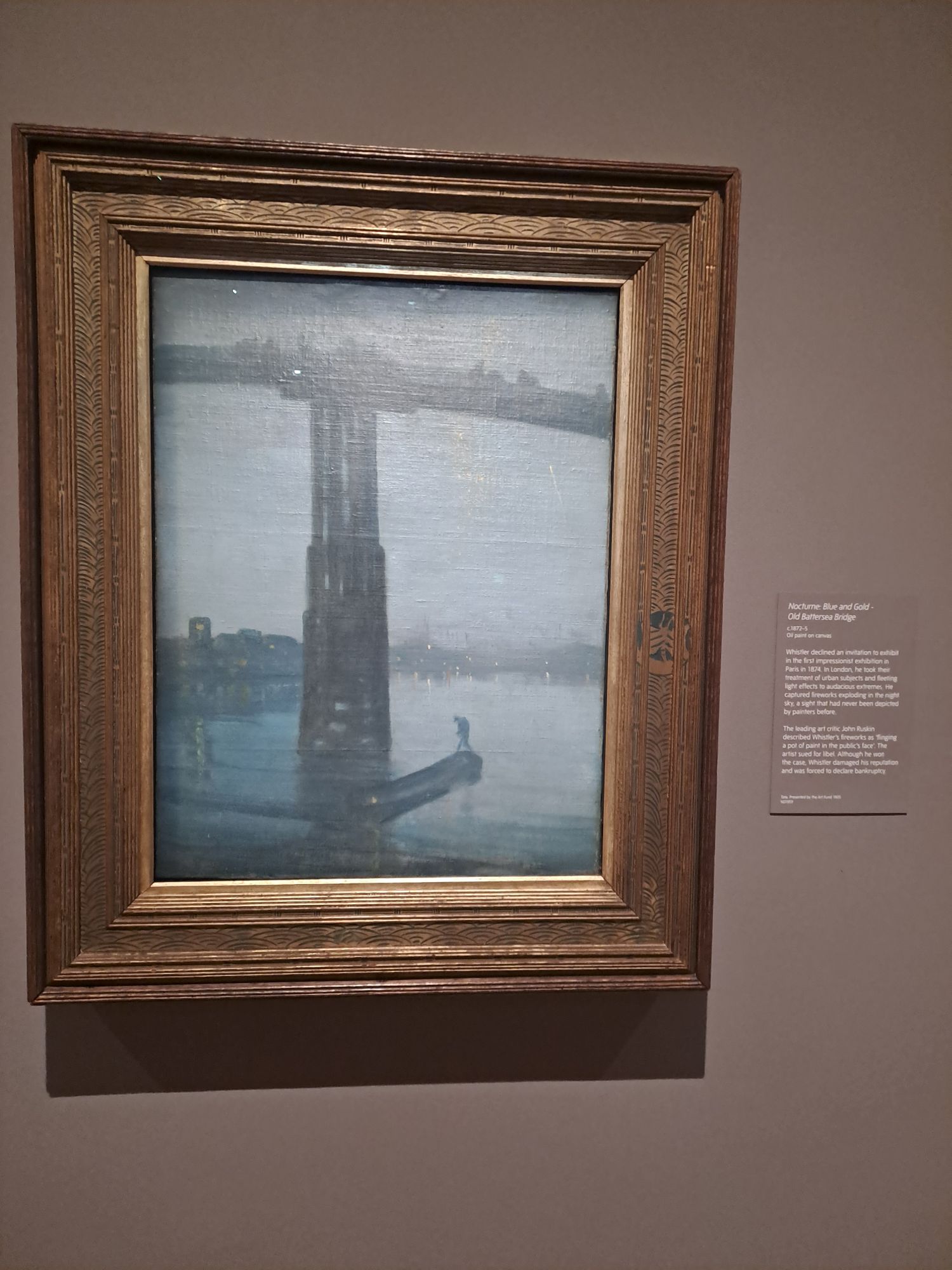
The last of these is particularly interesting to me. When the great American songwriter Billy Strayhorn saw the beautifully evocative painting (above) of one of the bridges over the River Thames, it inspired him to write an equally evocative song to be performed by his longstanding musical collaborator and friend Duke Ellington. The song was written in 1941, but it was only years later that he realized that he had named it after the wrong bridge. The painting was of Battersea Bridge; but he had named the song Chelsea Bridge, a much less romantic location. Chelsea Bridge is an intriguing tune, based on minor sixth chords voiced via their third inversions, it sounds almost atonal but very evocative, just like the painting.
In one of the video segments played during the exhibition we hear the actor Anton Lesser quoting Whistler with words the effect that he saw colours like notes on a keyboard; he started naming his paintings after musical works, e.g. “Symphony in White” before he got to his masterpieces, the Nocturnes.
I wrote about another of the Nocturnes here. Nocturne in Black and Gold, in the same series as the third picture above, is famous for having been at the centre of a libel case. The influential art critic John Ruskin hated it and accused Whistler of “flinging a pot of paint in the public’s face”. Whistler sued for damages (though he couldn’t really afford to). He won the case against Ruskin, but the outcome was financially disastrous for him because he was awarded only one farthing in damages and was bankrupted.
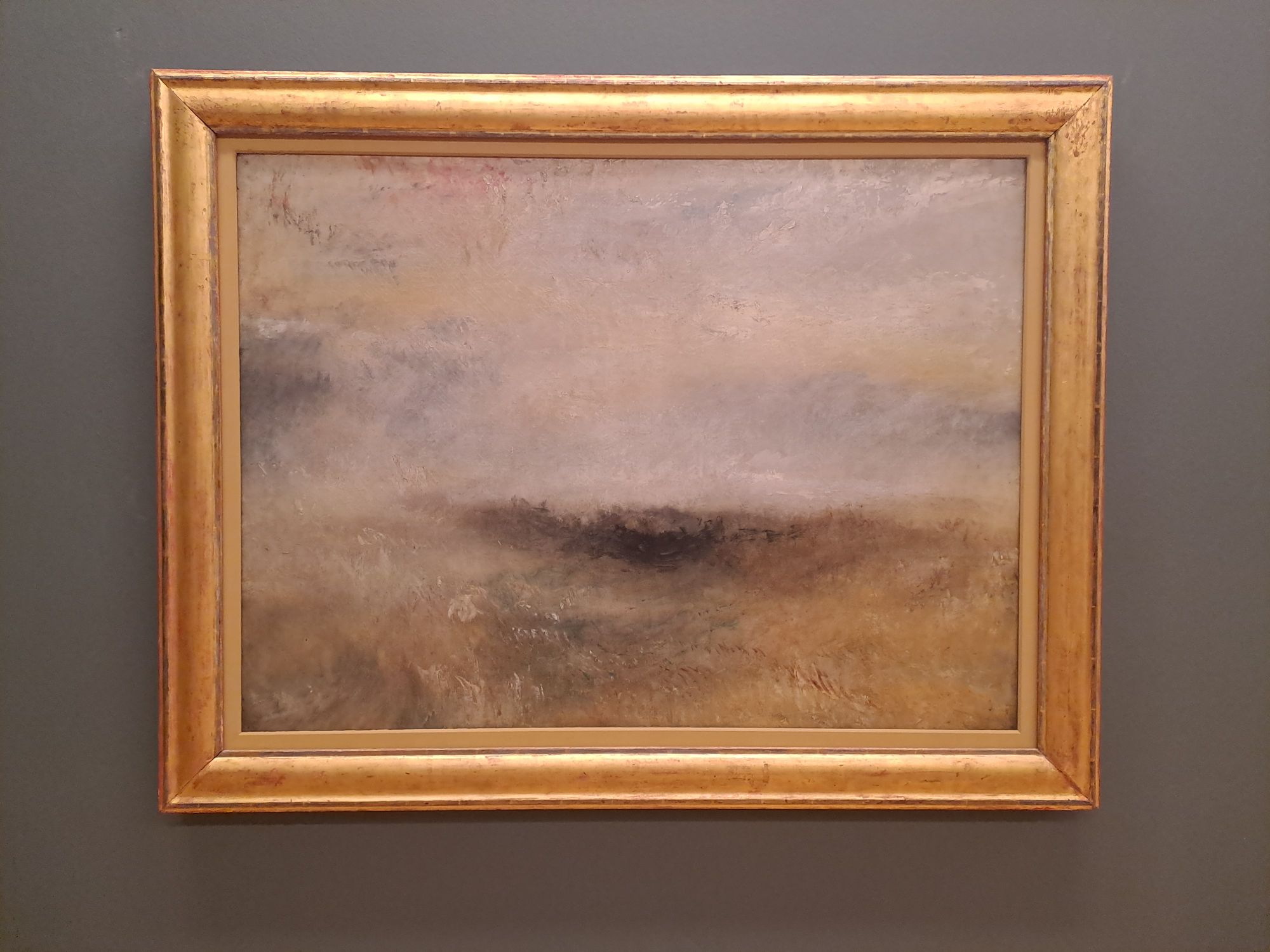
Tate Britain has an extensive permanent collection of primarily English art from about 1600 onwards, not least a huge collection of works by J.M.W. Turner. It’s fascinating to see so many of these together, charting this extraordinary artist’s evolution from brilliant if conventional upstart to pioneering impressionist. Along the way Turner’s interest in conventional themes began to wane in favour of the interplay between sea and clouds, to the extent that his works began to look like abstracts. There is in my mind a strong influence on Whistler. This one, ostensibly a seascape with a distant shore, reminds me of Rothko.