Another thing that happened last week is that I had my eyes examined, it being just over two years since my last test. I always approach this event with some trepidation as in my experience it often leads to a new prescription and the consequent need to fork out a considerable amount of dosh on new spectacles. I wear varifocals as I have both astigmatism (which primarily affects long-distance vision) and the usual problem at close range for people of my age.
I’ve had the former problem for many years, but when I reached my mid-40s my short-range vision began to deteriorate rather rapidly, hence the need for varifocals, which are rather expensive but do work pretty well for me. Over the following decade or so every eye examination led to a new prescription, new lenses and new frames and a consequent reduction in my bank balance. Since I’m now an established member of the Over-Sixties Club I just assumed there would be steady deterioration from now on. That seemed to be the case in 2020 when I got new spectacles after a test.
Happily that doesn’t seem to have happened. Last time I went to the optician, in 2024, my prescription had not changed from the previous time (2022). In fact it has been stable since 2020. This time the only very slight change is that my long-distance vision has improved very slightly. I’m told that, even with their glasses on, many people can’t read the bottom line on the the Snellen chart and/or the Jaeger chart for reading. Happily I can do both. I am officially 20/20 with my spectacles on, which is very nice, as well as saving me some money!
Before the eye test itself I had a retinal exam which involved taking pictures of the back of my eyse. This wasn’t carried out by the optometrist but by an assistant, but the resulting photographs were delivered magically onto the optometrist’s computer screen and shown to me. It turns out my eyes are reasonably healthy. The pictures did, however, point out something I’ve known about for a while, which is that there is some unevenness in the surface at the back of both eyes and some signs of swelling of or near the optic nerves. The optometrist showed me the scan and pointed out these abnormalities, but said that it wasn’t anything to worry about as she thought it was historical rather than progressive. She said that such things sometimes occur in who have in the past sufffered some form of trauma to the head (which can cause increased pressure inside and so damage the back of the eyes). I have indeed experienced such a thing, 40 years ago.
Although I’d known about this issue for a while the optometrist made a new suggestion – that I should try to eat plenty of green leafy vegetables (such as spinach and kale). That’s not a problem for me as I like them and they are very nutritious. These vegetables, among others, contain lutein and zeaxanthin which are thought to prevent age-related degeneration of the macula (the region in the centre of the retina).
The optometrist also suggested that I should avoid direct sunlight* whenever possible. Over the years a number of people have remarked that I often have the blinds closed in my office during the day and much prefer subdued lighting; people have remarked on this when I do Zoom/Teams calls. Avoiding bright light in such ways was suggested by an optician some years ago, who suspected I might have some form of retinal damage but couldn’t see anything definitive with the technology available then. It seems he was right.
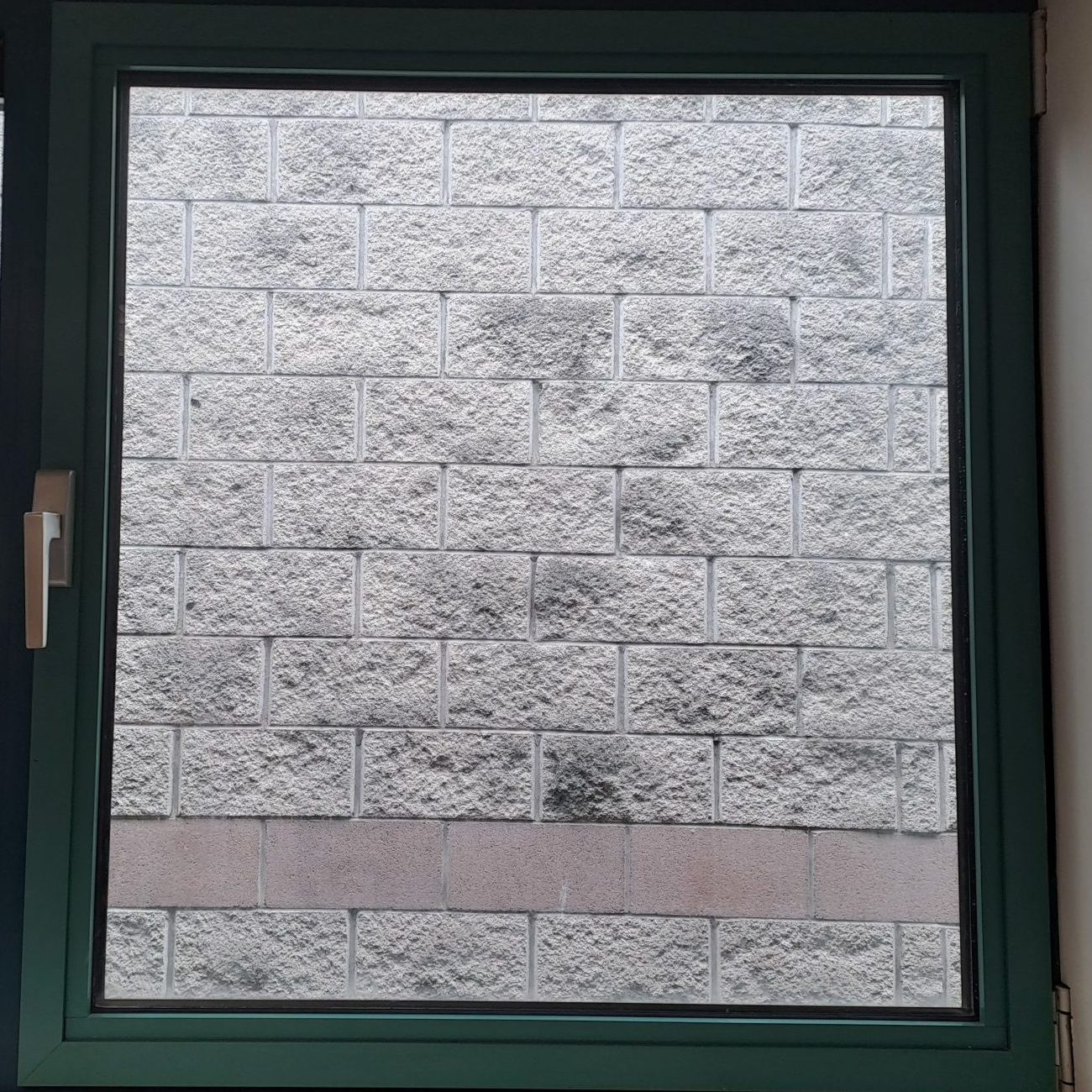
*Avoiding direct sunlight is not difficult in my office at Maynooth: