Archive for Physics

Methods of Images

Posted in Biographical, Cute Problems, Education with tags , , , , on January 29, 2014 by telescoper

I’ve had a very busy day today including giving a lecture on Electrostatics and the Method of Images and, in an unrelated lunch-hour activity, filing my tax return (and paying the requisite bill). The latter was the most emotionally draining.

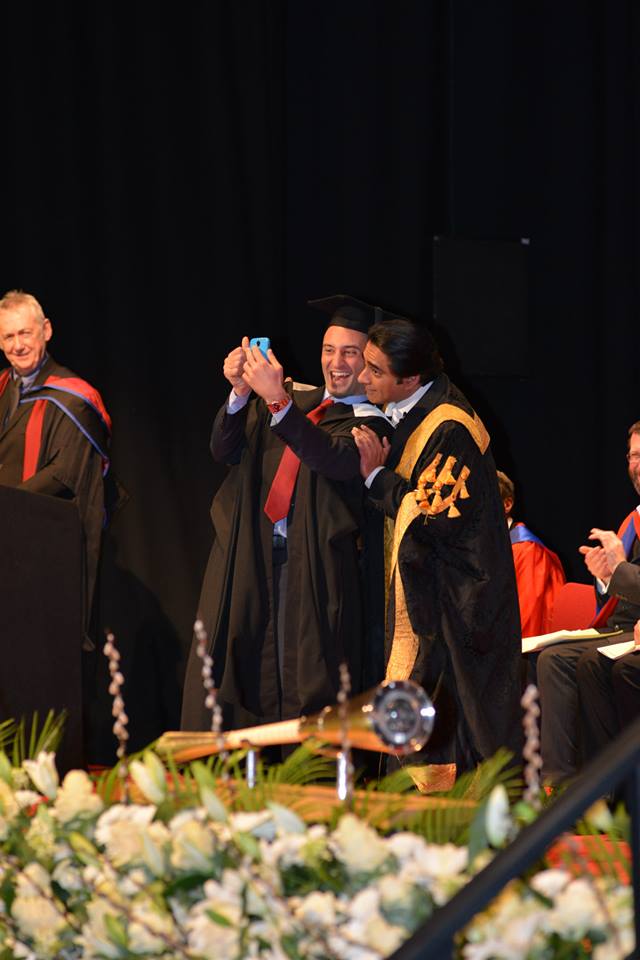
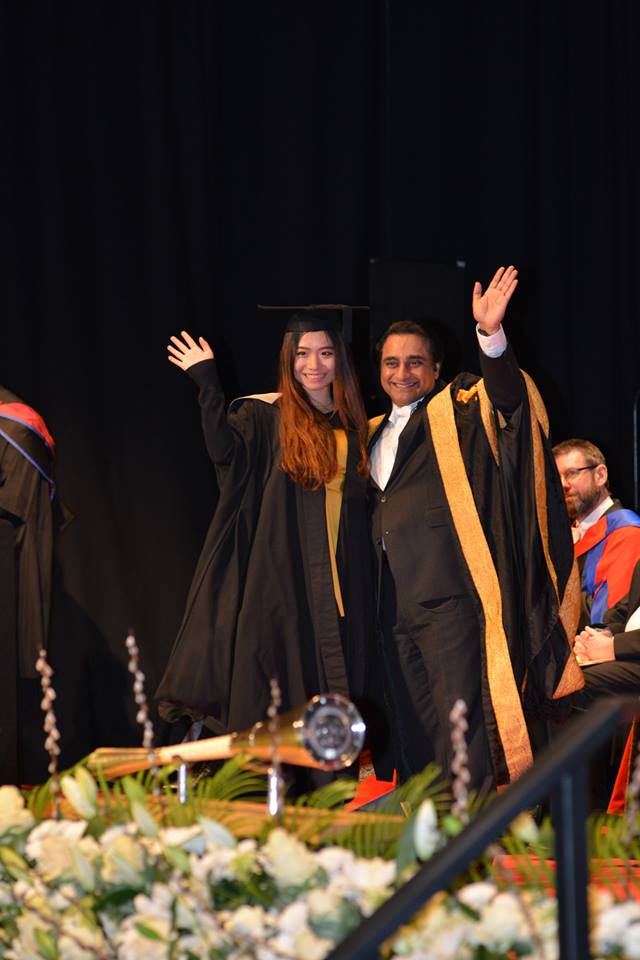
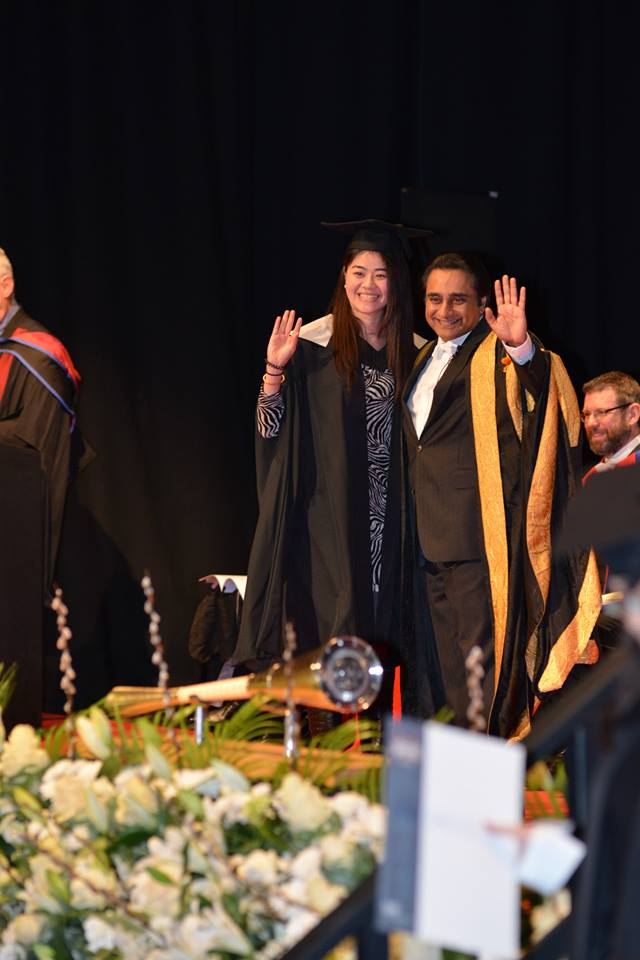
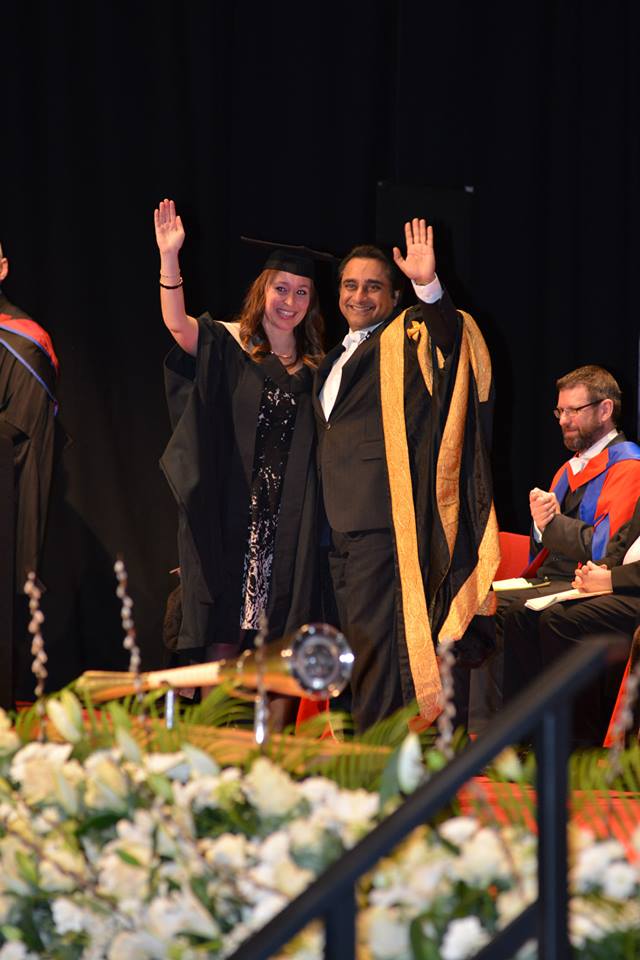
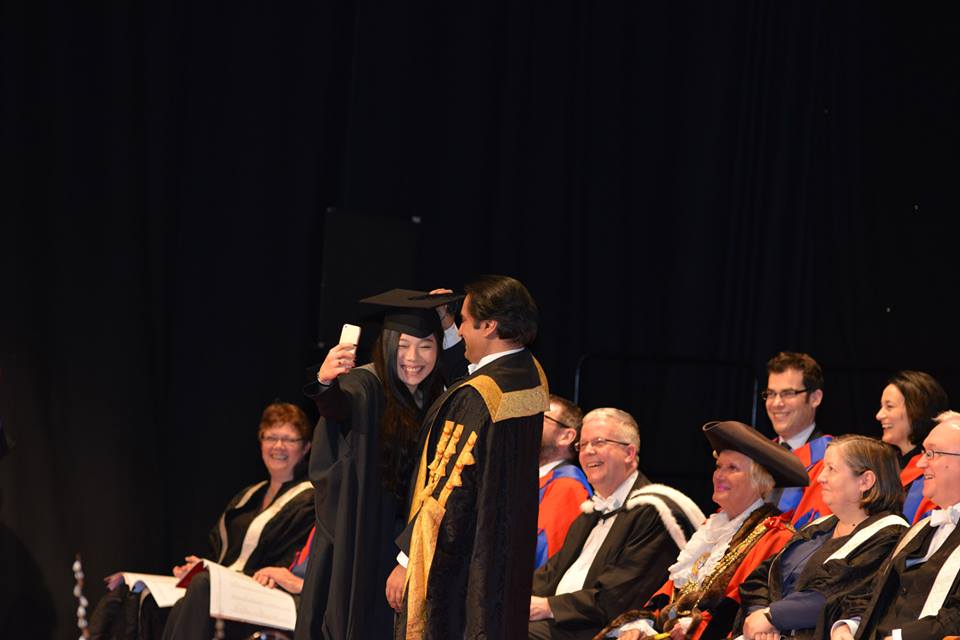
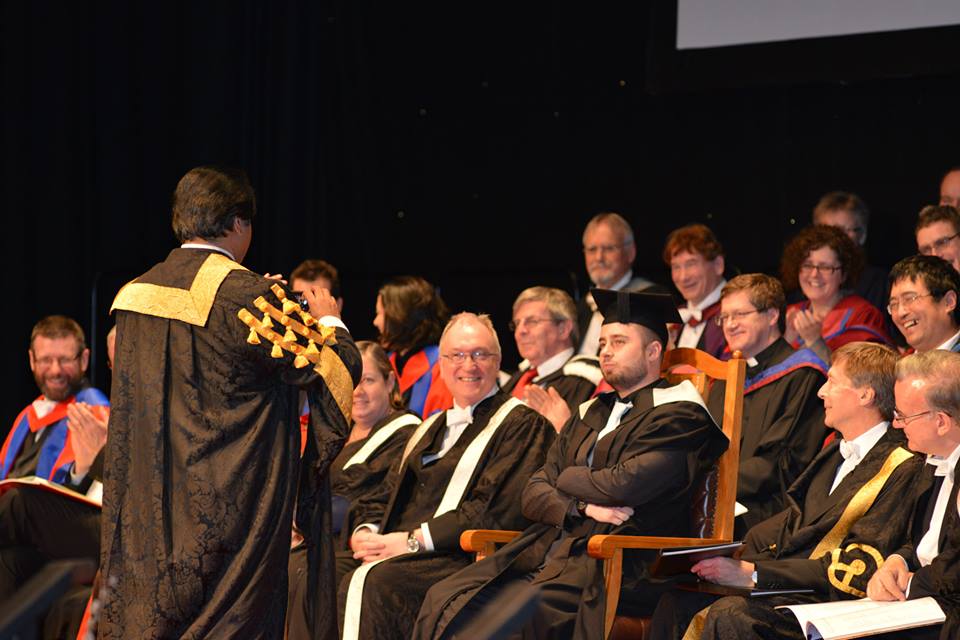
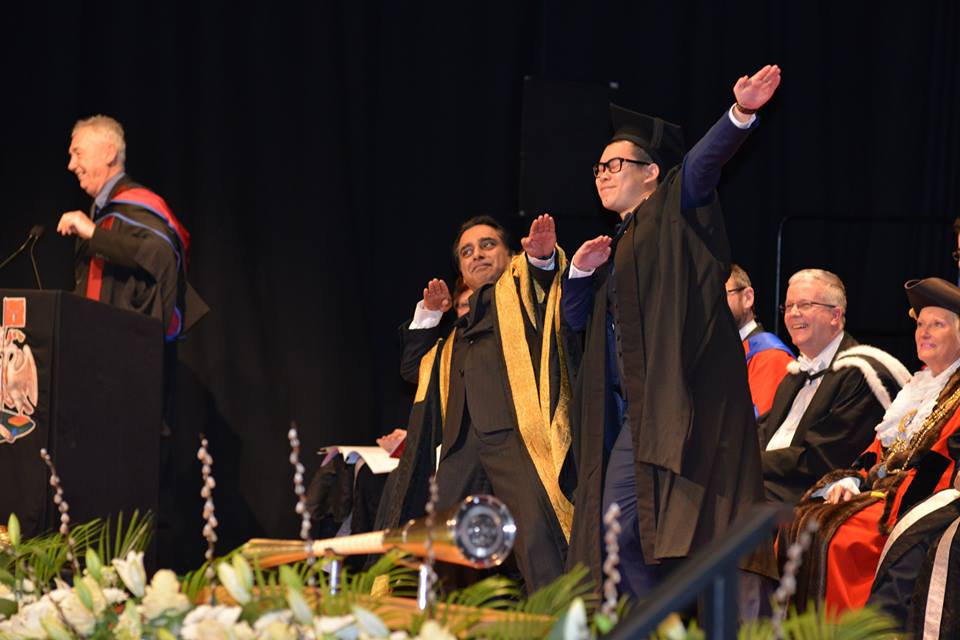
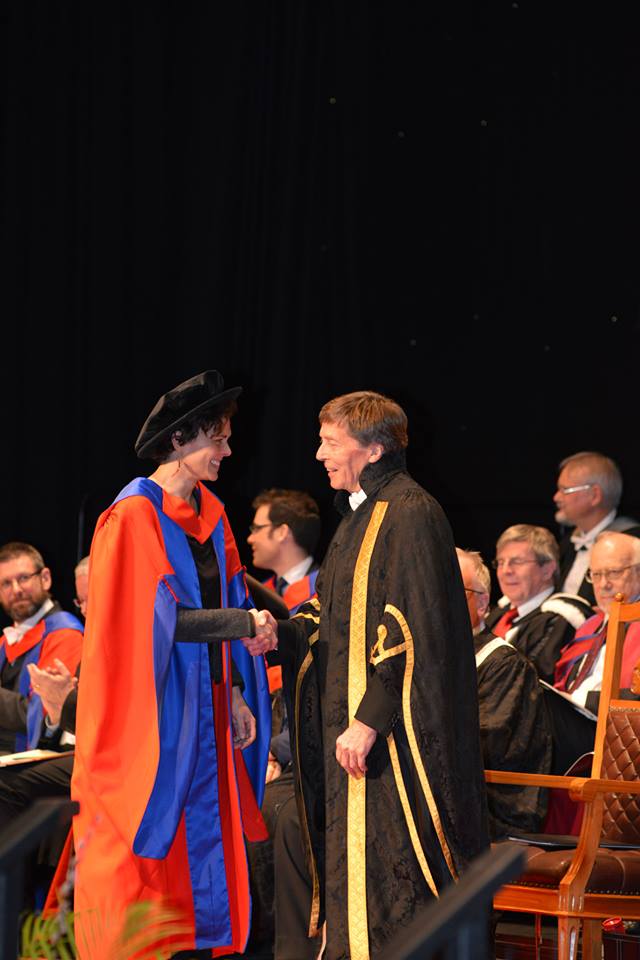
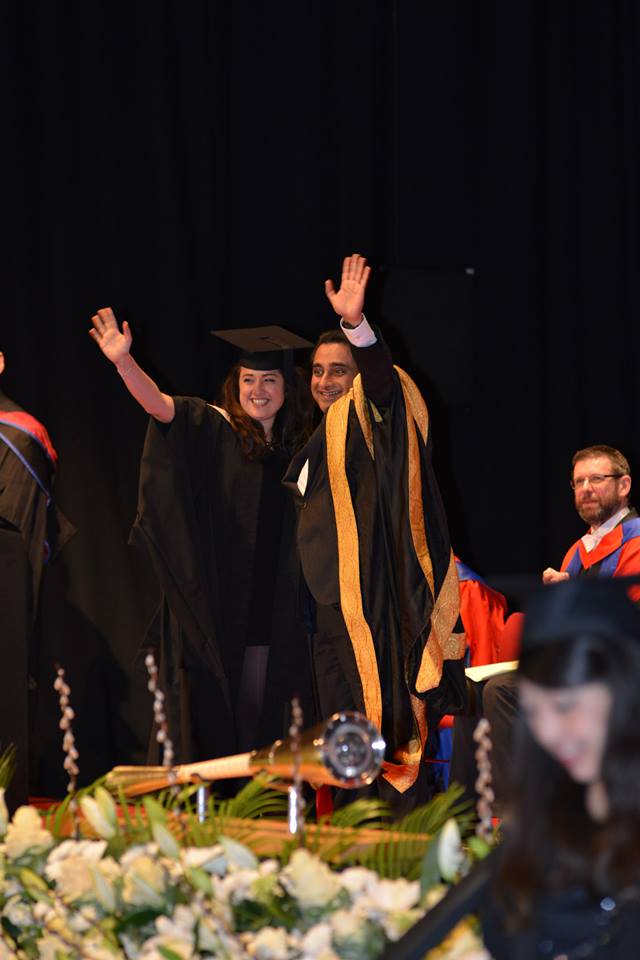
With no time for a proper post, I thought I’d give some examples of the images produced by yesterday’s graduands, including some who used a particular approach called the Method of Selfies. Unfortunately some of these are spoiled by having a strange bearded person in the background.

But first you might like to try the following example using the actual Method of Images:

Given two parallel, grounded, infinite conducting planes a distance a apart, we place a charge +q between the plates, a distance x from one of them. What is the force on the charge?

This is, in fact, from Griffiths, David J. (2007) Introduction to Electrodynamics, 3rd Edition; Prentice Hall – Problem 3.35.

Solutions via the comments box as usual, please.

And now here are some of the official pictures from yesterday

9

1

2

3

4

5

6

7

8

How to Address Gender Inequality in Physics

Posted in Education, The Universe and Stuff with tags , , , , on January 26, 2014 by telescoper

Last night I was drinking a glass or several of wine while listening to the radio and thinking about a brainwave I’d had on Friday. Naturally I decided to wait until I reconsidered it in the cold light and sobriety of day before posting it, which I have now done, so here it is.

The idea that came to me simply joins two threads of discussion that have appeared on this blog before. The first is that, despite strenuous efforts by many parties, the fraction of female students taking A-level Physics has flat-lined at 20% for over a decade. This is the reason why the proportion of female physics students at university is the same, i.e. 20%. In short, the problem lies within our school system.

The second line of argument is that A-level Physics is not a useful preparation for a Physics degree because it does not develop the sort of problem-solving skills or the ability to express physical concepts in mathematical language on which university physics depends. Most physics admissions tutors that I know care much more about the performance of students at A-level Mathematics than Physics.

Hitherto, most of the effort that has been expended on the first problem has been directed at persuading more girls to do Physics A-level. Since all universities require a Physics A-level for entry into a degree programme, this makes sense but it has not been successful.

I now believe that the only practical way to improve the gender balance on university physics course is to drop the requirement that applicants have A-level Physics entirely and only insist on Mathematics (which has a much more even gender mix). I do not believe that this would require many changes to course content but I do believe it would circumvent the barriers that our current school system places in the way of aspiring female physicists.

Not all UK universities seem very interested in widening participation, but those that are should seriously consider this approach.

The Russell Groupies

Posted in Education, Politics with tags , , , on November 29, 2013 by telescoper

There’s an interesting article in Research Professional upon which I thought a brief comment would be appropriate. The article is mainly about the recent demise of the 1994 Group of universities, made inevitable when some of its larger members jumped ship to climb on board the much posher Russell Group. I’ve always felt that mission groups of this type were of little interest or value, but the growth of the Russell Group has, in my view, become rather sinister because it involves a cynical attempt to manufacture status when none is justified by performance.

The piece in Research Professional says:

Vice-chancellors and principals are not the only ones playing the status game. Students, employers, academics and government ministers—who seem to love visiting Russell Group universities—all want to be associated with high-status universities, even if those institutions do not necessarily provide better education or research. A 2009 analysis of the results of the 2008 Research Assessment Exercise, carried out by the Higher Education Policy Institute, found that Russell Group institutions performed only half a percentage point better than the overall average, and that when universities in the golden triangle were excluded the score fell to below average. Truly, this is an emperor with very modest clothes.

This echoes my experience. Before moving to the University of Sussex earlier this year I worked in two Russell Group universities (and one which wasn’t in the Russell Group when I worked there but is now). All these institutions have much to recommend them – and I have no desire whatsoever to say negative things about former colleagues – but it is clear to me that they (or at least their Physics Departments) can’t claim to be any better than the one in which I currently work. Indeed the Physics department that performed best in the 2008 Research Assessment Exercise was Lancaster, which is also not in the Russell Group.

It’s also noticeable that the primary characteristic of Russell Group universities in the National Student Survey tables is that they generally do quite poorly relative to non-members. Does Russell Group status mean promoting research at the expense of teaching and the student experience generally?

There’s no doubt that by many metrics there is a group of “elite” English universities – Oxford, Cambridge, UCL, and Imperial. The Russell group comprises these and a few other excellent institutions. But the later additions are simply a group of fairly average universities who thought the £500,000 joining fee was worth paying to try to convince students and others that they had elite status too. Worryingly, it seems that the Russel Brand Group Group Brand has been marketed so effectively that politicians are starting to talk as if “research intensive” and “Russell Group” mean one and the same thing.

Six (very) bad things about the REF

Posted in Education, Science Politics with tags , , , , on November 22, 2013 by telescoper

I see that Jon Butterworth has written a piece on the Grauniad website, entitled Six good things about the REF, the REF in question not being a black-clad figure of questionable parentage and visual acuity responsible for supervising a game of association football, but the Research Excellence Framework.

I agree with some of Jon’s comments and do believe that past Research Assessment Exercises have generally raised the quality of research in UK universities. I do however think that there are some very bad things about the way the REF is being implemented, and that these far outweigh the positives Jon mentions. In the interest of balance, therefore, I thought I’d respond with a list of six (very) bad things about the REF, and particularly how it applies to physics. I’ll keep them brief because I’ve blogged about most of them before:

  1. The rules positively encouraged universities to play games with selectivity. This is absurd. All academic staff on teaching and research contracts should be submitted if a true indication of research quality is to be obtained.
  2. The criteria for what constitutes 3* or 4* publications are vague and subjective, leaving everything in the hands of the panels. Worse, all paperwork will be shredded after the panel’s deliberations leaving no possibility for appeal. This absolutely stinks.
  3. How QR funding will be allocated on the basis of the REF is not made clear in advance of the submission. Nobody knows how heavily the funding will be skewed towards 4* and 3* submissions. Having encouraged departments to play games, therefore, the REF refuses to disclose the rules. It’s not even clear there will be any QR funding.
  4. The panels will be unable to perform a detailed peer review of submissions simply because there will be too many papers. Each panel will be expected to make decisions on many hundreds of papers, leaving time only for a cursory reading of each.
  5. Limiting the physics submission to 4 papers per person is ridiculous. This corresponds to a tiny fraction of the outputs of a typical physics researcher. If someone has written ten 4* publications in the REF period, why should these not be counted?
  6. Impact counts for a sizable fraction (20%) of the funding, but the rules governing what counts as “impact” are absurdly restrictive and clearly encourage short-term commercially-oriented boilerplate stuff at the expense of genuine long-term “blue skies” research.


Well, I got to six in just a few minutes and could easily get to sixty, but that will do for now. Perhaps you’d like to contribute your own bad things through the comments box?

Introduction to the PhD for Physics or Astronomy students

Posted in Education with tags , , , , , , on October 22, 2013 by telescoper

It’s the time of year when final-year students start to think about the possibility of doing a PhD after they have graduated, so I I thought I’d jot down here a few general remarks that might be useful to people who are thinking of taking the plunge. I’ve posted on such matters before, but this is something that comes around every year so I hope you’ll excuse the repeat. I’m aiming this primarily at UK students applying for places in the UK; special considerations apply for students wanting to do graduate research abroad.

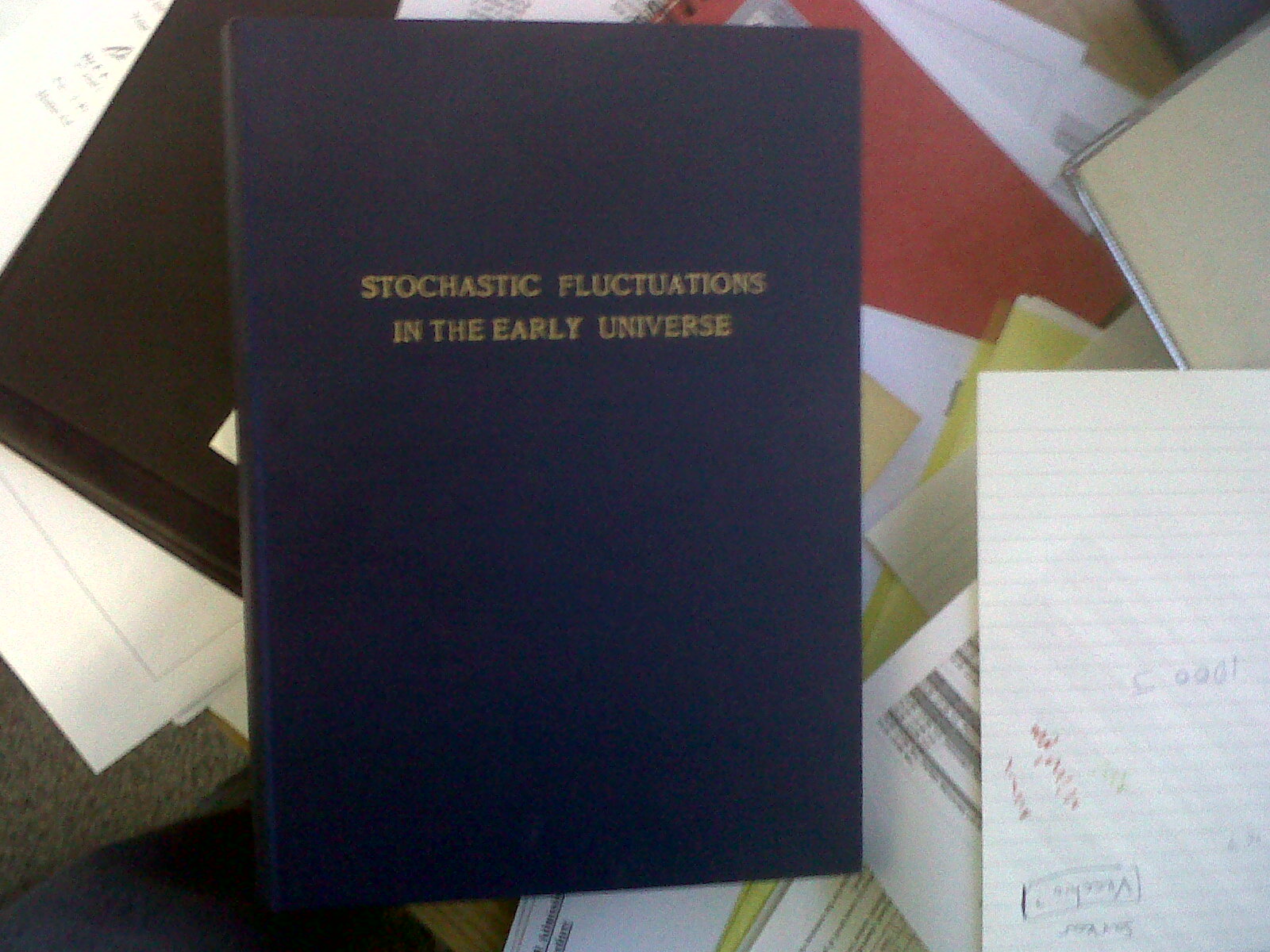
What is a PhD? The answer to that is relatively easy; it’s a postgraduate research degree. In order to obtain a PhD you have to present a thesis like that shown on the left (which happens to be mine, vintage 1988), typically in the range 100-250  pages long. A thesis has to satisfy two conditions for the award of the degree: it should contain original research, which is publishable in an academic journal; and it should present a coherent discussion of that original work within the context of ongoing work in the area of study. In Physics & Astronomy, the PhD is pretty much a prerequisite for any career in academic research, and it usually takes between 3 and 4 years to complete. After submission of the thesis you will have to undergo a viva voce examination conducted by two examiners, one internal and one external. This is quite a tough test, which  can last anywhere between about 2 and about 6 hours, during which you can be asked  detailed questions about your research and wide-ranging questions about the general area.

The Money Side. In the UK most PhDs are supported financially by the research councils, either EPSRC (most physics) or STFC (nuclear & particle physics, astronomy). These generally award quotas of studentships to departments who distribute them to students they admit. A studentship will cover your fees and pay a stipend, currently £13590 pa. That doesn’t sound like a lot, but you should at least remember that it is a stipend rather than a wage; it is therefore not taxed and there is no national insurance payable.

How do I choose a PhD? During the course of a postgraduate degree you are expected to become an expert in the area in which you specialize. In particular you should reach the point where you know more about that specific topic than your supervisor does. You will therefore have to work quite a lot on your own, which means you need determination, stamina and enthusiasm. In my view the most important criterion in your choice of PhD is not the institution where you might study but the project. You need to be genuinely excited by the topic in order to drive yourself to keep through the frustrations (of which there will be many). So, find an area that interests you and find the departments that do active research in that area by looking on the web. Check out the recent publications by staff in each department, to ensure that they are active and to have something to talk about at interview!

Qualifications. Most universities have a formal requirement that candidates for admission to the PhD should have a “good honours degree”, which basically means at least an Upper Second Class Honours degree. Some areas are more competitive than others, however, and in many disciplines you will find you are competing with a great many applicants with First Class degrees.

How to apply successfully. The application procedure at most universities is quite simple and can be done online. You will need to say something about the area in which you wish to do research (e.g. experiment/theory, and particular field, e.g. cosmology or star formation). You’ll also need a CV and a couple of references. Given the competition, it’s essential that you prepare. Give your curriculum vitae some attention, and get other people (e.g. your personal tutor) to help you improve it. It’s worth emphasizing particular skills (e.g. computing). If you get the chance, make use of your summer vacations by taking on an internship or other opportunity to get a taste of research; things like that will undoubtedly give your CV an edge.

The Interview. Good applicants will be invited for an interview, which is primarily to assess whether you have the necessary skills and determination, but also to match applicants to projects and supervisors. Prepare for your interview! You will almost certainly be asked to talk about your final-year project, so it will come across very badly if you’re not ready when they ask you. Most importantly, mug up about your chosen field. You will look really silly if you haven’t the vaguest idea of what’s going on in the area you claimed to be interested in when you wrote your  application!

Don’t be shy! There’s nothing at all wrong with being pro-active about this process. Contact academic staff at other universities by email and ask them about research, PhD opportunities. That will make a good impression. Also, don’t be afraid to ask for advice. Although we’re all keen to recruit good PhD students for our own departments, we academics are  conscious that it is also our job to give impartial advice. Ask your tutor’s opinion.

How many places should I apply for? Some research areas are more fashionable than others so the level of competition varies with field. As a general rule I would advise applying for about half-a-dozen places, chosen because they offer research in the right area. Apply to fewer than that and you might lose out to the competition. Apply to many more and you might not have time to attend the interviews.

What’s the timetable?  Most applications come in early in the new year for entry to the PhD in the following October. The Christmas break is therefore a pretty good time to get your applications sorted out. Interviews are normally held in February or March, and decisions made by late March. STFC runs a deadline system whereby departments can not force students to accept or decline offers before the end of March, so there should be ample time to visit all your prospective departments before having to make any decisions.

Here are some of the slides I used for a talk on such matters a year or so ago, which you might find useful.

That’s all I can think of for now. I hope at least some of these comments are useful to undergraduates anywhere in the UK thinking of applying for a PhD. If there are any further questions, please feel free to ask through the comments box. Likewise if I’ve missed anything important, please feel free to suggest additions in the same manner…
Old Emus for Physics

Posted in Education, The Universe and Stuff with tags , on September 3, 2013 by telescoper

It is time to reveal just a part of  the series of innovations I have been introducing to the curriculum here in the School of Mathematical and Physical Sciences at the University of Sussex, since I became head earlier this year.

In order to develop further the problem-solving skills of students in the Department of Physics & Astronomy, I have decided that  all modules OLD EMUS will henceforth be referred to by anagrams of their actual titles. For example, in the forthcoming Semester I will be teaching second-year students MONSTER DELICACY.

Among the other old emus to be taken by Year 2 students of SHY PICS are:

MANIAC MUNCH QUEST

UNFITTING COMIC SPICE

SPIN HISS SLICKLY

A TINSMITH’S DEPTH, SARCASTICALLY

ASTHMATIC MODE HALTED for SPICY SHITS

and for options there are

TRANSPLANTED ASS (compulsory for those into RACY SOPHISTS)

ATHEIST PSYCHIC LORE

This list does not include the compulsory A RICH SORT’S PLAYBOY.

I hope this clarifies the situation.

Quantum Information and Quantum Computing

Posted in The Universe and Stuff with tags , , , , , on August 23, 2013 by telescoper

Having a very late and very short lunch break today because I was involved in a series of meetings this morning all of which overran. That, together with the heat, has put me in a bit of a fluster. Anyway, while I drink my sandwich and eat a cup of tea, I thought I’d post this very cute video that I stumbled across via Twitter. It’s by Jorge Cham, the creator of Piled Higher and Deeper (known to the world as PhDcomics); you can find his blog post about these videos here.

Physics and Statistics

Posted in Bad Statistics, Education with tags , , , on August 16, 2013 by telescoper

Predictably, yesterday’s newspapers and other media  were full of feeble articles about the A-level results, and I don’t just mean the gratuitous pictures of pretty girls opening envelopes and/or jumping in the air.  I’ve never met a journalist who understood the concept of statistical significance, which seems to account for the way they feel able to write whatever they like about any numbers that happen to be newsworthy without feeling constrained by mathematical common-sense.  Sometimes it’s the ridiculous over-interpretation of opinion polls (which usually have a sampling uncertainty of ±3 %), sometimes its league tables. This time it’s the number of students getting the top grades at A-level.

The BBC, for example, made a lot of fuss about the fall in the % of A and A* A-level grades, to  26.3% this year from 26.6% last year. Anyone with a modicum of statistical knowledge would know, however, that whether this drop means anything at all depends on how many results were involved: the sampling uncertainty depends on size N approximately as √N. For a cohort of 300000 this turns into a percentage uncertainty of about 0.57%, which is about twice as large as the reported fall.  The result is therefore “in the noise” – in the sense that there’s no evidence that it was actually harder to get a high grade this year compared with last year – but that didn’t prove a barrier to those editors intent on filling their newspapers and websites with meaningless guff.

Almost hidden among the bilge was an interesting snippet about Physics. It seems that the number of students taking Physics A-level this year has exceeded 35,000 in 2013.  That was set as a government target for 2014, so it has been reached a year early.  The difference between the number that took Physics this year (35,569) and those who took it in 2006 (27,368) is certainly significant. Whether this is the so-called Brian Cox effect or something else, it’s very good news for the future health of the subject.

On the other hand, the proportion of female Physics students remains around 20%. Over the last three years the proportion has been 20.8%, 21.3% and 20.6% so numerically this year is down on last year, but the real message in these figures is that despite strenuous efforts to increase this fraction, there is no significant change.

As I write I’m formally still on Clearing business, sitting beside the telephone in case anyone needs to talk to me. However, at close of play yesterday the School of Mathematical and Physical Sciences had exceeded its recruitment target by quite a healthy margin.  We’re still open for Clearing, though, as our recent expansion means we can take a few more suitably qualified students. Physics and Astronomy did particularly well, and we’re set to welcome our biggest-ever intake into the first year in September 2013. I’m really looking forward to meeting them all.

While I’m on about statistics, here’s another thing. When I was poring over this year’s NSS results, I noticed that only 39 Physics departments appeared in the survey. When I last counted them there were 115 universities in the UK. This number doesn’t include about 50 colleges and other forms of higher education institutions which are also sometimes included in lists of universities. Anyway, my point is that at most about a third of British universities have a physics department.

Now that is a shocking statistic…

Advice for Students on Clearing

Posted in Education, The Universe and Stuff with tags , , , , on August 15, 2013 by telescoper

1-dont-panic

We still have places in the School of Mathematical & Physical Sciences at the University of Sussex. No other Physics & Astronomy department in the UK scored more highly in the latest NSS survey than ours, so whether you’re interested in Physics, Astrophysics, Astronomy or Mathematics (or even a combination of those subjects), why not just take a look at the University’s Clearing Page and give us a ring.?

As a matter of fact, I’ll be there myself from 8am this morning to talk to interested students.

11.30 UPDATE. I finished my first shift at 11am. I’ll be going back at 5pm for the last session, until the lines close at 7pm. During the last hour a minimum of 20 overs must be bowled. Or something.  The main call centre (which has fifty phone lines) is next door to where we were sitting and is operated by admissions experts and student helpers who are processing the queries and, if necessary, routing them through to academics (i.e. people like me) to provide further information or to answer specific questions. You can take a peep behind the scenes here. Some of the calls were from very anxious prospective students, and it’s a very nice feeling being able to help them sort out their course! Now back to other things until I start again this evening.


19.30 UPDATE. Phew. Finally been stood down, but I’ll be back on duty tomorrow afternoon. It’s been a very interesting day which has gone very well for us. Lines stay open until 8pm tonight and re-open at 8 in the morning and we’re still in business to see if we can give just a few more students the opportunity to study in the School next academic year. Now I’m off home to chill, probably over a glass or two of wine!

Duet for Violin and Subatomic Particles

Posted in Music, The Universe and Stuff with tags , , , on August 8, 2013 by telescoper

I received an email this morning about this video and thought I’d post the clip here. This short documentary is about the performance of the composition Cloud Chamber (“Duet for violin and subatomic particles”) in San Francisco at the California Academy of Sciences in Golden Gate Park. The video was produced by Patrick Haynes, Adam Behrmann and Chris Whitmore, and features commentaries from , e.g., Hitoshi Murayama, Professor of Physics at Berkeley and Director of the Institute of Physics and Mathematics of the Universe at the University of Tokyo (the commentaries start at 16:10). It is introduced by Professor JoAnne L. Hewitt, Head of Theoretical Physics at SLAC National Accelerator Laboratory, Stanford University. There’s a longer description on the Youtube page if you’re interested in learning more about this interesting project.