The publishers sent me a copy of this book Introduction to Entropy – The Way of the World by Jonathan Allday and Simon Hands. Here are some thoughts on it.
The conventional way of teaching physics at an introductory level is to develop the subject in thematic strands – classical mechanics, electromagnetism, quantum mechanics and so on – and reinforce the resulting structure with a cross-weave of methods – experimental, mathematical or computational – to show how the discipline as a whole is bound together by the interplay between these two. Some approaches emphasize the themes, others the methods but generally the layout is a criss-cross pattern of this sort, embedded within which are various concepts which we encounter on the way.
This book by schoolteacher Jonathan Allday and particle physicist Simon Hands is provides a valuable alternative approach in that it focusses on neither themes nor methods but on a particular concept, that of entropy. This is an interesting idea because it allows the reader to follow a direction more-or-less orthogonal to the conventional approaches. It is especially interesting to deal with entropy in this way because it is a concept that is familiar on one level – even Homer Simpson knows what about the Second Law of Thermodynamics! – but very unfamiliar when it comes to its detailed application, for example in quantum mechanics.
Guided by the concept of entropy, the authors take us on a journey through physics that has three main stages. The first is fairly mainstream in undergraduate courses, from classical thermodynamics to statistical mechanics, with applications and basic ideas of probability and statistics introduced along the way. The second, more technical, leg takes us through the idea of entropy in quantum mechanics and quantum information theory. The final part of the excursion is much freer ramble through more speculative terrain, including the role of entropy in biology, cosmology and black holes. This final section on life, the universe, and (almost) everything, addresses a number of open research questions. The authors stop to point out common errors and misconceptions at various points too.
This is an interesting and engaging book to anyone with an undergraduate education in physics, or above, who wants to understand the concept of entropy in all its manifestations in modern physics. It covers a great deal of territory but the narrative is coherent and well thought-out, and the material is very well organized and presented.
We’re about two-thirds of the way into the Autumn Semester here at Maynooth and, by a miracle, I’m just about on schedule with both the modules I’m teaching. It’s always difficult to work out how long things are going to need for explanation when you’re teaching them for the first time.
One of the modules I’m doing is Differential Equations and Transform Methods for Engineering Students. I’ve been on the bit following the “and” for a couple of weeks already. The first transform method covered was the Laplace transform, which I remember doing as a physics undergraduate but have used only rarely. Now I’m doing Fourier Series, as a prelude to Fourier transforms.
As I have observed periodically, the differential equations and transform methods are not at all disconnected, but are linked via the heat equation, the solution of which led Joseph Fourier to devise his series in Mémoire sur la propagation de la chaleur dans les corps solides (1807), a truly remarkable work for its time that inspired so many subsequent developments.
In the module I’m teaching, the applications are rather different from when I taught Fourier series to Physics students. Engineering students at Maynooth primarily study electronic engineering and robotics, so there’s a much greater emphasis on using integral transforms for signal processing. The mathematics is the same, of course, but some of the terminology is different from that used by physicists.
Anyway I was looking for nice demonstrations of Fourier series to help my class get to grips with them when I remembered this little video recommended to me some time ago by esteemed Professor George Ellis. It’s a nice illustration of the principles of Fourier series, by which any periodic function can be decomposed into a series of sine and cosine functions.
This reminds me of a point I’ve made a few times in popular talks about astronomy. It’s a common view that Kepler’s laws of planetary motion according to which which the planets move in elliptical motion around the Sun, is a completely different formulation from the previous Ptolemaic system which involved epicycles and deferents and which is generally held to have been much more complicated.
The video demonstrates however that epicycles and deferents can be viewed as the elements used in the construction of a Fourier series. Since elliptical orbits are periodic, it is perfectly valid to present them in the form of a Fourier series. Therefore, in a sense, there’s nothing so very wrong with epicycles. I admit, however, that a closed-form expression for such an orbit is considerably more compact and elegant than a Fourier representation, and also encapsulates a deeper level of physical understanding. What makes for a good physical theory is, in my view, largely a matter of economy: if two theories have equal predictive power, the one that takes less chalk to write it on a blackboard is the better one!
Anyway, soon I’ll be moving onto the complex Fourier series and thence to Fourier transforms which is familiar territory, but I have to end the module with the Z-transform, which I have never studied and never used. That should be fun!
The Mayall Telescope at Kitt Peak, in which DESI is housed. This PR image was taken during a meteor shower, which is not ideal observing conditions. Picture Credit: KPNO/NOIRLab/NSF/AURA/R. Sparks
I’ve just got time between meetings to mention that a clutch of brand new papers has emerged from the DESI (Dark Energy Spectroscopic Instrument) Collaboration. There is a press release discussing the results from the Lawrence Berkeley Laboratory here and one from the ICCUB in Barcelona here; several members of the group I visited there during sabbatical are working on DESI. Congratulations to them.
I haven’t had time to read them yet, but a quick skim suggests that the results are consistent with the standard cosmological model.
The latest batch contains three Key Publications:
DESI Collaboration et al., DESI 2024 II: Sample Definitions, Characteristics, and Two-point Clustering Statistics
Findlay et al. (2024), Exploring HOD-dependent systematics for the DESI 2024 Full-Shape galaxy clustering analysis
The links lead to the arXiv version of these papers. These articles can also be found, along with previously released publications by the DESI Collaboration, here.
Anyone who has read the latest papers is welcome to comment through the box below!
We live in a cyclic universe of a sort because every few years somebody tries to resurrect the idea that dark matter is somehow related to primordial black holes, i.e. black holes formed in the very early stages of the history of the Universe so that they have masses much smaller than black holes formed more recently by the collapse of stars or the merger of other black holes. If it forms very early the mass of a PBH could in principle be very small, much less than a star or a planet. The problem with very small black holes is that they evaporate very quickly via Hawking Radiation so would not survive the 14 billion years or so needed to still be in existence today and able to be dark matter.
An idea that was used in the past to circumvent this issue was that something might stop Hawking Radiation proceeding to reduce the mass of a PBH to zero, leaving a relic of finite mass usually taken to be the Planck mass. The suggestion has returned in different (but still speculative) guise recently, fueling a number of media articles of varying degrees of comprehensibility, e.g. here. The technical papers on which these articles are based can be found here and here.
Fortunately, there is now one of those excellent Cosmology Talks explaining the latest idea of how Hawking Radiation might break down and what the consequences are for Primordial Black Holes as a form of Dark Matter.
Today’s the day that over 60,000 school students across Ireland are receiving their Leaving Certificate Results. As always there will be joy for some, and disappointment for others. The headline news relating to these results is that a majority (68%) of grades have been scaled up to that the distribution matches last year’s outcomes. This has meant an uplift of marks by about 7.5% on average, with the biggest changes happening at the lower levels of grade.
This artificial boost is a consequence of the generous adjustments made during the pandemic and apparent wish by the Education Minister, Norma Foley, to ensure that this year’s students are treated “fairly” compared to last year’s. Of course this argument could be made for continuing to inflate grades next year too, and the year after that. Perhaps the Minister’s plan seems to be to keep the grades high until after the next General Election, after which it will be someone else’s job to treat students “unfairly”. Anyway, you might say that marks have been scaled to maintain a Norma Distribution…
One can’t blame the students, of course, but one of the effects of this scaling is that students will be coming into third-level education with grades that imply a greater level of achievement than they actually have reached. This is a particular problem with a subject like physics where we really need students to be comfortable with certain aspects of mathematics before they start their course. It has been clear that even students with very good grades at Higher level have considerable gaps in their knowledge. This looks set to continue, and we will just have to deal with it. This issue was compounded for a while because Leaving Certificate grades were produced so late that first-year students had to start university a week late, giving less time for the remedial teaching that many of them needed. At least this year we won’t have that problem, so can plan some activities early on in the new Semester.
Anyway, out of interest – probably mine rather than yours – I delved into the statistics of Leaving Certificate results going back six years for Mathematics (at Higher A and Ordinary B) level, Physics and Applied Mathematics which I fished out of the general numbers given here.
Here are the results in a table, with the columns denoting the grade (1=high) and the numbers are percentages:
You can seen that the percentage of students getting H1 in Mathematics has increased a bit to 12.6% after falling considerably from 18.1% in 2022 to 11.2% last year (2023); note the huge increase in H1 from 2020 to 2021 (8.6% to 15.1%). Another thing worth noting is that both Physics and Applied Mathematics have declined significantly in popularity since 2019 from 7210.
Now that the results are out there will be a busy time until next Wednesday (28th) when the CAO first round offers go out. That is when those students wanting to go to university find out if they made the grades and university departments find out how many new students (if any) they will have to teach in September.
P.S. When I was a little kid we used to call a “Certificate” a “Stiff Ticket”. I just thought you would like to know that.
Yesterday was the day that students in United Kingdom received this year’s A-level results. It seems the number of students getting the highest grades went up in England but down in Wales and Northern Ireland. That difference could be because of the timing of the transition from Covid-19 adjustments, with marks in Wales and Northern Ireland only returning to pre-pandemic levels this year; this may disadvantage applicants to universities this year, of course.
Another thing worth mentioning is that the number of students taking Physics A-level has increased by 12% this year, reversing a recent downward trend. In Physics, 31.5 per cent of students achieved the top grades. This was an increase from last year when 30.8 per cent were awarded an A or A*. That probably means that most students who applied to do Physics at university will get a place in their first-choice institution.
As always my advice to students who got disappointing results is
There’s always the clearing system and there’s every chance you can find a place somewhere good. If you’re reading this blog you might be interested in Physics and/or Astronomy so I’ll just mention that both Cardiff and Sussex have places in clearing and both are excellent choices.
At least you’ve got your results; students here in Ireland will have to wait next Friday (23rd August) to get to get theirs – not in the form of GCE A-levels, of course, but the School Leaving Certificate. I have been away all year so don’t know how admissions have been going for Maynooth but the intention seems to be to increase student numbers in any way possible despite the already huge student-staff ratio (the highest in Ireland) and lack of student accommodation. Anyway, Covid-19 adjustments are still in place in Ireland so the artificial inflation of Leaving Certificate grades will continue. It seems the Government doesn’t know how to get out of the system it has locked itself into and is intent on leaving it for the next Government to sort out.
Looking at the title of this paper you might be tempted to dismiss it on the grounds that warp drives are the stuff of science fiction (which they are), but this paper is really a rigorous technical study of the dynamical evolution and stability of spacetimes that violate the null energy condition, inspired by the idea of a warp drive. As soon as I announced this paper on social media it started to get attention. That will probably increase because there is now a press release to accompany the paper. I’ve taken the liberty of reproducing the text of the press release here:
–o–
Imagine a spaceship driven not by engines, but by compressing the spacetime in front of it. That’s the realm of science fiction, right? Well, not entirely. Physicists have been exploring the theoretical possibility of “warp drives” for decades, and a new study published in the Open Journal of Astrophysics takes things a step further – simulating the gravitational waves such a drive might emit if it broke down.
Warp drives are staples of science fiction, and in principle could propel spaceships faster than the speed of light. Unfortunately, there are many problems with constructing them in practice, such as the requirement for an exotic type of matter with negative energy. Other issues with the warp drive metric include the potential to use it to create closed time-like curves that violate causality and, from a more practical perspective, the difficulties for those in the ship in actually controlling and deactivating the bubble.
This new research is the result of a collaboration between specialists in gravitational physics at Queen Mary University of London, the University of Potsdam, the Max Planck Institute (MPI) for Gravitational Physics in Potsdam and Cardiff University. Whilst it doesn’t claim to have cracked the warp drive code, it explores the theoretical consequences of a warp drive “containment failure” using numerical simulations.
Dr Katy Clough of Queen Mary University of London, the first author of the study explains: “Even though warp drives are purely theoretical, they have a well-defined description in Einstein’s theory of General Relativity, and so numerical simulations allow us to explore the impact they might have on spacetime in the form of gravitational waves.”
Co-author Dr Sebastian Khan, from Cardiff University’s School of Physics and Astronomy, adds: “Miguel Alcubierre created the first warp drive solution during his PhD at Cardiff University in 1994, and subsequently worked at the MPI in Potsdam. So it’s only natural that we carry on the tradition of warp drive research in the era of gravitational wave astronomy .”
The results are fascinating. The collapsing warp drive generates a distinct burst of gravitational waves, a ripple in spacetime that could be detectable by gravitational wave detectors that normally target black hole and neutron star mergers. Unlike the chirps from merging astrophysical objects, this signal would be a short, high-frequency burst, and so current detectors wouldn’t pick it up. However, future higher-frequency instruments might, and although no such instruments have yet been funded, the technology to build them exists. This raises the possibility of using these signals to search for evidence of warp drive technology, even if we can’t build it ourselves.
Dr Khan cautions “In our study, the initial shape of the spacetime is the warp bubble described by Alcubierre. While we were able to demonstrate that an observable signal could in principle be found by future detectors, given the speculative nature of the work this isn’t sufficient to drive instrument development.”
The study also delves into the energy dynamics of the collapsing warp drive. The process emits a wave of negative energy matter, followed by alternating positive and negative waves. This complex dance results in a net increase in the overall energy of the system, and in principle could provide another signature of the collapse if the outgoing waves interacted with normal matter.
This research pushes the boundaries of our understanding of exotic spacetimes and gravitational waves. Prof Dietrich comments: “For me, the most important aspect of the study is the novelty of accurately modelling the dynamics of negative energy spacetimes, and the possibility of extending the techniques to physical situations that can help us better understand the evolution and origin of our universe, or the avoidance of singularities at the centre of black holes.”
Dr Clough adds: “It’s a reminder that theoretical ideas can push us to explore the universe in new ways. Even though we are sceptical about the likelihood of seeing anything, I do think it is sufficiently interesting to be worth looking!”
The researchers plan to investigate how the signal changes with different warp drive models and explore the collapse of bubbles travelling at speeds exceeding the speed of light itself. Warp speed may be a long way off, but the quest to understand the universe’s secrets continues, one simulated crash at a time.
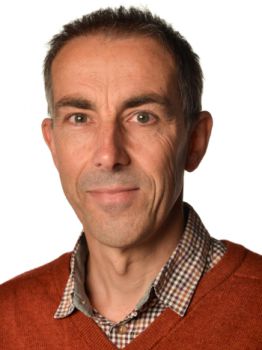
Peter Thomas (left) joined the University of Sussex as a lecturer in the Astronomy Centre in 1989 and remained there for his entire career. I know from my own time as Head of School that he was an excellent colleague. who made huge contributions to the University and indeed to his research discipline of cosmology.
Peter studied Mathematics at Cambridge University, graduating in 1983 and then did Part III (also known as the Certificate of Advanced Study) which he obtained in 1984. He stayed in Cambridge to do a PhD in the Institute of Astronomy under the supervision of Andy Fabian on Cooling Flows and Galaxy Formation, which he completed in 1987. He then spent a couple of years in Toronto as a Postdoctoral Fellow at the Canadian Institute for Theoretical Astrophysics (CITA) before taking up his lectureship at Sussex in 1989. His main research interests were in in the areas of galaxy formation, including numerical and semi-analytic models, and computer simulations of the formation of clusters of galaxies. He was a widely known and very highly respected researcher in the field of theoretical cosmology and extragalactic astrophysics.
I was a PDRA in the Astronomy Centre at Sussex when Peter joined in 1989; he was Professor in the Department of Physics & Astronomy when I returned there as Head of School of Mathematical and Physical Sciences in 2013, a position he himself subsequently held. He was a much-valued member of staff who made huge contributions to the Astronomy Centre, the Department of Physics & Astronomy, the School of Mathematical and Physical Sciences, and the University of Sussex as a whole. I also remember him as a colleague on various panels for PPARC and then STFC on which he served diligently.
Having known Peter for 35 years, and being of similar age, it was a shock to hear that he passed away. I understand that he had been suffering from cancer for over a year. I send my deepest condolences to his family, friends and colleagues. I understand that his funeral will be a private family affair, but there will be a more public occasion to celebrate his life at a later date.
I took my first degree in the Natural Sciences Tripos at the University of Cambridge. This involved doing a very general first year comprising four different elements that could be chosen flexibly. I quickly settled on Physics, Chemistry and Mathematics for Natural Sciences to reflect my A-level results but was struggling for the fourth. In the end I picked the one that seemed most like Physics, a course called Crystalline Materials. I didn’t like that at all, and wish I’d done some Biology instead – Biology of Cells and Biology of Organisms were both options – or even Geology, but I stuck with it for the first year.
Having to do such a wide range of subjects was very challenging. The timetable was densely packed and the pace was considerable. In the second year, however, I was able to focus on Mathematics and Physics and although it was still intense it was a bit more focussed. I ended up doing Theoretical Physics in my final year, including a theory project.
My best teacher at School, Dr Geoeff Swinden, was a chemist (he had a doctorate in organic chemistry from Oxford University) and when I went to Cambridge I fully expected to specialisze in Chemistry rather than Physics. I loved the curly arrows and all that. But two things changed. One was that I found the Physics content of the first year far more interesting – and the lecturers and tutors far more inspiring – than Chemistry, and the other was that my considerable ineptitude at practical work made me doubt that I had a future in a chemistry laboratory. And so it came to pass that I switched allegiance to Physics, a decision I am very glad I made.
(It was only towards the end of my degree that I started to take Astrophysics seriously as a possible specialism, but that’s another story…)
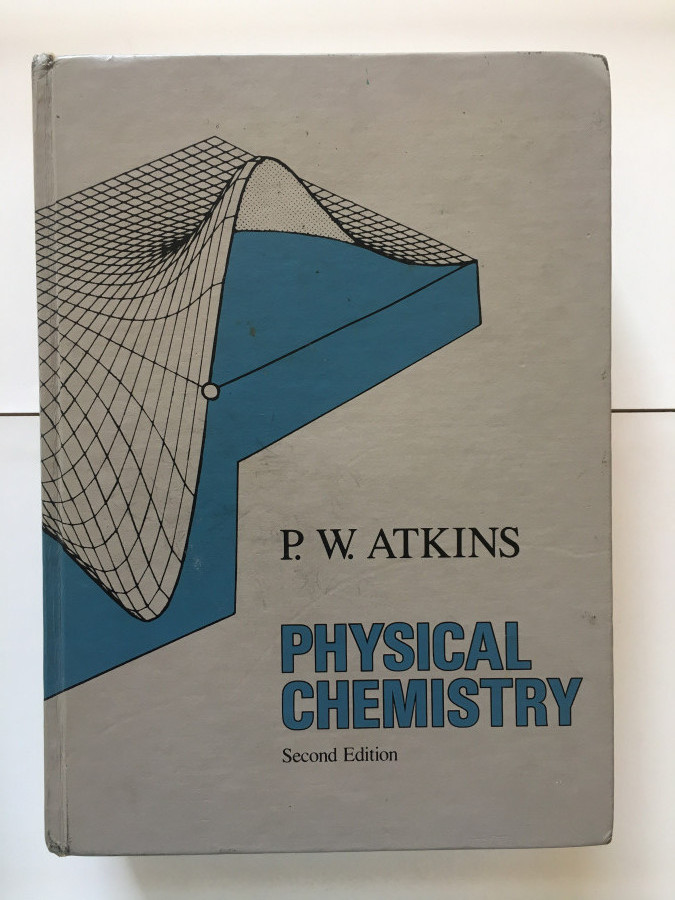
Anyway, when I turned up at Cambridge over 40 years ago to begin my course, and having Chemistry as a probable end point, I bought all the recommended text books, one of which was Physical Chemistry by P.W. Atkins. I found a picture (above) of the 1982 edition which may well be the one I bought (although I vaguely remember the one I had being in paperback). I thought it was a very good book, and it has gone into many subsequent editions. I also found the Physical part of Chemistry quite straightforward because it is basically Physics. I even got higher marks in Chemistry in the first year than I did in Physics but that didn’t alter my decision to drop Chemistry after the first year. When I did so, I followed tradition and sold my copy to a new undergraduate along with the other books relating to courses that I dropped.
Yesterday I found out that Peter Atkins has decided to make one of his books available to download. The book concerned is however not the compendious tome I bought, but a shorter summary called Concepts in Physical Chemistry, which was published in 1995. This is no doubt a very useful text for beginning Chemistry students so I thought I’d pass on this information. You can download it here, although you have to do it chapter by chapter in PDF files.
P.S. Chemistry in Spanish is ‘Química’. Since Physics and Chemistry share the same building in the University of Barcelona, where I am currently working, I frequently walk past rooms with doors marked ‘Quim’ (but I have never taken the opportunity to enter one).
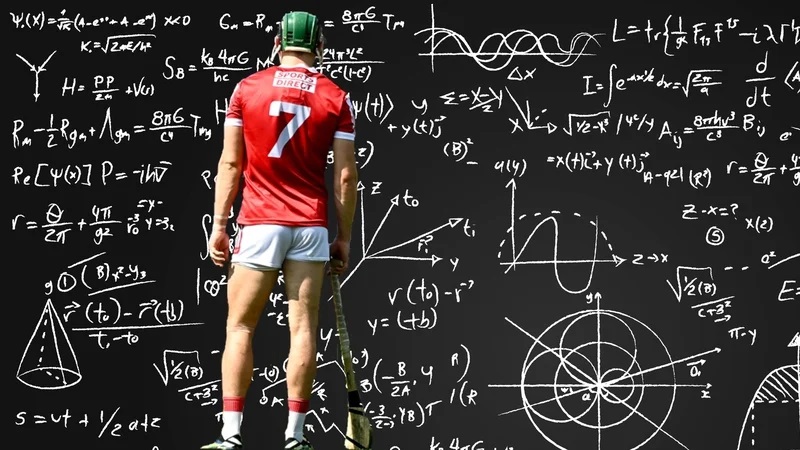
I was intrigued to see this graphic accompanying an article about hurling. Notice that the left hand side shows the field equations of Einstein’s General Theory of Relativity and some expressions to do with quantum mechanics. Hurling is indeed an extraordinary – and extraordinarily fast – sport but is the article implying that classical physics is inadequate to describe it? Perhaps it is implying that through hurling we will at last arrive at a Theory of Everything?
The views presented here are personal and not necessarily those of my employer (or anyone else for that matter).
Feel free to comment on any of the posts on this blog but comments may be moderated; anonymous comments and any considered by me to be vexatious and/or abusive and/or defamatory will not be accepted. I do not necessarily endorse, support, sanction, encourage, verify or agree with the opinions or statements of any information or other content in the comments on this site and do not in any way guarantee their accuracy or reliability.



 In the Dark