Archive for December, 2023

R.I.P. Alexei Starobinsky (1948-2023)

Posted in Covid-19, R.I.P., The Universe and Stuff with tags , , , on December 22, 2023 by telescoper
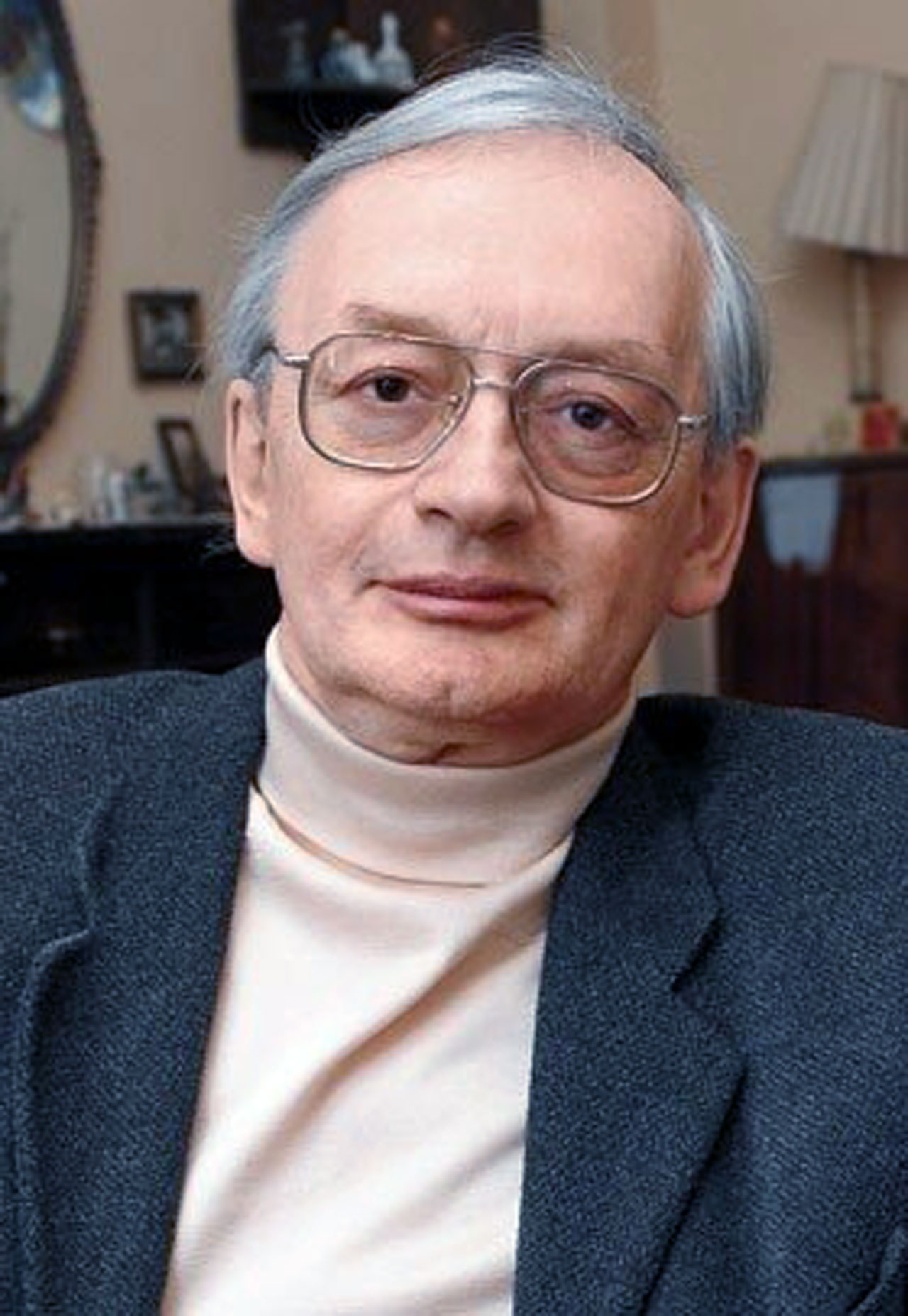
Alexei Starobinsky, pictured in 2013.

I’m very sorry, especially just before Christmas, to pass on the news of the death of Russian physicist and cosmologist Alexei Starobinsky who died yesterday (21st December 2023) of complications resulting from Covid-19. I heard this morning, but have been travelling all day and only just found time to write something in appreciation.

Starobinsky was one of the many academic descendants of the great Zeldovich; he did particularly important work on the physics of the early Universe in which field his ideas prefigured the theory that came to be known as cosmic inflation. Although Starobinsky’s seminal (1979) work on this topic was not well known outside the Soviet Union at the time Alan Guth wrote his paper on inflation (1981), it did later gained wider appreciation, and led to numerous awards, including the Gruber Prize in 2013 and the Kavli Prize in 2014 (together with Guth and Andrei Linde). 

I do have one rather fond personal memory of Starobinsky, from when we were coincidentally both visiting IUCAA in Pune at the same time back in the Nineties. We ended up going on a shopping trip together during which he revealed himself to be hopeless at the kind of light-hearted haggling that was the norm in the places we visited. He ended up paying way over the odds for everything he bought. He didn’t seem to mind though, and apparently found it all quite amusing. I only met him a few times and didn’t get to know him well at all, but he struck me as a very nice man as well as a fine physicist of the old-school Russian type.

Rest in peace, Alexei Alexandrovich Starobinsky (1948-2023).
Hasta la vista, Barcelona!

Posted in Barcelona, Biographical with tags , , , , on December 22, 2023 by telescoper

I’m reliably informed that Spanish people don’t really say “hasta la vista” very often, but it seemed an appropriate title. I’m writing this post in the Departure Lounge at Barcelona Airport, having got here in very good time for my flight. Last time I checked in here the check-in staff were so slow that it took two hours to drop my bag at the desk and I only just made it to the gate in time for my flight. This time I arrived three hours ahead of time and it only took about 15 minutes to get processed so now I’ve got ages until I leave.

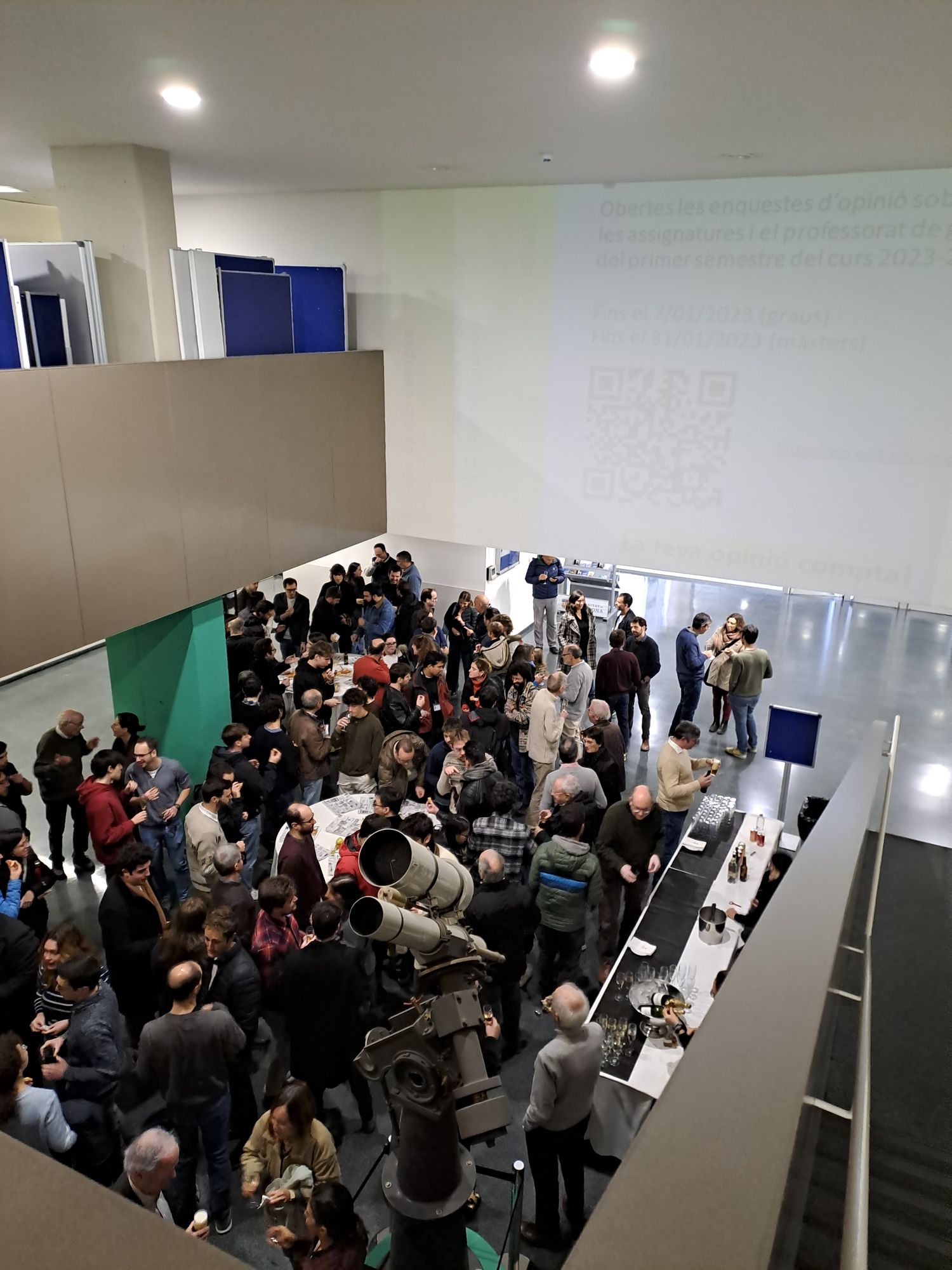
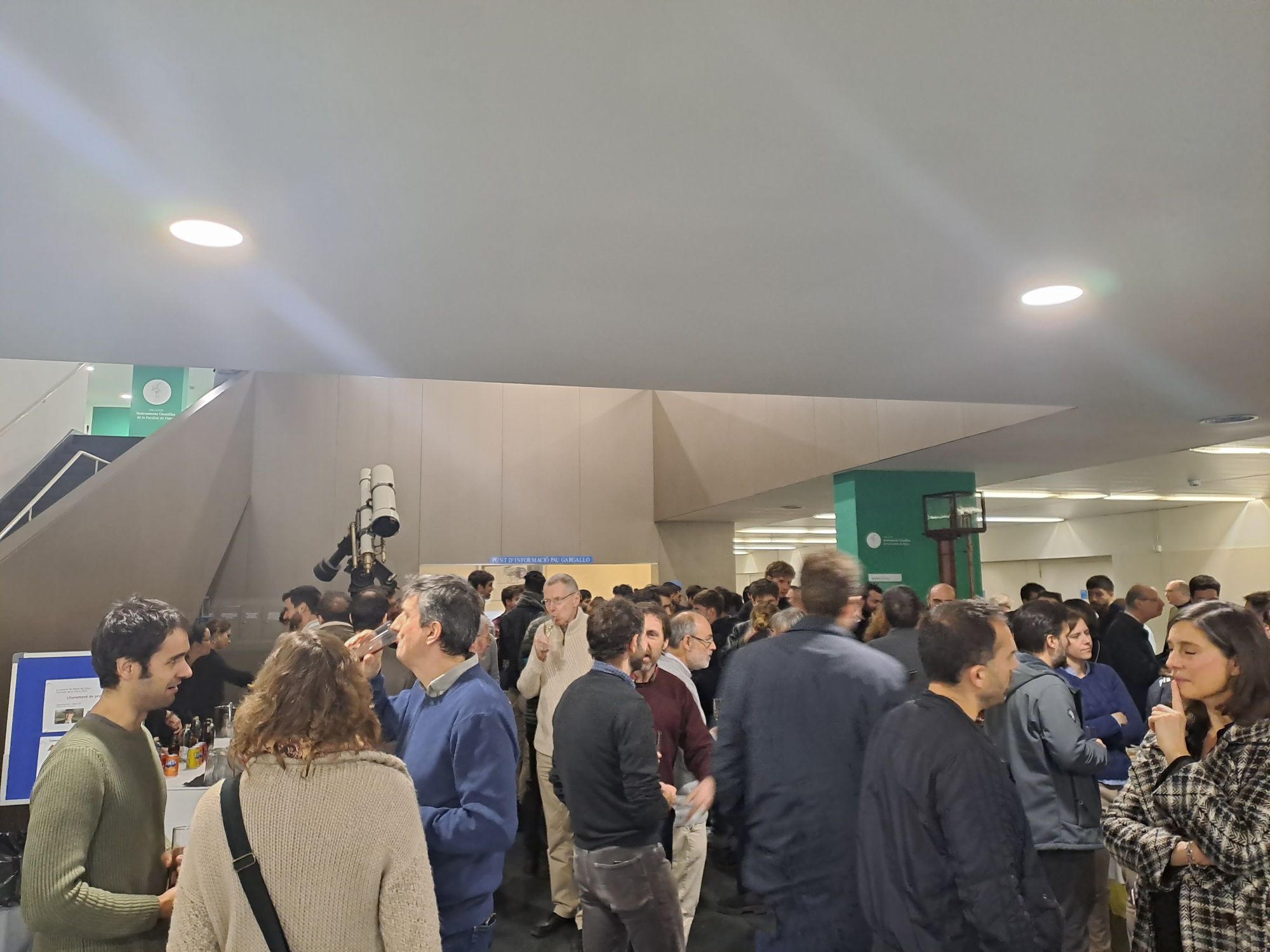
Yesterday, my last day in the office, we had a “Christmas Toast” in the foyer of the Physics Faculty building which consisted of a couple of inaudible speeches, followed by drinks and snacks in the company of a Grubb Telescope, an Atwood Machine, and many physicists.

This morning I said goodbye the flat I’ve been in for most of the past three months. I’ll be back in Barcelona in 2024, of course, but I’ll be in a different apartment when I return. Although my time in Barcelona is not over, I’d like to thank my hosts – especially Licia and Raul – for what has been a very enjoyable stay so far.

I’ll be back!

P.S. The last arXiv mailing before Christmas brought news of the accepted version of a paper for the Open Journal of Astrophysics, so I’ve just made the overlay and published the paper. That means that we finish 2023 with a half-century of articles in Volume 6. Roll on, Volume 7 (2024)!

UPDATE: I arrived safely in not-Barcelona and am looking forward to spend the next couple of weeks very lazily.

The Winter Solstice 2023

Posted in The Universe and Stuff with tags , , , on December 21, 2023 by telescoper
Sunlight at dawn on the Winter Solstice at Newgrange

Just a quick note to point out that the Winter Solstice in the Northern hemisphere happens tomorrow, Friday 22nd December 2023, at 4.27 am CET (3.27 UT). I am posting this in advance as although I am will be getting up quite early to catch a flight, it won’t be that early…

People often think that the Winter Solstice is defined to be the “shortest day” or the “longest night” of the year. The Solstice is actually defined in astronomical terms much more precisely than that. It happens when the axial tilt of the Earth away from the Sun is greatest, so that the Sun appears in the sky with its lowest maximum elevation. The timing of this event can be calculated with great precision.

In Barcelona, sunrise today (21st December) is at 8.13 am and sunset at 5.24 pm, while tomorrow the sunrise is at 8.14 am and sunset at 5.25 pm. The Solstice therefore occurs before sunrise tomorrow morning and the interval between sunrise and sunset tomorrow will be very close to that today; the interval between sunrise and sunset on 20th December (yesterday) was four whole seconds longer than on 22nd (today); the shortest day is therefore today rather than tomorrow. Moreover, the Solstice marks neither the latest sunrise nor the earliest sunset: sunrise will carry on getting later until the new year, the length of the day nevertheless increasing because sunset occurs even later. For a full explanation of this, see last year’s Winter Solstice post.

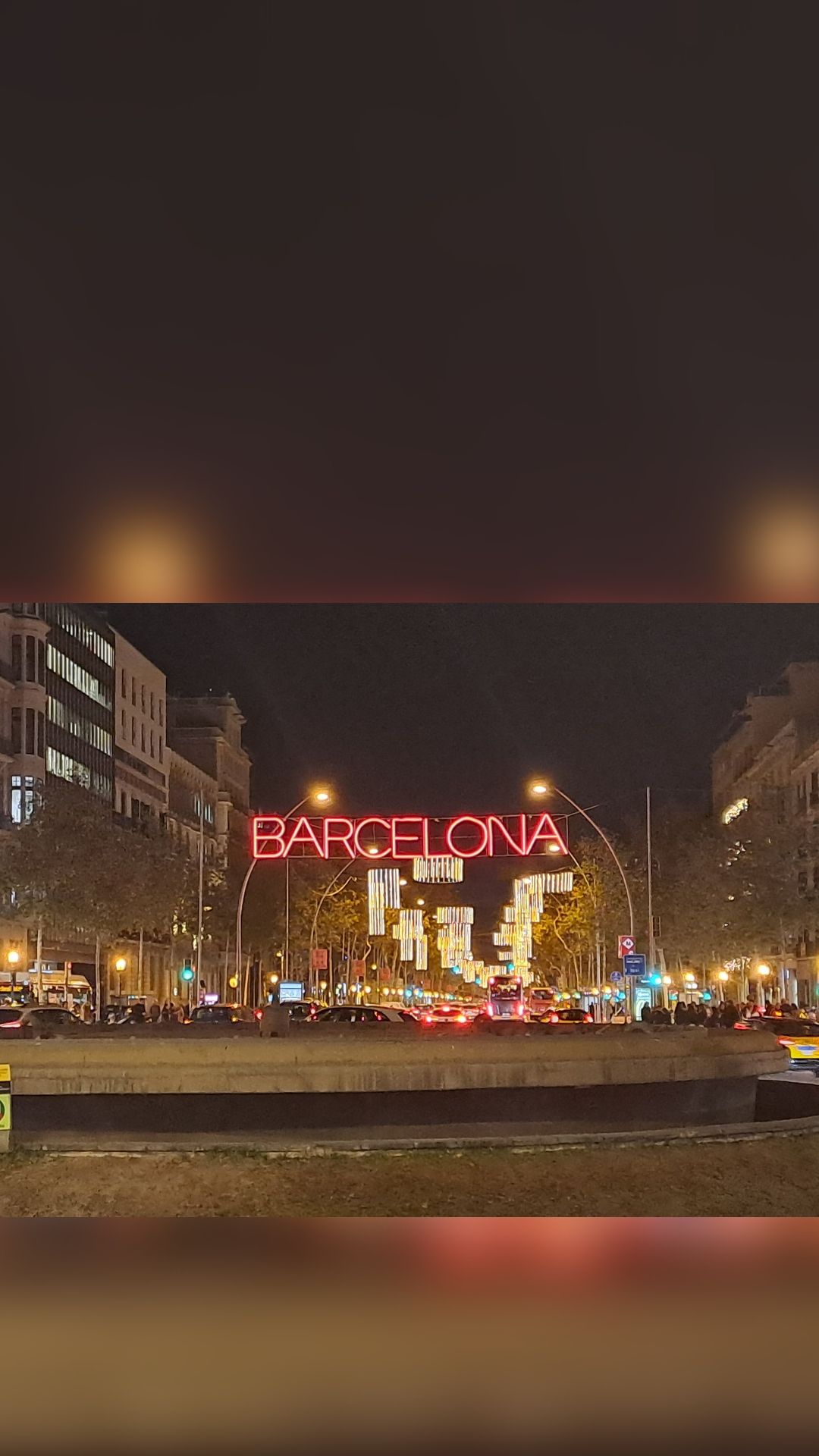
Merry Christmas from Barcelona!

Posted in Barcelona on December 19, 2023 by telescoper

Yet more high-z galaxies from JWST…

Posted in The Universe and Stuff with tags , , , , , , , on December 19, 2023 by telescoper

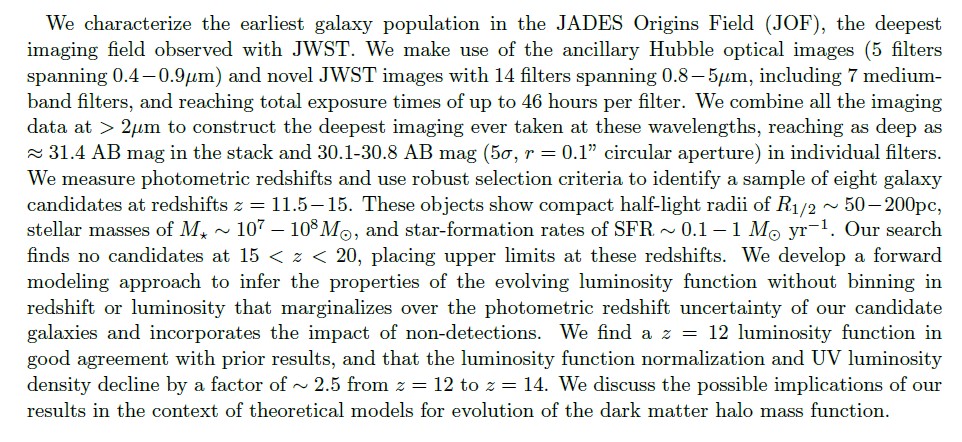
I noticed a paper on arXiv yesterday, by Robertson et al., with the abstract:

You can click on this to make it larger if you find it difficult to read.

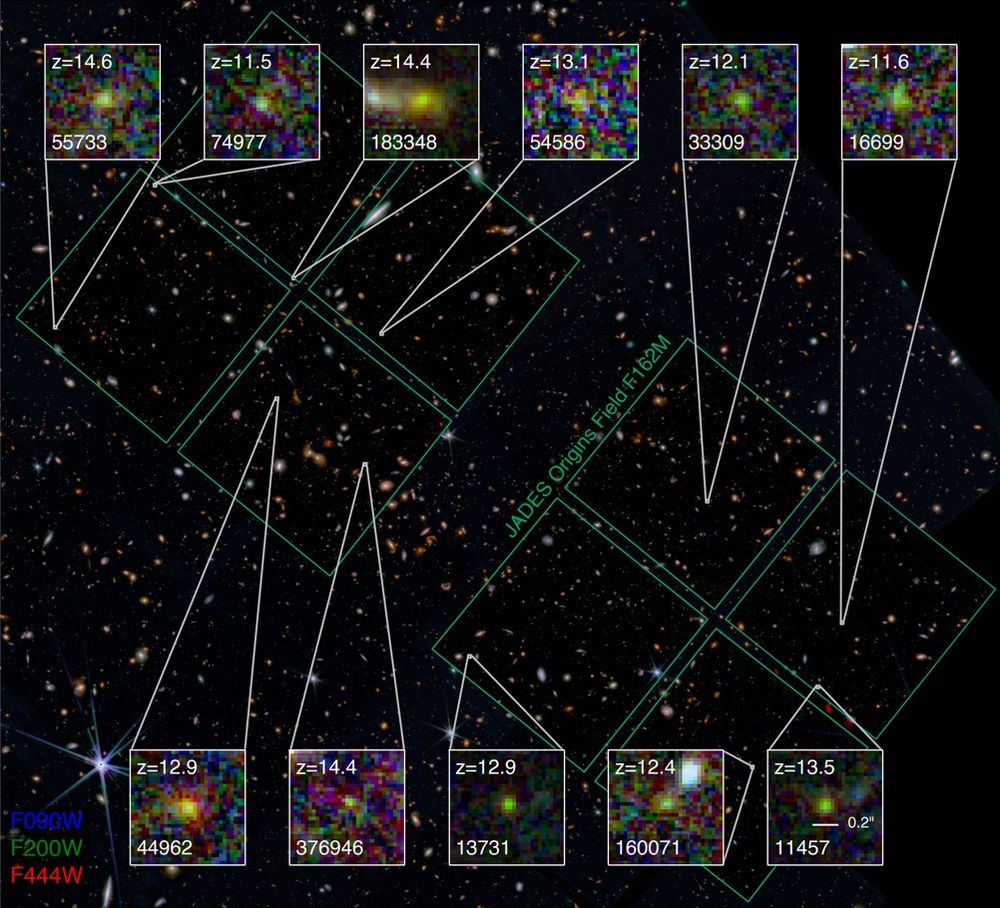
This is the latest in a number of studies by the JWST Advanced Deep Extragalactic Survey (JADES), which is aiming to detect galaxies that formed in the very early Universe; for a previous example see here. The latest batch can be seen in this figure:

There is an important caveat here, which is that these are photometric redshifts, based on the overall shape of the spectrum of the galaxy rather than on spectral lines which give a more accurate result. Follow-up spectroscopy is needed to firmly identify the redshift of the sources. Past experience suggests that some of these candidates may not actually be at as high a redshift as is claimed. If confirmed, however, the existence of large galaxies at redshifts of order 15 will put greater pressure on models of galaxy formation. A recent OJAp publication has shown that galaxies at redshift 10 are consistent with current theoretical ideas, but much larger will increase the tension on theorists. I can imagine quite a few people around the world replotting their graphs right now!

IOAP Diamond Open Access Awards 2024

Posted in Open Access with tags , , , , , , , , on December 18, 2023 by telescoper

Last week I found out about a new organization called Irish Open Access Publishers whose mission statement is as follows:

Irish Open Access Publishers (IOAP) is a community of practice driven by Irish open access publishers for Irish open access publishers.  The IOAP promotes engagement with the Diamond Open Access publishing model (free to publish and free to read) as well as indexing on the Directory of Open Access Journals and the Directory of Open Access Books. The aim of this dynamic community of practice is to promote publishing activity that is free of pay walls and publication embargoes to further the dissemination of high quality scholarly output to all in society.

These aims are laudable and I support them wholeheartedly. I should also mention that the Open Journal of Astrophysics is listed in the Directory of Open Access Journals here, where you will find details of all the papers we have published so far. This index is all part of the service.

The reason I found out about the existence of IOAP is that they are offering a new set of awards, for which nominations are now open:

(Unfortunately the links in the above image are not clickable, but you can the award details here…)

Nominations for the first three categories are by self-nomination only. I will of course, on behalf of Maynooth Academic Publishing, the Editorial Board, the authors, and everyone who has helped behind the scenes, be nominating the Open Journal of Astrophysics.

Nominations for the final category, Outstanding Contribution to the OA Field are described thus:

Category 4 welcomes third party as well as self nominations from academics, students, librarians, research managers, academic leaders, publishers and other stakeholders across further and higher education for an individual who has made an outstanding contribution to open access publishing in Ireland. Nominations from scholarly societies and other scholarly organisations are also welcome. Nominations for individuals based in Northern Ireland are also invited.

Self nominations are restricted to individuals based in Ireland including Northern Ireland. Third party nominations are invited from individuals based in Ireland including Northern Ireland as well as individuals based overseas. All third party nominations must be for individuals practising in the field of open access publishing in Ireland including Northern Ireland solely.

Notice that nominations are not restricted to individuals based in Ireland. So, wherever you are, if you can think of any individual based in Ireland who has done enough to merit being described as having made an “outstanding contribution”, perhaps not only for being a long-term advocate of Diamond Open Access but also for setting up and being Managing Editor of a successful Diamond Open Access journal in the field of astrophysics, then please feel free to nominate me them. I hope you get the message. If you want subtle, you’ve come to the wrong place!

The nomination form is here. The closing date for nominations is 1st February 2024.

Spanish Key – Miles Davis

Posted in Jazz with tags , , , on December 17, 2023 by telescoper

As I am still in Spain for a for more days before the Christmas break I thought I would share a vaguely relevant piece of music, Spanish Key from the 1970 album Bitches Brew by Miles Davis. This I don’t have time to write a long piece about this album, but I will say that of all the abrupt changes of musical direction during the career of Miles Davis, this album is probably the most startling and many jazz fans – even ardent admirers of Miles Davis – don’t like it at all. Anyway, des goûts et des couleurs on ne discute pas

This track is particularly interesting to me because I’ve long wondered about the title and the musical structure. I’m not at all sure, but it seems likely to me that the title indicates the relationship of this piece to the track Flamenco Sketches from the classic album Kind of Blue recorded over a decade earlier. In that album, Miles was experimenting with jazz based not on traditional keys and scales, but on modes. In Flamenco Sketches there is a section based on a major phrygian mode which is commonly used in flamenco music. Spanish Key is in a very different style – much faster for one thing – but it has a similar pattern involving changes from E to D to D (phrygian) to E (phrygian) and G (mixolydian). Apparently Miles gave minimal instruction to his musicians about what to play, but did have prearranged signals to shift from one mode to another, such as happens about 3:15 in the recording when he ushers in a guitar solo by John McLaughlin, and around 12:46 when the mood abruptly changes as Miles introduces a new theme. I also think it was a stroke of genius to include a bass clarinet on this album; on this track it adds a Moorish element to the Spanish tinge.

Anyway, there’s so much going on in this track that it’s more instructive to listen to it than write about it, so here you are. Enjoy!

Retractions and Resignations

Posted in Open Access with tags , , , , , , , , on December 16, 2023 by telescoper

I saw an article this week in Nature that revealed that more than 10,000 research papers have been retracted so far 2023. The actual number is probably much higher than that, as this is just the fraudulent papers that have been found out. Over 80% of the papers mentioned in the article were published by Hindawi, a known predatory publisher that specializes in Gold Open Access journals that charge Article Processing Charges. Hindawi is owned by Wiley but the brand has become so toxic that Wiley no longer wants to use the name. Presumably it still wants the profits.

(Another bit of news this week makes me think that Hindawi might be the academic publishing equivalent of Tesla…)

Here’s a figure showing how the number of retracted research articles has increased over time:

It has always seemed to me that the shift to “Gold” Open Access in which authors pay to have their work published would lead to a decrease in editorial standards. Since the publisher’s income comes from APCs, the more papers they publish the more money they get. This is another reason Diamond Open Access run on a not-for-profit basis with no fees for either authors or readers is a much better model.

At least some academics are taking a stand. Retraction Watch maintains a list of journals whose editors who have resigned – sometimes en masse from the same journal – in response to the imposition of dodgy practices by their publishers. Take the Journal of Geometric Mechanics, for example. The entire Editorial Board of this journal resigned because of pressure from above to increase “output” (i.e. profits) by lowering academic standards.

This is just a start, of course, but I don’t think it will take long for academic community to accept that the this publishing model is rotten to the core and embraces the only really viable and sustainable alternative.

Bullying and Astronomy

Posted in Euclid, Harassment Bullying etc with tags , , , , , on December 15, 2023 by telescoper

Yesterday I gave a talk at the UK Euclid Consortium (EC) Meeting in London in my role as Chair of the ECDC (Euclid Consortium Diversity Committee). I didn’t actually go to London, but delivered my talk virtually (not without a few hiccups, but I won’t go into that). My presentation was just a short one, outlining some of the things the ECDC does and encouraging others to get involved. One of the matters arising was the EC Code of Conduct, which has recently been updated. This document covers work within the EC generally, as well as specific rules governing EC-sponsored events, such as the meeting I spoke at. Incidentally, one of the latter rules is that organizers should facilitate virtual attendance at meetings, which they clearly did for me yesterday!

Coincidentally, there was a news item in Nature today that reminded me of a post on this blog from a couple of years ago. That was when news first broke of a bullying scandal at the University of Lund, specifically in the historic Lund Observatory, home of the Astronomy Department. Two professors were involved, Sofia Feltzing and Melvyn Davies. As far as I understand the situation, both are still employed by the University, in the Department of Geology and the Department of Mathematics respectively.

The latest news from Lund is that in the aftermath of this scandal, the Astronomy Department has been closed and the staff previously in it subsumed into Physics. That’s a pretty drastic step. In my experience forced mergers of departments, though popular with autocratic managers, are usually counterproductive from the point of view of staff morale. Precisely what the closure of the Lund Observatory after 350 years is meant to achieve is beyond me, but I assume that the atmosphere there had become so toxic that the authorities couldn’t think of anything else to do.

This is a demonstration of something I’ve often said in talks about EDI work. When matters come to formal disciplinary process – if they ever do – the outcome is almost never satisfactory in any respect, not least because the outcomes are often concealed by Non-Disclosure Agreements. The only really hope of creating an inclusive workplace is to ensure that bullying and harassment don’t happen in the first place, or are snuffed out very early on. Early intervention, mediation and conflict resolution are far more likely to provide a successful outcome than formal processes. The problem is that junior members of a department, who are most likely to be the target of bullying, do not feel empowered to make a complaint until it’s too late.

A binding Code of Conduct is one thing, but in order to work it has to be able to be enforced. That is why I agree with the approach suggested by the 21 Group, namely that there should be independent investigators for such matters whose conclusions are binding.