Author Archive

Maria Stuarda & Roberto Devereux

Posted in Uncategorized with tags , , , , , , on October 10, 2013 by telescoper

I spent last weekend in Cardiff in order to catch the remaining two operas in the series of three bel canto Tudor operas by Gaetano Donizetti being staged by Welsh National Opera; my review of the first, Anna Bolena, which I saw a month ago, can be found here.

Saturday night (5th october) in Cardiff Bay saw me at the splendid Wales Millennium Centre for Maria Stuarda. Although inspired by the story of Mary Queen of Scots, the plot of this Opera is almost entirely imagined. In particular, the dramatic centrepiece of the story is a meeting between Maria Stuarda and Queen Elizabeth I an event that never actually happened. In the Opera it is this encounter – which, to put it mildly, doesn’t go very well – that leads to Elizabeth finally making the decision to have Mary Stewart executed.

The Opera begins with Elizbeth I under pressure from her Court to marry the Duke of Anjou and to show mercy towards Mary Queen of Scotland (who has ambitions for the throne of England) who has been under house arrest for the best part of twenty years. She sees the political advantage of an alliance with France through marriage, but is secretly in love with Roberto (aka Robert Dudley, Earl of Leicester) who is actually keen on Mary. When Elizabeth and Mary actually do meet – accidentally, when Elizabeth is out hunting – their hatred for each other is impossible to disguise. After some terse exchanges, Mary loses her temper and denounces Elizabeth. Doomed, she is taken back into captivity; Elizabeth finally signs her death warrant, and orders Roberto to witness the execution. Protesting her innocence Mary says her goodbyes and is led off to be beheaded. End of story.

The plot may not be historically accurate but it’s ideal material for an opera, with the Chorus of Welsh National Opera in good form and Donizetti’s beautiful score to counterpoint the seething emotions of love, jealousy and revenge. Lasting around 2 hours and 45 minutes (including the interval) it’s also sharper and more focussed than Anna Bolena. The highlight of the evening was Judith Howarth’s stunning performance as Maria Stuarda, whose huge voice invested her role with immense dramatic power; Alastair Miles was a sombre and sonorous Talbot and Adina Nitescu was pretty good as Elisabetta (Elizabeth). Costumes were dark, and scenery minimal, as in Anna Bolena. The one thing I didn’t like was Maria Stuarda’s tartan skirt, not exactly the most subtle way of marking out the Queen of Scotland, which stuck out like a sore thumb among the black dresses on stage.

And so to Roberto Devereux, which finds an older Queen Elizabeth trying to protect her lover Robert Devereux (Earl of Essex) against charges of treason emanating from his enemies at court until she discovers that he also loves another woman, although she doesn’t know who it is; in fact it is her friend Sarah Duchess of Nottingham. Meanwhile the Duke of Nottingham isn’t too happy about Roberto’s dalliances with his wife. Eventually the net closes on Roberto and he attempts to flee but is captured, foolishly carrying a gift given to him by Sarah. His fate is sealed and he is executed, but not before Sarah shows up and reveals herself to be Elizabeth’s rival. Elizabeth has a sudden change of mind and attempts to halt Roberto’s execution, but she’s too late. In remorse the Queen longs for her own death.

The star of this show was undoubtedly the Orchestra of Welsh National Opera, who were on superb form, right from opening bars of the overture with its deliciously wry references to the National Anthem. Conductor Daniele Rustoni, who was great in Anna Bolena too, bouncing about in the pit, clearly enjoys Donizetti’s music enormously and got the very best out of the musicians.

The production was a bit strange though. Mostly sombre and minimal as the previous two Tudor operas, it nevertheless included some bizarre variations in costume and scenery. Leonardo Capalbo as Roberto Devereux was a leather-clad gigolo whose diminutive stature contrasted with the tall and elegant Alexandra Deshorties as a rather vampy Queen Elizabeth, even dressed in leather like a dominatrix for some of the time; although her attire was a bit incongruous I actually thought she was fabulous. Later on, even more strangely, a giant mechanical spider appeared on stage. I didn’t really get the point of this contratption, but thought the sudden injection of Steampunk imagery was a blast. After all, you don’t go to the opera expecting everything to make sense. The elderly blue-rinsed lady sitting next to me didn’t agree: “I don’t think so” she said in a loud voice when the aforementioned arachnid began its perambulation across the set…

Anyway, I enjoyed all three of these operas. Each has much to offer, though I think Maria Stuarda is the best overall. Some people seem to think that Bel Canto operas just consist of a series of vocal exercises with those not involved hanging around on stage clearing their throats ready for their turn. That’s entirely unfair. There’s real drama in these works and I commend Welsh National Opera for their courageous decision to stage all three of them in a single season.

Yesterday in Parliament

Posted in Science Politics, The Universe and Stuff with tags , , , , , on October 9, 2013 by telescoper

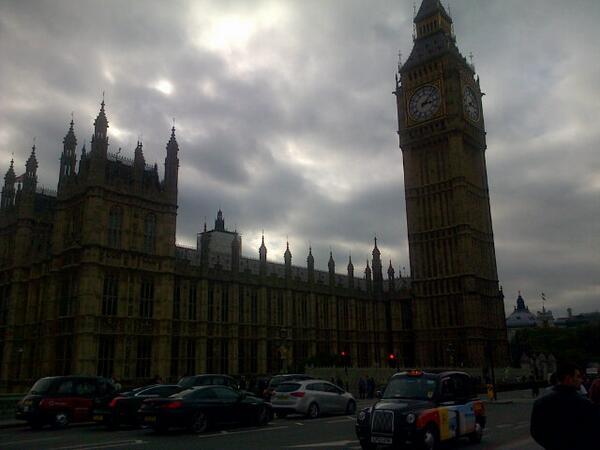
Yesterday afternoon I arrived in a rather muggy Westminster to attend a reception at the Houses of Parliament associated with an exhibition called Unveiling the Universe in all its Light which is currently set up inside the Palace of Westminster but will later go on tour around the UK.

Parliament

It took me a while to find the way in. I lived in London for the best part of 9 years but never bothered to visit the Houses of Parliament (at least not the interior), so I was quite excited as, clutching my invitation in a rather sweaty hand, I eventually joined the queue to go through the security checks. That didn’t take very long, so despite getting lost in the corridors of power en route – it’s a bit of a maze inside – I had plenty of time to see the exhibition before joining the assembled throng in the Strangers’ Dining Room. There, surrounded by walls covered in expensive but tasteless flock wallpaper, I had a couple of couples of glasses of wine and ate some posh sandwiches while chatting to various astronomers, particle physicists and others, including a contingent of familiar faces from the Science and Technology Facilities Council.

It was a coincidence, of course, that this event took place on the day that the Nobel Prize for Physics was announced; it was impressive that posters were already there celebrating the award to Peter Higgs. General opinion was delight that Higgs had won a share of the prize, but sadness that Tom Kibble had been left out.

There were upbeat speeches by Minister for Universities and Science David Willetts (who isn’t as tall as he looks on telly), Andrew Miller (Chair of the Parliamentary Select Committee on Science and Technology), John Womersley (Chief Executive of STFC) and Lord Rees (Astronomer Royal). I think everyone present came away with a strong sense that astronomy and particle physics had strong political backing. Martin Rees in particular said that he thought we were living in a “golden age” for fundamental science, involving an exciting interplay between the inner space of subatomic particles and the outer space of cosmology. I couldn’t agree more.

The 2013 Nobel Prize for Physics .. goes to Englert and Higgs

Posted in Science Politics, The Universe and Stuff with tags , , , , , , on October 8, 2013 by telescoper

Well, there we are. After an excruciating (and unexplained) delay the 2013 Nobel Prize for Physics has gone to François Englert and Peter Higgs. You can find the full press release here; the first section of text reads:

François Englert and Peter W. Higgs are jointly  awarded the Nobel Prize in Physics 2013 for the  theory of how particles acquire mass. In 1964, they  proposed the theory independently of each other  (Englert together with his now deceased colleague  Robert Brout). In 2012, their ideas were confirmed  by the discovery of a so called Higgs particle at the  CERN laboratory outside Geneva in Switzerland. The awarded theory is a central part of the Standard  Model of particle  hysics that describes how the world is  constructed. According to the Standard Model, every­thing, from flowers and people to stars and planets,  consists of just a few building blocks: matter particles.  These particles are governed by forces mediated by force  particles that make sure everything works as it should. The entire Standard Model also rests on the existence  of a special kind of particle: the Higgs particle. This  particle originates from an invisible field that fills up  all space. Even when the universe seems empty this  field is there. Without it, we would not exist, because  it is from contact with the field that particles acquire  mass. The theory proposed by Englert and Higgs  describes this process.

Anyway, congratulations to the two Laureates. I did get a bit excited when the rumour started that the winner this year would be someone born in Newcastle upon Tyne whose first name is Peter, but I guess I’ll have to wait until next year..

Oh, and François Englert is the first ever Belgian winner of the Nobel Prize for Physics!

I have to head off to London for a Parliamentary Reception organized by the Science & Technology Facilities Council, so I’ll have to leave it there but please feel free to add reactions to the announcement via the Comments Box.

P.S. Yesterday’s poll is now closed.

Physics Nobel Betting

Posted in Science Politics, The Universe and Stuff with tags , , , , , , , on October 7, 2013 by telescoper

I’m back in circulation just in time for tomorrow’s announcement of the 2013 Nobel Prize for Physics. The smart money is going on an award for the discovery of the Higgs Boson, but to whom should it be awarded. Today’s Grauniad summarizes the difficulties thus:

The committee can contrive the wording of the prize to narrow the number downwards and this is likely to happen. The prize could go to François Englert, who published the idea first, and Peter Higgs, who was second, but crucially was first to flag up the new particle. But that would rebuff the trio of Gerald Guralnik, Carl Richard Hagen and Tom Kibble, who developed the theory separately and published just a month after Higgs. The possibility has already caused acrimony among the scientists. Guralnik and Hagen, two US researchers, believe European physicists have conspired to erase their contribution from history.

This doesn’t seem to me to be entirely accurate, though. As far as I understand it, Higgs was the only one of the names above to mention a massive scalar particle, There is, I believe, therefore a strong case that the Nobel Prize should be awarded to Peter Higgs outright. Or if not to him, to some other person called Peter who was born in the North East…

However, I am used to being in a minority of one so there will undoubtedly be many others who feel differently.  Time for a poll! This one is different from my usual ones, in that you are allowed to vote more than once. Please use up to three votes: if you think Peter Higgs should win it outright vote three times for him. If you think it should be a three way split then vote for three different people, etc.

I should say that I don’t think the Nobel Committee for Physics is allowed to make an award to an institution such as CERN, but I’ve left that option in to see whether folks think that tradition should change..

UPDATE: Here are the Thomson-Reuters predictions, including Marcy, Mayor and Queloz for Extra Solar Planets…


Interlude

Posted in Uncategorized on October 2, 2013 by telescoper

This afternoon I’m going off to get my head examined (!) and thereafter will be indisposed for a few days during which I’ll unable to connect to the interwebs. Nothing serious, I hasten to add.  Normal services will be resumed as soon as possible (probably on Monday 7th October)  but, for the time being, there will now follow a short intermission.

Why the Universe is (probably) not rotating

Posted in Cosmic Anomalies, The Universe and Stuff with tags , , , , , on October 1, 2013 by telescoper

Just a quick post to point you towards a nice blog post by Jason McEwen entitled Is the Universe rotating? It’s a general rule that if  an article has a question for a title then the answer to that question is probably “no”, and “probably no” is indeed the answer in this case.

The item relates to a paper by McEwen et al whose abstract is given here:

We perform a definitive analysis of Bianchi VII_h cosmologies with WMAP observations of the cosmic microwave background (CMB) temperature anisotropies. Bayesian analysis techniques are developed to study anisotropic cosmologies using full-sky and partial-sky, masked CMB temperature data. We apply these techniques to analyse the full-sky internal linear combination (ILC) map and a partial-sky, masked W-band map of WMAP 9-year observations. In addition to the physically motivated Bianchi VII_h model, we examine phenomenological models considered in previous studies, in which the Bianchi VII_h parameters are decoupled from the standard cosmological parameters. In the two phenomenological models considered, Bayes factors of 1.7 and 1.1 units of log-evidence favouring a Bianchi component are found in full-sky ILC data. The corresponding best-fit Bianchi maps recovered are similar for both phenomenological models and are very close to those found in previous studies using earlier WMAP data releases. However, no evidence for a phenomenological Bianchi component is found in the partial-sky W-band data. In the physical Bianchi VII_h model we find no evidence for a Bianchi component: WMAP data thus do not favour Bianchi VII_h cosmologies over the standard Lambda Cold Dark Matter (LCDM) cosmology. It is not possible to discount Bianchi VII_h cosmologies in favour of LCDM completely, but we are able to constrain the vorticity of physical Bianchi VII_h cosmologies at $(\omega/H)_0 < 8.6 \times 10^{-10}$ with 95% confidence.

For non-experts the Bianchi cosmologies are based on exact solutions of Einstein’s equations for general relativity which obey the condition that they are spatially homogeneous but not necessarily isotropic. If you find that concept hard to understand, imagine a universe which looks the same everywhere but which is pervaded by a uniform magnetic field: that would be homogeneous (because every place is identical) but anisotropic (because there is a preferred direction – along the magnetic field lines). Another example of would be s a universe which is, for reasons known only to itself, rotating; the preferred direction here is the axis of rotation. The complete classification of all Bianchi space-times is discussed here. I also mentioned them and showed some pictures on this blog here.

As Jason’s post explains, observations of the cosmic microwave background by the Wilkinson Microwave Anisotropy Probe (WMAP) suggest  that there is something a little bit fishy about it: it seems to be have an anomalous large-scale asymmetry not expected in the standard cosmology. These suggestions seem to be confirmed by Planck, though the type of analysis done for WMAP has not yet been performed for Planck. The paper mentioned above investigates whether the WMAP asymmetry could be accounted for by one particular Bianchi cosmology, i.e. Bianchi VII_h. This is quite a complicated model which has negative spatial curvature, rotation (vorticity) and shear; formally speaking, it is the most general Bianchi model of any type that includes the standard Friedmann cosmology as a special case.

The question whether such a complicated model actually provides a better fit to the data than the much simpler standard model is one naturally answered by Bayesian techniques that trade off the increased complexity of a more sophisticated model  against the improvement in goodness-of-fit achieved by having more free parameters.  Using this approach McEwen et al. showed that, in simple  terms, while a slight improvement in fit is indeed gained by adding a Bianchi VII_h component to the model,  the penalty paid in terms of increased complexity means that the alternative model is not significantly more probable than the simple one. Ockham’s Razor strikes again! Although this argument does not definitively exclude the possibility that the Universe is rotating, it does put limits on how much rotation there can be. It also excludes one possible explanation of the  peculiar pattern  of the temperature fluctuations seen by WMAP.

So what does cause the anomalous behaviour of the cosmic microwave background?

I have no idea.

Return of the Bad Penny Blues

Posted in Jazz, Music with tags , , , on October 1, 2013 by telescoper

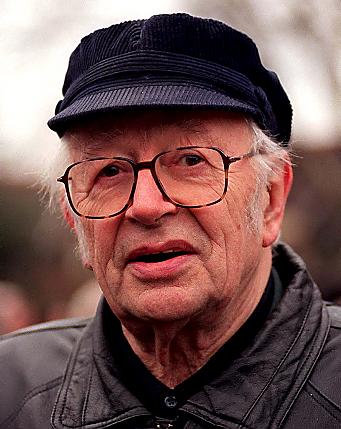
So, it’s October again. What happened to September? Anyway, looking back through my archive this morning I discovered that exactly five years ago today I posted a tribute to the legendary Humphrey Lyttelton. I still miss Humph greatly so thought I’d indulge myself by posting the piece again with a few small updates. Well, they say a Bad Penny always comes back….

–0–

I knew I could’t blog for long without writing something about a great hero of mine, the inimitable Humphrey Lyttelton, better known to his many fans as “Humph”. He died earlier this year (on April 25 2008, at the age of 86) of complications following a heart operation. News of his death came as a massive shock to me, as it had never really occured to me that one day he would be no more. Tributes to him in the media were unsurprisingly glowing in their admiration.

In later years, Humph was best known as the chairman of the long-running radio comedy show I’m Sorry I Haven’t a Clue, subtitled “The Antidote to Panel Games” in which his gravelly but perfectly elocuted voice, schoolmasterish manner and impeccable comic timing proved the perfect foil to the antics of Barry Cryer, Tim Brooke-Taylor, Graeme Garden and many other contributors. I hope I get the chance to say a bit more about this programme in due course, as I treasure my collection of recordings of shows that still make me laugh at the umpteenth listening.

But Humph had many other strings to his bow. He was a talented cartoonist and a gifted writer, and also hosted the BBC Radio programme “The Best of Jazz” on Radio 2 for forty years, counting the great John Peel among his legions of listeners. I owe a special debt to Humph for this programme as I listened to it religiously every monday night at 9pm during my teenage years. He would open the show with “This his Humphrey Lyttelton here, with the best part of an hour of jazz between now and five to ten”. His theme tune then was Wanderlust, recorded by a subset of Duke Ellington’s orchestra with the great saxophonist Coleman Hawkins appearing as a guest and contributing a truly magnificent tenor solo near the end of the piece.

Through Humph I discovered most of the music I still listen to on a daily basis, jazz from the classic era of Louis Armstrong and Jelly Roll Morton, through the swing era of Duke Ellington, Benny Goodman and Count Basie, the postwar bebop period of Charlie Parker, Dizzy Gillespie and Thelonious Monk, Miles Davis and John Coltrane, then modernists like Ornette Coleman, Sam Rivers, Archie Shepp and onto the avant-garde of the time. Humph loved all kinds of jazz, and he communicated his encyclopedic knowledge a style flavoured by a dry sense of humour. I never met him in person, but I would have loved the chance to thank him for helping nurture in me a passion for all that wonderful music.

Humph was also a fine Jazz trumpeter and bandleader in his own right. When my father was at school in the 1950s, the Lyttelton band was the leading “traditional Jazz” band in Britain. Humph had played with many of the greats, including Louis Armstrong and Sidney Bechet, and won their admiration for his trumpet-playing.

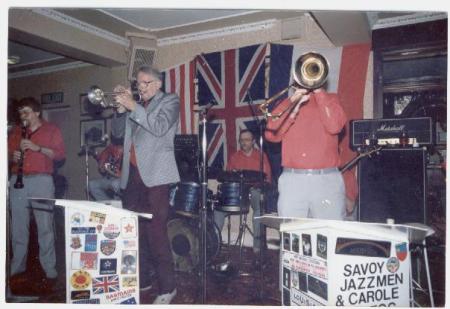
My dad had become a Lyttelton fan at School and it was this that persuaded him to take up playing the drums. He joined the RAF for his national service, and he had the opportunity to play with various bands then and later on when he went back into civvy street. He was a life long admirer of Humph and eventually got to play with him at the Corner House in Newcastle but not until the 1990s. He told me it was one of the proudest moments of his life, although he had been so nervous he didn’t really play very well. Here’s a photograph of this occasion:

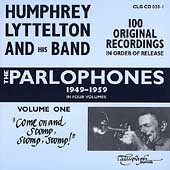
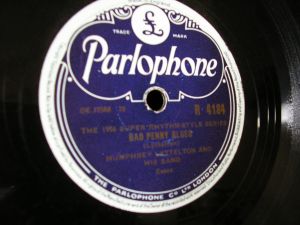
In the late 1940s Humph’s band had started to record a series of 78rpm records for the Parlophone label, starting with a lovely version of “Maple Leaf Rag” and stretching to over a hundred titles. Among these tracks was one record that actually made it into the Top 20 of the British pop charts in 1956, admittedly at Number 19, but nevertheless that’s no mean feat for a Jazz record. I should point out that this was long before my birth, but I remember hearing the track many times around the house when I was young.

The Bad Penny Blues was written by Humphrey Lyttelton and the hit recording features a quartet drawn from his band which, by the mid-1950s, had gravitated to a more mainstream jazz style, away from the “traddy” sound favoured by most contemporary jazz outfits. Indeed, he had incurred the wrath of many conservative fans by daring to include a saxophonist, the brilliant but eccentric Bruce Turner, in his outfit. Bad Penny Blues, though, featured only Humph on trumpet, Johhny Parker on piano, Stan Greig on drums and Jim Bray on bass. It was only recorded as an afterthought because it went down well at live gigs at Humph’s Jazz Club the HL Club (which later became the 100 Club, at 100 Oxford Street.)

But the real key to the success of this record was a young man by the name of Joe Meek. Starting out as a sound engineer at the Parlophone studios, Meek had quickly established an excellent reputation and in this case he was asked to take over the whole production of the record. According to Humph, they were slightly concerned at what he was doing with the microphones before they made the take but after it was done they all went home and left Meek to do some tinkering with the sound before cutting the disk. In those days, recording techniques were relatively crude and there generally wasn’t much in the way of post production, especially in jazz.

When he heard the final record, Humph was shocked. For one thing, Meek had close-miked all the instruments, including the drums – something which wasn’t generally done with jazz records for fear of (a) drowning out the rest of the band and (b) exposing the clumsiness of the drummer, the latter being a particularly problem. As Humph said, his band always sounded like the rhythm section was wearing diving boots. For this reason the drums were usually recorded with a distant mike and generally hidden in the ensemble playing. But in this case it worked out very well. Stan Greig used brushes on this track and his playing served beautifully both to propel and to punctuate the performances of the other musicians.

But it wasn’t the drums that so disturbed Humph. Meek had also fiddled with the double bass and with the left hand boogie-woogie figures of Johnny Parker’s piano, fattening them out and changing the balance to bring them right up in the final mix. He also compressed the overall sound so that the bass lines seem to press in on both the piano’s right hand and the growling muted trumpet lead, tying them closer to Greig’s insistent drum patterns and creating an unusually dense sound. The result is an intense, driving feel, with a dark undertone that is quite unlike any other jazz record of its period and redolent with the atmosphere of a smoky jazz club. I love it, especially the moment when Humph’s trumpet takes over from the piano solo. With a timely kick from the drums and against the backdrop of those bluesy thumping bass lines the band finds another gear and they build up a fine head of steam before riffing their way into the fade.

Here is the original 78rpm single:

Humph didn’t like the way the record had been put together, but it was an instant hit. He later joked that he hated it all the way to the bank.

Joe Meek went on to produce several classic pop records, generating many ideas that were later used by Phil Spector, but ultimately he became a tragic figure. Such commercial success as he achieved didn’t really last and he sank into debt, depression and paranoia. A gay man in an era in which homosexuality was still illegal, he became a victim of blackmail and was questioned by the police for alleged encounters with rent boys. He committed suicide in 1967 at the age of 37.

The Bad Penny Blues went on to be the “inspiration” behind Paul Macartney’s Lady Madonna, a Beatles track which has a lot of the same notes in it and also borrows the same overall feel. I can’t put it more subtly than that. George Martin, who produced the Beatles’ track, was actually in charge of the Parlophone studio at the time Bad Penny Blues was recorded…

And Humph went on to live another 52 years, bringing music and laughter to millions.

To end with, here’s a link to a later version of the tune recorded by a more recent manifestation of Humph’s band, probably in the 1980s. Note the way his technique involved the use of his eyebrows! I may be wrong, but I think the pianist on this performance is Mick Pyne and the bass is played by Dave Green. I can’t really make out the drummer.

Unchained Melody

Posted in Film, Music with tags , , , , on September 30, 2013 by telescoper

You pick up a lot of interesting snippets listening to BBC Radio 3. Last night I was listening to a programme about  Alex North, a prolific composer of music scores, including one of my favourite films A Streetcar Named Desire.  Alex North also wrote a complete soundtrack for Kubrick’s 2001: A Space Odyssey and must have been mortified when he turned up for the Premiere and found that not a single note of the music he’d written was used in the final version. Anyway, one thing I learnt that I didn’t know before was that Alex North also wrote the tune Unchained Melody for a relatively unknown prison movie called, appropriately enough, Unchained. The song was a massive hit in the 60s for the Righteous Brothers, and gained popularity again as a consequence of the 1990 film Ghost.  It’s also been murdered by countless karaoke singers since then…

Anyway, here is the original version of Unchained Melody as it appears in the 1955 film. Knowing the background to the song (i.e. that the enforced separation of the singer and his sweetheart is because the former is in prison) makes it all the more poignant, and Todd Duncan (whose style clearly owes a debt to Paul Robeson) gives it a bluesy feel present in none of the cover versions I’ve heard…

A Cranefly in September

Posted in Poetry with tags , , on September 29, 2013 by telescoper

She is struggling through grass-mesh – not flying,
Her wide-winged, stiff, weightless basket-work of limbs
Rocking, like an antique wain, a top-heavy ceremonial cart
Across mountain summits
(Not planing over water, dipping her tail)
But blundering with long strides, long reachings, reelings
And ginger-glistening wings
From collision to collision.
Aimless in no particular direction,
Just exerting her last to escape out of the overwhelming
Of whatever it is, legs, grass,
The garden, the county, the country, the world –

Sometimes she rests long minutes in the grass forest
Like a fairytale hero, only a marvel can help her.
She cannot fathom the mystery of this forest
In which, for instance, this giant watches –
The giant who knows she cannot be helped in any way.

Her jointed bamboo fuselage,
Her lobster shoulders, and her face
Like a pinhead dragon, with its tender moustache,
And the simple colourless church windows of her wings
Will come to an end, in mid-search, quite soon.
Everything about her, every perfected vestment
Is already superfluous.
The monstrous excess of her legs and curly feet
Are a problem beyond her.
The calculus of glucose and chitin inadequate
To plot her through the infinities of the stems.

The frayed apple leaves, the grunting raven, the defunct tractor
Sunk in nettles, wait with their multiplications
Like other galaxies.
The sky’s Northward September procession, the vast
soft armistice,
Like an Empire on the move,
Abandons her, tinily embattled
With her cumbering limbs and cumbered brain.

by Ted Hughes (1930-1998)

Better learning means less assessment and more feedback

Posted in Education with tags , , on September 28, 2013 by telescoper

Yesterday I took part in a meeting that discussed, among other things, how to improve the feedback on student assessments in order to help them learn better. It was an interesting meeting, involving academics, administrative staff and a representative of the Students Union, that generated quite a few ideas which I hope will be implemented pretty soon.

Positive though the discussion was, it didn’t do anything to dissuade me from a long-held view that the entire education system holds back the students’ ability to learn by assessing them far too much. The combination of the introduction of modular programmes and the increase of continuously assessed coursework has led to a cycle of partial digestion and regurgitation that involves little in the way of real learning.

I’m not going to argue for turning the clock back entirely, but for the record my undergraduate degree involved no continuous assessment at all (apart from a theory project I opted for in my final year. Having my entire degree result based on the results of six three-hour unseen examinations in the space of three days is not an arrangement I can defend, but note that despite the lack of continuous assessment I still spent less time in the examination hall than present-day students.

That’s not to say I didn’t have coursework. I did, but it was formative rather than summative; in other words it was for the student to learn about the subject, rather for the staff to learn about the student. I handed in my stuff every week, it was marked and annotated by a supervisor, then returned and discussed at a supervision.

People often tell me that if a piece of coursework “doesn’t count” then the students won’t do it. There is an element of truth in that, of course. But I had it drummed into me that the only way really to learn my subject (Physics) was by doing it. I did all the coursework I was given because I wanted to learn and I knew that was the only way to do it.

The very fact that coursework didn’t count for assessment made the feedback written on it all the more useful when it came back because if I’d done badly I could learn from my mistakes without losing marks. This also encouraged me to experiment a little, such as using a method different from that suggested in the question. That’s a dangerous strategy nowadays, but surely we should be encouraging students to exercise their creativity rather than simply follow the instructions? The other side of this is that more challenging assignments can be set, without worrying about what the average mark will be or what specific learning outcome they address.

I suppose what I’m saying is that the idea of Learning for Learning’s Sake, which is what in my view defines what a university should strive for, is getting lost in a wilderness of modules, metrics, percentages and degree classifications. We’re focussing too much on those few aspects of the educational experience that can be measured, ignoring the immeasurable benefit (and pleasure) that exists for all humans in exploring new ways to think about the world around us.