Archive for the Art Category

Messers, Dreamers and Misfits

Posted in Art, Education, Music with tags , , , on September 5, 2021 by telescoper

After the death of Charlie Watts last week, Fintan O’Toole wrote a piece in the Irish Times (here, unfortunately behind a paywall) pointing out that, along with a large fraction of the English rock musicians that began their careers in the 1960s, Charlie Watts went to Art School; Harrow Art School in his case. O’Toole goes on to argue that society needs to find ways to nurture its creative talents and that modern education is far too utilitarian to allow space for “Messers, Dreamers and Misfits”.

I agree with the broad thrust of Fintan O’Toole’s argument. I think the School and University systems are far too focussed on examination and assessment at the expense of genuine education. What I disagree with is the idea that creativity is only to be found in the Arts. When I saw the phrase “Messers, Dreamers and Misfits” it struck me that this could very well describe many of my colleagues in physics, and in science generally – and I don’t mean that in any way as an insult!

There is an explicit assumption in much of the world that creativity is only to be found in the Arts. That’s just not true. Who can say that Einstein didn’t have a creative mind? It is true that if you want to be, say, a theoretical physicist you do have to do formal training in the methods used, especially mathematics. But that is no different from an art school really. To be a painter you have to learn the techniques needed to manage the media you are using. To be a musician you have to learn the basics of harmony and solve the technical problems involved with playing an instrument. Artists have to pay their dues just like scientists. I wrote about this here, in the context of the great Jazz pianist Bill Evans, where I said:

All subjects require technical skill, but there is more to being a great jazz musician than mastery of the instrument just as there’s more to being a research scientist than doing textbook problems. So here’s to creativity wherever it is found, and let’s have a bit more appreciation for the creative aspects of science and engineering!

Anyway, here in Ireland, the Leaving Certificate results came out on Friday and next week we’ll begin the process that determines how many students we’ll have doing Mathematical and Theoretical Physics at Maynooth. It always surprises me how many students choose study subjects other than Physics, but then I remember that I went from School to Cambridge in 1982 to read Natural Sciences, fully expecting to specialize in Chemistry but just found Physics more interesting and, yes, more fun.

I don’t know whether I count as a creative person at all, but I’m definitely a misfit, prone to dreaming and – especially at the moment in the middle of unpacking my belongings – my house is a mess!

Anyway, here is a message for students just about the start their Third Level education here in Ireland or elsewhere. The most important advice I can give is to choose the subject that you will enjoy most, but pursue your other interests too. Charlie Watts was interested in music while at art school. There’s no reason why a theoretical physicist can’t pursue an interest in music too. I can think of at least one prominent example of a person who managed to become a pop musician and a physicist.

Given my own background I read Fintan O’Toole’s article as clear encouragement to students to pick theoretical physics.

Remembering Charles Byrd

Posted in Art, Biographical, Cardiff with tags , , on September 4, 2021 by telescoper

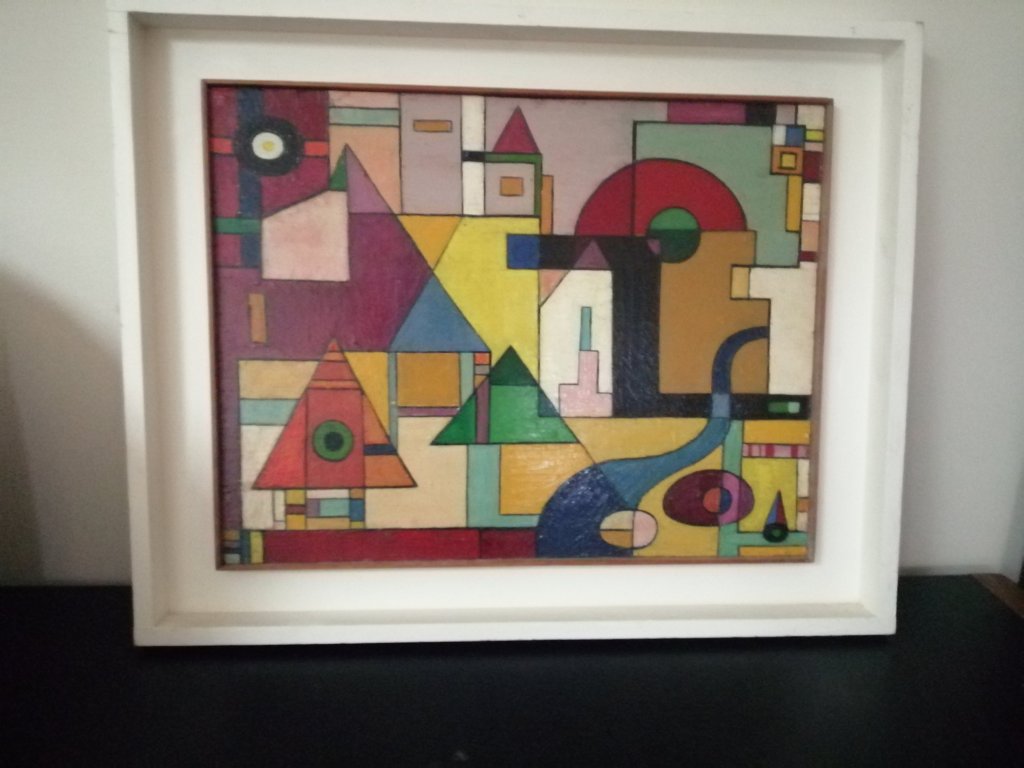
Most of the belongings I’ve just had delivered to Maynooth are of sentimental rather than financial value so I suppose it was inevitable that I’d get a bit sentimental opening them up. The painting above is by a Cardiff-based Welsh artist called Charles Byrd and it was painted in 1963, the year of my birth. The story of how it came into my possession over a decade ago can be found here.

I unpacked this yesterday along with most of my other artwork but I haven’t decided where to put it yet so it’s sitting on my desk until I decide where to put it.

It was with some sadness that I found out recently that Charles Byrd passed away in 2018 at the age of 101. There’s a nice little tribute to him here. I found out reading it that in the least years of his life he lived in a little flat on Llandaff Road, very close to where I lived in Pontcanna, though I never met him, which is a shame because he seems to have been quite a character!

Rest in peace, Charles Byrd (1916-2018).

The Irish Population

Posted in Art, History, Politics, Television with tags , , , , on August 31, 2021 by telescoper

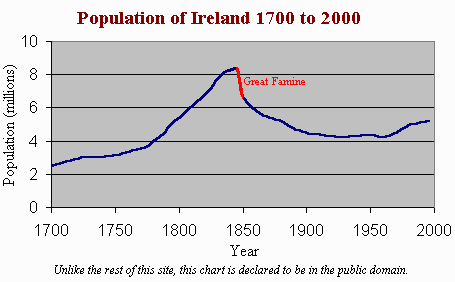
Not long ago I did a post about a documentary series called The Hunger which was broadcast on RTÉ just before Christmas. It was, of course, about the Great Irish Famine, which led to the death of one million (mainly poor) Irish people and the emigration of over two million in the subsequent years. It was a shattering episode that altered Ireland for ever. I remarked at the time that “the population of this island still hasn’t recovered to pre-Famine levels”.

Well today saw the announcement of a significant milestone in the trajectory of Ireland’s population. According to the Central Statistics Office, in April 2021 the population of the Republic of Ireland exceeded 5 Million for the first time since 1851. To be precise Ireland’s population was estimated to be 5.01 million in April 2021, which is the first time the population has risen above five million since the 1851 census, when the comparable population was 5.11 million. By “comparable” I mean the population of the 26 Counties that now constitute the Republic of Ireland.

The total population on the island of Ireland in 1851 was 6.6 million. Including the population of Northern Ireland brings the current population on the island of Ireland to about 6.9 million. The population of Ireland (ie the whole island) in 1841 was over eight million.

The following (rather old) graphic shows that catastrophic drop that was an immediate consequence of the Great Hunger but also the long period of decline caused by emigration and poor public health leading to low levels of fertility. The population did not begin to grow significantly until the 1970s.

Although the population is still nowhere near the level it reached in 1841, Ireland is in the grip of a housing shortage that the present Government seems reluctant to do anything about, not surprisingly when you realize that the present Government represents the property-owning classes in whose interests it is to keep housing scarce and rents correspondingly high. Ireland’s housing crisis is not an accident, it’s a matter of policy. Irish landlords oppressing the poorer classes and exploiting them for monetary gain. Some things haven’t changed…

It fascinates me that, with political will, human societies have made enormous changes – including financial interventions, inventing new vaccines and delivering mass vaccination programmes – to deal with the Covid-19 pandemic. Poverty and homelessness do not require new inventions – we already know very well how to build houses – only the political will is needed, and that’s just not there.

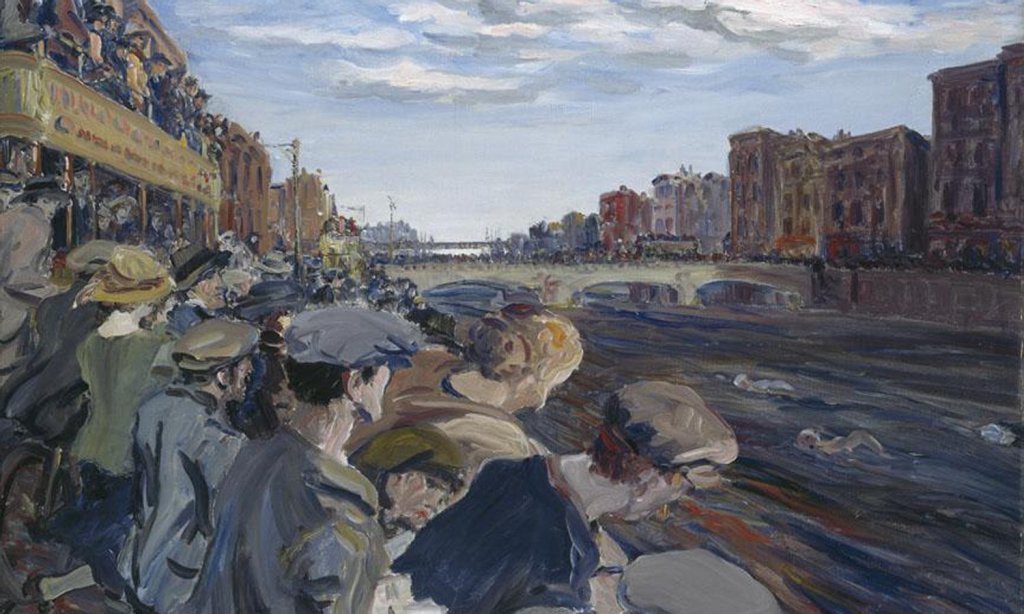
The Liffey Swim, by Jack B Yeats

Posted in Art with tags , , on August 29, 2021 by telescoper
The Liffey Swim, by Jack B. Yeats (1923, 61cm x 91cm, oil on canvas)

I posted the above painting because I was reminded that today is the 150th anniversary of the birth of Jack Butler Yeats, brother of the poet William Butler Yeats. That in turn reminded me that a major exhibition of art by Jack B. Yeats opens at the National Gallery of Ireland on Saturday 4th September. I hope to squeeze in a visit before teaching starts.

Although it was a style he only started to experiment with around 1920, The Liffey Swim is clearly an Expressionist work – the unusual colour palette and texture of the paint are characteristics of that movement- but it also serves as an interesting bit of social history. The Liffey Swim is a regular event in Dublin (or was, in pre-Covid days) but only began in 1920 so it was fairly new when Yeats painted it. He captures the excited atmosphere surrounding the event by placing the viewer in the middle of a huge crowd struggling to get a good view, with the swimmers only shown in cursory detail. You see far more of the spectators than you do of the race!

There’s another interesting thing about this painting. It won a Silver Medal for Ireland in the 1924 Olympic Games in Paris. In fact it was Ireland’s first ever Olympic Medal, coming just a couple of years after independence. It may surprise you to learn that art competitions were a part of the Olympic Games from 1912 until 1948, as were competitions in music and literature. The 1924 Gold Medal for painting was won by an artist from Luxembourg called Jean Jacoby who specialised in sporting themes.

Extensive view of Carton House, County Kildare, with Maynooth in the distance – Willem van der Hagen

Posted in Architecture, Art, History, Maynooth with tags , , , on July 8, 2021 by telescoper

I came across the above painting on the Maynooth local history Facebook page the other day and thought I’d share it here. It’s by a fairly obscure artist called Willem van der Hagen who was Dutch but who settled in Ireland around 1720. The painting (oil on canvas, 107.6 cm by 133.6 cm) dates from around 1730 and was sold at Christie’s in 2017 for £428,750. The painting was probably commissioned by Henry Ingoldsby who inherited Carton Demesne on the death of his father Sir Richard Ingoldsby in 1712.

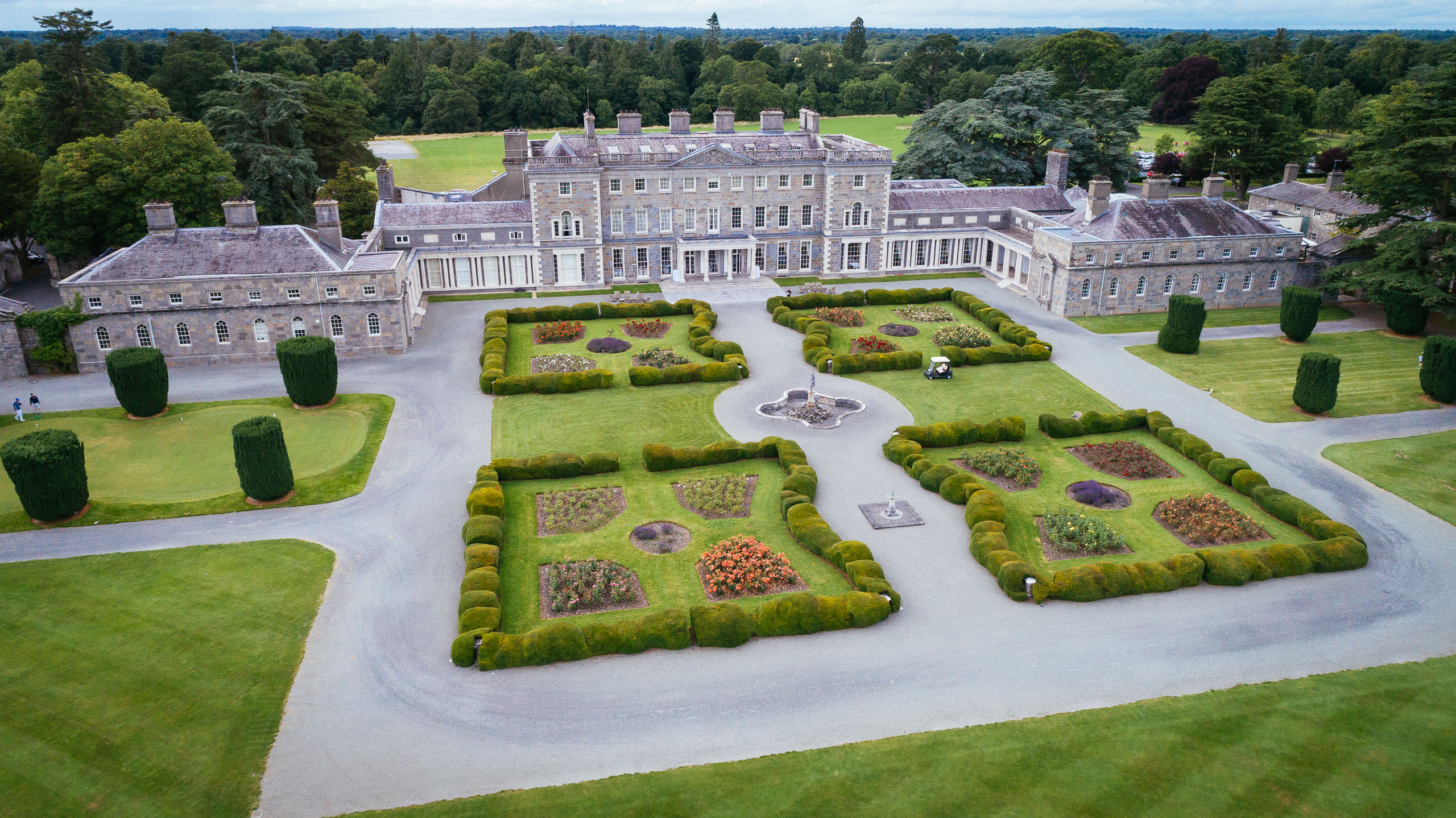
The view is of Carton House, a location very close to where I live and which I blogged about here. The grounds of Carton House are very pleasant for taking recreational walks.

The bird’s-eye view in the painting shows Carton and its demesne before the house was extensively remodelled in the mid-18th Century, although the layout is still recognizable in the modern house:

Th refurbishment of the house was undertaken by architect Richard Castle for the 19th Earl of Kildare between 1739 and 1745. The view in the painting dates from before this change and shows Carton at the centre of an elaborate formal garden. In the foreground, on the southern side of the house, avenues of lime trees radiate outward into the countryside from the enclosed entrance courtyard; on the northern side of the house can be seen a stepped series of walled gardens and terraced walks.

The gardens and demesne were also transformed when the house was rebuilt to reflect mid eighteenth-century taste. More recently the grounds have been turned into golf courses, one to the front and one to the rear as the house itself is now a golfing resort hotel so nothing remains of these extensive gardens.

In the distance to the far left you can see the ruins of the keep of the ancient FitzGerald castle in Maynooth, but St Patrick’s College was not built until the end of the 18th Century and much of the present-day town centre dates from the 19th Century so in those days Maynooth was a small place. The area between the castle and the walls surrounding Carton House demesne is now largely built-up although there is a pleasant tree-lined avenue leading from Maynooth towards the House as far as the Dunboyne Road.

In the right foreground you can see the Prospect Tower built by the Earl of Tyrconnell, which still stands. I always assumed this was some sort of folly but it was apparently intended as a mausoleum for one of the previous owners of the house.

Birthday Treats

Posted in Art, Biographical, Covid-19 on June 5, 2021 by telescoper

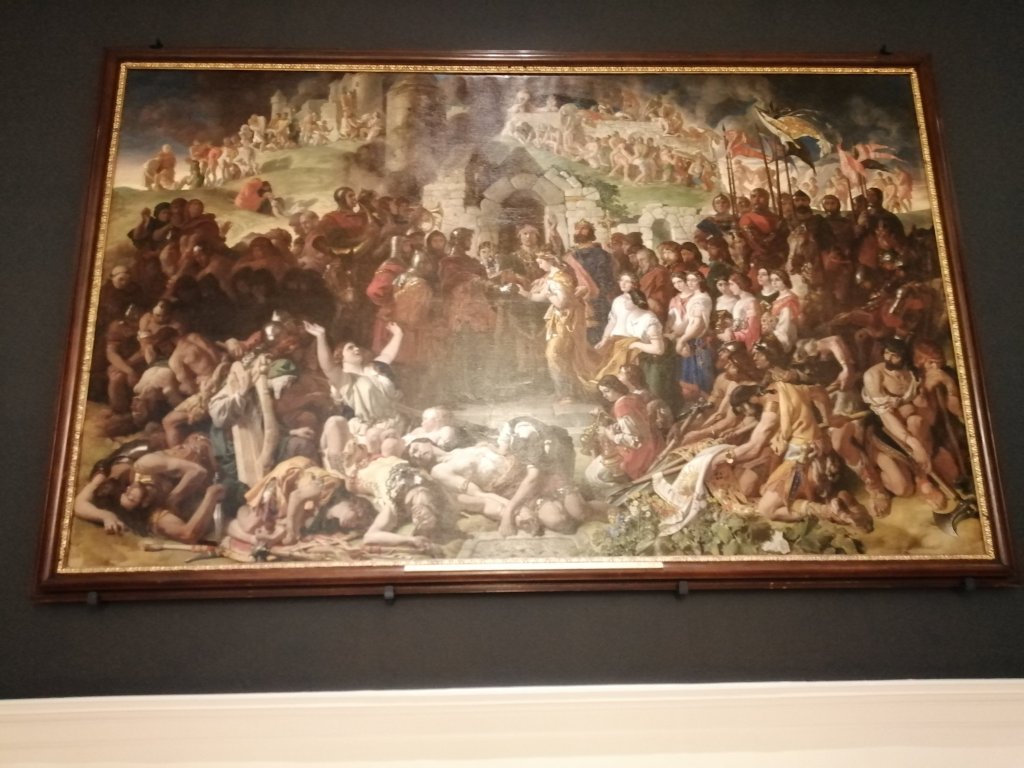
As planned I took some time out yesterday, hopped on a train for the first time in 15 months and went into Dublin. I was shocked by some of the scenes I saw when I reached my destination: large crowds with no masks and no social distancing and all kinds of rowdy behaviour. Here’s an example:

I was at the National Gallery of course. I wandered around for a couple of hours and then returned to Maynooth. The gallery is still free for visitors but these days you have to register online beforehand so they can control numbers. I have been there before but didn’t realize until yesterday that there’s an entrance on Clare Street, which is even closer to Pearse Station than the main entrance of Merrion Square, so I’ll be using that from now on. There’s a lot to see in the National Gallery and I hope to spend more time there in future.

After getting home I had Zoom drinks with some old friends from Cardiff, which was very pleasant indeed, and then cooked myself a self-indulgent dinner which I ate with a nice Barolo.

Earlier in the day, I was able to publish another paper in the Open Journal of Astrophysics (of which more anon).

Then, as a lovely present, I received a text telling me of the appointment for my second Pfizer/BioNTech Jab: Tuesday 8th June, exactly 4 weeks after the first. People (and the leaflets I was given on the occasion of Jab Number 1) say that the second dose is more likely to produce side effects than the first but I’m glad that in a few days I’ll be fully vaccinated and can start thinking about the possibility of travelling at some point this summer, regulations permitting.

Anyway, the relaxation isn’t over yet. This is a Bank Holiday Weekend in Ireland so I’ll be doing as little as possible until I return to work on Tuesday for Examination Matters, etc.

P.S. My birthday fundraiser has almost reached its target but is still going so if you feel like contributing you can still do so here.

P.P.S. There were some rowdy scenes in Dublin yesterday evening but not where I was (and I was home before they started).

Analysis of Diverse Perversities

Posted in Art with tags , , on May 14, 2021 by telescoper

by Paul Klee (1879-1940), painted in 1922, 24cm x 31cm, pen and watercolour on paper.

The Moon and Blackrock Castle

Posted in Art, The Universe and Stuff with tags , on April 14, 2021 by telescoper

Picture Credit: Cian O’Regan

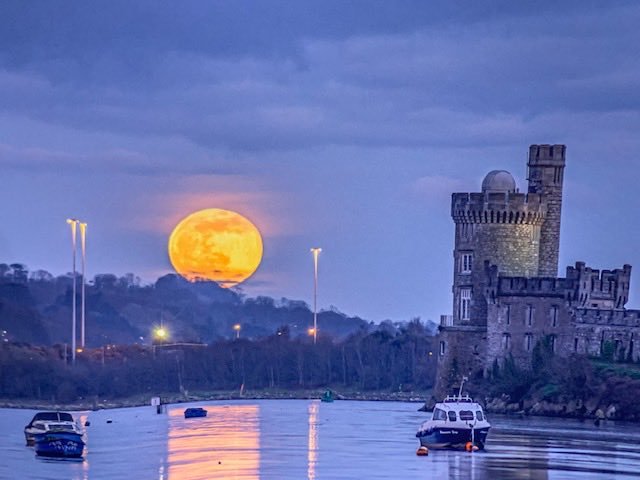
This image of February’s Full Moon (the “Snow Moon”) by Blackrock Castle Observatory in Cork is by Cian O’Regan. Prints of this and other beautiful images can be bought from his website here.

The Dead Christ

Posted in Art, Literature with tags , , , on April 3, 2021 by telescoper

The Dead Christ, 1521 (oil on limewood) by Hans Holbein the Younger (1497/8-1543)

Twitter reminded me this evening of this extraordinary painting by Hans Holbein the Younger and I thought I’d share it here because I realize it was painted in 1521, which means it is 500 years old this year. Despite its age this work still has the power to shock, not least because it is so different from so many works of religious art of its period. The depiction of the dead Christ is 2m long, life-size (so to speak). His eyes and mouth are open, the clear signs of putrefaction appearing in the colouring of his face, hands and feet, the body marked by wounds, is brutal in its frankness and shocking in its authenticity.

But what is the message of this work? Was Holbein questioning the reality of Christ’s bodily resurrection? Or was he emphasizing how miraculous it must have been? And where was a painting of this enormous size and peculiar shape supposed to be displayed? What purpose was it meant to serve? And what’s the reason for the extended middle finger?

I’m not the only one to have asked these questions. The author Fyodor Dostoevsky was famously moved by this work, so much so that in his novel The Idiot he has a character remark “Why, a man’s faith might be ruined by looking at that picture!”.

I don’t expect we’ll ever know what Holbein was trying to say, but perhaps that doesn’t matter. Great art should make you think, but should not necessarily tell you what you should think…

Laocoön and his Sons

Posted in Art, Biographical, Poetry with tags , , , , on March 15, 2021 by telescoper

Yesterday I was remind of the above very famous statue which is on display in the Vatican. It dates from antiquity but was unearthed almost intact during an excavation in Rome in the 16th Century. It’s an extraordinary work that depicts a legendary episode in the Trojan wars of priest Laocoön and his sons Antiphantes and Thymbraeus being attacked by sea serpents. Evidently it was very cold that day…

This scene is described in Book II of Virgil‘s Aeneid which happens to be the text I studied for Latin O-level back in the day. Virgil’s verse takes the form of a strict (dactylic) hexameter which provides a rhythmic pulse perfectly designed for action sequences such as this. Before this part, Laocoön (whose name has to be spoken as four syllables – Lah-o-co-ohn – in order to scan correctly) warns the Trojans about their gift of a wooden horse using the most famous phrase in the entire Aeneid:

Primus ibi ante omnis magna comitante caterva 40
Laocoon ardens summa decurrit ab arce,
et procul: ‘O miseri, quae tanta insania, cives?
Creditis avectos hostis? Aut ulla putatis
dona carere dolis Danaum? Sic notus Ulixes?
Aut hoc inclusi ligno occultantur Achivi, 45
aut haec in nostros fabricata est machina muros,
inspectura domos venturaque desuper urbi,
aut aliquis latet error; equo ne credite, Teucri.
Quidquid id est, timeo Danaos et dona ferentis

Then, while about to sacrifice a bull to the god Neptune, he and his sons meet their grisly end:

Laocoon, ductus Neptuno sorte sacerdos,
sollemnis taurum ingentem mactabat ad aras.
ecce autem gemini a Tenedo tranquilla per alta
(horresco referens) immensis orbibus angues
incumbunt pelago pariterque ad litora tendunt;
pectora quorum inter fluctus arrecta iubaeque
sanguineae superant undas, pars cetera pontum
pone legit sinuatque immensa volumine terga.
fit sonitus spumante salo; iamque arva tenebant
ardentisque oculos suffecti sanguine et igni
sibila lambebant linguis vibrantibus ora.
diffugimus visu exsangues. illi agmine certo
Laocoonta petunt; et primum parva duorum
corpora natorum serpens amplexus uterque
implicat et miseros morsu depascitur artus;
post ipsum auxilio subeuntem ac tela ferentem
corripiunt spirisque ligant ingentibus; et iam
bis medium amplexi, bis collo squamea circum
terga dati superant capite et cervicibus altis.
ille simul manibus tendit divellere nodos
perfusus sanie vittas atroque veneno,
clamores simul horrendos ad sidera tollit:
qualis mugitus, fugit cum saucius aram
taurus et incertam excussit cervice securim.

(You can find a translation into English here.)

The colour and energy of this verse, propelled by the remorseless rhythm, brings the horrific episode to life in truly compelling and typically gore-filled way. You don’t really have to be fluent in Latin to appreciate its quality. The line sibila lambebant linguis vibrantibus ora is particularly brilliant. It’s no surprise that Virgil is regarded as such a literary superstar.

My Latin teacher at school pointed out that epic poetry like this would probably have been performed in the Roman era by an actor as a dramatic recitation, probably with a drum pounding out the rhythm and with various sound and lighting effects to boot.

Anyway, today is the Ides of March so I thought I’d keep up classical theme by posting this  priceless bit of British cultural history relevant to such a fateful day.

This is from the First Folio Edition of Carry On Cleo, and stars the sublime Kenneth Williams as Julius Caesar delivering one of the funniest lines in the whole Carry On series. The joke may be nearly as old as me, but it’s still a cracker…