Archive for the Art Category

Olafur Eliasson: Space, Art and Little Sun

Posted in Art with tags , , , on July 13, 2012 by telescoper

I recently found a report about a new project by Olafur Eliasson at Tate Modern called Little Sun which seems very intriguing to me. Basically the Little Suns in question are solar-powered LED lamps, with a running time of about 5 hours. Similar, I suppose to the things some of us have in our gardens that charge up during the day and light up at night. Anyway,  the idea is that on Saturday evenings from 28 July to 23 September  the lights at Tate Modern will be switched off, and each visitor given a Little Sun so they can wander around and see the exhibits in the dark. I can imagine that this will a fascinating experience, changing as it will the usual relationship between the viewer and the viewed, and the space enclosing them both. During the day there will also be a gallery open on the building’s third floor, where visitors can learn about solar power, global energy problems, light and its importance to life, as well as create light graffiti, as demonstrated on the little video here:

I’m not sure I’ll the chance to see Little Sun but I hope this encourages at least a few of you to check it out.

I also found this talk by Olafur Eliasson at TEDX some time ago, called Playing with Space and Light. A while ago was invited one of the gatherings of artists and scientists he mentions at the beginning, and found it absolutely fascinating…

Munch at Tate Modern

Posted in Art, Biographical with tags , , , , , on July 8, 2012 by telescoper

On Friday I had the morning off from my stint at the Royal Society Summer Exhibition I mentioned a few days ago, so I took the short walk from my hotel to Tate Modern to see an exhibition of art by Edvard Munch called Edvard Munch: The Modern Eye.  Before seeing the collection, which is housed on the second floor of Tate Modern, I took a picture of the view from the balcony looking across the Thames from Bankside towards St Paul’s.

Not inappropriate weather for this exhibition!

Everyone knows Munch by his famous work The Screamwhich isn’t part of this exhibition. I don’t regret this omission it allows the visitor to focus on his lesser-known works, some of which I think are even more powerful than The Scream which, incidentally, I have seen when it was part of an exhibition of Munch’s work in Berlin in 1995. In fact I bought a poster of that exhibition, the design of which includes a copy of The Scream; it is hanging in my study as I write this.

The gallery’s booklet describes Munch’s paintings as

..profoundly introspective, unflinchingly depicting his experience of ageing, emotional turmoil, sickness and bodily decay.

Indeed. Some of the works are so powerful as to be almost unbearable to look at. I’ll just mention a few that struck me in particular.

One room is filled with a number of almost identical paintings entitled Weeping Woman, in which a naked female figure stands bowed and sobbing within a dreary claustrophobic room. The repetition of this theme across many canvases seems almost compulsive, and they’re painted with crude almost frantic strokes.

This is a painting called Red Virginia Creeper, a plant that grows on my house in fact, but which in this case has transformed into a dripping bloodstain behind the crudely drawn but obviously bewildered figure in the foreground.

But the most powerful works by Munch were made later in his life. He was born in 1863 (100 years before me) and suffered a complete nervous breakdown in 1908. Here is a self-portrait called The Night Wanderer, showing himself as a gaunt insomniac figure wandering around a darkened house:

Then, right at the end of the exhibition, is his most moving work of all. Self Portrait between Clock and Bed, painted near the end of his life – he died in 1944 – shows a lonely old man standing between the clock, symbolising the remorseless passage of time, and the bed in which he no doubt expected to die.

This exhibition is not exactly a comfortable experience, filled as it is with images of alienation, despair and inner torment, but it was a “must-see” for me as Munch is such an important artist. Groups of schoolchildren were being led around the exhibition while I was there. Most of them giggled. I wonder how long it will be before they understand that the world really can be exactly as Munch painted it?

Anyway, I headed back across the river to the Royal Society to do the afternoon shift at the Herschel Telescope stand, which included playing with an infra-red camera to show the visitors young and old how it detects body heat, and taking pictures of them in the near infra-red as souvenirs. To show that the Munch collection hadn’t affected me too much, I took one of myself.

Experiment Marathon, Reykjavik 2008

Posted in Art, Books, Talks and Reviews, The Universe and Stuff with tags , , , on May 8, 2012 by telescoper

A while ago I blogged about an event I attended, called  Experimental Marathon, which was held in Reykjavik Art Museum in May 2008. I was reminded about this for various reasons recently and managed to dig up a couple of pictures of my presentation, which appeared in the glossy book of the event that was produced later on.

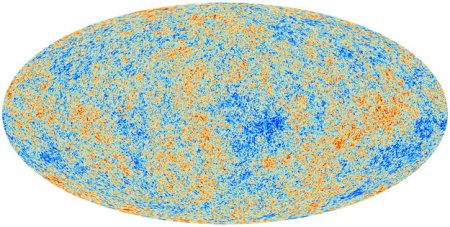
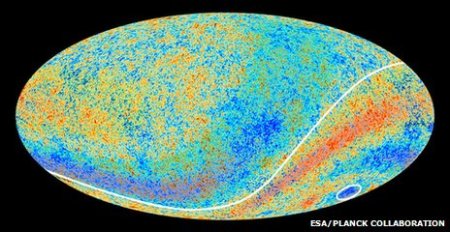
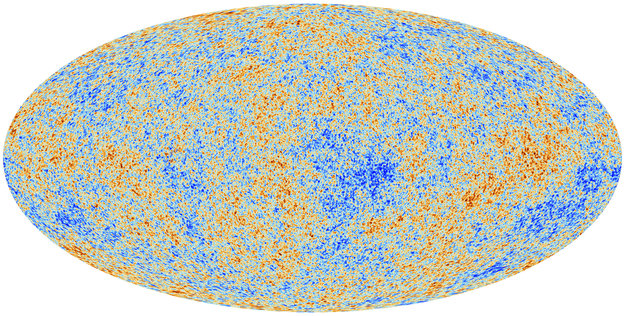
As you can probably infer, I gave a talk which was basically about the cosmic microwave background. My “experiment” was a television set that wasn’t tuned properly producing a screenful of static. I pointed out that some (actually not that much) of the buzz was coming from the beginning of the universe. Pretty unoriginal and gimmicky, I know, but it seemed to go down quite well with the audience and I had some nice questions and comments at the end of my 20 minutes.

During the three days of the event I also got to meet quite a few artists, scientists and other luminaries whose names are on the list here.:

You can find one of the numerous reviews of this event here, which also includes quite a few pictures of various experiments including one that some might consider to be NSFW …

Cosmology, Escher and the Field of Screams

Posted in Art, Education, The Universe and Stuff with tags , , , , , on March 20, 2012 by telescoper

Up early this morning for yet another busy day I thought I’d post a quick follow-up to my recent item about analogies for teaching physics (especially cosmology).

Another concept related to the cosmic microwave background that people sometimes have problems understanding is that of last scattering surface.

Various analogies are useful for this. For example, when you find yourself in thick fog you may have the impression that you are surrounded by an impenetrable wall at some specific distance around you. It’s not a physical barrier, of course, it’s just the distance at which there sufficient water droplets in the air to prevent light from penetrating further. In more technical terms the optical depth of the fog exceeds unity at the distance at which this wall is seen.

Another more direct analogy is provided by the Sun. Here’s a picture of said object, taken through an H-α filter..

What’s surprising to the uninitiated about an image such as this is that the Sun appears to have a distinct edge, like a solid object. The Sun, however, is far from solid. It’s just a ball of hot gas whose density and temperature fall off with distance from its centre. In the inner parts the Sun is basically opaque, and photons of light diffuse outwards extremely slowly because they are efficiently scattered by the plasma. At a certain radius, however, the material becomes transparent and photons travel without hindrance. What you see is the photosphere which is a sharp edge defined by this transition from opaque to transparent.

The physics defining the Sun’s photosphere is much the same as in the Big Bang, except that in the case of the Sun we are outside looking in whereas we are inside the Universe trying to look out. Take a look at this image from M.C. Escher:

The universe isn’t actually made of Angels and Demons – at least not in the standard model – but if you imagine you are in the centre of the picture  it nicely represents what it is like looking out through an expanding cosmology. Since light travels with finite speed, the further you look out the further you look back into the past when things were denser (and hotter). Eventually you reach a point where the whole Universe was as hot as the surface of a star, this is the cosmic photosphere or the last scattering surface, which is a spherical surface centred on the observer. We can’t see any further than this because what’s beyond is hidden from us by an impenetrable curtain,  but if we could just a little bit further we’d see the Big Bang itself where the density is infinite, not as a point in space but all around us.

Although it looks like we’re in a special place (in the middle) of the image, in the Big Bang theory everywhere is equivalent; any observer would see a cosmic photosphere forming a sphere around them.

And while I’m on about last scattering, here’s another analogy which might be useful if the others aren’t. I call this one the Field of Screams.

Imagine you’re in the middle of a very large, perhaps infinite, field crammed full of people, furnished with synchronised watches, each of whom is screaming at the top of their voice. At a certain instant, say time T, everyone everywhere stops screaming.

What do you hear?

Well , you’ll obviously  notice that it gets quieter straight away as the people closest to you have stopped screaming.  But you will still hear a sound because some of the sound entering your ear set out at a time before t=T. The speed of sound is 300 m/s or so, so after 1 second you will still hear the sound arriving from people further than 300 metres away. It might be faint, but it would be there. After two seconds you’d still be hearing from people further than 600 metres away,. and so on. At any time there’ll be circle around you, defined by the distance sound can have travelled since the screaming stopped – the Circle of Last Screaming. It would appear that you are in the centre of this circle, but anyone anywhere in the field would form the same impression about what’s happening around them.

Change sound to light, and move from two dimensions to three, and you can see how last scattering produces a spherical surface around you. Simples.


Graffiti Politti

Posted in Art, Politics with tags , , , on February 9, 2012 by telescoper

Winterreise – Das Wirtshaus

Posted in Art, Music with tags , , , on February 4, 2012 by telescoper

It’s cold again, and it’s just  started snowing, so here’s some wintry music. I know that the recording of Winterreise by Benjamin Britten and Peter Pears is by no means everyone’s favourite version, but I like it a lot. There’s the added bonus in this video of a glimpse of the art of Caspar David Friedrich.

P.S. Das Wirtshaus means “The Inn”, but in the poem by Müller that forms the lyric for this song, the inn is actually a graveyard…

Terra Nova

Posted in Art, History, The Universe and Stuff with tags , , , , , , , on February 3, 2012 by telescoper

We’re currently enduring a spell of cold weather here in Cardiff, although I think it might be rather milder here then elsewhere in the UK. My garden thermometer showed a mere -5 C when I looked at it at 7.15 this morning. The other day we had a meeting of half-a-dozen people in one of our large teaching rooms and it was absolutely freezing. I don’t know what was wrong with the heating. Yesterday I actually did a lecture in the same room, but with 80-odd “warm bodies” (or “students” as they are sometimes known) in there, it was bearable.

The cold here of course is nothing compared with that endured by Captain Scott‘s ill-fated expedition to the South Pole, but I mention it here for a number of reasons. First, the centenary of the death of Scott and his companions is coming up next month; the tragedy unfolded in March 1912. There’s actually a very special concert coming up next week, featuring Vaughan Williams’ wonderful music written for the classic film Scott of the Antarctic (which, incidentally, you can actually watch in full on Youtube). I’m definitely going along, and will probably review the performance next week, but quite a number of my colleagues are also going, for reasons which will become obvious..

The concert is special because of the very strong connections between the Scott Expedition and the City of Cardiff. Much of the financial support needed to fund the trek to the South Pole was raised from Cardiff businessmen and Scott’s ship, the Terra Nova, actually set sail from Cardiff (in June 1910) on its journey, first to New Zealand and thence to Antarctica.

Incidentally, an article in this morning’s Western Mail relates to a historic painting of the departure of the Terra Nova which is about to be auctioned:

Cardiff Bay has certainly changed a great deal since 1910, but quite a lot is recognizable, especially the Pierhead Building, which can be seen to the right. The actual docks, the locations of which are revealed by the lines of masts of tall ships, are now mainly filled in. But there is at least one other reminder of this occasion to be found at Cardiff Bay, a large waterfront bar itself called Terra Nova

There’s also a deep connection with the South Pole, and the Antarctic generally, for many members of the Astronomy Instrumentation Group here in the School of Physics & Astronomy at Cardiff University, quite a few of whom have actually been to the South Pole in connection with various experiments, including Quad,  Boomerang and BLAST, because of the unique observing conditions there.

Necrodelic Reverie

Posted in Art, The Universe and Stuff with tags , , , on November 25, 2011 by telescoper

Among the delights of having a blog are the friendly emails you get from complete strangers. I got one last week from an artist, who is quite new to me, called Tobias Collier, concerning an old post of mine about randomness. Looking at his website I can see why he was interested in that particular topic, and also found so many things  of interest myself that I decided to do a small showcase here.

According to one of the reviews on his website:

Tobias Collier’s work can be seen as an attempt to visually articulate a great epistemological challenge: that of the human mind encountering the intellectually imponderable. Encompassing elements of sculpture, installation, drawing, performance and video, Tobias Collier’s practice partly relies upon the translation of scientific research methodologies to the processes of art making. Using Art as their field of enquiry, the subsequent works function as mechanisms within the context of a research practice and present a unique combination of scientific processes with poetic artistry.

Playing with current ideas around Astronomy and Cosmology, Tobias Collier’s quotidian metaphors examine our cultural relationship to outer space, using objects of daily existence. They highlight the limitations and inadequacy of man-made processes such as logic (modelling, hypothesizing, inferring and inducing), analogies and metaphors when attempting to comprehend systems and structures that extend beyond our everyday experience.

You can find a host of fascinating things on his website, including sculptures that manage to be both whimsical and profound:

Predicting Random Events, 2011

My favourite pieces, however, admittedly based only on what I have viewed on the website, are the stunning “inductive dot”  drawings, done in ink on paper, and described in the following passage:

The revelation of science that our universe, governed by the second law of thermodynamics, is ultimately fated to a cold quiet ‘heat death’, becomes an unavoidable issue for the work of London based artist Tobias Collier. His response is to propose the pursuit of necrodelic reverie. Small, yet hugely ornate, pointillist drawings are produced as a result of hours of ritualised practice. Like moments in an ongoing process, or records of a timeless activity, the end results are un-human, naturalised, nebulous star-fields or perhaps cloudscapes. In his sculpture references to collapsing or eroded structures, chemical reactions and combustions abound. Conscious cosmic thought entropically linked to the arrow of time, reconciled to universal destiny.

Here’s an example

Necrodelic Reverie, 2010

And this one, reminiscent of cloud formations in a planetary atmosphere:

Untitled, 2010

I find it fascinating that so many contemporary artists take their inspiration, and sometimes their techniques, from the sciences but so few scientists take a reciprocal interest in contemporary art. Anyway, I hope at least a few readers of this blog will now go and have a look at the work of Tobias Collier!


Depressed Superman

Posted in Art with tags , on November 15, 2011 by telescoper

It’s been a while since I posted anything in the box marked “Art”, but I’m inspired to do so now by a short piece in Sunday’s Observer about an artist who is quite new to me called Lora Zombie. It also kind of fits with a theme established by a recent post. The Observer piece about her series of Depressed Superheroes was in the print edition, but doesn’t seem to be available on the website – or if it is I couldn’t find it – but I found another blog article about it here. The pieces are made using acrylics on paper and there are four altogether. I think they’re really excellent. I particularly liked the rather effete and slightly Byronesque Depressed Superman:

You can order a limited edition print of this work here.

Don Giovanni

Posted in Art, Opera with tags , , , , , , on September 24, 2011 by telescoper

Another sign that autumn is nigh is that the opera season has started again, which at least gives me the opportunity to resume my series of occasional opera reviews.

I was planning to go to see the new  Welsh National Opera production of Don Giovanni by Wolfgang Amadeus Mozart   last week but was stymied it clashed with the cricket, which turned out to be a day-night game finishing too late to allow me to go to both. Anyway, I was able to get tickets for last night’s performance as well as dispose of last week’s so it all worked out for me in the end.

First night reviews of this production weren’t particularly good – the reviews in the Telegraph and the Guardian are fairly typical – which probably accounted for the fact that the Wales Millennium Centre wasn’t particularly  full even for such an extremely popular opera. I don’t usually pay much attention to reviews myself and I thought the critics were excessively harsh, although some of the points they make are valid.

I won’t repeat the synopsis in detail here because it’s probably familiar to most people likely to read this, even those who aren’t opera buffs. In fact it’s all explained by the subtitle il dissolute punito. We meet the villainous “nobleman” Don Giovanni attempting to molest  Donna Anna after sneaking into the house of the Commendatore, Donna Anna’s father. Don Giovanni is rumbled and confronted by the Commendatore; a duel  ensues which appears to be ending without bloodshed until the Don draws a dagger and murders the Commendatore.

There then follows a series of escapades: attempted seductions, disguises, mistaken identities, narrow escapes, and so on. Typical comic opera stuff in fact, except that it’s not really typical comic opera  because it’s comic opera with music by Mozart and libretto by da Ponte. In other words, it’s genius.

Finally,  Don Giovanni’s past catches up to him. He taunts a statue of the dead Commendatore while seeking refuge in a graveyard. Later, back at Don Giovanni’s  house the statue arrives  and sends Don Giovanni to Hell.

The first impression you get of this production on entering the theatre is the monumental set, which is based (not inappropriately) on the  Gates of Hell by Auguste Rodin (shown left), a huge bronze sculpture that depicts a scene from Dante’s Inferno. What you see on stage, however, is not a simple replica of the Rodin piece, but a series of variations on and extensions of the original artwork. Extra pieces are added to form a walled courtyard, it opens out to form a series of rooms and chambers, and in the end the gates themselves open to take the eponymous villain down to Hell (along with a smoke and fire effect which unfortunately didn’t work very well last night; there wasn’t enough smoke to engulf him as was clearly intended).

The idea of basing the set around this work of art was potentially brilliant but I didn’t think it really worked as well as it might. The reason is that the magic of Mozart’s operas emanates, at least in part, from the huge dramatic contrasts. Don Giovanni certainly has a very dark edge, but it also has a great many lighter comic episodes, some of them bordering on the slapstick. Having this heavy sombre backdrop to everything tended to dampen the swings between light and shade. It’s as if the  production was so obsessed with this one idea, that everything else became subservient to it. What could have been brilliant was just too clumsy. You don’t have to force things so much, especially not with Mozart, especially not with Don Giovanni.

Another criticism I would make concerns David Kempster as Don Giovanni. He certainly sang extremely well, his smoky baritone voice sounding very rakish. However I thought he acted the part too broadly, at times like a pantomime villain, to the extent that he seemed delighted by the theatrical boos he got on his curtain call. He was at times very funny indeed, but again I thought he was a bit forced.

However, if it sounds like I’m being very negative about the performance then I don’t mean to be. Apart from the unnecessarily imposing set, the look of the production is wonderful: the costumes and lighting were beautifully done, and the crypto-Gothic look was appropriately spooky when “spooky” was called for.

David Soar was a really oustanding Leporello; I think the audience agreed with me as he got a huge cheer at the end. Camilla Roberts was excellent as Donna Anna as was Nuccia Focile as Donna Elvira. On the other hand I found Carlo Malinverno a disappointment as the Commendatore. He looked scary enough but his undistinguished and occasionally  wobbly bass voice didn’t have the necessary menace for climactic scene with Don Giovanni near the end. For me it has to be a voice that really reverberates with doom. Few can really pull it off, and Carlo Malinverno isn’t one of them.

A special mention, however, must be made of Samantha Hay, who stepped in at short notice to sing the part of Zerlina owing to the indisposition of Claire Ormshaw. She was absolutely wonderful, with a beautifully crystal-clear voice and engaging stage presence. Well done to her for a performance that was very warmly received by the audience.

Watching the opera last night it struck me again, as it always does listening to Don Giovanni,  just how many great pieces of music there are in it. Whereas most operas can offer at most a few set-pieces, in Don Giovanni they keep coming one after the other for well over three hours. This is Mozart at the very peak of his powers, and  a few blemishes don’t even come close to taking the magic away.