Archive for the Biographical Category

Good Friday Morning

Posted in Biographical, Education, Maynooth with tags , , , on April 18, 2025 by telescoper

Good Friday has a slightly strange status in Ireland. It is a Bank Holiday, meaning that the banks are shut, but it’s not a statutory public holiday so many people still go to work. This differs from the UK and Northern Ireland for which it is a public holiday, which seems strange when you think about the Republic’s Catholic traditions.

Schools in Ireland are closed today, but that’s because they are on an Easter break anyway. In contrast, Easter Monday (21st April) is both a Bank Holiday and public holiday. Maynooth University is closed today, so I miss a Particle Physics lecture, and next week is the Easter break (including Easter Monday). We return on Monday 28th April for the remaining two weeks of teaching, apart from Monday 5th May which is a Bank Holiday and a public holiday. The last day of teaching is Friday 9th May, which also happens to be the day on which I’m giving a colloquium at Maynooth, and examinations start a week later, on 16th May.

The weather so far is consistent with today being a Bank Holiday:

Bank Holiday weather

I think I’ll wait for a gap in the rain before going out.

Oh.

It looks be spending most of the day indoors! It seems a good day to make a start on my reading list.

It’s been a very busy week, not only because of the very enjoyable visit by Brian Schmidt, but also because I wanted to clear my coursework grading before the Easter break. I managed to do the last of that yesterday, so I don’t have to do any of that either this weekend or during the Easter break. There are some more assignments due, but I will deal with them when we return after Easter.

Supreme Prejudice

Posted in Biographical, LGBTQ+ with tags , , , , , , , on April 16, 2025 by telescoper

On reflection it was inevitable that the UK Supreme Court would make the decision that it did today, i.e. to decide to deprive trans people of the protections from discrimination that they should have under the 2010 Equality Act. After all, the Court did not consult with a single trans individual or organization representing trans people in the course of its deliberations, preferring instead to base its conclusions only on submissions from known transphobic groups. That alone renders the process indefensible.

That said, the Supreme Court had to twist itself in knots in its judgment to find some semblance of an argument. For example, the judgment claims that the definition of “sex” to be used in the context of the Equality Act is “biological sex” which is “binary”. I paraphrase, of course, but it doesn’t really matter that the argument about biology is wrong – ever heard of intersex people? – because they don’t use it anyway. In fact the judgment does not even attempt to define in biological terms what sex is nor what is a woman is. The definition asserted is “sex at birth”, which actually means what is written on a birth certificate. As a matter of fact, my birth certificate actually says “Boy”…

Whatever is written on an official document is not biological, but bureaucratic, and also non-binary. Intersex people sometimes have “intersex” written on their birth certificate, a fact that thus refutes the binary claim, but sometimes they are arbitrarily assigned “male” or “female” with potentially damaging consequences. I used intersex merely as an example. Very few things in nature are actually binary, and sex – whether it be genetic, hormonal , gonadal or whatever – is emphatically not one of them, particularly not in humans.

Here’s a helpful graphic.

Shoe-horning people into binary categories is wrong not only because it fails to accept scientific reality but also because of the harm it causes to human beings worthy of acceptance and respect. People who dismiss the non-binary nature of sex and gender often say words to the effect that “oh I know there are exceptions, but there aren’t many of them”. But:

  1. if there are so few then why are you so obsessed with them?
  2. one exception is sufficient to refute what purports to be a logical argument!
  3. it’s precisely because trans people are a small minority that means they deserve legal protection.

Today’s judgment looks set to cast an already beleaguered group entirely to the wolves. You can bet your bottom dollar that there will be a tidal wave of follow-up cases targetting trans people with the specific intention of stirring up more hostility. The Supreme Court actually acknowledges the existence of transphobic hate and offers some words to suggest that trans people will still have some legal protections. There can be no doubt however that the judges know that their ruling will be seen as a green light for bigots and their rich backers to engage in still more bigotry. I also fear a rise in the already appalling number of trans suicides that the UK Government is trying so hard to conceal. I think it goes without saying and contrary to the claims of those who brought the case, this ruling does absolutely nothing to protect cis women.

I can’t understand the mindset of people that can look at the evidently complex and nuanced of human sexual identity and respond by putting on blinkers and insisting that it is what it clearly isn’t. Some people just seem to need their bigotry to survive in their joyless unimaginative lives. Whatever that mentality is the Supreme Court shares it. They didn’t listen to any contrary views. It was a foregone conclusion, a sham contrived by a group of reactionary duffers.

I have tried throughout this piece to refer to trans people rather than trans men or trans women. Obviously the ruling today was in response to a case brought by cis women who hate trans women. It will almost certainly lead to more trans women being harassed and victimized (as was the intention of the case). But there are at least as many trans men as trans women. Under the new ruling trans men will presumably be forced to use “women-only” lavatories and will run the risk of hostility should they do so. Trans women using “male only” toilets are likely also to be harassed. The Supreme Court knows this is what will happen, but apparently doesn’t care, and is content to go along with a trajectory set by far-right activists who won’t stop here.

It’s no consolation to my friends living on TERF Island, but at least in Ireland the law is a bit more progressive and better grounded in reality. It’s a grim day for trans people in the UK. All I can do is send a message of solidarity and point you to this list of resources for trans people and their allies. I know it’s only a gesture but I’m proud to share the Trans Pride flag here too.

Update: 27th April. The British Medical Association has just passed this resolution:

That was the Dean’s Lecture that was..

Posted in Biographical, Maynooth, The Universe and Stuff with tags , , on April 15, 2025 by telescoper

As it was foretold, last night we had a very special event in Maynooth in the form of a public lecture with the title The Universe from Beginning to End by Nobel Laureate Prof. Brian Schmidt. Brian actually arrived on Sunday and is still here today; he will be returning to Australia from Dublin this evening. It was really great of him to take the time to visit us here in Maynooth not just for the lecture but to chat informally with staff and students. He also did some interviews with the media, e.g. here and here.

The talk, which was for a lay audience, was extremely well attended. In fact we had to move it to a larger venue than we originally intended. I don’t know the official attendance figures but I would guess somewhere between 400 and 500 people came. The talk was excellent, and there were lots of very good questions from the audience afterwards which Brian dealt with very engagingly. The talk was recorded and if it becomes available publicly I will provide a link.

At the end I even found myself on the list to have dinner with Brian in a local restaurant. All in all, it was an excellent day.

Time Passes

Posted in Biographical, Education, Maynooth with tags , , , on April 10, 2025 by telescoper

I’ve been feeling very tired this week, probably as an after-effect my flying visit to Cardiff at the weekend. I need to learn to adjust the way I plan such trips in view of the fact that I’m getting on a bit. I tried to pack in a lot of visiting and walking about on Saturday which younger me would have managed fine, but I should have taken it easier. I was worn out when I returned to work on Monday and it has taken me several days to get back to normal. I definitely don’t have the energy I used to have. It’s not so much that I mind getting older, it’s just that I have to learn to accept that I need to be a bit less ambitious when I make plans, especially when that involves travelling. I don’t really understand what makes travelling so tiring, as it mostly involves sitting down, but I’ve always found it so, and it’s getting more and more noticeable as time passes.

Term time is passing too. This morning I gave my last 9am Computational Physics lecture of the Semester. This is only Week 9 of 12 teaching weeks, but lectures finish early for this module because for the last few weeks of term the students are working, in teams, on their projects which form an important part of the module. A week today we take a break for Easter (Good Friday being 18th April this year). There will then be a very welcome week off before we return for the last leg of term and, of course, the examinations followed by the marking thereof.

After this morning’s lecture, on the way back to the Department, I was talking to some students about the forthcoming May examinations. I was a bit taken aback to realize that I did my finals precisely 40 years ago. I went on from my undergraduate degree at Cambridge to a PhD DPhil at Sussex. It took me three years to complete that and become a postdoc. Now there’s only a three-year period between now and my retirement.

This week I had my Developmental Review, the first one I’ve ever had at Maynooth. In other places this is called an Annual Appraisal or some such name. I conducted quite a lot of these when I was at Sussex, and was on the receiving end at Cardiff a few times too, but the Developmental Review scheme has only just been implemented in Maynooth University and in any case I am now just an appraisee (reviewee), not an appraiser (reviewer). The idea of these reviews is that the reviewee agrees some goals in a meeting with the reviewer and in two years’ time we meet again and see how well I have managed. In my experience can be a useful process for people who want to advance their careers by getting promoted. In my case those I have neither the desire nor the possibly to get promoted so it’s all a bit futile. I’ll be retiring in the not-too-distant future anyway. There are one or two things I want to finish before I retire so I wrote them on the form. All staff have to go through the process, so that box is now ticked and I can now move on until my next review (which will definitely be the last!)

A Day in Cardiff

Posted in Art, Biographical, Cardiff, LGBTQ+, Opera, Politics with tags , , , , , on April 5, 2025 by telescoper

I got up at Stupid O’Clock this morning to catch an early morning plane from Dublin to Cardiff. It was very cold when I  arrived but it soon warmed up and turned into a lovely day.

I had a nice breakfast at Bill’s when I arrived in the City then did tour of the National Museum of Wales where there is an exhibition about the Miners’ Strike of 1984/5, from which this display case caught my attention:

I also had time for a round of Name That Artist (scoring a miserable 3/12, for Sutherland, Ernst, and Magritte).

After that, I took a stroll around Bute Park before heading to my hotel in Cardiff Bay to check in and have a rest before the reason for my visit, an event which will take place here at 7pm:

I won’t be able to blog about that until I get back to Maynooth tomorrow afternoon.

ResearchFish Again

Posted in Biographical, Science Politics with tags , , , , , , on April 1, 2025 by telescoper

One of the things I definitely don’t miss about working in the UK university system is the dreaded Researchfish. If you’ve never heard of this bit of software, it’s intended to collect data relating to the outputs of research grants funded by the various Research Councils. That’s not an unreasonable thing to want to do, of course, but the interface is – or at least was when I last used it several years ago – extremely clunky and user-unfriendly. That meant that, once a year, along with other academics with research grants (in my case from STFC) I had to waste hours uploading bibliometric and other data by hand. A sensible system would have harvested this automatically as it is mostly available online at various locations or allowed users simply to upload their own publication list as a file; most of us keep an up-to-date list of publications for various reasons (including vanity!) anyway. Institutions also keep track of all this stuff independently. All this duplication seemed utterly pointless.

I always wondered what happened to the information I uploaded every year, which seemed to disappear without trace into the bowels of RCUK. I assume it was used for something, but mere researchers were never told to what purpose. I guess it was used to assess the performance of researchers in some way.

When I left the UK in 2018 to work full-time in Ireland, I took great pleasure in ignoring the multiple emails demanding that I do yet another Researchfish upload. The automated reminders turned into individual emails threatening that I would never again be eligible for funding if I didn’t do it, to which I eventually replied that I wouldn’t be applying for UK research grants anymore anyway. So there. Eventually the emails stopped.

Then, about three years ago, ResearchFish went from being merely pointless to downright sinister as a scandal erupted about the company that operates it (called Infotech), involving the abuse of data and the bullying of academics. I wrote about this here. It then transpired that UKRI, the umbrella organization governing the UK’s research council had been actively conniving with Infotech to target critics. An inquiry was promised but I don’t know what became of that.

Anyway, all that was a while ago and I neither longer live nor work in the UK so why mention ResearchFish again, now?

The reason is something that shocked me when I found out about it a few days ago. Researchfish is now operated by commercial publishing house Elsevier.

Words fail. I can’t be the only person to see a gigantic conflict of interest. How can a government agency allow the assessment of its research outputs to be outsourced to a company that profits hugely by the publication of those outputs? There’s a phrase in British English which I think is in fairly common usage: marking your own homework. This relates to individuals or organizations who have been given the responsibility for regulating their own products. Is very apt here.

The acquisition of Researchfish isn’t the only example of Elsevier getting its talons stuck into academia life. Elsevier also “runs” the bibliometric service Scopus which it markets as a sort of quality indicator for academic articles. I put “runs” in inverted commas because Scopus is hopelessly inaccurate and unreliable. I can certainly speak from experience on that. Nevertheless, Elsevier has managed to dupe research managers – clearly not the brightest people in the world – into thinking that Scopus is a quality product. I suppose the more you pay for something the less inclined you are to doubt its worth, because if you do find you have paid worthless junk you look like an idiot.

A few days ago I posted a piece that include this excerpt from an article in Wired:

Every industry has certain problems universally acknowledged as broken: insurance in health care, licensing in music, standardized testing in education, tipping in the restaurant business. In academia, it’s publishing. Academic publishing is dominated by for-profit giants like Elsevier and Springer. Calling their practice a form of thuggery isn’t so much an insult as an economic observation. 

With the steady encroachment of the likes of Elsevier into research assessment, it is clear that as well as raking in huge profits, the thugs are now also assuming the role of the police. The academic publishing industry is a monstrous juggernaut that is doing untold damage to research and is set to do more. It has to stop.

In the Good Books

Posted in Biographical, Literature with tags , , , , on March 25, 2025 by telescoper

It seems like eternity since I was on sabbatical and had enough time to get stuck in to some reading not related to work. Since I got back from Barcelona last September I’ve lapsed and haven’t read many books since then. I keep reading reviews in the Times Literary Supplement but that’s as close as I generally get.

It’s been in my mind for a while to rejuvenate my interest in literature but last week I had two specific triggers. One was the news that Amazon has opened a dedicated website in Ireland. I view that as a trigger not in a positive way but because it will make life even harder for our excellent local bookshop in Maynooth so I felt I should do more to support them. The other trigger was that the Irish Times published a list of the “best” 100 Irish novels of the 21st Century. When I saw I had only read a few of them, and feel I should read more contemporary literary fiction emanating from Ireland, I decided I should use the list as a guide to help me get back into a reading habit. Anyway, I went to the bookshop last week and bought these six to start with:

These aren’t the top six, by the way. They’re just the ones that caught my fancy while I was browsing in the store.

I’m going to start with Claire Keegan’s novella Foster, as it was this work that inspired the beautiful Irish language film An Cailín Ciúin which I blogged about here. It’s quite short, so it should provide me with a relatively gentle re-introduction to reading. I have’t decided in what sequence I will read the others. It remains to be seen when I can get another six let alone how long it will take for me to read all the books on the list!

Any comments on these books, or indeed any others either on the top 100 list or not would be welcome!

Not in Leiden…

Posted in Biographical, The Universe and Stuff with tags , , on March 24, 2025 by telescoper

It’s been a very busy day back to teaching after last week’s study break. This week there’s a big meeting in Leiden (Netherlands) which I would like to have attended as it combines the annual Euclid Consortium meeting with the 56th ESLAB Symposium. No doubt there’ll be a lot of discussion of the Euclid Q1 results announced last week. I can’t go, however, because of teaching commitments. The Euclid meetings are quite often scheduled in the summer, so I have a chance to attend, but not this time.

Anyway, I thought I would post a relevant memory from a previous trip to Leiden, about 30 years ago. which was taken at a conference in Leiden (Netherlands) in 1995. Was that really 30 years ago? Various shady characters masquerading as “experts” were asked by the audience of graduate students at a summer school to give their favoured values for the cosmological parameters (from top to bottom: the Hubble constant, density parameter, cosmological constant, curvature parameter and age of the Universe):

From left to right we have Alain Blanchard (AB), Bernard Jones (BJ, standing), John Peacock (JP), me (yes, with a beard and a pony tail – the shame of it), Vincent Icke (VI), Rien van de Weygaert (RW) and Peter Katgert (PK, standing). You can see on the blackboard that the only one to get anywhere close to correctly predicting the parameters of what would become the standard cosmological model was, in fact, Rien van de Weygaert…

The Vernal Equinox 2025

Posted in Biographical, Maynooth, The Universe and Stuff with tags , , on March 20, 2025 by telescoper
Loughcrew Cairn: for a few days on and around the vernal equinox the rays of the rising Sun penetrate the passage and illuminate the back stone.

Just a quick note to mention that the Vernal Equinox (Spring Equinox) in the Northern hemisphere happens this morning, Thursday 20th March 2025, at 9.01 UTC (which is 9.01am local time here in Ireland, i.e. in about half an hour). Many people in the Northern hemisphere regard the Vernal Equinox as the first day of spring; of course in the Southern hemisphere, this is the Autumnal Equinox.

The date of the Vernal Equinox is often given as 21st March, but in fact it has only been on 21st March twice this century so far (2003 and 2007); it was on 20th March in 2008, has been on 20th March every spring from then until now, and will be until 2044 (when it will be on March 19th).

Anyway, people sometimes ask me how one can define the `equinox’ so precisely when surely it just refers to a day on which day and night are of equal length, implying that it’s a day not a specific time? The answer is that the equinox is defined by a specific event, the event in question being when the plane defined by Earth’s equator passes through the centre of the Sun’s disk (or, if you prefer, when the centre of the Sun passes through the plane defined by Earth’s equator). Day and night are not necessarily exactly equal on the equinox, but they’re the closest they get. From now until the Autumnal Equinox, days in the Northern hemisphere will be longer than nights, and the days will continue get longer until the Summer Solstice before beginning to shorten again.

P.S. This time last year I was in Barcelona. Time passes.

R.I.P. Sergei Shandarin (1947-2025)

Posted in Biographical, R.I.P., The Universe and Stuff with tags , , , , on March 18, 2025 by telescoper

It is my sad duty to pass on the sad news of the death of Sergei Shandarin, who passed away yesterday at the age of 77. He had been suffering from cancer for some time and had been undergoing chemotherapy, alas to no avail. Last week he was moved onto palliative care and we knew he would soon be leaving us. I was going to post something last night when I heard that he had died, but I just couldn’t find the words. I send my deepest condolences to his family, friends and colleagues who are grieving.

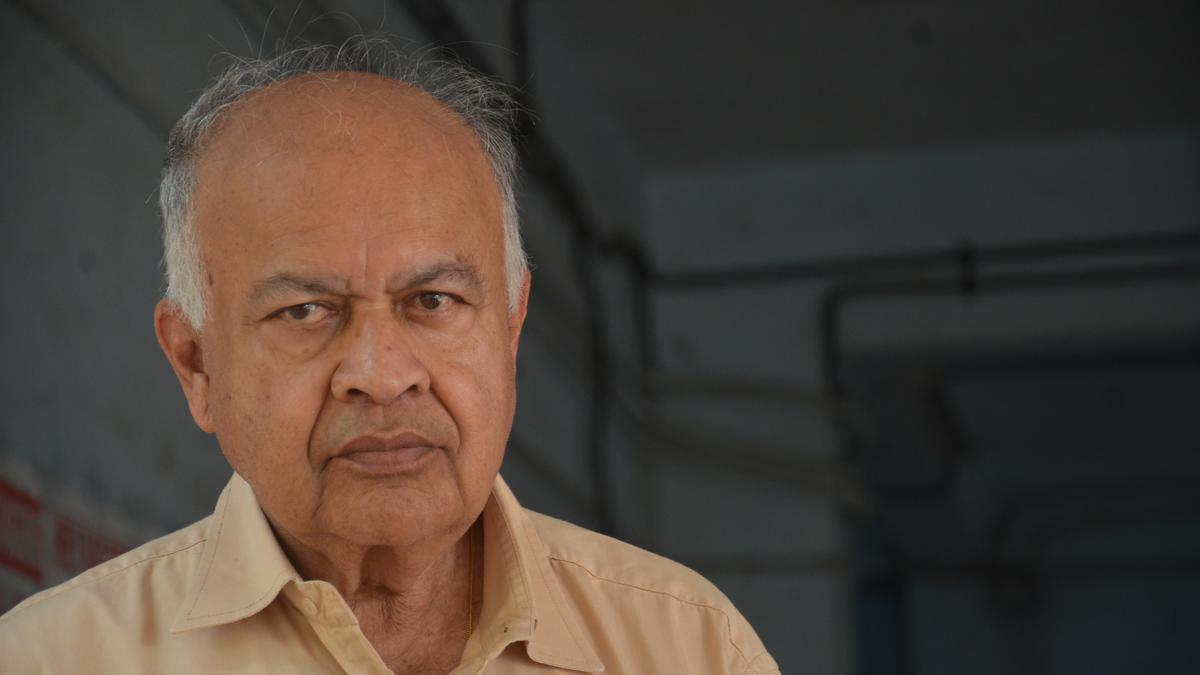
(The picture on the left shows Sergei in 2006; I’m grateful to John Peacock for letting me use it here.)

Sergei Fyodor Shandarin was born in 1947 and gained his PhD at the Moscow Institute of Physics and Technology in 1974. He was a student of the great physicist Yakov Borisovich Zeldovich (whom I blogged about here). Sergei moved to the USA in 1991 to take up a Professorship at the University of Kansas, in Lawrence, where he remained until his retirement. More recently he and his wife Vika moved to Toronto to be closer to his daughter Anya and their grandchildren.

Sergei’s main research interests were the dynamics and statistics of the “Cosmic Web” – the supercluster- void network in spacial distribution of galaxies. In particular, he was interested in nonlinear dynamics of gravitational instability, which is the major mechanism for the formation of a large variety of objects in the universe, and in geometrical and topological statistical descriptors of the distribution of mass and galaxies in space.

These topics overlap considerably with my own and I was delighted to have the opportunity to work with Sergei in 1992 when I was invited by Adrian Melott as a visitor to Lawrence fro about a month. My first impression of Sergei was that he was a bit scary – in that typical Russian physicist sort of way – but I soon discovered that, beneath his initially rather fierce demeanour, he was actually a kind and friendly person with a fine sense of humour. I remember that research visit very well, in fact, not only because of Adrian’s and Sergei’s hospitality, but also because the project we did together went so well that we not only completed the research, but I returned to London with a completed manuscript; the paper that resulted was published in early 1993.

After that I kept in touch with Sergei mainly at conferences. Last night after I heard the news that he has passed away I brought a box of old photographs down from the loft and rummaged around for some pictures. Here are two from a meeting in India in 1994, in which you can see Sergei very much in the centre of things:

The picture on the left shows: (standing, L to R) Francis Bernardeau, Paolo Catelan, Sergei, ?*, Paul R. Shapiro; (crouching) Enzo Branchini and Bernard Jones. The picture on the right has the addition of, among others, Varun Sahni (between Paul Shapiro and Bernard Jones), Dick Bond (with his arm on Sergei’s shoulder) and Sabino Matarrese (front left); I’m on the right of the front row. I remember these pictures were taken on an excursion from Pune to see the historic caves and temples at Ajanta and Ellora.

(*I think the unidentified person might be Lars Hernquist, but I’m not sure: I’d be grateful for any information.)

I also particular remember meeting up with Sergei at meetings in Los Angeles, Nice, Valencia (the meeting at which the first picture was taken). and most recently in Estonia (for a meeting to celebrate the centenary of the birth of Zel’dovich). He was always up for scientific discussions, but also liked to relax with a drink or several; he also liked to watch football.

Sergei was a wonderful scientist as well as a warm and generous human being who was held in a very high regard by the cosmological community worldwide. We will all miss him terribly.

Rest in peace, Sergei Fyodor Shandarin (1947-2025)