Archive for the Biographical Category

A Day in Cardiff

Posted in Art, Biographical, Cardiff, LGBTQ+, Opera, Politics with tags , , , , , on April 5, 2025 by telescoper

I got up at Stupid O’Clock this morning to catch an early morning plane from Dublin to Cardiff. It was very cold when I  arrived but it soon warmed up and turned into a lovely day.

I had a nice breakfast at Bill’s when I arrived in the City then did tour of the National Museum of Wales where there is an exhibition about the Miners’ Strike of 1984/5, from which this display case caught my attention:

I also had time for a round of Name That Artist (scoring a miserable 3/12, for Sutherland, Ernst, and Magritte).

After that, I took a stroll around Bute Park before heading to my hotel in Cardiff Bay to check in and have a rest before the reason for my visit, an event which will take place here at 7pm:

I won’t be able to blog about that until I get back to Maynooth tomorrow afternoon.

ResearchFish Again

Posted in Biographical, Science Politics with tags , , , , , , on April 1, 2025 by telescoper

One of the things I definitely don’t miss about working in the UK university system is the dreaded Researchfish. If you’ve never heard of this bit of software, it’s intended to collect data relating to the outputs of research grants funded by the various Research Councils. That’s not an unreasonable thing to want to do, of course, but the interface is – or at least was when I last used it several years ago – extremely clunky and user-unfriendly. That meant that, once a year, along with other academics with research grants (in my case from STFC) I had to waste hours uploading bibliometric and other data by hand. A sensible system would have harvested this automatically as it is mostly available online at various locations or allowed users simply to upload their own publication list as a file; most of us keep an up-to-date list of publications for various reasons (including vanity!) anyway. Institutions also keep track of all this stuff independently. All this duplication seemed utterly pointless.

I always wondered what happened to the information I uploaded every year, which seemed to disappear without trace into the bowels of RCUK. I assume it was used for something, but mere researchers were never told to what purpose. I guess it was used to assess the performance of researchers in some way.

When I left the UK in 2018 to work full-time in Ireland, I took great pleasure in ignoring the multiple emails demanding that I do yet another Researchfish upload. The automated reminders turned into individual emails threatening that I would never again be eligible for funding if I didn’t do it, to which I eventually replied that I wouldn’t be applying for UK research grants anymore anyway. So there. Eventually the emails stopped.

Then, about three years ago, ResearchFish went from being merely pointless to downright sinister as a scandal erupted about the company that operates it (called Infotech), involving the abuse of data and the bullying of academics. I wrote about this here. It then transpired that UKRI, the umbrella organization governing the UK’s research council had been actively conniving with Infotech to target critics. An inquiry was promised but I don’t know what became of that.

Anyway, all that was a while ago and I neither longer live nor work in the UK so why mention ResearchFish again, now?

The reason is something that shocked me when I found out about it a few days ago. Researchfish is now operated by commercial publishing house Elsevier.

Words fail. I can’t be the only person to see a gigantic conflict of interest. How can a government agency allow the assessment of its research outputs to be outsourced to a company that profits hugely by the publication of those outputs? There’s a phrase in British English which I think is in fairly common usage: marking your own homework. This relates to individuals or organizations who have been given the responsibility for regulating their own products. Is very apt here.

The acquisition of Researchfish isn’t the only example of Elsevier getting its talons stuck into academia life. Elsevier also “runs” the bibliometric service Scopus which it markets as a sort of quality indicator for academic articles. I put “runs” in inverted commas because Scopus is hopelessly inaccurate and unreliable. I can certainly speak from experience on that. Nevertheless, Elsevier has managed to dupe research managers – clearly not the brightest people in the world – into thinking that Scopus is a quality product. I suppose the more you pay for something the less inclined you are to doubt its worth, because if you do find you have paid worthless junk you look like an idiot.

A few days ago I posted a piece that include this excerpt from an article in Wired:

Every industry has certain problems universally acknowledged as broken: insurance in health care, licensing in music, standardized testing in education, tipping in the restaurant business. In academia, it’s publishing. Academic publishing is dominated by for-profit giants like Elsevier and Springer. Calling their practice a form of thuggery isn’t so much an insult as an economic observation. 

With the steady encroachment of the likes of Elsevier into research assessment, it is clear that as well as raking in huge profits, the thugs are now also assuming the role of the police. The academic publishing industry is a monstrous juggernaut that is doing untold damage to research and is set to do more. It has to stop.

In the Good Books

Posted in Biographical, Literature with tags , , , , on March 25, 2025 by telescoper

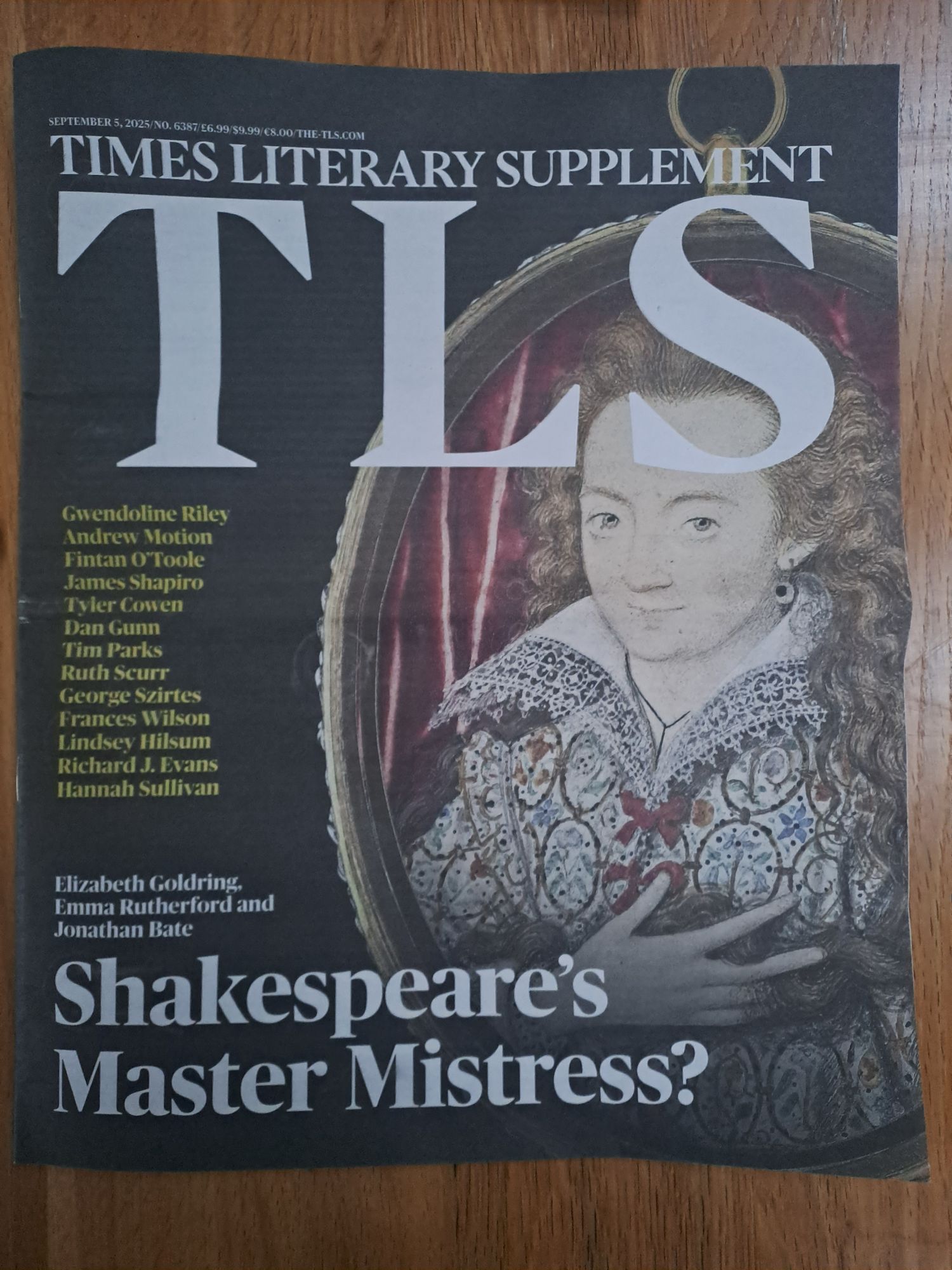
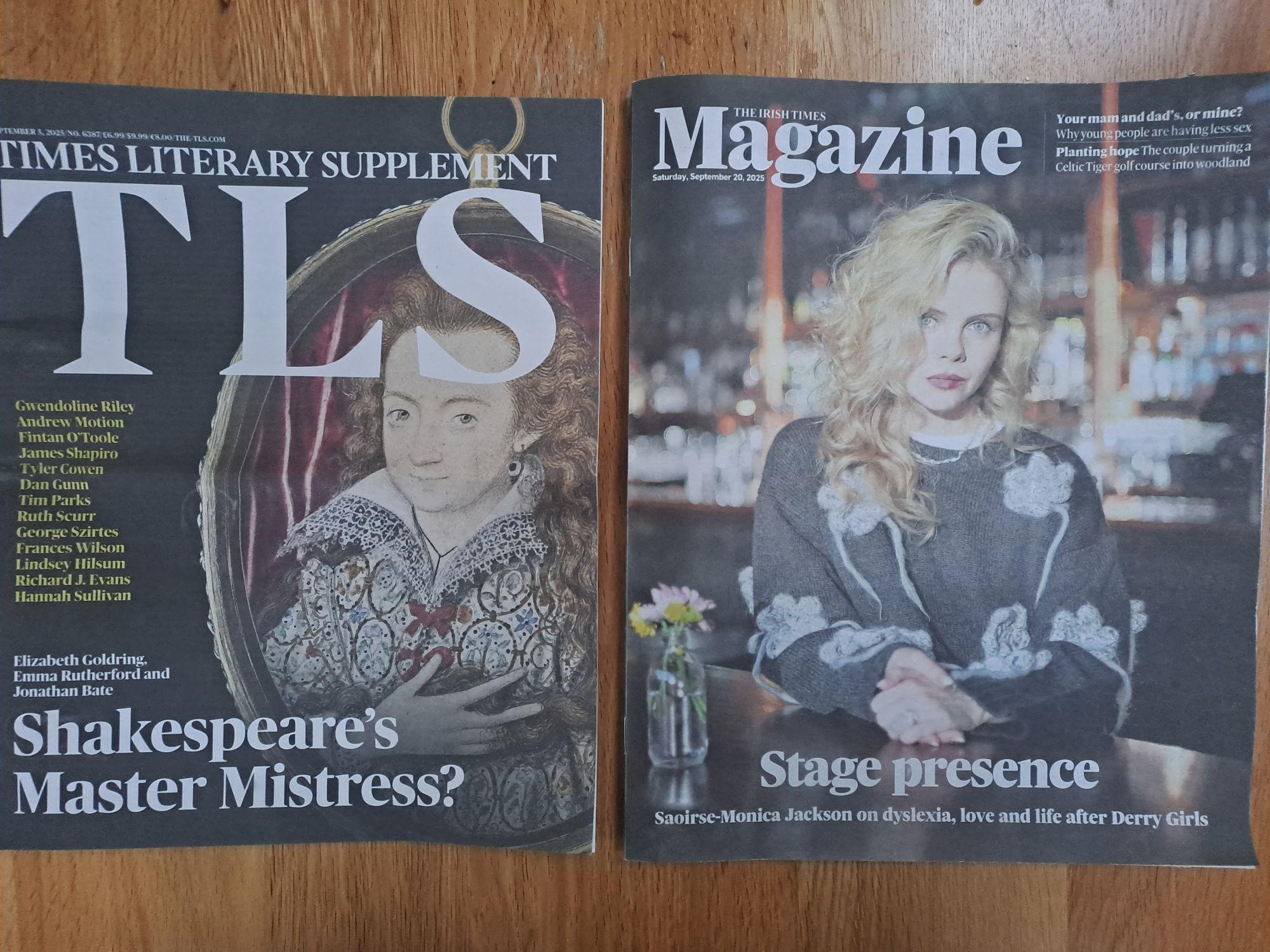
It seems like eternity since I was on sabbatical and had enough time to get stuck in to some reading not related to work. Since I got back from Barcelona last September I’ve lapsed and haven’t read many books since then. I keep reading reviews in the Times Literary Supplement but that’s as close as I generally get.

It’s been in my mind for a while to rejuvenate my interest in literature but last week I had two specific triggers. One was the news that Amazon has opened a dedicated website in Ireland. I view that as a trigger not in a positive way but because it will make life even harder for our excellent local bookshop in Maynooth so I felt I should do more to support them. The other trigger was that the Irish Times published a list of the “best” 100 Irish novels of the 21st Century. When I saw I had only read a few of them, and feel I should read more contemporary literary fiction emanating from Ireland, I decided I should use the list as a guide to help me get back into a reading habit. Anyway, I went to the bookshop last week and bought these six to start with:

These aren’t the top six, by the way. They’re just the ones that caught my fancy while I was browsing in the store.

I’m going to start with Claire Keegan’s novella Foster, as it was this work that inspired the beautiful Irish language film An Cailín Ciúin which I blogged about here. It’s quite short, so it should provide me with a relatively gentle re-introduction to reading. I have’t decided in what sequence I will read the others. It remains to be seen when I can get another six let alone how long it will take for me to read all the books on the list!

Any comments on these books, or indeed any others either on the top 100 list or not would be welcome!

Not in Leiden…

Posted in Biographical, The Universe and Stuff with tags , , on March 24, 2025 by telescoper

It’s been a very busy day back to teaching after last week’s study break. This week there’s a big meeting in Leiden (Netherlands) which I would like to have attended as it combines the annual Euclid Consortium meeting with the 56th ESLAB Symposium. No doubt there’ll be a lot of discussion of the Euclid Q1 results announced last week. I can’t go, however, because of teaching commitments. The Euclid meetings are quite often scheduled in the summer, so I have a chance to attend, but not this time.

Anyway, I thought I would post a relevant memory from a previous trip to Leiden, about 30 years ago. which was taken at a conference in Leiden (Netherlands) in 1995. Was that really 30 years ago? Various shady characters masquerading as “experts” were asked by the audience of graduate students at a summer school to give their favoured values for the cosmological parameters (from top to bottom: the Hubble constant, density parameter, cosmological constant, curvature parameter and age of the Universe):

From left to right we have Alain Blanchard (AB), Bernard Jones (BJ, standing), John Peacock (JP), me (yes, with a beard and a pony tail – the shame of it), Vincent Icke (VI), Rien van de Weygaert (RW) and Peter Katgert (PK, standing). You can see on the blackboard that the only one to get anywhere close to correctly predicting the parameters of what would become the standard cosmological model was, in fact, Rien van de Weygaert…

The Vernal Equinox 2025

Posted in Biographical, Maynooth, The Universe and Stuff with tags , , on March 20, 2025 by telescoper
Loughcrew Cairn: for a few days on and around the vernal equinox the rays of the rising Sun penetrate the passage and illuminate the back stone.

Just a quick note to mention that the Vernal Equinox (Spring Equinox) in the Northern hemisphere happens this morning, Thursday 20th March 2025, at 9.01 UTC (which is 9.01am local time here in Ireland, i.e. in about half an hour). Many people in the Northern hemisphere regard the Vernal Equinox as the first day of spring; of course in the Southern hemisphere, this is the Autumnal Equinox.

The date of the Vernal Equinox is often given as 21st March, but in fact it has only been on 21st March twice this century so far (2003 and 2007); it was on 20th March in 2008, has been on 20th March every spring from then until now, and will be until 2044 (when it will be on March 19th).

Anyway, people sometimes ask me how one can define the `equinox’ so precisely when surely it just refers to a day on which day and night are of equal length, implying that it’s a day not a specific time? The answer is that the equinox is defined by a specific event, the event in question being when the plane defined by Earth’s equator passes through the centre of the Sun’s disk (or, if you prefer, when the centre of the Sun passes through the plane defined by Earth’s equator). Day and night are not necessarily exactly equal on the equinox, but they’re the closest they get. From now until the Autumnal Equinox, days in the Northern hemisphere will be longer than nights, and the days will continue get longer until the Summer Solstice before beginning to shorten again.

P.S. This time last year I was in Barcelona. Time passes.

R.I.P. Sergei Shandarin (1947-2025)

Posted in Biographical, R.I.P., The Universe and Stuff with tags , , , , on March 18, 2025 by telescoper

It is my sad duty to pass on the sad news of the death of Sergei Shandarin, who passed away yesterday at the age of 77. He had been suffering from cancer for some time and had been undergoing chemotherapy, alas to no avail. Last week he was moved onto palliative care and we knew he would soon be leaving us. I was going to post something last night when I heard that he had died, but I just couldn’t find the words. I send my deepest condolences to his family, friends and colleagues who are grieving.

(The picture on the left shows Sergei in 2006; I’m grateful to John Peacock for letting me use it here.)

Sergei Fyodor Shandarin was born in 1947 and gained his PhD at the Moscow Institute of Physics and Technology in 1974. He was a student of the great physicist Yakov Borisovich Zeldovich (whom I blogged about here). Sergei moved to the USA in 1991 to take up a Professorship at the University of Kansas, in Lawrence, where he remained until his retirement. More recently he and his wife Vika moved to Toronto to be closer to his daughter Anya and their grandchildren.

Sergei’s main research interests were the dynamics and statistics of the “Cosmic Web” – the supercluster- void network in spacial distribution of galaxies. In particular, he was interested in nonlinear dynamics of gravitational instability, which is the major mechanism for the formation of a large variety of objects in the universe, and in geometrical and topological statistical descriptors of the distribution of mass and galaxies in space.

These topics overlap considerably with my own and I was delighted to have the opportunity to work with Sergei in 1992 when I was invited by Adrian Melott as a visitor to Lawrence fro about a month. My first impression of Sergei was that he was a bit scary – in that typical Russian physicist sort of way – but I soon discovered that, beneath his initially rather fierce demeanour, he was actually a kind and friendly person with a fine sense of humour. I remember that research visit very well, in fact, not only because of Adrian’s and Sergei’s hospitality, but also because the project we did together went so well that we not only completed the research, but I returned to London with a completed manuscript; the paper that resulted was published in early 1993.

After that I kept in touch with Sergei mainly at conferences. Last night after I heard the news that he has passed away I brought a box of old photographs down from the loft and rummaged around for some pictures. Here are two from a meeting in India in 1994, in which you can see Sergei very much in the centre of things:

The picture on the left shows: (standing, L to R) Francis Bernardeau, Paolo Catelan, Sergei, ?*, Paul R. Shapiro; (crouching) Enzo Branchini and Bernard Jones. The picture on the right has the addition of, among others, Varun Sahni (between Paul Shapiro and Bernard Jones), Dick Bond (with his arm on Sergei’s shoulder) and Sabino Matarrese (front left); I’m on the right of the front row. I remember these pictures were taken on an excursion from Pune to see the historic caves and temples at Ajanta and Ellora.

(*I think the unidentified person might be Lars Hernquist, but I’m not sure: I’d be grateful for any information.)

I also particular remember meeting up with Sergei at meetings in Los Angeles, Nice, Valencia (the meeting at which the first picture was taken). and most recently in Estonia (for a meeting to celebrate the centenary of the birth of Zel’dovich). He was always up for scientific discussions, but also liked to relax with a drink or several; he also liked to watch football.

Sergei was a wonderful scientist as well as a warm and generous human being who was held in a very high regard by the cosmological community worldwide. We will all miss him terribly.

Rest in peace, Sergei Fyodor Shandarin (1947-2025)

Carabao Cup Winners!

Posted in Biographical, Football with tags , , on March 16, 2025 by telescoper

I’m old enough to remember when the Carabao Cup was called the League Cup, and I’m (just) old enough to remember Newcastle United winning the Fairs Cup in 1969.  I’m also old enough to remember countless cup final defeats, but I’m not old enough to remember the last time The Toon won a domestic trophy (the FA Cup in 1955), so today’s victory against Liverpool presents a unique opportunity to celebrate a Cup success. Even if it isn’t the most important piece of silverware, such an event is something I’d taken for granted I’d never be able to blog about!

As the late President Jimmy Carter put it, Howay the Lads!

Half-term Time!

Posted in Biographical, Education, Maynooth with tags , , , , on March 14, 2025 by telescoper

After a Departmental meeting this afternoon being the last item on the agenda for this week, at last we’ve reached the Mid-Semester Half-Term Study-Week Break. Six weeks down, six weeks to go (not including an extra week off for Easter). This coming Monday is St Patrick’s Day, a national holiday here in Ireland, and the rest of the week is free from lectures, labs and tutorials. I have two batches of computational physics tests and a particle physics assignment to grade, four examination papers to write and a graduation ceremony to attend before we return, so it’s not exactly a holiday. I plan to try to make the most of the time freed up by not having to teach to finishing writing up at least one, and possibly two, papers.

I’m glad of the arrival of this break, as I’ve been running on empty for the last several days, the general sense of fatigue exacerbated by a flare-up of the arthritis in my knees. Doctors say that there’s no reliable evidence that arthritis pain correlates with the weather, but in my case it does seem to come on when the weather changes, especially when it suddenly becomes cold or damp as it has done over the past few days. I’ll be due for another steroid shot soon, which should help, and hopefully the weather will improve over the next few weeks. Possibly. It seems to be a tradition for St Patrick’s Day to take place during inclement weather so, while I plan to go and watch the parade in Maynooth on Monday, I won’t linger outside if it’s cold. I will be taking the whole day off though.

The second half of term should be a bit easier than the first. For one thing, we have another break coming up four weeks after the resumption. Good Friday is on April 18th, so that is a holiday, as is the following week. The second 6 weeks of the Semester is therefore split 4-2 with a week off in between. Moreover, I usually only give lectures in Computational Physics for 9 or 10of the 12 teaching weeks in the Semester, after which the students will be working on the mini-projects which form part of the assessment for this module.

Anyway, it’s time to head home via the shops and buy something to eat while I watch St Pat’s versus Bohemians on the telly box. I haven’t got the energy for anything else!

Pandemic Memories, Five Years On

Posted in Biographical, Covid-19, Education, Maynooth with tags , , , on March 13, 2025 by telescoper

At the start of my Computational Physics lecture at 9am this morning I suddenly remembered that it was the corresponding day five years ago that Covid-19 pandemic restrictions were introduced in Ireland. The date for that was Thursday March 12th 2020, while today is Thursday March 13th 2025, but it was the same stage of of the semester, the Thursday before St Patrick’s Day and the mid-term Study Break.

One thing I remember quite well from that day five years ago was that I told my Computational Physics class to keep an eye on their email during the day as I thought an announcement would be made. When it came – around lunchtime, if memory serves – it was much stricter than I had anticipated: from 6pm that day, all schools, colleges and cultural institutions were to close until 29th March. Few people believed that would be the end of it, and we were right!

I had a computing laboratory session that afternoon, which went ahead, but some students understandably left early as they had to find their way home. The next time I interacted with any students it was online, and remote working carried on for many months, not just the two weeks originally planned. I did not envisage it would last so long. Nor did I imagine how little support teaching staff would receive from management. Indeed, the University saw the opportunity to build up large surpluses during the lockdown, all generated by the huge amount of extra, unacknowledged and unrenumerated, work put in by academics and support staff. That’s all money that should have been spent on the education of students. It was never going to be easy to teach during lockdown, but deliberately withholding resources made it far harder than it had to be.

Among other things, the Covid-19 pandemic restrictions played havoc with my perception of the passage of time and messed with my memory. I remember some things very clearly, such the lecture and lab on the day the restrictions were announced, which seem like they happened a few weeks ago never mind five years. Other things are like ancient history. Several major life events took place during the Covid-19 period period that I find it hard place in chronological order without looking at written records (including this blog).

I am not an expert on such matters but it seems to me that the isolation, disruption of social interaction, and the loss of familiar routines imposed by work are among the things responsible for distorting one’s perception of the passage of time and powers of recall.

It was not just the disruption to routine of course. There was also a genuine fear of becoming infected. From time to time after my last in-person class on March 12th 2020, I wondered if I would ever see those students again. I also made arrangements to write a will. For a time it looked likely that intensive care facilities in Ireland might be overwhelmed so I felt it important to make contingencies of that sort. Fortunately they weren’t needed. As far as I know the Coronavirus never reached me, though I think even those of us who were never infected by Covid-19 were definitely affected by it.

Beard of Ireland 2025

Posted in Beards, Biographical with tags , , on March 10, 2025 by telescoper

Regular readers of this blog will know that, way back in 2020, apparently as the result of some form of administrative error, I was voted St Patrick’s Day Beard of Ireland. Five years have passed and it is now time for Beard of Ireland 2025 and I am among the contenders. The voting is mainly on X/Twitter, on which I have no presence, so I don’t hold out much hope, but if you do want to vote for me please do so there, or elsewhere following the instructions in the attached post from Keith Flett in which he volunteers to be bombarded with direct messages…

P.S. For reference, here is a picture of my beard and I