Archive for the Biographical Category

The Rain Falls Down

Posted in Biographical, Maynooth on February 12, 2026 by telescoper

There’s been a lot of rain recently, combined with an unusual easterly wind; the usual prevailing wind in Ireland is from a westerly direction. I’ve managed to avoid the worst of the wet until today. On the way home from work this evening I got absolutely drenched. A lot of water had pooled on the paths and pavements on campus too; I hadn’t put sufficiently sturdy footwear on so my feet got wet too. It seems set to be similar weather tomorrow, so I’ll make sure I’m better prepared. Was it Billy Connolly who said that there’s not really such a thing as bad weather, just the wrong clothes?

We are approaching the end of Week 2 of Semester 2 at Maynooth. I’ve been busy with the usual start-of-term things as well as some other jobs of the sort that crop up from time to time. I started teaching Computational Physics again last week for the first time in a different computer lab, and there were numerous problems with logins, etc, which caused quite a lot of stress. The second cycle of labs started today and everything went much better. I hope this continues. My lecture course on Particle Physics seems to be going reasonably well too, although it’s early days. Hopefully things will settle down and I won’t feel so exhausted for the rest of term. Thursdays are busy for me this term, with a 9am lecture as well as a lab and, today, several other things in between. Combined with the drenching on the way home I feel in need of refreshment, so I think I’ll have a hot bath followed by a glass of brandy and an early night…

P.S. Anniversaries often give me ideas for blog posts but I forgot one yesterday, which was ten years to the day since the announcement of the discovery of gravitational waves. Here’s the blog I did on that day. Was it really a decade ago?

Take Note!

Posted in Bad Statistics, Biographical, Education, Maynooth with tags , , , , on February 9, 2026 by telescoper

We’re a week into teaching term here at Maynooth University and I’m taking a short break from the task of preparing notes and problem sets for the modules  I’m teaching this term.  Yesterday I came across a paper with the title Typed Versus Handwritten Lecture Notes and College Student Achievement: A Meta-Analysis. I always cringe when I see the word “Meta-Analysis”, as this is a very problematic statistical approach. Nevertheless, that article reminded me of a post I did some time ago about  lecture notes which I thought I would rehash here. I won’t repeat the entire content of my earlier discussion, but one of the main points I made in that was that many students are simply not used to taking notes and find it difficult to do so effectively during lectures, so much so that the effort of copying things onto paper must surely prevent them absorbing the intellectual content of the lecture (assuming that there is any).

I dealt with the problem  of taking notes when I was an undergraduate by learning to write very quickly without looking at the paper as I did so. That way I didn’t waste time moving my head to and fro between paper and screen or blackboard. Of course, the notes I produced using this method weren’t exactly aesthetically pleasing, but my handwriting is awful at the best of times so that didn’t make much difference to me. I always wrote my notes up more neatly after the lecture anyway. But the great advantage was that I could write down everything in real time without this interfering with my ability to listen to what the lecturer was saying. An alternative to this approach is to learn shorthand, or invent your own form of abbreviated language. This approach is, however, unlikely to help you take down mathematical equations quickly.

My experience nowadays is that many students simply aren’t used to taking notes like this – I suppose because they get given so many powerpoint presentations or digital materials or other kinds of handout –  so they struggle to cope with the old-fashioned chalk-and-talk style of teaching that some lecturers still prefer (and which actually works very well in mathematically-based disciplines). That’s probably because they get much less practice at school than my generation did. Most of my school education was done via the blackboard..

Nowadays,  many lecturers  give copies of their presentations to students and others even give out complete sets of printed notes before, during, or after lectures. That’s all very well, I think, but what are the students supposed to be doing during the lecture if you do that? Listen, of course, but if there is to be a long-term benefit they should take notes too. In other words, entirely passive learning is unlikely to be effective.

Even if I hand out copies of slides or other notes, I always encourage my students to make their own independent set of notes, as completely as possible. I don’t mean by copying down what they see on the screen and what they may have on paper already, but by trying to write down what I say as I say it. I don’t think many take that advice, which means much of the spoken illustrations and explanations I give don’t find their way into any long term record of the lecture. And if the lecturer just reads out the printed notes, adding nothing by way of illustration or explanation, then the audience is bound to get bored very quickly.

My argument, then, is that regardless of what technology the lecturer uses, whether he/she gives out printed notes or not, then if the students can’t take notes accurately and efficiently then lecturing is a complete waste of time. 

As a further study aid, most lectures at my previous institutions (Sussex University and Cardiff University) were recorded and made available to students to view shortly after the event. At those institutions, we found – contrary to popular myth – no evidence that availability of recorded lectures lowers the attendance at in-person lectures. It appears that students use the recordings for revision and/or to clarify points raised in the notes they have taken, and if anything the recordings allow the students to get greater value from lectures rather than persuading them that there’s no need to attend them. Of course we had to use lecture recordings during the pandemic. Unfortunately Maynooth University decided not to invest in the technology needed to make this routine after we went back to classroom-based teaching, so we can’t offer lecture recordings in a systematic way. This is very regrettable,as many students live nowhere near campus and find it onerous to travel every day for one or two teaching sessions.

I do like lecturing, because I like talking about physics and astronomy, but as I’ve got older I’ve become less convinced that lectures play a useful role in actually teaching anything. I think we should use lectures more sparingly, relying more on problem-based learning to instil proper understanding. When we do give lectures, they should focus much more on stimulating interest by being entertaining and thought-provoking. They should not be for the routine transmission of information, which is far too often the default.

I’m not saying we should scrap lectures altogether. At the very least they have the advantage of giving the students a shared experience, which is good for networking and building a group identity. Some students probably get a lot out of lectures anyway, perhaps more than I did when I was their age. But different people benefit from different styles of teaching, so we need to move away from lecturing as the only option and ensure that a range of teaching methods is available.

I don’t think I ever learned very much about physics from lectures – I found problem-based learning far more effective – but I’m nevertheless glad I learned out how to take notes the way I did because I find it useful in all kinds of situations. Effective note-taking is definitely a transferable skill, but it’s also in danger of becoming a dying art. If we’re going to carry on using lectures, we old fogeys need to stop assuming that students learnt it the way we did and start teaching it as a skill.

Perhaps the biggest problem with the way physics is generally taught these days, however,  is not really about the mode of delivery but the compartmentalization that has crept in via the school system which encourages students to think of each `module’ as a bite-sized piece that can be retained until the examinations, regurgitated, and then forgotten. I’ve no doubt that a great many students pass the examinations we set by simply memorizing notes with little genuine understanding  needed or problem-solving ability demonstrated. We promote physics as a subject that nurtures these skills, but I don’t think many physics graduates – even those with good degrees – actually possess them at the end. We should be making much more of an effort in teaching students how to use their brains in other ways than as memory devices, and getting them engaged in more active teaching activities seems to me to be a very high priority. That said, I think we probably do much more of this in physics than in most other subjects!
10 Years of the Open Journal of Astrophysics

Posted in Biographical, Maynooth, OJAp Papers, Open Access with tags , , on February 8, 2026 by telescoper

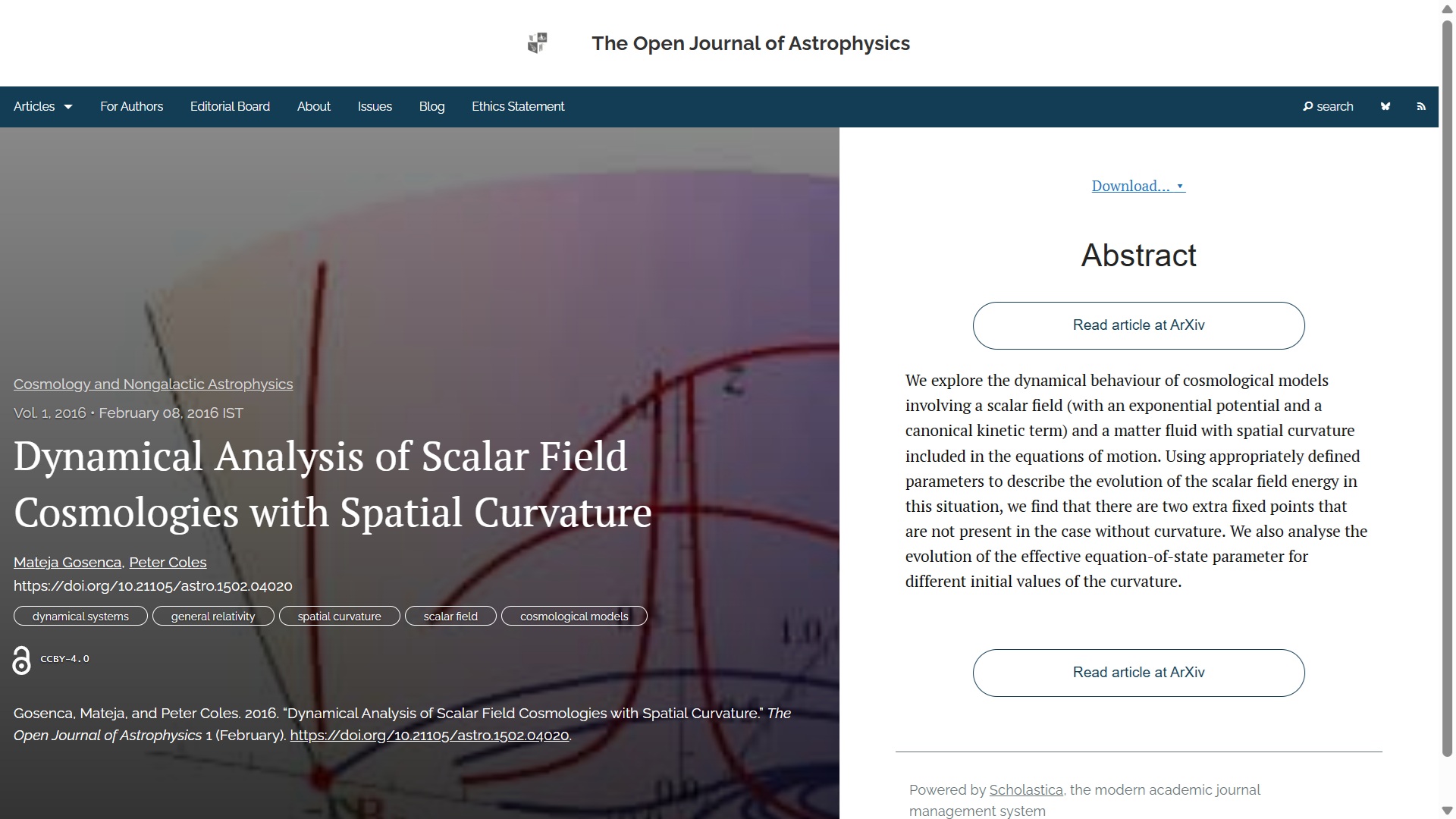
The visit of my former PhD student Mateja Gosenca to Maynooth last year reminded me that she was co-author of the very first paper published by the Open Journal of Astrophysics. The date of publication for that paper was 8th February 2016, i.e. excactly10 years ago today.

Here is the overlay:

In those days OJAp was very much an experiment, and we used a protoptype platform which I had paid a developer to set up but it never really progressed beyond a “beta” version owing to stability and other issues. I was a Head of School at Sussex then and had very little time to work on the project and it stalled. I came to Maynooth in late 2017 and discussed the idea of OJAp with staff at the Library who were enthusiastic about it. We abandoned the prototype and switched to the Scholastica platform, imported the papers we had previously published into the new site and restarted. It was slow going at first and then we had the Covid-19 lockdown tand I had to conted with a workload that went through the roof. Several times I thought it was never going to take off and wondered about closing it to new submissions. With a bit of pig-headed obstinacy and a refusal to look facts in the face, however, we carried on.

The journal has grown steadily since the end of the pandemuic: from just 17 papers in 2022, 50 in 2023, 120 in 2024, to 213 last year (including our first Supplement). I expect we’ll publish over 250 this year. I think a large part of the growth has been due to the decision of the Royal Astronomical Society to adopt a pay-to-publish model. I expected it to take a while to establish a reputation, but perhaps not as long as it did. We’re still quite small compared to other journals, but I’m pleased with the progress. I think in the long run the slow start helped, as it gave us more time to iron out various issues and recruit more editors.

This brings me to the fact that I will be retiring in a couple of years, if not sooner, and someone else will have to take over as Editor-in-Chief when that happens. At present, OJAp is published by Maynooth Academic Publishing and it’s not obvious that arrangement can continue when I am no longer employed at Maynooth. It would not be technically difficult to transfer everything to a new owner, but the handover would have to be planned to avoid disruption.

P.S. As I mentioned last month, we are always on the lookout for new Editors. Please contact me if you’re interesed!

The Week in Pictures…

Posted in Biographical, Maynooth with tags , , , on February 7, 2026 by telescoper

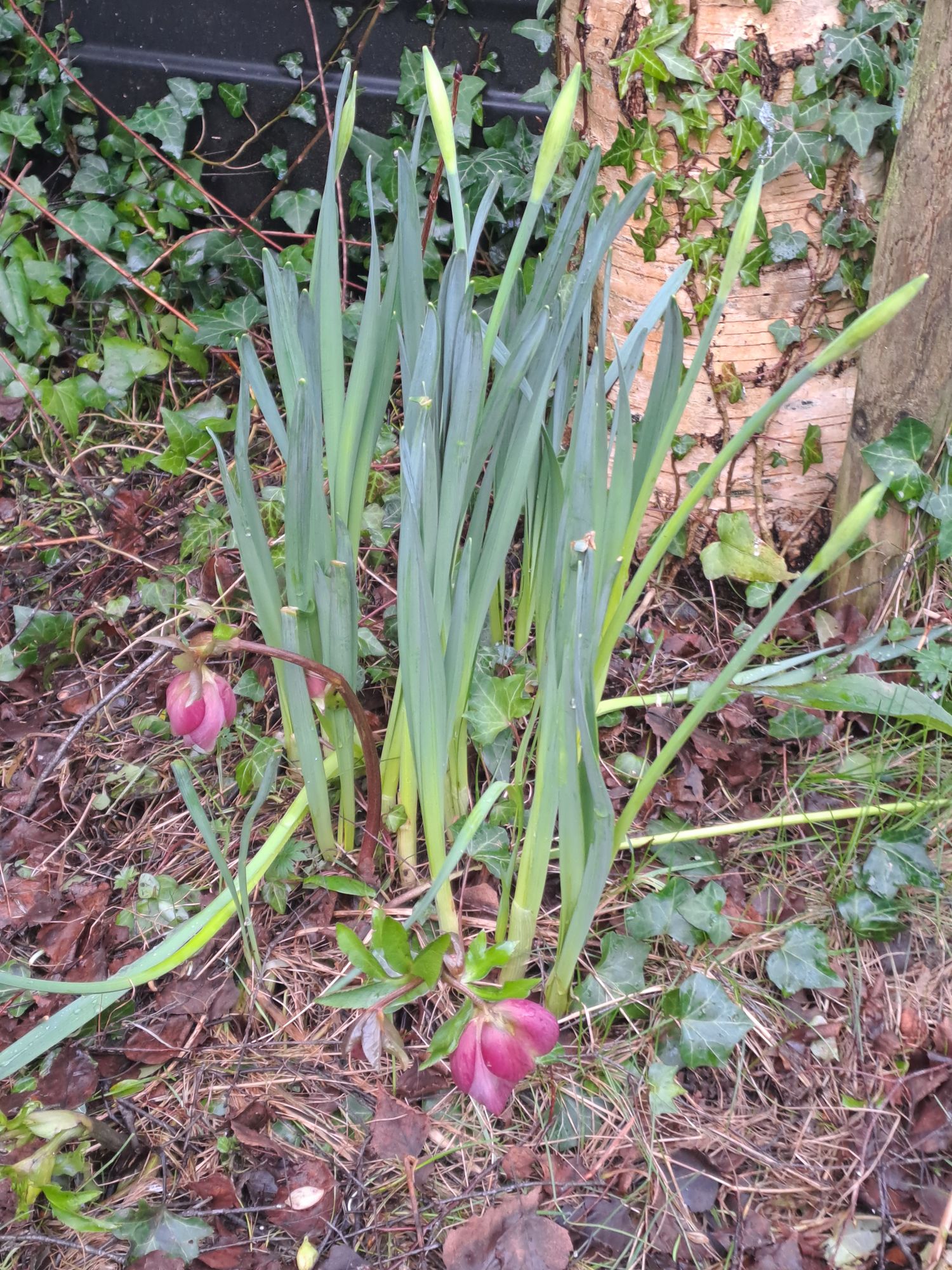
P.S. The pink flowers in the first picture in front of the daffodils are examples of Lenten Rose (Helleborus Orientalis), all parts of which are toxic (cf. Mandelson)

What’s your Epstein Number?

Posted in Biographical with tags , , , , , , on February 5, 2026 by telescoper

The release of the latest batch of information relating to disgraced financier and sex offender Jeffrey Epstein got me thinking about the number of physicists on friendly terms with that individual and that in turn got me thinking about the Erdős Number, which I blogged about here, and about constructing some sort of metric relating to a person’s connecttion to Epstein.

The Erdős Number? It’s actually quite simple to define. First, Erdős himself is assigned an Erdős number of zero. Anyone who co-authored a paper with Erdős then has an Erdős number of 1. Then anyone who wrote a paper with someone who wrote a paper with Erdős has an Erdős number of 2, and so on. The Erdős number is thus a measure of “collaborative distance”, with lower numbers representing closer connections. A list of individuals with very low Erdős numbers (1, 2 or 3) can be found here. As it happens, mine is three.

The main difference between an Erdős Number and a putative Epstein Number is that most people think’s a nice thing to have a low Erdős Number whereas the opposite is probably the case for evidence of close collaboration with Jeffrey Epstein…

It is also difficult to define an equivalent to the Erdős Number for Epstein as the form of “colloboration” is less easily catergorised than publishing a paper. I think it is probably fairer to base a number simply on the number of people you know who met Epstein personally (assuming you didn’t know him yourself). Anyone who did know Epstein personally therefore gets an automatic red card. It would also be very difficult for a typical person to work out how many people they have met who have met someone who has met Epstein, etc.

I was intrigued by this because it is known that Epstein liked hanging out with scientists and, being a scientist myself, I wondered if anyone I knew had been drawn into the Epstein circle. It’s unreasonable to count anyone who appears in the Epstein files as having “known” Epstein because many of the names simply appear on emails sent by Epstein to which no reply was apparently ever received or which were not indicative of a working relationship or personal friendship, sometimes quite the opposite.

Anyway, based on a not very thorough bit of research I came across the following people who I have met in person who met and knew Jeffrey Epstein to a greater or lesser extent.

First, there’s Lawrence Krauss who left his position at Arizona State University as a consequence of a sexual misconduct case. He features prominently in the Epstein correspondence, including many messages about the disciplinary case brought against him at ASU. I met Lawrence Krauss in the 1990s at an Aspen Summer School for Physics, where I shared an office with him for about two weeks. I wouldn’t say that we got on well.

Second, there’s Harvard theoretical physicist Lisa Randall, whom I met at a meeting in South Africa about 25 years ago. The disturbing thing about her case is that she carried on interacting with Epstein even after his conviction for sex offences, visiting Epstein’s island home and travelling on his private jet.

Another name that comes up frequently in the Epstein files is John Brockman, a well-known literary agent. I met him at the Experiment Marathon in Reykjavik in 2008. In fact we were placed next to each other alphabetically speaking in the list of contributors:

Our conversations at that meeting were limited to small talk. As a matter of fact I didn’t really know who he was! He certainly didn’t offer me a lucrative book deal like he did with certain other physicists. The topic never arose.

The files also contain references to Stephen Hawking (who died in 2018), including allegations about him made by Virginia Giuffre. Hawking was never charged with any crime but it is the case that he met Epstein at least once, at a meeting organized by Lawrence Krauss on St Thomas, close to Epstein Island. I met Stephen Hawking on a number of occasions.

Now you can add Lee Smolin, whom I met in Canada when I was on sabbatical in 2005. He has stepped back from his position at the Perimeter Institute after revelations that he maintained contact with Epstein after Epstein’s conviction for child sex offences.

So according to this my Epstein Number is four five. I have had no contact with any people who knew Epstein since 2008 and very little before that. Although it is perhaps indicative of a lack of eminence, I can’t say I’m sorry this number is low. I may have missed some, of course.

P.S. It is worth reading Peter Woit’s blog post on this topic and Scott Aaronson’s here.

Imbolg, St Brigid, and the Quickening of the Year

Posted in Biographical, History, Maynooth with tags , , , , on February 1, 2026 by telescoper

It is 1st February 2026, which means that today is Imbolc (or Imbolg in modern Irish), an ancient Gaelic festival marking the point halfway between the winter solstice and vernal equinox.  In the old pagan calendar, this day is regarded as the first day of spring, as it is roughly the time when the first spring lambs are born, daffodils etc start to appear, and the days get noticeably longer.  The name Imbolg may be derived from “i mbolg” meaning “in the belly”, referring to the pregnancy of ewes. This time corresponds to the Welsh Gŵyl Fair y Canhwyllau and is also sometimes called, rather beautifully, The Quickening of the Year.  It’s a time for rebirth and renewal after the darkness of winter.

Incidentally, in spoken Irish it is common to place an unstressed vowel sound – often schwa – between certain pairs of consonants, e.g. the name “Colm” is pronounced “Collum”. This extends to Hiberno-English: e.g. many Irish people say “fillum” for “film”. Imbolg is therefore pronounced something like “Imbollig”. In phonology this is called  anaptyxis.

In Ireland Imbolc is usually often referred to a Lá Fhéile Bríde,  St Brigid’s Day, after St Brigid of Kildare, whose feast day is today 1st February. There are events going on in Maynooth, which is in Couny Kildare, but I am not in Maynooth today so I don’t know what is going on. Incidentally, the Celts counted each day starting from sunset, so the Imbolc/St Brigid’s Day celebrations in County Kildare started last night, 31st January, but I didn’t see any of them either.

In the Northern hemisphere, in astronomical terms, the solar year is defined by the two solstices (summer, around June 21st, and winter, around December 21st) and the equinoxes (spring, around March 21st, and Autumn, around September 21st). These four events divide the year into four roughly equal parts of about 13 weeks each.

If you divide each of these intervals in two you divide the year into eight pieces of six and a bit weeks each. The dates midway between the astronomical events mentioned above are the cross-quarter days, of which Imbolc is one. They are:

  • 1st February: Imbolc (Candlemas)
  • 1st May: Beltane (Mayday)
  • 1st August: Lughnasadh (Lammas)
  • 1st November: Samhain (All Saints Day)

The names I’ve added in italics are taken from the Celtic/neo-Pagan and, in parenthesis the Christian terms, for the cross-quarter daysThese timings are rough because the dates of the equinoxes and solstices vary from year to year. Imbolc is often taken to be the 2nd of February (Groundhog Day) and Samhain is sometimes taken to be October 31st, Halloween but hopefully you get the point that although the Pagan festivals have been appropriated by the Christian church, they have much older origins. The status of St Brigid herself is particular obscure; it is not known for sure whether she was a real person or Christian appropriation of a Celtic deity, or some amalgamation of those.

Until recently there was an anomaly in that the first of these was the only one not associated with a Bank Holiday. That was changed in 2022 and tomorrow, Monday 2nd February, will be the St Brigid’s Day holiday. It would have been the first of teaching in Semester 2 had it not been a holiday; we return to teaching on Tuesday. As you may have surmised, I’ve taken the opportunity of the long weekend for a bit of a break and a trip elsewhere.

P.S. As it also happens, today is also the 8th anniversary of the very first lecture I gave in Maynooth, on Computational Physics, on 1st February 2018. I”ll be giving pretty much the same lecture again on Thursday 5th February.

Storm Chandra

Posted in Biographical, Maynooth with tags , , , on January 27, 2026 by telescoper

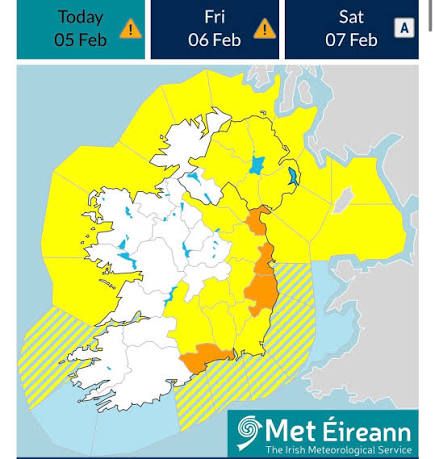
The Irish news today has been dominated by the arrival of Storm Chandra on these shores, accompanied by strong winds, heavy rain and widespread flooding. The whole country has been under a yellow alert, which will last until 11pm today.

The fact that it had been raining very heavily for days before the storm must have saturated the ground, which would have contributed to the flooding. Unusually, the worst has been on the East Coast, with Counties Wexford, Wicklow,  Carlow, and Dublin badly hit. Usually it’s the West of Ireland that bears the brunt of storms which typically come from across the Atlantic.

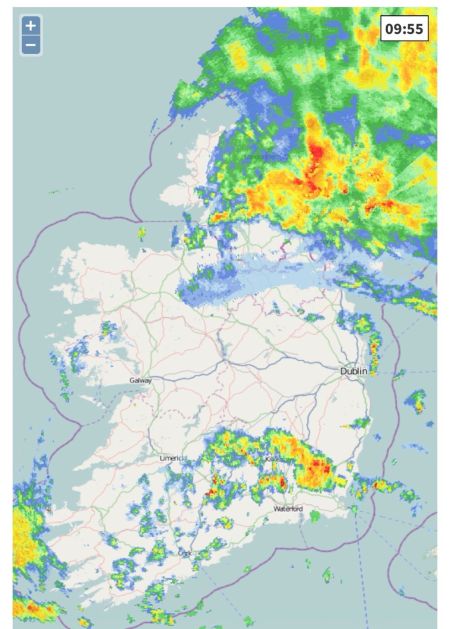
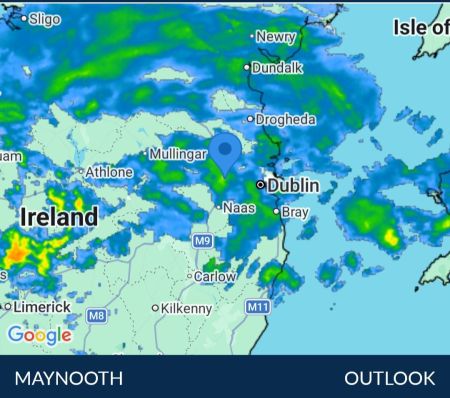
It’s been a strange day in Maynooth because, despite the storm, the weather hasn’t been too bad at all. There was a long window this morning during which it was actually quite sunny and pleasantly mild, though a bit breezy. The picture on the left shows the situation in mid-morning when the prevailing wind was southerly.

The main mass of raincloud to the North had passed over us by then, and the small but intense strip off the Louth/Dublin coast missed Maynooth entirely. You can see a big gap. Rain was heading towards us from the South, and did reach us in the afternoon, though it wasn’t particularly severe. It remained reasonably warm throughout the day, though it is much colder now (I’m writing this at about 7.30pm).

Dublin is only about 25km from Maynooth and it was a surprise to see major flooding, with parts of the M50 flooded for a time while we experienced nothing particularly severe. Not that I’m complaining!

For more about Storm Chandra, including animations of its progress can be found here. It seems that Great Britain had a lot of weather to contend with!

Marking Over

Posted in Artificial Intelligence, Biographical, mathematics, Maynooth with tags , , , , on January 19, 2026 by telescoper

Well, that wasn’t too painful. I’ve completed my marking duties. The fact that it has been pouring with rain most of the day made it easy to concentrate on this task. I was going to have a break for lunch, but I decided to keep on going until I was finished, though I did have to take a break for a telecon this afternoon. I also had to dash out to the shops, primarily to replenish my stock of food for the garden birds but also to get some groceries for myself. Having skipped lunch I bought myself something nice for supper.

Looking at the departmental database I see that I appear to be the first member of staff to have finished and uploaded all their Semester 1 examination marking. Normally I’m just happy if I’m not the last!

It feels good to have finished this task. It’s definitely a weight off my mind. I wouldn’t want to leave any loose ends when Trumpageddon comes.

I can’t say anything about the results of course but the change I made to continuous assessment, from take-home assignments to class tests, does not seem to have had a negative effect on either group of students I have been teaching. The opposite may indeed have been the case, as the class tests perhaps provide better preparation for the final assessment than the previous method. I think some other lecturers might make a similar switch in future. Anyway, I definitely plan to do something similar for my Semester 2 module on Particle Physics.

Now I have a couple of weeks before teaching resumes so I can get on with other things. For the rest of this week my priority is to finish revising a paper that I hoped to do before Christmas. I’ll see how that goes before deciding what to do next.

I’ll also have to prepare teaching for Semester 2. That shouldn’t be too difficult, as I’ve taught both modules before, but I do have to give some thought as to precisely how I’m going to word the instructions on the use of AI for my Computational Physics module. That can wait a little while, though, as it mainly affects the mini-project to be done towards the end of the Semester. In the meantime I’ll be thinking about other things…

Leaving X

Posted in Biographical, Maynooth with tags , , , on January 18, 2026 by telescoper

I posted a couple of weeks ago about why you and your institution should leave X (the platform formerly known as Twitter). A few days ago the Royal Irish Academy used its BlueSky account to remind users that it issued the following statement last year – even before the launch of Grok’s child pornography engine:

Last year, we made the decision to step away from X.

The Royal Irish Academy is committed to creating, convening, and sharing knowledge for the public good and as an organisation we value Independence; Integrity; Curiosity; Openness and Rigour.

In our view, X no longer aligns with these values

This is a correct decision by the RIA, and although I’m no longer a Fellow of either the Royal Astronomical Society or the Institute of Physics, I am glad they came to the same conclusion. On the other hand, the Royal Society (of which the Royal Irish Academy is the Irish equivalent) continues to endorse X and its machineries of abuse; this is unsurprising because Elon Musk, who owns X and actively promotes the generation of images of child sexual abuse, is a member of that particular club.

All academic institutions should close their accounts on X. There is no acceptable justification to contribute to a network that promotes racism, transphobia, misogyny and the manufacture and distribution of child pornography. I would have thought this was obvious, but it seems not to be. My employer, Maynooth University, has not yet made any statement about the situation with X, and continues to post there.

As I wrote in a recent post

If you don’t leave a social media platform when you find out that it endorses and encourages abusive exploitation of children then you are supporting that behaviour and helping to promote it. There is no grey area here in this. If you don’t draw the line here, where will you draw it? Staying on X is morally indefensible. It is the Epstein Island of social media.

I should also point out that Grok is breaking the law in Ireland (which is where the EU operations of Twitter are based). Even that doesn’t seem to matter to those who continue to use the platform.

On Maynooth University’s Equality and Diversity page you will find this:

The Maynooth University Equality and Diversity Policy has been developed therefore, to realise these core values of equality, inclusiveness, social justice, dignity and respect.

I’d like to know how remaining on X aligns with these core values, and by what process Maynooth University came to a different conclusion on this than the Royal Irish Academy and other organizations mentioned above. One might well be tempted to infer that the above statement, like so many others produced by University Management, is mere bullshit. Perhaps “The Leadership” is waiting to see what other higher education institutions do before making a decision. But that wouldn’t be leadership at all, would it?

By way of a postscript to this let me share this petition which aims to discourage the sharing of content on X and replacement with Mastodon.

https://my.uplift.ie/petitions/take-x-icons-off-websites-and-emails-and-replace-with-mastodon-icons

I make no apology for encouraging the use of Mastodon. BlueSky is better than X but Mastodon is much better than BlueSky in terms of both its functionality and its governance. It doesn’t have as much reach as other platforms, though, which is why I want to promote it. If I had my way, Maynooth would set up its own Mastodon instance, as the Dublin Institute for Advanced Studies has done, for example.

I removed the X icons from this blog some time ago. I can’t stop people sharing content from this blog on X, but I certainly don’t want to encourage it.

Boulanger, Shostakovich and Rimsky-Korsakov at the National Concert Hall

Posted in Biographical, Music with tags , , , , , , , , , , , , on January 17, 2026 by telescoper

It was a great pleasure last night to be able to attend my first concert of 2026 at the National Concert Hall. It was a rainy evening in Dublin, but the auditorium was nevertheless packed. The only issue was that so many people were there, mostly with overcoats checked into the cloakroom, that it took a long time to get out at the end!

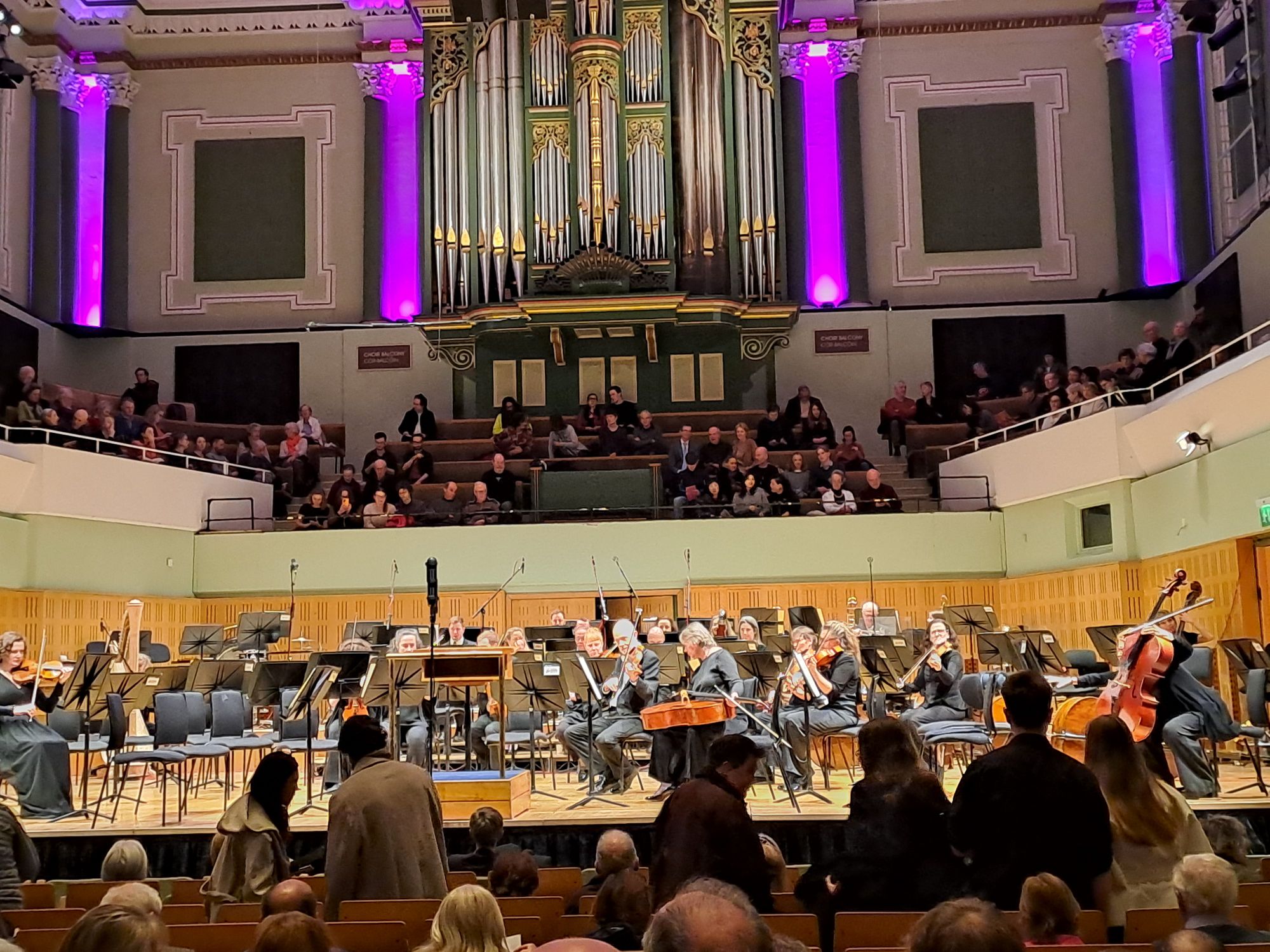
Before the performance

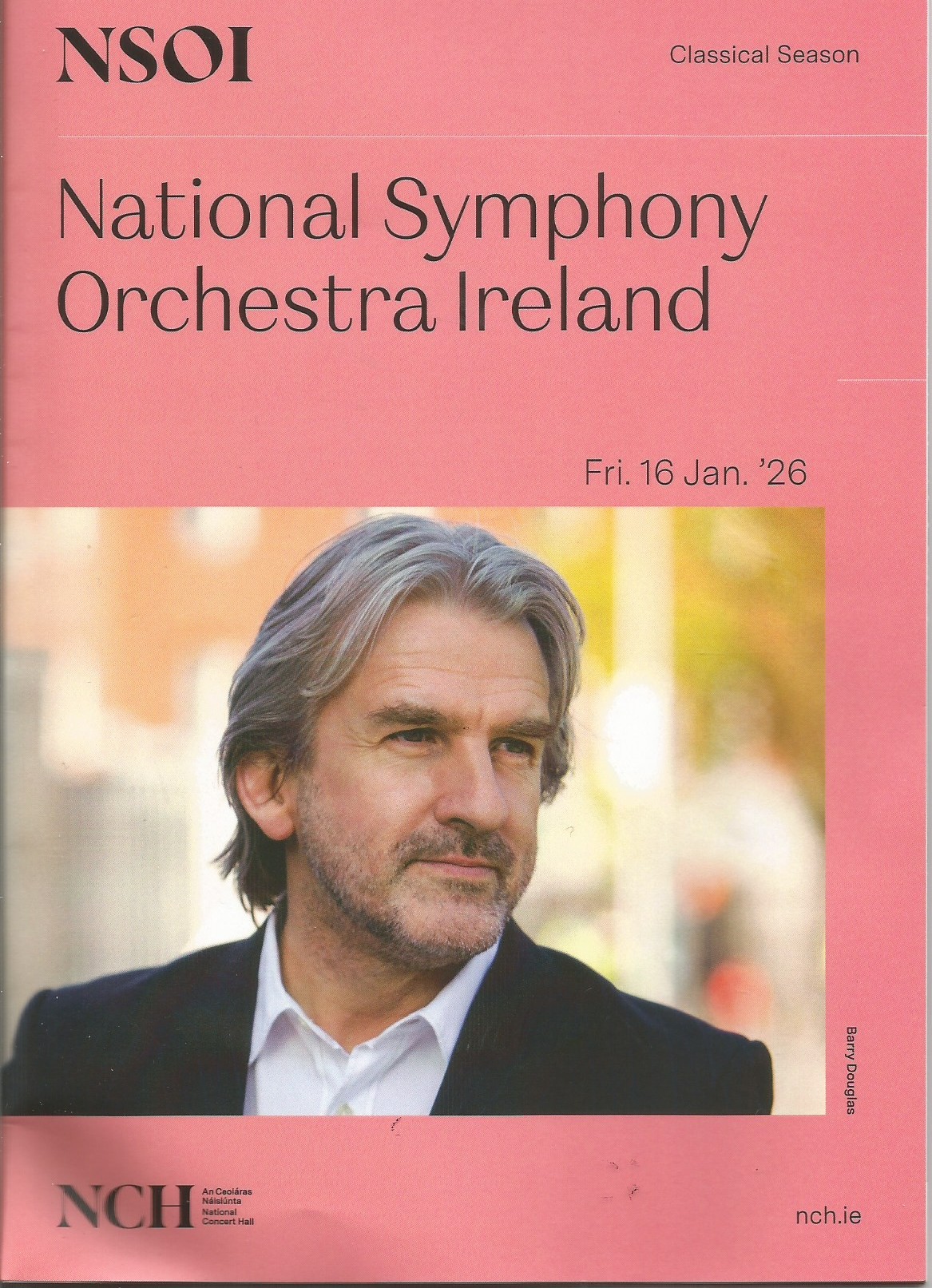
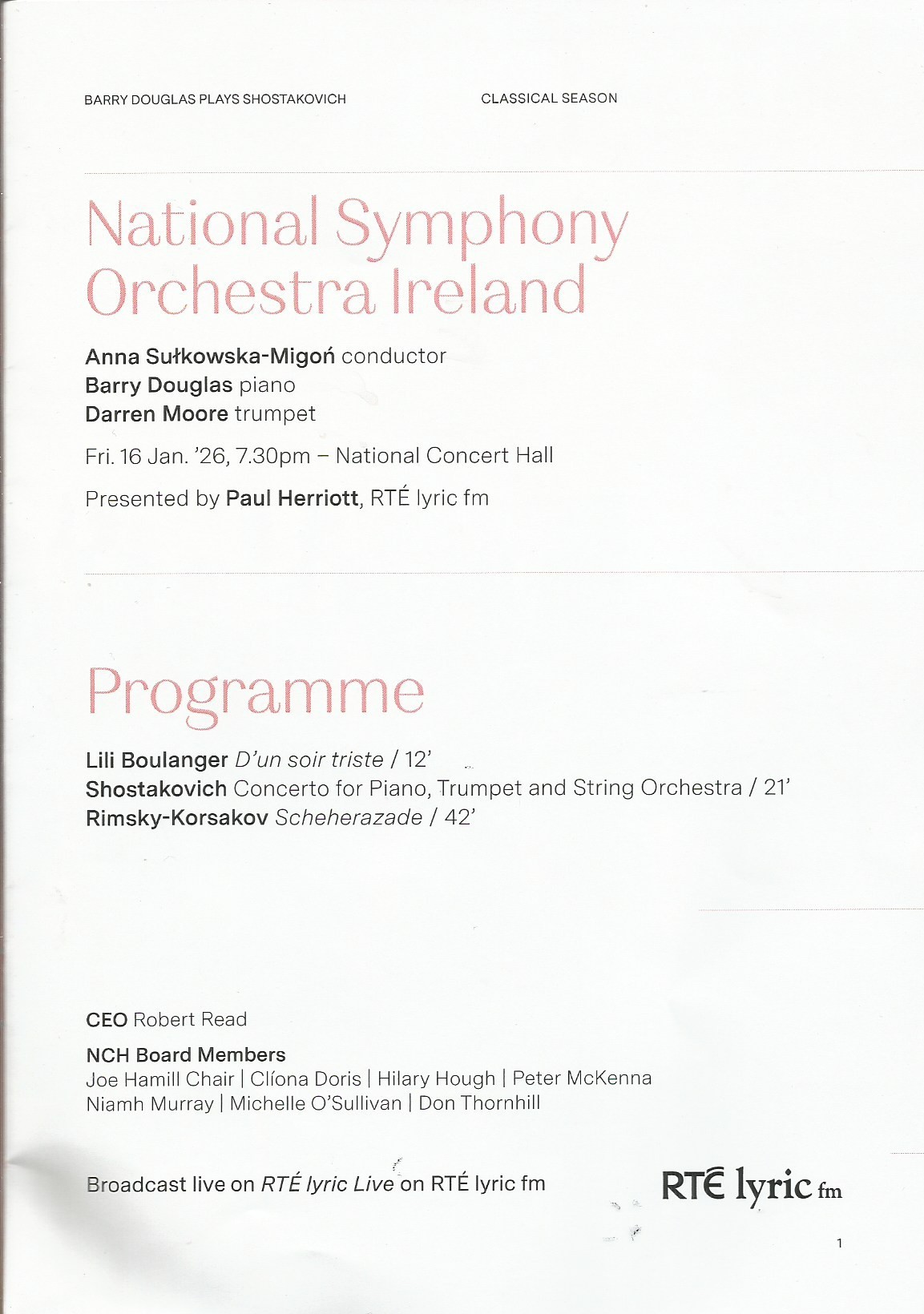
National Symphony Orchestra Ireland was conducted for the evening by guest conductor Anna Sułkowska-Migoń who directed a fine and varied programme of music.

The first piece (D’un Soir Triste; Of a Sand Evening) was by Lili Boulanger. I’ve heard a few pieces by her and found them all excellent, as was this one which is very atmospheric and packs a lot into the 12 minutes or so it takes to perform. The only reason Lili Boulanger is so much less famous than her older syster Nadia is that Lili suffered from ill health nearly all her life, eventually dying from tuberculosis just a few months after this piece was composed at the age of 24. Inevitably the number of compositions by her is very small, but as I said earlier everything I’ve heard by her is very good indeed. Her premature tragic death was a great loss.

After that piece there was considerable reorganization on the stage. The brass, woodwinds and percussion all left and space was made for the Steinway (between the conductor and the audience). Then we were joined by pianist Barry Douglas and trumpeter Darren Moore. The latter brough two trumpets with him, actually, of which more shortly.

The piece we were about to hear was listed in the programme as Concerto for Piano, Trumpet and String Orchestra (which is a more accurate description than the usual name Piano Concerto No. 1) by Dmitri Shostakovich. It’s quite hard to classify really, perhaps you could call it a Triple Concerto, but that doesn’t matter much. Music is much more important than how it is classified.

Although I admire the music of Shostakovich greatly, and look out for performances whenever I can, I had never heard this piece before. I was delighted by it. Written in 1933 when Shostakovich was only 27, it is instantly recognisable in style although I bit lighter and quirkier than one normally expects from that composer. Shostakovich had a wry sense of humour, but he often concealed his jokes to avoid getting into trouble. Not so in this piece, which is overtly playful and mischievous, rather than crypic

The trumpet plays a modest – indeed muted – part early on but, over the four movements, gradually becomes more prominent and at the end it delivers a series of exuberant fanfare-like figures as the key switches from C minor to close in C major. At this point I should given special mention to Darren Moore, Principal Trumpet of the NSOI, who played beautifully. He swtiched trumpets just before the end, where the trumpet is required to be louder and more assertive. I’m going to hazard a guess that he switched to a C trumpet for the closing stages, perhaps from a standard B♭ trumpet used earlier. I’ve heard it said that a C trumpet produces a brighter and cleaner sound, and it certainly did sound different from the other trumpet. If I am right it means that the piece concluded with none of the instruments on stage being transposing instruments.

Now a couple of questions for my readers. I have known some jazz trumpeters over the years and they all played B♭ trumpets. On this basis I always assumed that trumpets in classical orchestras would be B♭ instruments. Now I’m not sure this is true. Do trumpet players in classical orchestras usually use B♭ instruments, or does practice vary? A follow-up question is whether orchestral parts for trumpets and other transposing instruments are scored differently, or are the musicians required to do any transposition themselves? (If I had to bet I’d wager that professionally-trained classical musicians can transpose on sight.) Answers and comments through the comments box please.

Anyway, the hugely enjoyable performance was greeted with cheers and generous applause not only for the excellent soloists Barry Douglas and Darren Moore but for the whole Orchestra.

After the wine break we had a much more familiar work, the orchestral suite Scheherazade by Nikolai Rimsky-Korsakov. Pieces from this suite – especially the first section, The Sea and Sindbad’s Ship – often find their way into collections of popular classics and it is probably Rimsky Korsakov’s greatest hit. It’s inspired by the One Thousand and One Nights although there are only four movements, not 1001! The composer certainly included something for all sections of the orchestra, but there was especially beautiful playing by Elaine Clark (leader). I enjoyed this performance too, mainly as a bit of colourful escapism as did the audience, who have it another standing ovation.

Then it was into the queue to collect my coat and thence on foot to Pearse station for the train back to Maynooth. The rain had stopped by then.