Archive for Met Éireann

Irish Weather – The Three-Day Rule

Posted in Biographical, Maynooth with tags , , on July 26, 2026 by telescoper

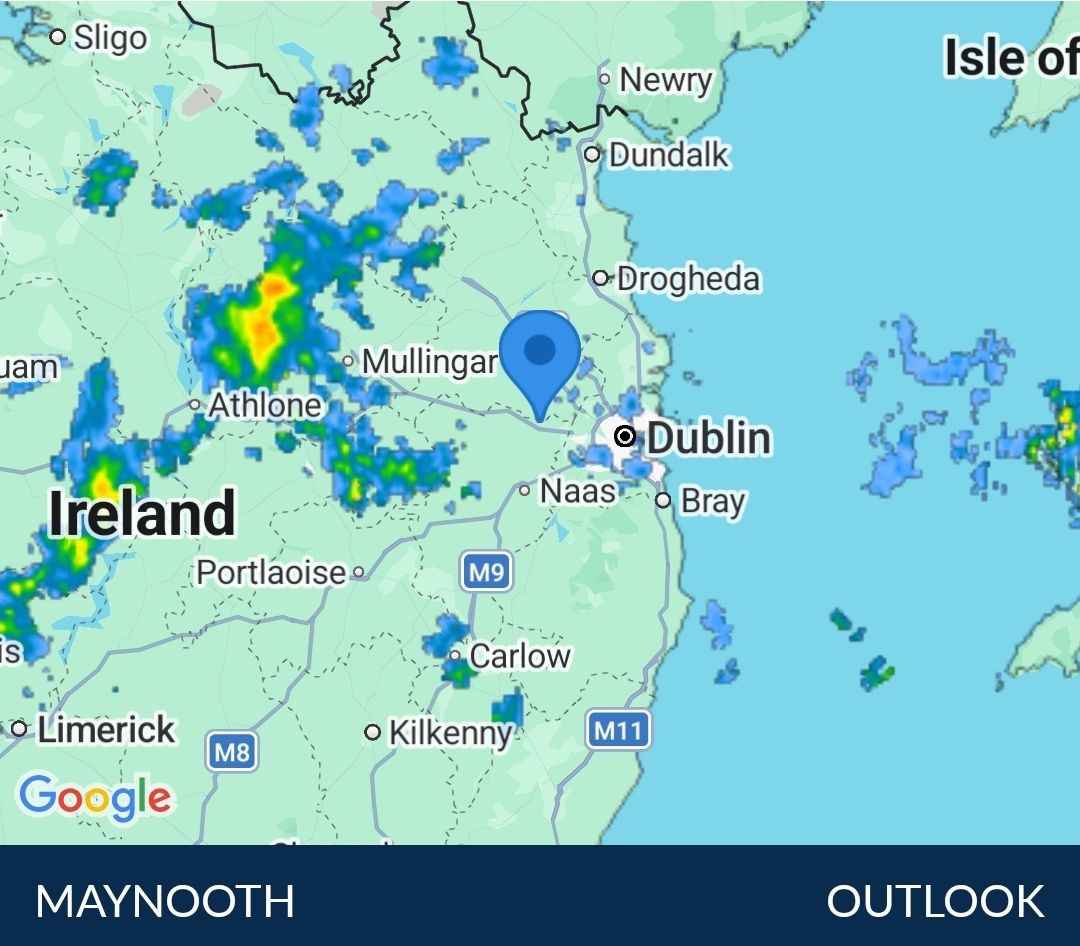
We got some rain at last. On Friday evening I checked the trusty Met Éireann app and saw this:

With a west/northwesterly wind I thought there was a good chance we would get a bit of rain, and so it turned out although to be honest there wasn’t that much. I think the greeny-yellowy blobs missed us. There was enough rain to give the garden a little light refreshment but not to make up for the ongoing hosepipe ban. We’ve had several weeks with next to no rain, which is highly unusual.

I look at the weather outlook quite regularly and have learned one thing in my time in Ireland. The forecast is usually fairly accurate up to about three days in the future but you shouldn’t rely on it beyond that. This week provided a good illustration. Last weekend the forecast predicted rain on Saturday (i.e. yesterday). As the week progressed the forecast changed and rain wasn’t forecast until next Wednesday. Then it rained on Friday evening. Saturday, by the way, was extremely humid: well over 90%.

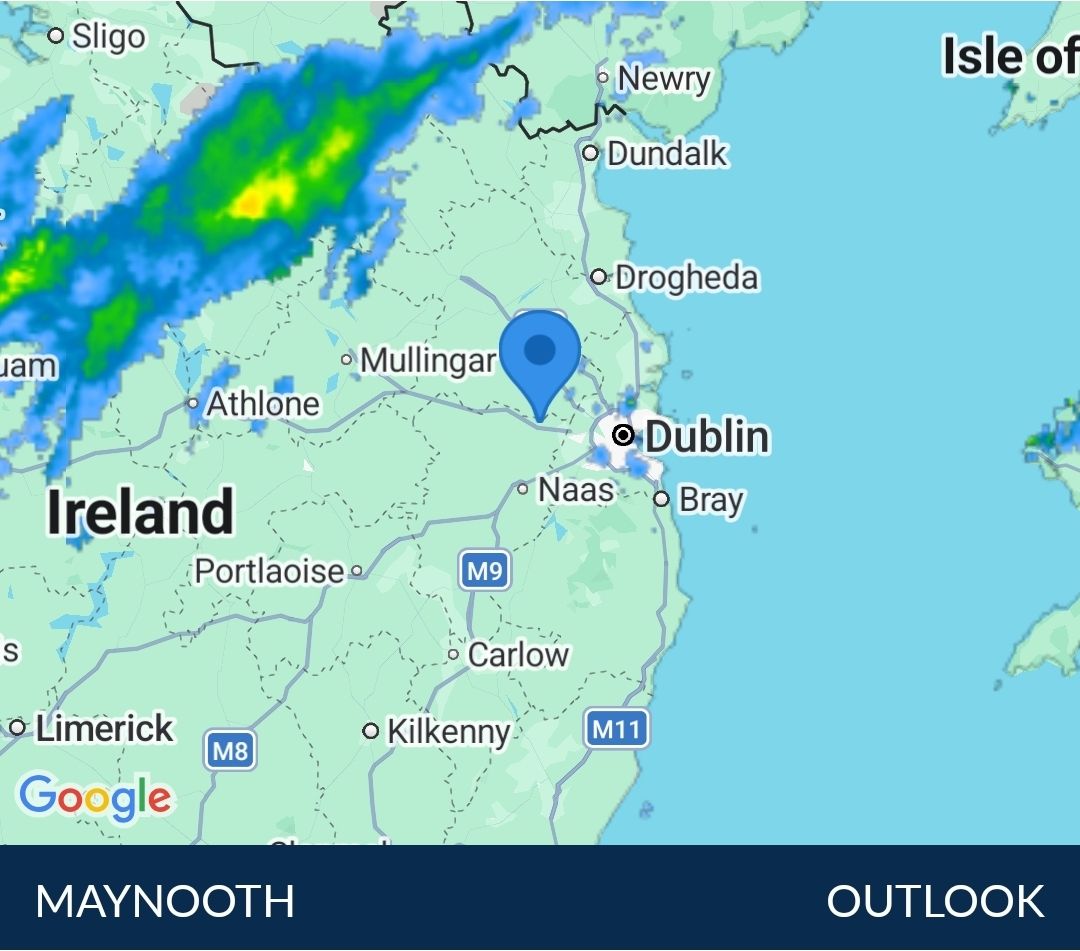
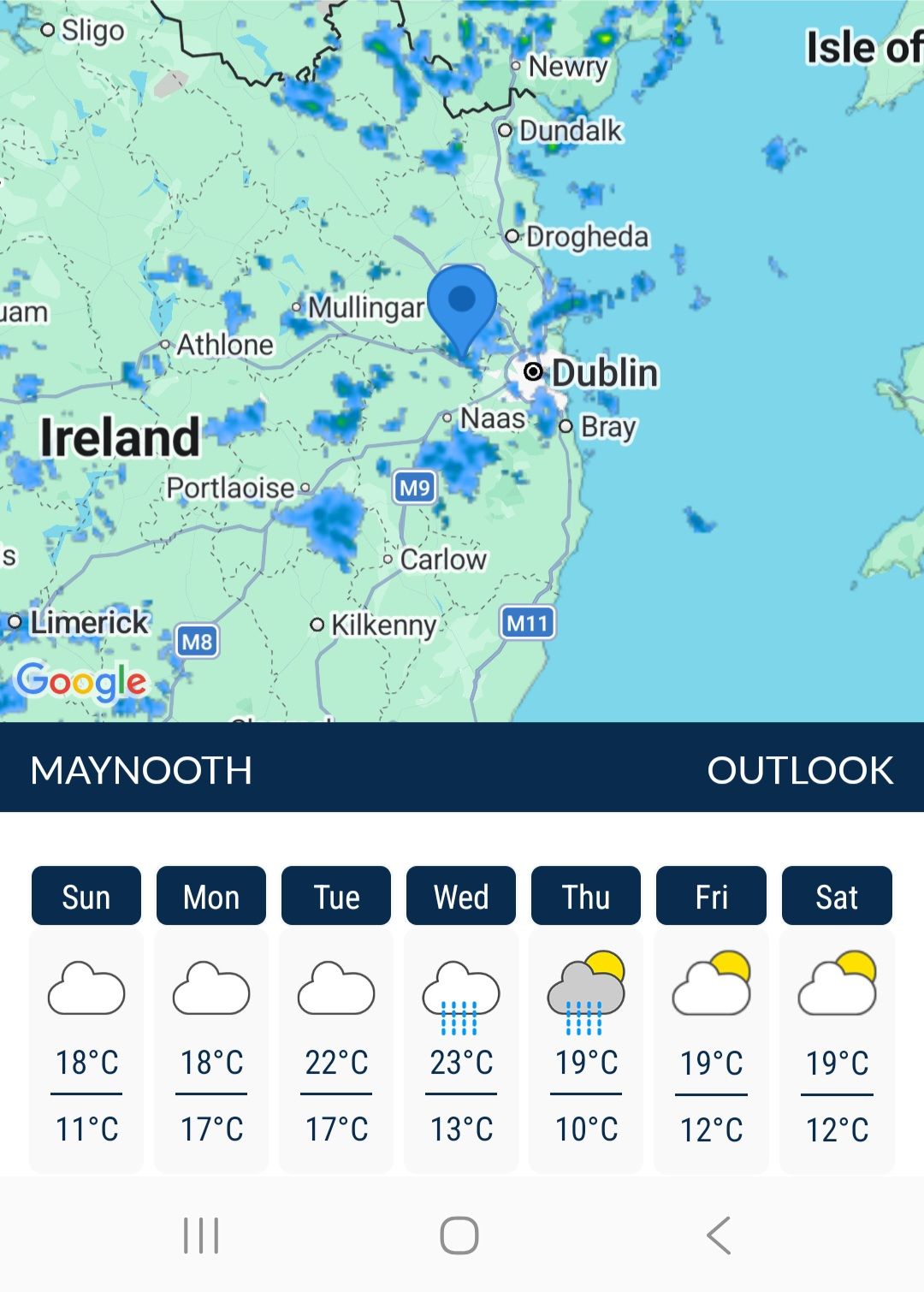
Here’s the outlook from today:

You can see that rain is forecast for Wednesday and Thursday, but the rainfall radar map shows why it is so difficult to predict whether rain will fall at a specific location. The rain clouds are rather small and moving rather quickly; the winds are around 25km/h (westerly). At the time of taking that screen grab there had been some light rain, but will the other blobs hit us? The Met Éireann model says “no” but others may well say “yes”. It’s a tough problem to predict this level of detail.

One thing that I think could be improved is a more reasonable representation of the uncertainty. The outlook for today confidently asserts that the Chance of Preciptation for the rest of today is “0%”. To me that means that it is absolutely impossible that it will rain, and that seems unreasonable to me. Surely there is some chance of rain later today? It doesn’t do much for the credibility of a forecast to claim such certainty. A week or two ago there were no clouds anywhere and “0%” was reasonable, but not today. If it were up to me I’d probably put “<1%” or “<5%” to hedge my bets.

And then there is the question of what amount of rain we’re talking about. I was on campus on Thursday and a few spots of rain fell then. I only noticed because I was outside, coming back from lunch. That was too little to count as real rainfall, but I wonder what the threshold is?

Degrees of Heat

Posted in Maynooth with tags , , , on June 23, 2026 by telescoper

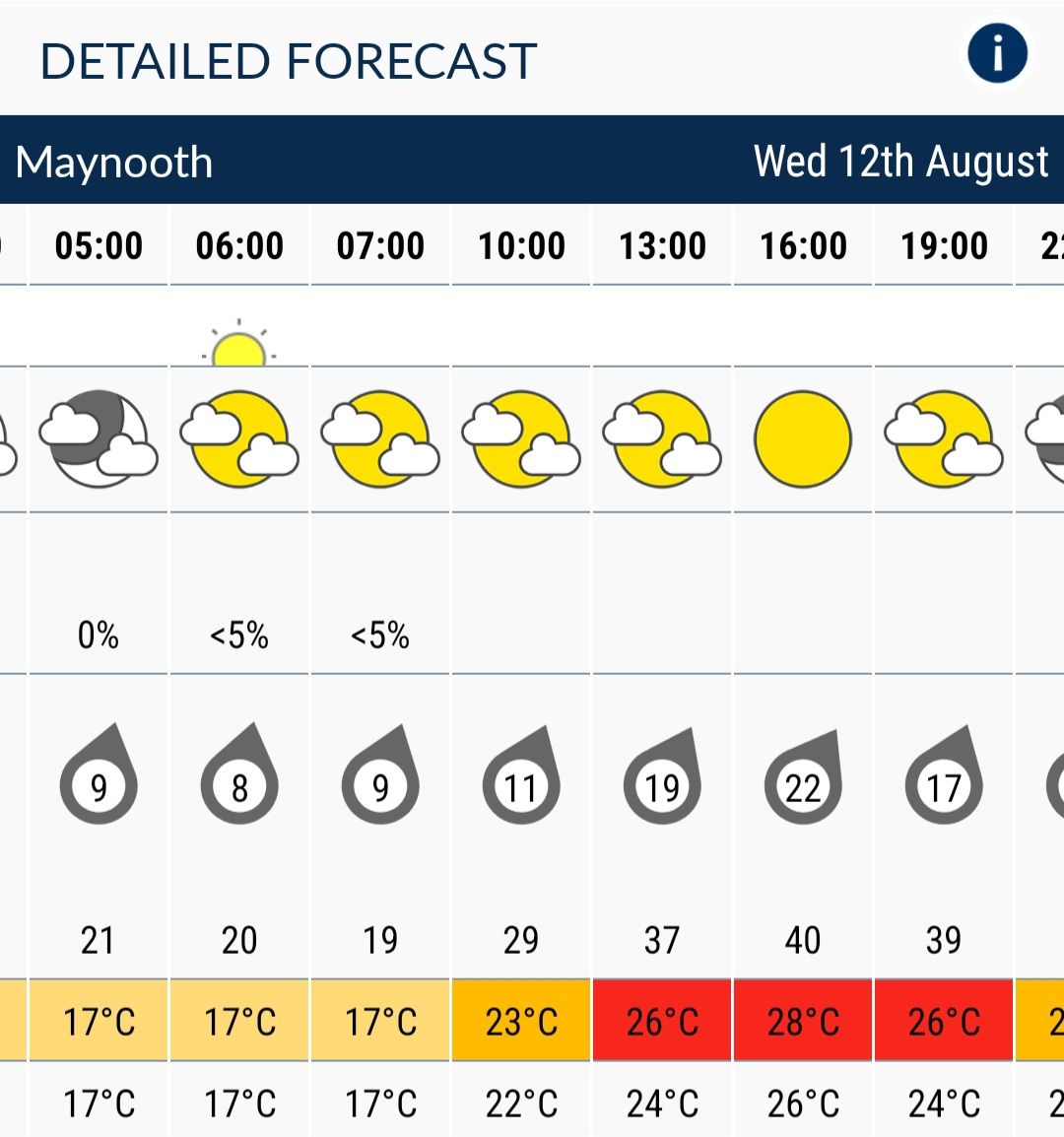
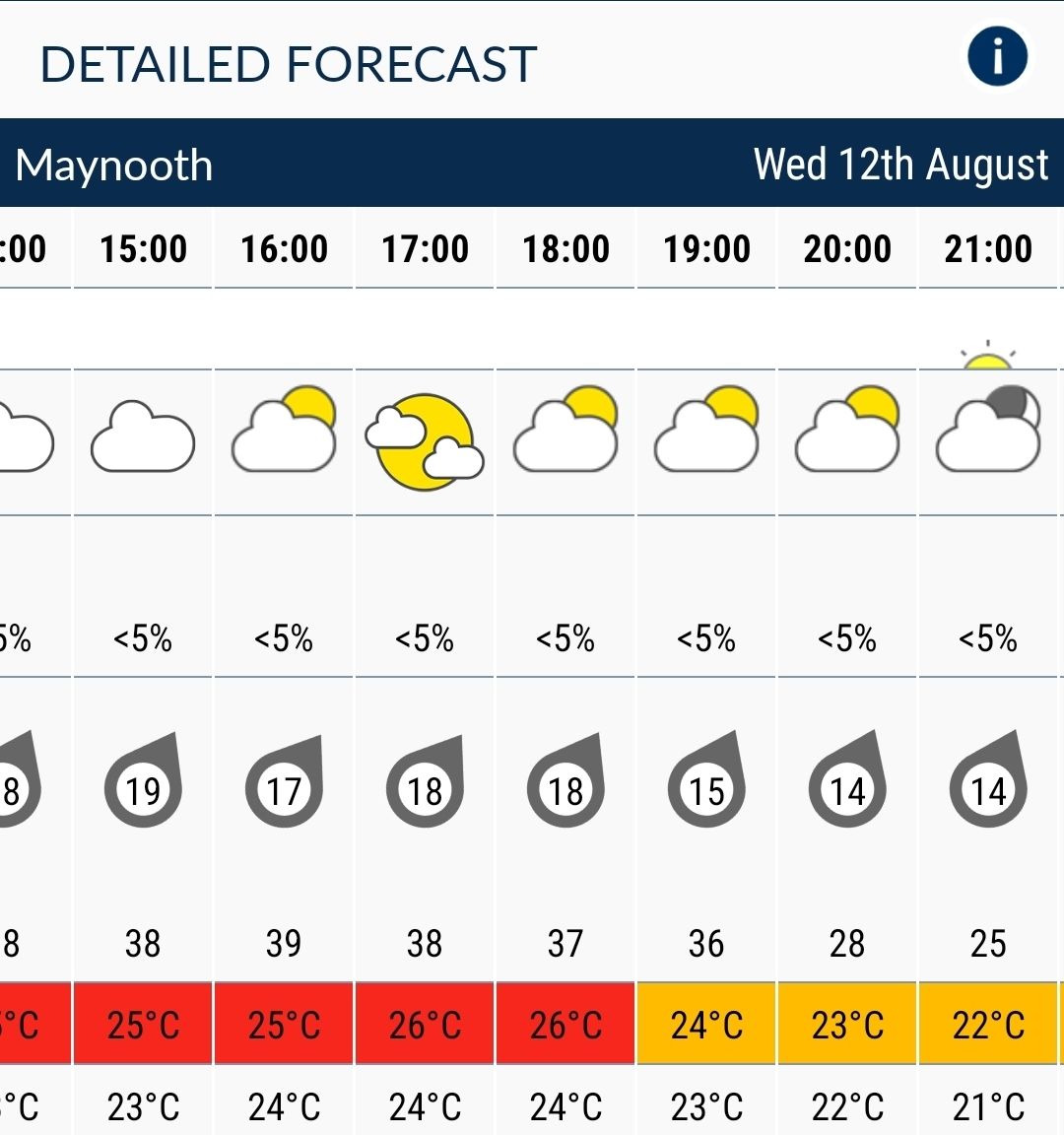
Ireland is on the periphery of the “Heat Dome” which is bringing extremely high temperatures (over 40°C) to mainland Europe and parts of Britain. Temperatures on the Emerald Isle are somewhat lower, warm by Irish standards, but bearable (though it is quite humid).

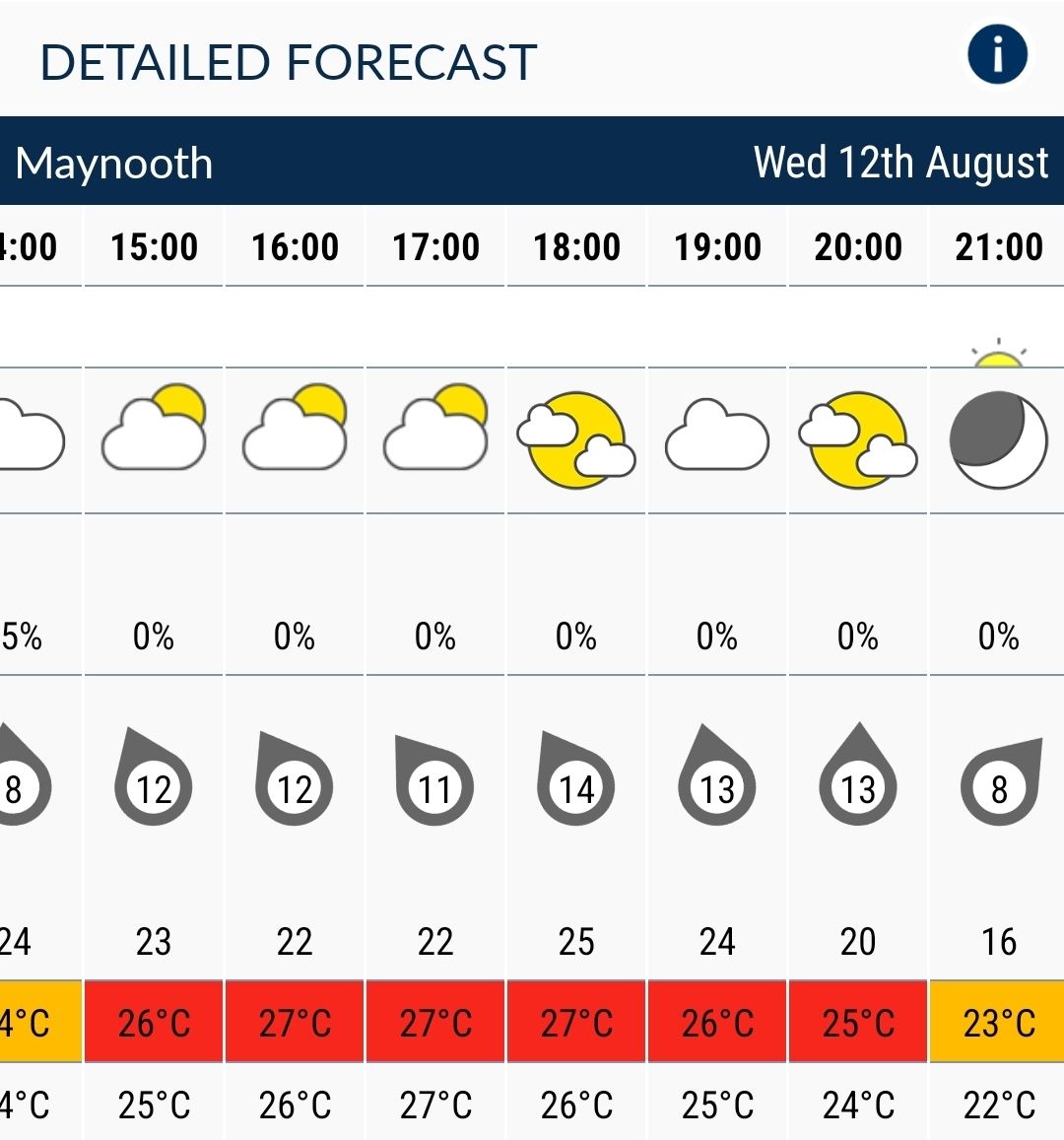
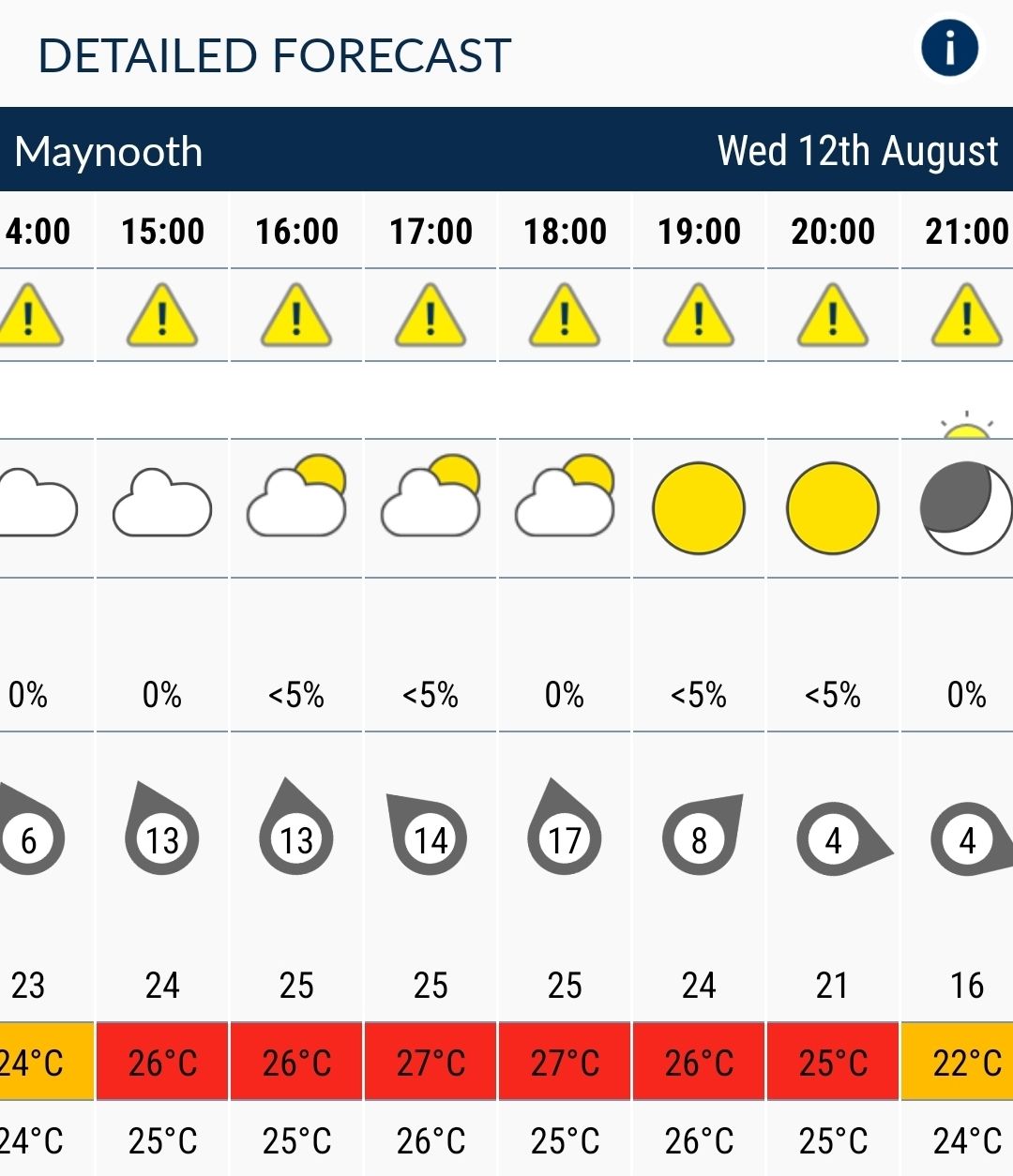
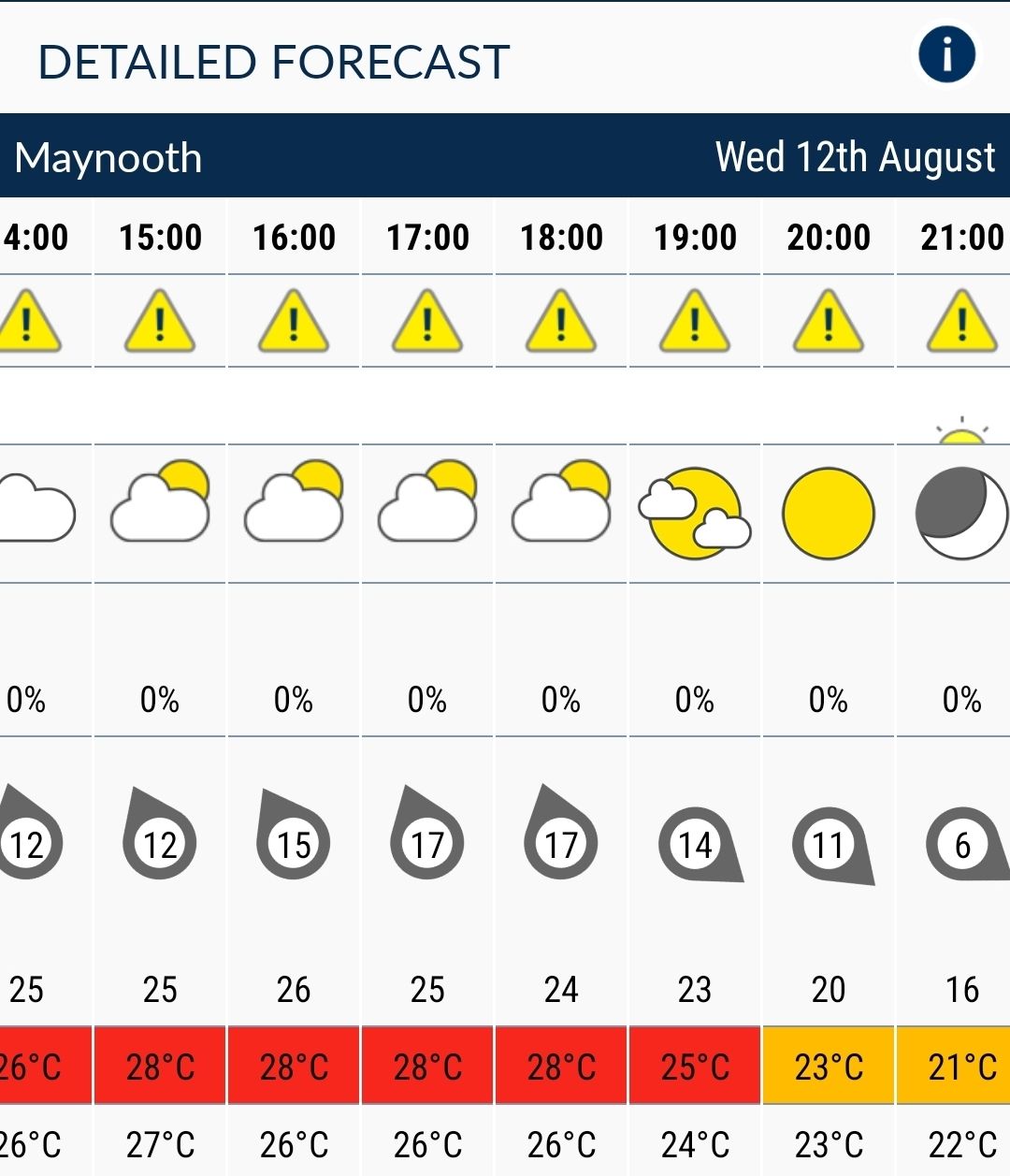
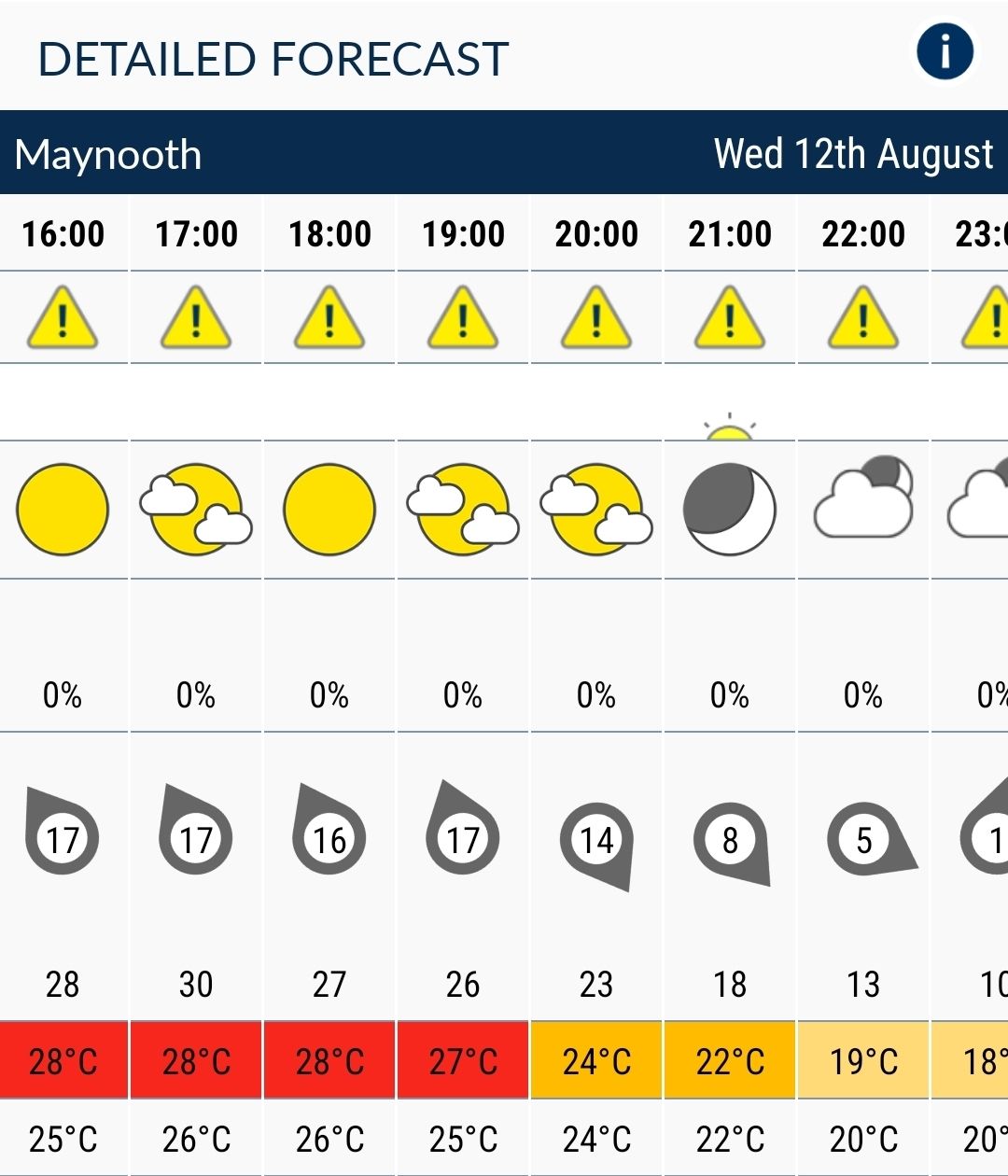
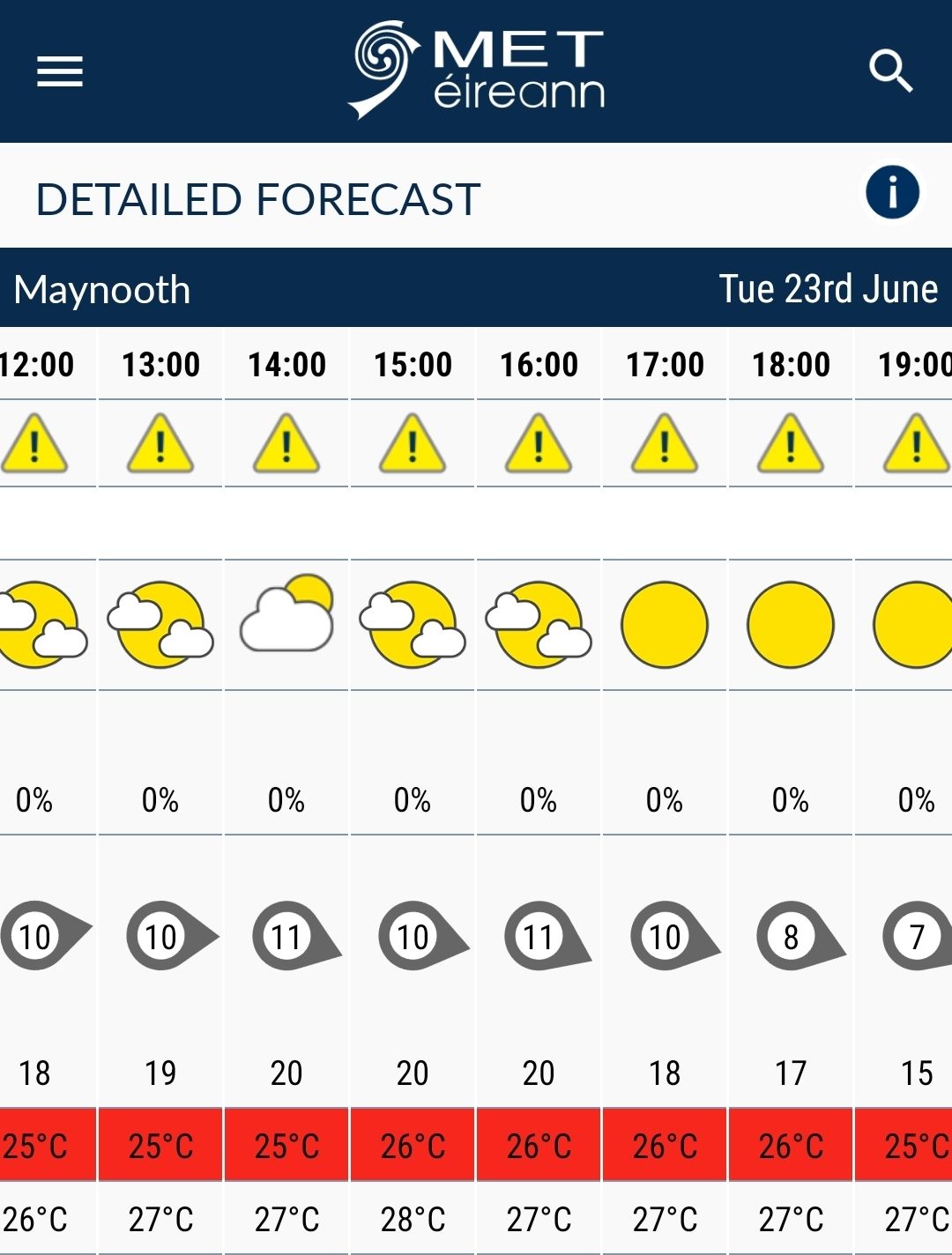
To amuse my friends and colleagues sweltering under the Heat Dome, I thought I’d share this graphic from the Met Éireann weather app:

No doubt it will cause some amusement to see red for danger for temperatures of 25°C!

This type of weather reminds me of the hot summer of 1976, which I remember very well, not least because of the England versus West Indies Test Series that summer. I hadn’t realized until recently that the Windies played a match against Ireland that summer too, in Rathmines. Collis King was out for 24 in the WI first innings, off 6 balls (4 4 6 4 6 out)…

Storm Chandra

Posted in Biographical, Maynooth with tags , , , on January 27, 2026 by telescoper

The Irish news today has been dominated by the arrival of Storm Chandra on these shores, accompanied by strong winds, heavy rain and widespread flooding. The whole country has been under a yellow alert, which will last until 11pm today.

The fact that it had been raining very heavily for days before the storm must have saturated the ground, which would have contributed to the flooding. Unusually, the worst has been on the East Coast, with Counties Wexford, Wicklow,  Carlow, and Dublin badly hit. Usually it’s the West of Ireland that bears the brunt of storms which typically come from across the Atlantic.

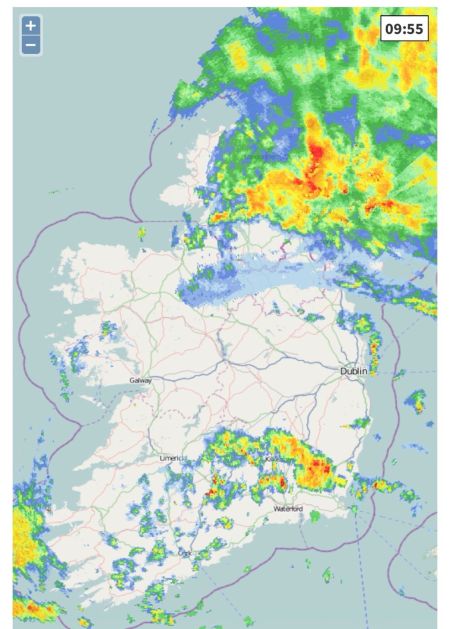
It’s been a strange day in Maynooth because, despite the storm, the weather hasn’t been too bad at all. There was a long window this morning during which it was actually quite sunny and pleasantly mild, though a bit breezy. The picture on the left shows the situation in mid-morning when the prevailing wind was southerly.

The main mass of raincloud to the North had passed over us by then, and the small but intense strip off the Louth/Dublin coast missed Maynooth entirely. You can see a big gap. Rain was heading towards us from the South, and did reach us in the afternoon, though it wasn’t particularly severe. It remained reasonably warm throughout the day, though it is much colder now (I’m writing this at about 7.30pm).

Dublin is only about 25km from Maynooth and it was a surprise to see major flooding, with parts of the M50 flooded for a time while we experienced nothing particularly severe. Not that I’m complaining!

For more about Storm Chandra, including animations of its progress can be found here. It seems that Great Britain had a lot of weather to contend with!

Calling all Irish weather and climate enthusiasts! 

Posted in The Universe and Stuff with tags , , , , on October 16, 2025 by telescoper

Just a quick post to share an opportunity to get involved in a bit of Citizen Science. The inestimable Zooniverse has teamed up with Met Éireann, the Irish National Meteorological Service, in a project called Irish Weather Rescue. Your mission, should you choose to accept it, is to help digitize historical weather records that currently only exist on paper. Currently only a few percent of the available records have been digitised.

The project aims to provide access to valuable data that will improve our understanding of how rainfall patterns have changed over longer timescales and provide context for the changes we see in our current climate and possible future climate. Met Éireann’s archive contains an extensive collection of historical weather observations that include meteorological registers, rainfall registers, climatological reports, weather diaries, monthly weather bulletins and maps. These handwritten paper records are at risk of being lost due to the vulnerability of the original paper documents. By creating a digital copy of these records and extracting the data contained in them we can use the data to monitor climate variability and change, support effective climate risk management and improve climate model projections.

To read more about the project and/or volunteer, see here.