Archive for the Biographical Category

Sydney Calling…

Posted in Biographical with tags , , on February 7, 2024 by telescoper
Zoom calls from Australia are awkward

I know that’s an obvious joke, but I couldn’t resist.

The thing that’s really awkward about Zoom calls from Australia is when the other attendees are in Europe and North America. I had to chair a (Euclid-related) telecon in the early hours of yesterday morning, which wasn’t much fun, though I think it went OK and I did manage to get some sleep afterwards.

Other than that I’ve been remarkably free of jet lag. I had received dire warnings from other colleagues who have made the trip, but it doesn’t seem to have affected me badly at all. By now I’m used to what time it is, though I still have problems with what day it is. That’s because most of the emails I get are sent from Europe and these are generally sent yesterday (my time), i.e. from a place where my today is the sender’s tomorrow. If somebody says “let’s chat tomorrow” that confuses me!

Although I haven’t had much trouble with the time difference, the one thing that I have taken time to adjust to is eating habits. I got on the plane at Abu Dhabi at 10.25pm and once the plane had reached cruising altitude they served dinner (and, of course, wine). The trouble is that was around 7am Sydney time when I should have been having breakfast. I arrived in Sydney around 7pm Sydney time, when I should have had dinner, but all I had was a craving for breakfast (especially coffee). Obviously my stomach wasn’t yet tuned in. Anyway, just two (or is it three?) days later, I’m back to having breakfast at breakfast time and dinner at dinner time so all is well.

University of Sydney, Physics, and Astronomy…

Posted in Biographical, History with tags , , , , on February 7, 2024 by telescoper

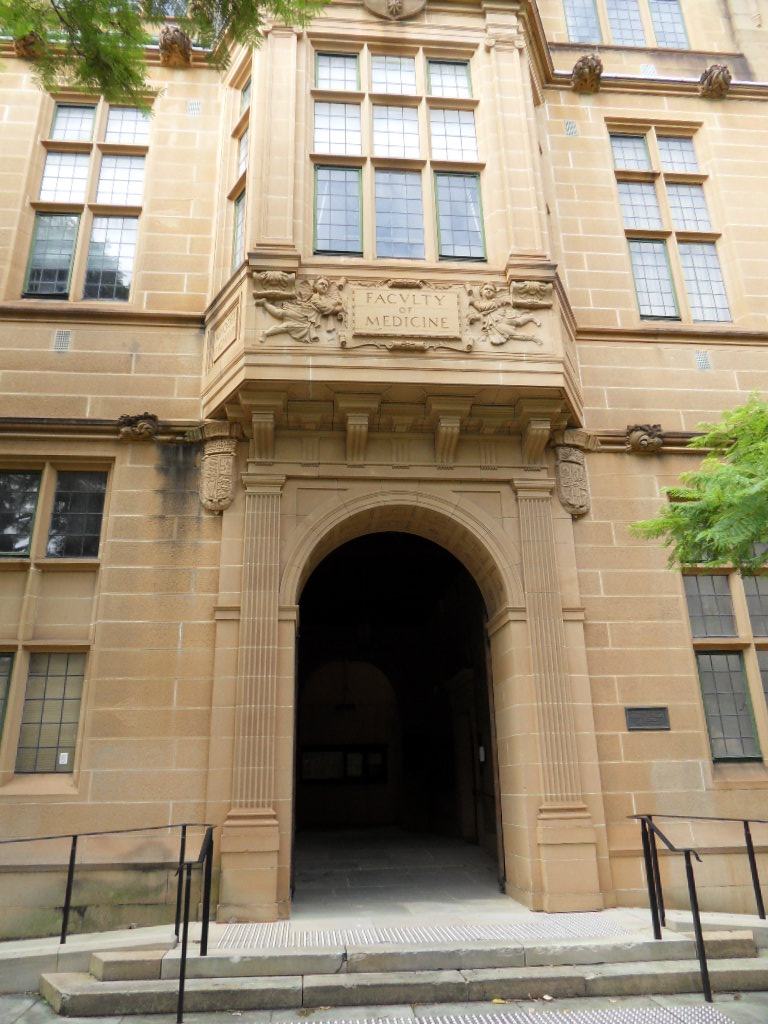
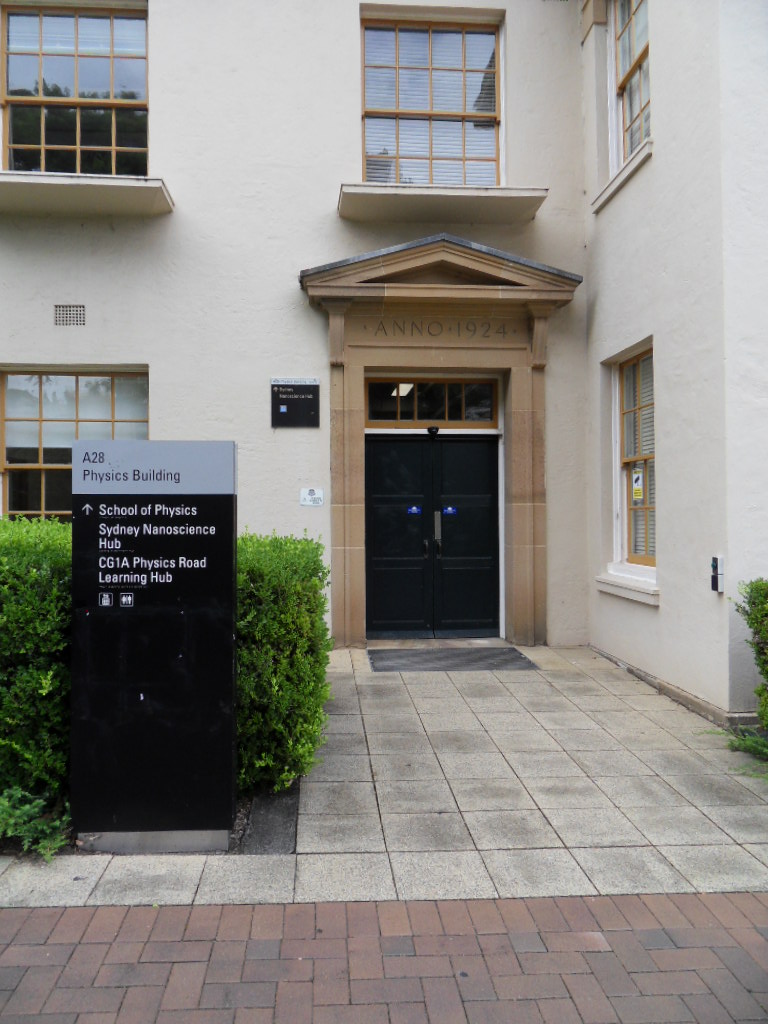
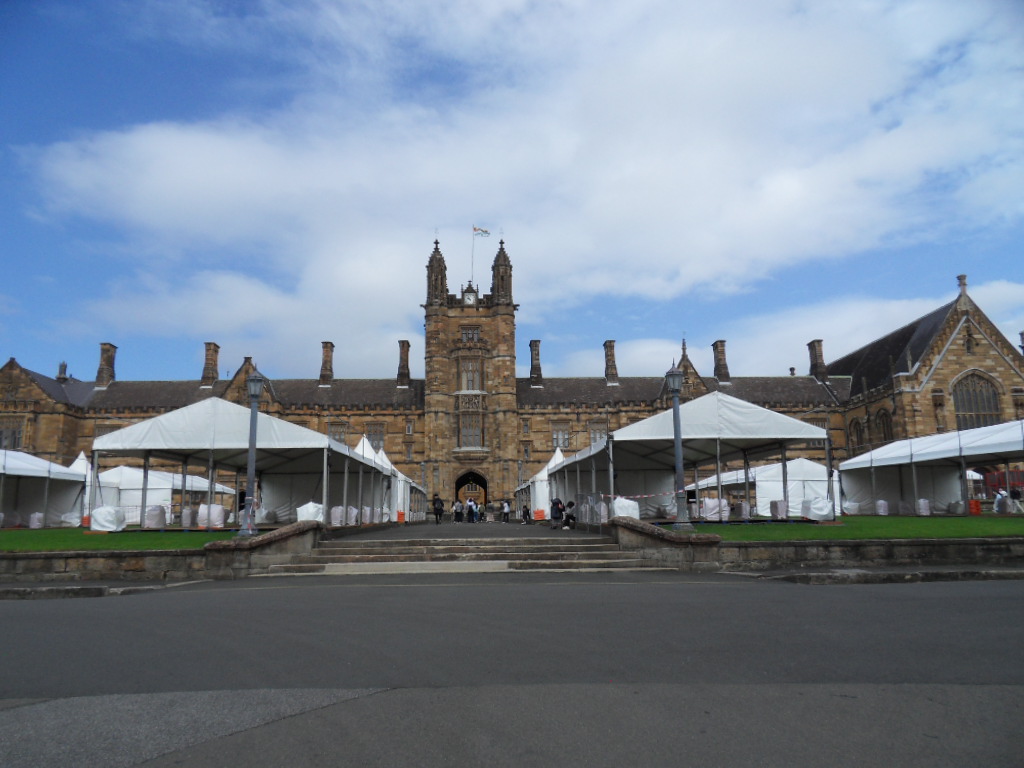
Here’s a gallery of random pictures I took on the way to the Physics Department at the University of Sydney this morning.

The academic year at the University of Sydney is about to start, with the new intake of students beginning to arrive next week and the first lectures taking place the week after that. The rows of tents are for the various student societies which will be hoping to recruit new members. The University was founded in 1850 and the architectural style of the older buildings on campus is what you might call Victorian Gothic Revival. There are also buildings dating from the 1920s, such as the Faculty of Medicine (1922) and the Physics Building (1924); the latter seems much bigger on the inside than the outside, and also has a new building next to it devoted to nanoscience.

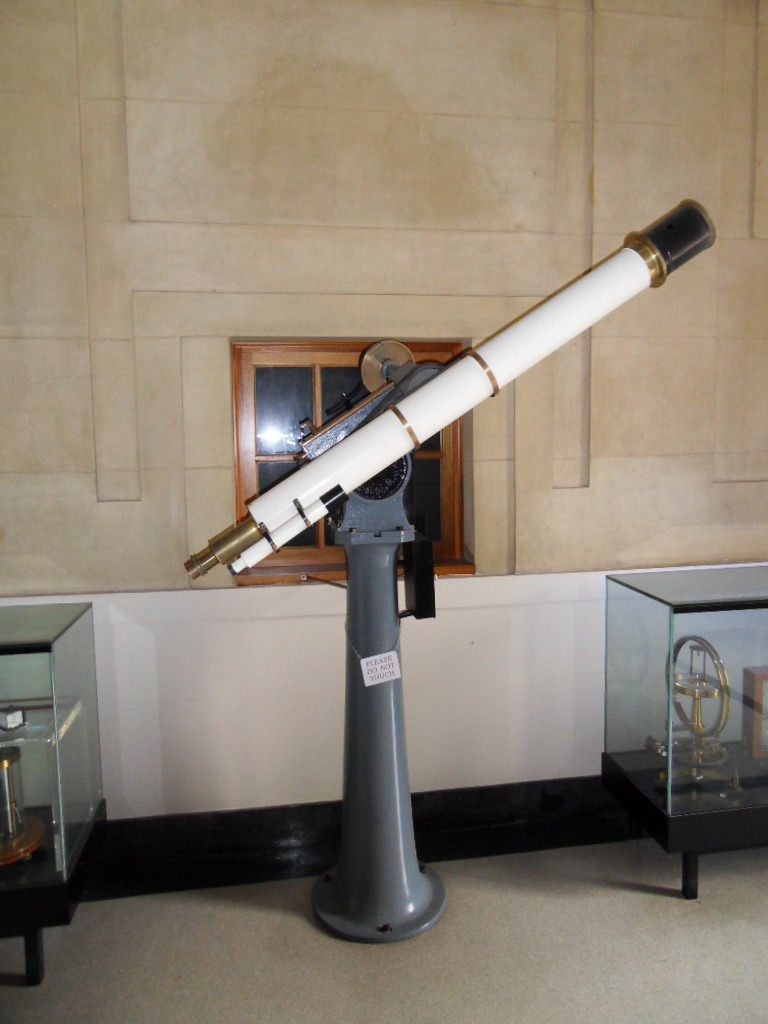
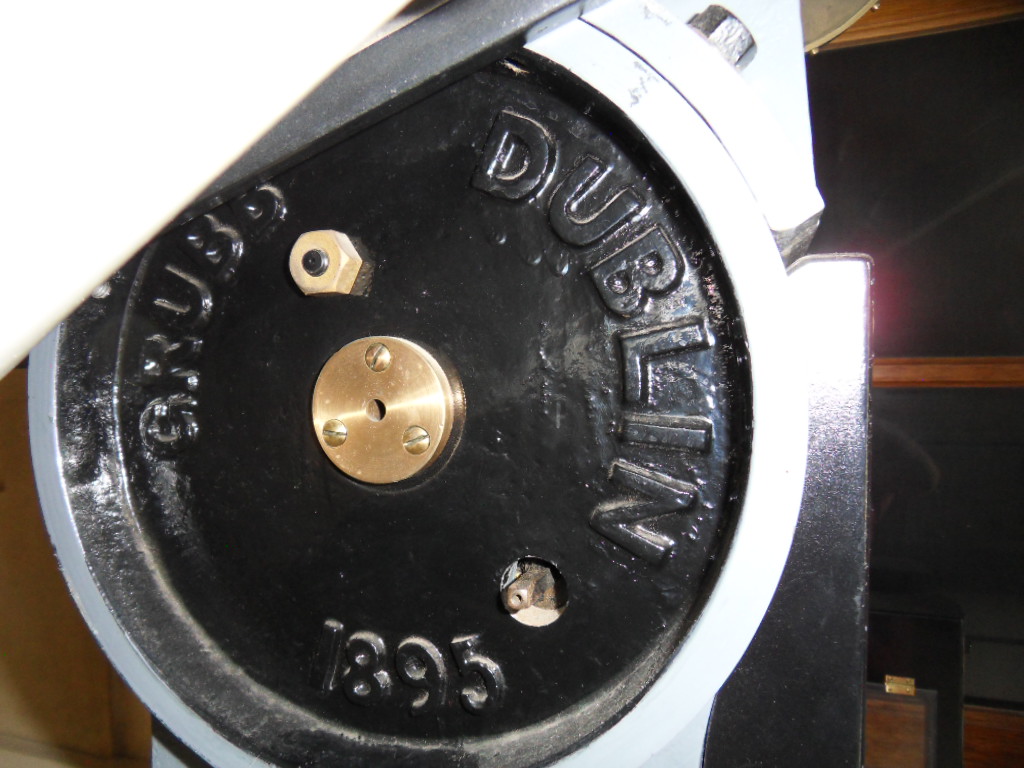
I’ve posted before about the famous optical instrument manufacturer, the Grubb Telescope Company, founded in Dublin by Thomas Grubb and later renamed Grubb Parsons after its relocation to Newcastle upon Tyne. I’ve posted about other connections too, including the presence in the Physics Department in Barcelona of a refracting telescope made by Grubb. Imagine my surprise, then, when I saw yet another Grubb Telescope near the entrance to the Physics building of the University of Sydney, this one made in 1893. This is further evidence – as if it were needed – that, in its time, the Grubb Telescope Company really was the world leader in optical instrumentation.

P.S. The later manifestation of the Grubb Telescope Company – Grubb Parsons – also has Australian connections, including making the primary mirror for the Anglo-Australian Telescope (AAT) and building the UK Schmidt situated next to the AAT at Siding Spring Observatory (about 500 km from Sydney).

Arrived Down Under

Posted in Biographical with tags on February 5, 2024 by telescoper

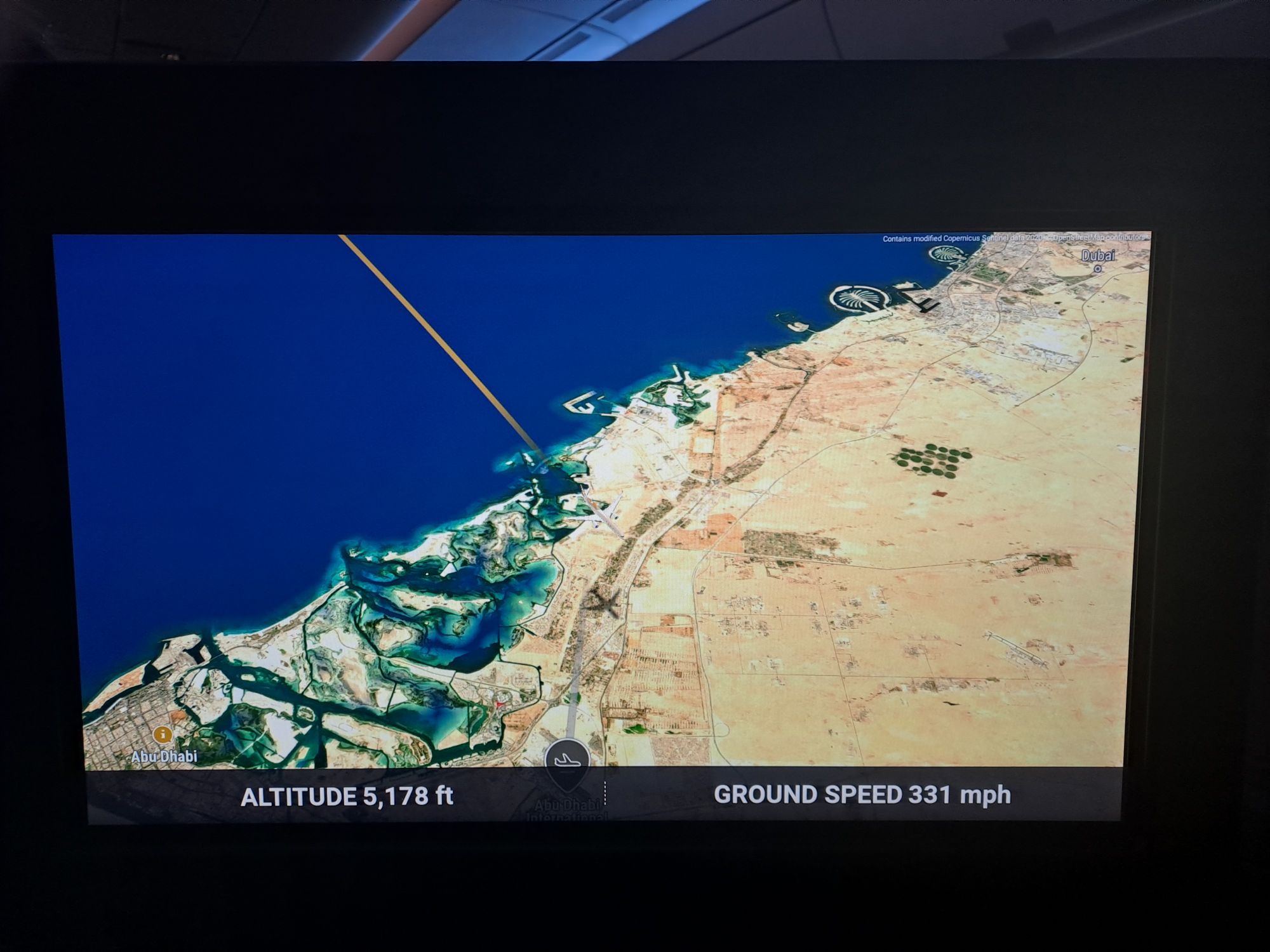
The plane from Abu Dhabi to Sydney set off a bit late but, 13 hours later, arrived slightly ahead of schedule in Sydney at about 7pm local time. I hadn’t quite realized how much of the flight is actually across Australia itself. It’s quite a big place. Who knew? The route took us over Sri Lanka, incidentally.

Australian immigration and customs were a bit of a rigmarole but didn’t really take all that long and once through I took a taxi to the hotel where I’ll be stating for the next month or so. I have a self-catering suite, which is very nice so I’m looking forward to my stay here.

It’s warm in Sydney – about 26° when I landed – but a bit overcast and very muggy. Rain is forecast.

Today is a public holiday in Ireland, the first Monday on or after 1st February. Astronomically speaking this cross-quarter day is about half-way between the Winter Solstice and the Spring Equinox in the Northern Hemisphere. Here of course it’s between the Summer Solstice and the Autumn Equinox, which takes place at the beginning of August in the Northern Hemisphere and is in Ireland sometimes referred to as the start of Autumn. The climate here in Sydney is very different from Ireland, however, and I don’t think anyone thinks of 1st August as Autumn.

Anyway, the flight went really well. I even slept for a few hours so I’m not particularly tired, but I’m still 11 hours out of kilter so I’ll try to stay up as long as possible and get a good night’s sleep to try to reset my internal clock. I plan to go for a walk tomorrow morning to explore my immediate surroundings then head up to the University campus to say hello to Physics Department.

In Transit

Posted in Biographical with tags , on February 4, 2024 by telescoper

So here I am in Abu Dhabi International Airport. It’s about 8.40 pm my time, which is about 4.40 pm GMT. I’ve decided to take the so-called “silly” route to Barcelona to resume my sabbatical (via Sydney Australia), and Abu Dhabi is the first staging post along the way. The flight so far – with Etihad – has been pleasant enough: on time, and with nice food and wine. I wasn’t sure about the in-flight entertainment though. That seemed to consist of a very long cartoon showing a very large aeroplane moving very slowly over a map. Still, there was some nice music to listen to, including some jazz and several Schubert piano sonatas and I’ve got plenty to read.

The first leg was about 7 hours or so, which isn’t too bad. The next bit is almost twice as long and there’s another +7 hrs in terms of time difference. I’m not sure what state I’ll be in when I get to my final destination but I’ll find out by about 7.30pm Sydney time tomorrow.

I’ll update when I get to the other side!

On Imbolc and the Quickening of the Year

Posted in Biographical with tags , , , , , on February 1, 2024 by telescoper

It is 1st February 2024, which means that today is Imbolc, a Gaelic festival marking the point halfway between the winter solstice and vernal equinox in the Northern hemisphere.  Incidentally, the Celts counted each day starting from sunset so Imbolc really started yesterday evening, on 31st January.

In the old pagan calendar, this day is regarded as the first day of spring, as it is roughly the time when the first spring lambs are born, daffodils, etc, start to appear, and the days get noticeably longer.  It is also sometimes called, rather beautifully, The Quickening of the Year.  It’s a time for rebirth and renewal after the darkness of winter.

In the Northern hemisphere, in astronomical terms, the solar year is defined by the two solstices (summer, around June 21st, and winter, around December 21st) and the equinoxes (spring, around March 21st, and Autumn, around September 21st). These four events divide the year into four roughly equal parts of about 13 weeks each. If you divide each of these intervals in two you divide the year into eight pieces of six and a bit weeks each. The dates midway between the astronomical events mentioned above are the cross-quarter days, of which Imbolc is one. They are:

  • 1st February: Imbolc (Candlemas)
  • 1st May: Beltane (Mayday)
  • 1st August: Lughnasadh (Lammas)
  • 1st November: Samhain (All Saints Day)

The names I’ve added in italics are taken from the Celtic/neo-Pagan and, in parenthesis the (English) Christian terms, for the cross-quarter daysThese timings are rough because the dates of the equinoxes and solstices vary from year to year. Imbolc is often taken to be the 2nd of February (Groundhog Day) and Samhain is sometimes taken to be October 31st, Halloween but hopefully you get the point that although the Pagan festivals have been appropriated by the Christian church, they have much older origins. In Ireland Imbolc is usually often referred to a Lá Fhéile Bríde,  St Brigid’s Day, after St Brigid of Kildare, whose Feast Day is 1st February, another appropriation of a much older festival.

Until last year only three of the four cross-quarter days were associated with public holidays in Ireland; there wasn’t a holiday for Imbolc. In 2022 however, the Government decided to create a new Bank Holiday that corrected this anomaly by introducing a new St Brigid’s Day holiday on the first Monday on or after 1st February, which also happens to be the first national holiday in Ireland to be named after a woman. The first such holiday was Monday, 6th February 2023 and the second is on Monday 5th February 2024, by which time I will hopefully be in a place where Northern hemisphere considerations do not apply.

P.S. On a personal note, today is also the 6th anniversary of the very first lecture I gave in Maynooth, on Computational Physics on 1st February 2018…

A Strange Dream

Posted in Biographical with tags , , on January 26, 2024 by telescoper

From time to time on this blog I’ve written about dreams that I’ve had (e.g. here and here). I find dreams rather fascinating but most times when I wake up I don’t remember enough about them to write coherently about. This week, though, I’ve been troubled by a dream I had a few days ago the memory of which has stayed in my brain.

For background, I have had a bit of a cold recently. It’s been nothing serious but has disturbed my sleep a bit and I have dreamt more than usual. One dream, of which I remember only a small part, involved my house being invaded by giant tortoises. Bizarre as that sounds, The Invasion of the Giant Tortoises, didn’t bother me as much as the one I will try to describe now…

In this dream I am at an academic conference of some sort. I am recognized by other people there, attend some talks in lecture theatres, socialize at coffee breaks, join a social dinner, and even go on an excursion by coach with other attendees through a beautiful landscape of mountains, forests and castles.

Nothing particularly weird about that, I suppose. The strange thing is that everywhere I go at this event I have a companion in the form of a young man who is blind. This boy is about twenty to twenty-five years old, with light blond hair, shorter than me, well built and pleasant-looking. His eyes are partly closed and permanently cast to one side. I don’t know his name.

I arrive at the conference with this boy’s arm linked through mine. I sit next to him at talks, sometimes whispering a description of what’s shown on the slides. I get him coffee. When we go to another lecture room we go arm in arm. During the excursion I sit next to him and describe what I can see. He smiles and nods in response. I notice other people looking at us with somewhat patronizing expressions.

Eventually, as dreams do, this all dissolves into some other sequence which I don’t remember. That’s it.

So why do I find this apparently rather innocuous dream so troubling?

The first reason is the identity of the young man. Although I would recognize him if I saw him, as far as I can recall, his face is not one that I’ve ever seen before. Perhaps he is someone I knew a long time ago, or perhaps my subconscious has created a fictional character! His age suggests he might be a student. I have taught blind students before, but I remember them all and he doesn’t resemble any of them. The last time I had a blind student in my class was at Sussex, and I did walk around with him sometimes holding my right arm, e.g. when there were tricky stairs, and was happy to be helpful in that way, but he looked nothing like the boy in the dreams.

More disturbing (to me) than the identity of my sightless companion, however, is what on Earth this dream actually means? Why do I have this boy with me all the time? What does his presence signify? Is it some sort of reference to my sexuality? Nothing at all obviously sexual happens in the dream, by the way, in case you were wondering. I really have no idea how to interpret this!

At this risk of eliciting some strange responses, anyone who has any ideas is welcome to suggest them through the comments box!

UPDATE: An old friend emailed me to say give his interpretation: that a cute blond boy would have to be blind to want to go out with me. Thank you for that.
DIRAC Research Image Competition Winners

Posted in Art, Biographical, The Universe and Stuff with tags , , , , on January 18, 2024 by telescoper

You may recall that last year I posted about the results of the annual Dirac Research Image competition for which I was one of the judges. For those of you who weren’t aware, DIRAC is a high-performance computing facility designed to serve the research community supported in the UK by the Science and Technology Facilities Council (STFC). I was honoured to be invited back to judge the competition this year.

As before, entries to the Research Image Competition were divided into two Themes: Theme 1 (Particle and Nuclear Physics) and Theme 2 (Astronomy, Cosmology and Solar & Planetary Science) and scores were allocated by the judges based on visual impact and scientific interest. Once again, the standard was very high, but there were clear winners in each category. Here they are:

LUCA REALI, MAX BOLEININGER, DANIEL MASON, SERGEI DUDAREV (UKAEA)

DATA INTENSIVE CAMBRIDGE

Molecular dynamics simulations of high-dose radiation damage in tungsten to understand the evolution of the material under fusion reactor conditions. Blue spheres are vacancies (missing-atom defects), orange spheres are interstitials (extra-atom defects). Lines are dislocations (linear crystallographic defect).

Softwares: LAMMPS for simulations, Ovito for the rendering.

JOSH BORROW, FLAMINGO TEAM

MEMORY INTENSIVE DURHAM

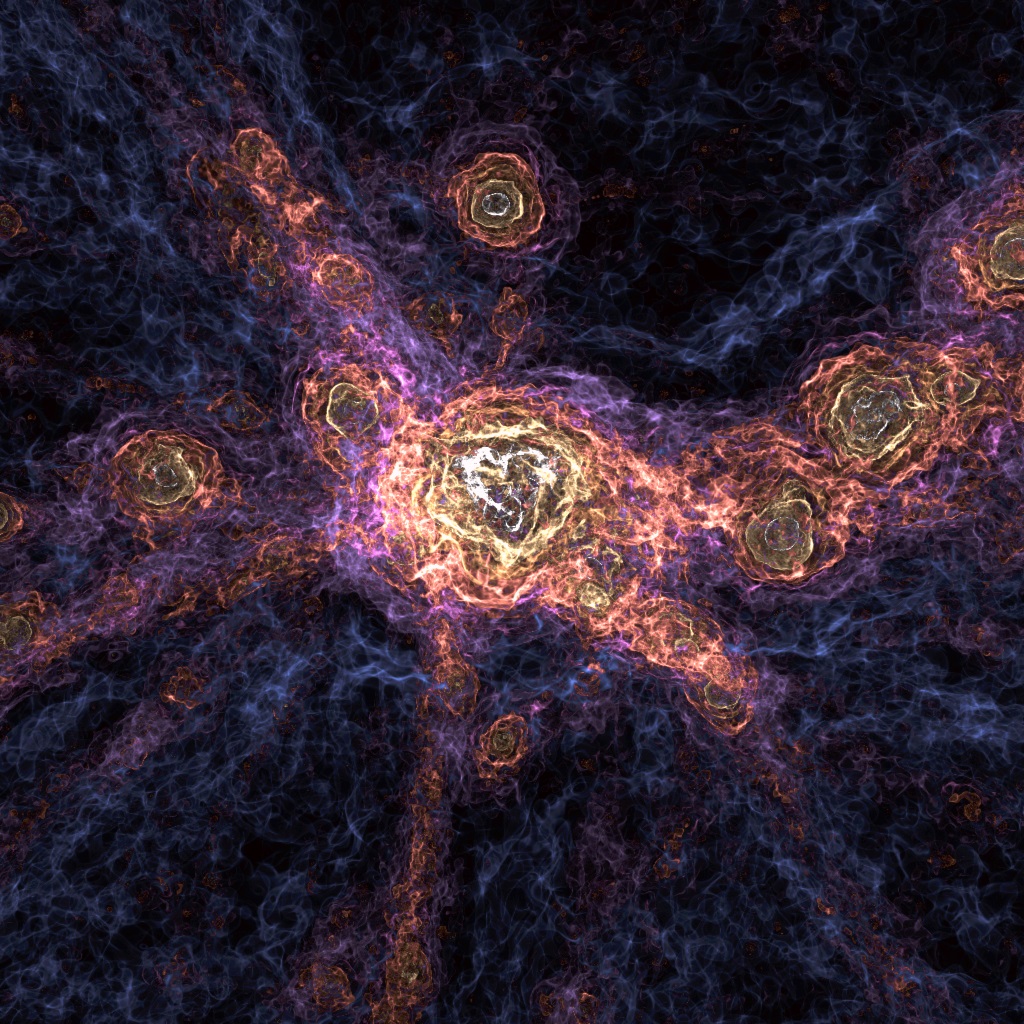
The most massive galaxy cluster in the flagship, 2.8 Gpc, FLAMINGO volume, with each side of the image spanning 40 megaparsecs. Each colour represents a different gas density contour, highlighting the extremely complex spatial and velocity structure of the gas within the cluster. At the center, the gas serendipitously aligns to produce a love heart.

The image was created with DiRAC supported software SWIFT and swiftsimio.

For more details about these images and the other entries see here. The 2024 Dirac Calendar features a selection of the entries.

Congratulations to the winners and indeed all the entrants!

The Club Records

Posted in Biographical with tags , , on January 14, 2024 by telescoper

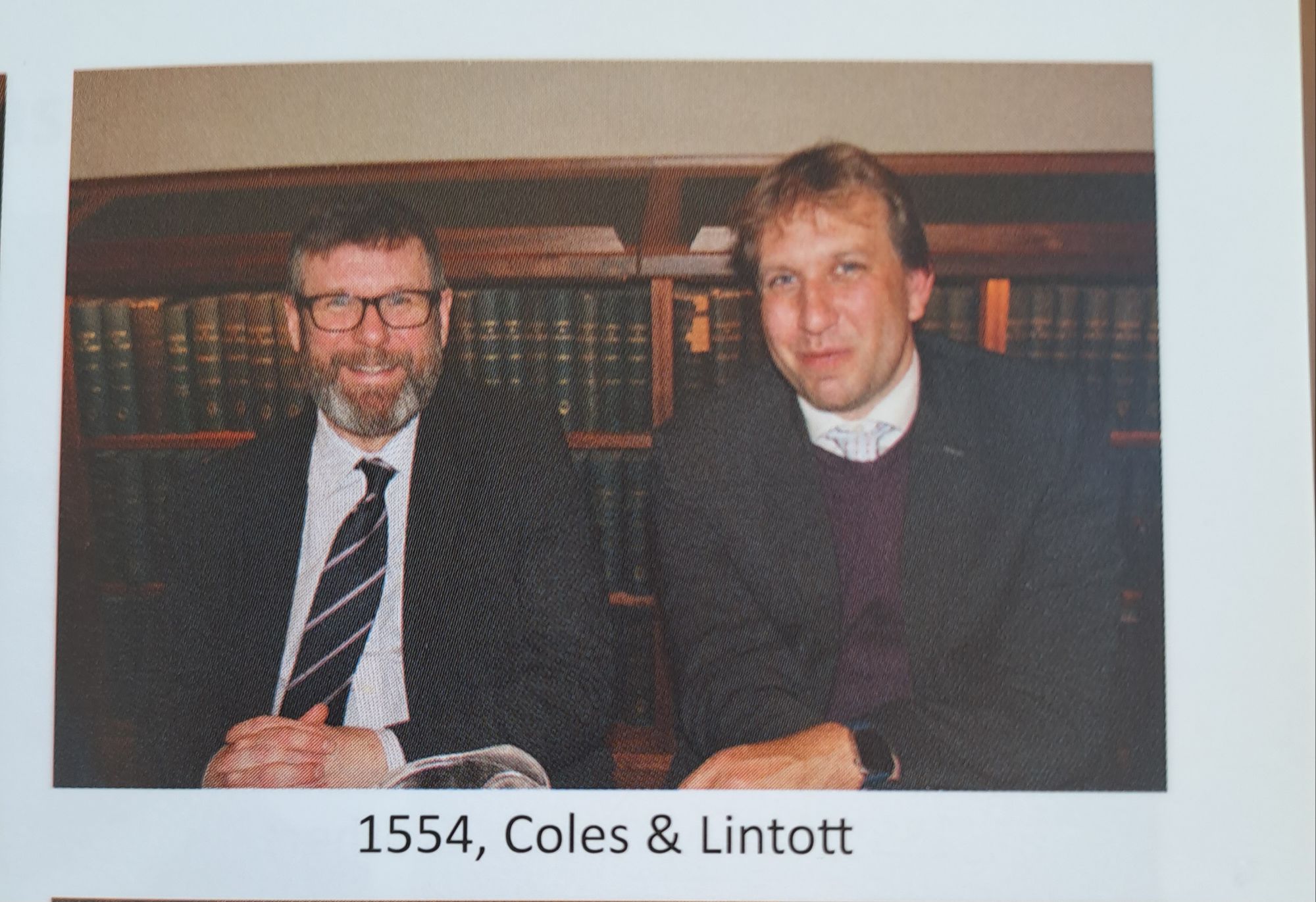
At the R.A.S. Club on Friday I was presented with the latest edition of the Club Records which covers the last 40 years; the Club itself began in 1820. Friday’s dinner was No. 1571, and there are five volumes of records containing lists of everyone who attended each dinner along with descriptions of notable events and a diagram showing who sat next to whom. I only just got the book because pandemic travel restrictions and other matters prevented me from dining much recently.

For the record, I was elected to the Club at the Parish Dinner on 11th January 2008 (Dinner No. 1448) but wasn’t able to dine until October that year (Dinner No. 1453). According to the records I have now dined 60 times (including last Friday). I wonder if I’ll make it to 100?

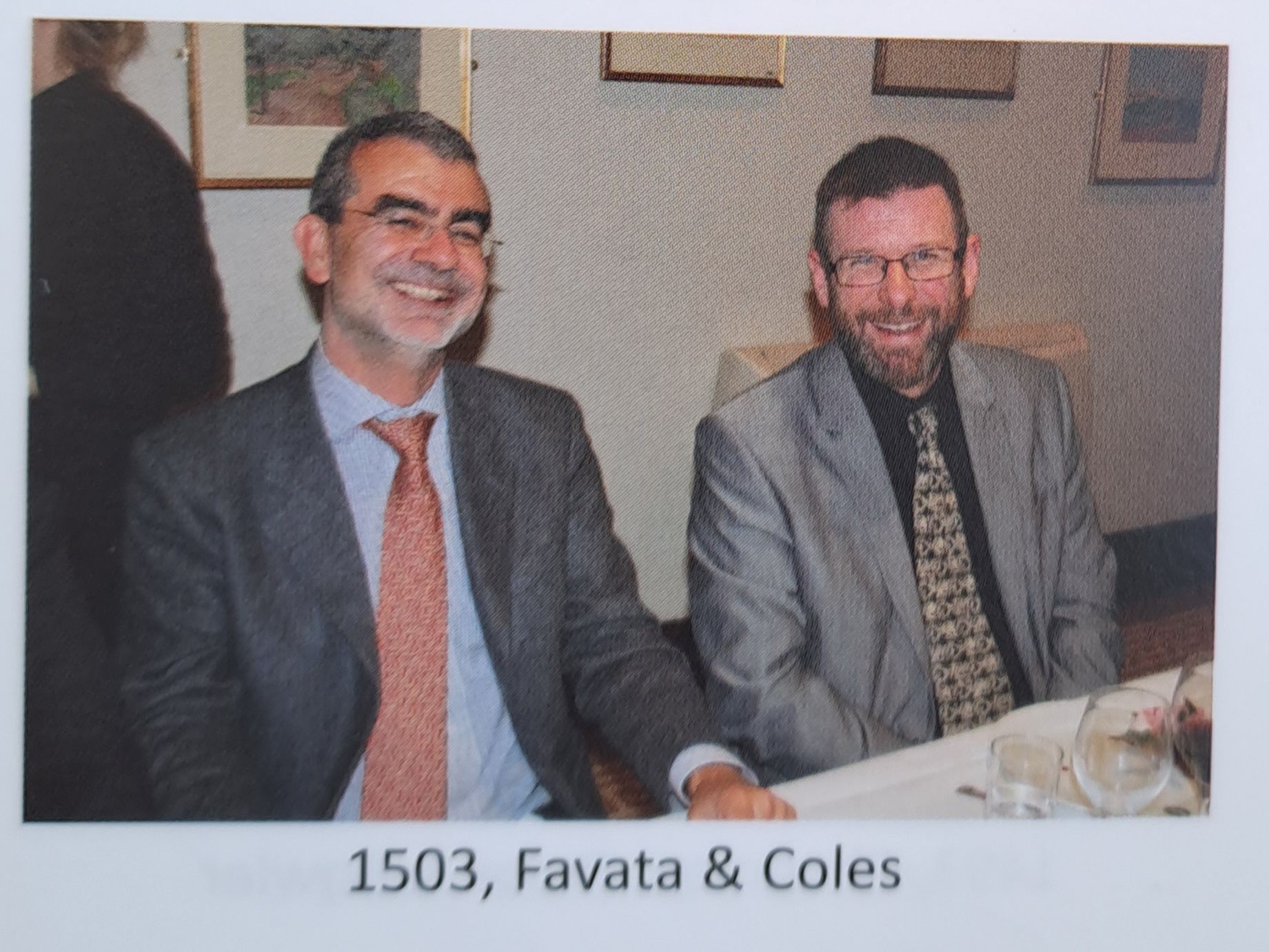
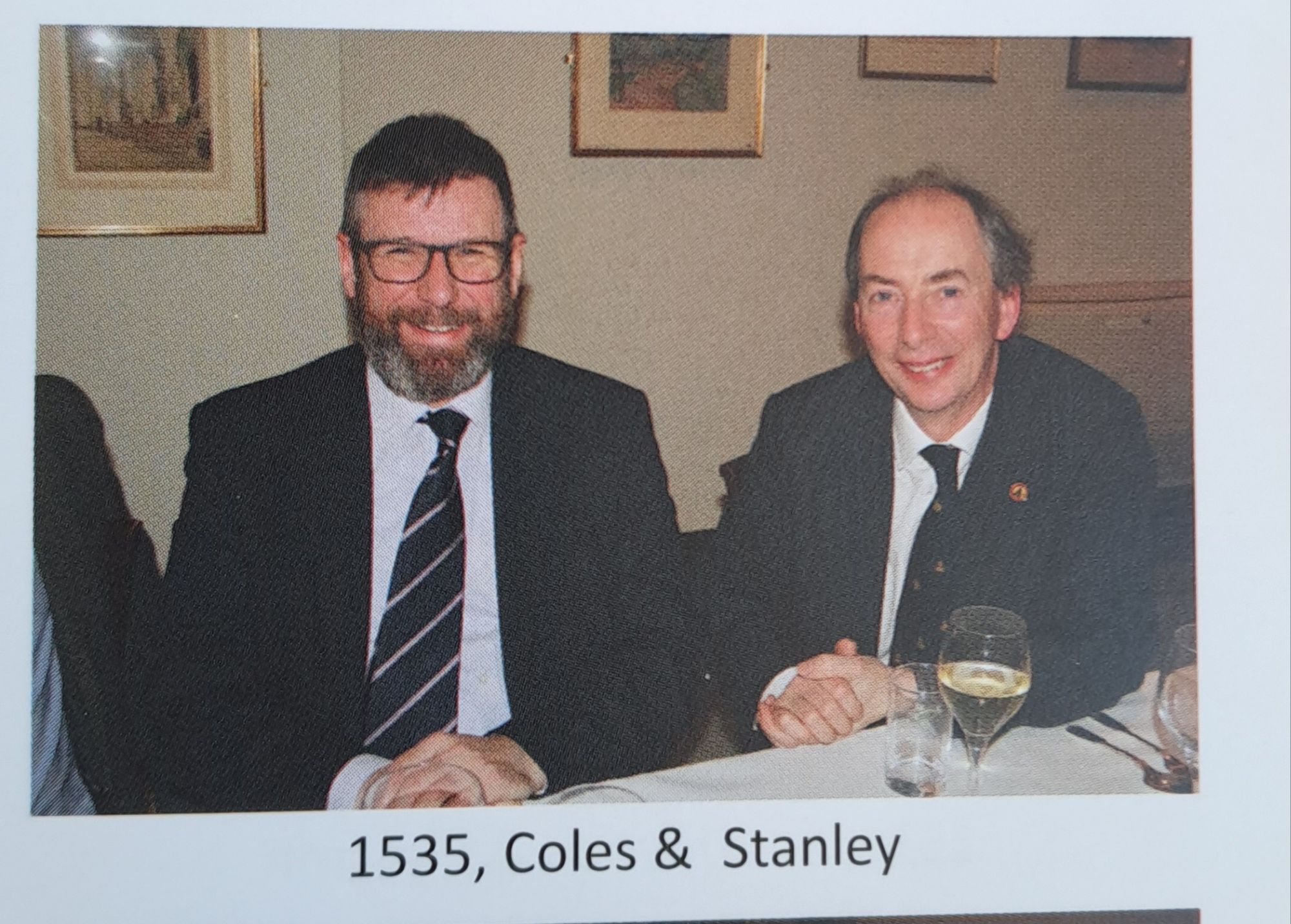
Anyway, here is a selection of pictures taken at Club Dinners past with various other members:

These pictures remind me that I should perhaps consider wearing some different ties in future!

From London

Posted in Biographical with tags , , on January 13, 2024 by telescoper

Here I am in Heathrow Airport waiting for a flight after a couple of days in London.

Every time I visit London it becomes harder to believe that I actually lived there years ago. On Thursday evening I took a stroll around Soho and walked past this place…

I used to be a member at Ronnie Scott’s and spent many late nights there back in the day. It must be about 25 years since I last set foot inside. I must go again for old times’ sake, but I didn’t have time on this trip.

Yesterday (Friday) was a very busy day, but a pleasant one. I spent the morning at a discussion meeting about Simulation based Inference in Astrophysics at which I learnt a lot. I didn’t attend the whole meeting however as I had to take some time out in the afternoon to do other things. I also met up with a couple of people I haven’t seen in person for a while, only to find out later that they both won Royal Astronomical Society Awards. Congratulations, then, to Pedro Ferreira on his Eddington Medal (Pedro is a member of the Editorial Board of the Open Journal of Astrophysics) and Sarah Kendrew for her part in the Team Award given to the MIRI instrument team for JWST.

After that I went to the “Parish Dinner” of the RAS Club at the Travellers in Pall Mall, which is the occasion when new members are elected by an arcane process defined by some truly bizarre rules. Somehow, though, the outcome turned out fine.

Anyway, I’ll soon be en route to a different part of not-Barcelona, so I think I’ll stretch my legs before the flight.

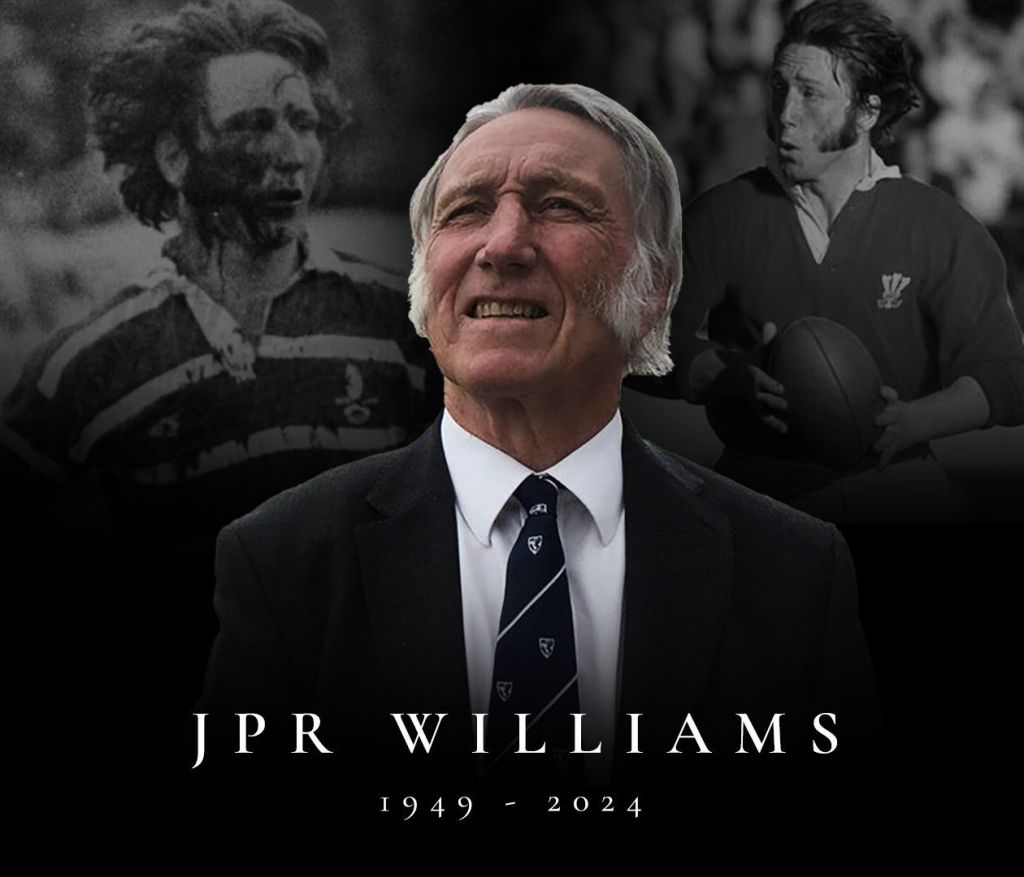
R.I.P. John Peter Rhys (“JPR”) Williams (1949-2024)

Posted in Biographical, Cardiff, R.I.P., Rugby with tags , , , , , , on January 9, 2024 by telescoper

A cold and miserable day in Cardiff yesterday got even sadder when news came out of the death of Welsh rugby legend John Peter Rhys Williams known universally as “JPR” after the winger John James Williams (another great player), joined the national team and became “JJ”. JPR was one of the superb players who dominated Welsh rugby in the 1970s; he stood out even in such exalted company. In my opinion JPR is was the greatest full-back ever.

JPR was instantly recognizable on the field: tall and craggy, with characteristic long hair, prominent sideburns, socks always rolled down around his ankles, he was an imposing figure whether patrolling the defensive lines or stepping up to join the attack. In the famous 1973 match in Cardiff between The Barbarians and New Zealand he was described by commentator Cliff Morgan as “a man who never shirks his responsibility”. Just watch the memorable opening try where you’ll see JPR in the thick of the action, twice shrugging off dangerous tackles around his neck, the second time receiving the ball from Phil Bennett to start the passing move from deep inside his own half.

Many people forget that the man himself scored a great try in that game too:

(Note the involvement of David Duckham in that move; he passed away just a year ago.)

As a full-back, JPR was often the last line of defence. Sometimes, tidying up after a kick from the opposition, he would clear his lines by kicking. More often, though, he would spot a weakness and go charging forward, ball in hand, not afraid to run straight at the opposition. He was quick to spot gaps in his own defence too, rushing to provide cover, often with last-ditch try-saving tackles.

As good as he was at turning defence into attack, he was even better when his side were already in control. Here are two tries he scored for Wales against England in 1976 that demonstrate his superb positional sense in attack as well as his sheer physical strength.

(Wales achieved a Grand Slam in 1976; England got the Wooden Spoon.)

JPR was a tough, aggressive and uncompromising man on the field – players certainly knew when he’d tackled them! – but a gentleman off it, and held in a very high regard throughout the rugby world and beyond. His loss is immeasurable. One by one the legends are leaving us. The world is poorer without them.

Rest in peace, J.P.R. Williams (1949-2024)

P.S. When living in Cardiff years ago I had the pleasure of meeting and talking with two Welsh rugby legends, Gerald Davies and Phil Bennett (the former at a function, the latter at a book-signing). Both were charmingly modest men. I never really met JPR properly but I remember vividly stepping out of my house in Pontcanna on a Six Nations match day and finding myself face-to-face with him in the street. He must have been around 60 then and was still the same imposing figure he was in the 1970s. I recognized him immediately. I wanted to say something and perhaps even shake his hand, but I was too star-struck.

P.P.S. JPR was a fully-qualified orthopaedic surgeon and a Fellow of the Royal College of Surgeons. This is a reminder that back in the 1970s, Rugby Union was still an amateur game.