Archive for the Biographical Category

Back to Electromagnetism

Posted in Biographical, Education, Maynooth, The Universe and Stuff with tags , , , on February 1, 2022 by telescoper

So today I gave my first lecture of the new Semester, it being a gentle reintroduction to Maxwell’s equations for a 4th-year class on Advanced Electromagnetism. They have seen these equations before but it doesn’t do any harm to spend a bit of time refreshing the memory. In what follows I do some potential theory, applications to electrostatics (method of images, multipole expansions, use of the complex potential, etc), dielectric materials and polarization, magnetostatics, relativistic formalism of electromagnetism, gauge invariance, electromagnetic radiation and energy transport, and (if time) plasma physics (if time).

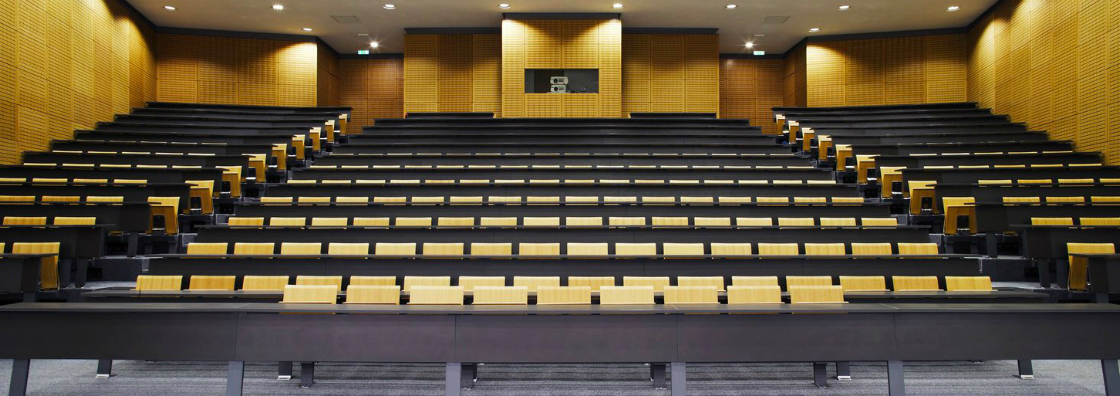
When I taught this module last year I did it all remotely from home – using the blackboard shown above – but this year until further notice I’ll be doing it in person in an actual lecture theatre, though I will be recording the lectures in case any students wish to look at them again for revision, etc, and webcasting them for any students unable to attend on campus. I know there are differences of opinion on this, but I think recording of lectures should become routine practice – as it is in all UK universities I’m aware of – but that is difficult here in Maynooth because the equipment available is inadequate (by which I mean virtually non-existent). Let’s hope the necessary investment will be made at some point.

Back Pain

Posted in Biographical, Maynooth with tags on January 28, 2022 by telescoper

I broke a 170-day blogging streak yesterday (Thursday) by failing to post anything. The reason for this lapse was that on Wednesday evening I started to experience very painful back spasms which carried on all night and made it almost impossible to get any sleep. It seems only very slight movements would trigger one of these, so it wasn’t just getting into and out of bed that caused problems: even adjusting my sleeping posture triggered a stabbing pain. Getting out of bed involved various abortive attempts to twist and slide into a position from which I could stand before finally managing to find one that minimised the pain. Standing up was OK, but the transition to sitting or lying, or walking, was perilous. As was getting dressed…

I had to be on campus in the morning so I made my way there gingerly and did what I had to do, but sitting in a chair was even more difficult than lying down, and I wasn’t getting anything useful done, so I decided to go home, try to get some rest and hope a bit of natural healing would mend whatever had gone wrong.

I’ve had such spasmodic attacks before though it has been a while since the last one, and they haven’t usually been quite so painful. In the past they’ve usually lasted just a few days and I hoped that would be the case this time too, especially because I have to start teaching on Monday! Luckily that seems to be true, as this morning I found I could get out of bed much more easily than yesterday. I am still getting twinges but, fingers crossed, I think it will pass.

As to what brought this all on, I have no idea.

What’s the difference between Astronomy and Astrophysics?

Posted in Biographical, Education, Maynooth, The Universe and Stuff on January 24, 2022 by telescoper

I’ve been a bit busy today but I did notice at lunchtime that an old question has been going around on Twitter which gives me the excuse to post an old answer to it, what’s the difference between Astronomy and Astrophysics? This is something I’m asked quite often, and have blogged about before, but I thought I’d repeat it here for those who might stumble across it.

The Oxford English Dictionary gives the following primary definition for astronomy:

The science which treats of the constitution, relative positions, and motions of the heavenly bodies; that is, of all the bodies in the material universe outside of the earth, as well as of the earth itself in its relations to them.

Astrophysics, on the other hand, is described as

That branch of astronomy which treats of the physical or chemical properties of the celestial bodies.

So astrophysics is regarded as a subset of astronomy which is primarily concerned with understanding the properties of stars and galaxies, rather than just measuring their positions and motions.

It is possible to assign a fairly precise date when astrophysics first came into use in English because, at least in the early years of the subject, it was almost exclusively associated with astronomical spectroscopy. Indeed the OED gives the following text as the first occurrence of astrophysics, in 1869:

As a subject for the investigations of the astro-physicist, the examination of the luminous spectras of the heavenly bodies has proved a remarkably fruitful one

The scientific analysis of astronomical spectra began with a paper by   William Hyde Wollaston in the Philosophical Transactions of the Royal Society Vol. 102, p. 378, 1802. He was the first person to notice the presence of dark bands in the optical spectrum of the Sun. These bands were subsequently analysed in great detail by Joseph von Fraunhofer in a paper published in 1814 and are now usually known as Fraunhofer lines.  Technical difficulties  made it impossible to obtain spectra of stars other than the Sun for a considerable time, but  William Huggins finally succeeded in 1864. A drawing of his pioneering spectroscope is shown below.

Meanwhile, fundamental work by Gustav Kirchoff and Robert Bunsen had been helping  to establish an understanding of the spectra produced by hot gases.  The identification of features in the Sun’s spectrum  with similar lines produced in laboratory experiments led to a breakthrough in our understanding of the Universe whose importance shouldn’t be underestimated. The Sun and stars were inaccessible to direct experimental test during the 19th Century (as they are now). But spectroscopy now made it possible to gather evidence about their chemical composition as well as physical properties. Most importantly, spectroscopy provided definitive evidence that the Sun wasn’t made of some kind of exotic unknowable celestial material, but of the same kind of stuff (mainly Hydrogen) that could be studied on Earth.  This realization opened the possibility of applying the physical understanding gained from small-scale experiments to the largest scale phenomena that could be seen. The science of astrophysics was born.

One of the leading journals in which professional astronomers and astrophysicists publish their research is called the Astrophysical Journal, which was founded in 1895 and is still going strong. The central importance of the (still) young field of spectroscopy can be appreciated from the subtitle given to the journal:

Initially the branch of physics most important to astrophysics was atomic physics since the lines in optical spectra are produced by electrons jumping between different atomic energy levels. Spectroscopy of course remains a key weapon in the astrophysicist’s arsenal but nowadays the term astrophysics is taken to mean any application of physical laws to astronomical objects. Over the years, astrophysics has therefore gradually incorporated nuclear and particle physics as well as thermodynamics, relativity and just about every other branch of physics you can think of.

I realize, however, that this  isn’t really the answer to the question that potential students want to ask. What they (probably) want to know is what is the difference between undergraduate courses called Astronomy and those called Astrophysics? The answer to this one depends very much on where you want to study. Generally speaking the differences are in fact quite minimal. You probably do a bit more theory in an Astrophysics course than an Astronomy course, for example. Your final-year project might have to be observational or instrumental if you do Astronomy, but might be theoretical in Astrophysics.  If you compare the complete list of modules to be taken, however, the difference will be very small.

Over the last twenty years or so, most Physics departments in the United Kingdom have acquired some form of research group in astronomy or astrophysics and have started to offer undergraduate degrees with some astronomical or astrophysical content. My only advice to prospective students wanting to find which course is for them is to look at the list of modules and projects likely to be offered. You’re unlikely to find the name of the course itself to be very helpful in making a choice.

To confuse things further, here in Maynooth there is a degree programme called Physics with Astrophysics which is taught primarily by the Department of Experimental Physics and has a heavy focus on observational techniques. If students want to do the interesting theoretical bits of Astrophysics, such as black holes and general relativity, they have to choose  options with the Department of Theoretical Physics.  As a theoretical astrophysicist I feel a bit frustrated by this.

One of the things that drew me into astrophysics as a discipline is that it involves such a wide range of techniques and applications, putting apparently esoteric things together in interesting ways to develop a theoretical understanding of a complicated phenomenon. I only had a very limited opportunity to study astrophysics during my first degree as I specialized in Theoretical Physics.  This wasn’t just a feature of Cambridge. The attitude in most Universities in those days was that you had to learn all the physics before applying it to astronomy. Over the years this has changed, and most departments offer some astronomy right from Year 1.

I think this change has been for the better because I think the astronomical setting provides a very exciting context to learn physics. If you want to understand, say, the structure of the Sun you have to include atomic physics, nuclear physics, gravity, thermodynamics, radiative transfer and hydrostatics all at the same time. This sort of thing makes astrophysics a good subject for developing synthetic skills while more traditional physics teaching focusses almost exclusively on analytical skills.

I hope this clarifies the situation.

Memories of Perugia

Posted in Biographical, The Universe and Stuff with tags , on January 23, 2022 by telescoper

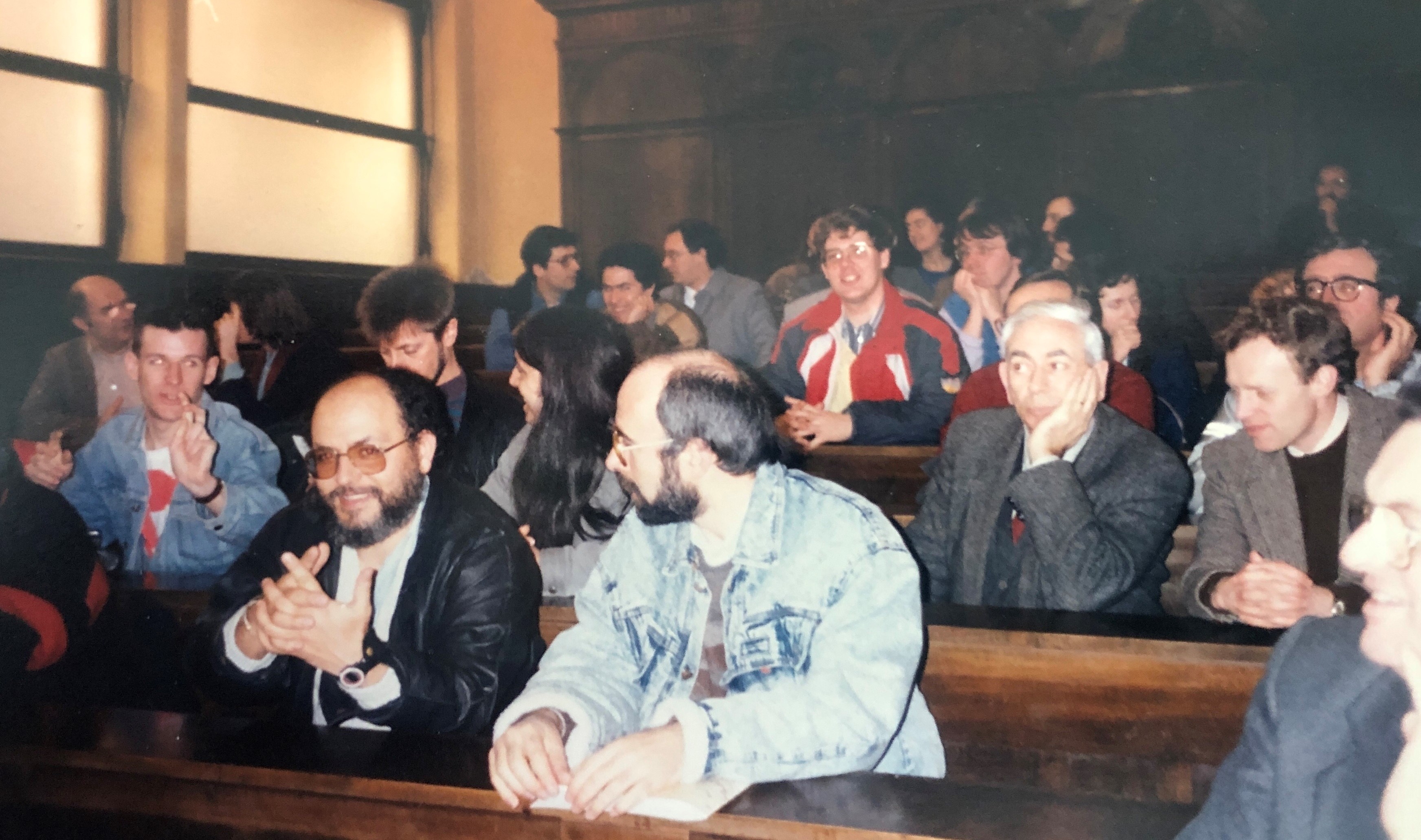
My friend and colleague Vicent Martínez sent me this picture which dates from the spring of 1988.

Picture credit: Vicent Martinez

It took me a while to figure out where it was taken but I finally came to the conclusion that it was in Perugia (the University thereof) in Italy at a small workshop organized there by Silvio Bonometto. If memory serves that room was called the Aula Mussolini

I am on the far left (looking deranged) and talking to Alain Blanchard (with the long black hair). In between us is Vincent Icke. Further along the same row you can see Dennis Sciama, who is sadly no longer with us, and John Miller. In the middle looking at the camera is Rien van de Weijgaert. Just behind me is Bernard Jones. I guess Vicent must have taken the picture!

You can find this and other pictures from this bygone era here.

Yes, I know it’s very white and very male. Meetings tended to be like that in those days.

Incidentally 1988 was the year that I finished my DPhil thesis so I was still a graduate student at the time of this meeting. I think I gave a talk but can’t remember what it was about! In fact I don’t remember much about that meeting except for the splendid lunch that happened at the end. We took a coach trip to a magnificent Castello in the country and were treated to a lavish banquet of many courses. As luck would have it I sat next to Dennis Sciama at the meal, which I enjoyed greatly. Dennis was my academic grandfather (i.e. he supervised my supervisor). He was a lovely gracious man as well as hugely knowledgeable about a wide range of things, wonderful to talk to, and very generous with his time. He was also teetotal, so when they came to fill up his glass he gave it to me so I had a double wine ration, and a single ration would have been a lot!

If I recall correctly the coach trip also took in quick visits to the towns of Cortona and Arezzo.

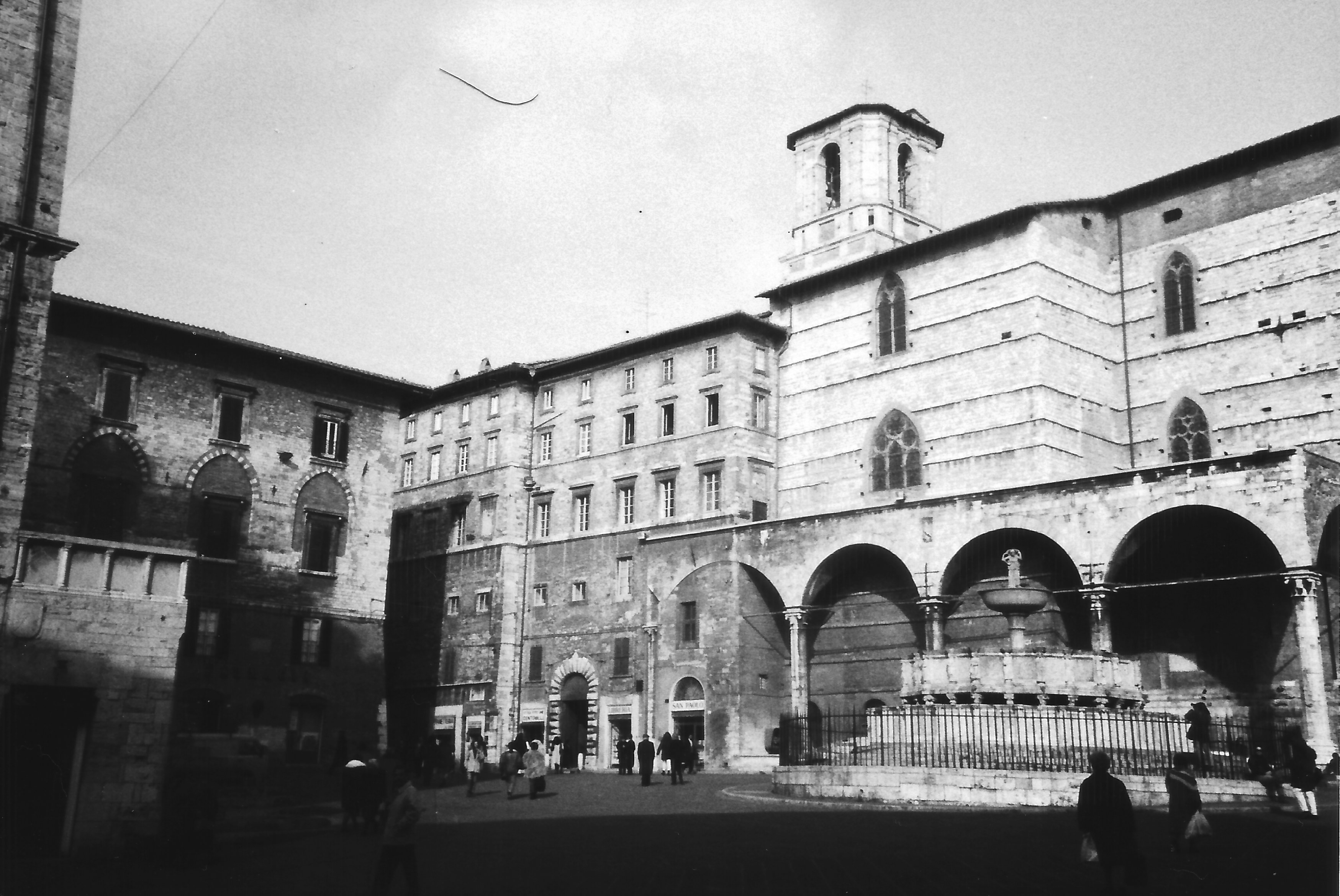
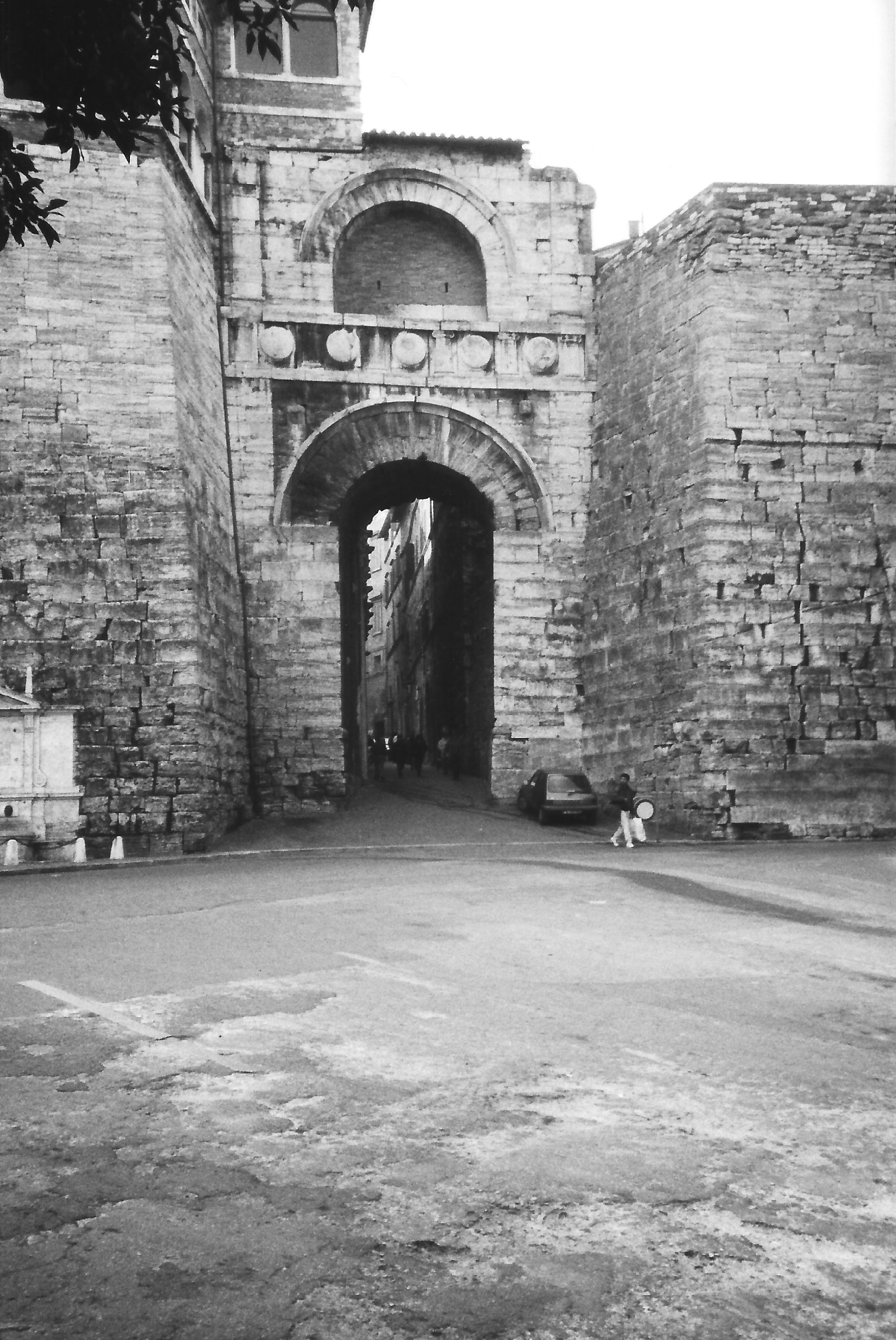
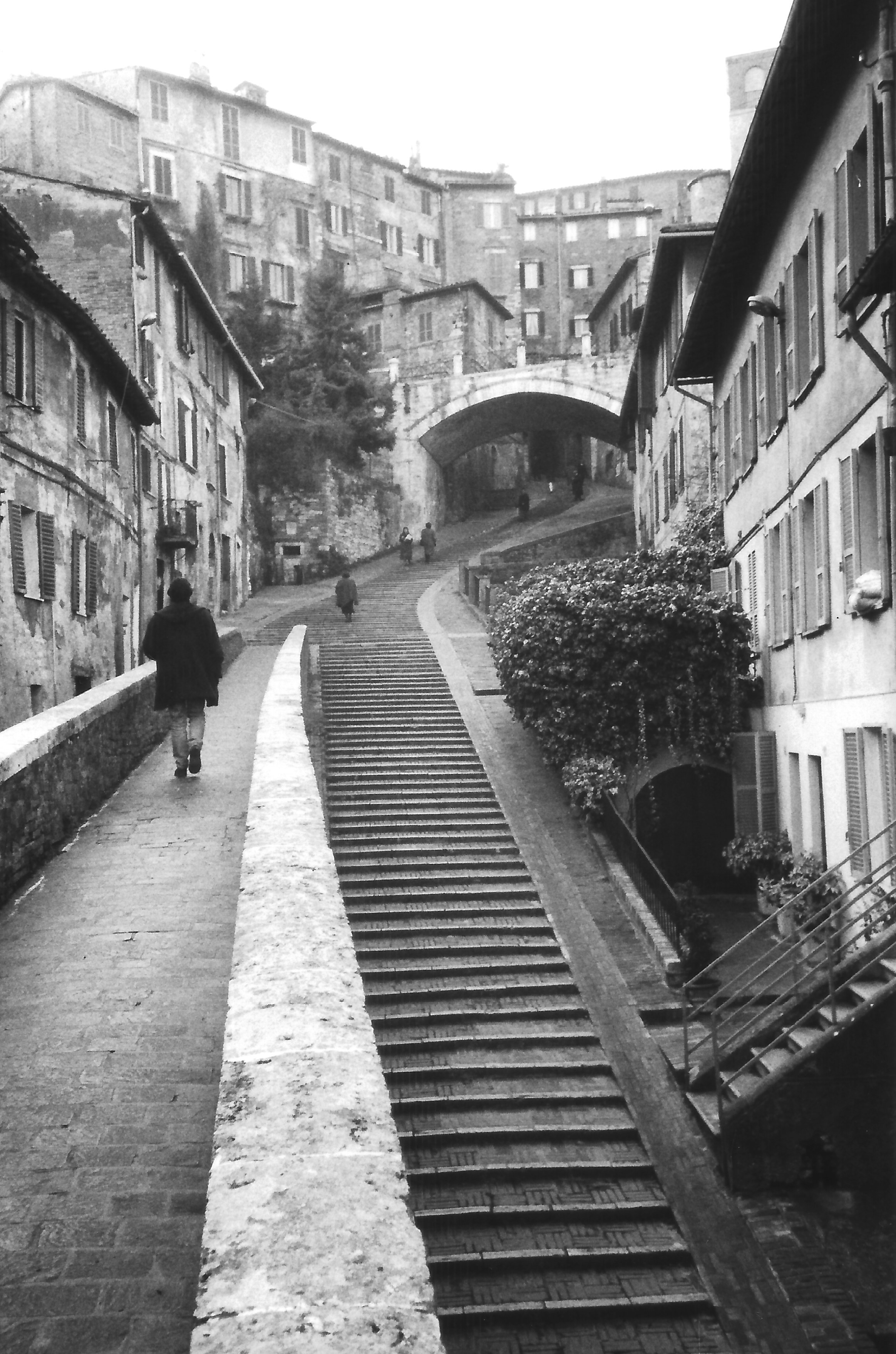
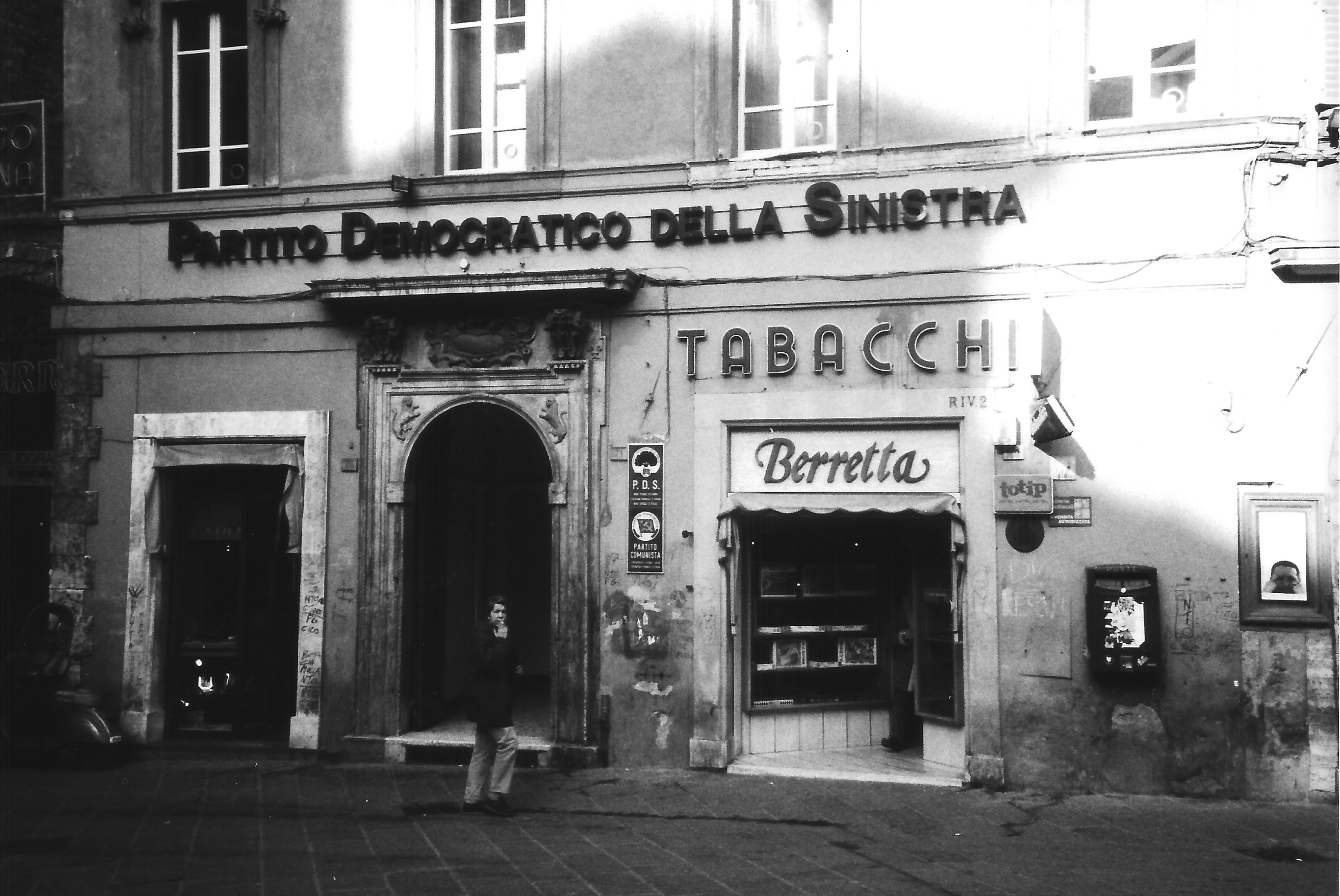
Anyway, seeing that picture sent me a bit down memory lane during which I opened up a box of old photographs to find some more of Perugia. That meeting in 1988 was the first time I’d visited that ancient and beautiful place but I’ve been back a few times since then and on one occasion took a few snaps as I wandered round. I thought black-and-white would capture the atmosphere of the place. You can decide whether I was right!

The first picture is of the main square (Piazza IV Novembre) and the second the famous Etruscan Arch, which dates from pre-Roman times, emphasizing how ancient this place is! The town is perched on top of a steep-sided hill so it’s quite hard work getting around on foot but well worth exploring.

R.I.P. Sir David Cox (1924-2022)

Posted in Biographical, mathematics, The Universe and Stuff with tags , , , , on January 21, 2022 by telescoper

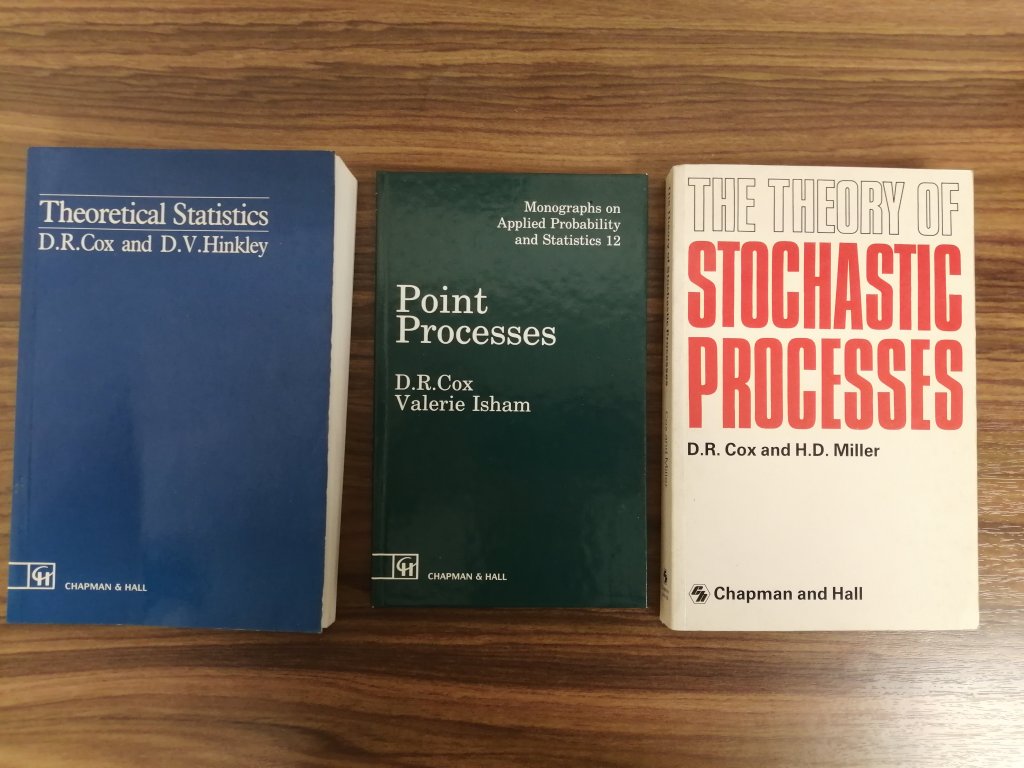
I was saddened to hear a few days ago that the eminent statistician David Cox has passed away at the age of 97. I didn’t know Professor Cox personally – I met him only once, at a joint astronomy-statistics meeting at (I think) the Royal Astronomical Society back in the day – but I learnt a huge amount from books he co-wrote, despite the fact that he was of the frequentist persuasion. Three examples from my bookshelf are shown above.

I started my PhD DPhil in 1985 with virtually no formal study of statistics under my belt so I had to follow a steep learning curve and I was helped enormously by these books. I bought the book on Point Processes so as to understand some of the ideas being applied to galaxy clustering. It’s only a short book but it’s crammed with interesting ideas. Cox & Miller on Stochastic Processes is likewise a classic.

I know I’m not the only person in astrophysics whose career has been influenced by David Cox and I’m sure there are many other disciplines who have benefitted from his knowledge.

Among many other awards, David Cox was elected a Fellow of the Royal Society in 1973 and knighted in 1985.

Rest in peace Sir David Cox (1924-2022)

Teaching + Learning ≠ Lecturing

Posted in Biographical, Education, Maynooth with tags , , , , , on January 13, 2022 by telescoper
Iontas Lecture Theatre, Maynooth University

The main purpose of this post is to encourage you to read a piece written by a second-year student at the blog run by Phil Moriarty of Nottingham University entitled Death of the Lecture: Musings of a second year student as it provides at least some first-hand reflections from a current student about the difficulties being faced by a student. So, go on, or as they say round here, gwan. Read it.

I couldn’t resist making a few tangential comments of my own.

First, on my philosophy of teaching (such as it is) which is largely formed by my own experiences both as a student many years ago and as a lecturer for many years since then. When I was an undergraduate I didn’t get much out of the lectures I attended at Cambridge and my attendance dropped off a bit as my course went on (though I still attended most). This was because the majority of lectures just involved transparency after transparency being put on and taken off the overhead projector, with students frantically writing down as much as they could but with little time to think. I think that’s what people nowadays call a “traditional” lecture. I agree with Phil Moriarty that these are pedagogically useless. If there ever is a return to normality, the New Normal – to use a very hackneyed phrase – should not be based on this as the primary mode of teaching.

I think this form of non-teaching evolved because it is cost-effective, but academics have gone along with it largely because lots of them actually enjoy standing up and talking about their subject; sometimes it’s difficult to get them to stop. As a matter of fact, that applies to me too. I enjoy talking about physics and astrophysics. I like to think that I can at least communicate some enthusiasm for the subjects through lectures, but I do realize that this does not necessarily make me a very effective teacher.

But in many ways I think the “traditional lecture” described above is a straw man. Many lecturers actually use the traditional format (50 minutes with a class in a large room) to do much more than I’ve just described. When we had to switch teaching online I bought a blackboard and did my lectures from home using it. I know a lot of people found it quaint that I adopted this “traditional” approach but I think explaining mathematical concepts through examples works well via a chalkboard and by standing up I could put more energy into the session than I could if sitting at a screen.

The point is that nowadays we provide students with many more resources to back up this kind of activity – besides my sessions the students get tutorials, and besides the live sessions they get printed notes, problem sets to do on their own, various online resources and of course video recordings. Having all that allows the lecturer to free themselves from the task of delivering material and instead try to cultivate understanding. I never lecture verbatim from notes; I prefer to cover the material in a complementary fashion, expanding on the bits I think need most explanation and/or are most important.

When I was a student I found I learned best not by attending lectures but by reading textbooks and doing problems. That’s just me though. Over the years I realized that different students learn in very different ways. The most important thing for teachers to do is to provide as many ways as possible for the students to learn so they can use what works best for them. In some respects I think of higher education as being more like a smorgasbord than a set menu.

But there lies the difficulty. There is now so much extra material available that many students find it hard to know where to start, just as when you arrive at a buffet table: it might look appetizing but you might not even know what’s in many of the dishes. There needs to be some structure, especially in the early years of a degree to help students find their own way to navigate the more independent methods of study required in an undergraduate degree.

The question for me is not whether lectures have a role to play in the New Normal – I think they do – but what is the best way to incorporate them in a blend. More importantly we need to do a lot more to help students develop their study skills and structure their time so they can learn most effectively. There was no time to do this when the pandemic forced us to change and we were given few resources to assist in the task, but it’s going to be necessary in future as we move inevitably to a more flexible future. Timetabled lectures do of course provide a structure, but there’s almost certainly a better way. As one concrete proposal, I’d call for a vastly expanded induction programme for new students focussing on study skills and other aspects of learning to put in place for the benefit of future intakes.

Like most universities, Maynooth University has a “Teaching & Learning Committee”. I sometimes wonder whether there is as strong a connection between these two words as we’d like to believe. At any rate, switching teaching online does not necessarily mean that learning goes with it!

After The Treaty

Posted in Biographical, History, Television with tags , , , , , on January 9, 2022 by telescoper

On Friday I saw a bit of a programme on RTÉ One called Treaty Live which covered the events of January 7th 1922 in the form of a modern live news broadcast. It was on that date that the Dáil Éireann voted on whether to ratify the Anglo-Irish Treaty (usually called “The Treaty”) negotiated between the British Government (led by Prime Minister David Lloyd George) and representatives of the Irish Government (led by Arthur Griffith) and signed on 6th December 1921. The Treaty was intended to end the Irish War of Independence and bring about the removal of Crown forces from Ireland, but it fell short of establishing a fully independent Irish Republic, instead creating an Irish Free State with the status of a British dominion rather like New Zealand or Australia (i.e. with its own government but with the British Monarch as Head of State). It also led to the partition of Ireland with six of the nine counties in the province of Ulster remaining under British rule.

Three days of debate preceded the momentous vote in the Dáil which, incidentally, took place in a room in a building in University College Dublin that is now the National Concert Hall. Here is some footage of TDs leaving the building after the debate:

It’s strange to think of the number of times I’ve walked up those steps to attend a concert without realizing this historic event took place there.

Anyway, in the end the vote was to ratify The Treaty by 64 votes to 57. It seems popular opinion at the time was in favour of ratification, and what was surprising was not the fact that the vote was carried but that the margin was so narrow: had just four TDs voted the other way it would have failed.

Éamonn de Valera, then President of the Irish Republic, was the most prominent opponent of ratification. Michael Collins, who was a member of the delegation of plenipotentiaries who negotiated The Treaty, was prominently in favour. Many questions can be asked about the conduct of the negotiations, including why de Valera did not conduct the negotiations himself. During the negotiations Lloyd George insisted that the Irish plenipotentiaries sign the agreement on the spot otherwise there would be “war within three days”. The Irish delegation clearly assumed he wasn’t bluffing so signed it. De Valera was unhappy that they did not consult more widely (especially with him) but then if that’s what he wanted he shouldn’t have sent “plenipotentiaries” – that word means “delegates having the full power to sign agreements” – but participated directly. Valera resigned as President on 9th January 1922 and was replaced by Arthur Griffith.

The anti-Treaty side considered it to be a betrayal of the sacrifices made during the War of Independence; the pro-Treaty side thought it was a stepping-stone towards the goal of independence. As it turned out a fully-independent Irish Republic was eventually established in 1949, though the partition of Ireland is still in place.

In retrospect the narrowness of the Dáil was an indication of what was to come. In June 1922 The Irish Civil War erupted between the two factions that lasted almost a year. All wars are dreadful, but there’s something about a Civil War that is particularly dreadful: people who had fought on the same side against British rule would now fight each other.

And that brings me to the point of this rather rambling post. I moved to Ireland at the end of 2017. Like most people born and educated in England I knew very little of Irish history before coming here; topics such as the Irish Famine are simply not taught in British schools, though they certainly are in Irish schools. I missed being here through the centennial commemorations of the 1916 Easter Rising, for example, but have followed subsequent events in the “decade of centenaries” and done the best I can to read about Irish history to gain some knowledge.

What’s interesting about this is that the events of the Easter Rising and the War of Independence, although commemorated with appropriate solemnity, do form a righteous narrative relating to the heroic birth of a new nation. As we approach the centenary of the outbreak of Civil War the issues are much more complex. An Irish friend told me that when he was taught history at school, it basically stopped at the Civil War. People generally are much less willing to talk about it than the events preceding. The Civil War left deep wounds, some of which have still not healed. Perhaps the centenary will provide an opportunity to confront some of the very difficult issues arising from this period of this nation’s history.

Webb Deployment

Posted in Biographical, The Universe and Stuff with tags on January 8, 2022 by telescoper

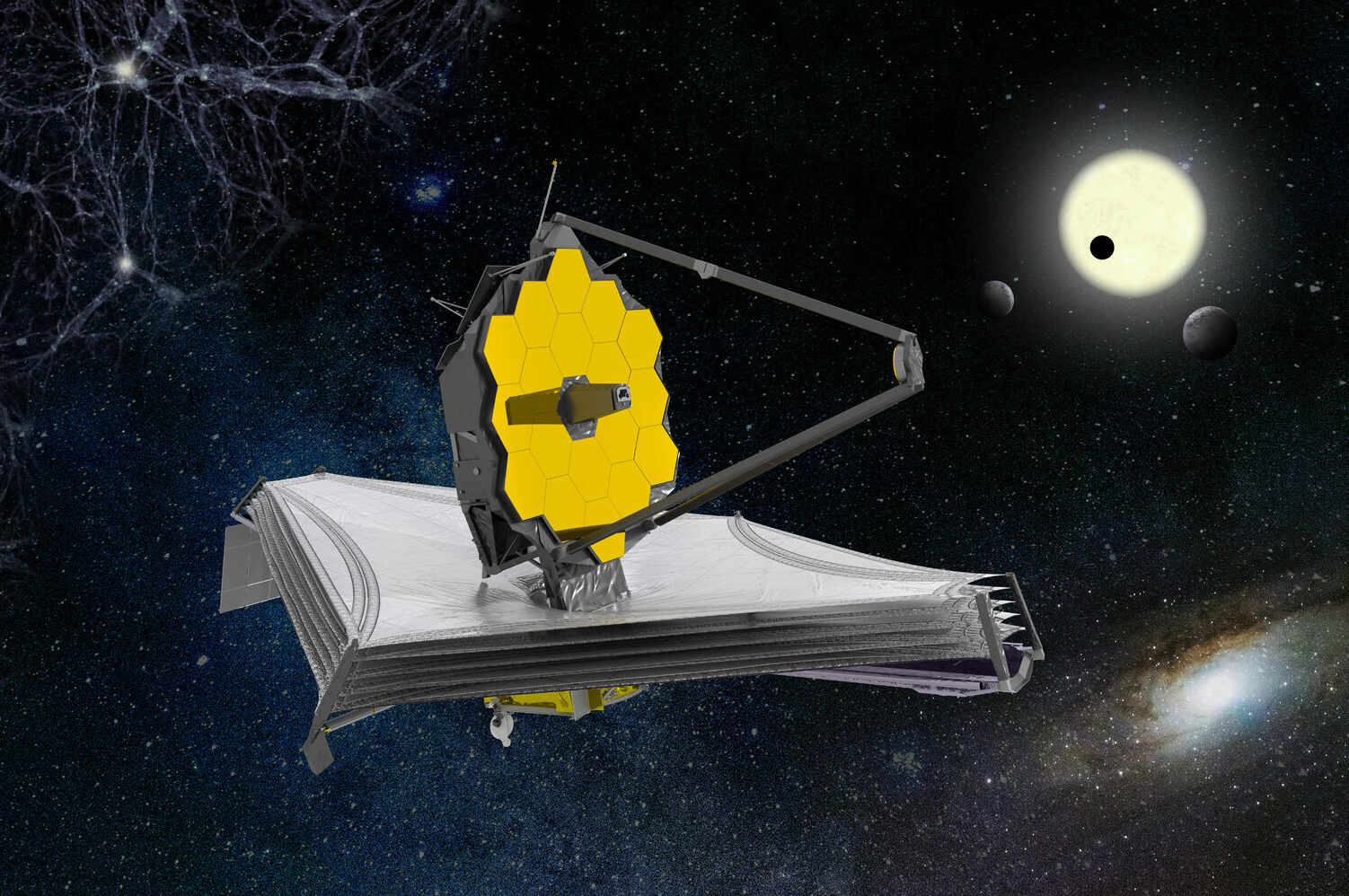
I’ve been busy all afternoon supervising an online examination and I’m now about to cook my dinner, which means I haven’t got time to post anything much but I will pass on the very welcome news that the James Webb Space Telescope has now completed the lengthy sequence of operations that were required to deploy a large sunshield, the primary and secondary mirrors and other bits and bobs needed to turn it into a proper observatory rather than just a basket of deployables. The whole thing should now look something like this:

Artists impression of Webb (with, by the look of it, a bit of the Cosmic Web)

There were over 300 potential single-point failures in this sequence so these last couple of weeks have been as stressful as the launch. Now commissioning work can begin.

This all gives me the excuse to have a celebratory drink just like I did on Christmas Day. Cheers!

Sneachta i Maigh Nuad

Posted in Biographical, Education, Maynooth on January 7, 2022 by telescoper

So the exam period is upon us and I’ve spent all day dealing with lots of last-minute issues to do with that. Switching examinations online has led to Departments having to do themselves lots of things that were previously done by the Exams Office. Needless to say this transfer of workload has not been accompanied by a transfer of resources. Grumble, grumble.

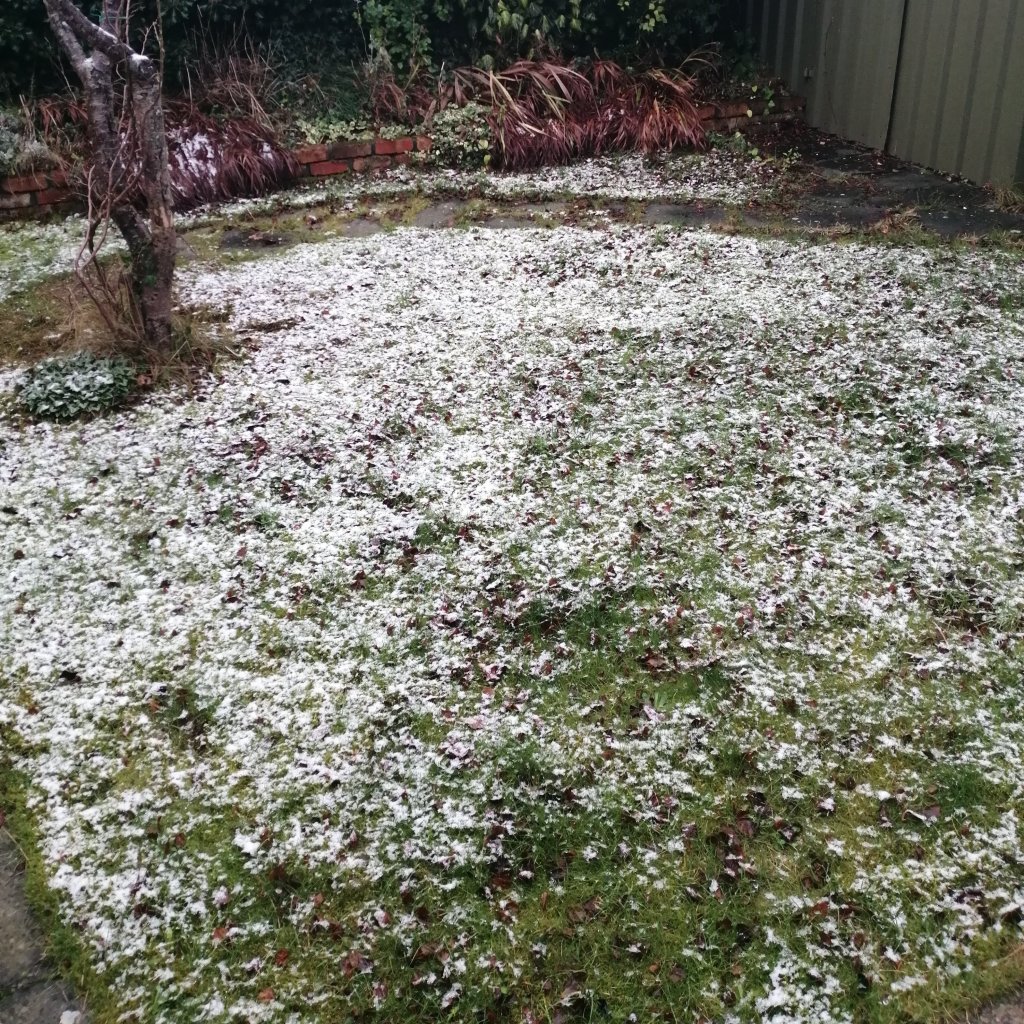
Snow!

Anyway I’ll just mention that, aside from the blizzard of emails and administrative tasks, today saw the first snow in Maynooth for 2022. I took the picture this morning after a light dusting. Then it snowed again, more heavily, only for that to turn to turn to rain that washed all the snow away.

Incidentally, this picture on the same day last year…

After a mild holiday season it’s been much colder recently, with a consequent increase in food consumption by the garden birds. I’ll have to replenish my supplies over the weekend. I do feel a bit sorry for the little critters in this weather, even the neighbourhood rook which is constantly trying to demolish my feeders.

Today the Irish Government has announced that Third Level institutions in Ireland will reopen on Monday without any changes in Covid-19 restrictions. We don’t actually start teaching until January 31st, for which I am grateful. I don’t even students or staff crowding into lecture theatres on Monday. Assuming, that is, that there aren’t huge numbers of absences…

A Piece of Euclid

Posted in Biographical, Euclid, Maynooth, The Universe and Stuff with tags , , on January 6, 2022 by telescoper

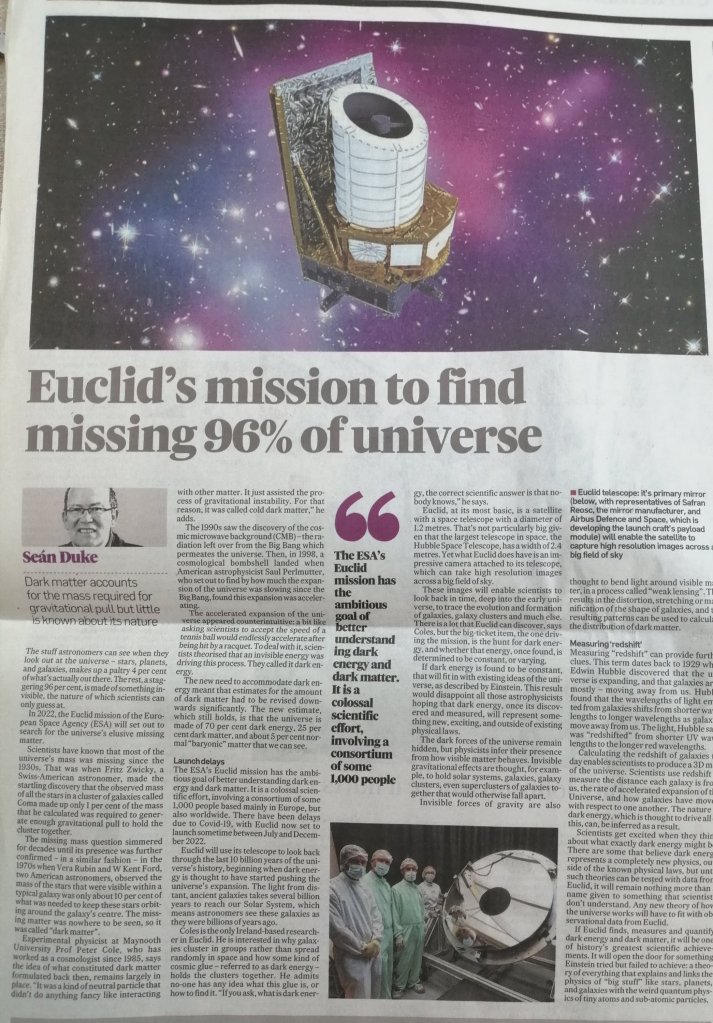
Fame at last! A colleague from the Department of Theoretical Physics at Maynooth University told me the above piece appeared in today’s Irish Times so I rushed out and bought the paper. My rapture was rapidly modified however when I discovered that my name was given incorrectly (as Cole instead of Coles), but that was to some extent offset by the amusement it would give my colleagues to see me described as an “Experiment Physicist”. These two slips are now corrected in the online version of the article which you can find here.

I was quite surprised by the sudden appearance of the article today because I spoke to the writer, Seán Duke, about Euclid well over a year ago (May 2020). That’s the reason that some things are a bit out of date. For example, the launch of Euclid will now not take place until the first quarter of 2023. Also the piece states that the largest telescope in space is the Hubble Space Telescope (HST) which is no longer the case (as of Christmas Day 2021…).

I’ll leave it as an exercise for the student to spot any other errors. Please feel free to point them out through the Comments Box. If you’re not banned, that is…