Archive for the Education Category

Early Morning Lectures

Posted in Biographical, Education, Maynooth on February 23, 2023 by telescoper

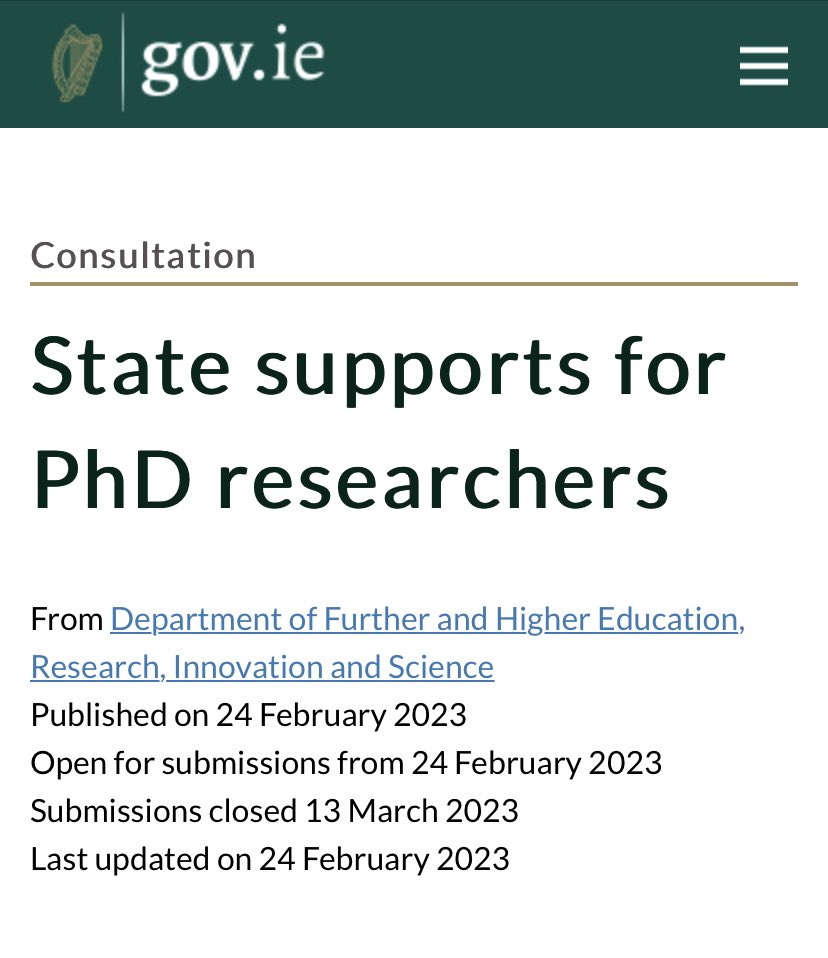
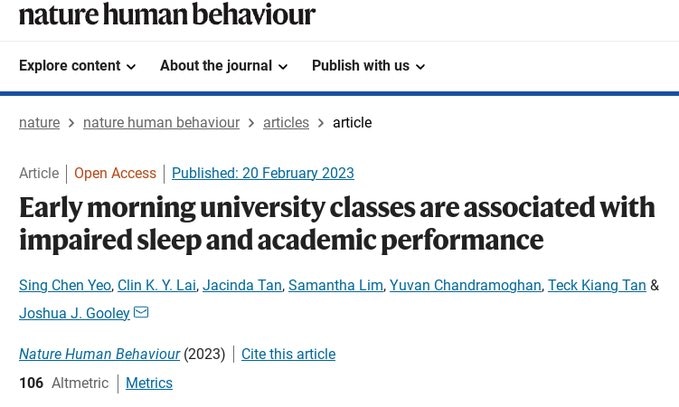
I saw this doing the rounds on Twitter the other day. I even made a little joke about it which went viral (by my standards) with over a million views and almost 2000 retweets:

There’s no accounting for taste.

Am I a meme now?

Anyway, I’m in the office quite early this morning ahead of my 9am Computational Physics lecture so thought I’d do a quick post. I realize that 9am is not early compared to practice in some institutions abroad where lectures can start at 7.30am or even earlier. Everything I say here is based on my own experience and is not claimed to be universal.

As a lecturer I don’t mind 9am lectures at all. I find itt’s nice to get something significant done before 10am as opposed to just trying to deal with emails. On the other hand, I live only about 20 minutes’ walk away from campus so I don’t have to get up especially early. As a matter of fact I get up at 7am on weekdays, so no real adjustment is necessary for a 9am start. If I had a two-hour commute it would no doubt be a different matter.

At conferences and so on, I don’t find myself sleeping in the morning sessions. I find the slots immediately after lunch the worst for staying awake. That’s the time we have our theoretical physics seminars at Maynooth, actually.

My own experiences of being an undergraduate student (at Cambridge) was that I had regular 9am lectures 6 days a week (Saturdays included) and didn’t mind those either. But Cambridge is relatively compact and, living in College, it didn’t take me long to get to the lecture theatres in town. I usually felt quite sharp at 9am, actually, probably less so later in the morning.

Of course the reality is different for many students, some of whom have lengthy journeys into campus on not-entirely reliable public transport, so find a 9am start a challenge (to say the least). It’s certainly not unknown for students to doze off, but I don’t mind that as long as they don’t snore too loudly. I try to break up these lectures with things for the students to do, and that sometimes wakes them up again. In terms of attendance it’s the early evening slots that are worse in my experience than early morning.

Anyway, here in Maynooth we teaching staff have no real say over timetabling so now I should head off to Hall C to set up.

UPDATE: I had a pretty full class but one student did doze (without snoring) for about 3 minutes.

Three weeks in…

Posted in Biographical, Education, Maynooth on February 17, 2023 by telescoper

The first quarter of the second Semester at Maynooth University has flown by. I’ve now done three weeks of lectures and even conducted the first class test in the computer lab. It is from the correcting of these submissions that I am now taking a short break to compose this blog.

Amazingly, for the first time ever, there have been no major problems in the Computational Physics lab at all. In previous years, something has always gone wrong but not (so far) this time round. I’m sure our nice new digital display screen has also improved the experience for the students in that they can now actually see the instructions I give them!

I’m actually ahead of the game in my Advanced Electromagnetism module, having done 7 lectures in 3 weeks instead of the usual 6, because I used one of my tutorial slots to give an extra lecture, anticipating that I’d lose a lecture on Good Friday (7th April) as this is a national holiday in Ireland. The following week is a holiday here too. Three weeks from now we have the mid-term Study Break (13th-17th March, ending on St Patrick’s Day), so after the first six weeks of this Semester we get a little more time to relax.

Soon it will be time to write the examinations for Semester 2. I need to think up some questions for Advanced Electromagnetism and Computational Physics. Writing an examination takes the same time regardless of how many students are taking it, but when the class sizes are small it takes much less time to do the marking. There is a large component of continuous assessment in Computational Physics, which means more work for me through the term, but there are only 25 in the class so it’s not too bad. The class for Advanced Electromagnetism is even smaller, which should make my marking workload in June a bit less heavy than it was in January.

Today students were notified of their provisional Semester 1 examination results. I expect I’ll be talking to some of them next week to discuss their options in the light of the outcome. Final marks don’t get confirmed until the Summer, when we have a full meeting of the Examination Board together with the External Examiner. Marks don’t usually change but they can if the Board decides they should.

We often have a seminar on Friday afternoons but we don’t have one today which is why I’ve got time to write this post. Often I go to the National Concert Hall on Friday evenings but I’m not going this evening. I decided to have a quiet night in tonight, as I’ve got something important to do tomorrow. After I finish marking this first class test I think I’ll toddle off home.

Solidarity to the UCU Strikers #UCURising

Posted in Education with tags , , , on February 14, 2023 by telescoper

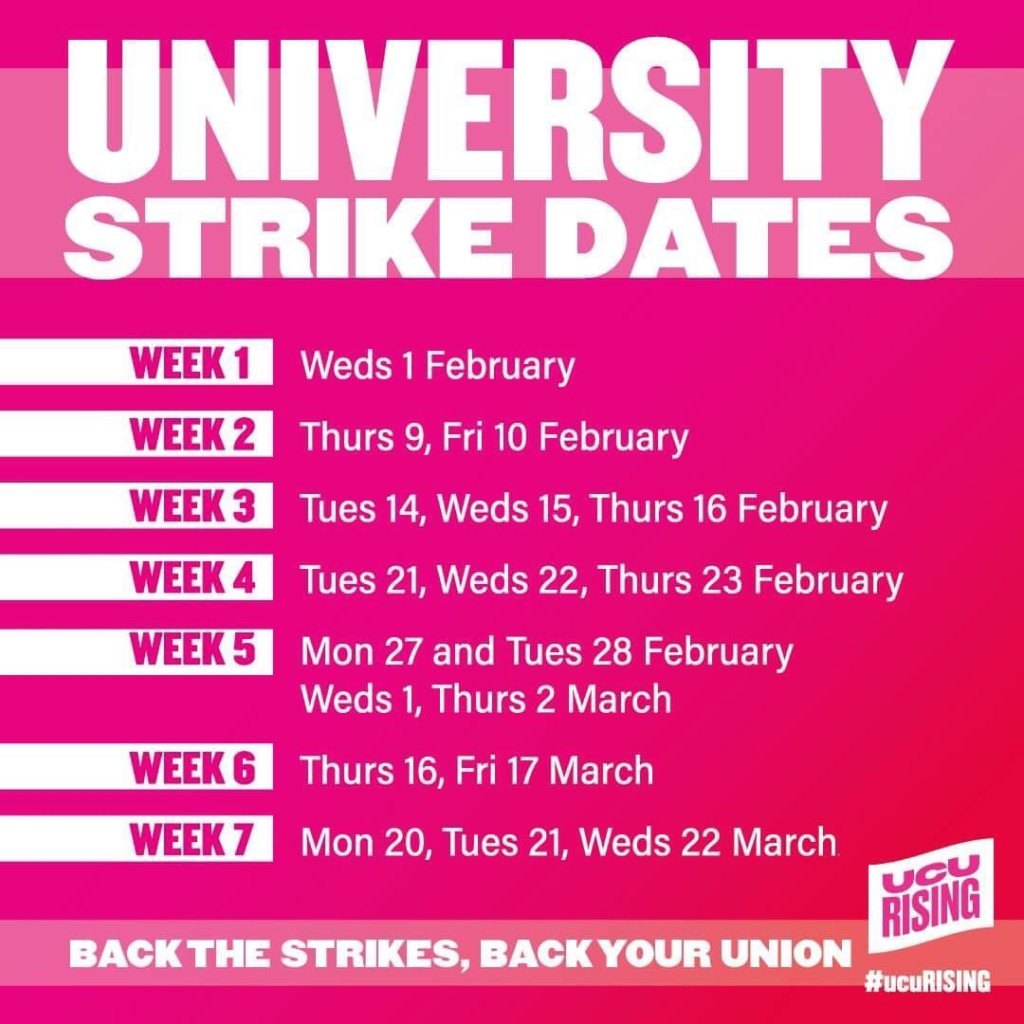
Today is Thursday 14th February so it sees the first of another three consecutive days of strike action by members of the University and College UCU across the UK over pay, pensions and working conditions. Although I no longer work in the UK I’d like to send this message of support to my former colleagues there who will be out on the picket lines today. There will be another three days of strikes next week, and four days the week after that.

Solidarity to the UCU Strikers #UCURising

Posted in Education with tags , , , on February 9, 2023 by telescoper

Today is Thursday 9th February so it sees the first of another two consecutive days of strike action by members of the University and College UCU across the UK. Although I no longer work in the UK I’d like to send this message of support to my former colleagues there who will be out on the picket lines tomorrow and on subsequent days. There will be further escalation of strike action next week, with three days of strikes.

This industrial action arises from a dispute over pensions, pay, and working conditions. The strikes will affect 2.5 million students but are necessary to safeguard not only the livelihoods of academic staff against increased casualisation and salary cuts but the UK university system itself, which is being ruined by incompetent management. Regrettably, the strikes will cause considerable disruption but, frankly, there is no point in a strike that doesn’t do that.

Reflections on the St Brigid’s Day Holiday

Posted in Biographical, Education, Maynooth with tags , , on February 6, 2023 by telescoper

It’s Monday 6th February 2023, which means that today is a new experience for me: a Bank Holiday in February. This is taking place on the first Monday after Imbolc, a Gaelic festival marking the point halfway between the winter solstice and vernal equinox. The 1st day of February is also the Feast day of St Brigid of Kildare (c. 451-525), one of Ireland’s patron saints, along with Saints Patrick and Colm Cille. . From what I’ve read, St Brigid is an a sort of amalgamation of a pagan deity and an early Christian figure, part legend and part real person. One of her miraculous powers was the ability to change water into ale, which perhaps explains her enduring popularity among the Irish.

Anyway, it’s nice to have a day off even if it is just a week after the start of Semester Two, well before exhaustion sets in. Last week I started both my modules. I was particularly apprehensive about the first laboratory session for Computational Physics 1 on Thursday. In previous years the first session has always generated a lot of technical problems. This year we are running a new version of the operating system on our Linux cluster as well as a new version of Python. Students are issued with accounts specifically for use on this cluster and even logging for the first time and changing passwords has proved a challenge. I am now also using a digital display screen instead of the old data projector I used to have and which conked out last year.

This time, however, there were no significant problems at all in the Lab. Let’s hope the same is true for the Tuesday lab, which is a repeat but with a different (and slightly larger) group of students. In recognition of the likelihood of technical hitches I don’t usually aim to do very much in Lab 1, but this time I managed to cover quite a lot of material. By next week I’ll be starting to get the students to write bits of their own code. Thereafter it gets increasingly hands-on. There’s no efficient way to learn coding other than by doing it, so the sooner they get going with that the better.

I don’t actually have any lectures timetabled on Mondays this semester and, since the lab for tomorrow (Tuesday) is a repeat of last Thursday’s, I don’t have anything urgent to prepare. I’m therefore using the time off to do some Open Journal business – including publishing a paper – and, despite the cold, do a bit of gardening to prepare for Spring.

Solidarity with the UCU Strikers!

Posted in Education, Politics with tags , , , , , , on January 31, 2023 by telescoper

Tomorrow, 1st February 2023, members of the University and College Union will walk out for the first of 18 days of strike action in UK universities:

This industrial action arises from a dispute over pensions, pay, and working conditions. The strikes will affect 2.5 million students but are necessary to safeguard not only the livelihoods of academic staff against increased casualisation and salary cuts but the UK university system itself, which is being ruined by incompetent management. Regrettably, the strikes will cause considerable disruption but, frankly, there is no point in a strike that doesn’t do that.

Although I no longer work in the UK I’d like to take this opportunity to send a message of support to my former colleagues there who will be out on the picket lines tomorrow and on subsequent days.

That also goes for workers in other sectors who are also involved in industrial action in the UK at this time!

The Term Ahead

Posted in Biographical, Education, Maynooth with tags , , , , on January 29, 2023 by telescoper

It’s the day before the start of a new Semester in Maynooth. Last week we finished all due processes relating to the First Semester examinations and the provisional results will be uploaded to “The System” next week. They’re provisional at this stage because they’re not set in stone until the final meeting of the Examination Board. Obviously I can’t discuss the results here. I could comment here about how clunky the whole process is, including multiple downloads of spreadsheets and subsequent uploads somewhere else, but I won’t bother. Nobody seems to be interesting in fixing it. Perhaps by the time I retire “The System” will have been replaced by something that doesn’t waste an enormous amount of staff time. But I doubt it.

It’s a curiosity of the teaching allocation in the Department of Theoretical Physics that I do first-year and second-year modules (MP110 Mechanics and Special Relativity and MP201 Vector Calculus & Fourier Series) in Semester 1 while in Semester 2 it’s the third and fourth year students who have to put up with my ramblings.

The menu for this term involves MP354 Computational Physics 1, which entails just one hour of lectures per week but two two-hour lab sessions. Each student attends one of these sessions, so they get 3 contact hours per week but I have to look after both sessions. Our computer lab has a small cluster of Linux machines and, this term, a brand new display screen which I am looking forward to playing with. I’m also looking forward to seeing how the infamous ChatGPT copes with the Python coding exercises I give the students to do in class: I’ve only tried one so far, without much success. This is the first module I taught at Maynooth, back in 2018, so this will be the 6th time I’ve done it.

My other class is MP465 Advanced Electromagnetism, which I’m doing for the 3rd time now. This is a standard chalk-and-talk kind of module covering a well-established syllabus, and involving two lectures per week plus a tutorial. At least I’m teaching in a classroom rather than online like when I first did this module!

In 2020/21 (during the Pandemic restrictions) I did five modules as well as being Head of Department. At this time two academic staff departures left us severely short-staffed and struggling to deliver our programmes. My workload then was unmanageable and I asked to step down. I changed my mind when were eventually allowed to recruit two lecturers and saw out my three-year term to the end. I had better not repeat here what I think of the deliberate management decisions that left us reeling and had such negative effects on staff morale and on the education of students in the Department. I just hope the damage is not irreparable.

Although I am doing the same number of modules as last term, the number of contact hours I have to do is higher (8 versus 5) because of the labs and the fact that we don’t have tutors for 4th-year modules so lecturers have to do the tutorials themselves. Four modules a year is a much heavier teaching load than a Full Professor at a UK university would be expected to carry, but it seems normal in Ireland where the funding for sciences is far less than adequate. The impact on research productivity is obvious and is systemic. There are excellent physicists in Maynooth but they are given little time or other resources. It’s a big waste of potential. That’s another “System” that needs changing, but I see little appetite for change of the required sort at institutional level. It’s all about recruiting more and more students to be taught with fewer and fewer resources.

The impact of this on staff careers is severe: teaching loads are so heavy that it’s very difficult to reach the level of research productivity required for promotion. For myself, though, the next career step will be retirement so I don’t have to worry about promotion. Fortunately too, I enjoy teaching, so I’ll just get on with it. So I’ll stop writing and get on with preparing my first week of lectures and lab sessions!

ChatGPT and Physics Education

Posted in Education, The Universe and Stuff with tags , , , on January 24, 2023 by telescoper

Following on the theme of ChatGPT, I see that Phil Moriarty has done a blog post about its use in Physics Education which many of my readers will find well worth reading in full. His findings are well in accord with mine, although I haven’t had as much time to play with it as he has. In particular, it is easily defeated by figures and pictures so if you want to make your assessment ChatGPT-proof all you need to do is unlike lots of graphics. More generally, ChatGPT is trained to produce waffle so avoid questions that require students to produce waffle. This shouldn’t pose too many problems, except for disciplines in which waffle is all there is.

Phil Moriarty also done a video in the Sixty Symbols series, on that YouTube thing that young people look at, which you can view here:

I start teaching Computational Physics next week and will be seeing how ChatGPT does at the Python coding exercises I was planning to set!

Reflections on Exam Marking

Posted in Education, Maynooth with tags , , , on January 21, 2023 by telescoper

At long last I’ve finished my marking my examination scripts. I’ve also entered the marks onto a spreadsheet and combined them with coursework so I’m almost done with this task. They just need one more check through and I can upload the results onto the system. in good time for next week’s departmental exam board meeting. It took a lot longer than I had anticipated because we have a big first-year class this year. So much for my New Year resolution not to work at weekends…

I’m a bit tired now so I thought I’d just rehash an excerpt from something I posted a while ago on the subject of examinations and what I believe to be the over-assessment of students at modern universities.

My feelings about examinations agree pretty much with William Wordsworth, who studied at the same University as me, as expressed in this quotation from The Prelude:

Of College labours, of the Lecturer’s room
All studded round, as thick as chairs could stand,
With loyal students, faithful to their books,
Half-and-half idlers, hardy recusants,
And honest dunces–of important days,
Examinations, when the man was weighed
As in a balance! of excessive hopes,
Tremblings withal and commendable fears,
Small jealousies, and triumphs good or bad–
Let others that know more speak as they know.
Such glory was but little sought by me,
And little won.

It seems to me a great a pity that our system of education – and not only at Third Level- places such a great emphasis on examination and assessment to the detriment of real learning. In particular, the biggest problem  with physics education in many institutions is the way modular degrees have been implemented.

I’m not at all opposed to modularization in principle. I just think the way we teach modules often fails to develop any understanding of the interconnection between different aspects of the subject. That’s an educational disaster because what is most exciting and compelling about physics is its essential unity. Splitting it into little boxes, taught on their own with no relationship to the other boxes, provides us with no scope to nurture the kind of lateral thinking that is key to the way physicists attempt to solve problems. The small size of each module makes the syllabus very “bitty” and fragmented. No sooner have you started to explore something at a proper level than the module is over. More advanced modules, following perhaps the following year, have to recap a large fraction of the earlier modules so there isn’t time to go as deep as one would like even over the whole curriculum.

Students in Maynooth take 60 “credits” in a year, split into two semesters. These are usually split into 5-credit modules with an examination at the end of each semester. The first-year module I teach is different, being 7.5 credits. Projects, and other continuously-assessed work do not involve a written examination, but the system means that a typical  student will have four or five written examination papers in January and another four or five in May. Each paper is usually of two hours’ duration.

One consequence of the way modularization has been implemented throughout the sector is that the ratio of assessment to education has risen sharply over time  with a negative effect on real understanding. The system encourages students to think of modules as little bite-sized bits of education to be consumed and then forgotten. Instead of learning to rely on their brains to solve problems, students tend to approach learning by memorizing chunks of their notes and regurgitating them in the exam. I find it very sad when students ask me what derivations they should memorize to prepare for examinations. A brain is so much more than a memory device. What we should be doing is giving students the confidence to think for themselves and use their intellect to its full potential rather than encouraging rote learning.

You can contrast this diet of examinations with the regime when I was an undergraduate. My entire degree result was based on six three-hour written examinations taken at the end of my final year, rather than something like 30 examinations taken over 3 years. Moreover, my finals were all in a three-day period.

Morning and afternoon exams for three consecutive days is an ordeal I wouldn’t wish on anyone, so I’m not saying the old days were better, but I do think we’ve gone far too far to the opposite extreme. The one good thing about the system I went through was that there was no possibility of passing examinations on memory alone. Since they were so close together there was no way of mugging up anything in between them. I only got through  by figuring things out in the exam room.

I don’t want to denigrate the achievements of students who are successful under the current system.  What I’m saying is that I don’t think the education we provide does justice to their talents. That’s our fault, not theirs…


Accessibility on arXiv

Posted in Education, Open Access with tags , , , , , on January 20, 2023 by telescoper

There’s an interesting paper on the arXiv that came out before Christmas, but which I’ve only just seen, about attempts to make arXiv content more accessible. Here is the abstract:

The research content hosted by arXiv is not fully accessible to everyone due to disabilities and other barriers. This matters because a significant proportion of people have reading and visual disabilities, it is important to our community that arXiv is as open as possible, and if science is to advance, we need wide and diverse participation. In addition, we have mandates to become accessible, and accessible content benefits everyone. In this paper, we will describe the accessibility problems with research, review current mitigations (and explain why they aren’t sufficient), and share the results of our user research with scientists and accessibility experts. Finally, we will present arXiv’s proposed next step towards more open science: offering HTML alongside existing PDF and TeX formats. An accessible HTML version of this paper is also available at https://info.arxiv.org/about/accessibility_research_report.html

I think this is well worth reading.

This reminds me a bit of the experiences I’ve had teaching theoretical physics to blind and partially-sighted students. Years ago this used to involve making braille copies of notes, but there are now various bits of software to help such people manage LaTeX both for creating and reading documents. In particular there are programs that can read Latex documents (including formulae and equations) which means that if a lecturer can supply LaTeX source version of their notes the student can hear them spoken out loud as well as make their own annotations/corrections. While HTML might be better for some fields, I wonder if physicists and other people in disciplines that make heavy use of mathematics might prefer to use the LaTeX source code which is already downloadable from arXiv?

I’d be interested in views on this through the comments!