Archive for the History Category

Cavete, Quod Idibus Martiis

Posted in Film, History with tags , , on March 15, 2016 by telescoper

Today is the Ides of March and we’re entering the final straight before crossing the finishing line of term and collapsing in a sweaty mess into the arms of the Easter holiday. I’ve been ridiculously busy today so, being too knackered to think of anything else to post, I thought I’d tap into a priceless bit of British cultural history relevant to this auspicious day.

This is from the First Folio Edition of Carry On Cleo, and stars the sublime Kenneth Williams as Julius Caesar delivering one of the funniest lines in the whole Carry On series. The joke may be nearly as old as me, but it’s still a cracker…


“British physics” – A Lesson from History

Posted in History, Politics, Science Politics, The Universe and Stuff with tags , , , , , , , , , , , , , , , , on March 13, 2016 by telescoper

The other day I came across the following tweet

The link is to an excellent piece about the history of European science which I recommend reading; as I do with this one.

I won’t pretend to be a historian but I can’t resist a comment from my perspective as a physicist. I am currently teaching a course module called Theoretical Physics which brings together some fairly advanced mathematical techniques and applies them to (mainly classical) physics problems. It’s not a course on the history of physics, but thenever I mention a new method or theorem I always try to say something about the person who gave it its name. In the course of teaching this module, therefore, I have compiled a set of short biographical notes about the people behind the rise of theoretical physics (mainly in the 19th Century). I won’t include them here – it would take too long – but a list  makes the point well enough: Laplace, Poisson,  Lagrange, Hamilton, Euler, Cauchy, Riemann, Biot, Savart, d’Alembert, Ampère, Einstein, Lorentz, Helmholtz, Gauss, etc etc.

There are a few British names too  including the Englishmen Newton and Faraday and the Scot Maxwell. Hamilton, by the way, was Irish. Another Englishman, George Green, crops up quite prominently too, for reasons which I will expand upon below.

Sir Isaac Newton is undoubtedly one of the great figures in the History of Science, and it is hard to imagine how physics might have developed without him, but the fact of the matter is that for a hundred years after his death in 1727 the vast majority of significant developments in physics took place not in Britain but in Continental Europe. It’s no exaggeration to say that British physics was moribund during this period and it took the remarkable self-taught mathematician George Green to breath new life into it.
I quote from History of the Theories of the Aether and Electricity (Whittaker, 1951) :

The century which elapsed between the death of Newton and the scientific activity of Green was the darkest in the history of (Cambridge) University. It is true that (Henry) Cavendish and (Thomas) Young were educated at Cambridge; but they, after taking their undergraduate courses, removed to London. In the entire period the only natural philosopher of distinction was (John) Michell; and for some reason which at this distance of time it is difficult to understand fully, Michell’s researches seem to have attracted little or no attention among his collegiate contemporaries and successors, who silently acquiesced when his discoveries were attributed to others, and allowed his name to perish entirely from the Cambridge tradition.

I wasn’t aware of this analysis previously, but it re-iterates something I have posted about before. It stresses the enormous historical importance of British mathematician and physicist George Green, who lived from 1793 until 1841, and who left a substantial legacy for modern theoretical physicists, in Green’s theorems and Green’s functions; he is also credited as being the first person to use the word “potential” in electrostatics.

Green was the son of a Nottingham miller who, amazingly, taught himself mathematics and did most of his best work, especially his remarkable Essay on the Application of mathematical Analysis to the theories of Electricity and Magnetism (1828) before starting his studies as an undergraduate at the University of Cambridge ,which he did at the age of 30. Lacking independent finance, Green could not go to University until his father died, whereupon he leased out the mill he inherited to pay for his studies.

Extremely unusually for English mathematicians of his time, Green taught himself from books that were published in France. This gave him a huge advantage over his national contemporaries in that he learned the form of differential calculus that originated with Leibniz, which was far more elegant than that devised by Isaac Newton (which was called the method of fluxions). Whittaker remarks upon this:

Green undoubtedly received his own early inspiration from . . . (the great French analysts), chiefly from Poisson; but in clearness of physical insight and conciseness of exposition he far excelled his masters; and the slight volume of his collected papers has to this day a charm which is wanting in their voluminous writings.

Great scientist though he was, Newton’s influence on the development of physics in Britain was not entirely positive, as the above quote makes clear. Newton was held in such awe, especially in Cambridge, that his inferior mathematical approach was deemed to be the “right” way to do calculus and generations of scholars were forced to use it. This held back British science until the use of fluxions was phased out. Green himself was forced to learn fluxions when he went as an undergraduate to Cambridge despite having already learned the better method.

Unfortunately, Green’s great pre-Cambridge work on mathematical physics didn’t reach wide circulation in the United Kingdom until after his death. William Thomson, later Lord Kelvin, found a copy of Green’s Essay in 1845 and promoted it widely as a work of fundamental importance. This contributed to the eventual emergence of British theoretical physics from the shadow cast by Isaac Newton. This renaissance reached one of its heights just a few years later with the publication of a fully unified theory of electricity and magnetism by James Clerk Maxwell.

In a very real sense it was Green’s work that led to the resurgence of British physics during the later stages of the 19th Century, and it was the fact that he taught himself from French books that enabled him to bypass the insular attitudes of British physicists of the time. No physicist who has taken even a casual look at the history of their subject could possibly deny the immense importance of mainland Europe in providing its theoretical foundations.

Of course science has changed in the last two hundred years, but I believe that we can still learn an important lesson from this particular bit of history. Science moves forward when scientists engage with ideas and information from as wide a range of sources as possible, and it stagnates when it retreats into blinkered insularity. The European Union provides all scientific disciplines with a framework within which scientists can move freely and form transnational collaborations for the mutual benefit of all. We need more of this, not less. And not just in science.

Land Of My Fathers – the 1931 Version

Posted in History, Rugby with tags , , on February 27, 2016 by telescoper

I’m very grateful to Anton for sending me a link to this wonderful bit of history – the first time the singing of “Land Of My Fathers” before an international rugby match was captured on a newsreel. The venue for the Wales-Scotland match was Cardiff Arms Park, which still exists, but the international games are now played at the recently-renamed Principality Stadium which is directly adjacent to the old venue. The skyline around the Arms Park is still mostly recognizable. The opening panning shot is looking North towards Bute Park, but as it moves right you can see the old Palace and Hippodrome, on Westgate Street, which is now the site of a Wetherspoon’s pub; only the facade is intact as the interior was completely gutted and rebuilt.

It seems that some sort of mechanical fault meant that the roof of the Principality Stadium was left open for last night’s match between Wales and France (which Wales won 19-10). That would have meant that the singing of Land of my Fathers could have been heard throughout the city. I remember once spending a Saturday afternoon in my garden in Pontcanna, and could hear the noise from the stadium very clearly. There’s something very special about the singing of the Welsh National Anthem on such occasions – it always sends a shiver down my spine.

Uncompromising Expression

Posted in History, Jazz with tags , on February 21, 2016 by telescoper

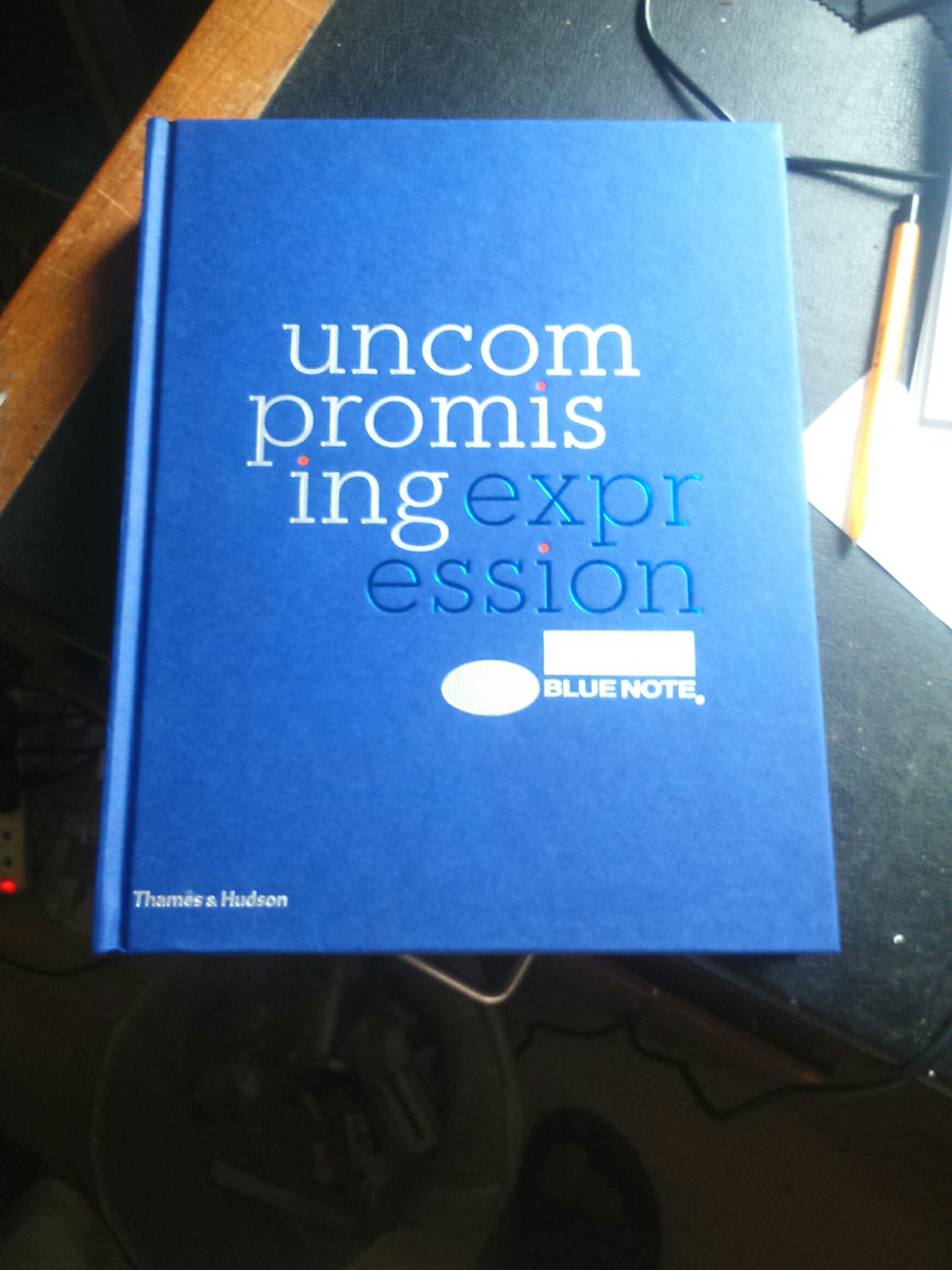
I don’t get much time for self-indulgence these days, but last week I treated myself to this book:

image

Written by Richard Havers, this is an excellent illustrated history of the legendary record label, Blue Note. Although primarily associated with post-war Jazz, Blue Note began with a number of classic recordings from the era of Sidney Bechet, Edmond Hall and Bunk Johnson.

I have only had time to dip into it so far, but what I have seen is superb, not only in terms of the text but also copious examples of the artwork that gave Blue Note albums their distinctive look.

image

Uncompromising Expression is a must- have for Jazz fans, although at just under £50 it’s not cheap. Fortunately I got a book token for Christmas!

Frederick Douglass and the Freedom of Newcastle

Posted in History with tags , , on February 2, 2016 by telescoper

You can learn a lot by looking at Google, even if you don’t use it to search for anything.

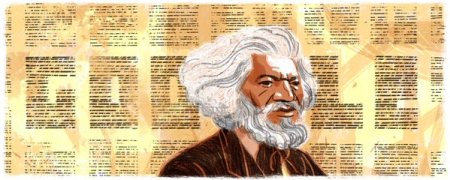
I found out – via the Twitter feed of Bonnie Greer – that yesterday’s Google Doodle was this:

Google_Douglass

The picture is a representation of Frederick Douglass (1818-1895), whose name was quite new to me until yesterday but whose remarkable life story turns out to have a strong connection with my home town of Newcastle upon Tyne.

Douglass was a prominent social reformer and campaigner against slavery, and for other forms of social justice, including equal rights for women. The most famous expression of his political philosophy is the following quote:

I would unite with anybody to do right and with nobody to do wrong.

Once a slave himself, Douglass escaped from bondage in 1838 and, while on the run, wrote his first autobiography Narrative of the Life of Frederick Douglass, an American Slave which quickly became a best seller on both sides of the Atlantic. He eventually made his way to England, where he went on a speaking tour,  impressing audiences around the country with the power of his oratory, his obvious intellect, and the conviction with which he held his political beliefs.

Slavery was unlawful under English common law at that time so technically Douglass was a free man from the moment he set foot in England, but the same would not be true if he returned to America. His English supporters wanted him to remain here, but he had a wife and three children in the United States and wanted to return and continue the campaign against slavery there. But as soon as he set foot back in America he was likely to be seized and returned to his “owner”.

Then, in a remarkably generous gesture, the people of Newcastle upon Tyne solved his problem. They collected enough money to pay his “owner”, Thomas Auld, for his freedom. He returned to America in 1847, a free man, where he remained true to his beliefs and spent the next 48 years continuing his various campaigns. He died of a stroke in 1895, aged 77.

Frederick Douglass was undoubtedly a remarkable man, passionate and courageous with a great gift for public speaking. A Google Doodle is a small honour for such a hero but I’m sure it has at least led to many others besides myself finding out just a little bit more about him.

And if you’ll forgive me for saying so, it also gives me yet another reason to be proud to be a Geordie.  Perhaps it’s true that the people of Newcastle upon Tyne are the most generous in the UK

P.S. Newcastle upon Tyne is not in the Midlands.


Ligatures, Diphthongs and Supernovae

Posted in History, Pedantry, The Universe and Stuff with tags , , , , , , , , on January 18, 2016 by telescoper

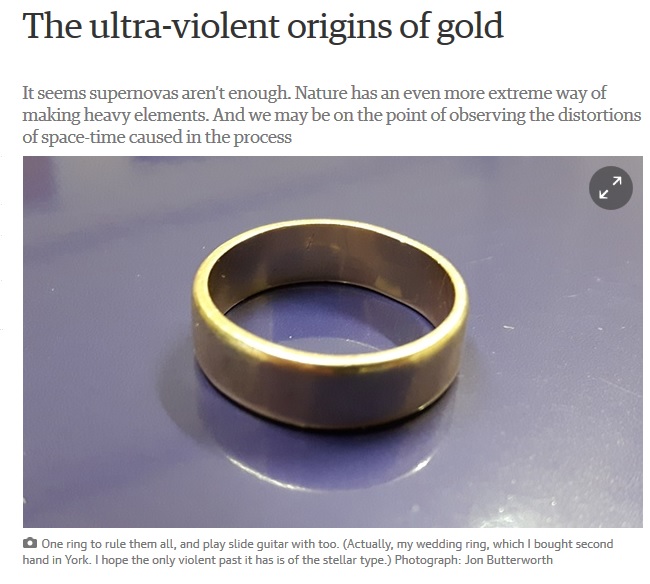
At the weekend I noticed a nice article by John Butterworth on his Grauniad blog about where Gold comes from. Regular readers of this blog (Sid and Doris Bonkers) know that I am not at all pedantic but my attention was drawn to the plural of supernova in the preamble:

Supernovas

I have to confess that I much prefer the latin plural “supernovae” to the modernised “supernovas”, although most dictionaries (including the One True Chambers) give these both as valid forms.  In the interest of full disclosure I will point out that I did five years of Latin at school, and very much enjoyed it…

When I tweeted about my dislike for supernovas and preference for supernovae some replied that English words should have English plurals so that supernovas was preferred (although I wonder if that logic extends to, e.g. datums and phenomenons). Others said that supernovae was fine among experts but for science communication purposes it was better to say “supernovas” as this more obviously means “more than one supernova”. That’s a reasonable argument, but I have to admit I find it a little condescending to assume that an audience can cope with the idea of a massive star exploding as a consequence of gravitational collapse but be utterly bewildered by a straightforward latin plural.

One of the reasons I prefer the Latin plural – along with some other forms that may appear archaic, e.g. Nebulae – is that Astronomy is unique among sciences for having such a long history. Many astronomical terms derive from very ancient sources and in my view we should celebrate this fact because it’s part of the subject’s fascination. That’s just my opinion, of course. You are welcome to disagree with that too.

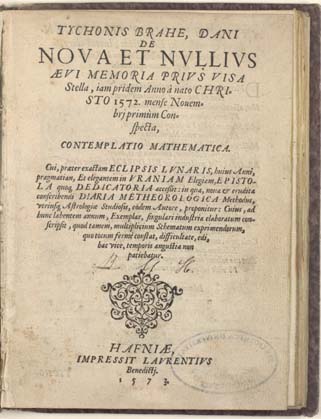
Anyway, you might be interested to know a couple of things. One is that the first use of “super-nova” recorded in the Oxford English Dictionary was in 1932 in a paper by Swedish astronomer Knut Lundmark. This word is however formed from “nova” (which means “new” in Latin) and the first use of this term in an astronomical setting was in a book by Tycho Brahe, published in 1573:

Brahe_book(I’ll leave it as an exercise to the student to translate the full title.)

Nowadays a nova is taken to be a much lower budget feature than a supernova but the “nova” described in Tycho’s book was was actually a supernova, SN1572 which he, along with many others, had observed the previous year. Historical novae were very often supernovae, in fact, because they are much brighter than mere novae. The real difference between these two classes of object wasn’t understood until the 20th Century, however, which is why the term supernova was coined much later than nova.

Anyway, back to pedantry.

A subsequent tweet from Roberto Trotta asserted  that in fact supernovae and supernovas are both wrong; the correct plural should be supernovæ, in which the two letters of the digraph “ae” are replaced with a single glyph known as a ligature. Often, as in this case, a ligature stands for a diphthong, a sort of composite vowel sound made by running two vowels together.   It’s one of the peculiarities of English that there are only five vowels, but these can represent quite different sounds depending on the context (and on the regional accent). This  means that English has many hidden diphthongs. For example,  the “o” in “no” is a diphthong in English. In languages such as Italian, in which the vowels are very pure, “no” is pronounced quite differently from English. The best test of whether a vowel is pure or not is whether your mouth changes shape as you pronounce it: your mouth moves as you say an English “no”, closing the vowel that stays open in the Italian “no”…

So, not all diphthongs are represented by ligatures. It’s also the case that not all ligatures represent diphthongs. Indeed some are composed entirely of consonants. My current employer’s logo features a ligature formed from the letters U and S:

image

The use of the ligature æ arose in Mediaeval Latin (or should I say Mediæval?). In fact if you look at the frontispiece of the Brahe book shown above you will see a number of examples of it in its upper-case form Æ. I’m by no means an expert in such things but my guess is that the use of such ligatures in printed works was favoured simply to speed up the typesetting process – which was very primitive – by allowing the compositor to use a single piece of type to set two characters. However, it does appear in handwritten documents e.g. in Old English, long before printing was invented so easier typesetting doesn’t explain it all.

Use of the specific ligature in question caught on particularly well in Scandinavia where it eventually became promoted to a letter in its own right (“aesc”) and is listed as a separate vowel in the modern Danish and Norwegian alphabets.  Early word-processing and computer typesetting software generally couldn’t render ligatures because they were just too complicated, so their use fell out of favour in the Eighties, though there are significant exceptions to this rule. Latex, for example, always allowed ligatures to be created quite easily. Software – even Microsoft Word – is much more sophisticated than it used to be, so it’s now not so much of a problem to use ligatures in digital text. Maybe they will make a comeback!

Anyway, the use of æ was optional even in Mediaeval Latin so I don’t think it can be argued that supernovæ is really more correct than supernovae, though to go back to a point I made earlier, I do admit that a rambling discussion of ligatures and diphthongs would not add much to a public lecture on exploding stars.


17 Equations that Changed the World

Posted in History, The Universe and Stuff with tags , , on December 14, 2015 by telescoper

Yesterday I posted about a map that “changed the world”. Clearly the world changed a lot and for many different reasons because when I got home I noticed the following picture on Facebook, depicting 17 equations that also “changed the world”:


17 Equations

This is from a book by mathematician Ian Stewart.

Of course it’s actually 20 equations, because there are four Maxwell Equations. It is an interesting selection. Are there any surprising omissions?


William Smith and the First National Geological Map

Posted in History, The Universe and Stuff with tags , , , on December 13, 2015 by telescoper

Friday was the last day of teaching term here at the University of Sussex. Aided by the general winding down of things I managed the unusual feat of geting up to London in time to catch some of the monthly discussion meeting of the Royal Astronomical Society, which was on A Critical Assessment of Cluster Cosmology. Usually I only just manage to get there in time for some of the Ordinary Meeting which follows the specialist meetings at 4pm. And sometimes I only get there in time for the drinks reception at Burlington House followed by the RAS Club dinner at the Athenaeum!

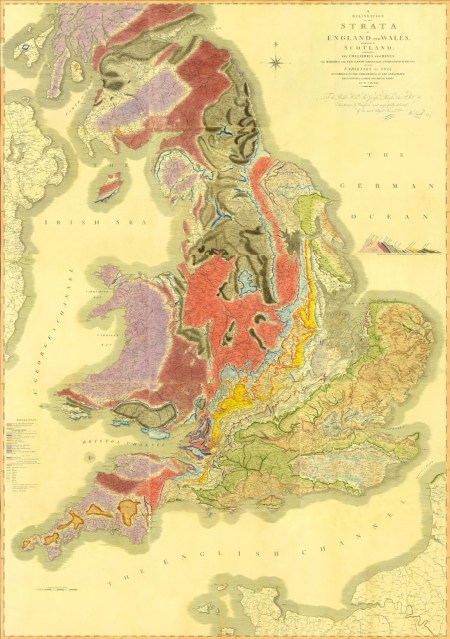
I may write something about Cluster Cosmology if I get time before Christmas, but I thought I’d post an item now inspired by one of the talks in the Ordinary Meeting by Tom Sharpe of Lyme Regis Museum and Cardiff University. This talk was timed to mark the 200th anniversary of the publication of the first ever geological map of England and Wales in 1815. To make it even more topical, the talk was given in the lecture theatre of the Geological Society of London where an original print of the Map is on permanent display:

William Smith Map

The person responsible for this map, which was the first to show nationwide geological strata, was a chap called William Smith who surveyed England and Wales on foot and on horseback, travelling over 10,000 miles to make it. It was a remarkable achievement which, among many other things, led the way to great changes in the understanding of geological time. Unfortunately his work didn’t have much impact when it was first published. Smith, who was evidently not a very astute businessman, eventually went bankrupt and spent some time in a debtor’s prison.

The map itself is extremely beautiful as well as very clever in the way it uses colours and shading to represent three-dimensional information on a two dimensional surface.

Anyway, there is a book  entitled  The Map that Changed the World  written by Simon Winchester which tells the story of William Smith and his map. I haven’t read it but I’m told it’s excellent. I’ll probably buy a copy with the book tokens I inevitably get for Christmas!


Bayes’ Theorem or Price’s Theorem?

Posted in History, The Universe and Stuff with tags , on December 4, 2015 by telescoper

Richard_Price_West

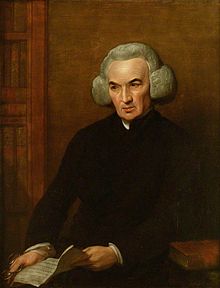
I’m indebted to a fellow blogger for drawing my attention to the person shown in the above picture, Dr Richard Price who has been described as “the most original thinker ever born in Wales”, and who has a Society named after him.

Price was a moral philosopher, nonconformist preacher and also a mathematician of some note. Of particular interest to this blog is the role he played in the development of what is now known as Bayes’ Theorem, after the Reverend Thomas Bayes.

However, the paper in the Philosophical Transactions of the Royal Society that contains the first published form of this theorem was not published until 1763, over a year after Bayes’ death and, as you can see if you follow the link, is attributed jointly to “Mr Bayes and Mr Price”.  It appears that there was an original manuscript written by Bayes around about 1755  which was communicated to Price when Bayes died in 1761 and then presented for publication over a year later; Price had been asked to act as “literary executor” of Bayes’ estate.

Unfortunately the original manuscript has never been found and it is therefore impossible to say for sure how much Price contributed to the final version. However, a relatively recent and very interesting article  raises this question, and argues (reasonably convincingly to my mind) that Bayes’ part stops at page 14 of 32 pages. It is therefore quite possible that Price wrote over half the paper himself although most historical discussions of this matter simple state that Price “edited” Bayes’ work.

It has to be said that the paper is not exactly a model of clarity and pertains only to a particular case of the full theorem. The form in general use today was first published by Laplace in 1812, so it should really be called Laplace’s Theorem, but Laplace did give generous credit to the work of Bayes which is no doubt why the name stuck.

I don’t suppose we will know for sure exactly how much Price contributed to the development of Bayes’ theorem, but this may be yet another example of the law that any result in science or mathematics that has a person’s name attached to it has the wrong name attached to it!

Finally, I will mention that the Richard Price Society has started a petition to the Welsh government. I’m taking the liberty of copying the purpose of this petition here:

We call on the Welsh government to acknowledge the important contribution of Dr Richard Price not only to the eighteenth century Enlightenment, but also to the making of the modern world that we live in today, and develop his birthplace and childhood home into a visitor information centre where people of all nationalities and ages can discover how his significant contributions to theology, mathematics and philosophy have shaped the modern world.

Tynton Farm in Llangeinor, the birthplace and childhood home of Dr Richard Price is for sale. Once derelict, the farm has been sensitively restored and almost all of the original features have been preserved. The Richard Price Society is aware that the house attracts visitors from all corners of the globe and this is attested by the previous owner’s Visitors Book that was signed by visitors to the farm. The position of the farm and its provenance would make it an ideal learning centre where people can find out just what an important person he was and remains. This is an opportunity to buy the property at market value and help celebrate the achievements of Wales’ intellectual giant and apostle of liberty.


I have signed it, and hope you will consider doing likewise!


100 Years of General Relativity

Posted in History, The Universe and Stuff with tags , on November 25, 2015 by telescoper

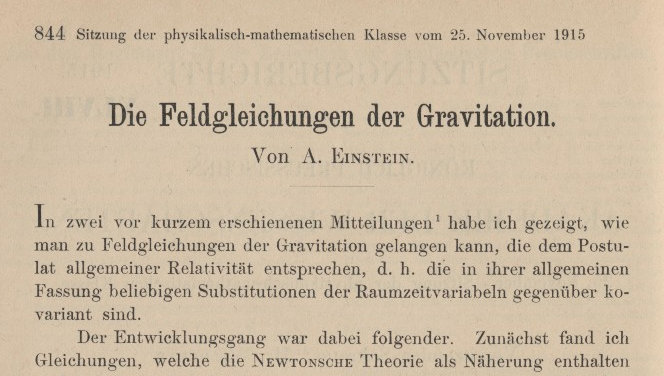
Many people have been celebrating the centenary of the birth of Einstein’s Theory of General Relativity this year, but it’s not obvious precisely what date to select. I’ve decided to go for today, partly because the News on BBC Radio 3 did when I work up this morning, but also because there is a well-known publication that mentions that date:

einsteingr

The 25th November 1915 was the date on which Einstein presented the “final” form of his theory to the Prussian Academy of Sciences. You can find a full translation of the paper “The Field Equations of Gravitation” here. You will see that he refers to a couple of earlier papers in that work, but I think this one is the first presentation of the full theory. It fascinated me when I was looking at the history of GR for the textbook I was working on about 20 years ago that the main results (e.g. on cosmology, the bending of light and on the perihelion of mercury) are spread over a large number of rather short papers rather than all being in one big one. I guess that was the style of the times!

So there you are, General Relativity has been around for 100 years. At least according to one particular reference frame…


Oh, and here’s a cute little video – funded by the Science and Technology Facilities Council – celebrating the centenary: