Archive for the History Category

Celestial Echoes: The Night Sky in Irish Folklore

Posted in History, Irish Language, The Universe and Stuff with tags , , , , on August 29, 2023 by telescoper
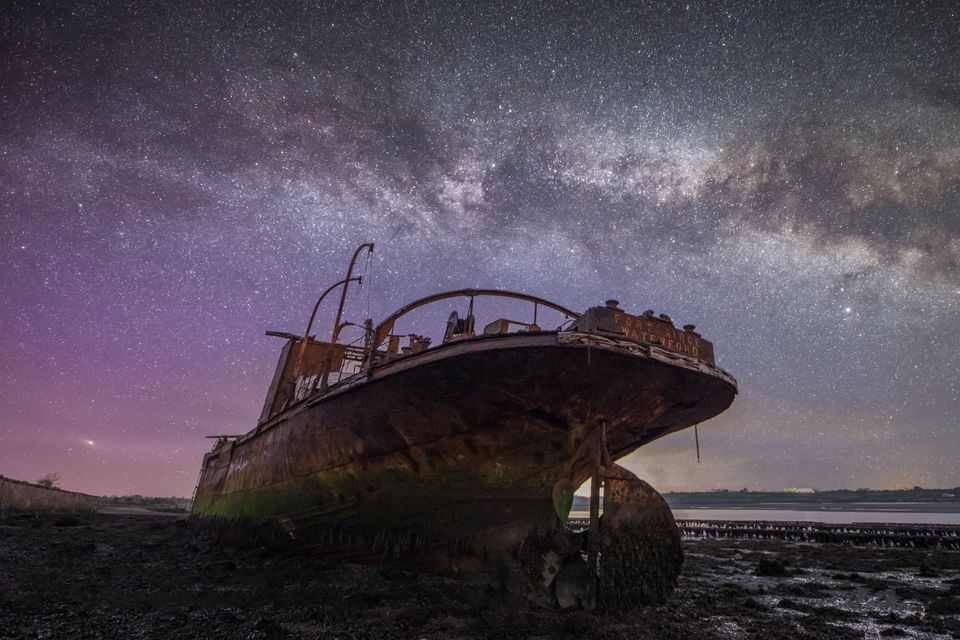
The Milky Way over a shipwreck in Co Wexford, photographed by Adrian Hendroff, winner of this year’s Reach for the Skies photography competition.

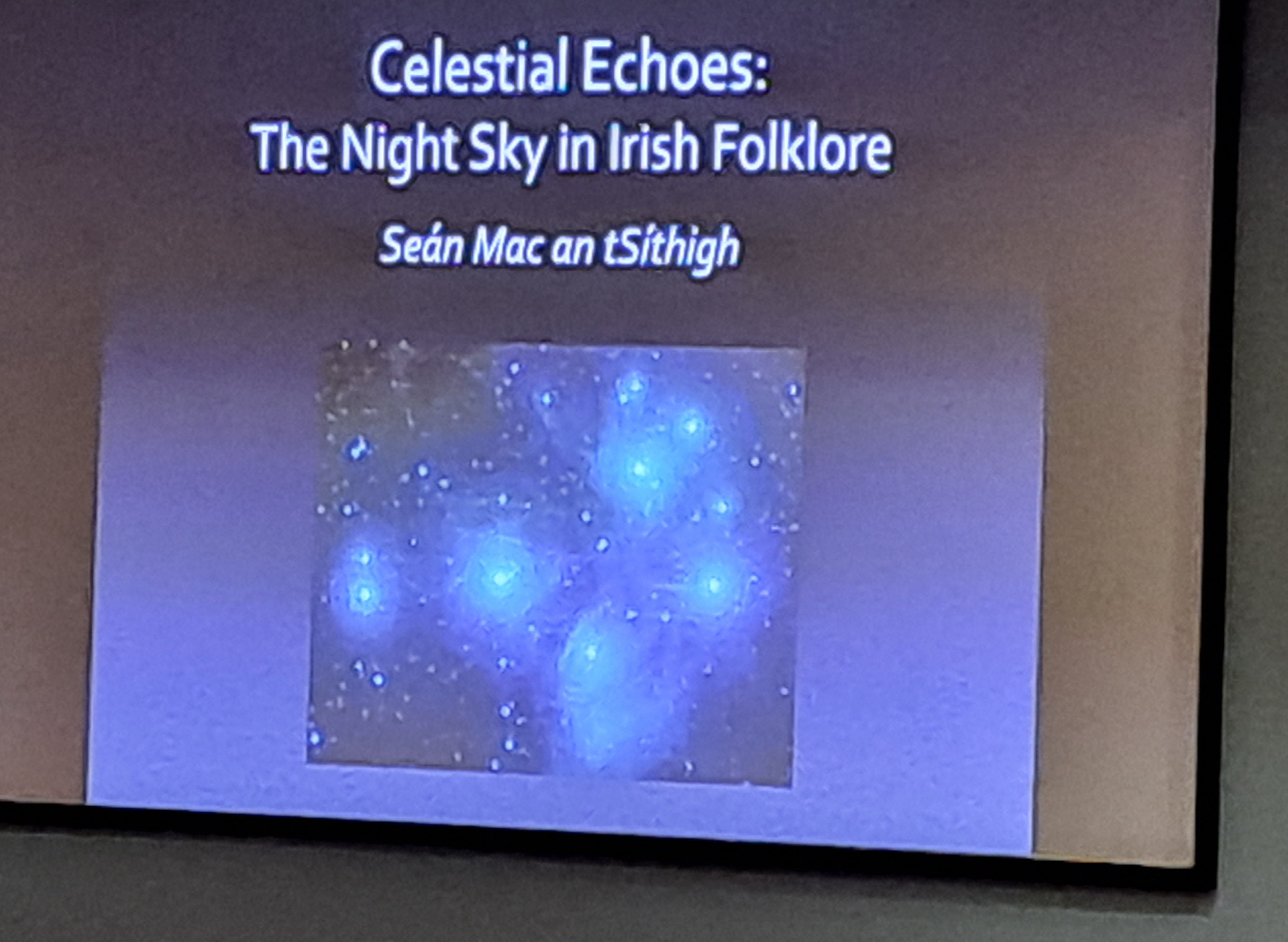
I mentioned last week that I attended a public lecture by journalist Seán Mac an tSíthigh called Celestial Echoes: the Night Sky in Irish folklore. The talk was largely about some of the names given to celestial objects and the stories attached to those names. Much of the material was drawn from an extensive National Folklore Collection held at University College, Dublin. Unfortunately, however, the index to this collection is not very good at names for stars and constellations. In some cases it isn’t obvious what those names that are recorded actually refer to and in some cases the words themselves are obscure. The lecturer stressed that many of these words would have been known by the parents or grandparents of people in the audience, but have since been lost. There’s an article here that makes a similar point in a wider context. One prominent source of folklore, for example, is the traditional style of mackerel fishing, done at night so that the phosphorescence produced by the fish could be seen, which basically no longer exists so the folk names of stars and constellations used by the fishermen for navigation have been forgotten. Some other names have obviously been influenced by the Greco-Roman constellation names, etc.

I didn’t take many notes during this very enjoyable talk, but I did jot down a few words and phrases that I thought I’d pass on here. Given that my knowledge of modern Irish is very limited and many of the words used are dialect or archaic words that you won’t find in dictionaries, I’ll restrict myself to just a few of the things that caught my ear. Many of these are very similar in Scots Gaelic. Apologies in advance for misspellings, mistranslations or other forms of incompetence!

Before we start let me just mention that the Irish word for “star” is réalta (plural réaltai), which can also mean “a light”. There is also a diminutive, réiltín. Astronomy is réalteolaíocht and astrophysics is réaltfhisic. I’ve always liked the way astrophysics looks like “real physics”!

  • The Milky Way is usually Bealach na Bó Finne (the Way of the White/Fair Cow). The legend that goes with this name is of a cow that produces an endless supply of milk. The Milky Way can also have the more literal name Claí Mór na Réaltaí (the Great Wall of Stars); in Irish mór means “big or great” and must be cognate with the Welsh mawr. Another folk name is An Láir Bhán (the White Mare).
  • Orion is An Bodach which can mean a man, specifically an old man, or a ghost.
  • Betelgeuse is An Spor Dearg (the Red Spur); Rigel is An Spor Liath (the Grey Spur).
  • The Orion Nebula is An Sparán (the purse, pouch); cf. Scots sporran.
  • In modern Irish, the Pleaides is An Tréidín (the Little Flock or Herd) but there are a variety of other terms including Buaile an Bhodaigh (the ghost’s milking place) and Na Cearrbhaigh (the Gamblers, because they look like people playing cards..).
  • The constellation of Leo is An Corrán (the Hook, Sickle).
  • Polaris is An Réalta Thuaidh (the North Star) but also Réalta Eolais (guiding star)
  • Sirius is An Réalta Mhadra (the Dog Star).
  • Ursa Minor is An Dragbhoth (the Fiery House).
  • Ursa Major is An Mathghamhain Mór (the Great Bear); a more modern alternative word for “bear” is mathúin. The Plough is An Camchéachta
  • The Aurora Borealis can be Soilse na Speire Thuaidh (lights of the Northern sky) or na Gealáin Thuaidh or na Saighneáin.
  • A Comet is réalta (an) eireabaill, (star with a tail) réalta mhongach (long-haired or maned star) or réalta (na) scuaibe (star with a brush). There is an (extremely exaggerated) account of a comet in the famous book (and mainstay of the Irish language leaving certificate) by Peig Sayers; given the timing it may have been Halley’s Comet near its 1910 perihelion.

That’s enough for now. I have a few more, but they’ll have to wait…
The 2023 Irish National Astronomy Meeting

Posted in Biographical, History, mathematics with tags , , , , on August 24, 2023 by telescoper

It’s been a busy day at the Irish National Astronomy Meeting, culminating with a fascinating public lecture by journalist Seán Mac an tSíthigh – bonus marks for getting the pronunciation right – and a very enjoyable shindig involving pizza and beer. There was a strong Maynooth contribution today, with excellent talks by students Noah, Saoirse, Joe & Hannah and postdocs Lewis & John. My contribution was limited to chairing a session, though I will be giving a talk tomorrow.

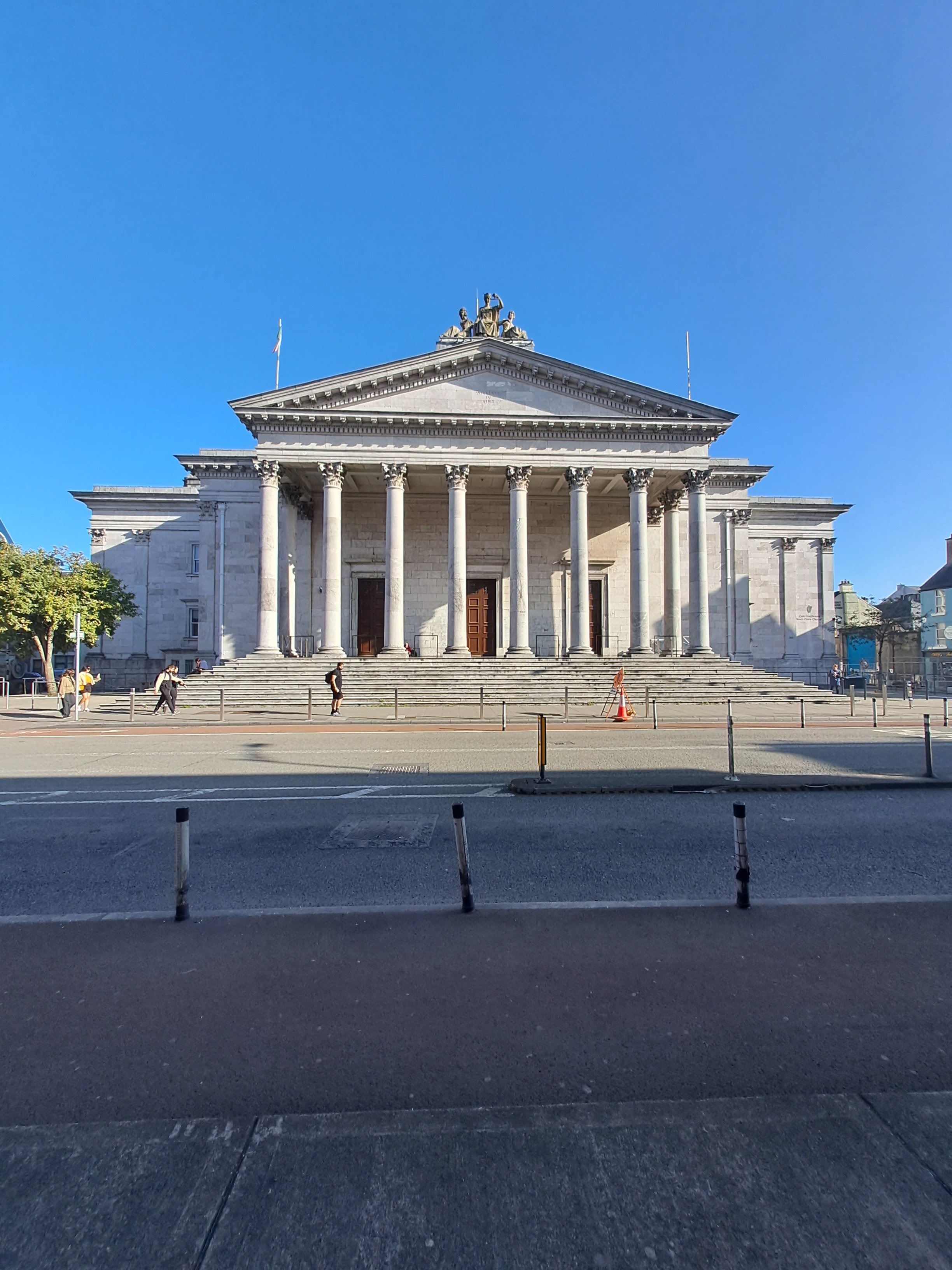
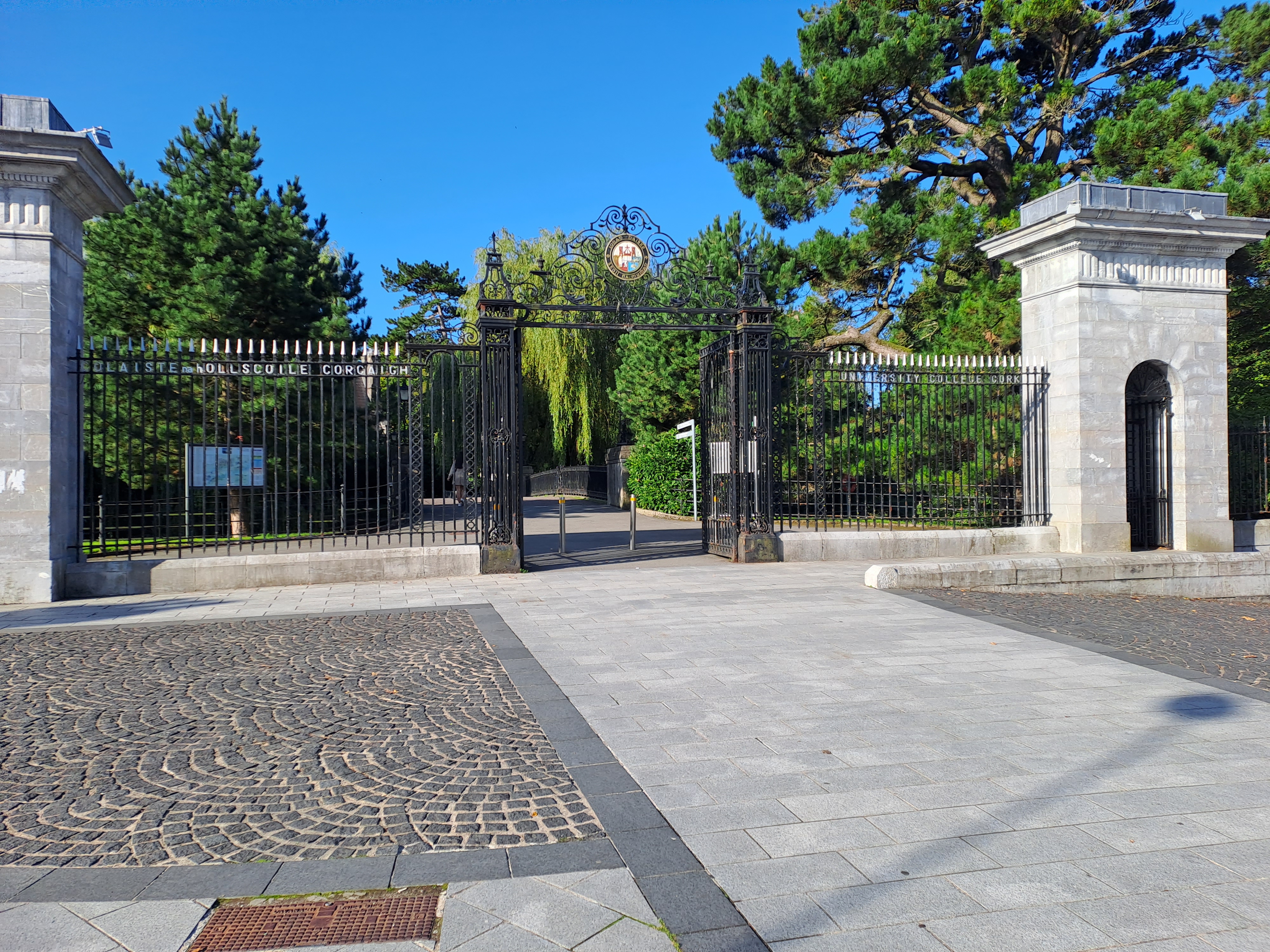
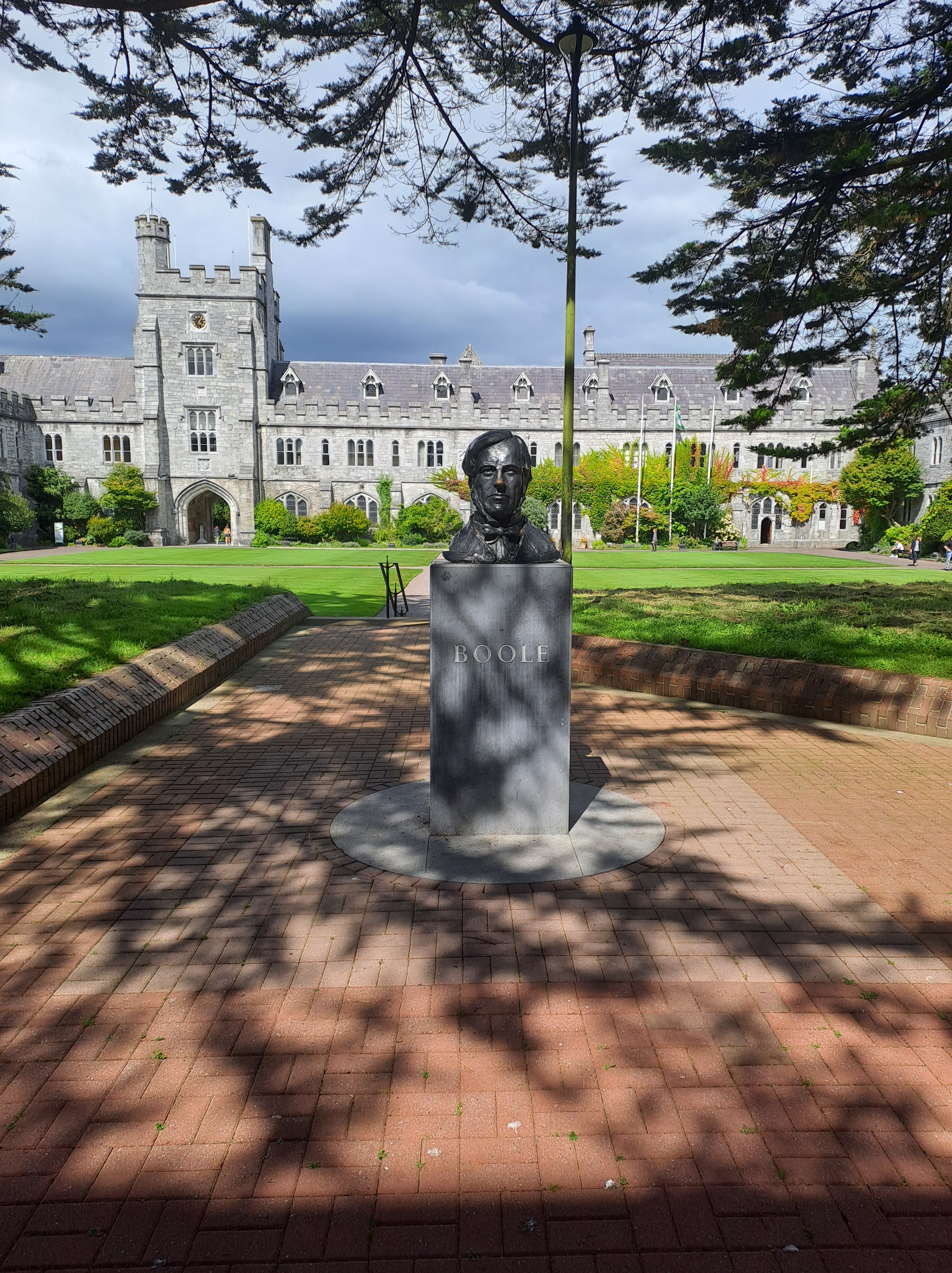
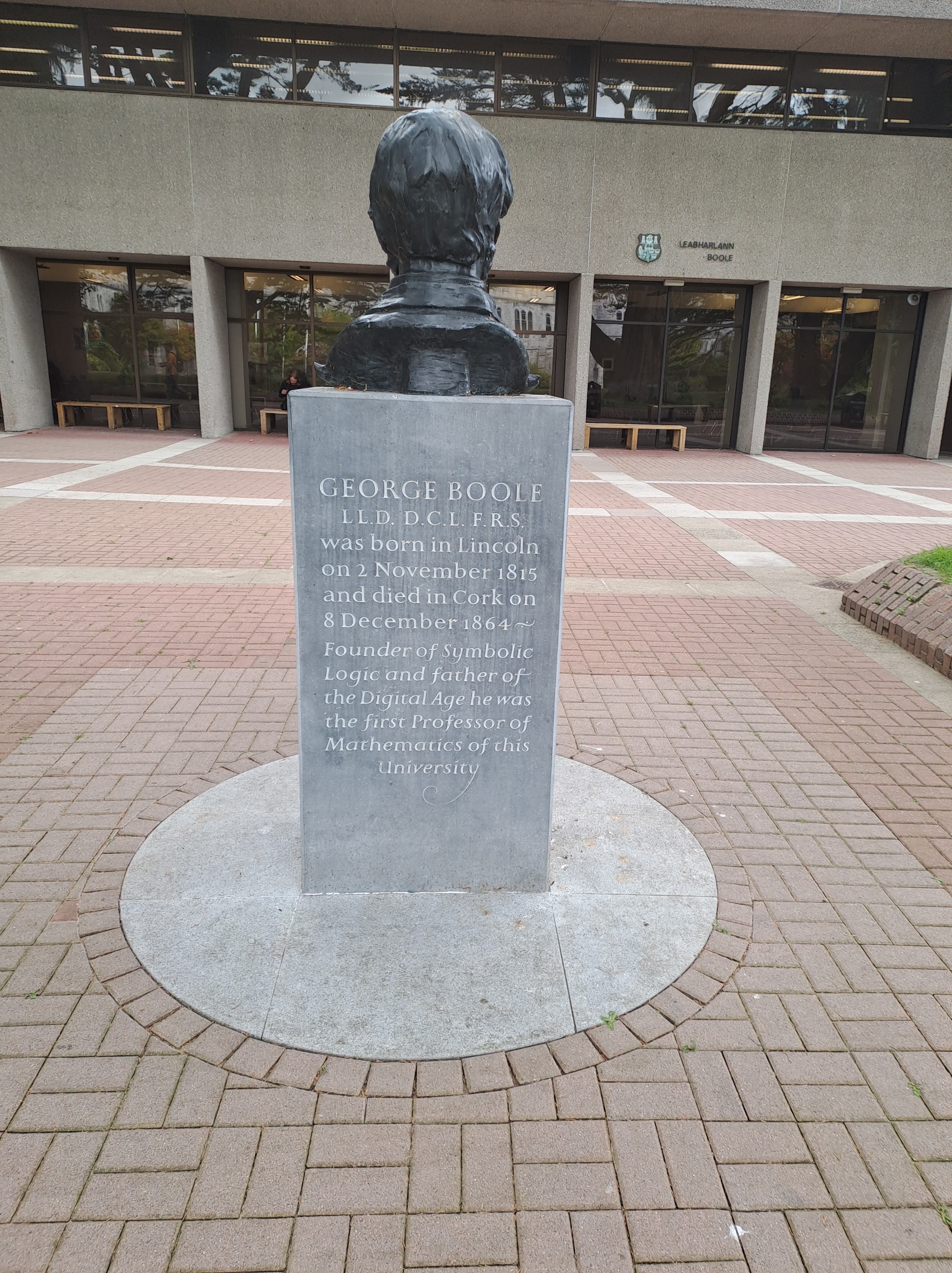
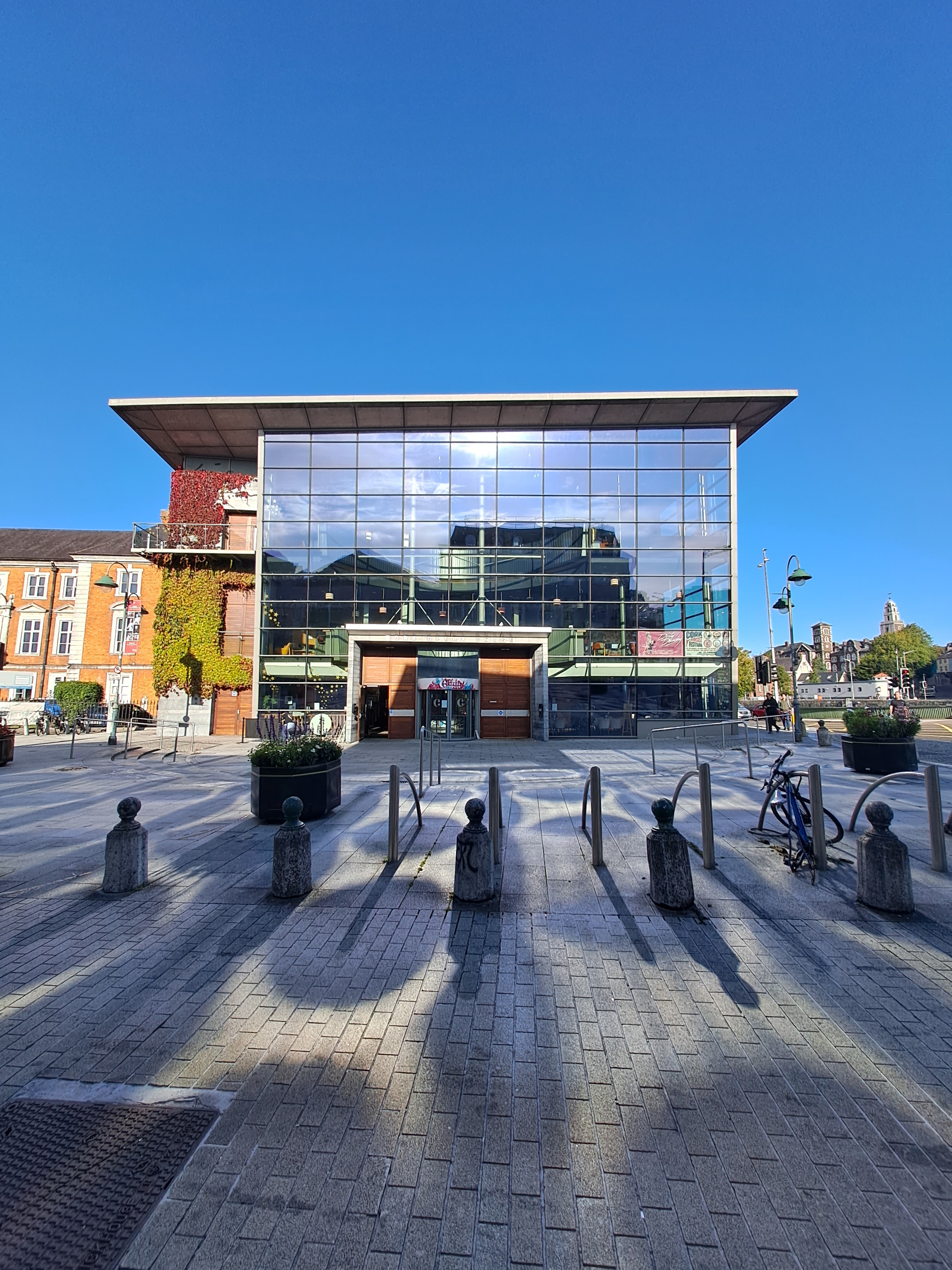
The only problem today was that I couldn’t get eduroam to work on the UCC campus so have only just managed to connect after getting back to my hotel, so am a bit late posting this. Anyway, here are some snaps I took on the way this morning, on the campus including a bust of George Boole.

ps. I’m sure to blog again about the public talk, but that will have to wait until I get home at the weekend.

Autumn Repeats

Posted in Education, History, Maynooth with tags , , , , , , on August 1, 2023 by telescoper

It’s August already, which means it is time once again for the repeat examination period to begin. Maynooth University has produced this nice good luck message for those resitting so I’ll pass it on here:

I was a bit surprised when I first arrived here that the August repeat examinations are called the Autumn Repeats. After all, they start on 1st August which is generally regarded as summer rather than Autumn. The term is, I think, a relic of the old Celtic calendar in which the start of Autumn coincides with the start of harvesting, the old festival of Lúnasa being when people celebrated the Celtic deity Lugh, who would bring a good harvest or who, if not satisfied, could bring his wrath in storms that would mess everything up. Lúnasa is the name for August in modern Irish; Lá Lúnasa is 1st August, a cross-quarter day lying (approximately) half-way between the summer solstice and the autumnal equinox. The festival is marked in the modern calendar by a Bank Holiday on the first Monday in August (Lá Saoire i mí Lúnasa) which is next Monday (7th August), so I have a long weekend to look forward to!

Anyway, the repeat examinations start today and go on for ten days or so, except there are none on the Bank Holiday when the University is closed. As it happens, my first paper is on Saturday, so I won’t be able to collect any scripts until Tuesday 8th, on which day I have two further examinations, so I’ll have three different sets to deal with.

Every year at this time I mention the difference between the system of repeats in Maynooth compared to other institutions with which I am familiar, especially in the UK. Students generally take resits when, because they have failed one or more examinations the previous May, they have not accumulated sufficient credits to proceed to the next year of their course. Passing the resit allows them to retrieve lost credit, but their mark is generally capped at a bare pass (usually 40%). That means the student gets the credit they need for their degree but their average (which determines whether they get 1st, 2nd or 3rd class Honours) is affected. This is the case unless a student has extenuating circumstances affecting the earlier examination, such as bad health or family emergency, in which case they take the resit as a `sit’, i.e. for the first time with an uncapped mark.

Here in Maynooth, however, the mark obtained in a repeat examination is usually not capped. Indeed, some students – though not many – elect to take the repeat examination even if they passed earlier in the summer, in order to increase their average mark.

Some people don’t like the idea of uncapped repeats because they feel that it would lead to many students playing games, i.e. deliberately not taking exams in May with the intention of spreading some of their examination  load into August. There’s not much sign of students actually doing that here, to be honest, for the reason that the results from the repeat examination period are not confirmed until early September so that students that deploy this strategy do not know whether they are going to be able to start their course until just a couple of weeks before term. That could cause lots of problems securing accommodation, etc, so it doesn’t seem to me to be a good ploy.

I’d welcome comments for or against whether resits/repeats should be capped/uncapped and on what practice is adopted in your institution.

Dunkirk

Posted in Biographical, Film, History with tags , , on July 17, 2023 by telescoper

On Saturday I watched the 2017 film Dunkirk for the first time. I don’t often watch films on TV but I saw this one in the listings and since it got some very positive reviews I thought I’d watch it. Here’s the trailer.

So what did I think?

First, the positives. There is some wonderful cinematography in this movie, and some realistic action sequences that manage to be disturbing without degenerating into a gorefest. It’s also quite interesting that we don’t really see the enemy at all at any point during the film. In summary, I found the first forty minutes or so very gripping, despite (or perhaps because of) the almost complete lack of dialogue.

After that, though, my interest began to wane. The main negative is that I found it hard to engage with any of the characters. In particular, the film did not convey the stress the troops must have been under. The editing was a bit of a mess too. It’s far too repetitive and I found some of the scenes rather contrived.

(I gather some people found the sound in the cinema version rather oppressively loud, but I watched it on telly at home so just turned down the volume…)

Overall, I found Dunkirk worth watching, but I’ve seen it described as one of the greatest war films of all time and it’s not that.

Three historical points.

First, I think there’s a key ingredient missing from this – and some other – tellings of the Dunkirk story, and that is the crucial role of the rearguard that valiantly defended the perimeter of the town and won enough time for evacuation to proceed. The different units of the rearguard (both French and British) depended entirely on the units either side of them to stand. Had the perimeter been broken anywhere, the defence would have failed. The men involved must have thought that they had no chance of making it back to Britain, but they held their ground and by doing so ensured that many thousands did get home. In fact, it was such a well-organized operation that much of the British rearguard was actually evacuated after a controlled retreat to the beach.

A second point is that most of the over 800 small boats that eventually proved crucial in Operation Dynamo were crewed by naval personnel, rather than their owners. The few exceptions were fishing boats, like the one shown in the film. Many of the smaller ships with a shallow draft were used to ferry men from the beach to destroyers rather than taking them all the way back to England.

Incidentally, the trip from Ramsgate – where the little boats were assembled – to Dunkirk is about 50 miles of open water. That’s quite a journey for a pleasure boat or paddle steamer.

Finally, the film reminded me that Winston Churchill’s famous speech in response to the “miracle” of Dunkirk, with its peroration “We shall fight them on the beaches, etc” was given to the House of Commons. It includes this:

We must be very careful not to assign to this deliverance the attributes of a victory. Wars are not won by evacuations. But there was a victory inside this deliverance, which should be noted.

Hansard, 4th June 1940

Churchill made that speech on 4th June 1940. I was born on the same day in the same month, a mere 23 years later.

Machiavelli on Mercenaries

Posted in History, Literature, Politics with tags , , on June 24, 2023 by telescoper

I thought I’d post this, from Il Principe (The Prince) by Niccolò Machiavelli for reasons of topicality. It’s from Chapter XII, entitled How Many Kinds of Soldiery There are, and Concerning Mercenaries:

Mercenaries and auxiliaries are useless and dangerous; and if one holds his state based on these arms, he will stand neither firm nor safe; for they are disunited, ambitious, and without discipline, unfaithful, valiant before friends, cowardly before enemies; they have neither the fear of God nor fidelity to men, and destruction is deferred only so long as the attack is; for in peace one is robbed by them, and in war by the enemy. The fact is, they have no other attraction or reason for keeping the field than a trifle of stipend, which is not sufficient to make them willing to die for you…

I wish to demonstrate further the infelicity of these arms. The mercenary captains are either capable men or they are not; if they are, you cannot trust them, because they always aspire to their own greatness, either by oppressing you, who are their master, or others contrary to your intentions; but if the captain is not skilful, you are ruined in the usual way.

Niccolò di Bernardo dei Machiavelli, The Prince (1513), Chapter XII

Them Ducks Died for Ireland – Paula Meehan

Posted in History, Poetry with tags , , on June 12, 2023 by telescoper

When I blogged last week about English Paper 2 of the 2023 Leaving Certificate, I mentioned that one of the poets that came up was Paula Meehan. I wasn’t at all familiar with her work before then I looked around for some examples, and found some lovely poems. I’m not surprised the students were glad she came up this year. She has a very distinctive and powerful sense of imagery and a wry sense of humour, as exemplified by this witty but poignant poem, which takes an unusual perspective of the Easter Rising 2016.  Inspired by the epigram which is quoted from the Irish Architectural Archive, it is a meditation on what is commemorated and what is not.

–0–

6 of our waterfowl were killed or shot, 7 of the garden seats broken and about 300 shrubs destroyed.

Park Superintendent in his report on the damage to St. Stephen’s Green, during the Easter Rising 1916

Time slides slowly down the sash window
puddling in light on oaken boards. The Green
is a great lung, exhaling like breath on the pane
the seasons’ turn, sunset and moonset, the ebb and flow
of stars. And once made mirror to smoke and fire,
a Republic’s destiny in a Countess’ stride,
the bloodprice both summons and antidote to pride.
When we’ve licked the wounds of history, wounds of war,
we’ll salute the stretcher bearer, the nurse in white,
the ones who pick up the pieces, who endure,
who live at the edge, and die there and are known
by this archival footnote read by fading light;
fragile as a breathmark on the windowpane or the gesture
of commemorating heroes in bronze and stone.


Chanson d’Automne

Posted in Art, History, LGBTQ+, Music with tags , , , on June 6, 2023 by telescoper

I’ve mentioned on here before that I had an English teacher at school who used to set interesting creative writing challenges, in which we would be given two apparently disconnected topics and asked to write something that connected them together. The inspiration was ‘Only Connect’, the epigraph of E.M. Forster’s novel Howard’s End. Since I’ve spent all afternoon in an Exam Board meeting I thought I’d do a little bit of connecting now.

Les sanglots longs
Des violons
De l’automne
Blessent mon coeur
D’une langueur
Monotone.

Tout suffocant
Et blême, quand
Sonne l’heure,
Je me souviens
Des jours anciens
Et je pleure;

Et je m’en vais
Au vent mauvais
Qui m’emporte
Deçà, delà,
Pareil à la
Feuille morte.

Chanson d’Automne, by Paul Verlaine (1844-1896).

I posted the above poem by Paul Verlaine for two reasons. One is that lines from the poem were broadcast on the eve of the Normandy Landings. The landings themselves began in the morning of June 6th 1944 and the excerpt – the last three lines of the first verse – formed a coded message broadcast to the French resistance by Radio Londres, 5th June 1944 at 23.15 GMT, informing them that the Allied invasion of France was imminent and that sabotage operations should commence.

The other reason is that that it was just two weeks ago that I attended a concert featuring settings by Benjamin Britten of prose poems taken from  Les Illuminations by Arthur Rimbaud. I didn’t know until that Verlaine and Rimbaud were lovers and that they lived for some time together in London. Their relationship was on the tempestuous side – at one point Verlaine fired a gun at Rimbaud, wounding him in the hand. Here’s a detail from a painting showing the two of them (Verlaine on the left, Rimbaud on the right).

It was said of Rimbaud that, as well as writing remarkable poetry, he was cute-looking, had a very dirty sense of humour, drank a bit too much, and liked lots and lots of rough sex. I think I would have liked him (although perhaps not enough to risk being shot by his jealous older boyfriend).

Anyway, this provides me with an excuse not only to commemorate D-Day but also Pride Month!


The End of the Irish Civil War

Posted in History with tags , , on May 24, 2023 by telescoper
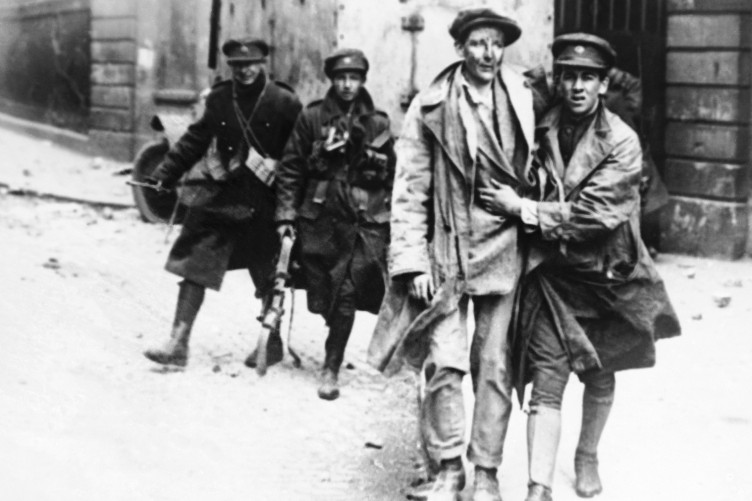
An injured Anti-Treaty soldier is supported by a fellow fighter in the Battle for Dublin that started the Irish Civil War; over 500 Anti-Treaty fighters were taken as prisoners after the battle died down in the city.

Just a very quick post to mark the fact that it was on this day a century ago, May 24th 1923, that the terrible Irish Civil War came to an end. The conflict had been stuttering to a close for some time, but the final act was a communique issued by Éamon de Valera, the political leader of the Anti-Treaty forces, which said

Soldiers of the Republic. The Republic can no longer be successfully defended by your arms. Further sacrifice on your part would now be in vain and the continuance of the struggle in arms unwise in the national interest and prejudicial to the future of our cause. Military victory must be allowed to rest for the moment with those who have destroyed the Republic. Other means must be sought to safeguard the nation’s right.

Éamon de Valera, May 24th 1923

The Irish Free State created by the Anglo-Irish Treaty lasted until 1937, when a new constitution, largely written by de Valera, was adopted. Ireland (minus the Six Counties retained by the United Kingdom in the Treaty) became a full republic in 1949.

Unknown Unknowns

Posted in Bad Statistics, History on May 2, 2023 by telescoper

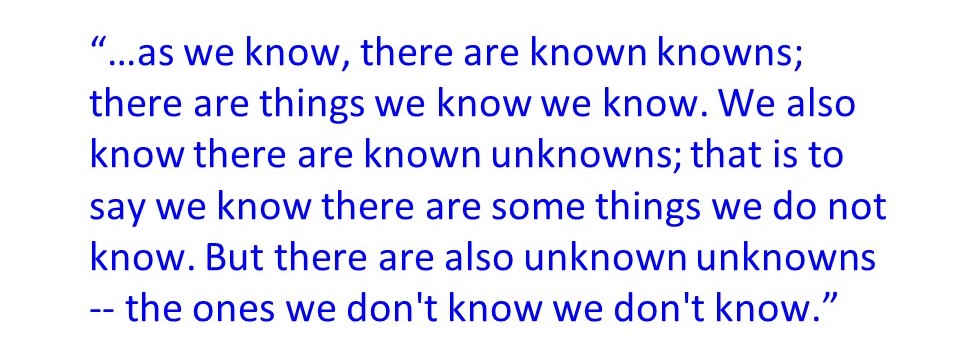
I was surprised today that some students I was talking to couldn’t identify the leading American philosopher and social scientist responsible for this pithy summation of the limits of human knowledge:

Obviously it’s from before their time. How about you? Without using Google, can you identify the origin of this clear and insightful description?

The Rising Trees

Posted in Biographical, History with tags , , , on May 2, 2023 by telescoper
The Shelbourne Hotel, viewed through the trees at the North-East corner of St Stephen’s Green

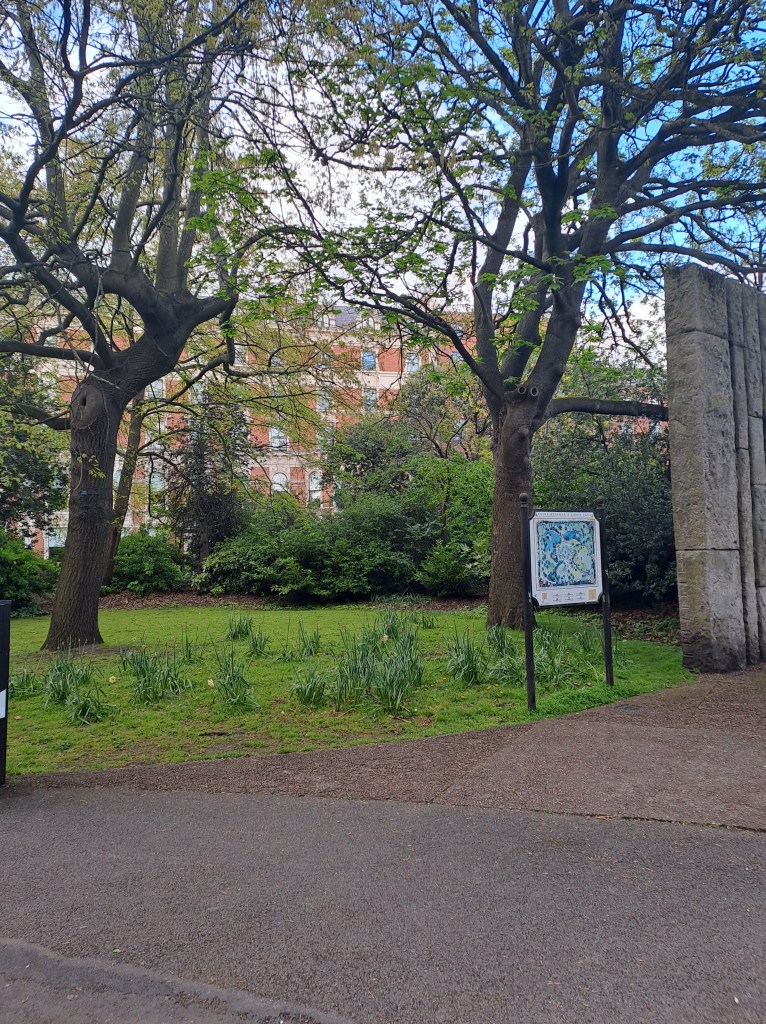
I was a bit early arriving into Dublin for the concert on Friday so decided to take a walk around St Stephen’s Green. It was a pleasant evening, and the park was quite busy with people, some sitting on the grass and some strolling around as I was. This was 28th April 2023.

The scene must have been very different 107 years ago. The Easter Rising of 1916 started on Easter Monday (24th April of that year), and ended on Saturday 29th. St Stephen’s Green was a focus of the first day of hostilities, as I blogged about here. It is obvious why the rebel forces considered this park an important location to control as it is at the junction of several main roads. On the other hand if you actually visit the location you will see a big problem, namely that the Green itself is surrounded on all sides by very tall buildings, including the swanky Shelbourne Hotel to the North.

When a contingent of about 120 members of the Citizens Army arrived in St Stephen’s Green on Easter Monday, 24th April 1916, they immediately began erecting barricades outside, and digging trenches inside, the Park. They did not, however, have the numbers needed to seize and hold the buildings around it except for the Royal College of Surgeons building to the West.

The following morning, Tuesday 25th April, the British moved two machine guns into position, one in the Shelbourne Hotel (on the 4th floor) and the other in the United Services club, along with numerous snipers. According to eyewitness accounts, almost every window in the hotel had a sniper in it. From these vantage points British soldiers could shoot down into the Park, making it impossible for the rebels to move around safely. The position inside the Green being untenable the Rebels effected an orderly (but perilous) withdrawal to the Royal College of Surgeons which they had fortified for the purpose. And that’s where they stayed until the surrender at the end of the Rising.

St Stephen’s Green is full of mature trees – there are about 750 at present – which would have been in full leaf at the time. Something I have occasionally wondered about is the extent to which the trees in late April might have afforded the rebels cover from the snipers and machine guns aimed into the park. It being the same time of year when I visited on Friday, and assuming the trees looked roughly the same as in 1916, I had a look around to see what protection they might have offered.

The answer, as you can see from the photo, is not very much…