Last night I arrived back in a very rainy Barcelona. Although I got a bit damp on the way back to my flat from the bus stop, the journey was otherwise uneventful. The one thing worthy of note is that although the approach to Barcelona Airport was a little bumpy owing to bad weather, the pilot managed to perform one of the softest of soft landings I’ve ever experienced. It was so well done that there was a spontaneous round of applause from the passengers. Clapping when the plane lands used to be fairly common, but nowadays is a rarity reserved for occasions such as this.
The end of my stint in Barcelona is now in sight so I plan to see the sights I haven’t yet seen, or at least as many of them as I can manage. Next week I have to travel to Rome for the 2024 Euclid Consortium Meeting, at which I’m doing a plenary talk on the first morning. The week after that I have to travel to Valencia to give a seminar, so it will be a busy second half of the month.
Talking of the Euclid Consortium, my term as Chair of the Euclid Consortium Diversity Committee (ECDC) closes at the end of June 2024, at which point I will also be leaving the Committee after 4 years on it. Hopefully I will find a bit more time to do research in the last two months of my sabbatical; I’ve spent about 50% of it so far on ECDC matters, and progress on writing papers has consequently been slower than I’d have liked. I hadn’t anticipated such a big increase in papers submitted to the Open Journal of Astrophysics, either but fortunately I’ve managed to get the most time-consuming aspects of that automated and since that it hasn’t taken up that much of my time.
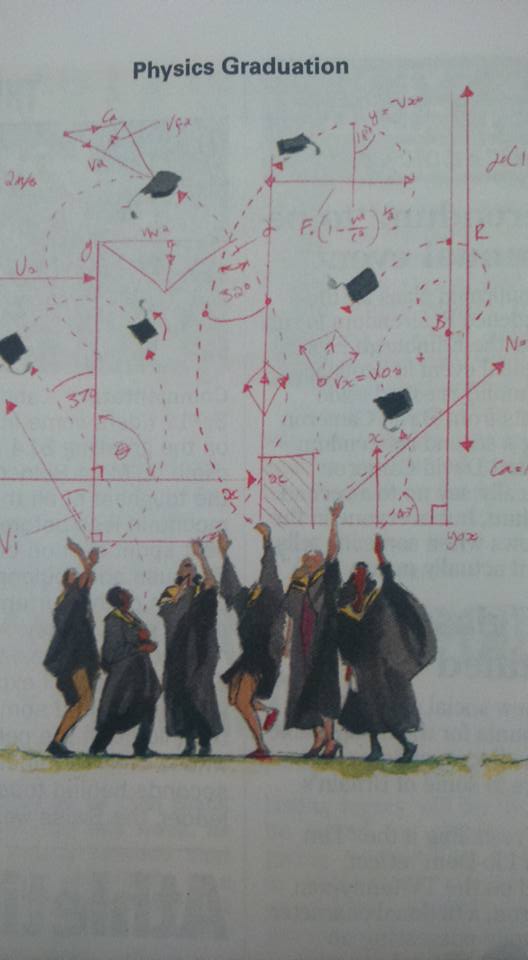
As it happens, yesterday was the day of the Departmental Examination Board for the Department of Theoretical Physics at Maynooth. I haven’t been teaching this year, so wasn’t involved. I do know quite a few students who will be graduating this summer, though, and am a little sad I won’t be around to congratulate them. I might see some of them at their conferring ceremonies in September though.
And then there’s next academic year to look forward to. What will I be teaching, I wonder? I’m not going to think about that until I have to…
Following Friday’s vote, counting in Ireland’s local elections began Saturday morning. As it happened, Maynooth was one of the first LEAs to start counting and, the electorate being fairly small, was completed last night.
In the system employed in these elections, votes are progressively reallocated in various rounds until one ends up with the top n candidates to fill the n available seats. The STV system involves a quota for automatic election which is N/(m+1) + 1 votes, where N is the number of valid ballots cast and m is the number of seats in the constituency. To see why this is the case consider a four-seat constituency, where the quota would be 20% of the votes cast plus one. No more than four candidates can reach this level so anyone managing to get that many vote is automatically elected. Surplus votes from candidates exceeding quota, as well as those of eliminated candidates, are reallocated to lower-preference candidates in this process.
I thought it might be interesting to show how it went. Here is the state of the poll after the initial count of first preference votes:
Incumbent Councillor Naoise Ó Cearúil (Fianna Fáil) led the first preference votes, exceeding the quota of 1566, and was therefore immediately elected. When his surplus votes were reallocated to second-preference candidates they did not result in anyone else exceeding quota, so Peter Hamilton (who finished last) was eliminated and his votes reallocated, etc. And so it came to pass that Tim Durkan (Fine Gael) was elected on the third count, Angela Feeney (Lab) and Peter Melrose (Social Democrats) on the 6th Count, and Paul Ward (FF) on the 7th Count. Durkan, by the way, is the son of sitting Fine Gael TD Bernard Durkan. For those outside Ireland I should mention that the Irish Social Democrats are quite progressive – in contrast to some parties with the same name in other countries – and they have a TD in the form of Caroline Murphy who has strong local support.
The turnout in Maynooth, by the way, was 45.3%. That’s quite high by the standards of local elections in the UK, but I always find it disappointing when people can’t be bothered to vote.
Anyway, of the five councillors elected (2 FF, 1 FG, 1 Lab & 1 SD) four are incumbent. The only change was sitting Green candidate Hamilton was replaced by newbie Peter Melrose for the Social Democrats. It was a disappointing result for Sinn Féin, similar to what happened five years ago in this LEA. The losing candidate then, however, Réada Cronin, went on to win a seat as TD for North Kildare in the General Election of 2020.
As I write, under a quarter of LEAs have completed their counts but it is fairly clear that it has been a disappointing election for Sinn Féin who, despite riding high in the opinion polls a few months ago, have not really recovered significantly from their poor showing in the 2019 Local Elections. Of course the question asked in opinion polls is about a General Election, which is quite a different kettle of fish compared to a Local election. Lots of pundits are trying to interpret these local results as a kind of opinion poll on the General Election which must happen before next year. They do this in the UK too. I don’t think that is wise. I think most people vote in the Local Elections on the local and rather mundane issues which are actually what the County Councils can actually deal with. Councils have very little power in Ireland and candidates who have grandiose plans far beyond the scope of what a councillor can actually achieve are not likely to do well. There is also a definite advantage on being an incumbent who has done a good job for the past five years. A problem for Sinn Féin is that it had to put up new faces in many LEAs to replace those lost five years ago, and few have been successful.
Anyway, it seems the status quo parties have done better than expected, and a variety of Independents have done well. Fianna Fáil and Fine Gael – to me, indistinguishable conservative neoliberal parties – are currently governing Ireland in coalition with the Greens. It surprises me that there is so much support for establishment parties that have presided over a housing shortage, ever-increasing homelessness and steadily deteriorating public services, but there you go.
We’ll have to wait a considerable time for the European Election count to finish, as it hasn’t even started yet, but it seems likely that Sinn Fein will struggle and that Independent will do well.
I’m briefly back in Maynooth in order to cast my vote in the Local and European Parliament Elections being held today, which I did earlier this morning. Both elections are held under Proportional Representation (Single Transferable Vote) which seems to me a very sensible system. One ranks the candidates in order of preference; you can rank all the candidates or just some. In the system employed here in Ireland, votes are progressively reallocated in various rounds until one ends up with the top n candidates to fill the n available seats. The STV system involves a quota for automatic election which is N/(m+1) + 1 votes, where N is the number of valid ballots cast and m is the number of seats in the constituency. To see why this is the case consider a four-seat constituency, where the quota would be 20% of the votes cast plus one. No more than four candidates can reach this level so anyone managing to get that many vote is automatically elected. Surplus votes from candidates exceeding quota, as well as those of eliminated candidates, are reallocated to lower-preference candidates in this process.
The Local Elections involve filling 40 seats on Kildare County Council, with five councillors representing Maynooth. The nine candidates are listed here, in case you’re interested. Some of the councillors applying for re-election have been diligent in dealing with local issues over the last five years and have in my opinion earned a vote. Other have only appeared since the election notice was given.
For the European Parliament Elections things are a bit more complicated. For the purposes of the EU elections Ireland is divided into three constituencies: Dublin, Ireland South and Midlands North West. I am in the latter, which elects four MEPs. There were 17 candidates for 4 MEPs in this constituency in 2019 but there are 27 this time round, for 5 MEPs, listed here. A sizeable fraction of these are sundry far-right loons, anti-vaxers, and general dickheads, whom I hope will be eliminated. The long list of candidates, however, means that it will take some time to complete the counting for the European elections, which won’t even start until Sunday. The Local election count will start tomorrow morning, and is expected to be completed by Sunday.
Simon Harris and Philip Nolan at the launch of Research Ireland
I just saw the news that Prof. Philip Nolan has left his post as Director General of Science Foundation Ireland (SFI) after allegations of misconduct (including bullying). Prof. Nolan was the previous President of Maynooth University, a post he left at the end of September 2021; for 18 months while still President he was also chair of the the Epidemiological Modelling as part of National Public Health Emergency Team dealing with the Covid-19 pandemic. He moved to SFI in January 2022 when Simon Harris, who is now Taoiseach, was Minister for Further and Higher Education, Research, Innovation and Science. Prof. Nolan was due to take charge of a new entity (Taighde Éireann– Research Ireland) formed by the merger of SFI with the Irish Research Council when the legislation required to create it it passes through the Oireachtas.
It seems there were no fewer than five serious complaints about Prof. Nolan’s conduct made under protected disclosure legislation, and an investigation found that he had displayed “inappropriate behaviour” towards the staff concerned, which was at the “upper level” in respect of two senior staff.
As an outsider I have no idea what has been going on at SFI, so have no dirt to dish, but it must have been rather serious for Prof. Nolan to have been forced out so quickly. I suppose it is reassuring in a way that SFI – unlike many organizations – takes bullying allegations seriously, but it is not at all good for the science ecosystem in Ireland for its main funding agency to be rocked by a scandal of these dimensions. I hope whoever takes over can steady the ship. It’s not an auspicious situation for the embryonic Research Ireland either. The first question that needs to be answered is whether Prof. Nolan will lead it despite being removed from SFI and, if not, who will?
Following on – sort of – from yesterday’s post – here is a little promotional video about the ‘Omnibus’ Bachelor of Science undergraduate course (codename MH201). I have blogged about this course before (e.g. here) but this gives me an opportunity to repeat the salient points.
Currently, most students doing Science subjects here in Maynooth enter on the General Science programme a four-year Omnibus BSc course that involves doing four subjects in the first year, but becoming increasingly specialized thereafter. That’s not unlike the Natural Sciences course I did at Cambridge, except that students at Maynooth can do both Mathematical Physics and Experimental Physics in the first year as separate choices. I’d recommend anyone who wants to do Physics in the long run to do both of these, as they do complement each other. Other possibilities include Chemistry, Computer Science, Biology, etc.
In Year 1 students do four subjects (one of which has to be Mathematics). That is narrowed down to three in Year 2 and two in Year 3. In their final year, students can stick with two subjects for a Joint Honours (Double Major) degree, or specialise in one, for Single Honours.
I like this programme very much because it does not force the students to choose a specialism before they have had a taste of the subject, and that it is flexible enough to accommodate Joint Honours qualifications in, e.g., Theoretical Physics and Mathematics. It also allows us to enrol students onto Physics degrees who have not done Physics or Applied Mathematics as part of the Leaving Certificate.
Anyway, this video features Oisín Davey, who took Mathematical Physics, Experimental Physics, Chemistry and Mathematics in his first year. As a matter of fact I taught him in Year 1 (Mechanics & Special Relativity) and Year 2 (Vector Calculus and Fourier Series) but, despite that, as he explains, he has decided to persist with Mathematical Physics. He will be in the final year next academic year, after he returns from his summer in CERN, and I’ll be back from sabbatical.
I thought I’d share this image of Maynooth University Library Cat, complete with daisy bonnet. He doesn’t look entirely gruntled with his new headgear, and I’m not sure how long it stayed on his bonce, but it’s nice to see him in fine fettle, though he’s getting a few more grey hairs. Aren’t we all?
This morning’s arXiv update brought the expected deluge of preprints from Euclid. You can find details of all fifteen of the new articles here. Ten of them relate to the Early Release Observations of which five were announced yesterday and five last November. These are essentially byproducts of the testing and calibration phase of the Euclid mission rather than the main cosmological survey. ESA is making a series of short videos about these results which I will share on here from time to time.
Of more direct relevance to cosmologists such as myself are the following five reference papers:
The overview paper, led by Yannick Mellier (Euclid Consortium Lead), giving a general description of the mission capabilities and science goals, will be the main reference paper and just about every active member of the Euclid Consortium is on the author list (including myself). That’s over a thousand people, not quite at the level of the Large Hadron Collider but getting there. I do think we need to find a better way of giving credit to work in large collaborations than through authorship, but until someone comes up with a workable scheme, and people responsible for hiring researchers adopt it, we’re stuck with what we’ve got. At least I can say that I’ve read that paper (which is 94 pages long, including the author list)
Papers II-IV are technical articles relating to Euclid’s instruments and their calibration, which will also be important references for the survey part of the Euclid mission. Paper V is about the Flagship simulations and the mock catalogues produced therefrom; I discussed these a while ago here. It is led by Francisco Castander of Institut de Ciencies de l’Espai, who organized the meeting I attended recently here in Barcelona.
These papers now now be peer-reviewed and, assuming they are accepted, published in a special issue of Astronomy & Astrophysics (A&A).
Together with the five images released last November that makes a total of ten Early Release Observations from the pre-survey phase of Euclid. It’s not all about the pictures, however. Today also saw the release of ten scientific papers to go with these images, as well as five reference papers for the main survey. You can find them all, with accompanying information here. They will be announced on arXiv tomorrow.
You might also be interested to read my Euclid piece on RTÉ Brainstorm which has just appeared. This is not just about the new images, but gives an update on what Euclid has been up to since launch, and what we can expect in the future. There’s also a version adapted for Maynooth University PR purposes here. It includes this quote:
Today’s release of new data and technical papers from Euclid is exciting in itself but also marks the start, after months of painstaking calibration and testing of the instruments, of Euclid’s main cosmological survey. We are on the threshold of a new era in cosmology. Maynooth is the only University in Ireland to be involved in this mission and it is very exciting to be at the forefront of such an important scientific development.
I’m also quoted in a piece in the Irish Times. You’ll probably find the article blocked by a paywall but my bit is:
It’s a hectic time ahead of a Big Event on Thursday 23rd May, which will include the publication of five new Early Release Observations (EROs). I’m not at liberty to say what they are until after 12 noon (CEST) on Thursday except that they’re very pretty. You can watch the live stream here:
Thursday will also see the release of ten scientific papers related to the EROs; they will appear on arXiv on Friday 24th May. These will be the first science results from the Euclid mission.
But that’s not all! Thursday will also see the publication of five papers from the Euclid Consortium (of which I am the sole member based in Ireland). These will be the principal technical reference papers aimed at the astronomical community about the Euclid mission, covering the instruments, cosmology and other astronomy science possibilities, as well as the cosmological simulations used to assist the analysis of the mission. One of these, the main overview paper for the mission, has over a thousand authors (one of whom is your truly).
Thursday’s announcements are likely to significant level of press interest. That’s not only due to the European Space Agency’s own social media feeds and the like, but also local activities in Ireland. For example, there’s this from Science Foundation Ireland using this, from the Little Book of Irish Research:
I have also written a piece for RTÉ Brainstorm, as a kind of update on the one I wrote last year on the occasion of the launch; this will go live after the embargo is lifted on Thursday.
Today is a public holiday in Spain, as it is in much of Europe (including France, Germany, The Netherlands and Denmark). The occasion for the day off is Pentecost (or Whitsuntide as it is known in the UK) which, if I understand correctly, is when the Holy Spirit went down on the Apostles. Actually Pentecost (Whit Sunday) was yesterday, exactly 7 weeks after Easter Sunday, which was quite early this year which is why Pentecost Monday (20th May) is earlier than the fixed Bank Holidays used to mark it in the UK (the last Monday in May, 27th, next Monday) and Ireland (the first Monday of June, 3rd, in two weeks’ time). Could I perhaps take all three off?
Today’s holiday notwithstanding, this is going to be a busy week. On Wednesday and Thursday there is to be an event at the European Space Agency coincident with which, on Thursday 23rd May, there will be a significant press event relating to Euclid. I’m not at liberty to say any more at this point, as everything is strictly embargoed until 12 noon CEST on that day, but I have been writing a piece for RTÉ Brainstorm to come out as soon as the embargo is lifted. Hopefully the Communications team at Maynooth University will get involved in the press activity. Watch this space.
Remarkably for me, I filed the RTÉ Brainstorm piece ahead of the deadline but it’s no time to rest on my laurels because I have another paper to finish this week by a different deadline.
And next week will be busy too. I have to make a short trip to not-Barcelona to do a PhD examination in Newcastle upon Tyne and give a lecture in Oxford, where (so I’m told) there is a University of some sort. Then I have to pass through Maynooth to vote in the Local and European Elections before returning to Barcelona. Having another two Whit Monday holidays is looking like a good plan…
The views presented here are personal and not necessarily those of my employer (or anyone else for that matter).
Feel free to comment on any of the posts on this blog but comments may be moderated; anonymous comments and any considered by me to be vexatious and/or abusive and/or defamatory will not be accepted. I do not necessarily endorse, support, sanction, encourage, verify or agree with the opinions or statements of any information or other content in the comments on this site and do not in any way guarantee their accuracy or reliability.