Today is International Women’s Day, so I thought I’d post this lovely performance of the standard Willow Weep For Me, not just because it is played by the wonderfully talented pianist composer and arranger Mary Lou Williams, but because the song itself was written by Ann Ronell…
Follow @telescoperArchive for the Jazz Category
Willow Weep For Me – Mary Lou Williams
Posted in Jazz with tags Ann Ronell, International Women's Day, Mary Lou Williams, Willow Weep For Me on March 8, 2018 by telescoper45° Angle
Posted in Jazz with tags 45 degree angle, Dannie Richmond, George Duvivier, Herbie Nichols, Jazz on February 24, 2018 by telescoperSome time ago I posted a piece of music by Dick Twardzik from the mid-50s. The jazz piano scene in those days was so heavily dominated by Thelonious Monk and Bud Powell that pianists seem to struggle to find their own voice in the space created by those two. Twardzik certainly succeeded, though he died very young. Well, here’s another track from roughly the same period (1957) featuring another underrated musician who solved this problem in a different way. This fine track, undoubtedly influenced by Monk and Powell, but at the same time with its own sound, is by Herbie Nicholls, playing his own composition 45° Angle with the excellent George Duvivier on bass and Dannie Richmond on drums. Enjoy!
Follow @telescoperWild Man Blues
Posted in Jazz with tags Johnny Dodds, Louis Armstrong, Wild Man Blues on February 16, 2018 by telescoperTime, I think, for some vintage jazz. This one doesn’t really need many words of introduction. It was recorded on May 7th 1927 in the Okeh Studios in Chicago by Louis Armstrong and his Hot Seven: Louis Armstrong (cornet), John Thomas (trombone), Johnny Dodds (clarinet), Lil Armstrong (piano), Johnny St. Cyr (banjo), Pete Briggs (tuba), and Warren `Baby’ Dodds (drums). Two things are worth saying, though. One is that this piece is very modern-sounding for its time, in that there’s very little of the ensemble work that one associates with New Orleans jazz, just two extended solos by Louis and Johnny Dodds, and that those solos are both very free. The other is that Armstrong’s solo is so good that there were only a few soloists who could have taken over from him without creating an anti-climax. Fortunately, one of those men (Johnny Dodds) was in the studio and did just that, matching Satchmo in power and invention. Enjoy!
Follow @telescoperR.I.P. Hugh Masekela (1939-2018)
Posted in Jazz with tags apartheid, Hugh Masekela, Jazz on January 23, 2018 by telescoperI woke up this morning to the very sad news that South African jazz trumpeter Hugh Masekela had lost the long and courageous battle he had been fighting against cancer and has passed away at the age of 78. Hugh Masakela did a huge amount to establish a uniquely South African jazz tradition and much of his music was a response to the struggle against apartheid. Although some “serious” jazz fans have criticised him for `selling out’ in his forays into pop – for which he simplified his playing style considerably – this approach definitely succeeded in bringing many new people to his music. His was exactly the same approach as Louis Armstrong, actually, and I for one don’t begrudge either his commercial success.
I was fortunate to hear Hugh Masekela live many years ago at Ronnie Scott’s Club. He had a wonderful stage presence, and played a typically eclectic mix of music and it was a wonderful night that I’ll remember for the rest of my life.
Here’s a clip of him playing and singing that gives an idea of what the man and his music were like and just how much he will be missed.
R.I.P. Hugh Masekela (1939-2018).
Follow @telescoperCome Sunday
Posted in Jazz with tags Come Sunday, Duke Ellington, Mahalia Jackson on January 21, 2018 by telescoperI can’t believe that I’ve been sharing music on this blog for almost a decade and haven’t yet posted this. It’s a beautiful Duke Ellington song Come Sunday, written for the extended concert suite Black, Brown and Beige, later appeared in the Duke Ellington concerts of sacred music, and eventually became a jazz standard. It was written for solo voice along with the full Ellington band, but this almost entirely a cappella version featuring the great gospel singer Mahalia Jackson with a few bits of Duke Ellington on piano is my favourite version. It’s a hauntingly elusive melody, but Mahalia Jackson fills it with her entire soul…
Follow @telescoperYellow Tango
Posted in Jazz with tags Bud Powell, Dick Twardzik, Thelonious Monk, Yellow Tango on January 12, 2018 by telescoperBefore Christmas I posted one of my favourite pieces of music, The Fable of Mabel, performed by a band led by Serge Chaloff and featuring pianist Dick Twardzik (who also composed the piece). I thought I’d follow this up with another piece by Twardzik, this time in a trio with Carson Smith on bass and the excellent Peter Littman on drums.
This piece was recorded in late 1954, at which time the two great influences on jazz piano were Bud Powell and Thelonious Monk. Here’s a good example of how Twardzik manages to nod in the very different directions of these two great musicians – the Monk influence in particular stands out a mile when the rhythm switches from Latin-American to 4/4 at about 1:43 – while also managing to find a very original voicea which was all his own. It’s such a terrible shame that within a few months of this session Twardzik was dead (of a heroin overdose, at the age of 24) and jazz had lost one of its most promising young artists.
Follow @telescoperHold ’em Joe – Sonny Rollins
Posted in Jazz with tags calypso, Hold 'em Joe, Jazz, Sonny Rollins on January 6, 2018 by telescoperSo I’m in Dublin airport waiting to board a (delayed) flight. Since it’s cold and dark outside I thought I’d take the opportunity to use the free airport Wi-fi to share something that put a bit of a spring in my step when I heard it on the radio a couple of days ago. It’s a truly phenomenal performance on tenor saxophone by the great Sonny Rollins over an infectious calypso rhythm generated by Mickey Roker on drums. Enjoy!
Follow @telescoper
The Fable of Mabel
Posted in Jazz with tags Dick Twardzik, Jazz, Serge Chaloff, The Best of Jazz, The Fabel of Mabel on December 22, 2017 by telescoperNow, as a special Christmas treat, I present for you one of my all-time favourite pieces of music. It was recorded by Serge Chaloff Octet in Boston, in September 1954 and I’ve loved it ever since I first heard it on The Best of Jazz, the radio show that was presented by Humphrey Lyttelton for many years on Radio 2, way back in the 1980s. Humph had eclectic musical tastes and I am forever in his debt for introducing me to relatively obscure pieces such as this which have given me so much pleasure over the years. I can see I’m not the only WordPress blogger who loves this track too!
The lineup for this track is Serge Chaloff (baritone sax) Herb Pomeroy (trumpet) Gene DiStachio (trombone) Charlie Mariano (also saxophone) Varty Haritounian (trumpet) Dick Twardzik (piano) Ray Oliveri (bass) and Jimmy Zitano (drums). Serge Chaloff was a famously dissolute and chaotic character, who struggled to control a serious narcotics habit, but he was a marvellously accomplished player of the huge and unwieldy baritone sax. Chaloff plays beautifully on this track but the star is the amazingly innovative pianist and composer Dick Twardzik, who wrote the piece. Had he not died so young (in 1955, of a heroin overdose, on tour in Paris with Chet Baker, at the age of just 24) he would have become a household name in Jazz.
Twardzik had this to say about The Fable of Mabel on the sleevenote:
The Fable of Mabel was introduced to jazz circles in 1951-52 by the Serge Chaloff Quartet. Audiences found this satirical jazz legend a welcome respite from standard night club fare. In this legend, Mabel is depicted as a woman who loves men, music and her silver saxophone that played counterpoint (her own invention which proved impractical). The work is divided into three movements: first, New Orleans; second Classical; and third, Not Too Sad An Ending. The soulful baritone solo Serge Chaloff traces Mabel’s humble beginnings working railroad cars in New Orleans to her emergence as a practising crusader for the cause of Jazz. During her Paris days on the Jazz Houseboat, her struggle for self-expression is symbolized by an unusual saxophone duet Charlie Mariano and Varty Haritrounian. Mabel always said she wanted to go out blowing. She did.
This piece is radically different from the mixture of bop tunes and standards that provided the bulk of the repertoire for Chaloff’s band in the 1950s and it provides a superb example of how the musical revolution pioneered by Charlie Parker, Dizzy Gillespie, Thelonious Monk et al. opened the doors and ushered in a wave of creativity that fanned out in all kinds of unexpected directions. I love The Fable of Mabel for its quirkiness, the virtuosity of the playing, and for the edgy, Noir-ish atmosphere that it generates. Incidentally, it’s interesting that most of the musicians on this track are of Eastern European extraction, as were many of the leading lights of Film Noir. I always felt this track would make a perfect soundtrack for such a film.
If ever got asked to go on one of those radio programmes where you have to pick your favourite pieces of music, this would definitely be among my selections. I hope you enjoy it too!
Follow @telescoperThe Sonny Rollins Williamsburg Bridge
Posted in Jazz with tags Jazz, Sonny Rollins, The Bridge, Williamsburg Bridge on December 12, 2017 by telescoperBetween 1959 and 1961 the great tenor saxophonist Sonny Rollins took a break from making recordings to practice intensively, developing his technique and expanding his musical vocabulary. Living in New York City, but lacking anywhere private to play, he went every day to Williamsburg Bridge to practice. The first record he made after this `sabbatical’ was called The Bridge, released in 1962, and now regarded as a classic:
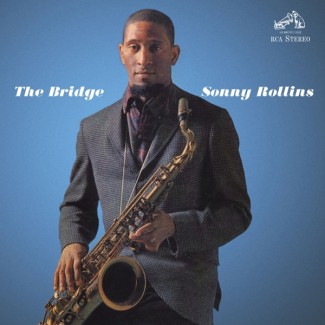
There is now a move afoot to have the Williamsburg Bridge renamed as the Sonny Rollins Williamsburg Bridge. There is a petition here. Please consider signing it. I have!
Here’s a little video about The Sonny Rollins Bridge project:
And if you’re on Twitter can follow their account here:
Follow @RollinsBridge
Ellington meets Tchaikovsky
Posted in Jazz with tags Duke Ellington, Nutcracker Suite, Pyotr Ilyich Tchaikovsky on December 9, 2017 by telescoperJazz and classical music don’t always provide a palatable blend, but here’s one cocktail that definitely works, especially in the festive season. It’s from the 1960 album The Nutcracker Suite by Duke Ellington, based on original music for the ballet by Pyotr Ilyich Tchaikovksy. Most of the arranging on the album was, I think, done by Duke Ellington’s regular collaborator Billy Strayhorn, and the result is every bit as witty, elegant and charming as you’d expect. No doubt some classical music fans will hate this, but I think it’s wonderful!
This is the Overture. If you like it do check out the other tracks!
Follow @telescoper
 In the Dark