Archive for Sonny Rollins

R.I.P. Sonny Rollins (1930-2026)

Posted in Jazz, R.I.P. with tags , , , , , , , , on May 26, 2026 by telescoper

I woke this morning to the sad news that the great tenor saxophonist Sonny Rollins passed away yesterday at the age of 95. He was one of the most influential and creative musicians of his time and there are many justifiably glowing obituaries of him. I can’t add much that hasn’t already been said by them, other than say that I consider myself deeply privileged to have been able see and hear Sonny Rollins play live, not once but twice, during the 1980s. The first was in the relatively intimate surroundings of Ronnie Scott’s club in London and the second in the Royal Festival Hall. On both occasions he was fantastic. Sonny Rollins was one of those musicians who made me think when I watched him that if you took the instrument out of his mouth it would somehow carry on playing on its own. At Ronnie Scott’s club he opened one set by starting to play in the band room, walking out through the audience onto the stage still playing and then about an hour later walked off back the way he came, still playing. The tune was Thelonious Monk’s 52nd Street Theme. He ended his set at the Festival Hall with an unstoppable version of Don’t Stop The Carnival that had everyone leaping about in the aisles. There was so much music in him it just had to come out. Was he playing the music or was it playing him?

Sonny Rollins began playing professionally when he was a teenager in the late 1940s but came to the attention of the jazz world in earnest when he teamed up with Miles Davis for a 1954 recording session that led to a record called Miles Davis with Sonny Rollins. (Coincidentally, today would have been Miles Davis’s 100th birthday). That record, originally issued on a 10″ LP, showcased Rollins’s big muscular sound on tenor sax, but also consisted of four tracks, three of which were compositions by Sonny Rollins, including a now-standard Oleo. That record was really Sonny’s breakthrough and he went on to record dozens of superb albums both as leader: A Night at the Village Vanguard, Saxophone Colossus, Newk’s Time, and Way Out West, to name just four. He also made many records as a side man, including the must-have album, Brilliant Corners with Thelonious Monk.
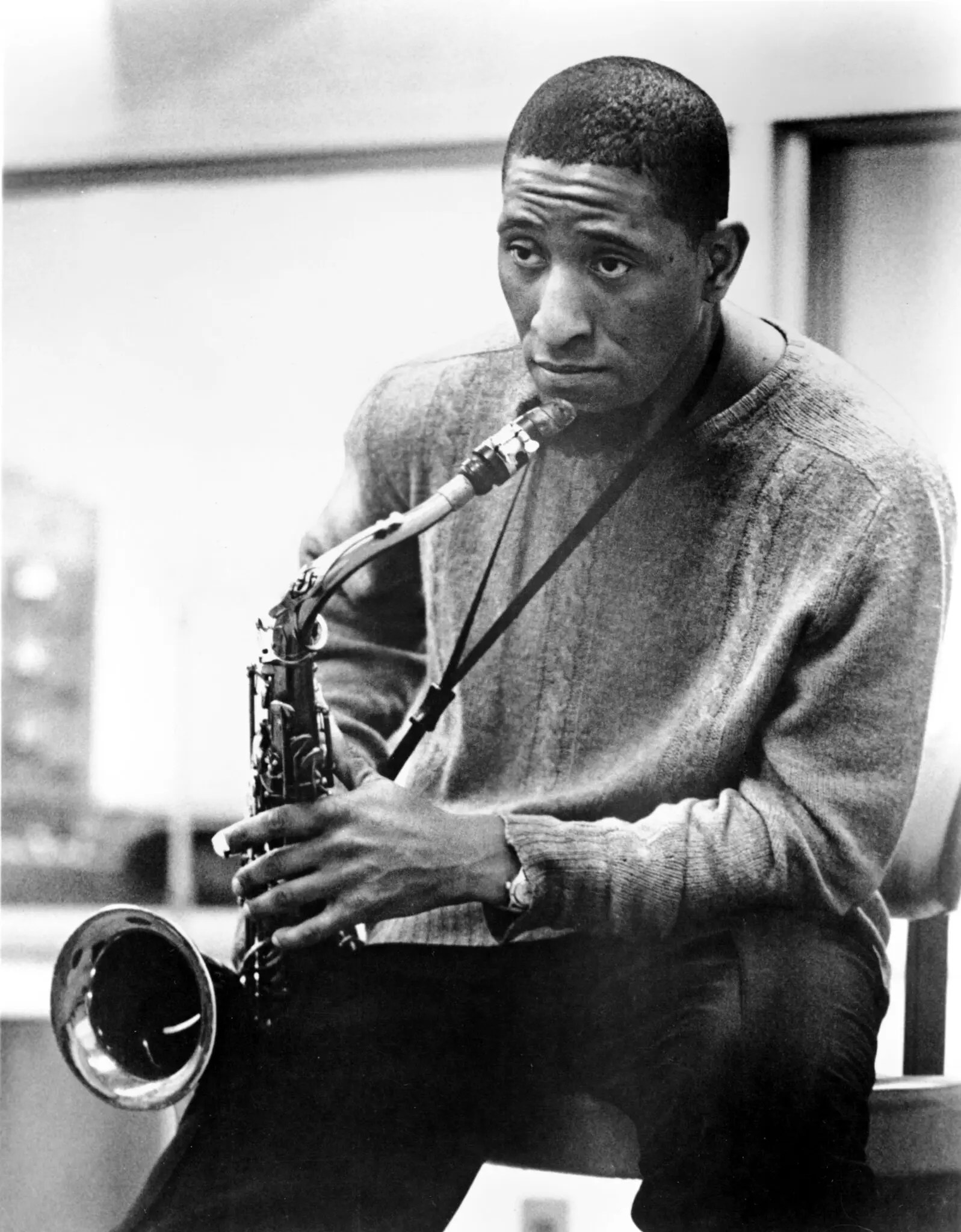
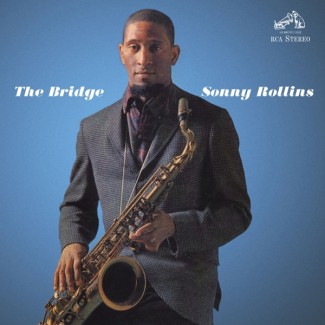
Having established himself as a major artist, Rollins suddenly took a three-year break from playing between 1959 to 1961 to develop his technique. Lacking space to practice in his apartment, he did so every day on the Williamsburg Bridge. When he returned to a recording studio in early 1962, the result was another classic album, The Bridge.

(Left: Sonny Rollins c. 1960)

Having established himself as a major artist, Rollins suddenly took a three-year break from playing between 1959 to 1961 to develop his technique. Lacking space to practice in his apartment, he did so every day on the Williamsburg Bridge. When he returned to a recording studio in early 1962, the result was another classic album, The Bridge.

In all he made over 60 albums, of which I have about a dozen. I’ll be listening to them a lot over the next few days and may post a few further items about them in due course.One thing I always liked about Sonny Rollins was his tendency to take a shine to very unexpected tunes and turn them into something magical. Off the top of my head I can think of The Surrey with the Fringe on Top, How are Things in Glocca Morra? and I’m an Old Cowhand.

It’s impossible to pick a single track than can do justice to Sonny Rollins so I’m just going to include a couple here. The first is the very first track I ever heard by him, on a Blue Note sampler album. It’s a Miles Davis tune called Tune Up and it’s from the 1957 Blue Note album Newk’s Time with Wynton Kelly (piano), Doug Watkins (bass), and Philly Joe Jones (drums). Perhaps listening to the energy and invention of his playing, delivered with that characteristically leathery tone then you’ will understand why I fell instantly in love with his music and wanted to hear more.

The second is one of my favourite records of all time. It’s called Hold’ Em Joe and it was recorded in 1965 with Ray Bryant (piano), Walter Booker (bass) and the fabulous Mickey Roker on drums:

As a sad footnote on this sad occasion, the passing of Sonny Rollins means that not one of the great musicians in this famous photograph A Great Day in Harlem, taken on August 12th 1958, is still with us:
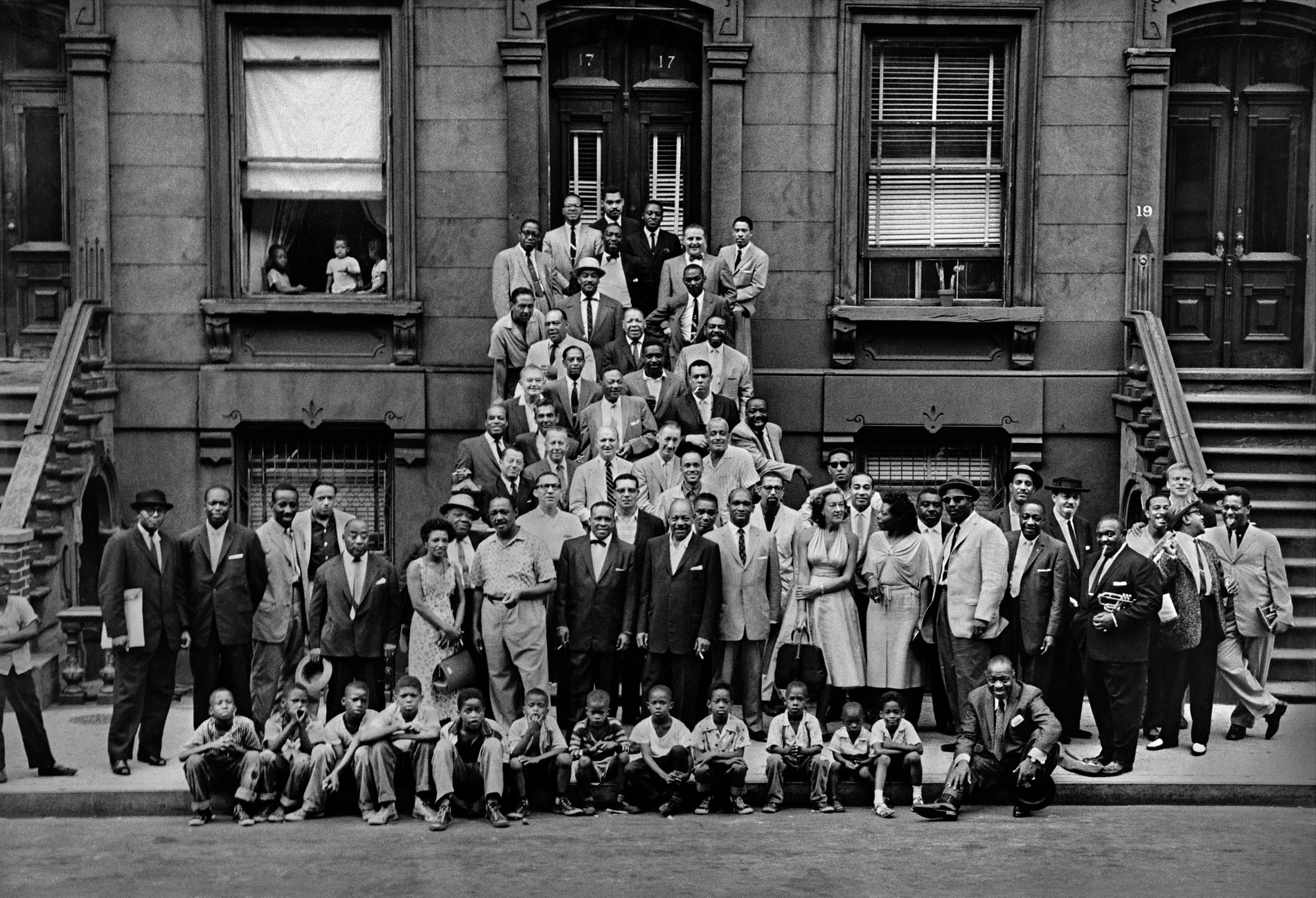
Rest in Peace Sonny Rollins (1930-1954), Saxophone Colossus indeed.
How are things in Glocca Morra? – Sonny Rollins

Posted in Jazz with tags , , on February 12, 2020 by telescoper

À propos de rien, but to chill for a few minutes while I have a cup of tea after this afternoon’s Engineering Mathematics lecture, I thought I’d post a piece of music. As regular readers of this blog (both of them) will know, I listen to quite a lot of jazz. In the course of doing that it has often struck me that there can hardly be a tune that’s ever been written – however unpromising – that some jazz musician somewhere hasn’t taken a fancy to and done their own version. Louis Armstrong turned any amount of base metal into gold during his long career, but here’s an example from a more modern legend, Sonny Rollins, who is still going strong at the age of 89.

The full personnel listing is Sonny Rollins (tenor saxophone); Donald Byrd (trumpet); Wynton Kelly (piano); Gene Ramey (bass); and Max Roach (drums). The track was recorded in 1956. The band is playing a tune called How are thing in Glocca Morra? and it was written for the 1947 musical Finian’s Rainbow (which I hate). This version, though is absolutely gorgeous.  It clearly doesn’t take much to inspire a genius…

Hold ’em Joe – Sonny Rollins

Posted in Jazz with tags , , , on January 6, 2018 by telescoper

So I’m in Dublin airport waiting to board a (delayed) flight. Since it’s cold and dark outside I thought I’d take the opportunity to use the free airport Wi-fi to share something that put a bit of a spring in my step when I heard it on the radio a couple of days ago. It’s a truly phenomenal performance on tenor saxophone by the great Sonny Rollins over an infectious calypso rhythm generated by Mickey Roker on drums. Enjoy!


The Sonny Rollins Williamsburg Bridge

Posted in Jazz with tags , , , on December 12, 2017 by telescoper

Between 1959 and 1961 the great tenor saxophonist Sonny Rollins took a break from making recordings to practice intensively, developing his technique and expanding his musical vocabulary. Living in New York City, but lacking anywhere private to play, he went every day to Williamsburg Bridge to practice. The first record he made after this `sabbatical’ was called The Bridge, released in 1962, and now regarded as a classic:

There is now a move afoot to have the Williamsburg Bridge renamed as the Sonny Rollins Williamsburg Bridge. There is a petition here.  Please consider signing it. I have!

Here’s a little video about The Sonny Rollins Bridge project:

And if you’re on Twitter can follow their account here:


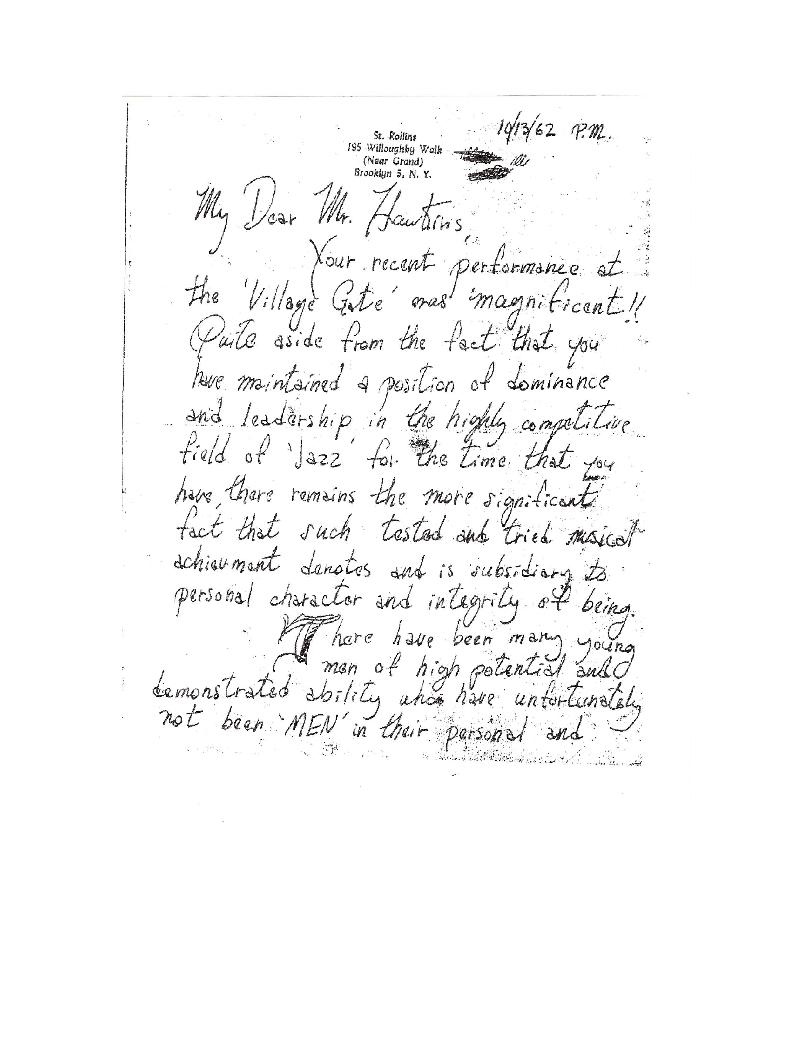
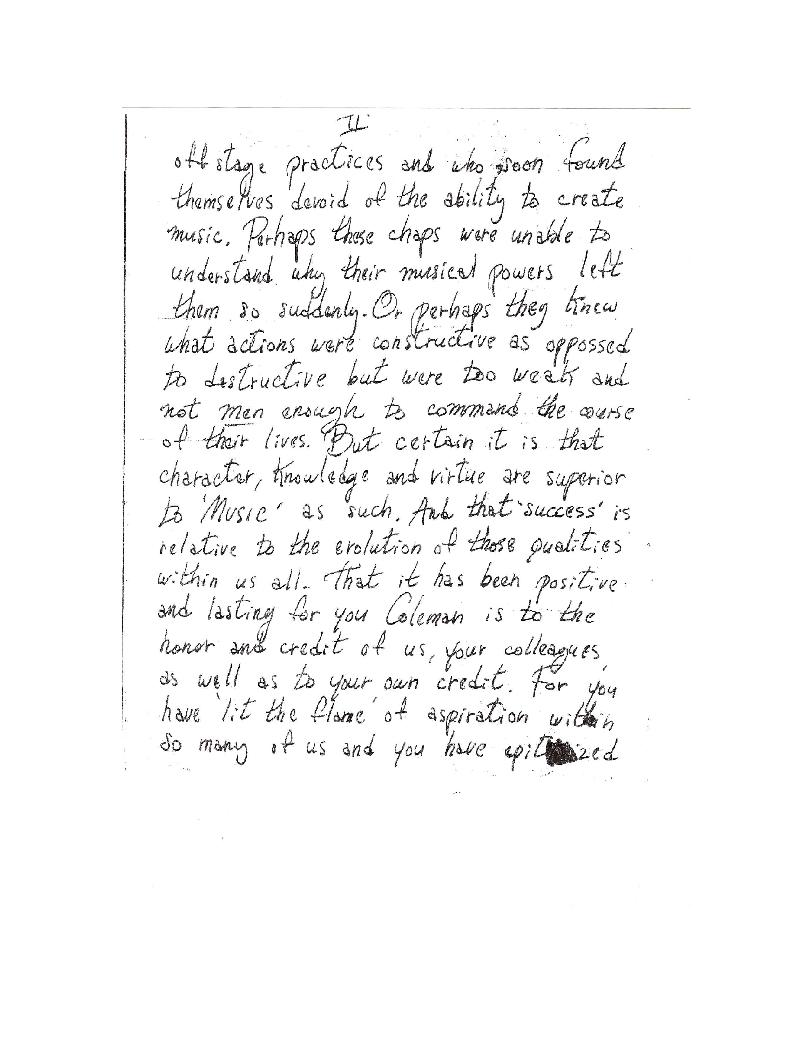
Sonny Rollins’ letter to Coleman Hawkins

Posted in Jazz with tags , , , , on March 4, 2015 by telescoper

I couldn’t resist reblogging this wonderful letter from one great saxophonist, Sonny Rollins, to another, Coleman Hawkins.

The letter was written in 1962. You can find here on Youtube a recording of the two of them playing the great Jerome Kern tune All The Things You Are at the Newport Jazz Festival just a few months later in summer 1963. The title seems to match the sentiments of the letter rather nicely!

Simon Purcell's avatarSimon Purcell

Do read this, a touching letter from Sonny Rollins to Coleman Hawkins in 1962 (from the website www.jazzclef.com). The greatest players possess not only self-discipline and powers of concentration, but generally, great humility.

View original post

How are things in Glocca Morra?

Posted in Jazz with tags , , on December 10, 2010 by telescoper

As regular readers of this blog (both of them) will know, I listen to quite a lot of jazz. In the course of doing that it has often struck me that there can hardly be a tune that’s ever been written – however unpromising – that some jazz musician somewhere hasn’t taken a fancy to and done their own version. Louis Armstrong turned any amount of base metal into gold during his long career, but here’s an example from a more modern legend, Sonny Rollins, who is still going strong at the age of 80. It’s a tune called How are thing in Glocca Morra? and it was written for the 1947 musical Finian’s Rainbow (which I hate). This version, though, recorded in the mid 50s by a band led by Sonny Rollins on tenor sax, is absolutely gorgeous. It doesn’t take much to inspire a genius…


Share/Bookmark

St Thomas

Posted in Jazz with tags , , , , on January 25, 2010 by telescoper

Walking past a Jazz club during my recent trip to Copenhagen – sadly, I didn’t have time to go in – I remembered the many times I’d heard the great Danish bass player Niels-Henning Ørsted Pedersen (known universally to Jazz fans as NHØP) playing there in the past. He died suddenly of a heart attack in 2005, at the age of 58, bringing to a close a career that had started when he was only 17. He was an incredible virtuoso, playing his unwieldy instrument in an astonishingly nimble fashion. As a result he was number one choice as accompanist whenever leading jazz artists toured his native Denmark where he remained most of his life, despite frequent invitations to join big name bands abroad. Although he appeared quite frequently on TV in the United Kingdom with Oscar Peterson in the 1970s, he never really became as widely known as he should have been given what a great musician he was.

I looked around on youtube to find an appropriate example of his playing, and found this superlative performance which I’d never seen before and which also offers a fine helping  of the great Sonny Rollins on tenor saxophone.  He will be 80 later this year and is still playing with the immense drive and imagination that he has shown since he began his career at the age of 11. He also wrote the tune, St Thomas, which has a strong caribbean feel to it, and which is based on a song from the Virgin Islands that his mother sang to him when he was a child. I’ve seen him play a number of times live, including at Ronnie Scott’s club in London and at the Royal Festival Hall, and wherever it was he always set the place on fire.

I hope the lilting calypso beat,  infectiously happy tune and, most of all, superb playing by every member of the band here will give you as warm a feeling as it did me when I first heard it. The other members of the quartet alongside Sonny Rollins are Kenny Drew on piano and Albert “Tootie” Heath on drums, but listen out for NHØP’s fantastic bass solo, starting around 4:41. Brilliant.