Not to be confused with the former UK Prime Minister, Ted Heath was the leader of a famous big band that was especially popular in the UK during the 1950s. His orchestra also served as a kind of “day job” for up-and-coming British jazz musicians, allowing them to earn enough cash through radio work and recording sessions to subsidize their jazz ventures. Among the excellent musicians that played with Ted Heath’s band were Ronnie Scott and Don Rendell (tenor sax), pianist Stan Tracey and trumpeter Kenny Baker, all of whom were what you might call modernists. I thought I’d share this recording of St James Infirmary – a tune that the legendary trombonist Jack Teagarden famously referred to as “the oldest blues I ever heard” – not only for the fine arrangement, but because of the excellent trombone solo on it. There is no personnel listing but I’d bet my bottom dollar that the featured trombonist is Keith Christie, who played with Humphrey Lyttelton’s band for many years before leaving to join the Heath band in 1957; this track was recorded in 1959.
Archive for the Music Category
St James’ Infirmary Blues – Ted Heath Orchestra
Posted in Jazz with tags Big Band jazz, Keith Christie, St James Infirmary, St James Infirmary Blues, Ted Heath on June 19, 2025 by telescoperL’elisir d’amore at the National Opera House
Posted in Opera with tags Claudia Boyle, Duke Kim, Erina Yashima, Gaetano Donizetti, Irish National Opera, John Molloy, Le'lisir d'amore, National Opera House, Opera on June 5, 2025 by telescoper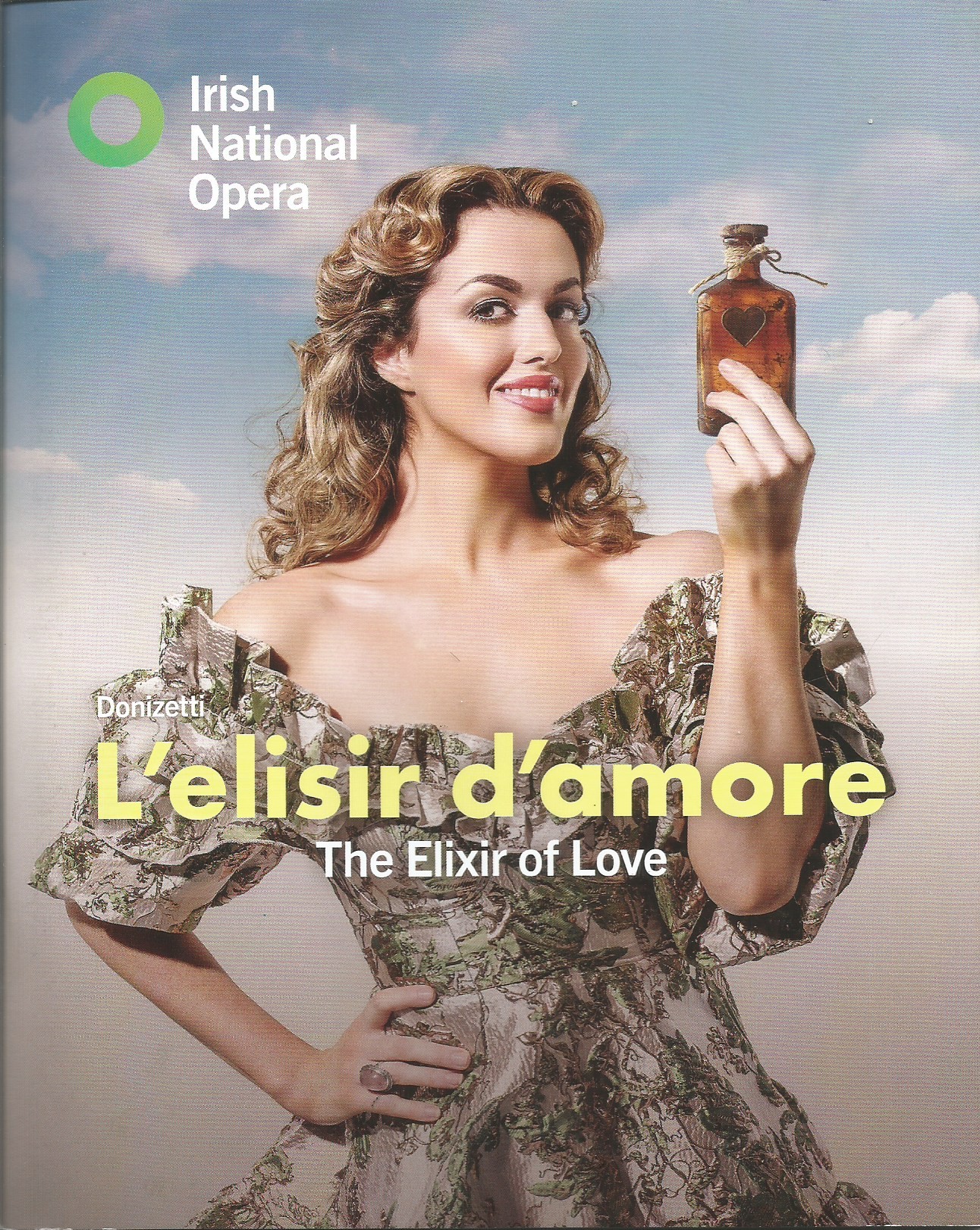
My trip to Wexford was to mark a special occasion by paying my first ever visit to the National Opera House to see a performance of Donizetti’s comic opera L’elisir d’amore by Irish National Opera. It was well worth the trip, as it was a wonderfully entertaining production with lovely singing and lots of laugh-out-loud moments. In short, it was a blast.
Billed as a melodramma giocoso, but more usually called an opera buffa, this was the first Donizetti opera to be performed in Ireland, in 1838; its world premiere was in 1832 in Milan and it has been in the operatic repertoire ever since. The show-stopping Una furtiva lagrima in Act II is one of the most recorded tenor arias, the first recording of which dates back to 1904 (by Enrico Caruso).
In case you’re not aware of the opera, it tells the story of a lowly peasant (Nemorino, tenor) who is in love with the wealthy Adina (soprano), who does not return his love – understandably not just because he’s poor but because he’s a bit of a drip. In despair Nemorino turns to the fake doctor Dulcamara (bass-baritone) “famous throughout the Universe and certain other places” who has arrived in town to peddle potions and quack remedies, no doubt made from snake oil. Nemorino asks him for a philtre that will make Adina fall for him. Dulcamara has sold all his potions, but fills an empty medicine bottle with wine and tells him it’s the love potion he needs. After drinking it, Nemorino feels more confident, but Adina still isn’t interested. Worse, Adina has agreed to marry to soldier Belcore. That’s Act I.
In Act II, desperate to stop the marriage, Nemorino wants to buy some more of the love potion but he has no money so he agrees to join the army for which he is entitled to a joining fee. He spends the money on more wine and gets completely wasted, so much so that he misses the news that a rich uncle has died and left him a large inheritance. When the women of the town find out that he is now rich, they all start showing an interest in Nemorino, which he assumes is because of the love-potion. At this point Adina decides she really does love Nemorino, buys out his contract with the army, and calls off the wedding with Belcore. The soldier shrugs off his loss. Dulcamara convinces himself that he really has magical powers…
Summarizing the plot doesn’t really do justice to the opera, however, as there are numerous musical interludes, with dancing, and slapstick comedy. Donizetti’s music is wonderful, and keeps the pace going. It’s basically a theatrical farce set to music, with the score keeping everything moving at the speed that is essential to make such a thing work. Erina Tashima conducted the Orchestra of Irish National Opera with great verve.
This production is set in a comical Wild West of America, with a relatively simple set but wonderful very witty costumes. Nemorino (Duke Kim) was dressed like Woody from Toy Story, for example. We also had appearances from Calamity Jane, Laurely & Hardy (who do their “Way Out West” dance), Abraham Lincoln and even the couple from Grant Wood’s painting American Gothic. Adina (Claudia Boyle) has no fewer than five costume changes, each one into a frock more glamorous than the previous. Dulcamara was the wonderful John Molloy and there is great comedy between him and his diminutive sidekick Truffaldino (a non-singing part played by Ian O’Reilly). Belcore’s troops are kitted out like the US Cavalry, and their dancing and messing about delivers laugh after laugh. There are also sundry “peasants”, i.e. cowboys and women of the town adding to the hilarity. I give 10/10 to the members of the chorus, their Director Richard McGrath and choreographer Paula O’Reilly.
All the principles were great too. Claudia Boyle sang beautifully, but also conveyed the comic aspects of her role. Duke Kim was perfectly cast as the boyish Nemorino; he has a light and agile tenor voice, which he used to bring the house down with the big number Una Furtiva Lagrima in Act II. Belcore was baritone Gianluca Margheri (whom I saw perform in Maynooth a couple of years ago). His physique matches the muscular quality of his voice, and he wasn’t shy in showing it off by taking off his shirt onstage! John Molloy’s singing was as impeccable as his comic timing in the role of Dulcamara. I think he got the most laughs, in a production that produced many.
This triumphant production plays L’elisir d’amore for laughs and wins by a knockout. Sadly there’s only one performance left in this run, in Cork on Saturday 7th June. Do go if you can!
Season Finale at the National Concert Hall
Posted in Biographical, Music with tags Anja Bihlmaier, Gustav Mahler, Mahler Symphony No. 9, National Concert Hall, National Symphony Orchestra Ireland on May 31, 2025 by telescoper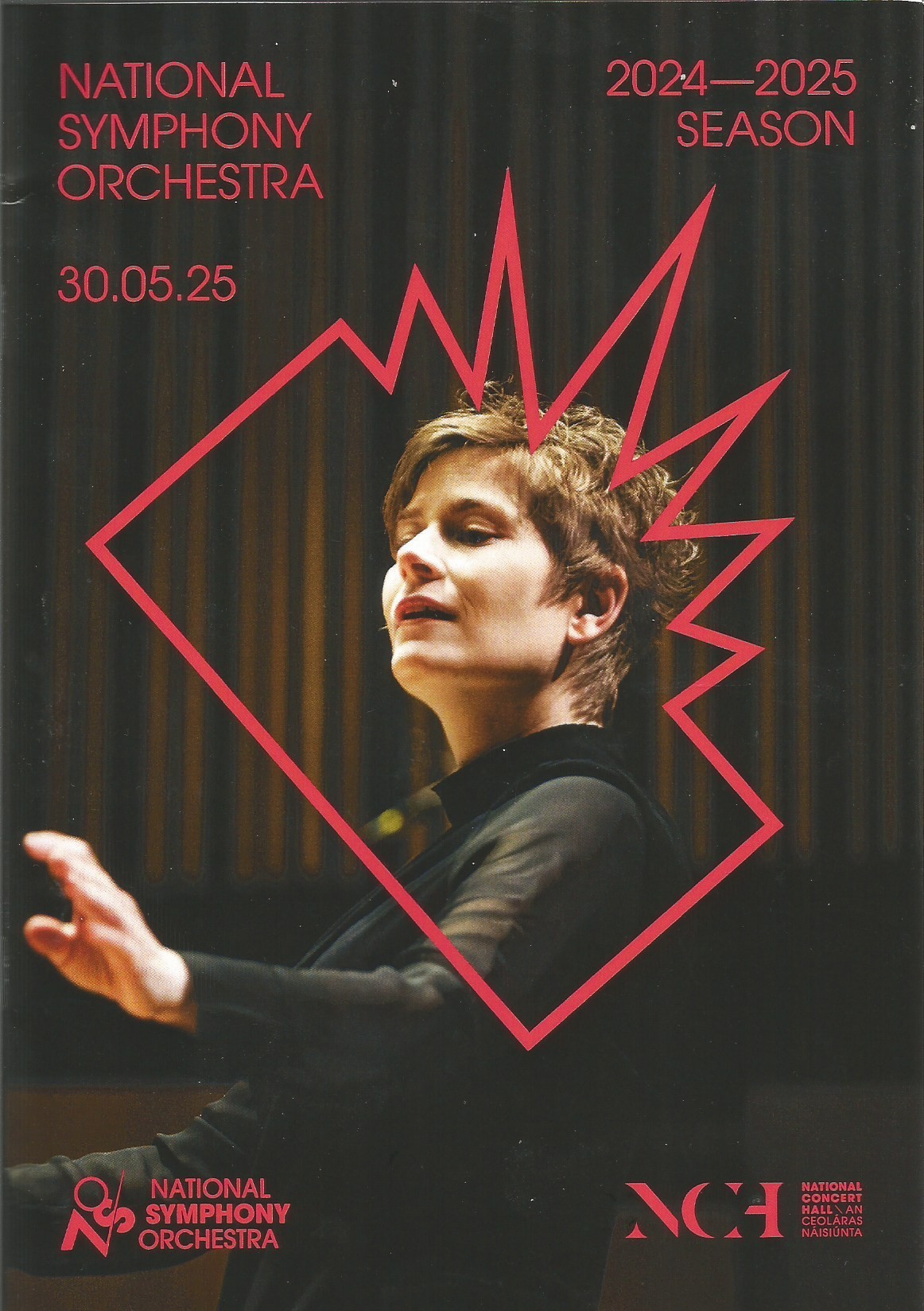
It was very nice to be able to put the marking of examinations behind me and travel into Dublin last night for the final concert of the season at the National Concert Hall in Dublin. It seems the former NSO is now to be called the NSOI, the National Symphony Orchestra Ireland, no doubt for some sort of corporate branding reason. Anyway, last night they were under the direction of guest conductor Anja Bihlmaier for a performance of the Symphony No. 9 by Gustav Mahler.
Looking back through my previous posts about Mahler I see that I haven’t previously written anything about his 9th Symphony. I am pretty sure that last night was the first time I’ve heard it live, although I have it on CD. Mahler wrote it between 1908 and 1909, immediately after finishing Das Lied von der Erde which is a symphony in all but name and which should really be his 9th. He was a very superstitious man, however, and he was worried about the Curse of the 9th, so it wasn’t given a number. After the acual 9th Symphony he went on to compose another, his 10th (though really the 11th), though he didn’t quite finish it before his death in 1911. I hope this clarifies the situation.
The 9th Symphony is a substantial piece last about 80 minutes in performance. That’s far from his longest, but it does justify it being performed on its own. The structure is unusual, with two very long slow movements either side of a pair of shorter movements, a scherzo and a rondo. The former is constructed from dance-like segments, and much of it is in 3/4 time; it reminded me a little of Ravel’s La Valse, which starts out like a standard waltz but disintegrates into a nightmarish parody of that form. The rondo described as “Rondo-Burleske” is very fragmented, grotesque and at times raucous, and also very modern-sounding. It has been described as “ferocious outburst of fiendish laughter at the futility of everything”. I think the final adagio movement is the best, and it brought out the best of the NSOI. The long sweeping passages played by only the strings, with the cellos and double-basses providing deep foundations to Mahler’s sumptuously textured harmonies. Absolutely gorgeous.
The Symphony ends very quietly indeed. Anja Bihlmaier kept her baton in hand for quite a long time before putting it down and letting the applause start. A little silence at the end of a piece of music is a very good thing: it allows the members of the audience a brief moment to reflect on what they have heard. It irks me when people starting clapping and shouting before the sound has even died away.
Anyway, when it was over, the applause was tumultuous. I’ve already mentioned the string sections, but ll the members of the NSOI contributed with outstanding contributions from the woodwinds and brass too.
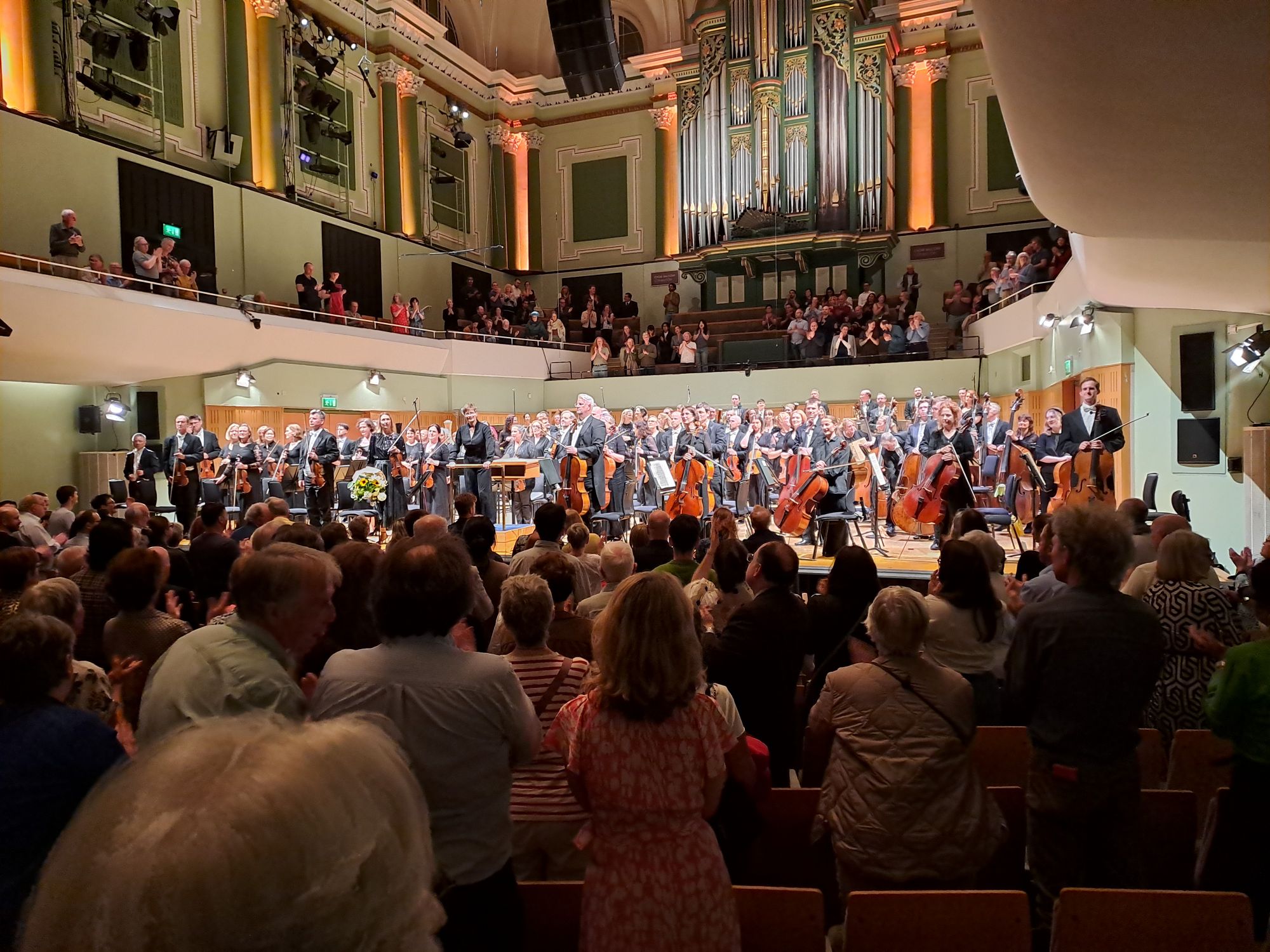
There being only one item on the menu there was no wine break, but not having an interval meant that I had time to have a drink at the end before heading back to Pearse station to get the train back to Maynooth. In the old days the NCH used to treat the audience to a free prosecco after the season finale, but not any more. I had to buy my own.
Well, this season may be over, but the booklet for next season is already out. I had a look through it on the train home. I plan to resume my Friday-night concert-going at the NCH in September, but there will be more music before then.
Finnegan’s Wake – The Dubliners
Posted in Literature, Music with tags Finnegans Wake, Ronnie Drew, The Dubliners on May 28, 2025 by telescoperTaking a short break from examination duties I thought I would post this version of the song Finnegan’s Wake. It was first published in America in the mid-19th century, it is a ballad about the wake of a hod-carrier by the name of Tim Finnegan who is too fond of whiskey. One day, with a hangover, he falls off a ladder and dies. His wake gets a bit rowdy and eventually a bottle of whiskey is thrown over his body, which brings him miraculously back to life.
It’s been in my mind since I got talking at lunch with some colleagues a while ago about James Joyce‘s famous novel Finnegan’s Wake largely because of the connection with particle physics via the word “quark” and thence to the Arthurian legends; for more of that see here. Anyway, one of the people there knew the song on which Joyce based his book and proceeded to sing a few verses of it, much to the surprise of the people sitting around us.
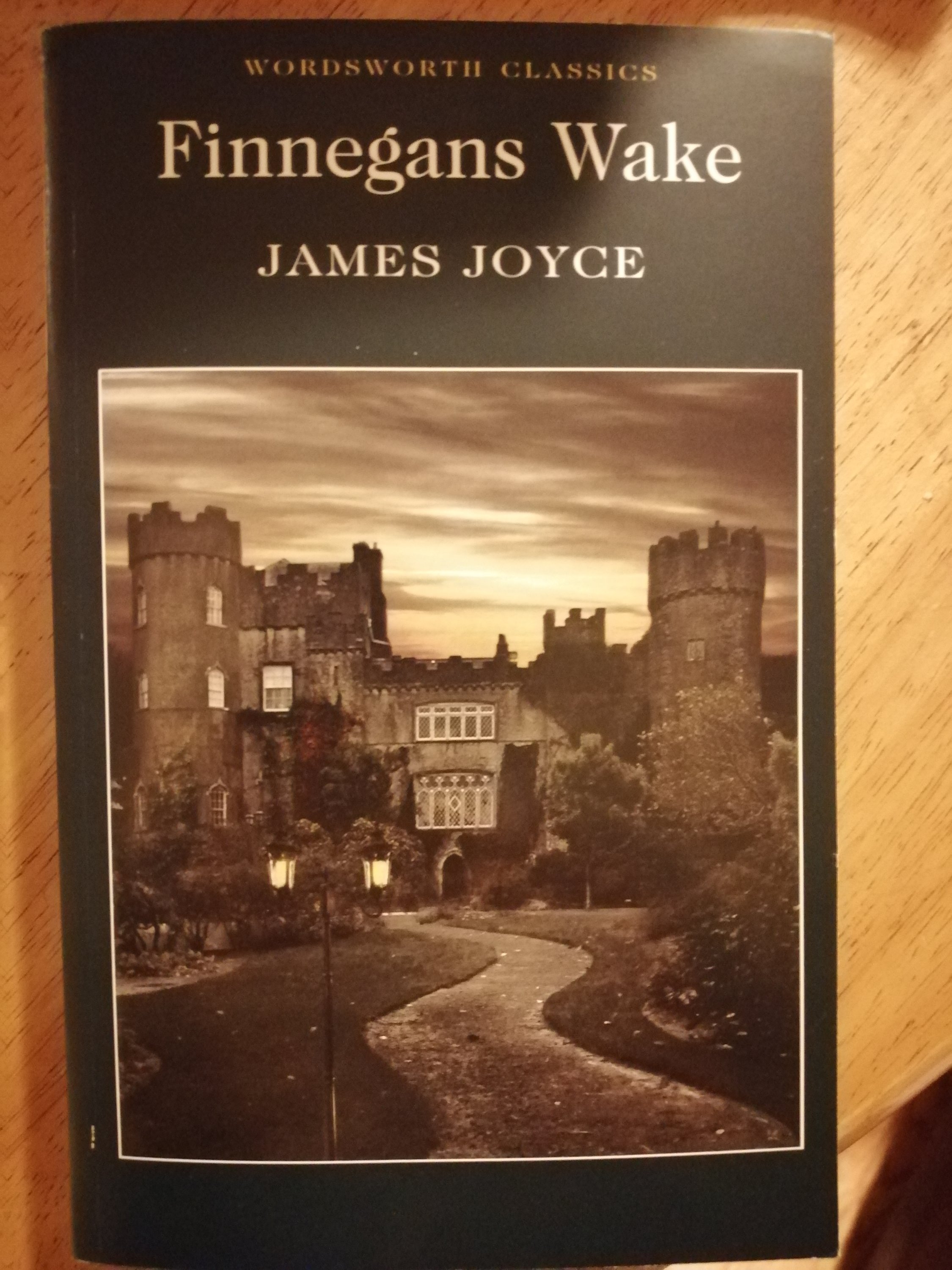
The interesting thing about the title is that Joyce dropped the apostrophe so it is not really about the wake of Tim Finnegan but lots of Finnegans waking up. The implication is that, in a way, we’re all Tim Finnegan. That’s exactly the sort of play on words – or in this case play on punctuation – that Joyce revelled in and with which Finnegans Wake is peppered.
Another reason for posting this is for a chance to see the iconic beards of the Dubliners, especially lead singer Ronnie Drew. Enjoy!
After the Lectures
Posted in Biographical, Education, Maynooth, Music with tags Dublin, lectures, National Concert Hall on May 9, 2025 by telescoperToday has been such a busy day that I’ve only got time for a quick post. This morning was spent preparing and delivering a revision lecture, and this afternoon preparing and delivering a Departmental Colloquium. That done I headed straight for the railway station to get the train into Dublin and thence by foot to the National Concert Hall.
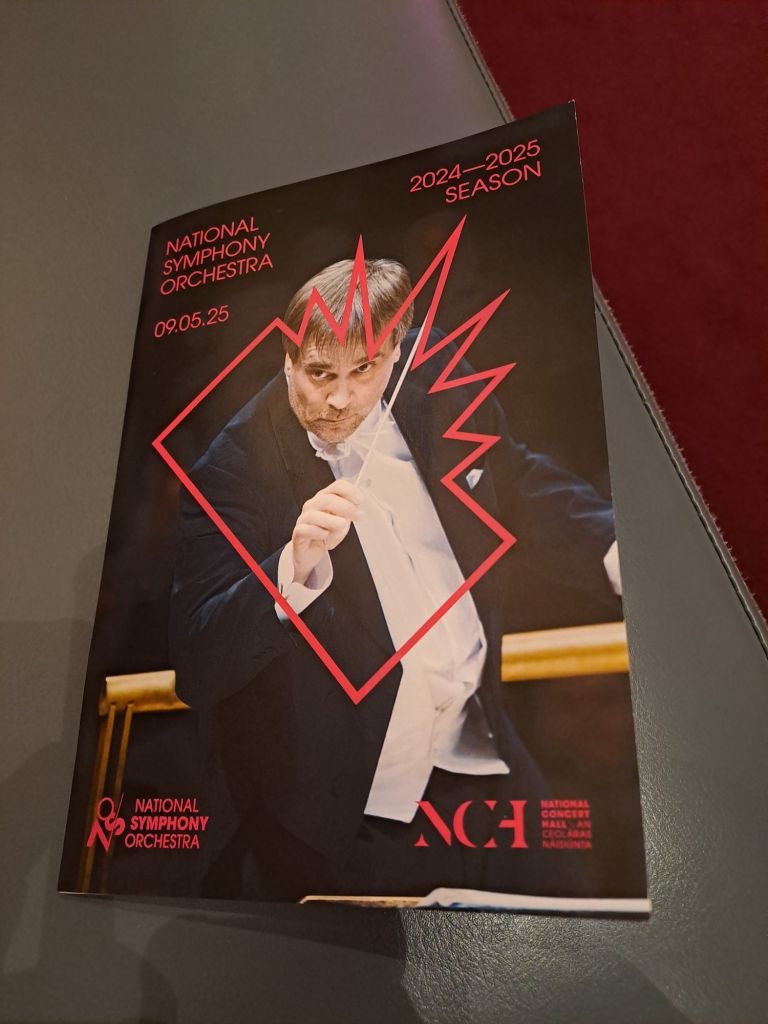
So here I am, sipping a glass of nicely chilled white wine as I wait for tonight’s performance. I’ll post a review tomorrow but, until then, Cheers!
Jazz 625 – Art Blakey and the Jazz Messengers
Posted in Jazz, Television with tags Art Blakey, Art Blakey and the Jazz Messengers, BBC, hard bop, Humphrey Lyttelton, Jazz 625, Lee Morgan on April 20, 2025 by telescoperThis just appeared on Youtube a couple of days ago and I couldn’t resist sharing it here. It is from a BBC programme in the series Jazz 625 and is presented by a chap called Humphrey Lyttelton, himself a trumpeter and bandleader. Although Humph is best known as a musician on the traditional side of jazz, he was very broadminded about music and extremely knowledgeable about more modern forms, as he demonstrated on his long-running radio show The Best of Jazz, which I listened to avidly as a teenager and which introduced open my eyes and ears to lots of new things including “hard bop“, which is the genre to which this belongs.
This programme was broadcast in 1965, at which time the BBC Television programmes were all in black-and-white so the recording has been “colourized”, and think the sound has been remastered too. It sounds great.
Anyway, the band featured here is Art Blakey and the Jazz Messengers. I was lucky enough to hear a couple of later incarnations of this group play live in the 1980s. There’s no need to run through the personnel or tunes because Humph does so in the recording. I will just add that the intro and outro are Thelonious Monk’s 52nd Street Theme.
Happy 85th Birthday, Herbie Hancock!
Posted in Jazz with tags Donald Byrd, Herbie Hancock, Jazz, The House of the Rising Sun on April 12, 2025 by telescoperProlific jazz pianist, composer, and arranger Herbie Hancock was born on 12th April 1940, which means that today is his 85th birthday. I’ve posted quite a few pieces of music featuring Herbie Hancock over the years so I thought I’d put up something a little different to mark his birthday in the form of this unusual but very cool version of The House of the Rising Sun, featuring Donald Byrd on trumpet, Hancock on piano, Kenny Burrell on guitar, Bob Cranshaw (bass) and Grady Tate (drums) and the Donald Byrd Singers. This track appeared on the album Up With Donald Byrd which wasn’t well received when it came out in 1964, but I like it!
P.S. I did a Google search for Herbie Hancock House of the Rising Sun and found this:

WNO Peter Grimes
Posted in Cardiff, Opera with tags Cardiff, David Kempster, Nicky Spence, Peter Grimes, Sally Matthews, Wales Millennium Centre, Welsh National Opera on April 6, 2025 by telescoper
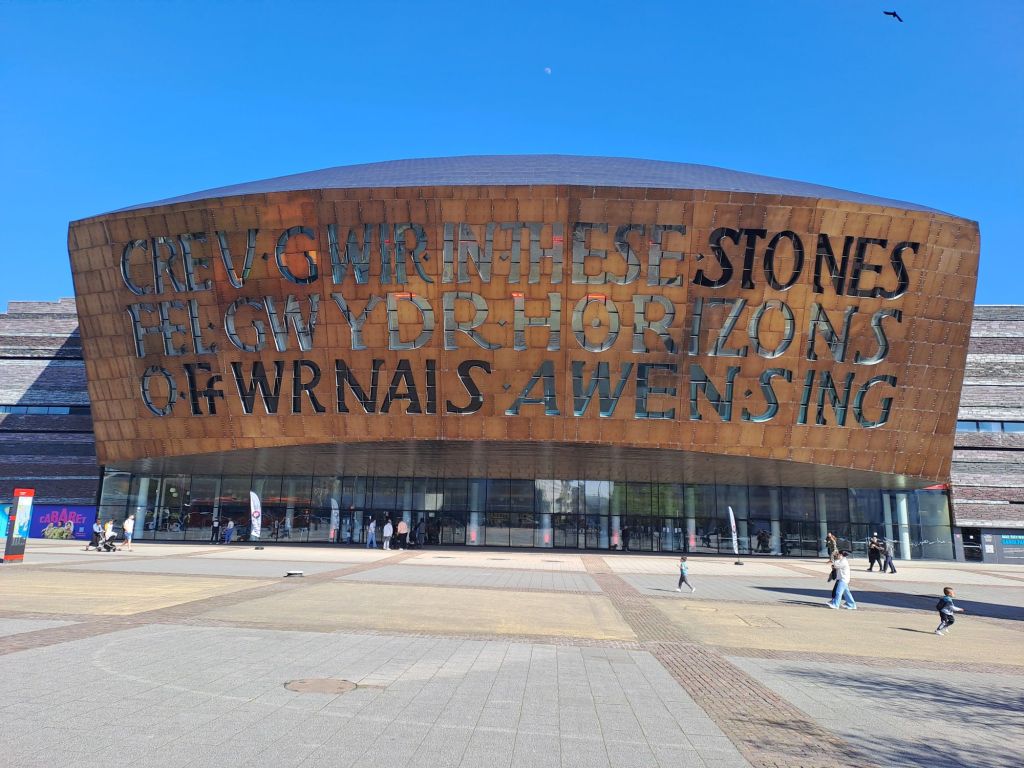
The reason for my flying visit to Cardiff this weekend was to visit the Wales Millennium Centre to catch the opening night of Welsh National Opera’s new production of the Opera Peter Grimes by Benjamin Britten. It was a full house and, being a premiere, there was a fair sprinkling of media types among the crowd. There will no doubt be many reviews but I don’t mind adding to the verbage. I’ve seen this Opera several times and it is one of my favourites in the entire repertoire.
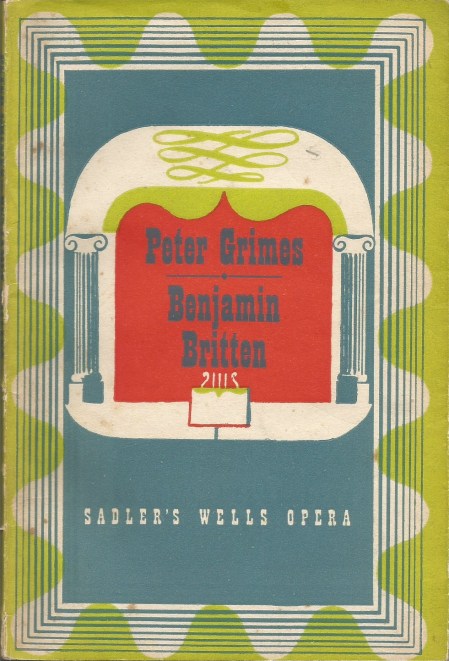
Peter Grimes premiered at Sadler’s Wells in London on 7th June 1945 almost 80 years ago. I wasn’t there – I’m not that old – but I do have an original programme from that season (left), bought in a second-hand bookshop. Perhaps surprisingly, given the grim subject matter and the intense music it was an immediate hit with audiences. Its popularity has not wained. Welsh National Opera gave its first performance in 1946, but is currently facing an uncertain future.
I’ve often heard Peter Grimes described as one of the greatest operas written in English. Well, as far as I’m concerned you can drop “written in English” from that sentence and it’s still true. I think it it’s a masterpiece, fit to rank alongside any by any composer. Searching through the back catalogue on this blog, however, I didn’t find any reviews of it, so the times I’ve seen it must have been before I started blogging back in 2008. I saw an excellent production by Opera North in Nottingham many moons ago, and also remember one at Covent Garden which stuck in my memory for its impressive staging.
Based on a character from the narrative poem The Borough by George Crabbe, the story revolves around the eponymous Peter Grimes, a fisherman, and the inhabitants of a small coastal village in Suffolk. Grimes is by no means a sympathetic character: he is an outcast with no social skills and is prone to fits of violent temper. The Opera begins witha Prologue in which Grimes is in court after the death of his apprentice; he is acquitted of any wrongdoing but the folk of the Borough – apart from the schoolteacher Ellen Orford and retired naval Captain Balstrode – still regard him as guilty. Against all advice, Grimes takes on another apprentice (John) whom he is subsequently suspected of mistreating. When the second boy dies (in accidental circumstances), Grimes flees with the crowd in pursuit. At the end he is given no choice but to take to his boat, sail it out to sea and sink it, taking his own life.
For me the key to the success of this Opera is its treatment of the character of Peter Grimes. In the original poem, Crabbe depicts Grimes is a monstrous figure rather like a pantomime villain. Britten is much more sympathetic: Grimes is misunderstood, a misft who as never been socialised; he just doesn’t know the rules that he should conform to. That’s his tragedy. Britten’s Grimes is not a villain. He’s not a hero either. At one point, shockingly, he even lashes out at Ellen Orford a lady who has shown him nothing but kindness. There’s good and bad in Grimes, like there is in all people. Who of us can say that we don’t share some of the faults of Peter Grimes? And if he’s bad what made him bad? Was he himself abused as a child? Could a little kindness along the way have made him better adjusted?
The Opera not just about Grimes, though. We get a vivid insight into the life of an isolated seaside community: the gossiping hypocrisy of the “good people” of the Borough, the debauchery of the landlady and her two “nieces” who cater to the needs of their male visitors, but above all the importance of the sea in their lives – stressed by Britten’s wonderful interludes describing dawn over the town, moonlight over the sea, and a raging storm. It also sheds light on the common practice of “buying” apprentices from the workhouse, essentially a means of slave labour, a systematic abuse far worse than anything Grimes ever does!
Anyway, to last night’s performance. In short, it was magnificent. The cast was very strong indeed: Nicky Spence shone in the role of Peter Grimes (tenor). Britten wrote the part to suit the characteristics of the voice of his partner, Peter Pears, and it doesn’t suit all tenor voices: the superb arioso When the Great Bear and Pleiades, for example, has dizzying head tones that challenges some singers. Ellen Orford was the excellent Sally Matthews (soprano) and Balstrode was the admirable baritone David Kempster.
I’ll mention three particularly memorable moments, near the end of the opera. The first is after the apprentice John has died; the gorgeous sea interlude Moonlight, which serves as a prelude to the third and final act, is played while the grieving Grimes cradles the lifeless corpse of the boy. The second is when Grimes is on the run, with the chorus calling his name and baying for blood. In fear of his life, he breaks down and is reduced to repeating his own name to himself. I’ve always found that scene unbearably moving and it was that way again last night. Finally, at the very end, the bodies of the two dead apprentices appear, one sprawled on a rock, the other standing eerily in the suspended boat which is tipped up vertically above the stage. When Grimes accepts Balstrode’s advice to drown himself, the two boys come to life; they exchange smiles, hold hands and walk off into the distance. It’s the only time Grimes looks happy in the whole performance. Only in death can he find his peace.
The staging is very spare but cleverly done. The basic set consists of a wet beach sloping up towards the rear above which from time to time a small fishing boat appears, suspended by wires, in a variety of attitudes. Otherwise there is little in the way of scenery. The clever part of this is the use of the dancers of Dance Ensemble Dawns. All the boys’ roles were in fact played by female dancers, including John the second apprentice, a non-speaking role played with great pathos by Maya Marsh whose use of body language was extraordinarily effective. Not only did they portray the boys of the village, often to be found generally misbehaving and taunting Peter Grimes, they also use their movements do evoke the storm in an extraordinarily compelling way. Not content with that they came on from time to time, in stylised fashion, to move scenery and props. The inn, for example, is conjured up by two simple props: a door frame and a window frame, held up by members of the ensemble for other members of the cast to walk or lean through. In all these contributions, the dancers were brilliant.
The simplicity of the staging probably reflects the financial crisis currently engulfing Welsh National Opera. They probably just didn’t have the money to pay for a elaborate sets, but it’s a testament to the skill and creativity of the designers that they were able to pull a triumph out of a financial disaster. I was sitting in the Circle so could see very well into the orchestra pit, where all the musicians of the Orchestra of Welsh National Opera were all wearing “SAVE OUR WNO” t-shirts. They played their hearts out. The WNO Chorus has always been excellent every time I’ve seen them, and last night was no exception.
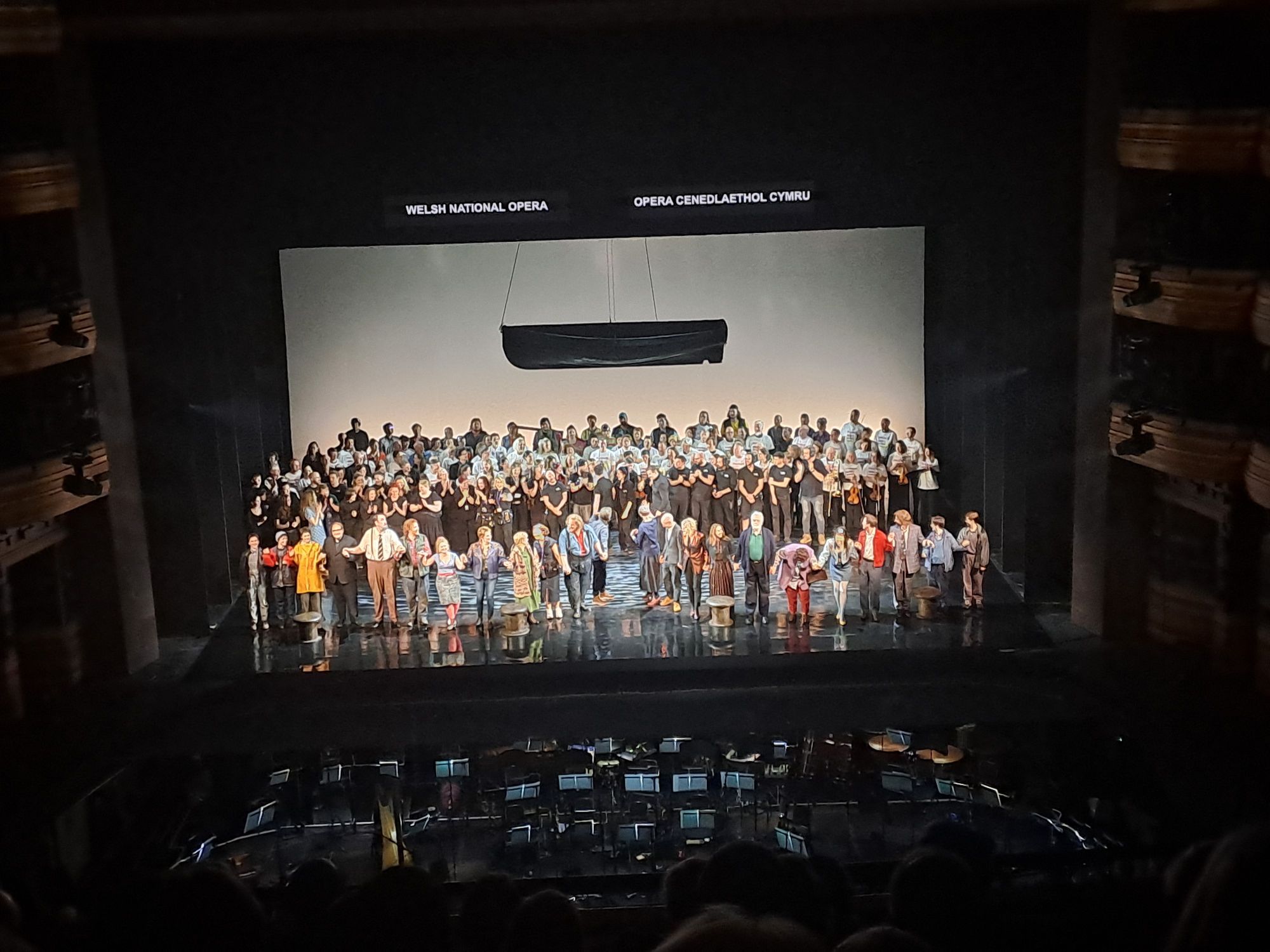
At the end of the opera, the cast, chorus and dancers were joined on stage not only by the entire orchestra (including instruments, where possible) and many members of the technical team. I’ve never seen that happen before! There were speeches by the co-directors of WNO expressing their determination to carry on through the financial turbulence that threatens to drown them. Welsh National Opera is a wonderful part of the artistic and cultural scene not only in Wales but across the rest of the UK and beyond. It just cannot be allowed to wither.
P.S. Last night’s performance was recorded for later broadcast on BBC Radio 3.
A Day in Cardiff
Posted in Art, Biographical, Cardiff, LGBTQ+, Opera, Politics with tags Art, Cardiff, Cardiff Bay, Miners' Strike, National Museum of Wales, Wales Millennium Centre on April 5, 2025 by telescoperI got up at Stupid O’Clock this morning to catch an early morning plane from Dublin to Cardiff. It was very cold when I arrived but it soon warmed up and turned into a lovely day.
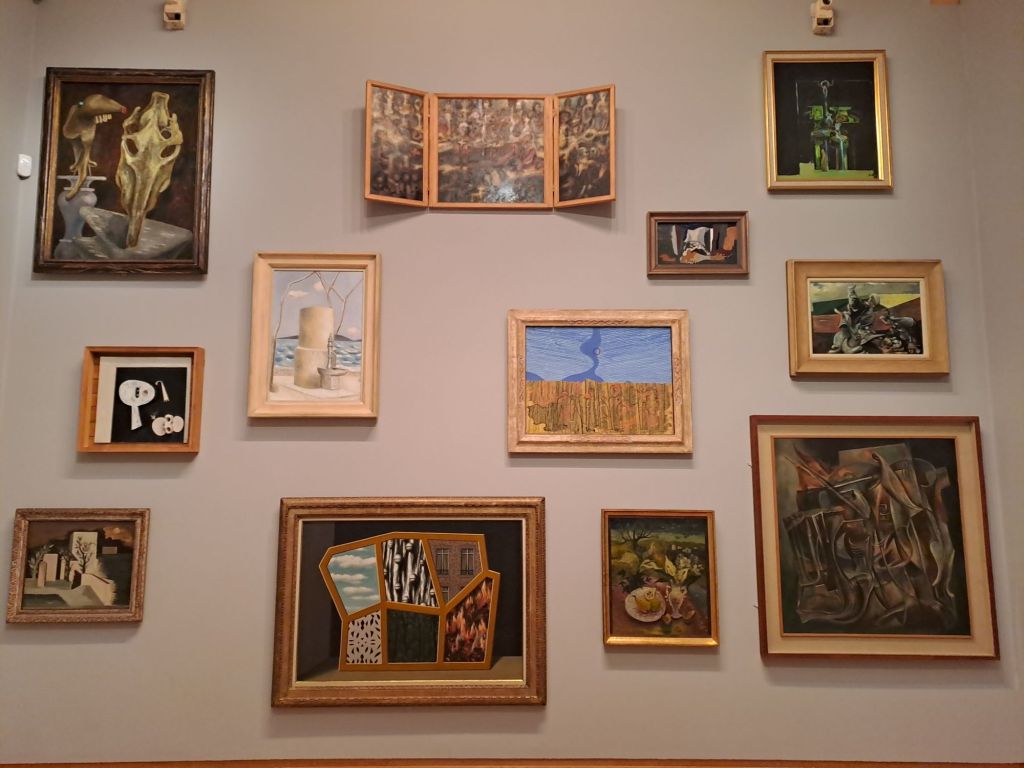
I had a nice breakfast at Bill’s when I arrived in the City then did tour of the National Museum of Wales where there is an exhibition about the Miners’ Strike of 1984/5, from which this display case caught my attention:

I also had time for a round of Name That Artist (scoring a miserable 3/12, for Sutherland, Ernst, and Magritte).
After that, I took a stroll around Bute Park before heading to my hotel in Cardiff Bay to check in and have a rest before the reason for my visit, an event which will take place here at 7pm:
I won’t be able to blog about that until I get back to Maynooth tomorrow afternoon.
The Particle Physics Opera
Posted in Opera, The Universe and Stuff on March 26, 2025 by telescoperI thought I’d use the excuse that I’m teaching particle physics again to revive an old idea linking that subject to Mozart’s Opera The Magic Flute (Die Zauberflöte, K. 620).
I can’t remember how many times I have seen this opera performed nor in how many different productions. It’s a wonderful creation because it manages to combine being utterly daft with being somehow immensely profound. The plot makes no sense at all, the settings are ridiculous (e.g. “rocks with water and a cavern of fire”), and the whole thing appears to be little more than a pantomime. Since it’s Mozart, though, there is one ingredient you can’t quibble with: a seemingly unending sequence of gorgeous music.
When I first saw The Magic Flute I thought it was just a silly but sublime piece of entertainment not worth digging into too deeply. I wondered why so many pompous people seemed to take it so terribly seriously. Real life doesn’t really make much sense, so why would anyone demand that an opera be any less ridiculous? Nevertheless, there is a vast industry devoted to unravelling the supposed “mystery” of this opera, with all its references to magic and freemasonry.
But now I can unveil the true solution of problem contained within the riddle encoded in the conundrum that surrounds the enigma that has puzzled so many Opera fans for so long. I have definitive proof that The Magic Flute is not about freemasons or magic or revolutionary politics. It is actually about particle physics.
To see how I arrived at this conclusion note the following figure which shows the principal elementary particles contained within the standard model of particle physics:
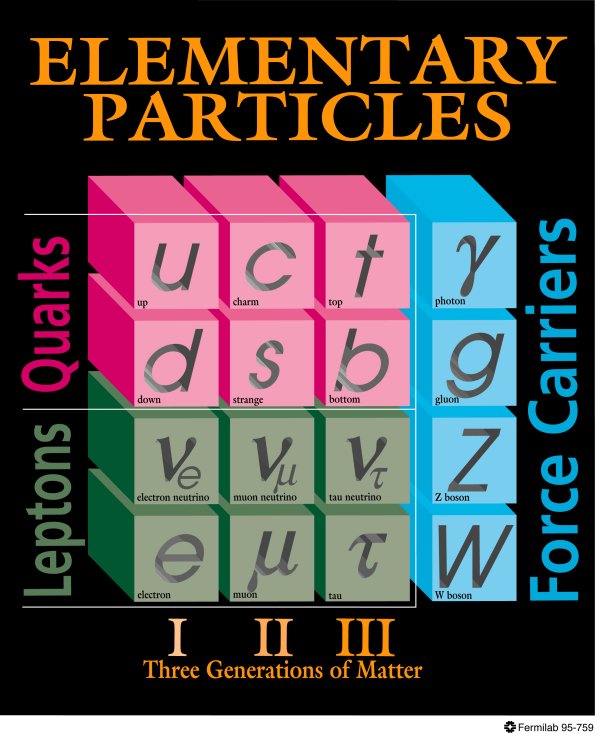
To the left of this picture are the fermions, divided into two sets of particles labelled “quarks” and “leptons”. Each of these consists of three pairs (“doublets”), each pair defining a “generation”. This structure of twos and threes is perfectly represented in the cast The Magic Flute.
Let’s consider the leptons first. These can be clearly identified with the three ladies who lust after the hero Tamino in Act 1. This emotional charge is clearly analogous to the electromagnetic charge carried by the massive leptons (the electron, muon and tauon, lying along the bottom of the diagram). The other components in the leptonic sector must be the three boys who pop up every now and again to help Papageno with useful advice about when to jangle his magic bells. These must therefore be the neutrinos, which are less massive than the ladies, and are also neutral (although I hesitate to suggest that this means they should be castrati). They don’t play a very big part in the show because they participate only in weak interactions.
Next we have the quarks, also arrayed in three generations of pairs. These interact more strongly than the leptons and are also more colourful. The first generation is easy to identify, from the phenomenology of the Opera, as consisting of the hero Tamino (d for down) and his beloved Pamina (u for up); her voice is higher than his, hence the identification. The second generation must comprise the crazy birdcatcher Papageno (s for strange) and his alluring madchen who is called Papagena (c for charmed). That just leaves the final pairing which clearly is the basso profundo and fount of all wisdom Sarastro (b for bass bottom) and my favourite character and role model the Queen of the Night (t for top).
To provide corroboration of the identification of the Queen of the Night with the “top” quark, here is a clip from Youtube of a bevy of famous operatic sopranos having a go at the immensely different coloratura passage from the Act 1 aria “O Zittre Nicht, mein leiber Sohn” culminating in a spectacular top F that lies beyond the range of most particle accelerators, never mind singers.
There’s some splendid frocks in there too.
The Queen of the Night isn’t actually in the Opera very much. After this aria in Act 1 she disappears until the middle of Act 2, probably because she needs to have a lie down. When she comes back on she sings another glass-shattering aria (Der Hölle Rache kocht in meinem Herzen), which I like to listen to when I’m writing referee reports. The first line translates as “The rage of hell is boiling in my heart”.
The remaining members of the cast – The Speaker and Monostatos, as well as sundry priests, slaves, enchanted animals and the chorus – must make up the so-called Force carriers at the left of the table, which are bosons, but I haven’t had time to go through the identifications in detail. They’re just the supporting cast anyway. And there is one particle missing from the picture, the Higgs boson. This accounts for the masses of other particles by exerting a kind of drag on them so it clearly must be the Dragon from Act 1.

 In the Dark