Archive for the Music Category

Hat and Beard

Posted in Jazz with tags , , , , on September 22, 2015 by telescoper

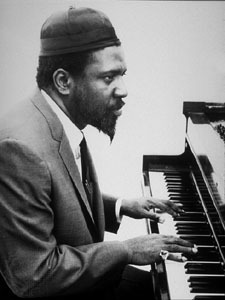
I haven’t posted much Jazz recently, and was reminded of this fact when I listened to the following track on my iPod yesterday while travelling back from Cardiff to Brighton.  Hat and Beard is an original composition by one of my favourite jazz artists, saxophonist Eric Dolphy and was written in honour of another of my favourite jazz artists, Thelonious Monk, who not only sported a splendid beard but also had a famously eccentric taste in headgear…

hat and beard

Anyway, Hat and Beard is taken from the pioneering free jazz album Out to Lunch. This album is without doubt one of the high points of 1960s avant-garde jazz, primarily because of Dolphy’s extraordinary playing (in this case on bass clarinet) but also because of the brilliance of the other musicians: Freddie Hubbard on trumpet; Bobby Hutcherson on vibes; Richard Davis on bass; and the superb Tony Williams on drums (who was only 18 when this track was recorded).

Maria Callas: “Ah, rendetemi la speme…”

Posted in Opera with tags , on September 16, 2015 by telescoper

I’m reminded that Maria Callas (“La Divina”) passed away on this day in 1977, so by way of a tribute here she is singing a famous “Mad Scene” from the Opera I saw at the Wales Millennium Centre last week, I Puritani by Vincenzo Bellini. This is a rare recording of the young Callas, aged only 25, made in 1949. It’s historically important too, because Callas stepped into this production at short notice in Venice that year, having started out on a  career as a dramatic soprano singing Wagnerian roles. Critics sneered when they heard that she had been cast as Elvira, but almost overnight she transformed the role and so began her almost single-handed revival of the entire bel canto repertoire.

One critic wrote:

Even the most sceptical had to acknowledge the miracle that Maria Callas accomplished… the flexibility of her limpid, beautifully poised voice, and her splendid high notes. Her interpretation also has a humanity, warmth and expressiveness that one would search for in vain in the fragile, pellucid coldness of other Elviras.

Her she is as Elvira, deranged by the loss of her beloved who has vanished without explanation. It’s as beautiful as it is heartbreaking. It’s not the best sound quality, but the emotional power of her voice shines through. Few singers have even come close to matching Callas in roles like this.

Qui la voce sua soave mi chiamava…e poi sparì.
Qui giurava esser fedele,  qui il giurava,
E poi crudele, mi fuggì!
Ah, mai più qui assorti insieme nella gioia dei sospir.
Ah, rendetemi la speme,  o lasciate, lasciatemi morir.

September in the Rain

Posted in Jazz with tags , , on September 16, 2015 by telescoper

Need cheering up on a rainy September afternoon? The gorgeous voice of Sarah Vaughan should do the trick!

I Puritani – Welsh National Opera

Posted in Opera with tags , , , , , on September 12, 2015 by telescoper

After spending yesterday in Cardiff at an External Advisory Panel meeting for the School of Physics & Astronomy, I’m now back on Sussex University campus to greet this year’s new new intake of students who begin arriving this weekend. Now, in between two Welcome Events this afternoon I just have time to do a quick review of last night’s entertainment in Cardiff. The meeting in Cardiff had been in my diary for a while but I only realised last week that Friday night was the opening performance of a new Welsh National Opera production of I Puritani by Vincenzo Bellini. Fortunately, I managed to get a last-minute ticket. I’m really glad I did because it was wonderful.

I Puritani is set in England during the Civil War and revolves around Elvira (soprano, sung by Rosa Feola), who is a Protestant, and in love with Arturo (tenor, Barry Banks), who is Catholic. The trouble is that Elvira’s father has already promised her hand in marriage to Riccardo (David Kempster). The thought of being unable to marry Arturo sends Elvira into a deep depression but, seeing this, her father relents and gives permission for her to marry her true love. She responds to this news in rapturous fashion; her future happiness seems assured.

Unfortunately events intervene. Arturo takes pity on a woman suspected of being a Stuart spy and about to be condemned to death. In fact it turns out that the “spy” is Queen Henrietta Maria, widow of Charles I. Arturo struggles with the conflict between love and duty (a familiar operatic theme) then, on the eve of his wedding, he leaves in order to take Henrietta Maria away to safety. The shock of discovering that her beloved has gone deranges Elvira’s mind, and the classic Bel Canto “Mad Scene” ensues. Arturo does return, eventually, but not until Act 3 by which time he has already been sentenced to death for treason and Elvira is beyond help. Riccardo, encouraged by a mob, prepares to carry out the execution. A herald appears, announcing victory for the Protestant side in the Civil War and declaring a general pardon on all Royalist prisoners. It is too late to save Arturo, although Elvira’s madness has deepened to such an extent she doesn’t even realised her would-be husband is dead.

That brief synopsis of the plot doesn’t do any justice to what I think is a consummate piece of music drama, and certainly one of the heights of the bel canto period. There’s a superb balance of the different vocal combinations and wonderfully expressive music throughout. There are trademark bel canto coloratura passages, but it never feels forced or showy in this opera. The momentum never flags, either. It might surprise those who don’t like bel canto opera that, for example, Richard Wagner was a particular admirer of Vicenzo Bellini. Incidentally, I Puritani was Bellini’s last Opera; he died suddenly in 1835, at the age of just 34, the year it was first performed. It was acclaimed by the critics way back then, and is a fitting swansong for a truly great operatic composer.

The new production is initially set in the Northern Ireland of 1970s, with Elvira dressed in a blue twin set reminiscent of Margaret Thatcher. The protestants were depicted as Ulsterman, complete with Orange regalia and bowler hats. But there is a surprise in store. As Elvira begans to lose her mind, an identically dressed (mute) doppelganger appears on stage. The real Elvira then leaves to return almost immediately dressed in 17th Century attire. The Orangemen also reappear dressed in the black clothes with white ruffs and cuffs of Puritans. Not only does this make a point about the three hundred years of sectarian madness in Northern Ireland, but it also manifests Elvira’s depersonalisation, i.e. her detachment from reality. The portrayal of Elvira’s madness in this Opera is sympathetic but unflinching, and deeply moving.

The principals were all excellent, but I can’t help singling out Rosa Feola, who sang and acted beautifully, and Barry Banks who tackled the immensely demanding tenor part with real gusto. The WNO chorus were magnificent, as they usually are in fact. Conductor Carlo Rizzi had the Orchestra of Welsh National Opera on top form too.

All in all, a wonderful night at the Opera. Congratulations to WNO for having the courage to put on this rare masterpiece. This is as good as anything I’ve seen at the Wales Millennium Centre, and that’s a pretty strong endorsement Do go and see it if you can!

Yo-Yo Ma and the Bach Suites for Solo Cello

Posted in Music with tags , , , , on September 7, 2015 by telescoper

I stayed in on Saturday night especially to listen to a very special promenade concert live on BBC Radio 3 during which renowned cellist Yo-Yo Ma played all six of the Suites for unaccompanied Cello by Johann Sebastian Bach. It was an absolutely brilliant concert which you can, if you missed it, or even if you didn’t,  download for the next month here. The whole thing runs for over two and a half hours, but I didn’t move from my seat once.

I’ve loved all these pieces from the moment I first heard them. How Bach manages to conjure up such a vast range of melodic and rhythmic possibilities using just the one instrument is almost miraculous. Despite using very few chords, they manage to explore the  harmonic domain too. Part of what makes them so special is the instrument itself – its earthy sound, complete with occasional growls and scrapes, emphasizes how this sublime music is somehow at the same time deeply human, somehow connecting the listener to something from far beyond the mundane world we normally inhabit. I’m not a religious man, but listening to music like this is a spiritual experience for me.

Do listen to the whole concert if you can, but if you can’t here’s a short taster (recorded elsewhere). This is the Prelude to the 1st Suite, the first page of which is here:

bach_cello

If you look at the sheet music you might be forgiven for thinking that it is just a dry exercise in playing across the strings. Listen to it come to life, however, and you’ll quickly realise that you were wrong. The ending of this prelude always sends shivers down my spine.

I know these suites have been transcribed for other solo instruments, such as the flute, but listening to them on Saturday I wondered if they had been transcribed for my favourite earthy and growly instrument, the tenor saxophone. In fact they have; you can hear an example here.  One problem that struck me immediately is that saxophonists have to pause for breath! Anyway,  I must get a copy of the transcription and have a go at learning it, though I think it would take a Sonny Rollins or John Coltrane to do them justice!


Original Jelly Roll Blues

Posted in Jazz with tags , , on August 21, 2015 by telescoper

Well, it’s a sunny Friday afternoon here so I thought I’d wind down for the weekend by posting a nice bit of Jazz to end the week. This is a version of a famous composition (by Jelly Roll Morton) made by Humphrey Lyttelton with his Paseo Jazz Band. This consisted of the core of Humph’s band of the time – notably Humph himself on trumpet and Wally Fawkes on clarinet – with the addition of a large number of West Indian musicians whom Humph had met in London; the recordings they made together are an absolute blast, largely because of the fusion of traditional jazz with Caribbean rhythms. The sound contrasts with a lot of the “trad” jazz at the time, but is if anything more authentic than that of many revivalist bands of the period because it echoes the astonishing blend of cultures that was characteristic of New Orleans at the time Jazz was born. This tune in particular gets a rhythmic backdrop of congas, bongos, claves and maracas that gives it a lovely lilting feel. And on top of all the extra percussion there is Fitzroy Coleman’s guitar which was then, is now, and forever shall be, a joy. It’s a very original version indeed of the Original Jelly Roll Blues…

Who needs critics? Or peer review for that matter…

Posted in Art, Literature, Music, Science Politics with tags , , , , , on August 9, 2015 by telescoper

No time for a proper post today so I’m going to rehash an old piece from about six years ago. In particular I direct your attention to the final paragraph in which I predict that peer review for academic publications will soon be made redundant. There has been quite a lot of discussion about that recently; see here for an example.

Critics say the stangest things.

How about this, from James William Davidson, music critic of The Times from 1846:

He has certainly written a few good songs, but what then? Has not every composer that ever composed written a few good songs? And out of the thousand and one with which he deluged the musical world, it would, indeed, be hard if some half-dozen were not tolerable. And when that is said, all is said that can justly be said of Schubert.

Or this, by Louis Spohr, written in 1860 about Beethoven’s Ninth (“Choral”) Symphony

The fourth movement is, in my opinion, so monstrous and tasteless and, in it’s grasp of Schiller’s Ode, so trivial that I cannot understand how a genius like Beethoven could have written it.

No less an authority than  Grove’s Dictionary of Music and Musicians (Fifth Edition) had this to say about Rachmaninov

Technically he was highly gifted, but also severely limited. His music is well constructed and effective, but monotonous in texture, which consists in essence mainly of artificial and gushing tunes…The enormous popular success some few of Rachmaninov’s works had in his lifetime is not likely to last and musicians regarded it with much favour.

And finally, Lawrence Gillman wrote this in the New York Tribune of February 13 1924 concerning George Gershwin’s Rhapsody in Blue:

How trite and feeble and conventional the tunes are; how sentimental and vapid the harmonic treatment, under its disguise of fussy and futile counterpoint! Weep over the lifelessness of the melody and harmony, so derivative, so stale, so inexpressive.

I think I’ve made my point. We all make errors of judgement and music critics are certainly no exception. The same no doubt goes for literary and art critics too. In fact,  I’m sure it would be quite easy to dig up laughably inappropriate comments made by reviewers across the entire spectrum of artistic endeavour. Who’s to say these comments are wrong anyway? They’re just opinions. I can’t understand anyone who thinks so little  of Schubert, but then an awful lot of people like to listen what sounds to me to be complete dross.

What puzzles me most about the critics is not that they make “mistakes” like these – they’re only human after all – but why they exist in the first place. It seems extraordinary to me that there is a class of people who don’t do anything creative themselves  but devote their working lives to criticising what is done by others. Who should care what they think? Everyone is entitled to an opinion, of course, but what is it about a critic that implies we should listen to their opinion more than anyone else?

(Actually, to be precise, Louis Spohr was also a composer but I defy you to recall any of his works…)

Part of the idea is that by reading the notices produced by a critic the paying public can decide whether to go to the performance, read the book or listen to the record. However, the correlation between what is critically acclaimed and what is actually good (or even popular) is tenuous at best. It seems to me that, especially nowadays with so much opinion available on the internet, word of mouth (or web) is a much better guide than what some geezer writes in The Times. Indeed, the   Opera reviews published in the papers are so frustratingly contrary to my own opinion that I don’t  bother to read them until after the performance, perhaps even after I’ve written my own little review on here.  Not that I would mind being a newspaper critic myself. The chance not only to get into the Opera for free but also to get paid for spouting on about afterwards sounds like a cushy number to me. Not that I’m likely to be asked.

In science,  we don’t have legions of professional critics, but reviews of various kinds are nevertheless essential to the way science moves forward. Applications for funding are usually reviewed by others working in the field and only those graded at the very highest level are awarded money.  The powers-that-be are increasingly trying to impose political criteria on this process, but it remains a fact that peer review is the crucial part of the process. It’s not just the input that is assessed either. Papers submitted to learned journals are reviewed by (usually anonymous)  referees, who often require substantial changes to be made the work before the work can be accepted for publication.

We have no choice but to react to these critics if we want to function as scientists. Indeed, we probably pay much more attention to them than artists do of critics in their particular fields. That’s not to say that these referees don’t make mistakes either. I’ve certainly made bad decisions myself in that role,  although they were all made in good faith. I’ve also received comments that I thought were unfair or unjustifiable, but at least I knew they were coming from someone who was a working scientist.

I suspect that the use of peer review in assessing grant applications will remain in place for a some considerable time. I can’t think of an alternative, anyway. I’d much rather have a rich patron so I didn’t have to bother writing proposals all the time, but that’s not the way it works in either art or science these days.

However, it does seem to me that the role of referees in the publication process is bound to become redundant in the very near future. Technology now makes it easy to place electronic publications on an archive where they can be accessed freely. Good papers will attract attention anyway, just as they would if they were in refereed journals. Errors will be found. Results will be debated. Papers will be revised. The quality mark of a journal’s endorsement is no longer needed if the scientific community can form its own judgement, and neither are the monstrously expensive fees charged to institutes for journal subscriptions.

Half Term Blue Moon

Posted in Biographical, Music, The Universe and Stuff with tags , on July 31, 2015 by telescoper

Tonight’s a Blue Moon, which happens whenever there are two full moons in a calendar month, although the phrase used to mean the third full moon of a season in which there are four in a quarter-year (or season). A Blue Moon isn’t all that rare an occurence actually. In fact there’s one every two or three years on average. But it does at least provide an excuse to post this again…

Incidentally, today marks the half-way mark in my five-year term as Head of the School of Mathematical and Physical Sciences at the University of Sussex. I started on 1st February 2013, so it’s now been exactly two years and six months. It’s all downhill from here!

Raincheck

Posted in Jazz with tags , , , , on July 20, 2015 by telescoper

Well, the British Summer has arrived at last. It’s raining. The weather reminded me of little number I posted some time ago by Tommy Flanagan, one of the most consistently enjoyable but underrated Jazz pianists of all time. So naturally I decided to post it again. Tommy Flanagan (who died in 2001) was probably best known as the long-time accompanist of Ella Fitzgerald but he also played on a number of really important Jazz albums with Sonny Rollins and John Coltrane, to name just two. He also loved to play within the classic Jazz piano trio format with George Mraz (bass) and Kenny Washington (drums). Here they are playing a nice tune by the great Billy Strayhorn, called Raincheck

R.I.P. Jon Vickers (1926-2015)

Posted in Opera with tags , , , , on July 12, 2015 by telescoper

Ah well. Back in the office on a rainy Sunday afternoon after a few days away trying to catch up before a very busy week next week. I thought I’d pause first, however, to pay my respects to the great Canadian tenor Jon Vickers, whose death I learnt of last night. Many tributes have been paid to him already, including several examples of his work on Radio 3 this morning. There’s nothing much I can add to them except to say that he not only had a great voice, but was also a fine actor with a powerful stage presence.

What I can do is post again one of my favourite examples of Jon Vickers, singing the greatest passages in one of the greatest of all operas, Peter Grimes by Benjamin Britten. Most people I know who have seen Peter Grimes think it is a masterpiece, and I’m interested to see another physics blog has already discussed this aria. Still, I don’t think Britten is sufficiently appreciated even in the land of his birth. There aren’t that many operas written in English so perhaps we feel a little uncomfortable when we can actually understand what’s going on without reading the surtitles?

I’ve often heard Peter Grimes described as one of the great operas written in English. Well, as far as I’m concerned you can drop “written in English” from that sentence and it’s still true. It’s certainly in my mind fit to put up alongside anything by Verdi, Puccini, Wagner and even Mozart.

In this aria it’s not just the extraordinary vocal line, beginning way up among the “head notes” beyond a tenor’s usual range, that makes it such a  powerful piece of music,  but also the tragic poetry in the words. The main character of Peter Grimes is neither hero nor villain, but  a man trapped in his own destiny. It’s a tragedy in the truest sense of the word:

Now the great Bear and Pleiades where earth moves
Are drawing up the clouds of human grief
Breathing solemnity in the deep night.
Who can decipher in storm or starlight
The written character of a friendly fate
As the sky turns, the world for us to change?
But if the horoscope’s bewildering
Like a flashing turmoil of a shoal of herring,
Who can turn skies back and begin again?


The part of Peter Grimes was actually written by Britten specifically to suit the voice of his partner, Peter Pears, who performed the role first. The classic recording of that performance is wonderful, but this later version starring Jon Vickers is quite different, and the inner agony portrayed by Vickers’ voice in the upper register is most moving. For its combination of musical expressiveness and dramatic intensity, this music really does take some beating even if you listen to it on its own outside the context of the opera.

Rest in Peace, Jon Vickers (1926-2015)