Archive for the Politics Category

UNESCO and Open Science

Posted in Open Access, Politics with tags , , , , , on January 12, 2022 by telescoper

Time to pass on news of an interesting development from the United Nations Educational, Scientific and Cultural Organization (UNESCO) concerning Open Science. Here’s a little video to explain what it’s about:

A press release announcing the new recommendations begins thus:

The first international framework on open science was adopted by 193 countries attending UNESCO’s General Conference. By making science more transparent and more accessible, the UNESCO Recommendation on Open Science will make science more equitable and inclusive. 

Through open science, scientists and engineers use open licenses to share their publications and data, software and even hardware more widely. Open science should, thus, enhance international scientific cooperation. 

Some 70% of scientific publications are locked behind paywalls. Over the past two years, however, this proportion has dropped to about 30% for publications on COVID-19 specifically. This shows that science can be more open. 

The framework document itself is here (21 pages). It’s a very general document, the strongest aspect of which is that it takes a broad view of open science. When I’ve talked and written about open access publishing I’ve always stressed that represents only one aspect of open science: there is a need to share data and analysis software too.

You can find an upbeat commentary on the new agreement by James Wilsdon here. Here’s a snippet:

At a time when ideologies opposed to universalism, multilateralism, and collaboration are gaining ground in many parts of the world—exacerbated by greed, corruption, and exploitation of common assets and resources—the scientific system is as vulnerable as it has always been to reflecting both the best and the worst of society’s wider tendencies.

Moves towards open research have gained significant ground over the past twenty years, but this progress remains fragile, under-resourced, and at times willfully or unintentionally blind to the fresh inequalities and pressures it can create—particularly for researchers and institutions in the global south.

For me, the greatest strengths of the UNESCO statement are its breadth and holism—unlike some declarations in this field, it speaks with an authentically international chorus of voices. It reasserts the need for cultural, linguistic, and disciplinary pluralism, and reminds us that openness is ultimately a means to more fundamental ends. The recommendation returns repeatedly to the importance of infrastructures and incentives, which need to be financed, sustained, and better aligned.

I couldn’t agree more!

A Memoir of Thomas Bewick

Posted in Art, Education, History, Politics with tags , , , on January 11, 2022 by telescoper

Thomas Bewick (1753-1828) was a superb illustrator and natural historian who lived in the North East of England. He is celebrated primarily for his fine engravings and woodcuts of wild animals and birds, and humorous vignettes, some of which are quite cheeky, such as this one called “Man Pissing”…

Man Pissing (c.1797, wood engraving on laid paper, 8.9 x 12.5 cm)

You can find many other examples of his fine work here.

Bewick also held radical political views in a time of great social unrest across the continent of Europe. His views were heavily influenced by the terrible conditions of the rural poor in his native Northumberland and the corruption of the Government. In 1822 he began to write his Memoir, which is absolutely fascinating, not least because part of it is devoted to his views about the British Government and the media of the time. Two hundred years later, many of his words still ring true.

Here’s an excerpt from a section covering the period from about 1818 to 1823, a period of domestic instability in Britain that led to acts of protest and brutal suppression, including the Peterloo Massacre of 1819:

The pen of literature was prostituted to overshade the actions of good men, and to gloss-over the enormities of the base. The energies of many members of both Houses of Parliament were unavailing against this compact confederacy of undeserving placemen and pensioners, who were bound together by fellow feelings of self-interest, in which all ideas of public trust were lost in private considerations. They had sinned themselves out of all shame. This phalanx have kept their ground, and will do so till, it is to be feared, violence from an enraged people breaks them up, or, perhaps, till the growing opinions against such a crooked order of conducting the affairs of this great nation becomes quite apparent to an immense majority, whose frowns may have the power of bringing the agents of government to pause upon the brink of the precipice on which they stand, and to provide in time, by wise and honest measures, to avert the coming storm.

A Memoir of Thomas Bewick, Written by himself, CHAPTER XVII.

Plus ça change

P.S. Not far from where I grew up in Newcastle upon Tyne there is a school for children and young adults with autism called the Thomas Bewick School. His name is well known in the Newcastle area for that reason and his artistic legacy, but I’m not sure his memory is as widely celebrated as it should be. He was a fascinating character.

ERC Starting Grant Statistics

Posted in Politics, Science Politics, The Universe and Stuff with tags , , , , , on January 10, 2022 by telescoper

Today the European Research Council (ERC) announced the first round of winners of Starting Grants under the new Horizon Europe programme. The results make for interesting reading. Some 397 grants were awarded worth a total of €619 million, i.e. about €1.5 million each on average, all intended for researchers in the early stages of their careers. A complete list of award winners can be found in this PDF document. Congratulations to all of them!

Here is the breakdown by host country:

You will see that Ireland has secured 8 (half in social sciences & humanities, and half in science). That’s not bad for a small country, and is comparable with Denmark, Norway and Finland. The only two funded in Physical Sciences & Engineering in Ireland are both at the University of Limerick.

The big shock, however, is that the number of grants to be hosted in the UK is down sharply on previous Starter Grant rounds. In previous years that I can remember the UK was at the top of the awards table. Now top spot goes to Germany, with the UK in third place, only just above the Netherlands. I wonder what the reason could be for that?

You might be surprised that the UK is listed at all because it is not in the EU has not signed an association agreement with the European Union. Switzerland, also not in the EU, has been awarded 28 grants but these are not eligible for funding because negotiations on association have ended without a signature. According to the ERC website:

As a result, host institutions established in Switzerland are not eligible for funding. Exceptionally for this call, since it was already closed before the termination of the negotiations between the EU and Switzerland, the proposals submitted with Swiss host institutions and which have been selected for funding may remain eligible if their host institution is replaced with a legal entity established in an eligible country.

This looks like a cue for other institutions to start poaching! Israel and Norway are non-EU countries have agreements in place.

The situation with the UK, as far as I understand it, is that negotiations towards an association agreement are currently snarled up with issues surrounding the Northern Ireland Protocol component of the UK’s withdrawal agreement from the European Union. If an agreement is signed before contracts have to be issued (in April) then the grants to UK institutions will be funded by the EU. If not then not.

In addition, successful applicants established in a country in the process of associating to Horizon Europe will not be treated as established in an associated country if the association agreement does not apply by the time of the signature of the grant agreement. 

In this case, however, the UK Government will fund these through the UKRI budget. So they say.

On the other hand, these grants are portable and some winners may decided to change host institution to avoid any uncertainty. Cue some more poaching?

Another thing that is striking is that although 46 UK institutions are intended hosts for such funding, only 12 of the grantees have UK nationality.

It follows that many of the UK’s grantees are from elsewhere, either in the EU or outside. It is possible under this scheme for awardees to relocate to institutions in member countries from non-member countries, which accounts for the large number of “Others” in the plot.

Notice the opposite applies to Italy: there are 58 Italian grantees but only 28 grants will be hosted in Italy.

Here is the breakdown by gender:

Anyway, you can read more about the statistics in this PDF document here.

For Those in Peril on the Sea

Posted in Biographical, Politics on December 7, 2021 by telescoper

News that winds up to 156 km/h associated with Storm Barra were recorded earlier this morning at Fastnet Lighthouse made me think of the brave lifeboat crews who put to sea in such conditions to save lives around the UK and Irish coasts. That in turn put me in mind of the hymn Eternal Father Strong to Save which I used to sing in the church choir when I was a boy and of which I can still remember most of the words:

This hymn gains extra poignancy given the tragic incident in the English Channel a few weeks ago when 27 people drowned when their boat was swamped by water in rough weather.

Thinking of Storm Barra, the desperate refugees attempting to cross the Channel, and the reports of people attempting to stop a lifeboat from launching, I decided to make a donation to the Royal National Lifeboat Institution (RNLI) and encourage you, if you are able, to do likewise. You can do so here.

Four Years in Maynooth

Posted in Biographical, Maynooth, Politics, Science Politics with tags , , on December 1, 2021 by telescoper


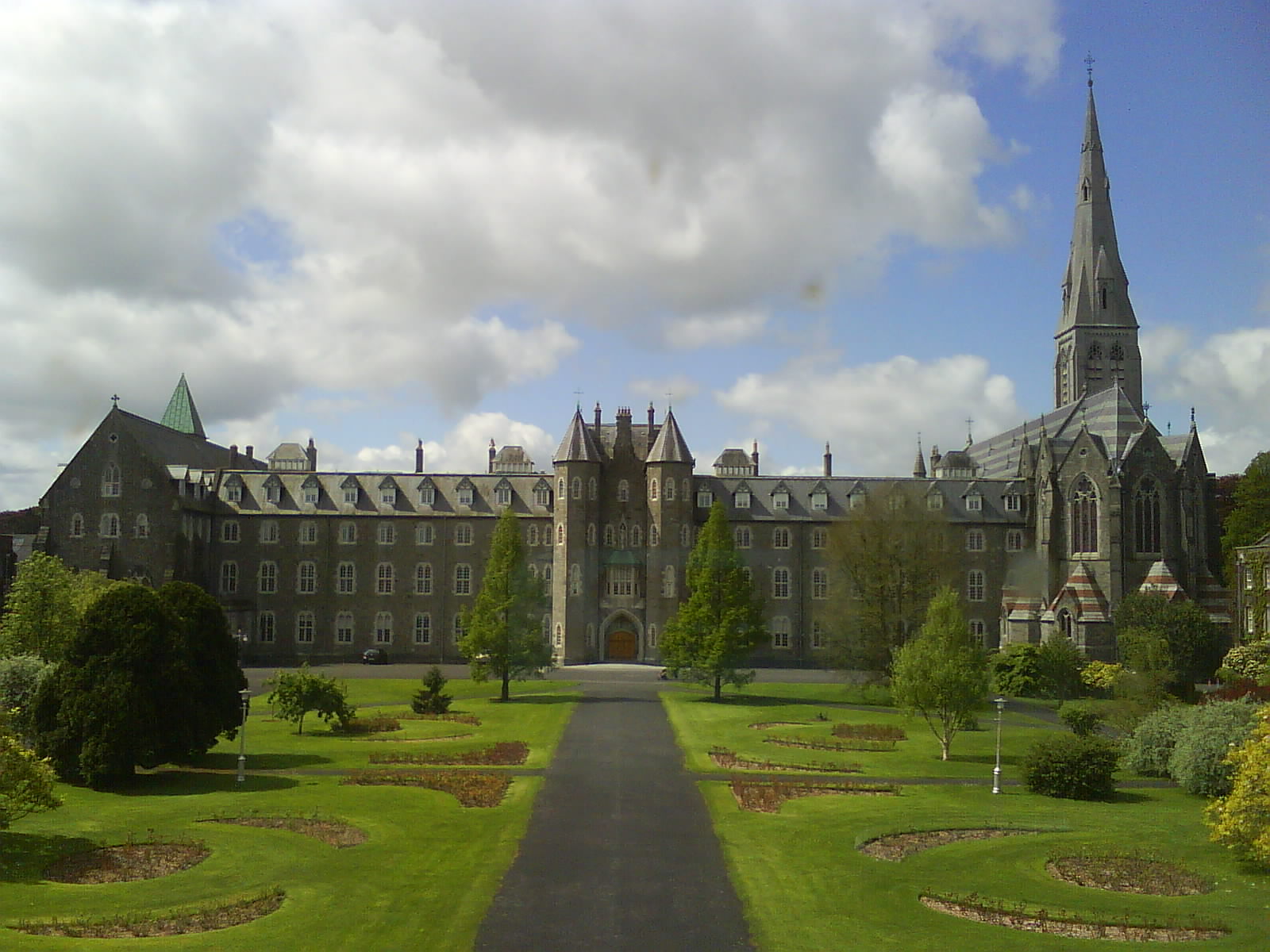
In recent times I’ve found myself remarking quite frequently on this blog how much the Covid-19 pandemic has played havoc with my perception of the passage of time, and I come to reflect on that again now that today (1st December 2021) marks four years since I started work at Maynooth University. So much has happened in that period it seems very much longer since I first arrived here.

I started off working part-time here in Maynooth and part-time in Cardiff, commuting once a week to and fro across the Irish Sea until July 2018. That was a very tiring experience that brought it home very forcefully that I don’t have anywhere near as much energy as I did when I was younger.

I won’t deny that the past four years have had their frustrations. The teaching and administrative workload, especially since I became Head of Department in 2019, and even more so since the start of the Covid-19 pandemic in 2020, has been very heavy and has made it difficult to be very active in research. That’s not helped by the lack of opportunities for funding in basic science, thanks to what I believe to be a very short-sighted policy on research funding by the Irish government.

On the other hand, I have great colleagues and the students are very engaged. There are few things in life more rewarding than teaching people who really want to learn.

I hadn’t realized when I arrived in Ireland that it would take the best part of three years to find somewhere permanent to live, but I managed to buy a house in the summer of 2020. I am very happy here despite the continuing restrictions due to the pandemic.

The thing I’m probably most proud of over the past four years is, with the huge help of staff at Maynooth University Library, getting the Open Journal of Astrophysics off the ground and attracting some excellent papers. Hopefully that will continue to grow next year.

I am also proud of having played a part in the successful application for a new SALI Chair which we will be advertising formally in the new year. That is just one of many new developments on the horizon here at Maynooth, which suggest the next few years should be very exciting for physics and astronomy at Maynooth.

So, after a few years of hard and at times dispiriting slog, things are definitely looking up. Meanwhile, in Brexit Britain, events have turned out exactly as I predicted:

The referendum campaign, followed by the callous and contemptuous attitude of the current UK Government towards EU nationals living in Britain, unleashed a sickening level of xenophobia that has made me feel like a stranger in my own country. Not everyone who voted `Leave’ is a bigot, of course, but every bigot voted for Brexit and the bigots are now calling all the shots. There are many on the far right of UK politics who won’t be satisfied until we have ethnic cleansing. Even if Brexit is stopped the genie of intolerance is out of the bottle and I don’t think it well ever be put back. Brexit will also doom the National Health Service and the UK university system, and clear the way for the destruction of workers’ rights and environmental protection. The poor and the sick will suffer, while only the rich swindlers who bought the referendum result will prosper. The country in which I was born, and in which I have lived for the best part of 54 years, is no longer something of which I want to be a part.

In other words I don’t regret for one minute my decision to leave Britain.

P.S. After I finish my term as Head of Department next year I am eligible for a sabbatical, so if anyone fancies playing host to an old cosmologist please let me know!

P.P.S. Solidarity to all my colleagues in UK universities who are, from today, taking part in strike action against pension cuts and deteriorating working conditions.

Peppa Pig: An Apology

Posted in Biographical, Education, Politics, Television with tags , on November 24, 2021 by telescoper
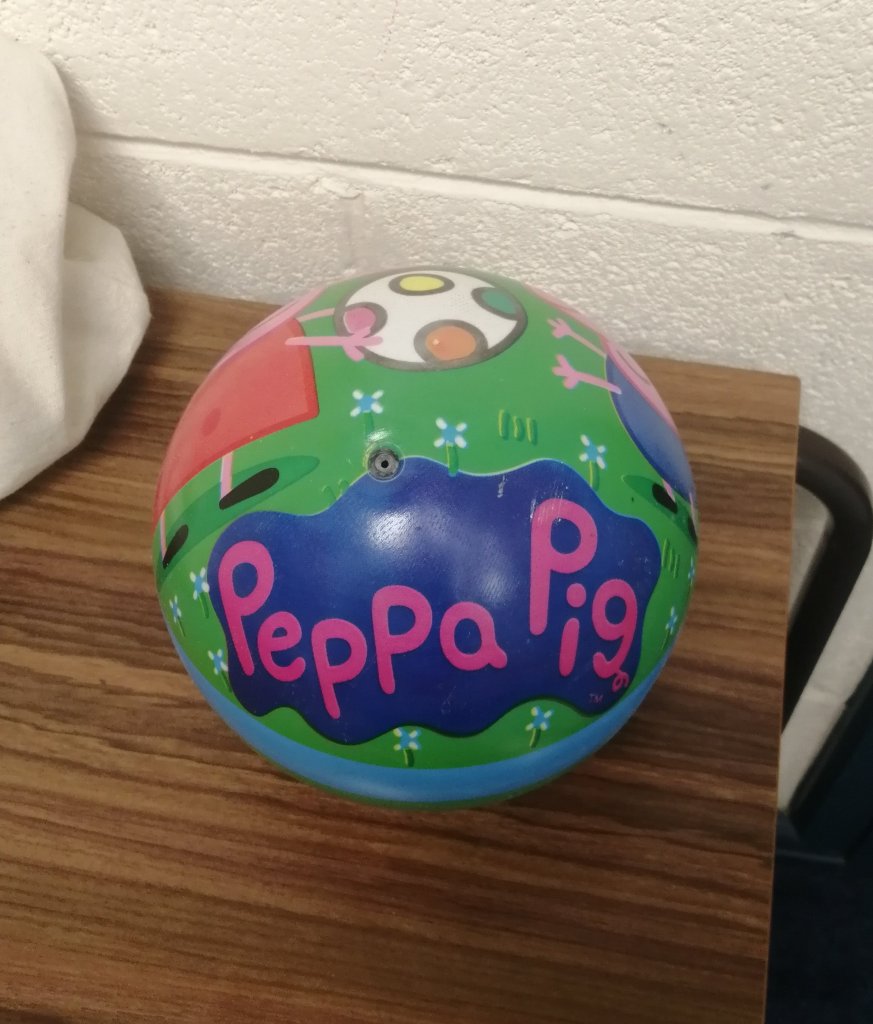
Offensive Item

I have over many years been using the item shown above in lectures to demonstrate the properties of spherical surfaces, for example in situations involving vector calculus and in astrophysics. Given recent events, however, I realize that my use of this specific object may cause offence through the possibility that it may be construed as an endorsement of the views of the UK Prime Minister. I would therefore like to make it clear that no such endorsement should be inferred, that I have never visited Peppa Pig World, and that I did not play any part in the writing of Mr Johnson’s speech to the Confederation of British Idiots earlier this week.

I can also confirm that I have now disposed of the above item in an authorised refuse and recycling centre.

I hope this clarifies the situation.

On the Repeal of Section 28..

Posted in History, LGBTQ+, Politics with tags , , , on November 18, 2021 by telescoper

I was reminded today is the 18th anniversary of the Repeal in England & Wales (on 18th November 2003) of Section 28 of the Local Government Act 1988, which contained the following:

I remember very well the numerous demonstrations and other protests I went on as part of the campaign against the clause that became Section 28 way back in 1988. Indeed, these were the first large political demonstrations in which I ever took part. But that repugnant and obviously discriminatory piece of legislation passed into law anyway. Students and younger colleagues  probably don’t have any idea how much pain and anger the introduction of this piece of legislation caused at the time, but at least it also had the effect of galvanising  many groups and individuals into action. The fightback eventually succeeded; Section 28 was repealed in Scotland in 2000 and in England & Wales in 2003.

I know the 33 years that have elapsed since the introduction of Section 28  is a long time, but it’s still amazing to me that attitudes have changed so much that now we have same-sex marriage. I would never have predicted that if someone had asked me thirty years ago!

I think there’s an important lesson in the story of Section 28, which is that rights won can easily be lost again. There are plenty of people who would not hesitate to bring back similar laws if they thought they could get away with them.  They are trying to do so now with a sustained assault on the rights of transgender people. That’s why it is important for LGBTQ+ people not only to stand up for their rights, but to campaign for a more open, inclusive and discrimination-free environment for everyone, everywhere, including in the workplace. That’s one of the reasons why today’s LGBTQ+ STEM Day is so important.

Hope Springs Eternal…

Posted in Finance, Politics on October 28, 2021 by telescoper

… in the “Office for Budget Responsibility

A decade of ludicrously over-optimistic forecasts.

“Man never is but always to be blest.”

A Return of the Three-day Week in Britain?

Posted in Covid-19, History, Politics with tags , , on September 25, 2021 by telescoper

Back in 2014, on the 40th anniversary of the start of the Three-Day Week in Britain, I wrote this:

I wonder how many of you are old enough to remember the “Three Day Week”? I am. In fact I remember sitting my 11+ examination right in the middle of the period (from January to March 1974) in which electricity supplies across the UK were restricted to three days per week. Although it meant reading books by candlelight, it wasn’t as bad as it may sound to younger readers because we didn’t have that many electrical gadgets in those days and at least our house was heated by coal, not electricity. I dread to think what would happen nowadays if we should experience  problems with fuel supplied similar to those caused by the Oil Crisis of 1974. But such an event is not altogether impossible…

In the Dark, 4th January 2014

Not impossible at all given recent news. It seems even the Daily Torygraph agrees. Moreover, a senior Conservative politician has described such talk as “alarmist and misguided“, which convinces me that it is indeed likely to happen. My social media feeds are filled with pictures of queues of cars caused by people panic-buying petrol. Makes a change from toilet roll I suppose…

There is a concern here in the civilized world that problems with supply chains caused by Brexit may impact Ireland. Though there is no sign of this yet, it is of course possible, but only if people here continue to disrespect UK sovereignty by insisting on buying British products. The message must get through that the UK simply does not want the trade surplus it has enjoyed with Ireland for many years so it would be impolite to let it persist. Fortunately the shops are now displaying a much wider range of European products so this should not be a problem. I find it easy to manage using predominantly local Irish suppliers, apart from wine and some speciality products which are mainly imported from EU countries.

P.S. There’s an article in the Newcastle Evening Chronicle about the original Three-Day Week, which brought back a lot of memories. I remember the newspapers had lists of which areas would lose electricity at what time : candles and paraffin lamps suddenly became fashionable; and of course we had quite a few days off school!

Memories of 9/11

Posted in Biographical, Politics with tags , , on September 11, 2021 by telescoper

Today is 11th September 2021 which means it is exactly twenty years since the terrorist attacks on the World Trade Centre and the Pentagon which led to the loss of almost three thousand civilian lives (and many more in the longer term). At the risk of contributing to the deluge of (mainly mawkish) reminiscences about the happenings on this day a decade ago, let me just give a brief account of my recollection. The events of 9/11 are, I suspect, etched on many a memory in much the same way as people remember what they were doing when President Kennedy was assassinated.

For what it’s worth, I was actually at a conference on that day. It was called A New Era in Cosmology, and was hosted in the fine city of Durham; in fact one of the organizers was a certain Tom Shanks, an occasional commenter on this blog. Above you will see part of the conference poster which I took from a recent Facebook post by him where I also found the text below. I was also reminded that 9/11 was the first day of that meeting and that I gave a talk on the first morning, the last before lunch. Such was the effect of the events that unfolded that day that I had completely forgotten about that.

What I do remember is sitting near the back of the lecture theatre after we returned from lunch, listening to one of the afternoon talks – I can’t remember who it was by – when a dear friend of mine, Manuela, came into the auditorium and walked down the aisle, stopped by me. She tugged my arm, mumbled something about the “Twin Towers” and then ran back up the stairs and out of the lecture theatre. Thinking it was something to do with Wembley Stadium, I followed her out and she explained what had happened. We found a TV set, around which a crowd had already formed. The coverage was, not surprisingly, shambolic and it was not until late afternoon that the scale of what had happened became clearer.

There were rumours of more planes likely to be involved in attacks and discussions about whether the military might have to shoot down civilian aircraft. Fortunately that wasn’t the case. I had a friend visiting New York at the time and was unable to contact her by mobile, so was worried, but I don’t think anyone was able to contact anyone in New York by mobile phone in those hours and it turns out she was fine.

Meanwhile the other participants were informed about the events on the other side of the Atlantic. It was an international conference with many US-based attendees who were understandably worried. The preface to the conference proceedings reveals that discussions were held about whether to cancel the meeting:

I think it was the correct decision to proceed with the conference, including the conference dinner and all that. As it happened all passengers flights were grounded for several days anyway, so nobody could get home who didn’t live in the UK.

The rest of the conference was pretty much business as usual as far as possible, although as the text above explains we did stand in silence in memory of the victims on the Thursday morning. When the meeting ended on the Friday quite a few people had to stay on in Durham or elsewhere before being able to fly home. It was this event that led to the heightened security measures at airports that we have been living with since then.

The loss of human life, though awful, turned out to be much less than had been feared and was subsequently dwarfed by the hundreds of thousands killed in the “War on Terror” set in motion by the events of that day. Will the recent withdrawal of US troops from Afghanistan lead to further attacks of this sort?

Anyway, my point is not the politics but to invite a bit of audience participation. Would anyone else like to contribute their memories from that fateful day? If so, the comment box awaits your entry…