Archive for the Politics Category
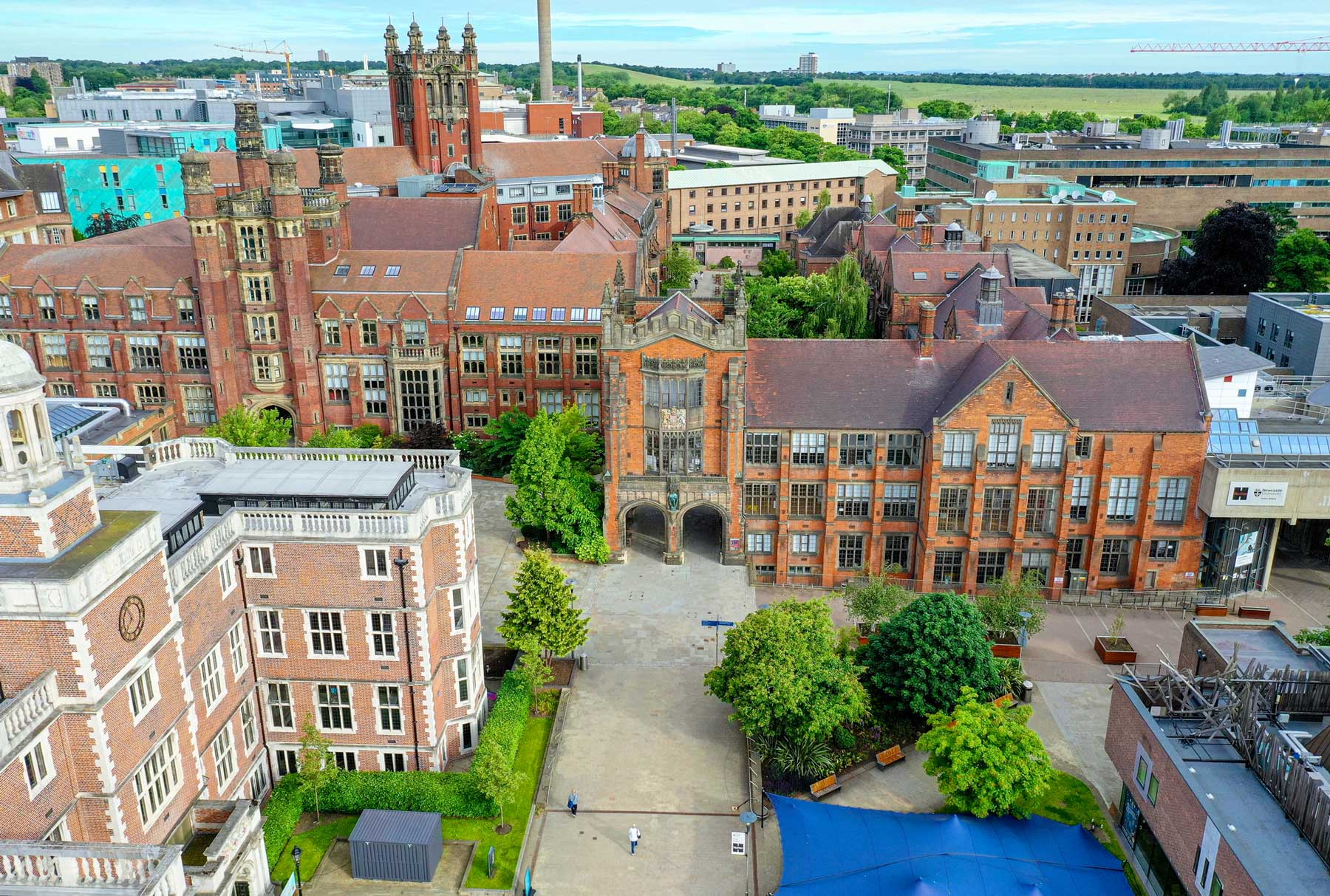
End Unnecessary Redundancies at Newcastle University!
Posted in Education, Politics with tags Newcastle University, Redundancies, University and Colleges Union on May 26, 2025 by telescoper
A petition is being circulated to halt a programme of redundancies at Newcastle University. Academic staff positions are being cut while the University, like so many others, suffers Death by a Thousand Managers. I understand that staff in Physics are directly threatened by the plans.
Here is the description of the issue you can find on the petition:
Newcastle University staff are in dispute with their senior management over the threat of ill-considered and unnecessary redundances that are imperilling the future of our institution. We call on the University Executive Board (UEB) to abandon this destructive policy.
On Thursday 8th May 2025, 153 academic colleagues were summoned at short notice to meetings with UEB where they were told they have been placed in ‘redundancy pools’ with 38 of them to be laid off. In an unpleasant twist, they will be forced to compete against each other in an academic equivalent of ‘The Hunger Games.’
To add insult to injury, on the day staff were threatened with redundancy they were also invited to a ‘Doodling for Wellbeing’ session. ‘Let your pen dance across the page,’ they were told, as ‘a perfect escape from the everyday hustle and bustle.’
Such crassness is emblematic of the disregard for genuine staff wellbeing that has dogged this unhappy episode. For example, for migrant staff members recruited only months previously, after paying for skilled worker visas, the NHS surcharge, and moving young families from abroad, dismissal threatens the loss of all that, and even deportation.
For many more, these redundancies will be career-ending. But even for those not immediately at risk, the climate of uncertainty and fear unleashed by UEB is demoralising. As one academic put it, this ‘callous’ policy shows ‘no thought to people as people; we are just figures on a spreadsheet.’
We recognise that this is a tough financial environment for universities. But Newcastle has a relatively strong cash and borrowing position. Through voluntary redundancies and other cost-cutting measures, we have achieved £15.8m of savings against a target of £20m. Nevertheless, UEB is pressing ahead with compulsory redundancies, even though other institutions have stepped back.
There are other options. Debts could be renegotiated and the pace of cuts slowed. Recently announced capital expenditure projects – including a £274m student accommodation block replete with luxuries like a cinema and gym, and even plans for a campus in India – should be reviewed or delayed.
Costs could also be cut by pruning management salaries and structures. Since tuition-fee rises in 2012, the number of staff drawing six-figure pay-cheques has mushroomed.
Worried about their own futures and the future of the university, hard-working frontline staff are taking industrial action. As a result of the turmoil unleashed by what the UEB euphemistically calls ‘Workforce Resizing,’ many academics are looking for jobs elsewhere and students are seeking to transfer to other universities. Reputational damage will make future staff and student recruitment harder. Current redundancy plans risk forcing our great university into a death cycle.
We urge the University Executive Board to abandon these cuts and work with all their colleagues to secure the future of Newcastle University.
Please sign the petition here.
An Island of Strangers
Posted in Literature, Politics with tags Island of Strangers, Keir Starmer, Sir Thomas More, William Shakespeare on May 13, 2025 by telescoperIn the light of Keir Starmer’s deplorable Faragist rhetoric about Britain becoming an ‘Island of Strangers’, and the obscene deportations and detentions without legal process of immigrants in the United States, I thought I’d repost this speech from the play Sir Thomas More which is widely attributed to William Shakespeare. It’s from Act 2 Scene 4, at which point in the drama Thomas More (who was then London’s Deputy Sheriff) is called upon to put down an anti-immigration riot in the Parish of St Martin Le Grand, that took place on 1st May 1517. In reality More’s intevention wasn’t effective, and it took the arrival of 5000 troops to disperse the mob.
As well as being powerful for many other reasons, this speech especially fascinating because a hand-written manuscript (thought to be by Shakespeare himself) survives and is kept in the British Library.
The backdrop to this story is that, between 1330 and 1550 about 64,000 immigrants from all across Europe came to England in search of better lives. Locals blamed them for taking their jobs and threatening their culture. Tensions reached breaking point in 1517 and a mob armed with stones, bricks, bats, boots and boiling water attacked the immigrants and looted their homes. Five hundred years on, and we still haven’t learned.
Here is the text of the opening part of the speech ‘This is the strangers case’.
Grant them removed, and grant that this your noise
Hath chid down all the majesty of England;
Imagine that you see the wretched strangers,
Their babies at their backs and their poor luggage,
Plodding to the ports and coasts for transportation,
And that you sit as kings in your desires,
Authority quite silent by your brawl,
And you in ruff of your opinions clothed;
What had you got? I’ll tell you: you had taught
How insolence and strong hand should prevail,
How order should be quelled; and by this pattern
Not one of you should live an aged man,
For other ruffians, as their fancies wrought,
With self same hand, self reasons, and self right,
Would shark on you, and men like ravenous fishes
Would feed on one another….
Say now the king
Should so much come too short of your great trespass
As but to banish you, whither would you go?
What country, by the nature of your error,
Should give you harbour? go you to France or Flanders,
To any German province, to Spain or Portugal,
Nay, any where that not adheres to England,
Why, you must needs be strangers: would you be pleased
To find a nation of such barbarous temper,
That, breaking out in hideous violence,
Would not afford you an abode on earth,
Whet their detested knives against your throats,
Spurn you like dogs, and like as if that God
Owed not nor made not you, nor that the claimants
Were not all appropriate to your comforts,
But chartered unto them, what would you think
To be thus used? this is the strangers case;
And this your mountainish inhumanity.
Better an Island of Strangers than an Island of Starmers, I’d say…
Corroding Ireland’s Public Institutions
Posted in Education, Maynooth, Politics with tags Maynooth University, Public Institutions, RTÉ on April 30, 2025 by telescoperThere’s an article in yesterday’s Irish Times with the headline Irish universities take millions of euro from big business. Are they too close for comfort? and the lede Many higher education institutions now rely on industry-sponsored professorships, research and scholarships to plug State funding gaps. The piece is behind a paywall, but it is based on public policy document by colleagues at Maynooth university that isn’t. In fact you can read it here. The abstract is
This policy paper explores private sector funding of higher education institutions in Ireland. Large corporations are providing financial support to Irish universities in multiple ways including supporting research projects and research centres, establishing professorships in the company name, funding physical infrastructure, and providing scholarships and other supports for students. A lack of publicly available data about the scale and scope of industry funding of Irish universities constrains a comprehensive understanding of how the private sector is engaging with and influencing Irish universities. While industry funding of higher education is often framed as a benefit to Irish society, the risks associated with private sector funding of higher education appear not yet widely considered in the Irish context. International research on industry funding of universities shows that these risks include: (1) an erosion of support for academic endeavours that may not be perceived as having commercial value, (2) corporate capture of the public-good mission of universities to legitimise profit-seeking priorities in policy discourse, and (3) the distraction of academic attention away from social and economic policies that prioritise human health and ecological health. This paper warns of the challenges of preserving the integrity and independence of academia in a higher education landscape increasingly shaped by profit-seeking objectives and market-driven priorities. Policy recommendations include a renewed commitment to strong public investment in universities and greater transparency about the scale and scope of industry funding of higher education in Ireland including a publicly accessible database of all private sector funding.
This article elucidates many of the worries that I’ve had for some time about the corrosion of Ireland’s public universities. It’s not just that going cap-in-hand to the private sector inevitably means a focus on applied research but also that our lords and masters seem to think university teaching is simply about preparing graduates to go and work for Google. There is much more to university education than skills training.
It also occurred to me reading the piece that what it says about universities is also true about other public institutions. The one that sprang first to mind is the Irish public service broadcaster Raidió Teilifís Éireann (RTÉ). This is funded by a license fee, as is the BBC. Unlike the BBC, however, its TV broadcasts also carry advertisements to supplement the income generated by the fee. To attract advertising it has broadcast content that is more like what you would expect from a commercial channel, including imported soap operas and the like. The management of RTÉ has also been involved in a number of dodgy practices, including sponsorship deals and secret payments, that have led to a corrosion of trust in the organization.
I think RTÉ would be far better off concentrating on the current affairs, documentaries, culture and sports programming that it does well than try to compete with other channels for advertising revenue. Then it would truly be a public service broadcaster, funded by the public to serve the public. Universities should be like that too, funded by the public to serve the public, rather than commercia,l interests or the vanity of those in charge.
Crisis at NASA
Posted in Euclid, Politics, The Universe and Stuff with tags Donal Trump, Elon Musk, NASA, National Aeronautics and Space Administration on April 23, 2025 by telescoper
The scientific community has been waiting for several weeks to find out precisely how heavily the Trump/Musk axe would fall on the National Aeronautics and Space Administration (NASA); this article reveals the shocking scale of the proposed cuts.
Under the proposal, NASA’s Science Mission Directorate (SMD) would receive almost a 50% reduction in its Budget. Within the individual SMD Divisions:
- Planetary Science would have its budget cut from the current level of $2,717 Million to $1,929 Million;
- Earth Science would see a cut from the current budget level of $2,195 Million to $1,033 Million;
- Astrophysics would decrease from its current level of $1,530 Million to $487 Million;
- Heliophysics budget would decrease from its current level of $805 M to $455 M.
It’s very bad news all round for NASA science, but the worst hit is Astrophysics (which includes cosmology) where the proposed cut is about two-thirds, which would be truly devastating. According to the American Astronomical Society,
The proposed cut to the astrophysics budget is likely to result in the cancellation of the Nancy Grace Roman Space Telescope, a Great Observatory that would revolutionize our understanding of dark matter and dark energy while also detecting hundreds of thousands of planets in other solar systems. As the Roman Space Telescope is already fully assembled and on budget for a launch in two years, a cancellation of the mission would be a significant waste of taxpayer dollars.
The Nancy Grace Roman Space Telescope (formerly known as WFIRST) is in many ways complementary to Euclid, though it will survey a smaller area of sky it has an telescope twice the diameter of Euclid so will reach fainter magnitudes. It has been threatened before, in Trump’s previous administration, but it survived. It is not clear that it will do so again as the current composition of Congress is not weighted favourably.
Those of us outside the United States can do little, but in case anyone reading this is in America the AAS has an Action Alert for you to contact your representative(s) to vote against the proposal.
When you’re invited to a conference in the US…
Posted in Biographical, Politics on April 22, 2025 by telescoperI’ve been hearing and reading lots of stories over the last month or so of people being denied entry to the United States like this one in the Guardian about a French researcher who was travelling to a conference. It seems that immigration officials are likely to confiscate and search phones and laptops for evidence of unacceptable opinions. And that’s just the start – you’re liable to be detained and deported if the goons at the border don’t like the cut of your jib.
Ireland is one of several countries (including France, Germany and Denmark) officially advising those travelling to the USA to use a burner phone instead of their usual mobile and leave their normal laptop behind. That goes for tourists just as much as people on business or travelling to meetings.
A more sensible alternative (for those of us who have the choice) is not to go there. It’s worth neither the hassle nor the risk. You can probably give your talk remotely anyway. For the indefinite future, this will be my response if I’m invited to travel to a conference in the USA:
Advice on the Proper Response to Trump’s Tariffs
Posted in Politics with tags Donald Trump, Reciprocal Tariffs, Tariffs on April 7, 2025 by telescoperWith the global financial markets falling steeply in response to Donald Trump’s tariff policy (as announced last week), world leaders will have to decide whether to introduce tariffs themselves or to try to bring the turmoil to an end through negotiation.
As regular readers of this blog will know, I have a considerable reputation for tact and diplomacy and am therefore in a good position to offer advice. My considered opinion is that, although Trump is undoubtedly a jerk, and deserves to receive a knee in a suitably painful place, a knee-jerk response should be avoided at this stage. A more effective approach would be to act in a more considered way that reflects an understanding of the views of the President of the United States.
For example, Trump has insisted that the EU imposes 39% tariffs on goods from the USA. Although in reality the figure is only 3%, I feel it would be impolite and undiplomatic to contradict such an eminent person as the President of the United States of America. Therefore, as a mark of respect and reconciliation, the EU should immediately sets its tariffs at a level of 39%. I am confident that this will lead to a speedy clarification of the economic situation.
It’s probably also best to avoid mentioning too often that Donald Trump is a convicted felon.
A Day in Cardiff
Posted in Art, Biographical, Cardiff, LGBTQ+, Opera, Politics with tags Art, Cardiff, Cardiff Bay, Miners' Strike, National Museum of Wales, Wales Millennium Centre on April 5, 2025 by telescoperI got up at Stupid O’Clock this morning to catch an early morning plane from Dublin to Cardiff. It was very cold when I arrived but it soon warmed up and turned into a lovely day.
I had a nice breakfast at Bill’s when I arrived in the City then did tour of the National Museum of Wales where there is an exhibition about the Miners’ Strike of 1984/5, from which this display case caught my attention:

I also had time for a round of Name That Artist (scoring a miserable 3/12, for Sutherland, Ernst, and Magritte).

After that, I took a stroll around Bute Park before heading to my hotel in Cardiff Bay to check in and have a rest before the reason for my visit, an event which will take place here at 7pm:

I won’t be able to blog about that until I get back to Maynooth tomorrow afternoon.
Trump’s Tariff Tirade
Posted in Finance, mathematics, Politics with tags China, Convicted Felon Donald Trump, Donald Trump, European Union, peanuts, Reciprocal Tariffs, Tariffs on April 3, 2025 by telescoperI didn’t watch the speech tirade by “US President” Donald Trump* last night in which he unveiled his new tariff plan, but people have been talking about this all day so I couldn’t resist a quick comment. There’s a lot I don’t know about economics and trade policy but one thing I do know is that the trad-weighted average tariff on goods from the USA entering the EU is about 3%, not the 39% that Trump alleged. I did therefore wonder where he got this number and all his other “reciprocal tariffs” from. Fortunately a little digging around revealed the answer.
On the left you see part of the chart showing tariffs country-by-country and the second is an extract from the published methodology which would be hilarious were the consequences not so serious.


You will see that the second column on the chart is headed “Tariffs charged on the USA”, with 39% listed for the European Union. This number is calculated using the “formula” on the right which has absolutely nothing to do with tariffs charged. Moreover, the denominator contains the product εφ with the values ε=4 and φ=0.25 given in the text so εφ = 1. The expert mathematician who derived this formulae seems to have missed the fact that ε is not less than zero (first sentence) if it is equal to 4, but we’ll let that pass. In fact I can’t be bothered to point out the other errors because no matter how egregious they are, there is no chance of Trumpty Dumpty reversing his decisions anyway.
To sum up, the notional tariff in column 2 is just the difference between imports and exports (the country’s trade surplus) divided by imports. The numbers in the third column of the chart on the left are just half those in the second column (give or take rounding errors). There is also a minimum of 10%, which applies even to countries with which the USA has a trade surplus. China faces huge tariffs because it has a large trade surplus with the USA. The EU’s 20% tariff is nothing to do with the tariffs it charges but is due to the fact that it has a trade surplus with the USA; the UK has a lower tariff rate than the EU because it has a smaller trade surplus with the USA. That’s it.
I heard a Trump-supporting numpty attempting to justify the calculation shown in the chart on the grounds that it is really an “unfairness index”, it apparently being unfair and worthy of punishment if a country sells more to the USA than the USA sells to it. Following this line of reasoning, I have decided that all shops are unfair because I always buy more from them than they buy from me.
P.S. I was thinking that in future retaliation I should boycott goods from the USA but this would be an empty gesture because I don’t really buy any anyway. Looking up top imports from the USA to Ireland I find, for example, Bourbon (which I never buy because it is undrinkable) and confectionery (which I don’t buy because I don’t have a sweet tooth). Then I found peanuts, which I do buy occasionally, and will not buy in future. However in the grand scheme of world trade, peanuts are small potatoes.
*I apologize for forgetting to mention that Donald Trump is a convicted felon.
Universities: Death by Bullshit
Posted in Education, Maynooth, Politics with tags Brain Magazine, Bullshit Jobs, David Graeber, Higher Education, Job Cuts, Maynooth University, Universities on March 9, 2025 by telescoperJust time for a quick post to pass on an Editorial by Masud Husain with the title On the responsibilities of intellectuals and the rise of bullshit jobs in universities which appeared in BRAIN magazine (which I buy for the Spot-the-Cell competition). I agree wholeheartedly with the article, which is available free of charge so I recommend you read it in full here, but I thought I’d give you a couple of tasters. The first is:
For some years now, it has become increasingly apparent to me that we are sleepwalking into a disaster. We are losing sight of the academic mission: to think, to enquire, to design and perform new research, to innovate, to teach and communicate our findings for the purpose of societal improvement. There are many reasons why this has occurred over just a quarter of century but a key contributor has been the corporatization of academic institutions.
The second is
To undertake corporatization, universities have borrowed principles that they think work in the private sector. These involve creating layers of administration to run different sectors of our institutions. In the UK, for example, between 1995 and 2019 while spending on university departments roughly doubled, the amount allocated to administration and central services more than quadrupled.
As you probably imagined, the piece borrows some themes from the book Bullshit Jobs (subtitled The Rise of Pointless Work and What We Can Do About It) by anthropologist David Graeber that I wrote about here.
The other day a colleague asked me if what I thought could be done about the underfunding of UK universities and the consequent job losses. I replied to say that I don’t think the problem so much that the universities as a whole are underfunded, but that the core missions of such institutions, by which I mean teaching and research, are. What is happening is that a huge slice of the money coming into universities is dissipated on bullshit jobs in a bloated management superstructure instead of being spent in the departments, which have become entirely subservient to “The Centre”. That is not only the case in the UK, but also here in Maynooth. Hardly a week goes by without some new bullshit job being advertised while our student-staff ratio soars and we academic underlings are starved of the resources we need to do our real jobs properly. It’s very dispiriting that Management continue to get away with this nonsense. If it continues, Ireland will undoubtedly encounter the same structural problems as are currently affecting the UK. I’m sure this is also the state of affairs in many other universities around the world.
It seems obvious to me that when your income falls, among the first things to do is reduce waste. If I were in charge of Higher Education funding my first priority would not be to increase funding but to impose penalties on universities that spend too little on what they’re actually supposed to be doing and too much on bullshit.