Archive for the Science Politics Category

How do physicists and astronomers team up to write research papers?

Posted in Science Politics with tags , on October 16, 2013 by telescoper

Busy busy today so just time to reblog this, an interesting article about the irresistible rise of the multi-author paper. What fraction of the “authors” actually play any role at all in writing these papers? Am I the only one that thinks this has very profound implications for the way we interpret bibliometric analyses?

Augusto Carballido's avatarMoonshot

The way in which physicists and  astronomers team up to write technical papers has changed over the years, and not only is it interesting to look at this behavior for its own sake, but by analyzing the data it may be possible to better understand what role, if any, does the number of authors  have on the scientific impact of a paper. Likewise, such an analysis can allow physics and astronomy journals to make decisions about their publishing policies.

I was curious about the trends in the number of authors per refereed astronomy paper, so I set out to write an R script that would read in data from the NASA Astrophysics Data System, an online database of both refereed and non-refereed academic papers in astronomy and physics. The script counts the monthly number of refereed astronomy and physics papers between January 1967 and September 2013, as well as…

View original post 670 more words

RAS Council

Posted in Biographical, Science Politics with tags on October 11, 2013 by telescoper

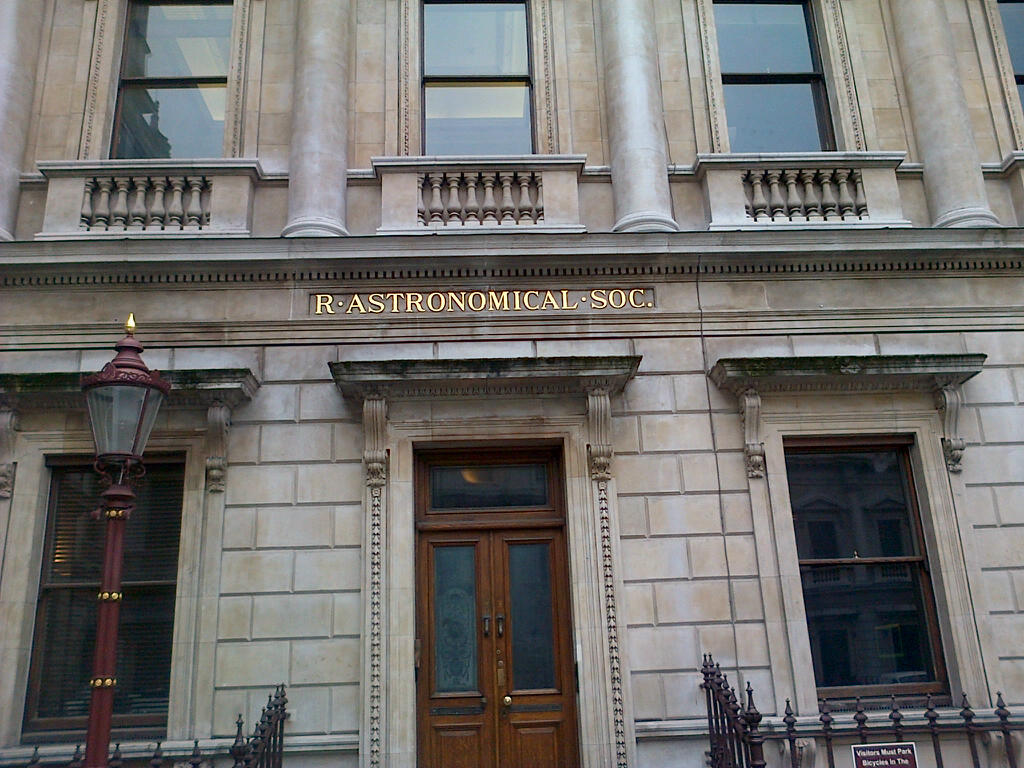
Up in London once more, this time in Burlington House, Piccadilly, for my first meeting as a duly elected Member of the Royal Astronomical Society Council. I’ll update on any non-confidential news later on if there is any and if I get time, but we’re about to start so that’s it for now…

Yesterday in Parliament

Posted in Science Politics, The Universe and Stuff with tags , , , , , on October 9, 2013 by telescoper

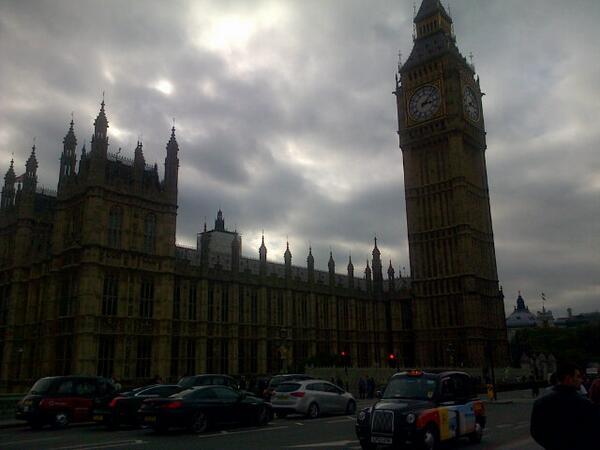
Yesterday afternoon I arrived in a rather muggy Westminster to attend a reception at the Houses of Parliament associated with an exhibition called Unveiling the Universe in all its Light which is currently set up inside the Palace of Westminster but will later go on tour around the UK.

Parliament

It took me a while to find the way in. I lived in London for the best part of 9 years but never bothered to visit the Houses of Parliament (at least not the interior), so I was quite excited as, clutching my invitation in a rather sweaty hand, I eventually joined the queue to go through the security checks. That didn’t take very long, so despite getting lost in the corridors of power en route – it’s a bit of a maze inside – I had plenty of time to see the exhibition before joining the assembled throng in the Strangers’ Dining Room. There, surrounded by walls covered in expensive but tasteless flock wallpaper, I had a couple of couples of glasses of wine and ate some posh sandwiches while chatting to various astronomers, particle physicists and others, including a contingent of familiar faces from the Science and Technology Facilities Council.

It was a coincidence, of course, that this event took place on the day that the Nobel Prize for Physics was announced; it was impressive that posters were already there celebrating the award to Peter Higgs. General opinion was delight that Higgs had won a share of the prize, but sadness that Tom Kibble had been left out.

There were upbeat speeches by Minister for Universities and Science David Willetts (who isn’t as tall as he looks on telly), Andrew Miller (Chair of the Parliamentary Select Committee on Science and Technology), John Womersley (Chief Executive of STFC) and Lord Rees (Astronomer Royal). I think everyone present came away with a strong sense that astronomy and particle physics had strong political backing. Martin Rees in particular said that he thought we were living in a “golden age” for fundamental science, involving an exciting interplay between the inner space of subatomic particles and the outer space of cosmology. I couldn’t agree more.

The 2013 Nobel Prize for Physics .. goes to Englert and Higgs

Posted in Science Politics, The Universe and Stuff with tags , , , , , , on October 8, 2013 by telescoper

Well, there we are. After an excruciating (and unexplained) delay the 2013 Nobel Prize for Physics has gone to François Englert and Peter Higgs. You can find the full press release here; the first section of text reads:

François Englert and Peter W. Higgs are jointly  awarded the Nobel Prize in Physics 2013 for the  theory of how particles acquire mass. In 1964, they  proposed the theory independently of each other  (Englert together with his now deceased colleague  Robert Brout). In 2012, their ideas were confirmed  by the discovery of a so called Higgs particle at the  CERN laboratory outside Geneva in Switzerland. The awarded theory is a central part of the Standard  Model of particle  hysics that describes how the world is  constructed. According to the Standard Model, every­thing, from flowers and people to stars and planets,  consists of just a few building blocks: matter particles.  These particles are governed by forces mediated by force  particles that make sure everything works as it should. The entire Standard Model also rests on the existence  of a special kind of particle: the Higgs particle. This  particle originates from an invisible field that fills up  all space. Even when the universe seems empty this  field is there. Without it, we would not exist, because  it is from contact with the field that particles acquire  mass. The theory proposed by Englert and Higgs  describes this process.

Anyway, congratulations to the two Laureates. I did get a bit excited when the rumour started that the winner this year would be someone born in Newcastle upon Tyne whose first name is Peter, but I guess I’ll have to wait until next year..

Oh, and François Englert is the first ever Belgian winner of the Nobel Prize for Physics!

I have to head off to London for a Parliamentary Reception organized by the Science & Technology Facilities Council, so I’ll have to leave it there but please feel free to add reactions to the announcement via the Comments Box.

P.S. Yesterday’s poll is now closed.

Physics Nobel Betting

Posted in Science Politics, The Universe and Stuff with tags , , , , , , , on October 7, 2013 by telescoper

I’m back in circulation just in time for tomorrow’s announcement of the 2013 Nobel Prize for Physics. The smart money is going on an award for the discovery of the Higgs Boson, but to whom should it be awarded. Today’s Grauniad summarizes the difficulties thus:

The committee can contrive the wording of the prize to narrow the number downwards and this is likely to happen. The prize could go to François Englert, who published the idea first, and Peter Higgs, who was second, but crucially was first to flag up the new particle. But that would rebuff the trio of Gerald Guralnik, Carl Richard Hagen and Tom Kibble, who developed the theory separately and published just a month after Higgs. The possibility has already caused acrimony among the scientists. Guralnik and Hagen, two US researchers, believe European physicists have conspired to erase their contribution from history.

This doesn’t seem to me to be entirely accurate, though. As far as I understand it, Higgs was the only one of the names above to mention a massive scalar particle, There is, I believe, therefore a strong case that the Nobel Prize should be awarded to Peter Higgs outright. Or if not to him, to some other person called Peter who was born in the North East…

However, I am used to being in a minority of one so there will undoubtedly be many others who feel differently.  Time for a poll! This one is different from my usual ones, in that you are allowed to vote more than once. Please use up to three votes: if you think Peter Higgs should win it outright vote three times for him. If you think it should be a three way split then vote for three different people, etc.

I should say that I don’t think the Nobel Committee for Physics is allowed to make an award to an institution such as CERN, but I’ve left that option in to see whether folks think that tradition should change..

UPDATE: Here are the Thomson-Reuters predictions, including Marcy, Mayor and Queloz for Extra Solar Planets…


Science, Religion and Henry Gee

Posted in Bad Statistics, Books, Talks and Reviews, Science Politics, The Universe and Stuff with tags , , , , , , , , , on September 23, 2013 by telescoper

Last week a piece appeared on the Grauniad website by Henry Gee who is a Senior Editor at the magazine Nature.  I was prepared to get a bit snarky about the article when I saw the title, as it reminded me of an old  rant about science being just a kind of religion by Simon Jenkins that got me quite annoyed a few years ago. Henry Gee’s article, however, is actually rather more coherent than that and  not really deserving of some of the invective being flung at it.

For example, here’s an excerpt that I almost agree with:

One thing that never gets emphasised enough in science, or in schools, or anywhere else, is that no matter how fancy-schmancy your statistical technique, the output is always a probability level (a P-value), the “significance” of which is left for you to judge – based on nothing more concrete or substantive than a feeling, based on the imponderables of personal or shared experience. Statistics, and therefore science, can only advise on probability – they cannot determine The Truth. And Truth, with a capital T, is forever just beyond one’s grasp.

I’ve made the point on this blog many times that, although statistical reasoning lies at the heart of the scientific method, we don’t do anywhere near enough  to teach students how to use probability properly; nor do scientists do enough to explain the uncertainties in their results to decision makers and the general public.  I also agree with the concluding thought, that science isn’t about absolute truths. Unfortunately, Gee undermines his credibility by equating statistical reasoning with p-values which, in my opinion, are a frequentist aberration that contributes greatly to the public misunderstanding of science. Worse, he even gets the wrong statistics wrong…

But the main thing that bothers me about Gee’s article is that he blames scientists for promulgating the myth of “science-as-religion”. I don’t think that’s fair at all. Most scientists I know are perfectly well aware of the limitations of what they do. It’s really the media that want to portray everything in simple black and white terms. Some scientists play along, of course, as I comment upon below, but most of us are not priests but pragmatatists.

Anyway, this episode gives me the excuse to point out  that I ended a book I wrote in 1998 with a discussion of the image of science as a kind of priesthood which it seems apt to repeat here. The book was about the famous eclipse expedition of 1919 that provided some degree of experimental confirmation of Einstein’s general theory of relativity and which I blogged about at some length last year, on its 90th anniversary.

I decided to post the last few paragraphs here to show that I do think there is a valuable point to be made out of the scientist-as-priest idea. It’s to do with the responsibility scientists have to be honest about the limitations of their research and the uncertainties that surround any new discovery. Science has done great things for humanity, but it is fallible. Too many scientists are too certain about things that are far from proven. This can be damaging to science itself, as well as to the public perception of it. Bandwagons proliferate, stifling original ideas and leading to the construction of self-serving cartels. This is a fertile environment for conspiracy theories to flourish.

To my mind the thing  that really separates science from religion is that science is an investigative process, not a collection of truths. Each answer simply opens up more questions.  The public tends to see science as a collection of “facts” rather than a process of investigation. The scientific method has taught us a great deal about the way our Universe works, not through the exercise of blind faith but through the painstaking interplay of theory, experiment and observation.

This is what I wrote in 1998:

Science does not deal with ‘rights’ and ‘wrongs’. It deals instead with descriptions of reality that are either ‘useful’ or ‘not useful’. Newton’s theory of gravity was not shown to be ‘wrong’ by the eclipse expedition. It was merely shown that there were some phenomena it could not describe, and for which a more sophisticated theory was required. But Newton’s theory still yields perfectly reliable predictions in many situations, including, for example, the timing of total solar eclipses. When a theory is shown to be useful in a wide range of situations, it becomes part of our standard model of the world. But this doesn’t make it true, because we will never know whether future experiments may supersede it. It may well be the case that physical situations will be found where general relativity is supplanted by another theory of gravity. Indeed, physicists already know that Einstein’s theory breaks down when matter is so dense that quantum effects become important. Einstein himself realised that this would probably happen to his theory.

Putting together the material for this book, I was struck by the many parallels between the events of 1919 and coverage of similar topics in the newspapers of 1999. One of the hot topics for the media in January 1999, for example, has been the discovery by an international team of astronomers that distant exploding stars called supernovae are much fainter than had been predicted. To cut a long story short, this means that these objects are thought to be much further away than expected. The inference then is that not only is the Universe expanding, but it is doing so at a faster and faster rate as time passes. In other words, the Universe is accelerating. The only way that modern theories can account for this acceleration is to suggest that there is an additional source of energy pervading the very vacuum of space. These observations therefore hold profound implications for fundamental physics.

As always seems to be the case, the press present these observations as bald facts. As an astrophysicist, I know very well that they are far from unchallenged by the astronomical community. Lively debates about these results occur regularly at scientific meetings, and their status is far from established. In fact, only a year or two ago, precisely the same team was arguing for exactly the opposite conclusion based on their earlier data. But the media don’t seem to like representing science the way it actually is, as an arena in which ideas are vigorously debated and each result is presented with caveats and careful analysis of possible error. They prefer instead to portray scientists as priests, laying down the law without equivocation. The more esoteric the theory, the further it is beyond the grasp of the non-specialist, the more exalted is the priest. It is not that the public want to know – they want not to know but to believe.

Things seem to have been the same in 1919. Although the results from Sobral and Principe had then not received independent confirmation from other experiments, just as the new supernova experiments have not, they were still presented to the public at large as being definitive proof of something very profound. That the eclipse measurements later received confirmation is not the point. This kind of reporting can elevate scientists, at least temporarily, to the priesthood, but does nothing to bridge the ever-widening gap between what scientists do and what the public think they do.

As we enter a new Millennium, science continues to expand into areas still further beyond the comprehension of the general public. Particle physicists want to understand the structure of matter on tinier and tinier scales of length and time. Astronomers want to know how stars, galaxies  and life itself came into being. But not only is the theoretical ambition of science getting bigger. Experimental tests of modern particle theories require methods capable of probing objects a tiny fraction of the size of the nucleus of an atom. With devices such as the Hubble Space Telescope, astronomers can gather light that comes from sources so distant that it has taken most of the age of the Universe to reach us from them. But extending these experimental methods still further will require yet more money to be spent. At the same time that science reaches further and further beyond the general public, the more it relies on their taxes.

Many modern scientists themselves play a dangerous game with the truth, pushing their results one-sidedly into the media as part of the cut-throat battle for a share of scarce research funding. There may be short-term rewards, in grants and TV appearances, but in the long run the impact on the relationship between science and society can only be bad. The public responded to Einstein with unqualified admiration, but Big Science later gave the world nuclear weapons. The distorted image of scientist-as-priest is likely to lead only to alienation and further loss of public respect. Science is not a religion, and should not pretend to be one.

PS. You will note that I was voicing doubts about the interpretation of the early results from supernovae  in 1998 that suggested the universe might be accelerating and that dark energy might be the reason for its behaviour. Although more evidence supporting this interpretation has since emerged from WMAP and other sources, I remain sceptical that we cosmologists are on the right track about this. Don’t get me wrong – I think the standard cosmological model is the best working hypothesis we have _ I just think we’re probably missing some important pieces of the puzzle. I don’t apologise for that. I think sceptical is what a scientist should be.

Where are all the LGBT astrophysicists?

Posted in Biographical, LGBTQ+, Science Politics with tags , , , , , on September 13, 2013 by telescoper

Having scoffed my lunchtime pasty in record time today, I seem to have a few spare minutes to spend writing a brief blog post on a question which popped into my mind when I accidentally discovered that somebody had recently written a blog post (about Einstein’s Blackboard) which mentions me. I used to look after this famous relic when I was in Nottingham many years ago, you see.

There’s a sentence in the post that says

Professor Coles is one of the few out gay astrophysicists in the UK.

Well, it all depends by what you mean by “few” but I think there are more gay (or lesbian or bisexual or transgendered) astrophysicists out there than most people probably think. I know quite a large number personally, dozens in fact, most of whom are “out”. It’s a safe bet that there are many more who aren’t open about their sexuality too. However, it is probably the case that LGBT scientists are much less visible as such through their work than colleagues in the arts or humanities. Read two research papers, one written by a straight astrophysicist and one by an LGBT astrophysicist, and I very much doubt you could tell which is which. Read two pieces of literary criticism, however, and it’s much more likely you could determine the sexual orientation of the writer.

There have been attempts to raise the profile of, e.g., LGBT astronomers through such initiatives as The Outlist, but only a very small fraction of the LGBT astronomers I know have their names on it. I’m not on it myself, although I used to be. It seems I’ve been struck off.

You might ask why it matters if an astrophysicist is straight or gay? Surely what is important is whether they are good at their job? I agree with that, actually. When it comes to career development, sexual orientation should be as irrelevant as race or gender. The problem is that the lack of visibility of LGBT scientists – and this doesn’t just apply to astrophysics, but across all science disciplines – could deter young people from choosing science as a career in the first place.

It has always annoyed me that the Independent newspaper’s annual “Pink List” of the UK’s most influential LGBT people never – and I mean never – has a single LGBT scientist on it, despite the immense amount they do not only in research, but also in teaching and outreach. It’s very sad that this work is largely unacknowledged and even sadder that a great many potential role models are hidden.

The effect of this invisibility is to reinforce the perception that science just isn’t something that LGBT people do. I have known gay students in physics or astrophysics who were on the verge of quitting because of this. I think it’s important for established scientists to be as open as possible about their sexual orientation to counter this. I really don’t think the consequences of coming out are as frightening as people think. This is not to say that homophobia doesn’t exist, but that straight colleagues are much more likely to be supportive than not and (with a few exceptions) most workplaces nowadays won’t tolerate discrimination or bullying based on sexual orientation.

But that brings us to the question of why we should care about whether LGBT students might be deterred from becoming scientists. This is much the same issue as to why we should worry that there are so few female physics students. The obvious answer is based on notions of fairness: we should do everything we can to ensure that people have equal opportunity to advance their career in whatever direction appeals to them. But I’m painfully aware that there are some people for whom arguments based on fairness simply don’t wash. For them there’s another argument that may work better. As scientists whose goal is – or should be – the advancement of knowledge, the message is that we should strive as hard as possible to recruit the brightest and most creative brains into our subject. That means ensuring that the pool from which we recruit is as large and as diverse as possible. The best student drawn from such a pool is likely to be better than the best student from a smaller and more restricted one.

Big companies haven’t become gay-friendly employers in recent years out of a sudden urge for altruism. They’ve done it because they know that they’d be discouraging many excellent employees from joining them. It’s exactly the same way for research.

At Sussex University we will soon be welcoming well over a hundred new students about to start their degree programmes in the Department of Physics & Astronomy. It’s a reasonable estimate than one in ten of these will be an LGBT student. The same will be true for many other departments around the country. So, regardless of your own orientation, if you’re reading this and you’re involved in teaching science just try not to assume, just because you’re talking to a science student, that you must be talking to a straight student. That shouldn’t be be too hard, should it?

Seeing Sense on Open Access

Posted in Open Access, Politics, Science Politics with tags , , on September 10, 2013 by telescoper

Just time for a quick post to pass on the news that the Parliamentary Select Committee on Open Access has published its report. A PDF file of the whole thing is available here. I was eagerly anticipating this publication for many reasons, including the fact that this blog (inadvertently) provided evidence to it:

A senior academic wrote on his blog that “the publisher was deliberately and disgracefully misleading the author about the RCUK policy on open access in order to take money from them”. I could go on, but can you convince us otherwise, because if that is the case, this is one of the less helpful pieces of the work that the Government has decided to do?

Anyway, the good news is that the Select Committee has seen sense and produced a report that is very critical of the government’s rush to Gold Open Access. Here are the main conclusions:

92. The Government’s committed and pro-active stance to increasing access to published research findings is admirable, as is its desire to achieve full open access. Gold open access, at scale, is a desirable ultimate goal, and we acknowledge that the recommendations of the Finch Report, and the Government and RCUK’s open access policies were formulated with this end in mind.

93. However, almost without exception, our evidence has pointed to gaps in both the qualitative and quantitative evidence underpinning the Finch Report’s conclusions and recommendations, most significantly a failure to examine the UK’s Green mandates and their efficacy. This has been replicated in the formulation of the Government and RCUK’s open access policies and their mistaken focus on the Gold solution as the primary route to achieving open access at scale in the UK. The major mechanism of transition must be Green open access, specifically through strong immediate self-archiving mandates set by funders and institutions, either as a funding condition or tied to research assessment as appropriate.

94. Given the emphasis the Government has placed on the benefits of open access, the Government should seek a derogation in relation to VAT on e-journals as a matter of urgency.

95. The Minister for Universities and Science and members of the Finch working group are due to meet in September 2013 to assess impact and progress of open access policy. RCUK has said it intends to review its policy in 2014, to assess how developments compare to their expectations, and to meet annually after that. As part of those reviews, both Government and RCUK must fully consider and address the conclusions and recommendations set out in this Report.

Item 93 is pretty strong stuff and I agree with every word of it! I have long believed that the Finch Report, which precipitated the Government’s present policy, was hijacked by vested interests in the academic publishing industry, greatly to the detriment of the academic community. The government needs to reverse its policy, and fast, before more money that should be spent on research and scholarship is wasted on subsidies for greedy publishers. It remains to be seen whether the government has the courage to change course.

UPDATE: See here for a more detailed and considered report by Stephen Curry

Good Morning Swindon

Posted in Biographical, Science Politics with tags , , on August 28, 2013 by telescoper

So here I am again, in the picturesque town of Swindon (Wilts) for the three-day festival of fun and frivolity that is the Astronomy Grants Panel. I probably won’t get much time to blog, so I thought I’d post a photograph of the idyllic view from my hotel window, in case any of you think I’m here enjoying myself…


HS2 or H2O?

Posted in Finance, Politics, Science Politics with tags , , , on August 26, 2013 by telescoper

Since it’s a Bank Holiday – and a fine and sunny one at that – I’ll restrict myself to a brief post today so I can return to the outside part of the Universe and get a bit of sun while it lasts.

I saw an article in the Observer yesterday about the proposed High Speed 2 rail link (`HS2′) between London and the Midlands. The budget for this project has risen to a whopping £42.6 billion pounds. Another article in today’s Grauniad argues that HS2 is `certainly not for northerners’ benefit’, which is clearly the case because according to current plans it only goes as far as Leeds, which as everyone knows, is in the Midlands.  But  the real point is that I find it extraordinary that  we are  even considering investing such a staggering sum in a new railway with few obvious benefits to anyone other than the lucky company that gets the contract to build it. In the mean time our existing railways will continue to be poorly maintained, shockingly unreliable and of course excruciatingly expensive.

Thinking about the cost of HS2, which had earlier been estimated at a mere £30 billion, reminded me of an old post about renewable energy, and specifically the proposed Severn Barrage, which has an estimated cost somewhere between £10 billion and £35 billlion, but which could generate 2GW average power from tidal energy extracted from plain old H2O,  which is about 6% of the UK’s average demand. Of course there are important environmental issues to be dealt with – no form of electricity generation is free from such concerns – and the power generated by a Severn Barrage would be variable, with peaks not necessarily coinciding with peak demand. At least the variation is predictable, though, which is more than can be said for wind power…

Anyway, let’s suppose for the sake of argument that the price tags on these two projects are both £30 billion. I’d be interested in knowing how many people think, as I do, that £30 billion invested in tidal energy generation would be a far better use of funds than a fast train from London to nowhere interesting.