Archive for the The Universe and Stuff Category

Euclid finds an Einstein Ring

Posted in Euclid, The Universe and Stuff with tags , , , , , , on February 10, 2025 by telescoper

What better way to start a cold February morning than with a lovely image from Euclid? The picture above on the left shows an image of the galaxy NGC 6505 and on the right a closer view of the central portion that reveals a near perfect Einstein Ring. This phenomenon is caused by gravitational lensing and is quite a rare occurrence because it requires a perfect alignment between a background source, a concentration of mass that acts as a lens, and the observer (in this case the Euclid telescope):

This find is all the more extraordinary because it was made using observations made during Euclid’s commissioning phase when the telescope was not yet fully focussed. The first release of (a small sample) of full-quality data from Euclid – the so-called Q1 release – will actually be announced next month.

The published paper by O’Riordan et al is available here, from which I have taken this image showing the two relationship between the two images above:

There has already been quite a lot of media coverage of this discovery (even in Ireland). Here is the Press Release from the European Space Agency explaining the background and some comments from people involved in the work:

–0–

Euclid blasted off on its six-year mission to explore the dark Universe on 1 July 2023. Before the spacecraft could begin its survey, the team of scientists and engineers on Earth had to make sure everything was working properly. During this early testing phase, in September 2023, Euclid sent some images back to Earth. They were deliberately out of focus, but in one fuzzy image Euclid Archive Scientist Bruno Altieri saw a hint of a very special phenomenon and decided to take a closer look.

“I look at the data from Euclid as it comes in,” explains Bruno. “Even from that first observation, I could see it, but after Euclid made more observations of the area, we could see a perfect Einstein ring. For me, with a lifelong interest in gravitational lensing, that was amazing.”

The Einstein Ring, an extremely rare phenomenon, turned out to be hiding in plain sight in a galaxy not far away. The galaxy, called NGC 6505, is around 590 million light-years from Earth, a stone’s throw away in cosmic terms. But this is the first time that the ring of light surrounding its centre is detected, thanks to Euclid’s high-resolution instruments.

The ring around the foreground galaxy is made up of light from a farther out bright galaxy. This background galaxy is 4.42 billion light-years away, and its light has been distorted by gravity on its way to us. The far-away galaxy hasn’t been observed before and doesn’t yet have a name.

“An Einstein ring is an example of strong gravitational lensing,” explains Conor O’Riordan, of the Max Planck Institute for Astrophysics, Germany, and lead author of the first scientific paper analysing the ring. “All strong lenses are special, because they’re so rare, and they’re incredibly useful scientifically. This one is particularly special, because it’s so close to Earth and the alignment makes it very beautiful.”

Albert Einstein’s general theory of relativity predicts that light will bend around objects in space, so that they focus the light like a giant lens. This gravitational lensing effect is bigger for more massive objects – galaxies and clusters of galaxies. It means we can sometimes see the light from distant galaxies that would otherwise be hidden.

If the alignment is just right, the light from the distant source galaxy bends to form a spectacular ring around the foreground object. These Einstein rings are a rich laboratory for scientists. Studying their gravitational effects can help us learn about the expansion of the Universe, detect the effects of invisible dark matter and dark energy, and investigate the background source whose light is bent by dark matter in between us and the source.

“I find it very intriguing that this ring was observed within a well-known galaxy, which was first discovered in 1884,” says Valeria Pettorino, ESA Euclid Project Scientist. “The galaxy has been known to astronomers for a very long time. And yet this ring was never observed before. This demonstrates how powerful Euclid is, finding new things even in places we thought we knew well. This discovery is very encouraging for the future of the Euclid mission and demonstrates its fantastic capabilities.

By exploring how the Universe has expanded and formed over its cosmic history, Euclid will reveal more about the role of gravity and the nature of dark energy and dark matter. The space telescope will map more than a third of the sky, observing billions of galaxies out to 10 billion light-years. It is expected to find around 100 000 strong lenses, but to find one that’s so spectacular – and so close to home – is astonishing. Until now, less than 1000 strong lenses were known, and even fewer were imaged at high resolution.

“Euclid is going to revolutionise the field, with all this data we’ve never had before,” adds Conor.

Although this Einstein ring is stunning, Euclid’s main job is searching for the more subtle effects of weak gravitational lensing, where background galaxies appear only mildly stretched or displaced. To detect this effect, scientists will need to analyse billions of galaxies. Euclid began its detailed survey of the sky on 14 February 2024 and is gradually creating the most extensive 3D map of the Universe yet. Such an amazing find, so early in its mission, means Euclid is on course to uncover many more hidden secrets.

Book of the Week

Posted in Education, The Universe and Stuff with tags , on February 9, 2025 by telescoper

This week’s particularly exciting choice for Book of the Week was selected by Dr Joost Slingerland.

Weekly Update from the Open Journal of Astrophysics – 08/02/2025

Posted in OJAp Papers, Open Access, The Universe and Stuff with tags , , , , , , , on February 8, 2025 by telescoper

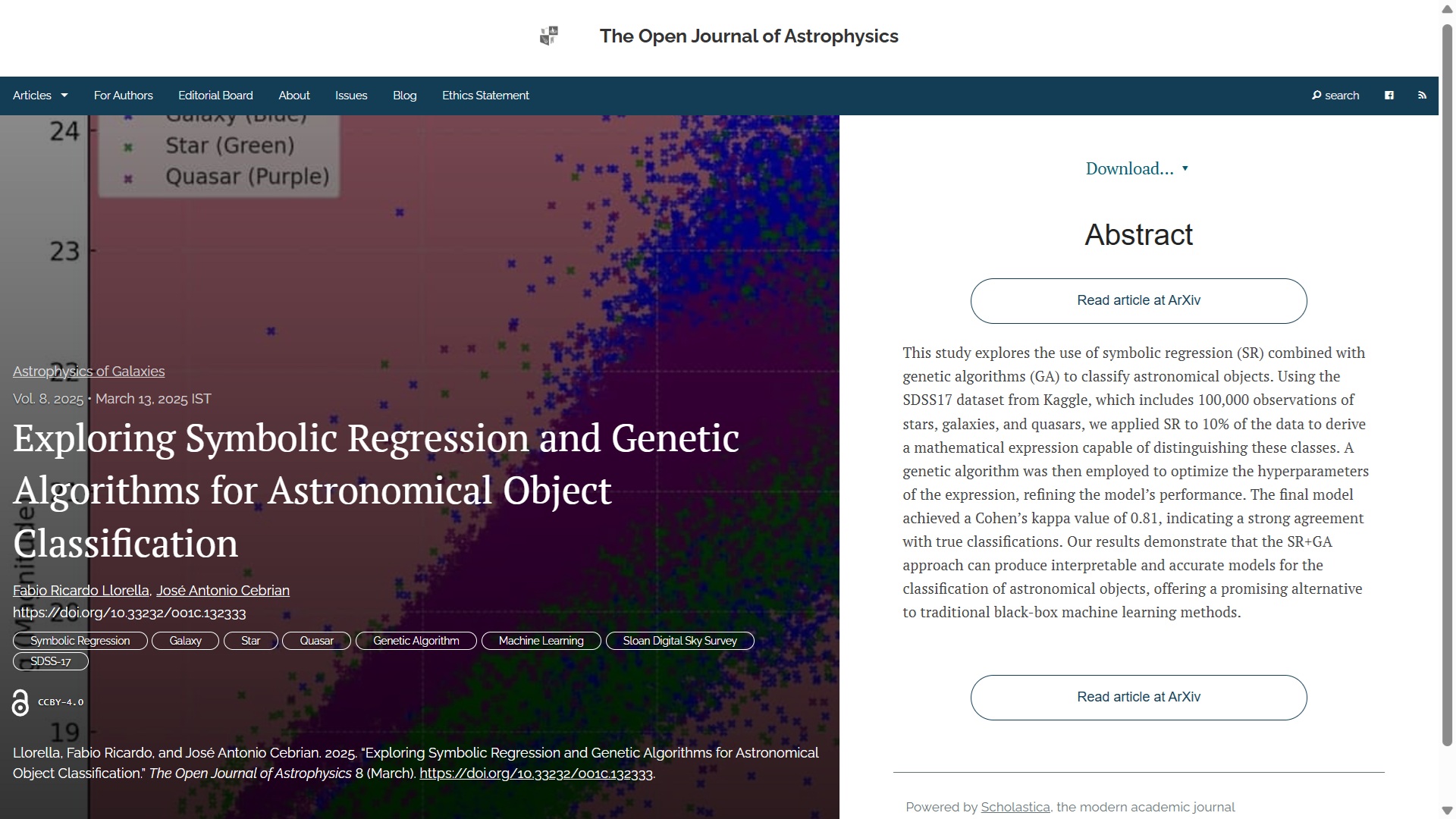
It’s Saturday morning, so once again it’s time for an update from the Open Journal of Astrophysics. Since the last update we have published one new paper, which brings the number in Volume 8 (2025) up to 12 and the total so far published by OJAp up to 247.

Galaxy evolution in the post-merger regime. III – The triggering of active galactic nuclei peaks immediately after coalescence” was written by Sara Ellison, Leonardo Ferreira, Robert Bickley & Tess Grindlay (U. Victoria, Canada), Samir Salim (Indiana U., USA), Shoshannah Byrne-Mamahit (Victoria), Shobita Satyapal (George Mason U., USA), David R. Patton (Trent U., Canada) and Jillian M. Scudder (Oberlin College, USA).  It was published on 4th February 2025 and is in the folder marked Astrophysics of Galaxies. The paper describes an investigation into the timescale of triggering of AGN activity after galaxy mergers and concluding that most occurs immediately after coalescence. 

You can find the officially accepted version of this paper on arXiv here.

That’s all for this week. I’ll have more updates next Saturday.

Big Things in the Universe

Posted in Bad Statistics, The Universe and Stuff with tags , , , , on February 7, 2025 by telescoper

About a year ago I wrote a couple of articles (here and here) in response to the discovery of a very large structure (“The Big Ring“) and claims that this structure and others – such as a Giant Arc – were inconsistent with the standard model of cosmology; the work concerned was later submitted as a preprint to arXiv. In my first post on the Big Ring I wrote

To assess the significance of the Big Ring or other structures in a proper scientific fashion, one has to calculate how probable that structure is given a model. We have a standard model that can be used for this purpose, but to simulate very structures is not straightforward because it requires a lot of computing power even to simulate just the mass distribution. In this case one also has to understand how to embed Magnesium absorption too, something which may turn out to trace the mass in a very biased way. Moreover, one has to simulate the observational selection process too, so one is doing a fair comparison between observations and predictions.

Well on today’s arXiv there is a preprint by Sawala et al. with the title aims to assess the significance of structures comparable to the Giant Arc. The title of the paper is The Emperor’s New Arc: gigaparsec patterns abound in a ΛCDM universe from which you can guess the conclusions. The abstract is

Recent discoveries of apparent large-scale features in the structure of the universe, extending over many hundreds of megaparsecs, have been claimed to contradict the large-scale isotropy and homogeneity foundational to the standard (ΛCDM) cosmological model. We explicitly test and refute this conjecture using FLAMINGO-10K, a new and very large cosmological simulation of the growth of structure in a ΛCDM context. Applying the same methods used in the observations, we show that patterns like the “Giant Arc”, supposedly in tension with the standard model, are, in fact, common and expected in a ΛCDM universe. We also show that their reported significant overdensities are an algorithmic artefact and unlikely to reflect any underlying structure.

arXiv:2502.03515

Here’s a picture of a large structure (a “Giant Arc”) taken from a gallery of such objects found in the simulations


I quote from the conclusions:

We hope that our results will dispel the misconception that no inhomogeneity can be found in the standard model Universe beyond some finite size. Instead, any given realisation of the isotropic universe comprises a time- and scale-dependent population of structures from which patterns can be identified on any scale.

I have nothing to add.

The Threat to the Astrophysics Data System

Posted in Open Access, The Universe and Stuff with tags , , on February 6, 2025 by telescoper

Many times on this blog (e.g. here) I have mentioned the SAO/NASA Astrophysics Data System which (for the uninitiated) is a Digital Library portal for researchers in astronomy and physics, operated by the Smithsonian Astrophysical Observatory (SAO) under a NASA grant. The ADS maintains three bibliographic databases containing more than 14.0 million records covering publications in Astronomy and Astrophysics, Physics, and (of course) the arXiv e-prints. In addition to maintaining its bibliographic corpus, the ADS tracks citations and other information, which means, that among many other things, it is an important tool for evaluating publication impact. I use it very frequently.

I’m not the only person to be worried about this, see e.g. here.

After the Trump administration’s sudden and devasting cuts to Federal science agencies such as the National Science Foundation, it seems very likely that NASA programmes will also be severely cut which calls the future of the ADS system into doubt. This facility is used by astronomers around the world and its loss would have serious consequences for the global research community. I sincerely hope that astronomical organizations around the world will get together and ensure that data is not lost and a replacement website is set up. If your’e an astronomer please put pressure on your national funders to look at this as a matter of agency. We NASA/ADS is a wonderful resource, and is not by any standards expensive to run. We will all regret it if it is lost.

Until about 5 years ago, when ADS underwent a major overhaul, there were mirror sites all around the world. These are all still listed by ADS but do not seem to be functional. At the very least these should be reactivated.

P.S. I have been asked if arXiv is under a similar threat. I don’t believe it is – yet – as it is not run by a Federal organization. We do have secure backups of all OJAp published articles, though, in case you were wondering.

Back to Teaching

Posted in Biographical, Education, Maynooth, The Universe and Stuff with tags , , , on February 4, 2025 by telescoper

After yesterday’s holiday it was back to teaching full-time this morning with the first lecture of my module on Particle Physics. I just about managed to get everything ready in time for the teaching session at 1pm which, because it was an introductory lecture with lots of pictures, I decided to do via powerpoint rather than my usual chalk-and-talk. That didn’t get off to a very good start because the podium PC in my room had decided to do a Windows update just before I started and I had to wait for that to finish before I could show my slides. I suppose that happened because this was the first day of teaching after a lengthy break so nobody had used the room recently.

Most of the lecture was devoted to introducing natural units, which I intend to use throughout the module, like I have on previous occasions I have taught this sort of material for reasons I explained here. The last time I taught particle physics was some 15 years ago, so I had to update some things, especially the picture of the components of the standard model to include the Higgs. After extensive research (by which I mean looking at wikipedia) I found the above; the Higgs is on the right. Unfortunately the particle masses – which reveal themselves if you click on the image above – are not given in natural units, but have pesky factors of c-squared in them. You can’t have everything.

The bit I’m looking forward to most is doing the Dirac Equation which, years ago when I was at Sussex, was once the subject of a cake:

That particular cake was a lemon drizzle cake which unfortunately is not one of the flavours represented in the standard model.

Weekly Update from the Open Journal of Astrophysics – 01/02/2025

Posted in OJAp Papers, Open Access, The Universe and Stuff with tags , , , , , , , , , , , , , , , , , , on February 1, 2025 by telescoper

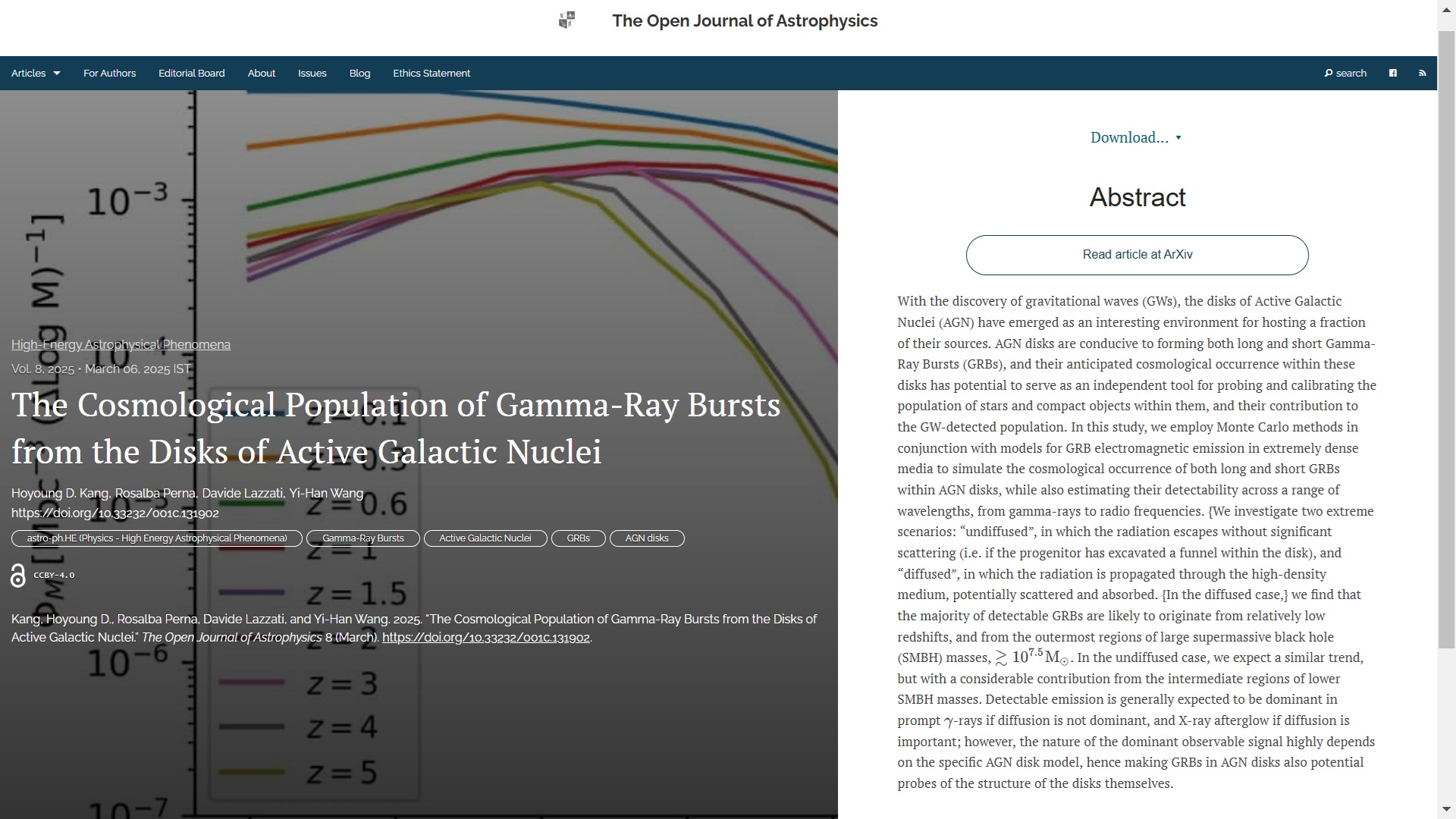
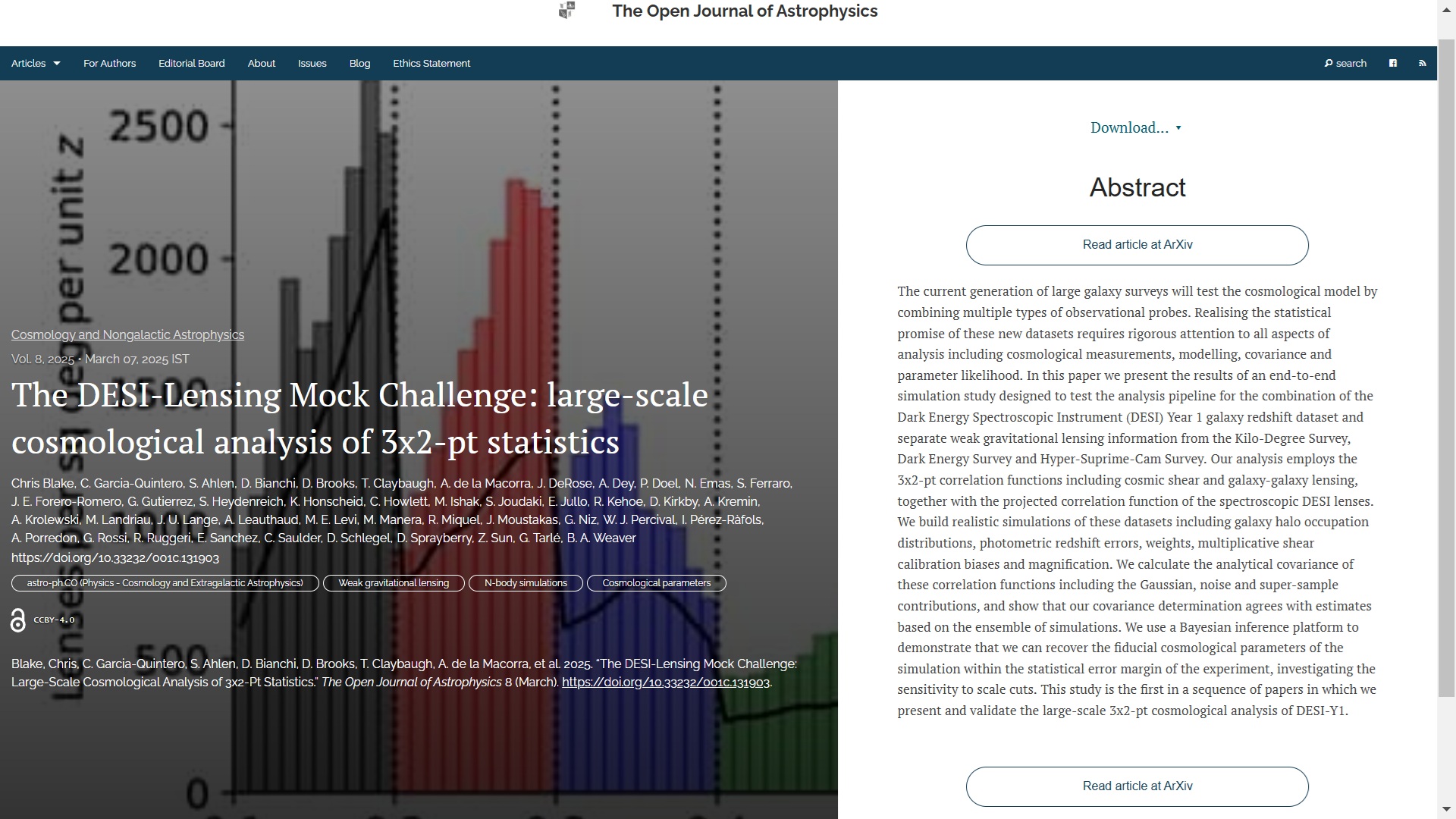
It’s Saturday morning, so once again it’s time for an update of papers published at the Open Journal of Astrophysics. There were no papers to report last week but since the last update we have published four new papers, which brings the number in Volume 8 (2025) up to 11 and the total so far published by OJAp up to 246.

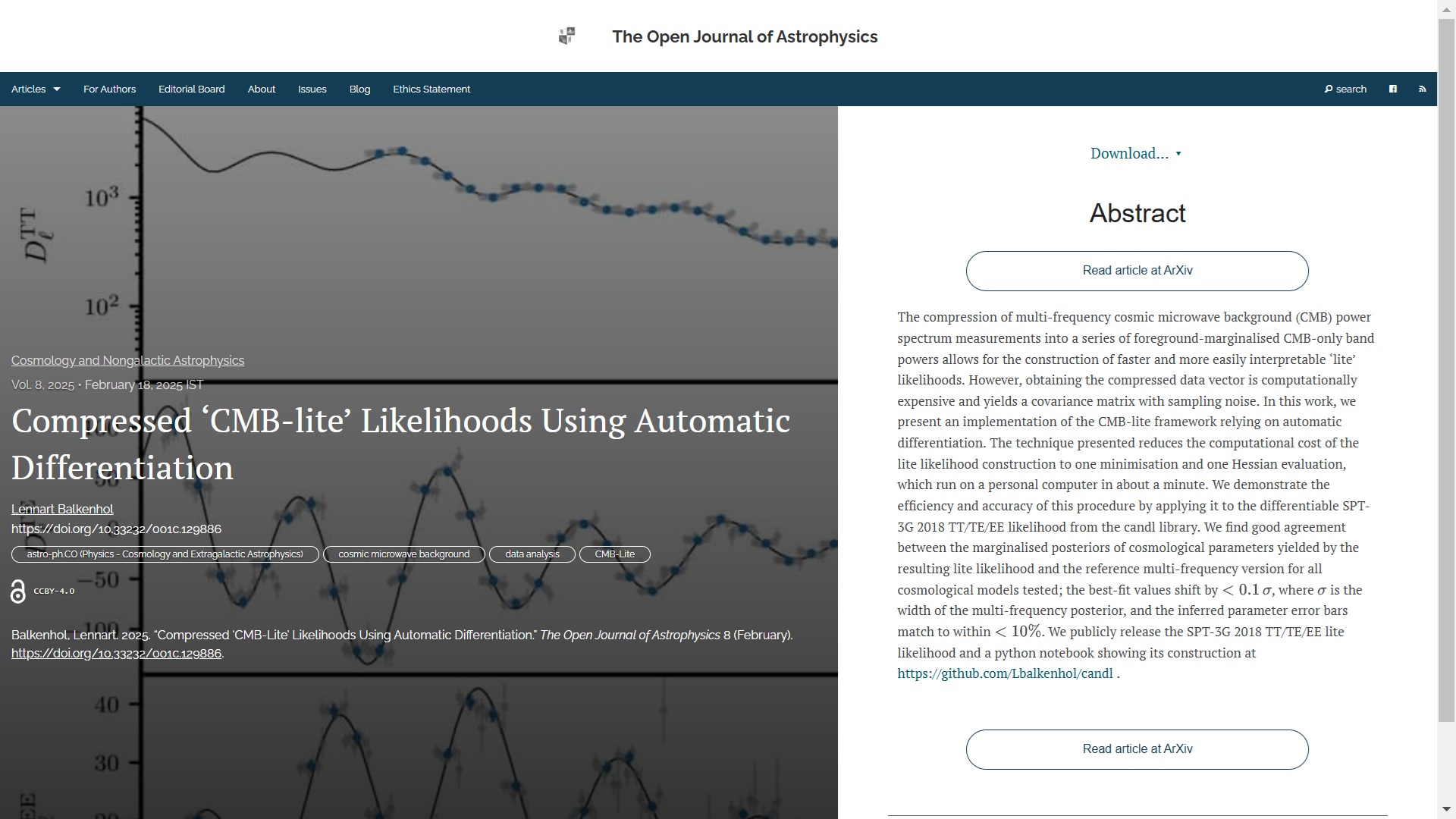
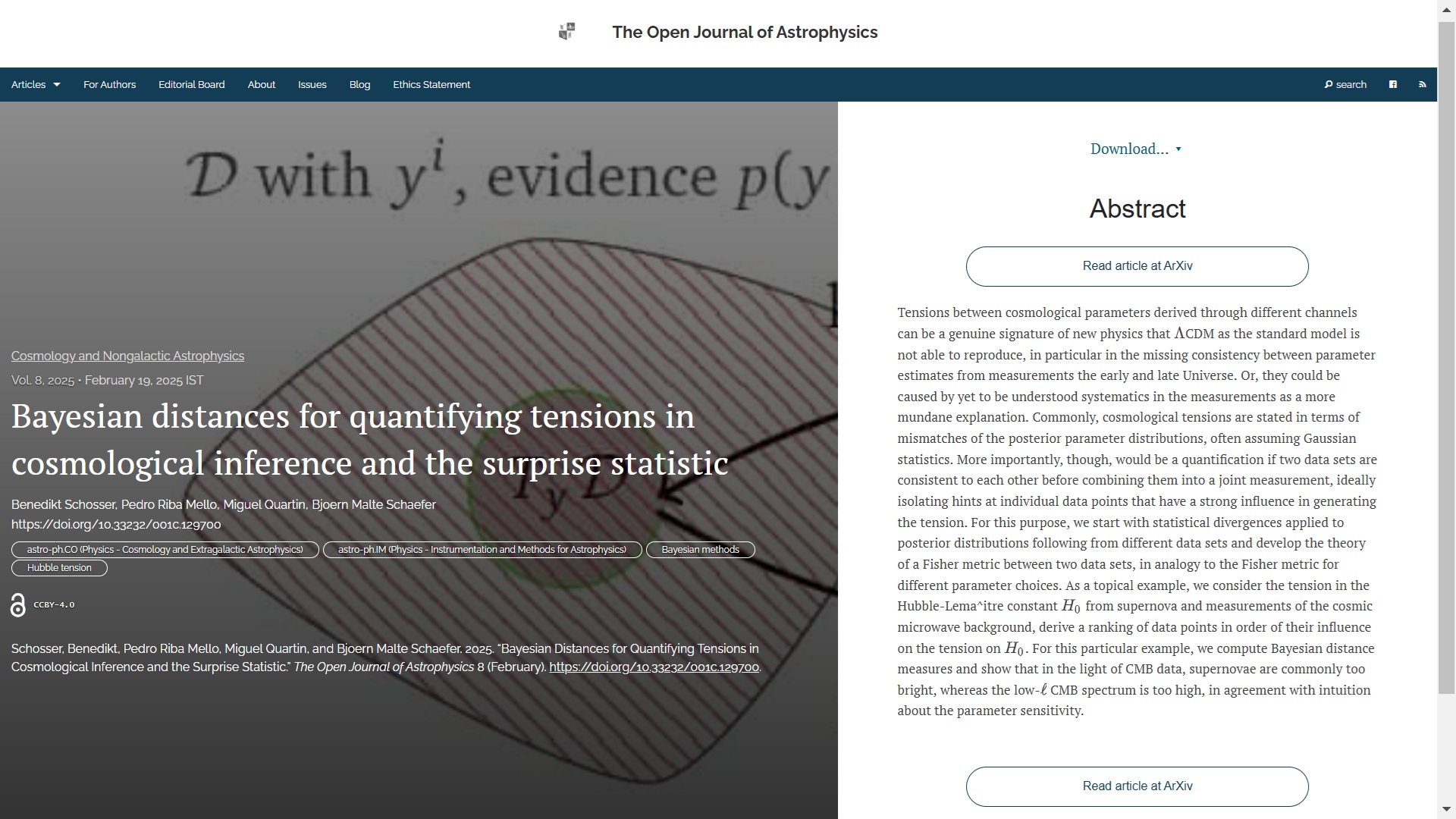
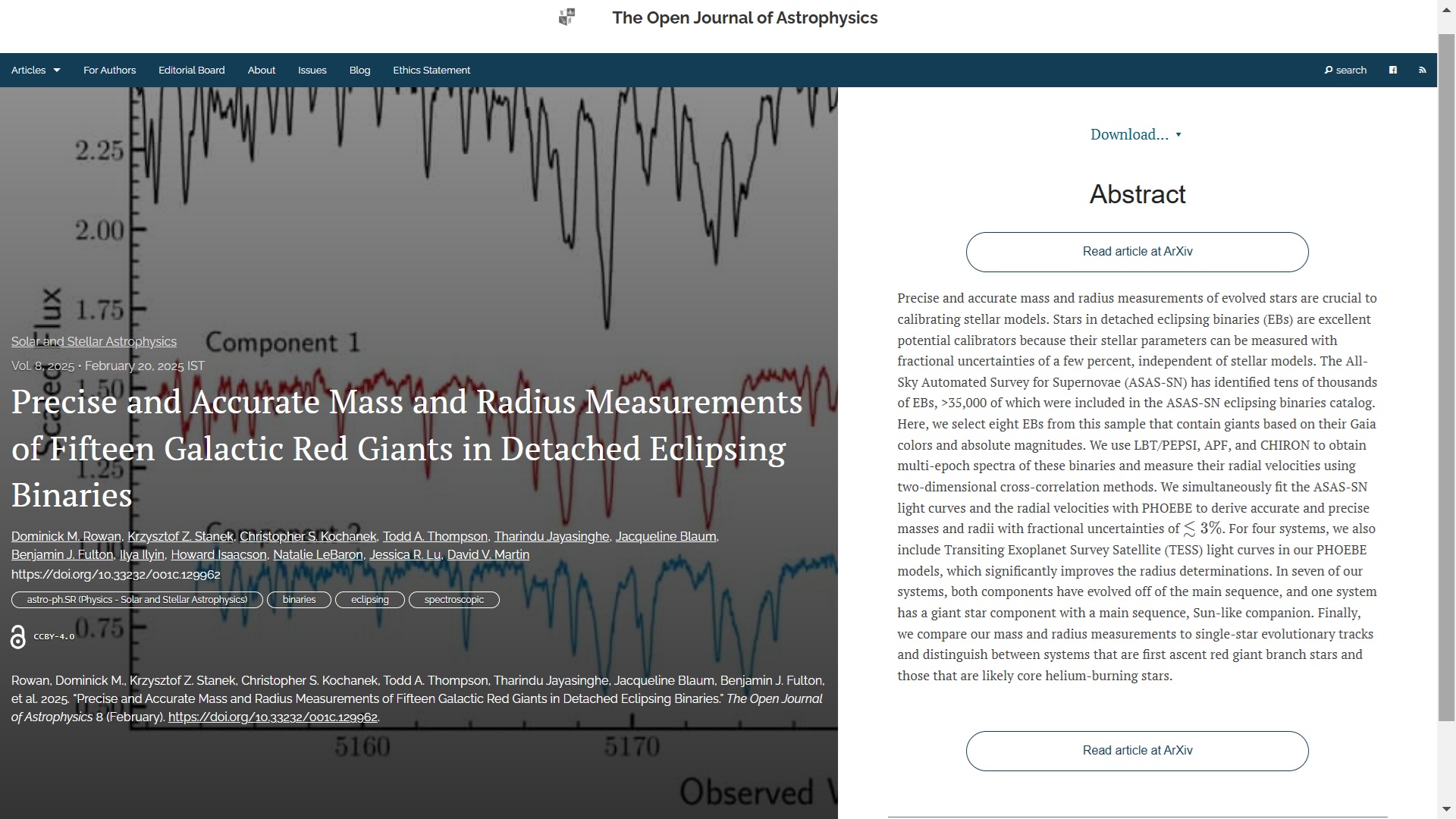
In chronological order of publication, the four papers published this week, with their overlays, are as follows. You can click on the images of the overlays to make them larger should you wish to do so.

First one up is  “A halo model approach for mock catalogs of time-variable strong gravitational lenses” by Katsuya T. Abe & Masamune Oguri (Chiba U, Japan), Simon Birrer & Narayan Khadka (Stony Brook, USA), Philip J. Marshall (Stanford, USA), Cameron Lemon (Stockholm U., Sweden), Anupreeta More (IUCAA, India), and the LSST Dark Energy Science Collaboration. It was published on 27th January 2025 in the folder marked Cosmology and NonGalactic Astrophysics. The paper discusses how to generate mock catalogs of strongly lensed QSOs and Supernovae on galaxy-, group-, and cluster-scales based on a halo model that incorporates dark matter halos, galaxies, and subhalos.


You can find the officially accepted version of this paper on arXiv here.

This paper, also published on Monday 27th January 2025, but in the folder Astrophysics of Galaxies, is “The Soltan argument at redshift 6: UV-luminous quasars contribute less than 10% to early black hole mass growth” by Knud Jahnke (MPI Heidelberg, Germany). This paper presents an argument that almost all growth of supermassive black hole mass at z>6 does not take place in UV-luminous quasars.

Here is a screen grab of the overlay, which includes the abstract:You can find the officially accepted version of the paper on the arXiv here.

The third paper to announce, published on 29th January 2025 in the folder Cosmology and NonGalactic Astrophysics, is “A Heavy Seed Black Hole Mass Function at High Redshift – Prospects for LISA” by Joe McCaffrey & John Regan (Maynooth U., Ireland), Britton Smith (Edinburgh U., UK), John Wise (Georgia Institute of Technology, USA), Brian O’Shea (Michigan State U., USA) and Michael Norman (University of California, San Diego). This is a numerical study of the growth rates of massive black holes in the early Universe and implications for their detection via gravitational wave emission.

You can see the overlay here:


The accepted version of this paper can be found on the arXiv here.

The last paper of this batch is “Forecasting the Detection of Lyman-alpha Forest Weak Lensing from the Dark Energy Spectroscopic Instrument and Other Future Surveys” by Patrick Shaw & Rupert A. C. Croft (Carnegie Mellon U., USA) and R. Benton Metcalf (U. Bologna, Italy). This paper, published on January 30th 2025, is about extending the applicationof  Lyman-α forest weak gravitational lensing to lower angular source densities than has previously been done, with forecasts for future spectral surveys. It is in the folder marked Cosmology and NonGalactic Astrophysics.

The overlay is here


You can find the accepted version on arXiv here.

Incidentally, we currently have 121 papers under review, including 81 under a revise and resubmit request.

That’s all for this week. I’ll do another update next Saturday.

Blue Sky Research in Ireland

Posted in Maynooth, Science Politics, The Universe and Stuff with tags , , , , on January 31, 2025 by telescoper

There’s a new piece in the Irish Times (sponsored by the recently formed Research Ireland, but probably behind a paywall) that makes promising noises about “Blue Skies” research. No jokes about the Irish weather, please. I quote:

The merger of Science Foundation Ireland (SFI) and the Irish Research Council (IRC) to form Research Ireland on August 1st, 2024, has opened up new possibilities and opportunities for the Irish research community. The new organisation now oversees competitive research funding across all disciplines, ranging from the arts, humanities and social sciences through to science, technology, engineering and maths, as well as across the full spectrum spanning curiosity-driven to applied research.

“SFI was enterprise and Stem-focused,” explains Research Ireland deputy chief executive Dr Ciarán Seoighe. “The IRC was not set up on a statutory basis so that meant that the arts, humanities and social sciences [AHSS] were not in the statutory research funding system. That put us behind other countries. We weren’t getting the full benefit of research in those areas. By creating Research Ireland we are able to support the full spectrum.”

He also points out that SFI wasn’t able to fund blue-skies, fundamental research, but Research Ireland can. “We need that research to create the new ideas and innovations that become applied research in years to come. By creating Research Ireland, we now have the ability to tap into and unlock the full potential of research in Ireland.”

The last bit is encouraging – or at least less discouraging – for those of us who work in fundamental science than the previous regime. The thing that struck me immediately when arriving in Ireland from the UK that funding for basic or fundamental research – especially in the sciences – is extremely poor. That is still the case now. This situation is largely the result of a high-level report published in 2012. This identified 14 priority areas of research that are most likely to give demonstrable economic and societal return, and where Ireland should focus the majority of competitive funding. Four criteria were used in selecting the 14 priority areas for future, competitively-awarded investment for economic objectives:

  1. the area is associated with a large global market or markets in which Irish-based enterprises already compete or can realistically compete;
  2. publicly performed R&D in Ireland is required to exploit the area and will complement private sector research and innovation in Ireland;
  3. Ireland has built or is building (objectively measured) strengths in research disciplines relevant to the area; and,
  4. the area represents an appropriate approach to a recognized national challenge and/or a global challenge to which Ireland should respond.

The `vast majority’ of SFI’s funding was directed towards the 14 areas so defined, leaving virtually nothing for anything else, an outcome which has dire implications for `blue skies’ research.

I think this is a deeply misguided short-term policy, which has had and will continue to have strongly negative effects on science in Ireland in the medium to long term, especially because Ireland spends so little of its GDP on research in the first place. There’s simply no point in trying to persuade world-leading researchers to come to Ireland if insufficient funds are available to enable them to establish here; the politicians’ welcoming platitudes will never be enough. This makes appointment of world-class researchers to Irish universities extremely difficult so, given that is what we are trying to do in Maynooth now, the change of tone is welcome.

The problem is that the creation of Research Ireland has not involved any more money that was previous allocated to the SFI and IRC separately. Unless there is a budget uplift – which in my view would be a good use for at least part of the huge windfall tax from Apple – any increase in basic research will have to be offset by cuts elsewhere.

It seems appropriate re-iterate part of my response to a previous funding crisis in the UK, about using taxpayer’s money to fund research in universities:

… “commercially useful” research should not be funded by the taxpayer through research grants. If it’s going to pay off in the short term it should be funded by private investors, venture capitalists of some sort or perhaps through some form of National Investment Bank. When the public purse is so heavily constrained, it should only be asked to fund those things that can’t in practice be funded any other way. That means long-term, speculative, curiosity driven research.

This is pretty much the opposite of what Irish government thinks. It wants to concentrate public funds in projects that can demonstrate immediate commercial potential. Taxpayer’s money used in this way ends up in the pockets of entrepreneurs if the research succeeds and, if it doesn’t, the grant has not fulfilled its stated objectives and the funding has therefore, by its own standards, been wasted.

My proposal, therefore, would be to phase out research grants for groups that want to concentrate on commercially motivated research and replace them with research loans. If the claims they make to secure the advance are justified, they should have no problem repaying the funds from the profits they make from patent income or other forms of exploitation. If not, then they will have to pay back the loan from their own funds (as well as being exposed as bullshit merchants). In the current economic situation the loans could be made at very low interest rates and still save a huge amount of the current research budget. I suggest these loans should be repayable in 3-5 years, so in the long term this scheme would be self-financing. I think a large fraction of research in, e.g., the applied sciences and engineering should be funded in this way. I think it is wrong to nationalise the risk only to privatise the profits.

The money saved by replacing grants to commercially driven research groups with loans could be re-invested in those areas where public investment is really needed, such as purely curiosity-driven science. Here grants are needed because the motivation for the research is different. Much of it does, in fact, lead to commercial spin-offs, and when that happens it is a very good thing, but these are likely to appear only in the very long term. But just because this research does not have an immediate commercial benefit does not mean that it has no benefit. For one thing, it is subjects such as Astronomy and Particle Physics that inspire young people to get interested in science in the first place.

Professorial Position in Observational Astrophysics or Cosmology at Maynooth University!

Posted in Maynooth, The Universe and Stuff with tags , , , , on January 30, 2025 by telescoper

You may recall that back in November 2021 we received word that Maynooth University had been awarded one of ten new senior professorial positions under the Strategic Academic Leadership Initiative (SALI). I blogged about this scheme here. The position we were awarded is a Chair (Full Professorship) in Observational Astrophysics or Cosmology.

We haven’t been able to make an appointment so far, despite trying! One of the reasons was undoubtedly that the two previous Departments of Theoretical Physics and Experimental Physics were in the throes of a merger and it was by no means certain at that time what the outcome of that process would look like in terms of the structure of the new Department. However, we now have a single Department of Physics so that at least is much clearer. So we’re trying again now.

The job announcement can be found here. It will appear on other sites shortly. Update: it is now on the Times Higher Jobs page here. The deadline is 31st March. I hope readers of this blog will help spread the news of this opportunity through their own networks.

The key rationale for these SALI positions is clear from the statement from Simon Harris, the (then) Minister responsible for Third Level education in Ireland:

“Championing equality and diversity is one of the key goals of my department. The Senior Academic Leadership Initiative (SALI) is an important initiative aimed at advancing gender equality and the representation of women at the highest levels in our higher education institutions.

We have a particular problem with gender balance among the staff in Physics in Maynooth, especially on the theoretical side, where all the permanent staff are male, and the lack of role models has a clear effect on our ability to encourage more female students to study with us.

The wider strategic case for this Chair revolves around broader developments in the area of astrophysics and cosmology at Maynooth. Currently there are two groups active in research in these areas, one in the former Department of Experimental Physics (which is largely focussed on astronomical instrumentation) and the other, in the former Department of Theoretical Physics, which is theoretical and computational. We want to promote closer collaboration between these research strands. The idea with the new position is that the holder will nucleate and lead a research programme in the area between these existing groups as well as getting involved in outreach and public engagement.

It is intended that the position to appeal not only to people undertaking observational programmes using ground-based facilities (e.g. those provided by ESO, which Ireland recently joined), or those exploiting data from space-based experiments, such as Euclid, as well as people working on multi-messenger astrophysics, gravitational waves, and so on.

Exciting as this position is in itself, it is part of wider developments and we are expecting to advertise further job opportunities in physics and astronomy very soon! I’d be happy to be contacted by any eligible person wishing to discuss this position (or indeed the general situation in Maynooth) on an informal basis:

← Back

Thank you for your response. ✨

P. S. For those of you reading this from outside Ireland the job includes a proper public service pension, a defined benefit scheme way better than the UK’s USS.

R.I.P. Sverre Aarseth (1934-2024)

Posted in R.I.P., The Universe and Stuff with tags , , , on January 21, 2025 by telescoper
Picture Credit: Institute of Astronomy, Cambridge

I am very late passing this sad news on, but I only just heard of the death (on 28th December 2024, at the age of 90) of Sverre Aarseth, who spent almost all of his research career at the Institute of Astronomy in Cambridge. Sverre was a pioneer in the use of N-body numerical techniques for solving gravitational problems and whose work had enormous impact across many aspects of astrophysics and cosmology, not least because he made his codes available as “open source”. I suspect many of us have used an “Aarseth code” at some point in our careers! I only met him a few times, but he struck me as a friendly and self-effacing man. He was certainly never someone who tried to hog the limelight but he was held in a very high regard across the research community.

You can find fuller tributes here and here.

Rest in peace, Sverre Aarseth (20 July 1934 – 28 December 2024)