Archive for the The Universe and Stuff Category

Autumnal Equinox 2022

Posted in Biographical, Maynooth, The Universe and Stuff with tags on September 22, 2022 by telescoper

It’s almost that time of year again. The Autumnal Equinox (in the Northern hemisphere) takes place in the early hours of tomorrow morning (Friday 23nd September 2022)  at 02.04 Irish Summer Time (01.04 UT). That is way past my bedtime so I thought I’d post this a few hours early.

Although  the term `equinox’  refers to a situation in which day and night are of equal length, which implies that it’s a day rather than a specific time, the astronomical equinox is more accurately defined by a specific event, i.e. when the plane defined by Earth’s equator passes through the centre of the Sun’s disk (or, if you prefer, when the centre of the Sun passes through the plane defined by Earth’s equator). Day and night are not necessarily exactly equal on the equinox, but they’re the closest they get. From now on days in the Northern hemisphere will be shorter than nights and they’ll get shorter still until the Winter Solstice on 21st December at 21.48 Irish Time.

Many people take the autumnal equinox to be the end of summer. There is a saying around these parts, however, that `Summer is Summer to Michaelmas Day’ (September 29th), which is not until next week. I must say, though, though it doesn’t feel particularly summery today.

Anyway, this is Welcome Week in Maynooth and we’re due to start teaching first year students next week, on Monday 26th September. It seems to be a bumper year for our intake, with 113 so far registered. That’s more than we’ve had in the 1st year since I arrived here. Returning students commenced on Monday 19th. I already gave my first lecture on Vector Calculus and Fourier Series to this class yesterday; I have another with them tomorrow. We have about the same number of students in Year 2 this year as we had last year.

R.I.P. Maarten Schmidt (1929-2022)

Posted in History, R.I.P., The Universe and Stuff with tags , on September 20, 2022 by telescoper

Once again I find myself having to pass on some sad news. Astronomer Maarten Schmidt has passed away at the age of 92. The highlight of his long and distinguished career was the discovery, in 1963, that quasars showed hydrogen emission lines that revealed them to be at cosmological redshifts. Together with Donald Lynden-Bell (who passed away in 2018), Schmidt was awarded the inaugural Kavli Prize for Astrophysics in 2008.

Rest in peace, Maarten Schmidt (1929-2022).

Last night’s fireball was a meteor

Posted in The Universe and Stuff with tags , , on September 15, 2022 by telescoper

I didn’t see it myself but there were hundreds of reports last night of a very bright fireball over Ireland and the UK at around 9pm. Here is an example video of the phenomenon:

Quite a few people have asked me today what this object, most people assuming that it was space junk coming back down to Earth. I gave the most accurate answer possible which is that I didn’t know, but I thought that to be that bright it would have to be quite large and if it were that large a bit of space debris we would (a) know what it was and (b) it seemed to me that it would probably have broken up a bit more. While that seemed to rule out, e.g. a rogue bit of one of Elon Musk’s constellations , I am not an expert and thought I could well be wrong.

Anyway, the Jury has now returned to deliver a verdict. After collating and cross-referencing all the reports from tracking stations, the UK Meteor Observation Network is now 100% convinced that it was a meteor (rather than space debris). Its trajectory took it in a roughly north-westerly direction, passing directly over Belfast, and it came down in the Atlantic somewhere near the Hebrides.

There is enough data about this object to infer its orbit of the asteroid of which it was originally part: Semi-major axis 1.36A.U., eccentricity 0.33, inclination 8.77°, Period 1.59Y, LA Sun 171.72°, last Perihelion 2021-03-24.

All the relevant data can be downloaded here.

I hope this clarifies the situation.

“New” Publication at the Open Journal of Astrophysics

Posted in OJAp Papers, Open Access, The Universe and Stuff with tags , , , , , on September 15, 2022 by telescoper

It’s time once again for me to announce the publication of another paper at the Open Journal of Astrophysics. The new paper, published last week, is the 14th paper in Volume 5 (2022) and the 62nd in all. The latest publication is entitled “Gravitational Stability of Vortices in Bose-Einstein Condensate Dark Matter”. This paper is another one for the folder marked Cosmology and Non-Galactic Astrophysics and the authors are Mark N Brook Now at the Institute for Cancer Research in London) and Peter Coles (Who he? Ed).

There is a bit of a story behind this one. The work on which this paper is based was done while both authors (Mark and I) were at the University of Nottingham. Mark was my PhD student at the time.  I left Nottingham for Cardiff in 2007 but Mark stayed behind to finish his thesis and write this paper, which appeared on the arXiv in 2009. The paper wasn’t accepted in its original form, Mark left the field after obtaining his PhD, and I was working on other things at Cardiff so the paper remained unpublished on the arXiv.

Last year, however, I was updating my publication list and noticed the old preprint so looked it up on NASA/ADS. Although not Earth-shattering, I found it had been acquiring a reasonable number of citations (16 according to ADS, including some this year) as an unpublished work largely because of increased interest in the field of condensate dark matter. I therefore approached the Editorial Board of the Open Journal of Astrophysics to ask their opinion about whether it would be appropriate to consider it for publication. They agreed and the paper was assigned to an Editor. Obviously I recused myself from the process.

Somewhat to my surprise, given that it’s basically an old paper, the referee comments were supportive. I’ve been very busy for the past year and communication with Mark was slow so it’s taken a while to revise and update the paper in line with the referee requests. We also took the opportunity to include a brief review of some papers that had come out since the original version of the paper appeared. Mark and I agreed a final text l and the paper was accepted last week. I uploaded the agreed version to arXiv and now the paper is now published. It was all a bit unconventional but there we are. It was interesting to be on the author side of the process for a change!

Anyway, here is a screen grab of the overlay which includes the  abstract:


You can click on the image to make it larger should you wish to do so. You can find the accepted version of the paper on the arXiv here.

Making (Dark Matter) Waves: Untangling Wave Interference in Multi-Streaming CDM

Posted in Open Access, The Universe and Stuff with tags , , , , on September 13, 2022 by telescoper

A couple of days ago I announced the publication of a new paper in the Open Journal of Astrophysics called Making (dark matter) waves: Untangling wave interference for multi-streaming dark matter by Alex Gough and Cora Uhlemann. I forgot on that occasion to mention that there is a video of a talk by the first author in the series Cosmology at Home, so I’m remedying that now by posting the video here. Enjoy!

New Publication at the Open Journal of Astrophysics

Posted in OJAp Papers, Open Access, The Universe and Stuff with tags , , , , , , on September 11, 2022 by telescoper

It’s time once again for me to announce another new paper at the Open Journal of Astrophysics. The new paper, published last week, is the 13th paper in Volume 5 (2022) and the 61st in all. The latest publication is entitled “Making (dark matter) waves: Untangling wave interference for multi-streaming dark matter” and the authors are Alex Gough and Cora Uhlemann (both of Newcastle University). The paper is another one for the folder marked Cosmology and Non-Galactic Astrophysics.

Here is a screen grab of the overlay which includes the  abstract:

You can click on the image to make it larger should you wish to do so. You can find the accepted version of the paper on the arXiv here.

This is a paper that’s close to one of my current research interests. I think it’s really excellent and I am very happy the authors chose to publish it in the Open Journal of Astrophysics.

As a bonus here is a groovy animated version of Figure 1 from the paper showing the development of a multi-stream region.

And if that weren’t enough here is a short talk about their work in the Cosmology From Home series by the first author Alex Gough.

Life, the Universe and the Drake Equation

Posted in The Universe and Stuff with tags , , , , , , , on September 3, 2022 by telescoper

Picture of Frank Drake with his equation

Frank Drake and the Drake Equation (Picture credit: Space.com)

I heard last night of the death at the age of 92 of astronomer Frank Drake, one of the pioneers of the Search for Extraterrestrial Intelligence (SETI). He was best known to most people for formulating the Drake Equation, so since it’s a rainy Saturday morning I thought I’d commemorate him here by presenting a brief discussion of that equation and what it means.

Our Universe is contrived in such a way as to make life possible within it. After all, we’re here! But just because it is possible, that doesn’t mean that it is commonplace. Is life all around us, or did it only happen on Earth? It fascinates me that this topic comes up so often in the question sessions that follow the public lectures I give on astronomy and cosmology. Do you think there is life on other worlds? Are there alien civilisations more advanced than our own? Have extraterrestrials visited Earth? These are typical of the kind of things people ask me when I give talks on the Big Bang theory of the origin of the Universe. It often seems that people are more interested in finding out if there is life elsewhere than in making more serious efforts to sustain life in the fragile environment of our own planet. But there’s no doubting the effect that it would have on humanity to have proof that we are not alone in the cosmos. We could then accept that the Universe was not made for our own benefit. Such proof might also help release mankind from the shackles currently placed on it by certain fundamentalist religious cults. But whatever the motives for seeking out life on other worlds, this is undoubtedly a subject worthy of serious scientific study.

Our understanding of the origins of terrestrial life still has important gaps. There is still no compelling direct evidence that life has existed elsewhere in the Solar system. Conditions may, for example, have been conducive to life earlier in the history of Mars but whatever did manage to evolve there has not left any unambiguous clues that we have yet found. The burgeoning new field of astrobiology seeks to understand the possible development of life far from Earth, and perhaps in extreme conditions very different from those found on our planet. This is, however, a very new field and it will be a very long time before it becomes fully established as a rigorous scientific discipline with a solid experimental and observational foundation. What I want to do in this discussion is therefore not to answer the question “Are we alone?” but to give some idea of the methods used to determine if there might be life elsewhere, including the SETI (Search for ExtraTerrestrial Intelligence) industry which aims to detect evidence of advanced civilizations.

The first ever scientific conference on SETI was held in 1961, in Green Bank, West Virginia, the site of a famous radio telescope. A search had just been carried out there for evidence of radio signals from alien intelligences. This conference didn’t exactly change the world, which is not surprising because only about ten people showed up. It did, however, give rise to one of the most famous equations in modern science: the Drake Equation.

The astronomer Frank Drake was setting up the programme for the inaugural SETI conference and he wanted to summarize, for further discussion, the important factors affecting the chances of detecting radio transmissions from alien worlds. The resulting equation yields a rough guess of the number of civilizations existing in the Milky Way from which we might get a signal. Of course we can’t calculate the answer. The equation’s usefulness is that it breaks down the puzzle into steps, rather than providing the solution. The equation has been modified over the years so that there are various versions of it addressing different questions, but its original form in all its glory was


N=R× fp × ne × fl × fi × fc × L


The symbols in this equation have the following meanings. The left hand side N is the number of transmitting civilisations in our Galaxy, which is what we want to determine  The first term on the right hand side is R, which is the birth-rate of stars in our Galaxy per year. We know that the Milky Way is about 10 billion years old, and it contains about 100 billion stars. As a very rough stab we could guess that the required birth-rate is therefore about ten stars per year. It seems unlikely that all stars could even in principle be compatible with life existing in their neighbourhood. For example, very big stars burn out very quickly and explode, meaning that there is very little time for life to evolve there in the first place and very little chance of surviving once it has. Next in the equation is fp, the fraction of these stars having planets, followed by ne, the typical number of planets one might find.  This is followed by fl, the fraction of all planets on which life in some form does actually evolve. The next term is fi, the fraction of those planets with life on them that have intelligent life on them. Finally we have two factors pertaining to civilization: fc is the fraction of planets inhabited by intelligent beings on which civilizations arise that are capable of interstellar communication and L is the average lifetime of such civilizations.

The Drake equation probably looks a bit scary because it contains a large number of terms, but I hope you can see that it is basically a consequence of the rules for combining probabilities. The idea is that in order to have a transmitting civilisation, you must the simultaneous occurrence of various properties each of which whittles away at the original probability.

To distil things a little further we can simplify the original Drake equation so that it has only four terms

N=NH × fl × fc × fnow

The first three terms of the original equation have been absorbed into NH, the number of habitable planets and the last two have become fnow, the fraction of civilized planets that happen to be transmitting now, when we are trying to detect them. This is important because many civilizations could have been born, flourished and died out millions of years in the past so will never be able to communicate with them.

Whichever way you write it, the Drake equation depends on a number of unknown factors. Combining factors multiplicatively like this can rapidly lead to very large (or very small) numbers. In this case each factor is very uncertain, so the net result is very poorly determined.

Recent developments in astronomy mean that we at least have something to go on when it comes to NH, the number of habitable planets. Until relatively recently the only planets we knew about for sure were in our own Solar System orbiting our own star, the Sun. We didn’t know about planets around other stars because even if there were there we were not able to detect them. Many astronomers thought planets would turn out to be quite rare but absence of evidence is not evidence of absence.  Observations now seem to support the idea that planets are fairly common, and this also seems to be implied by our improved understanding of how stars form.

Planets around distant stars are difficult to detect directly because they only shine by light reflected from their parent star and are not themselves luminous. They can, however, be detected in a number of very convincing ways. Strictly speaking, planets do not orbit around stars. The star and the planet both orbit around their common centre of mass.  Planets are generally much smaller than stars so this centre of mass lies very close to the centre of the star. Nevertheless the presence of a planet can be inferred through the existence of a wobble in the stars’ path through the Galaxy. Dozens of extrasolar planets have been discovered using this basic idea. The more massive the planet, and the closer it is to the star the larger is the effect. Interestingly, many of the planets discovered so far are large and closer in than the large ones in our Solar System (Jupiter, Saturn, Uranus and Neptune). This could be just a selection effect – we can only detect planets with a big wobble so we can’t find any small planets a long way from their star – but if it isn’t simply explained away like that it could tell us a lot about the processes by which planets formed.

The birth of a star is thought to be accompanied by the formation of a flattened disk of debris in the form of tiny particles of dust, ice and other celestial rubbish. In time these bits of dirt coagulate and form larger and larger bodies, all the way up in scale to the great gas giants like Jupiter. The planets move in the same plane, as argued by Laplace way back in the 19th century, because they were born in a disk.

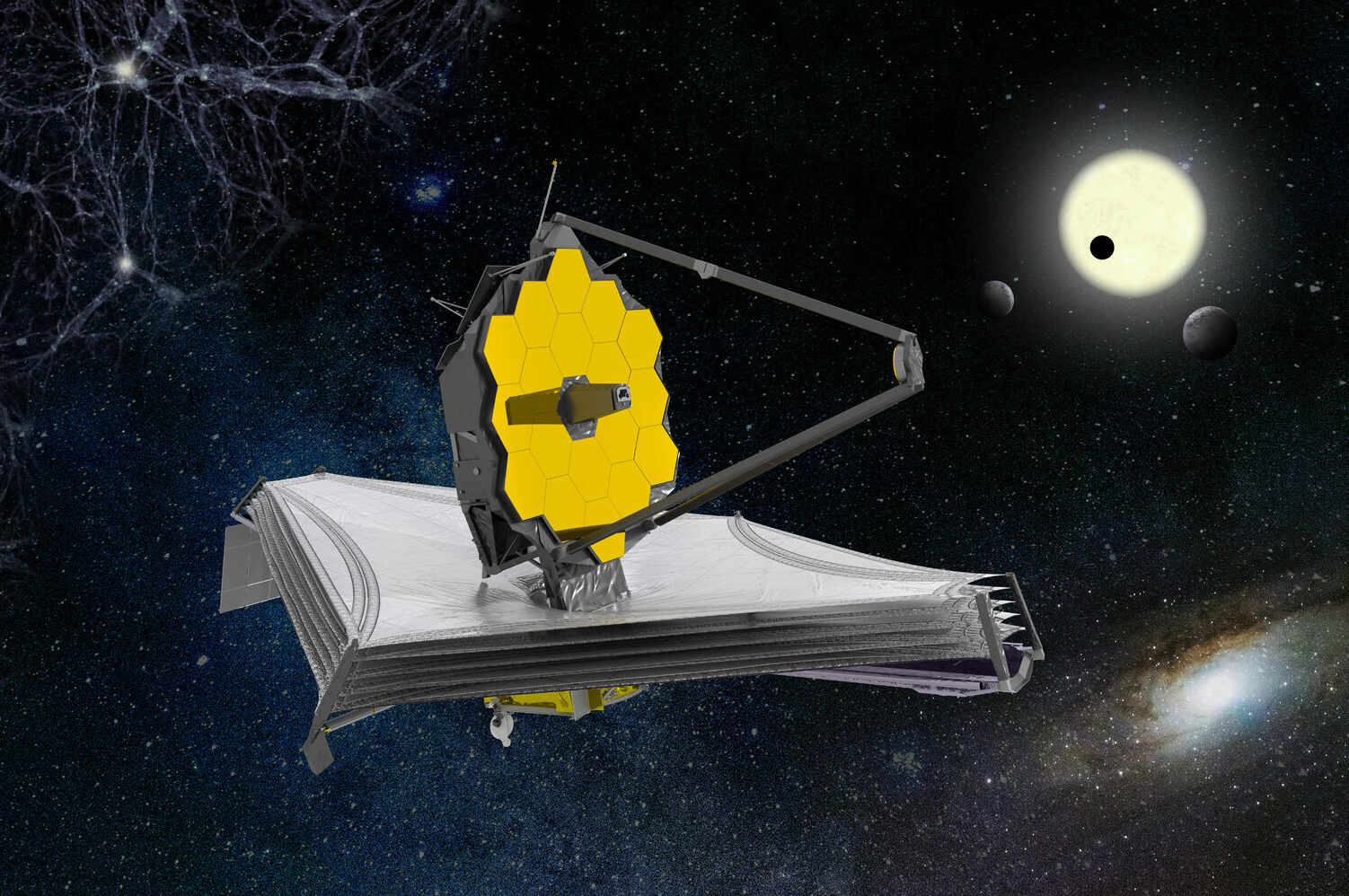
As an aside I’ll mention that when I started my PhD in 1985 there were no known extra-solar planets -exoplanets for short – so as a field exoplanet research hadn’t really started. Now it’s one of the biggest areas of astrophysics and is set to grow even more with the launch of JWST, which has just made its first direct image of an exoplanet:


Of course, while planets may be common we still do not know for sure whether habitable planets are also commonplace. We have no reason to think otherwise, however, so we could reasonably assume that there could be one habitable planet per system of planets. This would give a very large value for NH, perhaps 100 billion or so in our Galaxy.

The remaining terms in the Drake Equation pose a bit more of a problem. We certainly don’t have any rational or reliable way to estimate fl. We only know of one planet with life on it. Even Bayesians can’t do much in the way of meaningful statistical inference in this case because we do not have a sensible model framework within which to work. On the other hand, there is a plausibility argument that suggests fl may be larger rather than smaller. We think Earth formed as a solid object about 4.5 billion years ago. Carbon-isotope evidence suggests that life in a primitive form had evolved about 3.85 billion years ago, and the fossil record suggests it was abundant by 3.5 billion years. At least the early stages of evolution happened relatively quickly after the Earth was formed and it is a reasonable inference that life is not especially difficult to get going.

It might be possible therefore that fl=1, or close to it, which would mean that all habitable planets have life. On the other hand, suppose life has a one-in-a-million chance of arising then this reduces the number of potentially habitable planets with life actually on them to only a millionth of this value.

The factor fc represents the fraction of inhabited planets on which transmitting civilizations exist at some point. Here we really don’t have much to go on at all. But there may be some strength in the converse argument to that of the previous paragraph. The fact that life itself arose 3.85 billion years ago but humans only came on the scene within the last million years suggests that this step may be difficult, and fc should consequently take a small value.

The last term in the simplified Drake equation, fnow, is even more difficult because it involves a discussion of the survivability of civilizations. Part of the problem is that we lack examples on which to base a meaningful discussion. For present purposes, however, it is worth looking at the numbers for terrestrial life. The Milky Way is roughly 10 billion years old. We have only been capable of interstellar communication for about 80 years, initially accidentally through through stray radio broadcasts. This is only about one part in 200 million of the lifetime of our Galaxy. If we destroy ourselves in the very near future, either by accident or design, then this is our lifetime L as it appears in the original Drake equation. If this is typical of other civilizations then we would have roughly a one in 200 million chance of detecting them at any particular time. Even if our Galaxy had nurtured hundreds of millions of civilizations, there would only be a few that would be detectable by us now.

Incidentally, it is worth making the comment that Drake’s equation was definitely geared to the detection of civilizations by their radio transmissions. It is quite possible that radio-based telecommunication that results in leakage into space only dominates for a brief stage of technological evolution. Maybe some advanced form of cable transmission is set to take over. This would mean that accidental extraterrestrial communications might last only for a short time compared to the lifetime of a civilization. Many SETI advocates argue that in any case we should not rely on accidents, but embark on a programme of deliberate transmission.  Maybe advanced alien civilizations are doing this already…

In Drake’s original discussion of this question, he came to the conclusion that the first six factors on the right-hand-side of the equation, when multiplied together, give a number about one. This leads to the neat conclusion that N=L (when L is the lifetime of a technological civilization in years). I would guess that most astronomers probably doubt the answer is as large as this, but agree that the weakest link in this particular chain of argument is L. Reading the newspapers every day does not make me optimistic that L is large…

A Memory of Dunsink

Posted in Biographical, History, Open Access, The Universe and Stuff with tags , on September 2, 2022 by telescoper
Dunsink Observatory

Just time for an early morning post before I get the train in order to attend the second day of this year’s Irish National Astronomy Meeting at Dunsink Observatory (in the above picture, which I took yesterday morning). Incidentally, Dunsink Observatory is Réadlann Dhún Sinche in the Irish language.

Thinking about this meeting ahead of the event reminded me of a loose end, which I managed to tidy up this week.

Once upon a time, before the pandemic, I was involved in various events to celebrate the centenary of the famous eclipse expeditions of May 1919 which had a strong connection with Dunsink Observatory (see e.g. here). Among these things was an invitation to write a paper on the subject, which appeared in Contemporary Physics in June 2019.

Contemporary Physics being a commercial journal the paper was published behind a paywall. The publication rules however allowed the paper to be made freely available after an embargo period of one year.

I had intended to put the paper on arXiv in June 2020 when the embargo period lapsed, but at that point Covid-19 had taken hold, my workload went through the roof and I forgot about it until this week when a combination of my forthcoming trip to Dunsink and the appearance of my student’s first paper on arXiv conspired to remind me. Finally, therefore, the paper has now appeared in a fully open-access form on the arXiv here, just over two years later.

The title is A Revolution in Science: the Eclipse Expeditions of 1919 and the abstract reads:

The first direct experimental test of Einstein’s theory of general relativity involved a pair of expeditions to measure the bending of light at a total solar eclipse that took place one hundred years ago, on 29 May 1919. So famous is this experiment, and so dramatic was the impact on Einstein himself, that history tends not to recognise the controversy that surrounded the results at the time. In this article, I discuss the experiment in its scientific and historical background context and explain why it was, and is, such an important episode in the development of modern physics.

Guest Post: The Euclid Consortium has an EDI challenge if ESA goes ahead with SpaceX

Posted in Euclid, LGBTQ+, The Universe and Stuff with tags , , , on September 1, 2022 by telescoper

The following is a guest post from Arthur Loureiro who is Euclid Science Ground Segment Senior Scientist at the The University of Edinburgh. Opinions expressed here are personal and do not reflect those of the Euclid Collaboration nor the University of Edinburgh.

This guest post is based on an open letter sent by Arthur Loureiro & Gabriele Mainetti to the Euclid Consortium Diversity Committee.

–o–

According to news outlets, the European Space Agency is considering using Elon Musk’s SpaceX to send the Euclid Space Telescope to L2. SpaceX is seen as an alternative to fill the gap left by the Soyuz spacecraft – removed by Roscosmos as a consequence of the Russian invasion of Ukraine. Russia made its first invasion of Ukraine back in 2014 and, since then, ESA had plans to use the future Ariane 6 rocket to deliver Euclid. But the plan to use Ariane 6 went to space (differently from Euclid) as Ariane Space signed their largest contract ever with… Bezos! The comic book vilan billionaire doesn’t seem to have enough rockets in his back garden. He needs to cut the queue ahead of Euclid to send more space junk low-orbit satellites for Amazon.

So, off to SpaceX we (seem to) go.

The issue is that SpaceX’s CEO is known to be a complicated figure (to say the least!). Musk has attacked multiple times subjects at the core of the Euclid Collaboration’s values. We cannot claim to care for diversity, inclusion, equality, LGBTQIA+ rights, climate change, vaccines, and democracy and close a deal with such a vile figure. Launching the Euclid telescope via SpaceX would mean dumping millions of euros in the pockets of someone who is very vocal against these values.

In case our telescope decides to hitch a $50+M hike in SpaceX’s Falcon 9, the Euclid Collaboration has an EDI challenge ahead.

Personally, as one of the few Latin Americans involved in Euclid, it feels like a slap in the face to know we will be doing business with him. Musk has zero respect for the fragile democracy we have in our southern continent. In 2020, for example, Musk said “We will coup whoever we want. Deal with it” about the coup against the elected president Evo Morales in Bolivia. For context, the coup was mainly motivated by gaining access to Bolivia’s Lithium reserve. I find this statement absurdly disturbing. Reminiscents of a (hopefully) long gone colonial epoch.

I cannot speak for the group, but I suspect the feeling must be similar for the LGBTQIA+ community within Euclid. Musk has consistently and openly attacked the LGBTQIA+ community on multiple fronts. For the (few) women in the Collaboration, I imagine the feeling is of absolute repulse and disgust. On top of other issues Musk has with women, the telescope they have been working for will be (possibly) launched by SpaceX where recent accusations of sexual harassment have been raised against the CEO.

As a collective and diverse group of scientists, engineers, and academics, are we endorsing Musk and his attitudes by signing a multi-million dollar contract with his company?

As a collaboration that endorses the values of EDI, science, and democracy, what are we going to do to mitigate the damage caused by paying this person and company so much money?

How are we going to deal with the bitter taste (to say the least) left for those members of the EC that has been directly or indirectly attacked by Musk and his followers?

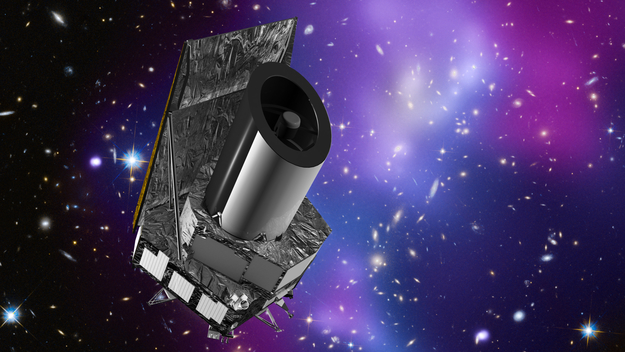
Euclid must fly to its final destination at L2. We cannot wait to see all that our Dark Universe mission has to reveal to us! If ESA decides to use Musk’s SpaceX, that is beyond the Euclid Collaboration’s decision power. However, the Collaboration can and must discuss how to avoid being linked in any way, shape or form to this despicable figure before we change from ESA’s Euclid Mission to Elon’s Euclid Mission. Credit to Musk must be avoided at all costs as the cost will be Euclid’s shot at being a diverse and inclusive Collaboration.

Sizes, Shapes and Minkowski Functionals

Posted in mathematics, The Universe and Stuff with tags , , , , on August 27, 2022 by telescoper

Before I forget I thought I would do a brief post on the subject of Minkowski Functionals, as used in the paper we recently published in the Open Journal of Astrophysics. As as has been pointed out, the Wikipedia page on Minkowski Functionals is somewhat abstract and impenetrable so here is a much simplified summary of their application in a cosmological setting.

One of things we want to do with a cosmological data set to characterize its statistical properties to compare theoretical predictions with observations. One interesting way of doing this is to study the morphology of the patterns involved using quantitative measures based on topology.

The approach normally used deals with Excursion Sets, i.e. regions where a field exceeds a certain level usually given in terms of the rms fluctuation or defined by the fraction of space above the threshold. The field could, for example, be the temperature field on the CMB Sky or the density field traced by galaxies. In general the excursion set will consist of a number of disjoint pieces which may be simply or multiply connected. As the threshold is raised, the connectivity of the excursion set will shrink but also its connectivity will change, so we need to study everything as a function of threshold to get a full description.

One can think of lots of ways of defining measures related to an excursion set. The Minkowski Functionals are the topological invariants that satisfy four properties:

  1. Additivity
  2. Continuity
  3. Rotation Invariance
  4. Translation Invariance

In D dimensions there are (D+1) invariants so defined. In cosmology we usually deal with D=2 or D=3. In 2D, two of the characteristics are obvious: the total area of the excursion set and the total length of its boundary (perimeter). These are clearly additive.

In order to understand the third invariant we need to invoke the Gauss-Bonnet theorem, shown in this graphic:

The Euler-Poincare characteristic (χ) is our third invariant. The definition here allows one to take into account whether or not the data are defined on a plane or curved surface such as the celestial sphere. In the simplest case of a plane we get:

As an illustrative example consider this familiar structure:

Instead of using a height threshold let’s just consider the structure defined by land versus water. There is one obvious island but in fact there are around 80 smaller islands surrounding it. That illustrates the need to define a resolution scale: structures smaller than the resolution scale do not count. The same goes with lakes. If we take a coarse resolution scale of 100 km2 then there are five large lakes (Lough Neagh, Lough Corrib, Lough Derg, Lough Ree and Lower Lough Erne) and no islands. At this resolution, the set consists of one region with 5 holes in it: its Euler-Poincaré characteristic is therefore χ=-4. The change of χ with scale in cosmological data sets is of great interest. Note also that the area and length of perimeter will change with resolution too.

One can use the Gauss-Bonnet theorem to extend these considerations to 3D by applying to the surfaces bounding the pieces of the excursion set and consequently defining their corresponding Euler-Poincaré. characteristics, though for historical reasons many in cosmology refer not to χ but the genus g.

A sphere has zero genus (χ=1) and torus has g=1 (χ=0).

In 3D the four Minkowski Functionals are: the volume of the excursion set; the surface area of the boundary of the excursion set; the mean curvature of the boundary; and χ (or g).

Great advantage of these measures is that they are quite straightforward to extract from data (after suitable smoothing) and their mean values are calculable analytically for the cosmologically-relevant case of a Gaussian random field.

Here endeth the lesson.