Archive for the The Universe and Stuff Category

New Publication at the Open Journal of Astrophysics

Posted in OJAp Papers, Open Access, The Universe and Stuff with tags , , , , , , on September 23, 2021 by telescoper

Time to announce another publication in the Open Journal of Astrophysics. This one is the tenth paper in Volume 4 (2021) and the 41st in all. We actually published this one a couple of days ago but I’ve been so busy with start-of-term shenanigans that I didn’t get time to announce it until this morning.

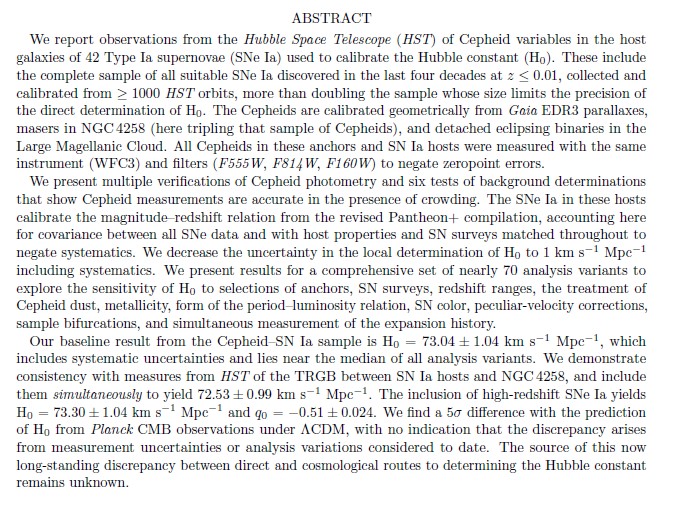
The latest publication is entitled Consequences of constant elevation scans for instrumental systematics in Cosmic Microwave Background Experiments. The authors are Daniel B. Thomas & Nialh McCallum of Queen Mary, University of London, and Michael Brown of the University of Manchester.

Here is a screen grab of the overlay which includes the abstract:

You can click on the image to make it larger should you wish to do so. You can find the arXiv version of the paper here. This one is also in the folder marked Instrumentation and Methods for Astrophysics, though it is obviously of relevance to Cosmology and Non-Galactic Astrophysics too.

The Autumnal Equinox 2021

Posted in Biographical, Maynooth, The Universe and Stuff with tags , , on September 22, 2021 by telescoper

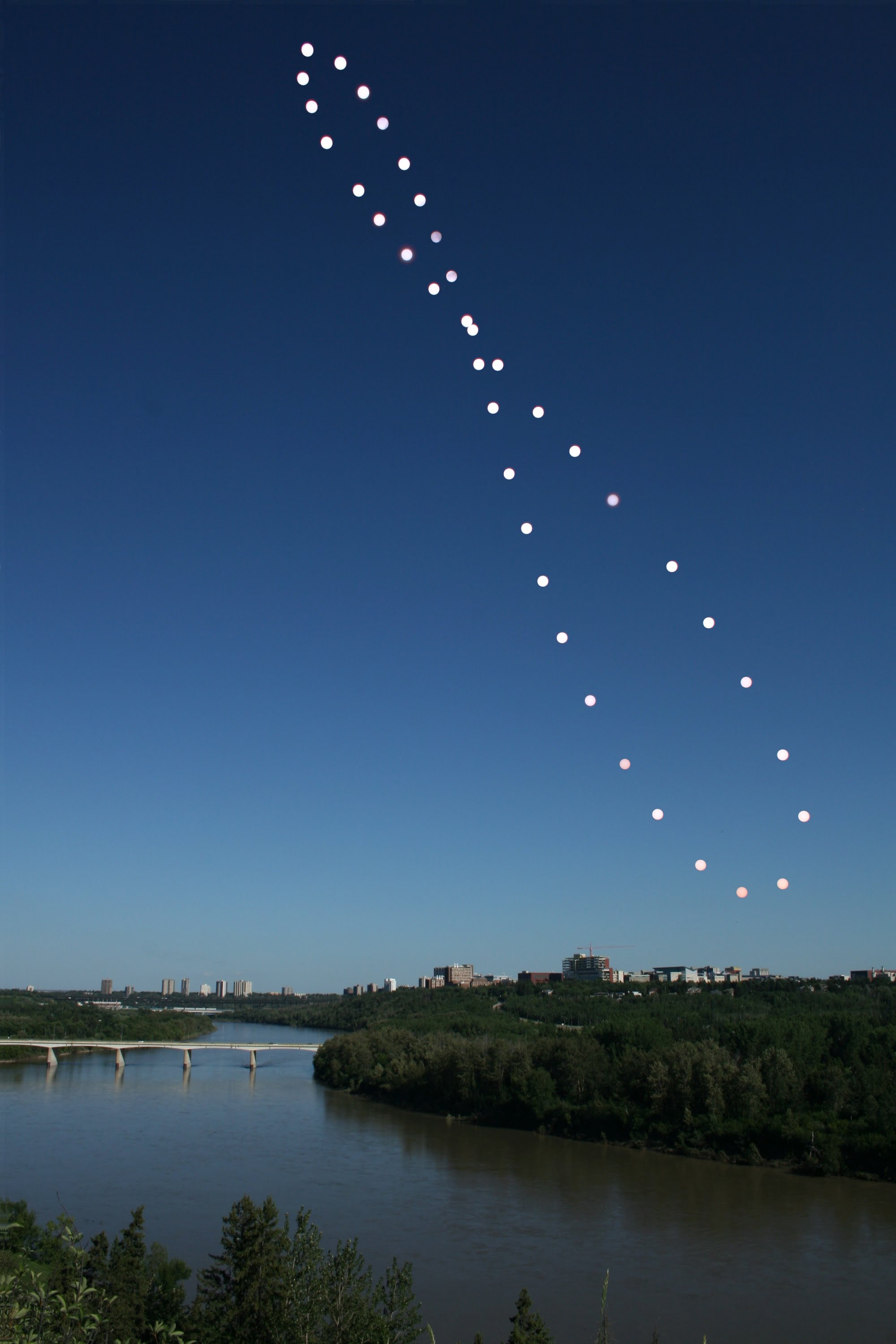
So here we are then. The Autumnal Equinox (in the Northern hemisphere) takes place this evening (Wednesday 22nd September)  at 20.21 Irish Time (19.21 UT).

Although  the term `equinox’  refers to a situation in which day and night are of equal length, which implies that it’s a day rather than a specific time, the astronomical equinox is more accurately defined by a specific event, i.e. when the plane defined by Earth’s equator passes through the centre of the Sun’s disk (or, if you prefer, when the centre of the Sun passes through the plane defined by Earth’s equator). Day and night are not necessarily exactly equal on the equinox, but they’re the closest they get. From now on days in the Northern hemisphere will be shorter than nights and they’ll get shorter still until the Winter Solstice.

Many people take the autumnal equinox to be the end of summer. There is a saying around these parts, however, that `Summer is Summer to Michaelmas Day’ (September 29th), which is not until next week. I must say, though,  though it doesn’t feel very summery today.

Anyway, this is Welcome Week in Maynooth and, barring any sudden changes of plan, we’re due to start teaching first year students on Monday 27th September. Returning students commenced on Monday 20th. I gave my first lecture on Vector Calculus yesterday. That was the first in-person lecture I’ve done for over a year. It was strange because I taught the same students online last year, but obviously never actually saw or heard them, as students generally mute their video and sound when attending lectures. Today was an improvement on that but everyone in the class was wearing a mask so I still haven’t really seen them! At lest this means that all the students were observing the necessary protocol, which is a relief, and the masks didn’t interfere with them responding to questions of mine or asking questions of their own.

We are still one lecturer short as the visa office in Dublin has been sitting on the application from our new member of staff since June 23rd. On top of my own things to do I’ve been setting up lectures for him so the students can view them in the lecture hall remotely. I’m not sure how long that will go on for, although it’s out of my hands.

Other than that I’ve spent the last couple of days trying to iron out problems with the timetable – of which there are unfortunately many – as well as preparing my own lectures. I want to record my lectures from the classrooms but unfortunately the University has chosen not to install decent video equipment so I’ve had to improvise. I recorded yesterday’s lecture using a webcam attached to the stand for my tenor saxophone. It seemed to work out reasonably well.

R.I.P. Tony Hewish (1924-2021)

Posted in The Universe and Stuff with tags , , , , , on September 17, 2021 by telescoper

It’s a grim day when I have three R.I.P. posts on this blog, but I learned this afternoon via email that Nobel Prize winning Cambridge radio astronomer Antony Hewish has passed away on 13th September this year at the age of 97. You can read a full obituary at his college website here so I’ll keep my own remarks brief.

Tony Hewish was one of the pioneering generation of radio astronomers who were involved with the development of radar during World War 2 and went on to apply the knowledge they had gained to explore the Universe. He is most famous for winning the 1974 Nobel Prize for Physics (jointly with Martin Ryle) for the discovery of pulsars. Although the Nobel Foundation were clearly wrong not to give a share to Jocelyn Bell Burnell (who actually made the discovery). Indeed I would argue that Hewish should have declined the award unless Jocelyn Bell Burnell had been included. These errors should not however detract from Hewish’s scientific achievement in conceiving and constructing the Interplanetary Scintillation Array with which the discovery was made.

I’ll just add on a personal note that when I was a final-year undergraduate student at Cambridge (in the Lent Term in 1985) I took what was called a Major Option in Observational Cosmology which was lectured by Tony Hewish. As a matter of fact I still have the notes. Here’s the file opened at a random page:

It’s very out of date now, of course. A lot has happened in cosmology since 1985! At the time, though, I enjoyed the course very much and that affected my choice of potential areas in which to do my PhD. Although I ended up doing Theoretical rather than Observational Cosmology, at Sussex rather than at Cambridge, this course of lectures played a big part in me starting out on a career in that field.

Rest in peace Tony Hewish (1924-2021).

R.I.P. Thanu Padmanabhan (1957-2021)

Posted in The Universe and Stuff with tags , on September 17, 2021 by telescoper
Prof. Thanu Padmanabhan

It’s my sad task to pass on yet another piece of bad news. Renowned Indian physicist and cosmologist Professor Thanu Padmanabhan (known to all as “Paddy”) passed away suddenly this morning at the age of 64. I believe he suffered a heart attack at his home in Pune.

Paddy was not only a prolific researcher, with over 300 articles and many books to his name, but also a very gifted public speaker. Although we met and chatted a few times I never really got to know Paddy personally, but I shall remember him best for the many wonderful lectures I heard him give, at conferences and in seminars, the first being at Sussex when I was a graduate student there ay back in the 1980s.

The sudden death of such a highly esteemed colleague and friend has shocked his family and circle of friends, as well as the physics community in India, and is sure to have a similar effect around the world as news travels. Paddy travelled widely and had collaborators across the globe, including in the United Kingdom and United States.

All I can do here is to offer my sincere condolences to his family, friends, scientific colleagues who are grieving now, and for whom his loss will be irreparable.

Rest in peace, Thanu Padmanabhan (“Paddy”) (1957-2021).

New Publication at the Open Journal of Astrophysics

Posted in OJAp Papers, Open Access, The Universe and Stuff with tags , , , , , , on September 16, 2021 by telescoper

Time to announce another publication in the Open Journal of Astrophysics. This one is the ninth paper in Volume 4 (2021) and the 40th in all.

The latest publication is entitled Black Hole Shadow Drift and Photon Ring Frequency Drift. The authors are Emmanuel Frion (Helsinki), Leonardo Giani (Queensland) and  Tays Miranda (Jyväskylä).

Here is a screen grab of the overlay which includes the abstract:

You can click on the image to make it larger should you wish to do so. You can find the arXiv version of the paper here. This one is also in the folder marked Cosmology and Nongalactic Astrophysics; although primarily in general relativity and quantum cosmology (gr-qc) it is cross-listed in astro-ph so it eligible for publication with us.

The end of the summer has been heralded by the arrival at OJAp HQ of a number of revised versions so I expect to be publishing a few more papers in the next few weeks!

Thirteen Years in The Dark!

Posted in Biographical, The Universe and Stuff with tags on September 15, 2021 by telescoper

When I logged onto WordPress today I received a message that it was the 13th anniversary of my registration with them as a blogger, which is when I took my first step into the blogosphere; that was way back on 15th September 2008.

I actually wrote my first post on the day I registered but unfortunately I didn’t really know what I was doing on my first day at blogging – no change there, then – and I didn’t actually manage to figure out how to publish this earth-shattering piece. It was only after I’d written my second post that I realized that the first one wasn’t actually visible to the general public because I hadn’t pressed the right buttons, so the two appear in the wrong order in my archive.

If you’re interested in statistics then, as of 12.49 Irish Summer Time Today today, I have published 5634 blog posts posts and have received about 4.6M hits altogether. This varies in a very erratic fashion from day to day, but there has been a bit of a downward trend over the last few years, presumably because I’m getting older and more boring. The largest number of hits I have received in a single day is 8,864 (at the peak of the BICEP2 controversy).

There have been 37,465 comments published on here and 2,795,394 rejected by the spam filters. The vast majority of the rejected comments were from bots, but a small number have been removed for various violations, usually for abuse of some kind. And, yes, I do get to decide what is published: it is my blog!

While I am on the subject of comments, I’ll just repeat here the policy stated on the home page of this blog:

Feel free to comment on any of the posts on this blog but comments may be moderated; anonymous comments and any considered by me to be abusive will not be accepted. I do not necessarily endorse, support, sanction, encourage, verify or agree with the opinions or statements of any information or other content in the comments on this site and do not in any way guarantee their accuracy or reliability.

It does mean a lot to me to know that there are people who find my ramblings on this `shitty wordpress blog’ interesting enough to look at, or even read, and sometimes even to come back for more, so I’d like to take this opportunity to send my best wishes to all those who follow this blog!

The last twelve years have been eventful, to say the least, both personally and professionally. I started blogging not long after I’d moved into my house in Pontcanna, Cardiff. Since then I moved to Sussex, then back to Cardiff, and now to Ireland. More importantly we’ve seen the discovery of the Higgs Boson and gravitational waves, both of which resulted in Nobel Prizes, as did the studies of high-redshift supernovae. The Planck mission mission was launched, did its stuff, and came to a conclusion in this time too. Science has moved forward, even if there are many things in this world that still seem to be going backwards.

The AAS goes for Gold

Posted in Open Access, The Universe and Stuff with tags , , , , , , on September 2, 2021 by telescoper

Yesterday there was a big announcement from the American Astronomical Society (AAS) , namely that all its journals will switch to Open Access from 1st January 2022. This transition will affect the Astronomical Journal (AJ), the Astrophysical Journal (ApJ), Astrophysical Journal Letters (ApJL), and the Astrophysical Journal Supplement Series (ApJS). Previously authors were able to opt for Open Access but from next year it will apply to all papers.

The positive aspect to this change is that it makes articles published by the AAS freely available to the public and other scientists without requiring the payment of a subscription.

On the other hand, these journals will require authors to pay a hefty sum, equivalent to an Article Processing Charge (APC), that increases with the length and complexity of a paper. AAS journals have in the past levied “page charges” from authors for standard (non-OA) publications. In the new regime these are merged into a unified scheme. Here is a summary of the rates.

What’s on offer is therefore a form of Gold Open Access that switches the cost of publication from subscribers to authors. In my view this level of APC is excessive, which is why I call this Fool’s Gold Open Access. Although the AAS is a not-for-profit organization, its journals are published by the Institute of Physics Publishing which is a definitely-for-profit organization.

The Open Journal of Astrophysics charges neither subscribers nor authors; this form of Open Access is usually called Diamond or Platinum Open Access.

The terminology surrounding Open Access is confusing not least because its usage is evolving. In the current jargon, “Gold” Open Access refers to publication that is free to access at the journal. The principal alternative is “Green” Open Access, which means that free access is offered through depositing the paper in some form of repository separate from the journal. Some astronomical journals allow authors to deposit their articles on arXiv, for example, which is probably the main way in which astrophysicists achieve Green Open Access.

Nowadays “Gold” Open Access refers to anything that is made available freely by a journal regardless of whether an APC is charged or not. The Diamond Open Access provided by the Open Journal of Astrophysics is thus a special case of Gold Open Access. A classification in which Diamond and Platinum are subdivisions of Gold must confuse the heck out of chemists, but that’s where we are at the moment. At least it’s not as bad as in astrophysics where the only terms used to describe chemical elements are hydrogen, helium and “metals”…

While I am glad to see the AAS move its journals into Open Access configurations, I can’t agree with the level of APC. The Open Journal of Astrophysics may be relatively small but it has plenty of capacity for growth while remaining entirely free. The more people realize that it costs tens of dollars rather than thousands to publish a paper the more likely it is that they’ll see the moral case for Diamond Open Access.

Talking About Open Access

Posted in Open Access, The Universe and Stuff on September 1, 2021 by telescoper

By way of a sequel to my Colloquium in the same series earlier this summer, a fortnight today (on 15th September 2021) I will be doing another talk for the Ecole Internationale d’Astrophysique Daniel Chalonge – Hector de Vega. This won’t be an actual science talk but instead will be about Open Access publishing in general and about the Open Journal of Astrophysics in particular.

The talk is of course free but you need to register here to get the Zoom link. It’s at 4pm Paris Time (which is 3pm Irish Time).


New Publication at the Open Journal of Astrophysics

Posted in OJAp Papers, Open Access, The Universe and Stuff with tags , , , , , , on August 19, 2021 by telescoper

Time to announce another publication in the Open Journal of Astrophysics. This one is the eighth paper in Volume 4 (2021) and the 39th in all.

The latest publication is entitled A Detailed Description of the CAMSPEC Likelihood Pipeline and a Reanalysis of the Planck High Frequency Maps. The authors are George Efstathiou and Steven Gratton of the Kavli Institute for Cosmology at the University of Cambridge.

Here is a screen grab of the overlay which includes the abstract:

You can click on the image to make it larger should you wish to do so. You can find the arXiv version of the paper here. This one is also in the folder marked Cosmology and Nongalactic Astrophysics.

This is a long and detailed paper, running to 92 pages in PDF form. Our Editorial process relies on referees being willing to volunteer their time to read and comment on submissions and this one in particular required a great deal of effort. I am always grateful to referees but in this case I am even more grateful than usual the diligence displayed during and the many useful comments received. I know who our reviewers are and they know who they are, but shall remain anonymous!

Happy 30th Birthday to the arXiv!

Posted in Biographical, Open Access, The Universe and Stuff with tags , , , on August 14, 2021 by telescoper

I was reminded yesterday that today, 14th August, is the 30th anniversary of the start of the arXiv so I thought I’d send a quick birthday greeting to mark the occasion. In case you weren’t aware, arXiv is a free distribution service and an open-access archive containing (currently) 1,928,825 scholarly articles in the fields of physics, mathematics, computer science, quantitative biology, quantitative finance, statistics, electrical engineering and systems science, and economics.

There was a precursor to the arXiv in the form of an email distribution list for preprints, but arXiv proper started on 14th August 1991. It was based at Los Alamos National Laboratory (LANL) with a mirror site in SISSA (Trieste) that was used by those of us in Europe. In the beginning, arXiv was quite a small-scale thing and it wasn’t that easy to upload full papers including figures. In fact the SISSA system was run from a single IBM 386 PC (called “Babbage”). As it expanded, the running of arXiv was taken over Cornell University. You can read more about the history here.

You have to remember that journals didn’t generally have electronic submission in those days: you had to send paper manuscripts in the post to the Editorial office. Likewise many of us carried on sending out paper preprints for some time after the arXiv was set up. Younger researchers should be grateful they don’t have to put up with the absolute chore of producing papers the old-fashioned way!

The astrophysics section of arXiv (“astro-ph”) started in April 1992. Although astrophysicists generally were quick to latch on to this new method of distributing preprints, it took me a little time to get onto arXiv: my first papers did not appear there until February 1993; my first publication was in 1986 so there are quite a few of my early papers that aren’t on arXiv at all. In 1993 I was working at Queen Mary & Westfield College (as it was then called). I was working a lot with collaborators based in Italy at the time and they decided to start posting our joint papers on arXiv. Without that impetus it would have taken me much longer to get to grips with it.

In case you’re interested, my first paper to appear on the arXiv was this one on 23rd February 1993 but it was followed a day later by two others, this one and that one. I don’t remember very well, but this was an exercise in catching up and all three of those papers were actually published in journals before we put them on arXiv. It was only later that we got into the habit of posting papers on arXiv at the same time as submitting to a journal, which I think is the best way to do it!

The Open Journal of Astrophysics would not have been possible without the arXiv but in a wider sense the astrophysics community has a very great deal to thank the arXiv for, but remember that it is funded by donations and is run on a shoestring. If you agree that it’s a tremendously useful asset for your research then please consider making a donation.