
(Based on an idea stolen from here.)
(Based on an idea stolen from here.)
As promised yesterday, it’s time for a roundup of the week’s business at the Open Journal of Astrophysics. This past week we have published three papers, taking the count in Volume 7 (2024) up to 4 and the total published by OJAp up to 119. There are quite a few more ready to go as people return from the Christmas break.
In chronological order, the three papers published this week, with their overlays, are as follows. You can click on the images of the overlays to make them larger should you wish to do so.
First one up is “Prospects for studying the mass and gas in protoclusters with future CMB observations” by Anna Gardner and Eric Baxter (Hawaii, USA), Srinivasan Raghunathan (NCSA, USA), Weiguang Cui (Edinburgh, UK), and Daniel Ceverino (Madrid, Spain). This paper, published on 17th January 2024, uses realistic hydrodynamical simulations to probe the ability of CMB Stage 4-like (CMB-S4) experiments to detect and characterize protoclusters via gravitational lensing and the Sunyaev-Zel’dovich effect. This paper is in the category of Cosmology and Nongalactic Astrophysics.
Here is a screen grab of the overlay, which includes the abstract:

You can find the officially accepted version of the paper on the arXiv here.
The second paper to announce is “SDSS J125417.98+274004.6: An X-ray Detected Minor Merger Dual AGN” and is by Marko Mićić, Brenna Wells, Olivia Holmes, and Jimmy Irwin (all of the University of Alabama, USA). This presents the discovery of a dual AGN in a merger between the galaxy SDSS J125417.98+274004.6 and dwarf satellite, studied using X-ray observations from the Chandra satellite. The paper was also published on 18th January 2024 in the category Astrophysics of Galaxies . You can see the overlay here:

The accepted version of this paper can be found on the arXiv here.
The last paper of this batch is entitled “Population III star formation: multiple gas phases prevent the use of an equation of state at high densities” and the authors are: Lewis Prole (Maynooth, Ireland), Paul Clark (Cardiff, UK), Felix Priestley (Cardiff, UK), Simon Glover (Heidelberg, Germany) and John Regan (Maynooth, Ireland). This paper, which presents a comparison of results obtained using chemical networks and a simpler equation-of-state approach for primordial star formation (showing the limitations of the latter) was published on 19th January 2024 and also in the folder marked Astrophysics of Galaxies.
Here is the overlay:

You can find the full text for this one on the arXiv here.
And that concludes the update. There’ll be more next week!

As it was foretold, since January 1st 2024 the journal Monthly Notices of the Royal Astronomical Society (MNRAS) is now charging authors an Article Processing Charge (APC) at the (suitably astronomical) level of £2310 (approx €2700 at current rates) for each paper. There are exemptions in certain situations, such as if the author’s institution has signed up to a read-and-publish agreement via JISC (although that still involves a researcher’s institution paying unjustifiable amounts to the publisher).
The fundamental fact is that it just doesn’t cost £2310 to publish a paper online. That APC level is – for one paper – larger than the entire running costs of the Open Journal of Astrophysics for a year.
I did actually laugh out loud when I saw the spin the RAS tried to put on this decision:
The RAS is excited to be a key contributor to the open science movement, helping to drive discoverability and change.
Au contraire. Gold Open Access a serious hindrance to the open science movement, as it involves hugely inflated costs to the authors in attempt to protect revenue in the face of declining subscription income. This means that many potential authors just will not be able to pay. That’s not Open Access. Switching from a ‘fleece-the-libraries’ model to a ‘fleece-the-authors’ alternative can in no way be regarded as a progressive move.
It is true that some institutions will pay the APC on behalf of their authors, but that is hardly the point. If institutions have cash to pay for astronomy publications to be open access then they would do far more good to the research community by giving it to the arXiv rather than to the publishing industry. When authors themselves see how much they have to pay to publish their work, many will realize that it is simply not worth the money. I refuse to pay any APC on principle.
The question for the Royal Astronomical Society, and indeed the other learned societies that fund their activities in a similar way, is whether they can find a sustainable funding model that takes proper account of the digital publishing revolution. If their revenue from publishing does fall, can they replace it? And, if not, in what form can they survive? I’d like to think that future operating models for such organizations would involve serving their respective communities, rather than fleecing them. I’d advocate a institutional subscriptions as a fairer and more transparent alternative to syphoning funds from library budgets or research grants.
Meanwhile, the new regime at MNRAS (and possibly its acceptance on Scopus) have led to steadily increasing activity at the Open Journal of Astrophysics. This morning I announced three more papers. I will post about them on here tomorrow. Diamond Open Access is the way forward. It’s just a question of time before everyone realizes it.
You may recall that last year I posted about the results of the annual Dirac Research Image competition for which I was one of the judges. For those of you who weren’t aware, DIRAC is a high-performance computing facility designed to serve the research community supported in the UK by the Science and Technology Facilities Council (STFC). I was honoured to be invited back to judge the competition this year.
As before, entries to the Research Image Competition were divided into two Themes: Theme 1 (Particle and Nuclear Physics) and Theme 2 (Astronomy, Cosmology and Solar & Planetary Science) and scores were allocated by the judges based on visual impact and scientific interest. Once again, the standard was very high, but there were clear winners in each category. Here they are:

Molecular dynamics simulations of high-dose radiation damage in tungsten to understand the evolution of the material under fusion reactor conditions. Blue spheres are vacancies (missing-atom defects), orange spheres are interstitials (extra-atom defects). Lines are dislocations (linear crystallographic defect).
Softwares: LAMMPS for simulations, Ovito for the rendering.
The most massive galaxy cluster in the flagship, 2.8 Gpc, FLAMINGO volume, with each side of the image spanning 40 megaparsecs. Each colour represents a different gas density contour, highlighting the extremely complex spatial and velocity structure of the gas within the cluster. At the center, the gas serendipitously aligns to produce a love heart.
The image was created with DiRAC supported software SWIFT and swiftsimio.
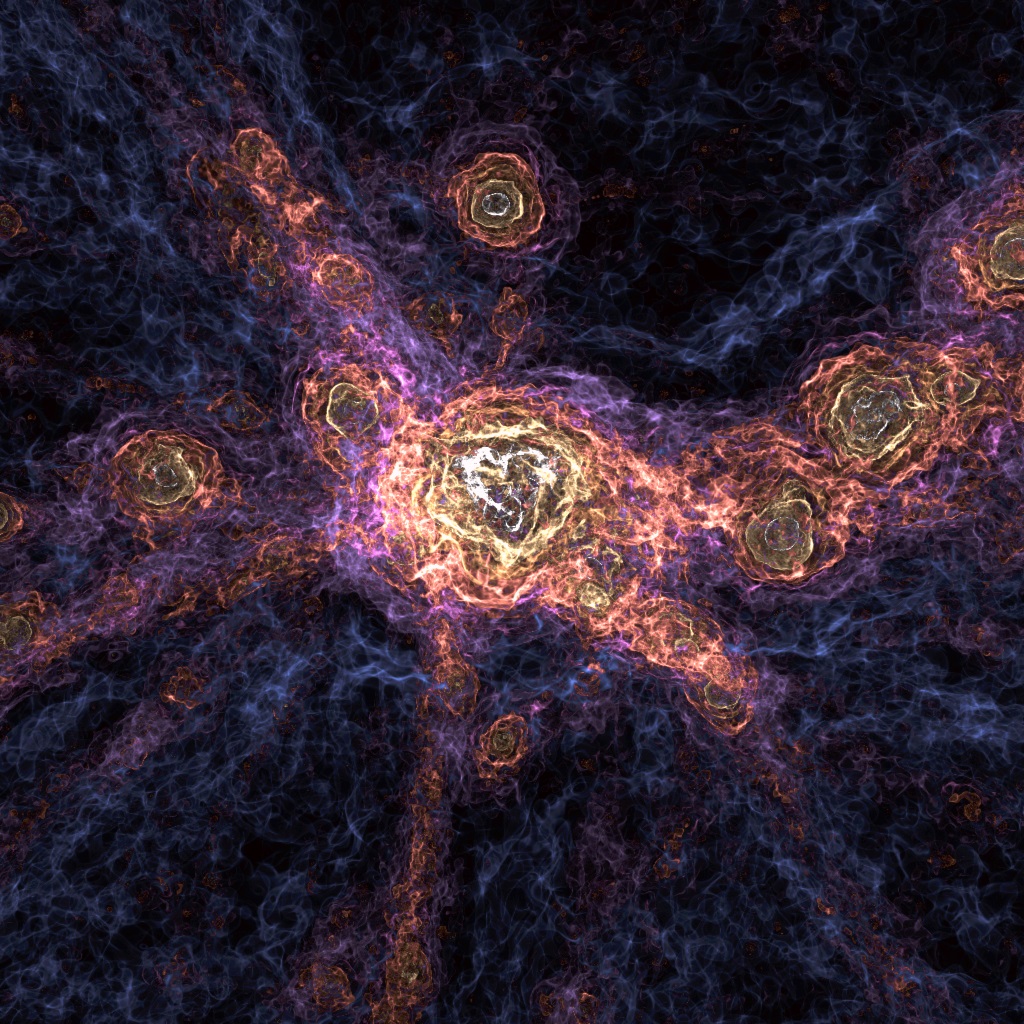
For more details about these images and the other entries see here. The 2024 Dirac Calendar features a selection of the entries.
Congratulations to the winners and indeed all the entrants!
A week or so before Christmas I posted about a new organization called Irish Open Access Publishers whose mission statement is as follows:
Irish Open Access Publishers (IOAP) is a community of practice driven by Irish open access publishers for Irish open access publishers. The IOAP promotes engagement with the Diamond Open Access publishing model (free to publish and free to read) as well as indexing on the Directory of Open Access Journals and the Directory of Open Access Books. The aim of this dynamic community of practice is to promote publishing activity that is free of pay walls and publication embargoes to further the dissemination of high quality scholarly output to all in society.
These aims are laudable and I support them wholeheartedly. I should also mention that the Open Journal of Astrophysics is listed in the Directory of Open Access Journals here, where you will find details of all the papers we have published so far. This index is all part of the service. We have also been accepted for inclusion in Scopus, in case that matters to you.
Anyway, I thought I would remind readers of this blog (both of them) about the fact that the IOAP is offering a new set of awards, for which nominations are now open:
(Unfortunately the links in the above image are not clickable, but you can the award details here…)
Nominations for the first three categories are by self-nomination only. I will of course, on behalf of Maynooth Academic Publishing, the Editorial Board, the authors, and everyone who has helped behind the scenes, be nominating the Open Journal of Astrophysics.
Nominations for the final category, Outstanding Contribution to the OA Field are described thus:
Category 4 welcomes third party as well as self nominations from academics, students, librarians, research managers, academic leaders, publishers and other stakeholders across further and higher education for an individual who has made an outstanding contribution to open access publishing in Ireland. Nominations from scholarly societies and other scholarly organisations are also welcome. Nominations for individuals based in Northern Ireland are also invited.
Self nominations are restricted to individuals based in Ireland including Northern Ireland. Third party nominations are invited from individuals based in Ireland including Northern Ireland as well as individuals based overseas. All third party nominations must be for individuals practising in the field of open access publishing in Ireland including Northern Ireland solely.
Notice that nominations are not restricted to individuals based in Ireland. So, wherever you are, if you can think of any individual based in Ireland who has done enough to merit being described as having made an “outstanding contribution”, perhaps not only for being a long-term advocate of Diamond Open Access but also for setting up and being Managing Editor of a successful Diamond Open Access journal in the field of astrophysics, then please feel free to nominate me them. I hope you get the message. If you want subtle, you’ve come to the wrong place!
The nomination form is here. The closing date for nominations is 1st February 2024.
For reasons that may or may not be revealed shortly, I am currently re-reading the novel Pride and Prejudice by Jane Austen:
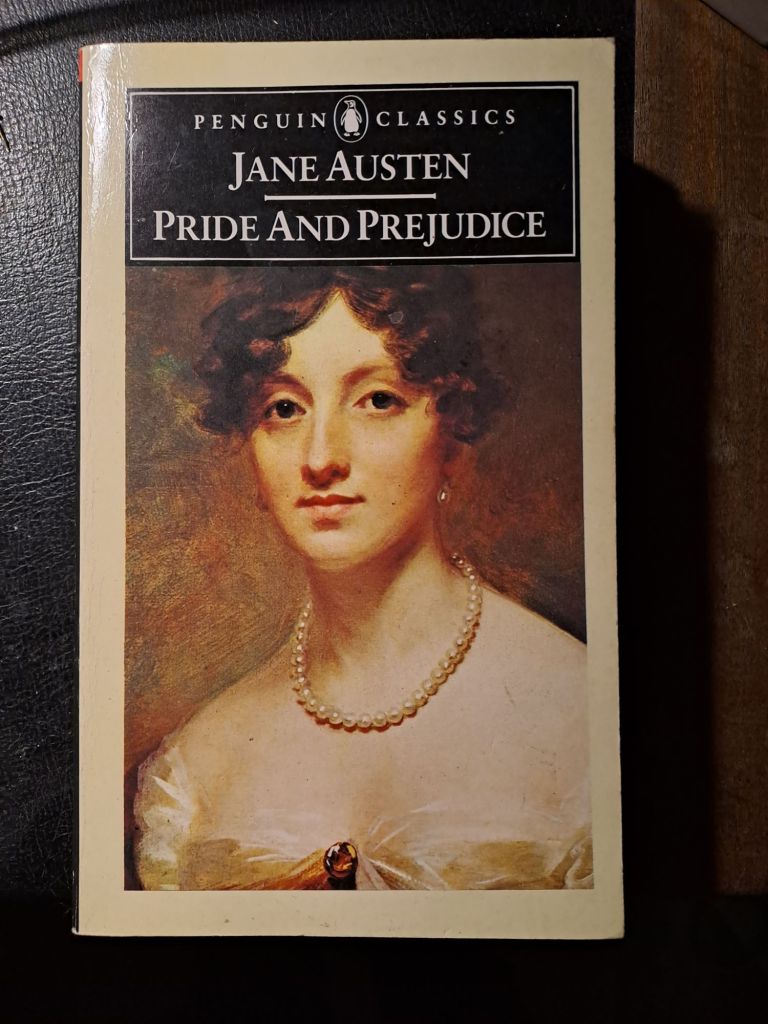
Among many other things, this has one of the most famously ironic opening lines in all English literature:
It is a truth universally acknowledged that, that a single man in possession of a good fortune must be in want of a wife.
I recently came across this discussion of this sentence by the philosopher Ludwig Wittgenstein, which I thought it would be amusing to share:
Let us ask what it is when we say “It is a truth universally acknowledged” that something is the case. Isn’t this a queer thing to say? How can we possibly understand it? At first sight it may appear that “it” is simply the something that is the case (ie that a man possessed of a certain degree of wealth will always feel the lack, or perhaps, without feeling it, be in need, of a wife). This “it”, however, can be no more than a pronominal anterior reference to the “truth” that is being claimed, without as yet there being any evidence for it, even though it is later stated to be acknowledged as a truth by everyone. In such a case it seems to us that the truth has been claimed a priori, since nothing can be acknowledged until it is proposed, although once proposed, such a supposed truth may be further tested through opinion and behaviour. Consider the much simpler proposition: “A man in possession of a good fortune must be in want of a wife”. We might reply “How do you know?”, a response that immediately raises the idea of possible exceptions to such a generalisation, such as (among other more complex forms of exception) that he may have a wife already, or may be a secret lover of men. To claim universal acknowledgement of a truth is to claim that a probable “truth” is undeniably true, which can be no more than a specious tautology. Moreover, as we have seen, the “it” with which we began has already laid claim to the existence of something (a kind of truth, as it soon turns out) that can only be assumed through this insistent and superfluous pronoun, which is a form of private acknowledgement by the speaker alone, and is by no means obviously universal. That this “it” is true, and that truth is also true, is what is being claimed here, and the double tautology becomes a distinct puzzle. To be induced to assent to an “it”, when there may be ample reason to doubt its very relation to the proposition which follows, is to be invited not to understand it.
I hope this clarifies the situation.
At the annual AAS Meeting in New Orleans last week there was an announcement of a result that made headlines in the media (see, e.g., here and here). There is also a press release from the University of Central Lancashire.
Here is a video of the press conference:
I was busy last week so didn’t have time to read the details so refrained from commenting on this issue at the time of the announcement. Now that I am back in circulation, I have time to read the details, but unfortunately was unable to find even a preprint describing this “discovery”. The press conference doesn’t contain much detail either so it’s impossible to say anything much about the significance of the result, which is claimed (without explanation) to be 5.2σ (after “doing some statistics”). I see the “Big Ring” now has its own wikipedia page, the only references on which are to press reports, not peer-reviewed scientific papers or even preprints.
So is this structure “so big it challenges our understanding of the universe”?
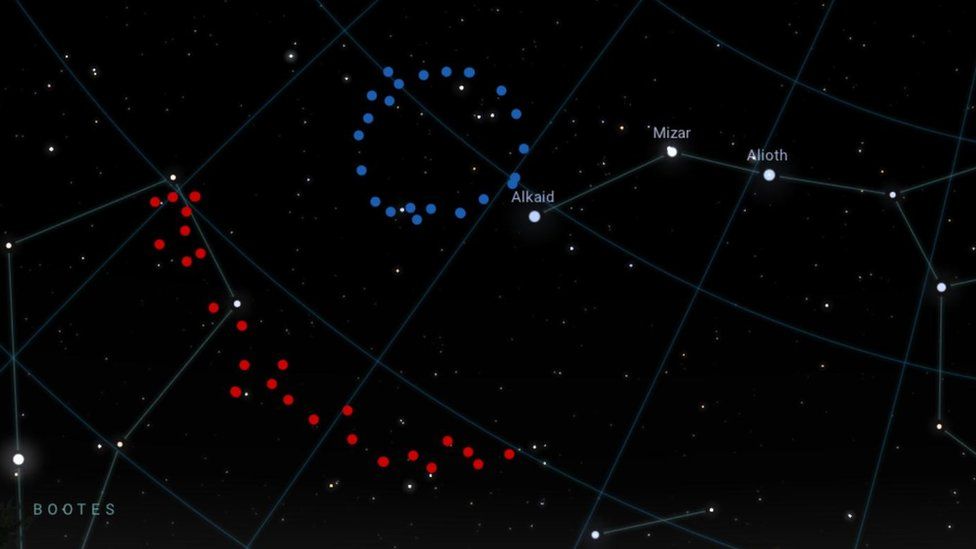
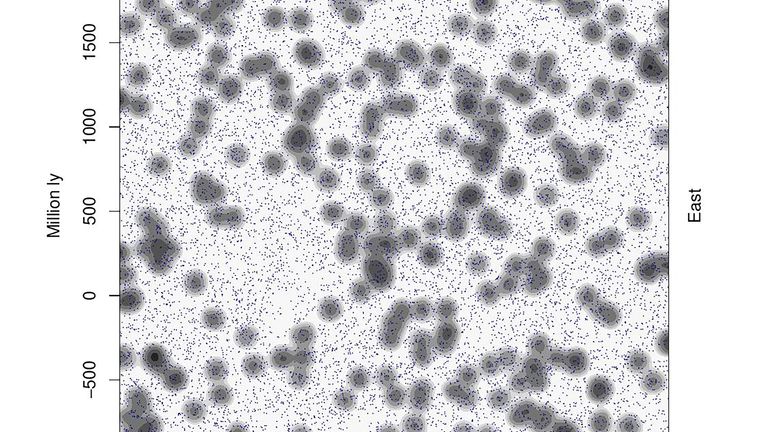
Based on the available information it is impossible to say. The large-scale structure of the Universe comprises a complex network of walls and filaments known as the cosmic web which I have written about numerous times on this blog. This structure is so vast and complicated that it is very easy to find strange shapes in it but very hard to determine whether or not they indicate anything other than an over-active imagination.
To assess the significance of the Big Ring or other structures in a proper scientific fashion, one has to calculate how probable that structure is given a model. We have a standard model that can be used for this purpose, but to simulate very structures is not straightforward because it requires a lot of computing power even to simulate just the mass distribution. In this case one also has to understand how to embed Magnesium absorption too, something which may turn out to trace the mass in a very biased way. Moreover, one has to simulate the observational selection process too, so one is doing a fair comparison between observations and predictions.
I have seen no evidence that this has been done in this case. When it is, I’ll comment on the details. I’m not optimistic however, as the description given in the media accounts contains numerous falsehoods. For example, quoting the lead author:
The Cosmological Principle assumes that the part of the universe we can see is viewed as a ‘fair sample’ of what we expect the rest of the universe to be like. We expect matter to be evenly distributed everywhere in space when we view the universe on a large scale, so there should be no noticeable irregularities above a certain size.
https://www.uclan.ac.uk/news/big-ring-in-the-sky
This just isn’t correct. The standard cosmology has fluctuations on all scales. Although the fluctuation amplitude decreases with scale, there is no scale at which the Universe is completely smooth. See the discussion, for example, here. We can see correlations on very large angular scales in the cosmic microwave background which would be absent if the Universe were completely smooth on those scales. The observed structure is about 400 Mpc in size, which does not seem to be to be particularly impressive.
I suspect that the 5.2σ figure mentioned above comes from some sort of comparison between the observed structure and a completely uniform background, in which case it is meaningless.
My main comment on this episode is that I think it’s very poor practice to go hunting headlines when there isn’t even a preprint describing the results. That’s not the sort of thing PhD supervisors should be allowing their PhD students to do. As I have mentioned before on this blog, there is an increasing tendency for university press offices to see themselves entirely as marketing agencies instead of informing and/or educating the public. Press releases about scientific research nowadays rarely make any attempt at accuracy – they are just designed to get the institution concerned into the headlines. In other words, research is just a marketing tool.
In the long run, this kind of media circus, driven by hype rather than science, does nobody any good.
P.S. I was going to joke that ring-like structures can be easily explained by circular reasoning, but decided not to.

At the R.A.S. Club on Friday I was presented with the latest edition of the Club Records which covers the last 40 years; the Club itself began in 1820. Friday’s dinner was No. 1571, and there are five volumes of records containing lists of everyone who attended each dinner along with descriptions of notable events and a diagram showing who sat next to whom. I only just got the book because pandemic travel restrictions and other matters prevented me from dining much recently.
For the record, I was elected to the Club at the Parish Dinner on 11th January 2008 (Dinner No. 1448) but wasn’t able to dine until October that year (Dinner No. 1453). According to the records I have now dined 60 times (including last Friday). I wonder if I’ll make it to 100?
Anyway, here is a selection of pictures taken at Club Dinners past with various other members:
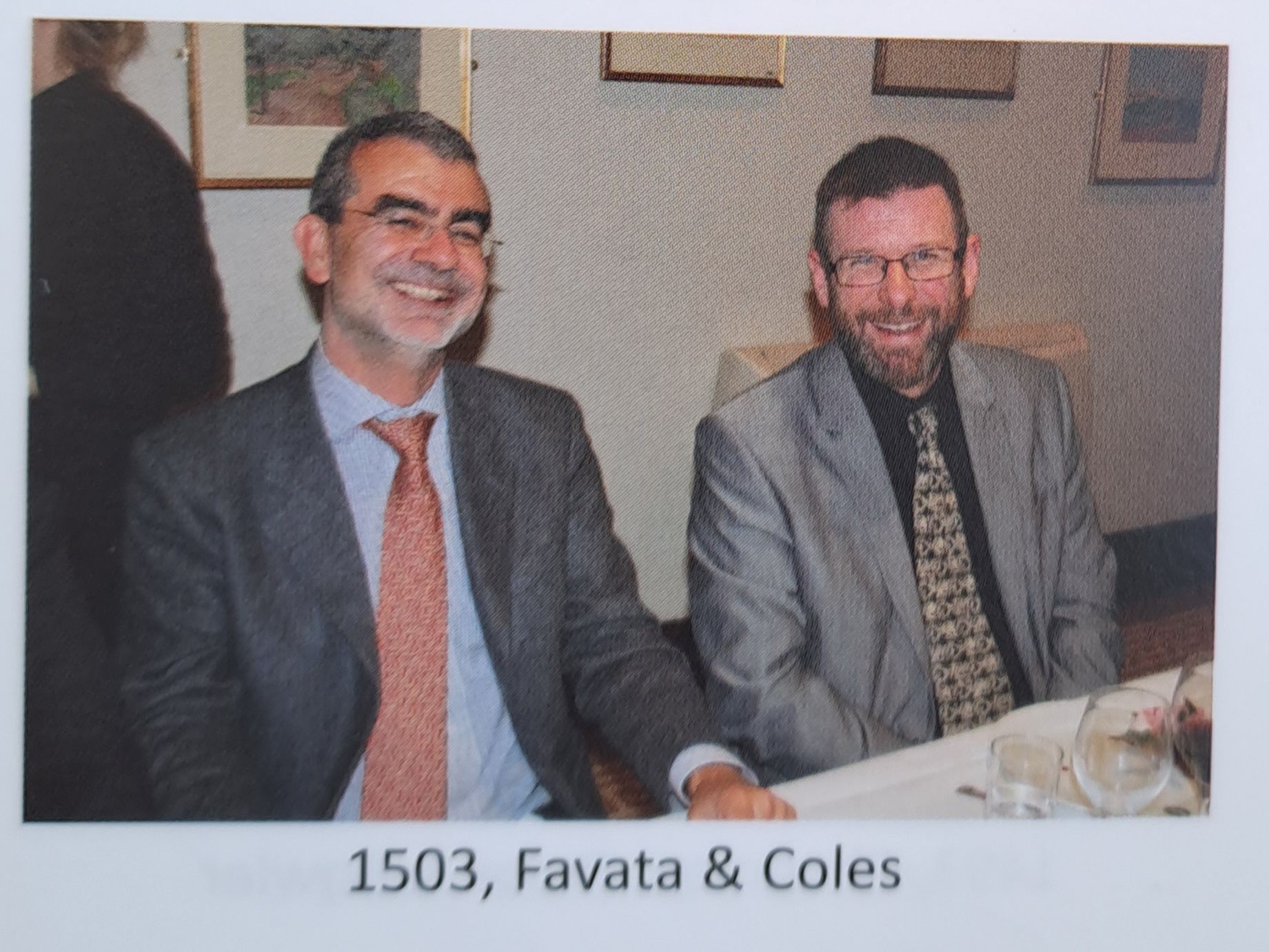

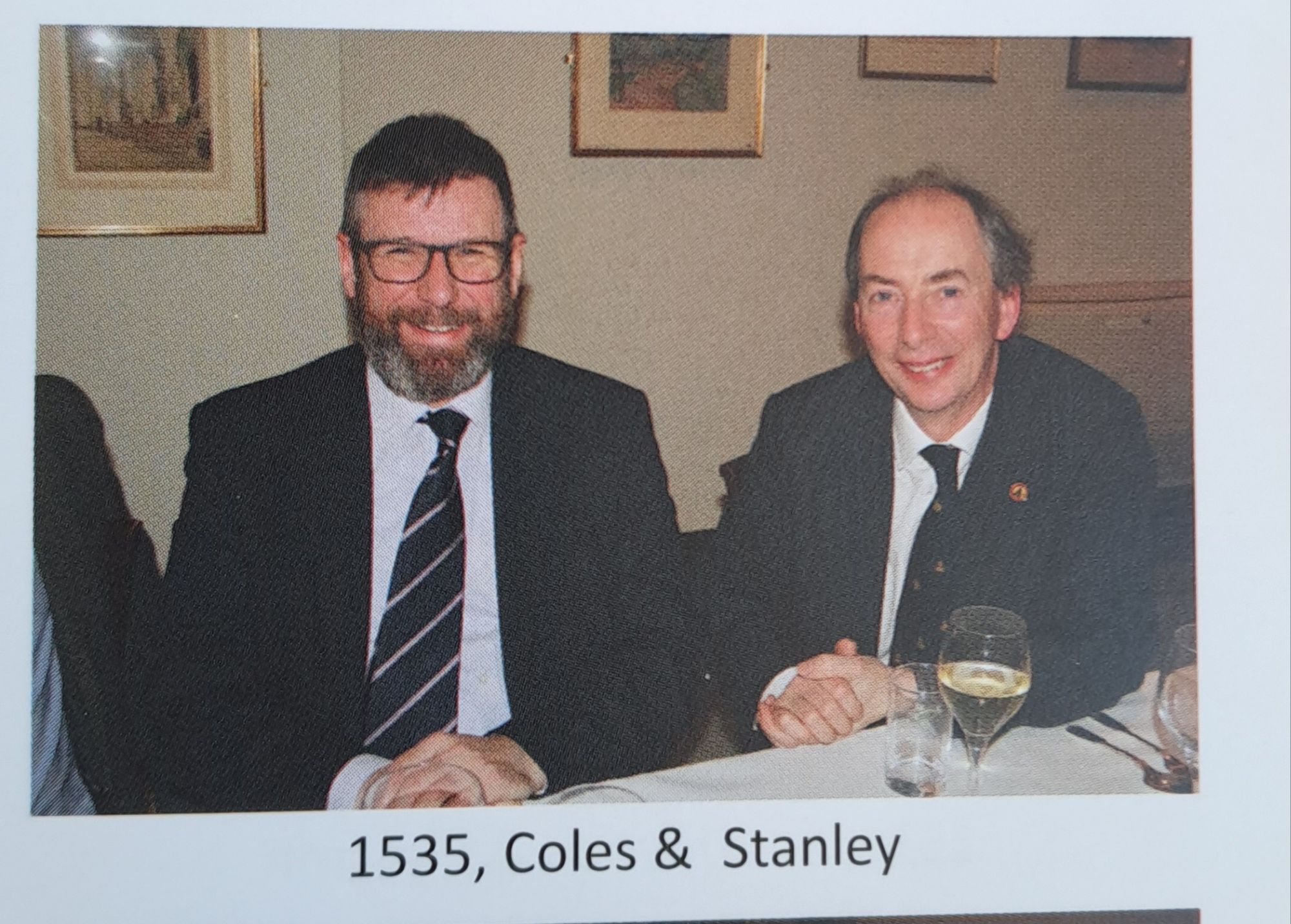
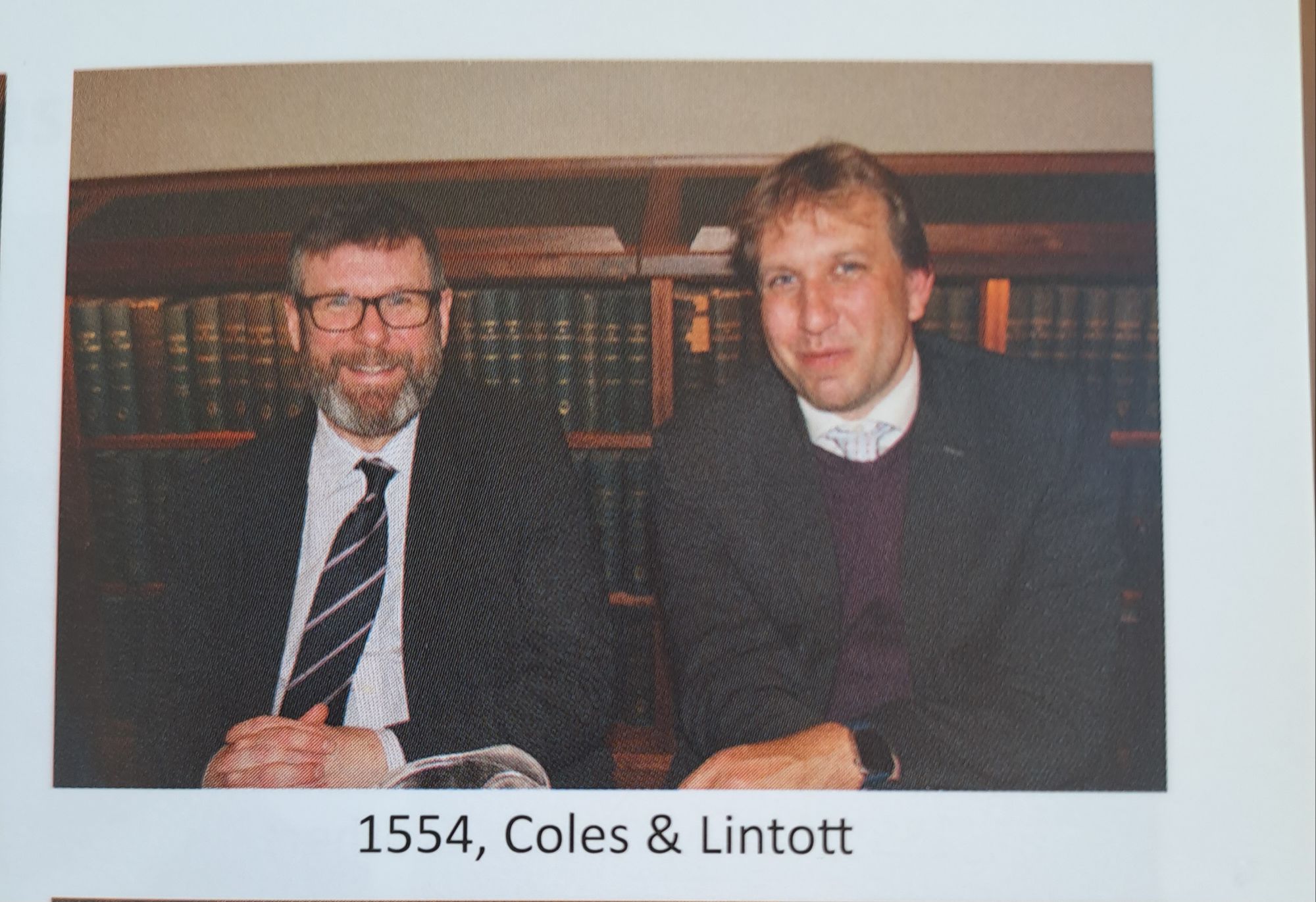
These pictures remind me that I should perhaps consider wearing some different ties in future!
Here I am in Heathrow Airport waiting for a flight after a couple of days in London.
Every time I visit London it becomes harder to believe that I actually lived there years ago. On Thursday evening I took a stroll around Soho and walked past this place…

I used to be a member at Ronnie Scott’s and spent many late nights there back in the day. It must be about 25 years since I last set foot inside. I must go again for old times’ sake, but I didn’t have time on this trip.
Yesterday (Friday) was a very busy day, but a pleasant one. I spent the morning at a discussion meeting about Simulation based Inference in Astrophysics at which I learnt a lot. I didn’t attend the whole meeting however as I had to take some time out in the afternoon to do other things. I also met up with a couple of people I haven’t seen in person for a while, only to find out later that they both won Royal Astronomical Society Awards. Congratulations, then, to Pedro Ferreira on his Eddington Medal (Pedro is a member of the Editorial Board of the Open Journal of Astrophysics) and Sarah Kendrew for her part in the Team Award given to the MIRI instrument team for JWST.
After that I went to the “Parish Dinner” of the RAS Club at the Travellers in Pall Mall, which is the occasion when new members are elected by an arcane process defined by some truly bizarre rules. Somehow, though, the outcome turned out fine.
Anyway, I’ll soon be en route to a different part of not-Barcelona, so I think I’ll stretch my legs before the flight.
Having arrived in that London I thought I’d check out a nice little exhibition at the Royal Academy called Impressionists on Paper. As its name suggests, this is a collection of drawings, sketches, and studies done with charcoal, pencil pastels, and occasionally watercolours, all done on paper. The artists involved cover the spectrum from Degas to Toulouse-Lautrec. My favourite is the study by Seurat that became part of a very famous painting but which is wonderful in its own right.


 In the Dark