It’s Christmas Eve so I thought I’d share this Christmas message from the President of Ireland (Uachtarán na hÉireann) Michael D. Higgins, a person I admire greatly and am proud to call my President. He is a rare example of a politician who is also a decent and likeable human being.
The whole speech is worth listening to, but I draw your attention in particular to this excerpt:
… may I express my gratitude to the migrants who now call Ireland their home. Their presence enriches our culture, contributes to our society, bringing as they do experiences, traditions, and perspectives that make us stronger as a nation.
It’s such a refreshing change to hear such words, contrasting with the toxic rhetoric being spewed out by so many politicians across the world. Well said, Michael Higgins!
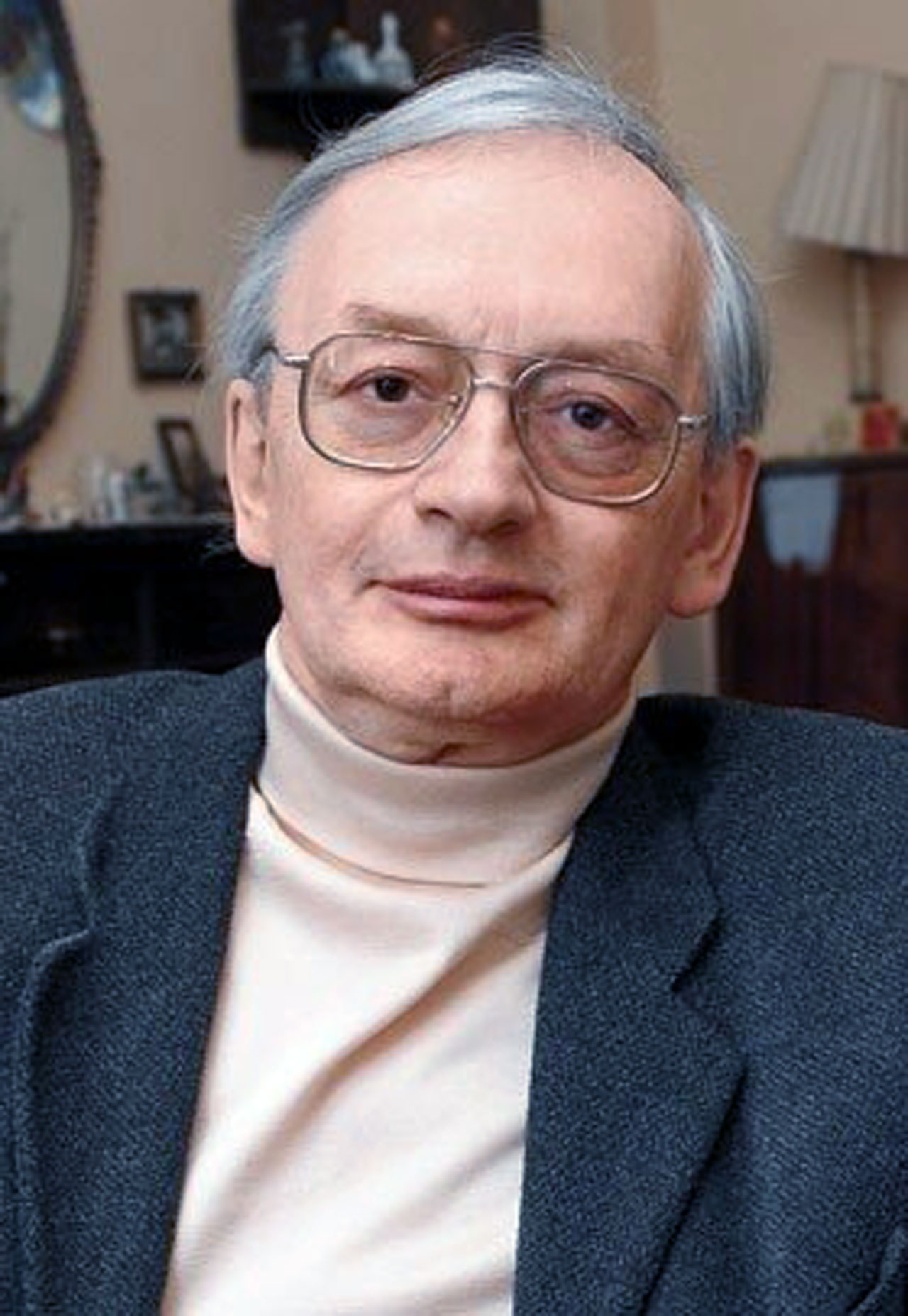
I’m very sorry, especially just before Christmas, to pass on the news of the death of Russian physicist and cosmologist Alexei Starobinsky who died yesterday (21st December 2023) of complications resulting from Covid-19. I heard this morning, but have been travelling all day and only just found time to write something in appreciation.
Starobinsky was one of the many academic descendants of the great Zeldovich; he did particularly important work on the physics of the early Universe in which field his ideas prefigured the theory that came to be known as cosmic inflation. Although Starobinsky’s seminal (1979) work on this topic was not well known outside the Soviet Union at the time Alan Guth wrote his paper on inflation (1981), it did later gained wider appreciation, and led to numerous awards, including the Gruber Prize in 2013 and the Kavli Prize in 2014 (together with Guth and Andrei Linde).
I do have one rather fond personal memory of Starobinsky, from when we were coincidentally both visiting IUCAA in Pune at the same time back in the Nineties. We ended up going on a shopping trip together during which he revealed himself to be hopeless at the kind of light-hearted haggling that was the norm in the places we visited. He ended up paying way over the odds for everything he bought. He didn’t seem to mind though, and apparently found it all quite amusing. I only met him a few times and didn’t get to know him well at all, but he struck me as a very nice man as well as a fine physicist of the old-school Russian type.
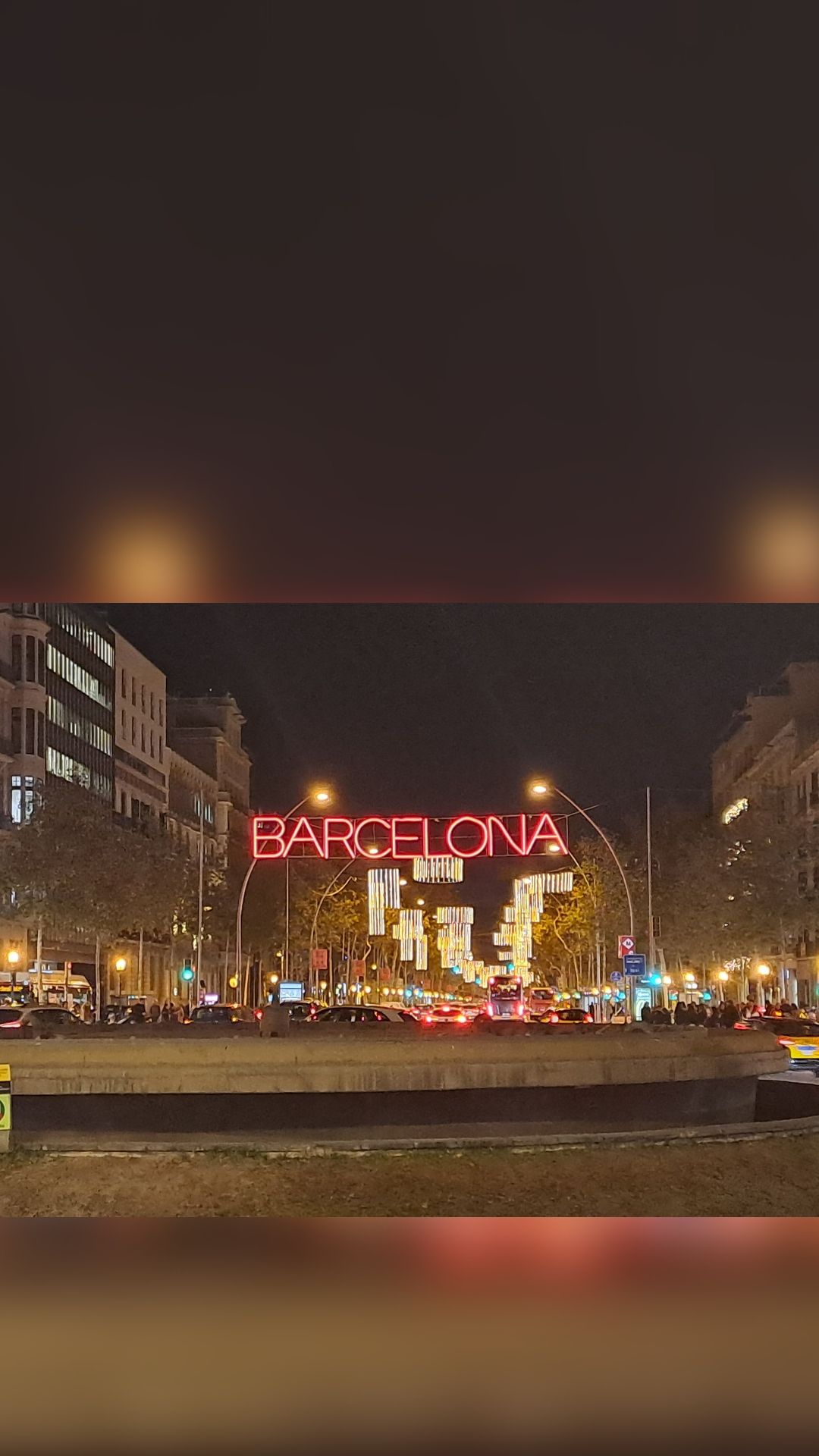
I’m reliably informed that Spanish people don’t really say “hasta la vista” very often, but it seemed an appropriate title. I’m writing this post in the Departure Lounge at Barcelona Airport, having got here in very good time for my flight. Last time I checked in here the check-in staff were so slow that it took two hours to drop my bag at the desk and I only just made it to the gate in time for my flight. This time I arrived three hours ahead of time and it only took about 15 minutes to get processed so now I’ve got ages until I leave.
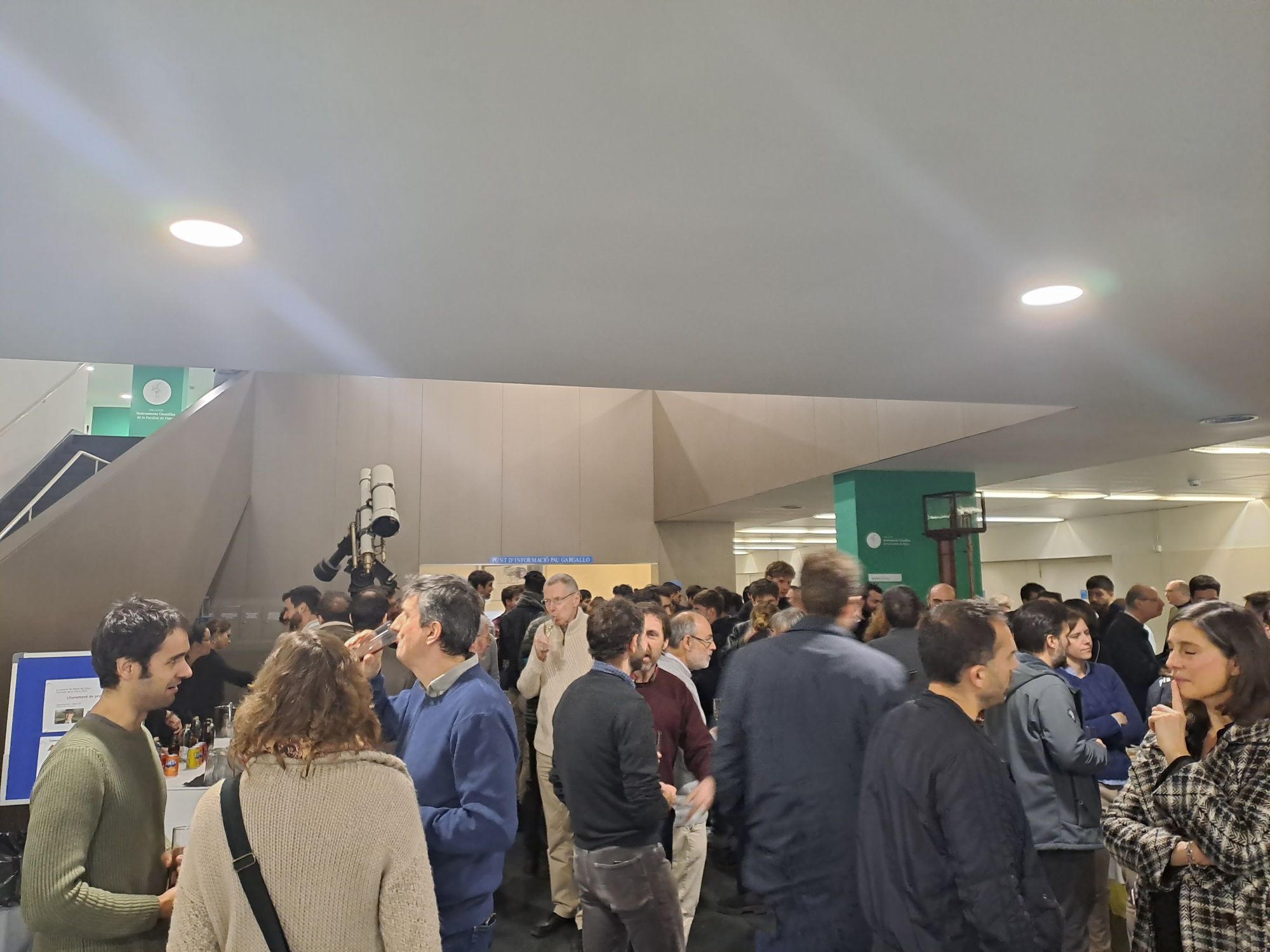
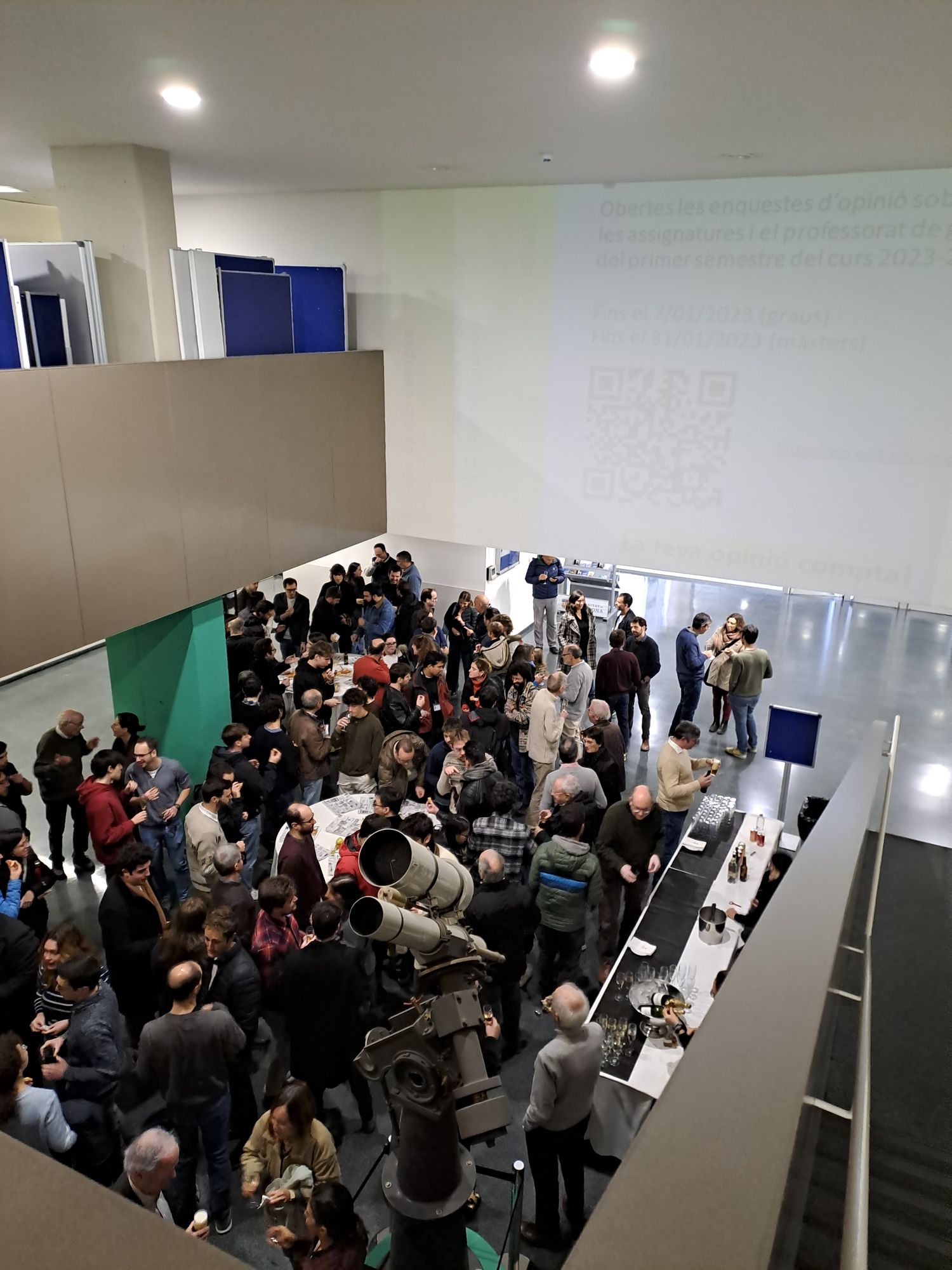
Yesterday, my last day in the office, we had a “Christmas Toast” in the foyer of the Physics Faculty building which consisted of a couple of inaudible speeches, followed by drinks and snacks in the company of a Grubb Telescope, an Atwood Machine, and many physicists.
This morning I said goodbye the flat I’ve been in for most of the past three months. I’ll be back in Barcelona in 2024, of course, but I’ll be in a different apartment when I return. Although my time in Barcelona is not over, I’d like to thank my hosts – especially Licia and Raul – for what has been a very enjoyable stay so far.
I’ll be back!
P.S. The last arXiv mailing before Christmas brought news of the accepted version of a paper for the Open Journal of Astrophysics, so I’ve just made the overlay and published the paper. That means that we finish 2023 with a half-century of articles in Volume 6. Roll on, Volume 7 (2024)!
UPDATE: I arrived safely in not-Barcelona and am looking forward to spend the next couple of weeks very lazily.
Sunlight at dawn on the Winter Solstice at Newgrange
Just a quick note to point out that the Winter Solstice in the Northern hemisphere happens tomorrow, Friday 22nd December 2023, at 4.27 am CET (3.27 UT). I am posting this in advance as although I am will be getting up quite early to catch a flight, it won’t be that early…
People often think that the Winter Solstice is defined to be the “shortest day” or the “longest night” of the year. The Solstice is actually defined in astronomical terms much more precisely than that. It happens when the axial tilt of the Earth away from the Sun is greatest, so that the Sun appears in the sky with its lowest maximum elevation. The timing of this event can be calculated with great precision.
In Barcelona, sunrise today (21st December) is at 8.13 am and sunset at 5.24 pm, while tomorrow the sunrise is at 8.14 am and sunset at 5.25 pm. The Solstice therefore occurs before sunrise tomorrow morning and the interval between sunrise and sunset tomorrow will be very close to that today; the interval between sunrise and sunset on 20th December (yesterday) was four whole seconds longer than on 22nd (today); the shortest day is therefore today rather than tomorrow. Moreover, the Solstice marks neither the latest sunrise nor the earliest sunset: sunrise will carry on getting later until the new year, the length of the day nevertheless increasing because sunset occurs even later. For a full explanation of this, see last year’s Winter Solstice post.
As I have explained before, I left the platform formerly known as Twitter at the end of August 2023 and haven’t looked back. Many of my friends and colleagues have quit too, most of them setting up accounts on Bluesky and/or Mastodon. In recent months, a number of big companies have also stopped advertising on Twitter/X too. The above image is appearing more and more frequently around the world of social media.
It’s not just the systematic amplification of hateful tweets from a variety of antisocial bigots, nor the reinstatement of noxious individuals previously banned for such conduct, nor the deluge of porn bots and other automated gibberish nor the scrapping of virtually all forms of moderation. It’s also that Elon Musk himself has used his own site to endorse explicitly anti-Semitic conspiracy theories. Everyone who puts anything on Twitter nowadays is providing revenue that feeds this maelstrom of hate. How a decent individual can in good conscience remain on that site is beyond me.
But that’s not the point of this post. Virtually every public institution I know – including universities – continues to maintain a presence on Twitter/X for self-promotion despite that platforms deliberate and sustained violation of what purport to be their institutional values. Only a small number of institutions have acted according to their own ethics by quitting Musk’s platform, including the University of Luxembourg. Those still on, including my employer, are, in my opinion, displaying gross hypocrisy.
Why are so many universities still supporting Twitter/X? I suppose it may be because many of them have specifically employed staff to broadcast news about themselves on this platform and without it they’d have nothing to do. That’s not a very good argument, in my opinion. I’m sure other bullshit jobs can be found. Another possibility, of course, is that they just don’t care. Given the prevalence of toxic management in higher education these days, this may well be the real reason.
Any institution worried that there is no viable alternative to Twitter/X should consider setting up on the Fediverse. Dublin Institute for Advanced Studies, for example, already has its own Mastodon instance. The advantage of the Fediverse is that the owners of each server can apply their own policies. I’d like to see a future in which all universities, national agencies, and other public research institutions, set up their own Mastodon instances instead. That would create a very exciting environment for the exchange of news and information which would be a more than adequate replacement for academic Twitter.
You can click on this to make it larger if you find it difficult to read.
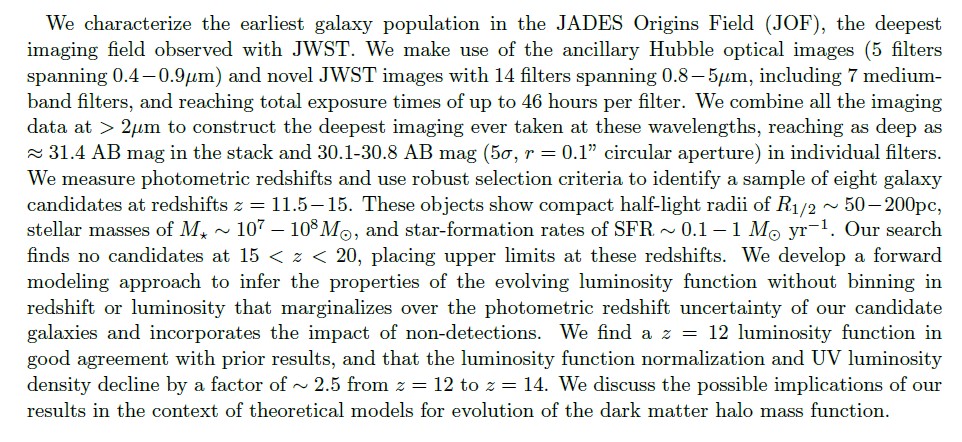
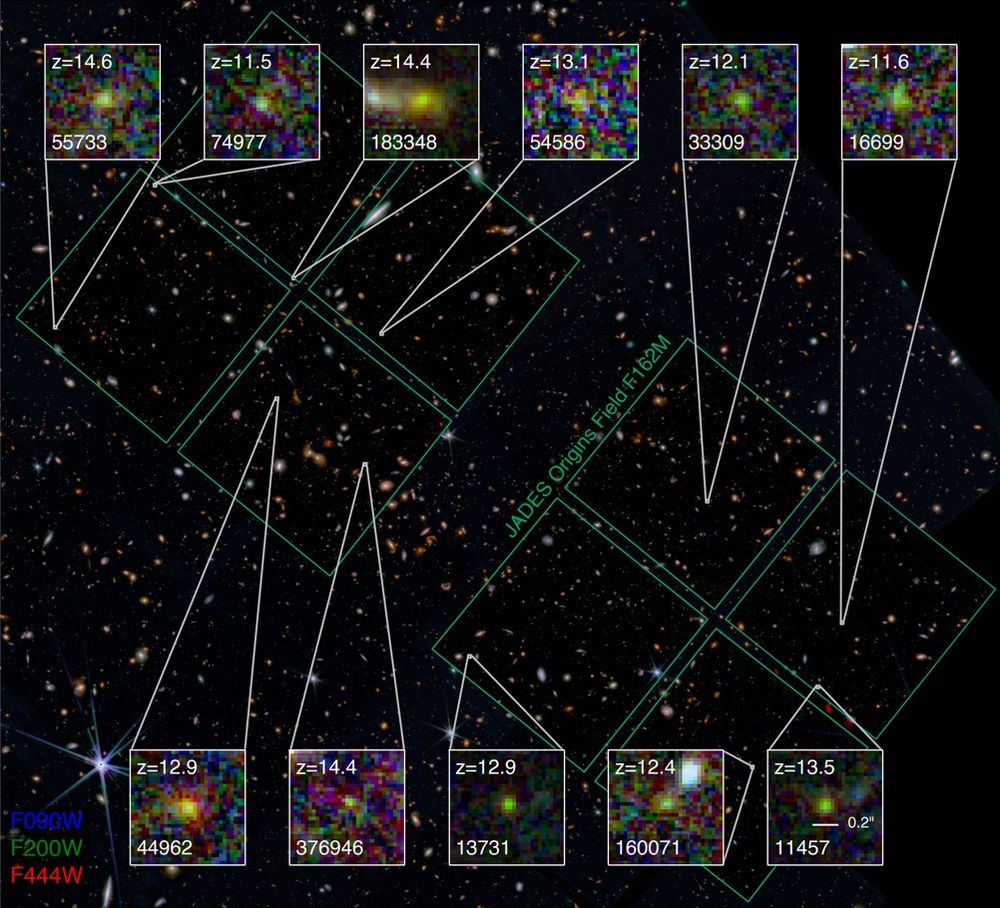
This is the latest in a number of studies by the JWST Advanced Deep Extragalactic Survey (JADES), which is aiming to detect galaxies that formed in the very early Universe; for a previous example see here. The latest batch can be seen in this figure:
There is an important caveat here, which is that these are photometric redshifts, based on the overall shape of the spectrum of the galaxy rather than on spectral lines which give a more accurate result. Follow-up spectroscopy is needed to firmly identify the redshift of the sources. Past experience suggests that some of these candidates may not actually be at as high a redshift as is claimed. If confirmed, however, the existence of large galaxies at redshifts of order 15 will put greater pressure on models of galaxy formation. A recent OJAp publication has shown that galaxies at redshift 10 are consistent with current theoretical ideas, but much larger will increase the tension on theorists. I can imagine quite a few people around the world replotting their graphs right now!
Last week I found out about a new organization called Irish Open Access Publishers whose mission statement is as follows:
Irish Open Access Publishers (IOAP) is a community of practice driven by Irish open access publishers for Irish open access publishers. The IOAP promotes engagement with the Diamond Open Access publishing model (free to publish and free to read) as well as indexing on the Directory of Open Access Journals and the Directory of Open Access Books. The aim of this dynamic community of practice is to promote publishing activity that is free of pay walls and publication embargoes to further the dissemination of high quality scholarly output to all in society.
These aims are laudable and I support them wholeheartedly. I should also mention that the Open Journal of Astrophysics is listed in the Directory of Open Access Journals here, where you will find details of all the papers we have published so far. This index is all part of the service.
The reason I found out about the existence of IOAP is that they are offering a new set of awards, for which nominations are now open:
(Unfortunately the links in the above image are not clickable, but you can the award details here…)
Nominations for the first three categories are by self-nomination only. I will of course, on behalf of Maynooth Academic Publishing, the Editorial Board, the authors, and everyone who has helped behind the scenes, be nominating the Open Journal of Astrophysics.
Nominations for the final category, Outstanding Contribution to the OA Field are described thus:
Category 4 welcomes third party as well as self nominations from academics, students, librarians, research managers, academic leaders, publishers and other stakeholders across further and higher education for an individual who has made an outstanding contribution to open access publishing in Ireland. Nominations from scholarly societies and other scholarly organisations are also welcome. Nominations for individuals based in Northern Ireland are also invited.
Self nominations are restricted to individuals based in Ireland including Northern Ireland. Third party nominations are invited from individuals based in Ireland including Northern Ireland as well as individuals based overseas. All third party nominations must be for individuals practising in the field of open access publishing in Ireland including Northern Ireland solely.
Notice that nominations are not restricted to individuals based in Ireland. So, wherever you are, if you can think of any individual based in Ireland who has done enough to merit being described as having made an “outstanding contribution”, perhaps not only for being a long-term advocate of Diamond Open Access but also for setting up and being Managing Editor of a successful Diamond Open Access journal in the field of astrophysics, then please feel free to nominate me them. I hope you get the message. If you want subtle, you’ve come to the wrong place!
The nomination form is here. The closing date for nominations is 1st February 2024.
As I am still in Spain for a for more days before the Christmas break I thought I would share a vaguely relevant piece of music, Spanish Key from the 1970 album Bitches Brew by Miles Davis. This I don’t have time to write a long piece about this album, but I will say that of all the abrupt changes of musical direction during the career of Miles Davis, this album is probably the most startling and many jazz fans – even ardent admirers of Miles Davis – don’t like it at all. Anyway, des goûts et des couleurs on ne discute pas…
This track is particularly interesting to me because I’ve long wondered about the title and the musical structure. I’m not at all sure, but it seems likely to me that the title indicates the relationship of this piece to the track Flamenco Sketches from the classic album Kind of Blue recorded over a decade earlier. In that album, Miles was experimenting with jazz based not on traditional keys and scales, but on modes. In Flamenco Sketches there is a section based on a major phrygian mode which is commonly used in flamenco music. Spanish Key is in a very different style – much faster for one thing – but it has a similar pattern involving changes from E to D to D (phrygian) to E (phrygian) and G (mixolydian). Apparently Miles gave minimal instruction to his musicians about what to play, but did have prearranged signals to shift from one mode to another, such as happens about 3:15 in the recording when he ushers in a guitar solo by John McLaughlin, and around 12:46 when the mood abruptly changes as Miles introduces a new theme. I also think it was a stroke of genius to include a bass clarinet on this album; on this track it adds a Moorish element to the Spanish tinge.
Anyway, there’s so much going on in this track that it’s more instructive to listen to it than write about it, so here you are. Enjoy!
The views presented here are personal and not necessarily those of my employer (or anyone else for that matter).
Feel free to comment on any of the posts on this blog but comments may be moderated; anonymous comments and any considered by me to be vexatious and/or abusive and/or defamatory will not be accepted. I do not necessarily endorse, support, sanction, encourage, verify or agree with the opinions or statements of any information or other content in the comments on this site and do not in any way guarantee their accuracy or reliability.