I may be away at a conference, but it’s still time to announce yet another new paper at the Open Journal of Astrophysics. This one was published on Monday 19th June.
The latest paper is the 20th so far in Volume 6 (2023) and the 85th in all, so with still more than half of 2023 remaining and many papers still in the pipeline, we’re on track to reach a total of 100 papers by the end of 2023!
The primary classification for this paper is Cosmology and Nongalactic Astrophysics and its title is “Sparse Bayesian mass-mapping using trans-dimensional MCMC”. The paper describes a new trans-dimensional Markov Chain Monte Carlo sampler for mass-mapping, using wavelets, for the construction of mass maps from weak gravitational lensing which, as I’ve previously mentioned on this blog, is what the cool kids do these days.
The authors are: Augustin Marignier, Thomas D. Kitching & Jason D. McEwen (MSSL, Mullard Space Science Laboratory), Ana M. G. Ferreira (Department of Earth Sciences), all at University College London.
Here is a screen grab of the overlay which includes the abstract:
You can click on the image of the overlay to make it larger should you wish to do so. You can find the officially accepted version of the paper on the arXiv here.
Posted in Uncategorized on June 21, 2023 by telescoper
The Summer Solstice in the Northern hemisphere takes place later today, Wednesday21st June 2022, at 15.58 Irish Time (14.58 UTC) or 16.58 local time here in Copenhagen.
Among other things, this means that today is the longest day of the year around these parts. Incidentally, the latitude of Copenhagen is 55.6761° N, which is a little bit South of Edinburgh. I had thought it was further North, but I was wrong.
According to this website, the interval between sunrise and sunset in Copenhagen today will be 17 hours 32 minutes and 18 seconds. which is 5 seconds longer than yesterday while tomorrow will be two whole seconds shorter than that.
It’s all downhill from now on.
In the Northern hemisphere, days will get shorter from tomorrow until the Winter Solstice in December, although this does not mean that sunset will necessarily happen earlier on 22nd than it does tomorrow. In fact it is a little later. Nor does it mean that sunrise will happen later tomorrow; in fact it is a little earlier.
This arises because there is a difference between mean solar time (measured by clocks) and apparent solar time (defined by the position of the Sun in the sky), so that a solar day does not always last exactly 24 hours. A description of apparent and mean time was given by Nevil Maskelyne in the Nautical Almanac for 1767:
Apparent Time is that deduced immediately from the Sun, whether from the Observation of his passing the Meridian, or from his observed Rising or Setting. This Time is different from that shewn by Clocks and Watches well regulated at Land, which is called equated or mean Time.
The discrepancy between mean time and apparent time arises because of the Earth’s axial tilt and the fact that it travels around the Sun in an elliptical orbit in which its orbital speed varies with time of year (being faster at perihelion than at aphelion).
Anyway, here’s a picture of four sixty-somethings – myself, John Peacock, Per Lilje and Ofer Lahav – on our way to dinner last night (including a toast to the memory of Nick Kaiser)
Picture courtesy of Ofer Lahav
The building in the background is Københavns Domhus (the Copenhagen Court House). The restaurant we went to, Puk, is highly recommended.
Quick update from the Euclid Consortium confirming that the launch will take place on Saturday 1st July 2023, at 1612 Irish Time (GMT+1):
If for some reason (such as weather) the launch cannot take place at 11.12 precisely it will be delayed for 24 hours and then launched the next day, 2nd July, at the same time. I’m told that thunderstorms are quite common at Cape Canaveral at this time of year so there may well be such a delay.
P.S. When the Euclid mission was accepted by ESA, over a decade ago, the launch date was envisaged to be in 2020, so it is about three years late.
I made it to the conference venue (CPH Conference) for this year’s Euclid Consortium Meeting, which is 5 minutes walk from my hotel.
One thing that confused me when I looked at the programme last night was that all the rooms in the conference centre are named after locations in and around the city, e.g. Kastrup, Amager, Vesterbro, etc. For a while I thought the delegates would be running around Copenhagen to find their parallel sessions! Then I realized these were just names of meeting rooms…
The full programme doesn’t start until tomorrow but today I attended a couple of sessions aimed at early career researchers, not because I identify myself as such but because I wanted to listen to questions they asked and the advice given to them, much of which was very sound.
I’m looking forward to tomorrow, especially the plenaries, but first: dinner.
Posted in Uncategorized on June 18, 2023 by telescoper
It’s Sunday morning, I’ve just had breakfast, and shortly I’ll be throwing a few things into a bag and heading off to Dublin Airport on the Hopper Bus which is back running after being suspended for a considerable time owing to the pandemic. It’s by far the most convenient way to get to the Airport from Maynooth. I’m all checked in and ready to go, although my flight is not until this evening and it takes less than an hour to get to the airport. You can put this down to nerves!
I realized last night that this will be the first trip I’ve taken outside the UK/Ireland Common Travel Area since I went to the Euclid Consortium Meeting in Helsinki in June 2019, just over four year ago. I was made Head of Department in 2019 and the pandemic descended on us in March 2020, so I couldn’t have travelled even if I’d had the time (which I didn’t).
After such a big gap I’m very out of practice with all this travelling malarkey so am actually quite nervous, which is ridiculous, especially since I’m going to a familiar destination, Copenhagen, and will only be there for a few days. I had a short panic this morning because I’d forgotten where I’d put my passport after all this time. On the other hand, it’s good to be getting back into the swing of things with a little trip before a much bigger one later in the year.
Anyway, the reason for this trip is this year’s Euclid Consortium Meeting which will be the last before Euclid is launched next month. It promises to be a very exciting event which I can enjoy without the tension of having to do a talk.
There’s a good chance that the actual launch date for Euclid will be announced during this meeting. At the moment, all we know is that it’s between July 1st and July 15th. The announcement of the date will be made 10 days in advance so if it’s early in that two-week window, we will be told next week.
UPDATE: I took an earlier Airport Hopper than I really needed to, in case of traffic delays and/or queues at security, but the bus arrived dead on time at Maynooth and slightly ahead of schedule at the Airport. Then it only took 15 minutes to get through security. Then I found it my flight was delayed on its inbound journey so I ended up having to wait about three hours. I arrived in Copenhagen about an hour later than I’d expected but that’s not too bad really. I was a bit disappointed that I didn’t get full value from my EU passport at arrivals, however, as the “All Passports” booths were a lot less busy than the EU/EEA/ETC ones so I went through one of them as I would have done if I’d been travelling on my British passport. Anyway, the public transport here is very good so I got to my hotel not far from the Central Railway Station very easily. Now I just have to settle in and find out where I have to be tomorrow and when I need to get there!
You may recall that a couple of weeks ago, on the occasion of my birthday, I started a fundraiser for Pieta, which is a charity working to prevent suicide and self-harm. Well, the fundraiser is now closed and I’m very glad to say that the official fundraiser on Facebook reached my target. I know that quite a few more people gave directly to Pieta without going through Facebook so the amount of money raised overall comfortably exceeded the goal. Thank you so much to everyone who made a contribution. I really do appreciate it.
Thinking about Stevie Smith after yesterday’s post I thought I’d post something by her. She liked to put funny little sketches or doodles with some of her more whimsical poems, some of which are very short like this one, which brought a smile to my face so I thought I’d share it.
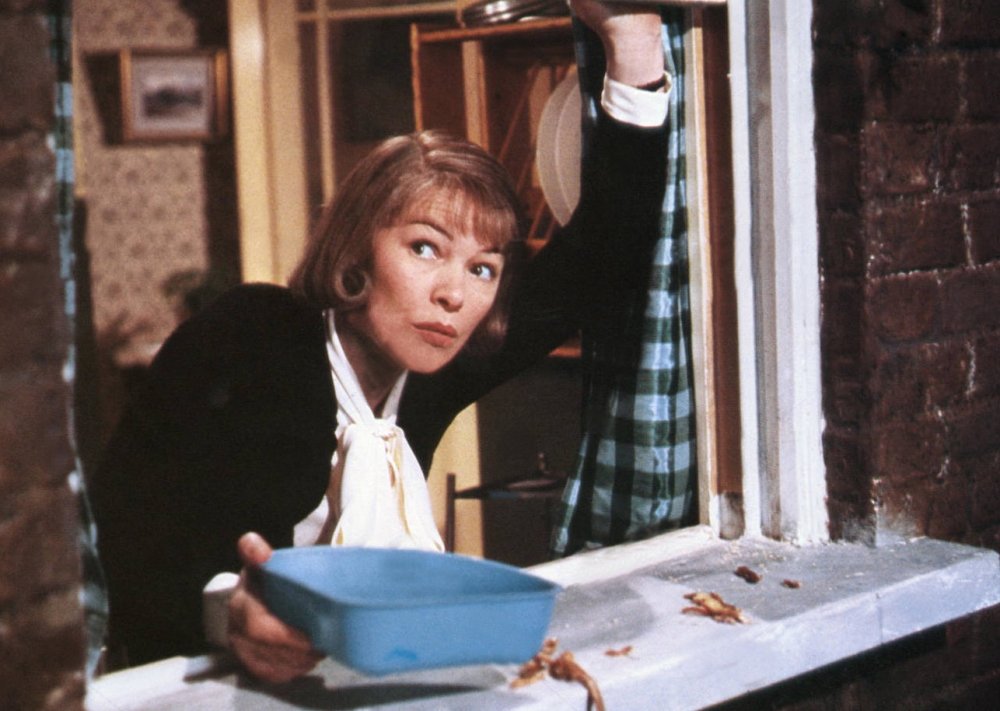
I’ve been writing far too many R.I.P. posts recently, but I had to say something to mark the passing of Glenda Jackson who has died at the age of 87. Glenda Jackson had an illustrious acting career during which she won many awards (including two Oscars) and then turned her hand to politics; she was a Labour Member of Parliament from 1992 to 2015.
Glenda Jackson in Stevie (1978)
The role in which I remember Glenda Jackson best was in the film Stevie (1978) in which she played the poet Stevie Smith, whose poetry I have admired greatly for its dark yet whimsical tone since I was introduced to it while at school. The originality of her voice is the reason I’ve posted some of her poems on this blog from time to time.
Stevie Smith, who died in 1971, made a number of radio broadcasts and, without really trying to impersonate her, I think Glenda Jackson captured perfectly her quirky mixture of wit and melancholia. It was a marvelous performance in what I think is a neglected film masterpiece.
Just a short post passing on the information that we have a fixed-term job available in the Department of Theoretical Physics at Maynooth University. You can find further details here.
The position is for 10 months, starting in September 2023, and is to provide teaching cover for Professor Peter Coles (Who He? Ed.) who will be on sabbatical leave next academic year.
I know it is a relatively short appointment, but it seems to me that it would provide a good opportunity for an early-career academic, perhaps someone straight out of a PhD, to gain some teaching experience.
The deadline for applications is 23.30 on Sunday July 9th and you should apply through the jobs portal here.
Please feel free to pass this on to anyone who may be interested!
P.S. I’m not involved in the recruitment process, just passing this on for information.
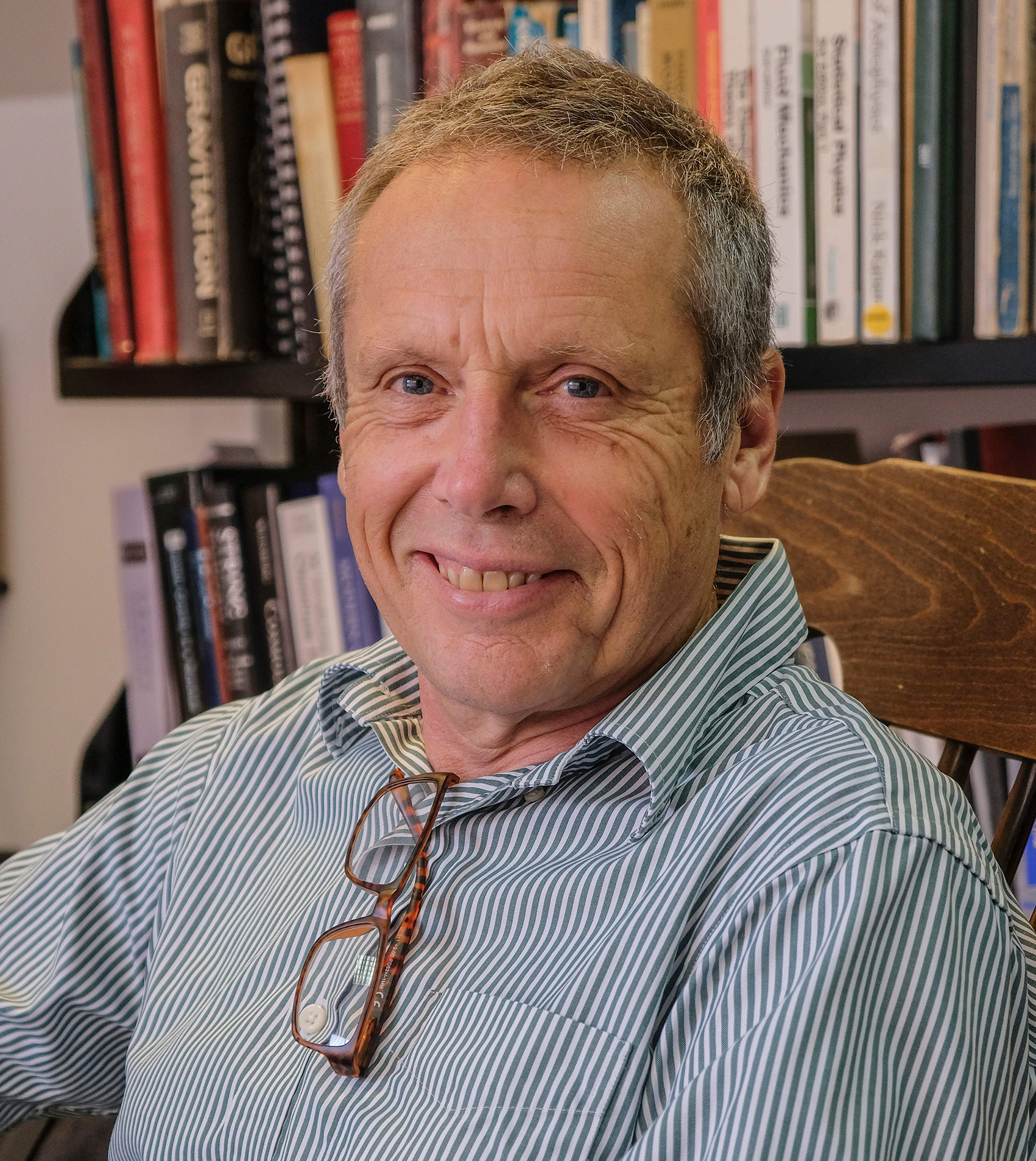
It was with a sense of shock that I heard this afternoon of the death of the age of 68 of cosmologist Nick Kaiser. It seems like only yesterday that we were celebrating the award of the Gruber Prize to Nick, but that was back in 2019. In a field filled with very clever people, Nick was one of the cleverest and also one of the nicest.
I have never worked directly with Nick Kaiser but he had an enormous influence on me, especially early on in my career. When I was doing my PhD, Nick was based in Cambridge and if I remember correctly he was the first person ever to ask me a question during a conference talk when I gave one there in 1987. Nick was never shy about making such interventions, sometimes somewhat mischievously. At first he terrified me because I didn’t know him except by scientific reputation, and didn’t realize what a nice guy he was. His question was actually very helpful, as it allowed me explain something that I’d skipped because I was under time pressure. His response to my explanation was very complimentary and supportive, which encouraged me a lot, and we chatted for quite a while after the session (in a pub). He was very friendly and approachable, and very far from the intimidating character I’d expected. Anyway, his 1984 paper on cluster correlations was the direct motivation for my very first publication (in 1986).
I mentioned yesterday that many of the papers published by the Open Journal of Astrophysics over the last few years have been in the field of weak gravitational lensing. It is safe to say that is a field that was basically created by Nick; see the paper by Kaiser & Squires (1993) that kicked it all off. You could also say the same about the use of redshift-space distortions, concerning which he wrote a seminal paper in 1987. These are two techniques that will be applied in the analysis of data from the Euclid spacecraft, to be launched next month.
These are just a few of things that Nick did. He did many others, always original and always interesting. In recognition of his achievements he was made a Fellow of the Royal Society in 2008, won the Gold Medal of the Royal Astronomical Society in 2017, the Daniel Chalonge and Hector de Vega Medals in 2018, and the Gruber Prize for Astronomy in 2019.
It’s hard to characterize someone of such intellectual breadth, but it always seemed to me that his approach was driven by a very deep physical insight. He was often able to identify what were the fundamental aspects of apparently complicated phenomena and build simple models that captured most of the physics. Using this approach he could penetrate the thickets in which others might get lost. He was perfectly capable of undertaking more complicated calculations to elaborate the details, but he always started by focussing on the basics.
I met Nick many times here and there, usually at conferences. He was always enthusiastic and energetic and entertaining, and was great company to talk to over a drink or several. You always had a good laugh talking to Nick, but you always learnt something too. His son studied in Cardiff some years ago, while I was working there, and Nick sometimes came to visit on the pretext of giving a seminar. I remember once he almost missed his own talk because we were sitting in a pub chatting.
Nick spent recent years in Paris; I remember his presence when I did an online colloquium for the Daniel Chalonge – Hector de Vega School in 2021. He certainly seemed in fine health and good spirits then. Indeed, he gave a talk in the same series that year which you can download here.
Nick’s untimely death is particularly shocking because he was ultra-fit. I think he got hooked on ultra-endurance events while living in Hawaii, as the first Ironman events were held there. Mere marathons were not enough for him. I think I last saw him in person in 2016 during a meeting in Italy. While most of us laboured on the “easy” hiking trails, Nick found them uninteresting and went running off looking for greater challenges.
It still hasn’t really sunk in that Nick has gone. I know I’m not the only one who feels that way. I think the sense of loss will pervade the cosmological community for a considerable time. I send deepest condolences to his family, friends, colleagues and co-workers. He’ll be hugely missed by a huge number of people.
The views presented here are personal and not necessarily those of my employer (or anyone else for that matter).
Feel free to comment on any of the posts on this blog but comments may be moderated; anonymous comments and any considered by me to be vexatious and/or abusive and/or defamatory will not be accepted. I do not necessarily endorse, support, sanction, encourage, verify or agree with the opinions or statements of any information or other content in the comments on this site and do not in any way guarantee their accuracy or reliability.




 In the Dark