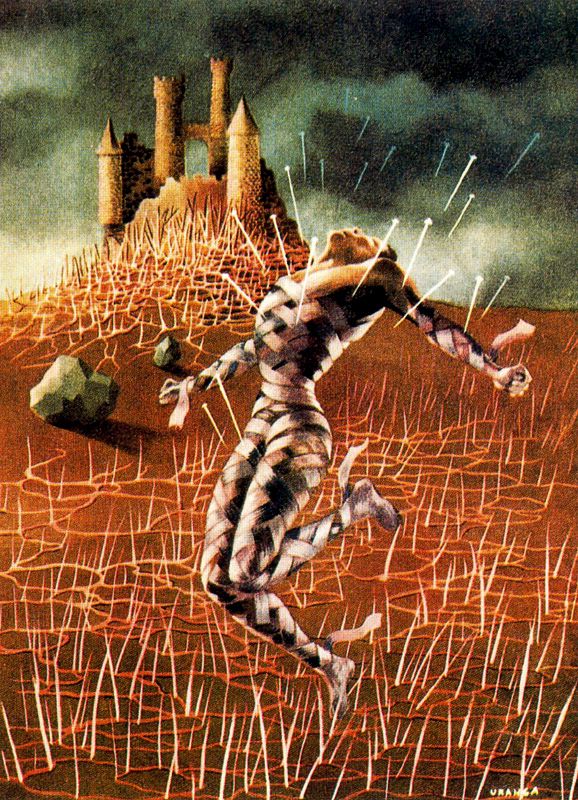
Dolor Reumático II by Remedios Varo, 1948, gouache on cardboard, 25×19 cm.
While the Tory Government on the other side of the Irish Sea appears to be collapsing I’ve trying not to laugh too loud so have distracted myself by updating my Covid-19 page with the latest data for Ireland. The summary figure is this:
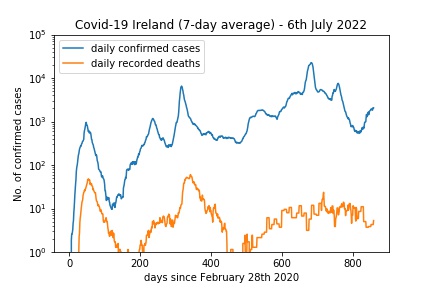
You can see that cases (blue curve) are still rising (up 5.8% on last week) but the increase may just be slowing. I only show PCR-confirmed tests so interpretation of these is complicated by the lack of general PCR testing. The testing positivity rate is 38.5% and there are many more positive antigen tests not confirmed by PCR. There are now over 900 people in hospital with Covid-19 and 37 in intensive care. The mortality rate (orange curve) however remains steady.
I’m a bit concerned that case numbers are so high, especially as there are so few people taking precautions. I know this is purely anecdotal but I do know several people in Maynooth who have come down with fairly nasty doses of Covid-19 in recent weeks. I also know of many people who have travelled to conferences for the first time in a couple of years only to come down with Covid-19 in the process. The high incidence of Covid-19 is causing staff absences elsewhere that are disrupting many organizations and businesses. I do hope we’re not in for another surge before the start of term in September!
Despite all this (and the fact that I have been fairly lax about wearing a face covering myself) I still have not experienced Covid-19. I’ve never had symptoms and never tested positive. Have I just been lucky, or is there more to it than that?
Last week the Government of Ireland announced a new scheme intended to recruit “high-level researchers” to PhD programme in Ireland. The scheme, which is a public-private partnership of around €100 million, will fund around 400 PhD studentships with an annual stipend around €28K, which is substantially higher than the current rate for, e.g., ICR-funded students which is €18.5K.
The call for applications has not yet been issued, so I don’t know how the new scheme will operate. I will, however, comment on the implications for postgraduate landscape in general.
With inflation rampant at the moment, even the IRC level of stipend is difficult for a student to live on (especially in the Greater Dublin area) yet many receive even less than that. Maynooth University, for example, funds many of its PhD students at the paltry level of €10K per annum which is impossible to live on and which forces recipients to undertake large amounts of tutoring or other work in order to get by financially. In my opinion stipends paid at this level are simply exploitative. They exist in order to force PhD students to undertake extensive and poorly paid teaching duties because there aren’t enough teaching faculty to cover what is required. That situation is a direct result of the chronic underfunding of higher education in Ireland. Universities will argue that they don’t have any choice, but that doesn’t make the situation is acceptable.
It is of course good for a research student to get some teaching experience during their PhD but this should be on a voluntary basis. A PhD student who chooses to teach will probably do a better job than one who is forced to do it in order to pay the rent. My basic point, though, is that a full-time research student should be funded to do research full time, and it is grossly unfair to pay them too little for this to be possible.
Apparently the level of the new €28K stipends is “in line with financial supports offered under similar global scholarships”. I take this as a statement that the Irish Government has acknowledged that the proper rate of pay for a PhD student is at this level, which seems to me to be about right. It is howeer about 50% higher than what existing PhD students actually receive. Now it has been explicitly accepted that €28K is the right amount, it seems to me to be logical that all PhD stipends should be increased to this level.
In order to get a place on a PhD course, any student needs to have an excellent undergraduate track-record, so all graduate students are “high-level” researchers however they are funded. This new scheme will create a new tier of higher remuneration for some students, many of whom will be in the same departments and laboratories as others doing exactly the same level of work but at a much lower income with heavy teaching duties to do on top of their research, and who will justifiably feel like second-class citizens. This is unfair and will prove extremely divisive and bad for morale.
I have nothing against the new scheme, but it needs to be accompanied by a drastic “levelling up” (to coin a phrase) across the entire postgraduate system.
P.S. I note that the new scheme costs €100M and will fund 400 PhD students. Maynooth University ran up a surplus of €13.2M during the first year of the pandemic. This is enough to fund about 50 PhD studentships with a 28K stipend. Just saying.
P.P.S. Another difficulty in Ireland not addressed at all by this scheme is at Masters level, where there are currently even fewer funding opportunities than at Doctoral level. Students who want to do a Masters in Ireland usually have to fund themselves whereas they can do one for free – or even get paid! – at other European universities. There is therefore a strong incentive to leave to do a Masters programme.
Time to announce another new publication in the Open Journal of Astrophysics! This one, published on Sunday, is the 8th paper in Volume 5 (2022) and the 56th in all.
The latest publication is entitled “Search for a distance-dependent Baryonic Tully-Fisher Relation at low redshifts” and is written by by Aditi Krishak (IISER-Bhopal, India) and Shantanu Desai (IIT Hyderabad, India).
This paper is in the Cosmology and Nongalactic Astrophysics folder.
Here is a screen grab of the overlay which includes the abstract:
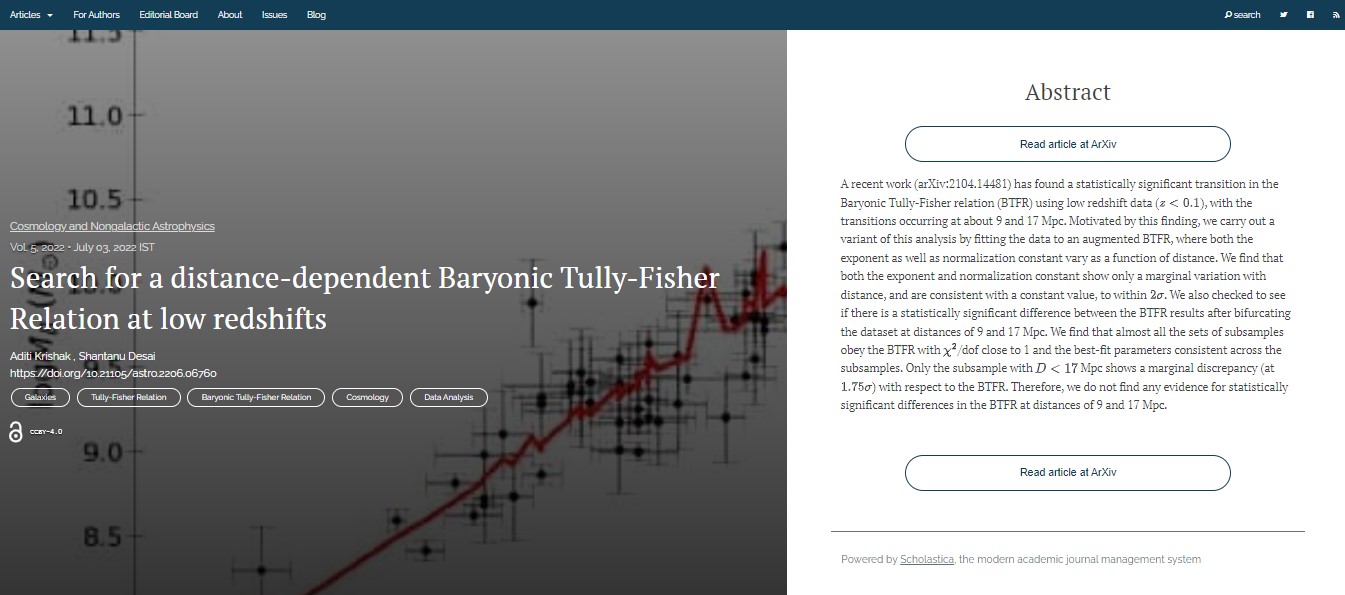
You can click on the image to make it larger should you wish to do so. You can find the arXiv version of the paper here.

I was saddened this morning to hear news of the death at the age of 83 of Jim Bardeen who passed away on June 20th 2022. Jim – the son of John Bardeen, who won two Nobel physics prizes – did important work in theoretical cosmology and general relativity. In my own field of cosmology he is probably best known for his work on perturbation theory where he clarified many longstanding issues about gauge-dependence and as the first author of the famous and heavily cited “BBKS” (Bardeen, Bond, Kaiser & Szalay) paper, published in 1986:
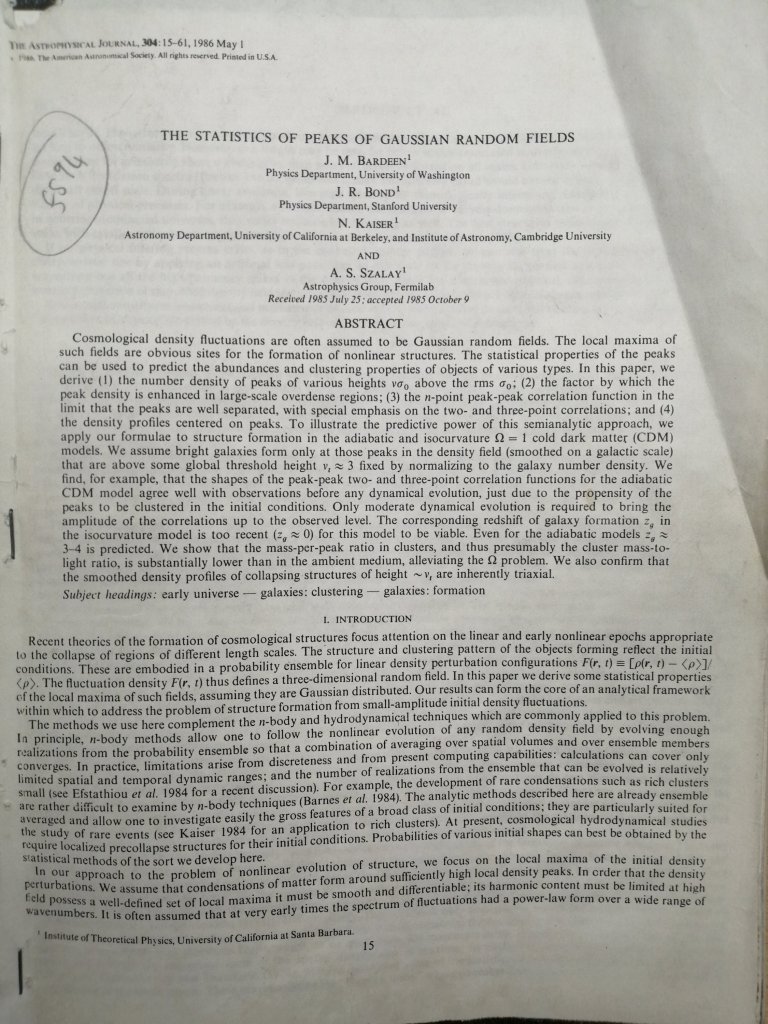
I received this as a very hefty preprint when I started my graduate studies back in 1985 and it scared the hell out of me. I still have the photocopy of the published version I made when it came out (in the days when PhD meant Doctor of Photocopying). You can find the paper on the NASA/ADS system here.
I met Jim Bardeen only once, at an Aspen Summer Workshop back in the 90s. He was a very shy and modest man but very kindly and polite. I remember a couple of times out hiking with him, when a discussion about physics was going on he would keep quiet until he had figured out what he thought and when he did choose to speak it was usually brief and invariably very incisive. He didn’t write all that many papers either, but those he did publish were invariably excellent.
Rest in peace, James Maxwell Bardeen (1939-2022)
Just a quick post to draw your attention to an important paper on arXiv about the Astropy Project, which is community effort to develop a common core package for Astronomy in Python and foster an ecosystem of interoperable astronomy packages. The abstract of the paper is:
The Astropy Project supports and fosters the development of open-source and openly-developed Python packages that provide commonly needed functionality to the astronomical community. A key element of the Astropy Project is the core package astropy, which serves as the foundation for more specialized projects and packages. In this article, we summarize key features in the core package as of the recent major release, version 5.0, and provide major updates for the Project. We then discuss supporting a broader ecosystem of interoperable packages, including connections with several astronomical observatories and missions. We also revisit the future outlook of the Astropy Project and the current status of Learn Astropy. We conclude by raising and discussing the current and future challenges facing the Project.
One of the great advantages of using Python for scientific programming in general and for applications to astrophysics in particular is the existence of extensive software libraries of which Astropy is a prominent example. This is one reason why Python is now the state-of-the-art language in many fields, as exemplified by the following graphic (Figure 1 from the paper) showing the frequency of mentions of various languages in the astronomical literature.

This is on a logarithmic scale so Python is really way out in front.
Most people I know use Python for their scientific programming, and most undergraduate physics courses also use it (including mine at Maynooth). I’m a big fan of the astropy project but it faces many challenges, including funding and management issues. I can’t do much about those but I can encourage users of astropy at least to ensure they acknowledge and cite it properly in their papers, following the instructions here.
I went out to the hazel wood,
Because a fire was in my head,
And cut and peeled a hazel wand,
And hooked a berry to a thread;
And when white moths were on the wing,
And moth-like stars were flickering out,
I dropped the berry in a stream
And caught a little silver trout.
When I had laid it on the floor
I went to blow the fire a-flame,
But something rustled on the floor,
And someone called me by my name:
It had become a glimmering girl
With apple blossom in her hair
Who called me by my name and ran
And faded through the brightening air.
Though I am old with wandering
Through hollow lands and hilly lands,
I will find out where she has gone,
And kiss her lips and take her hands;
And walk among long dappled grass,
And pluck till time and times are done,
The silver apples of the moon,
The golden apples of the sun.
by William Butler Yeats (1865-1939)
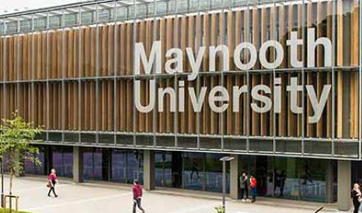
With just a few days to go to the deadline (3rd July), I thought I would take the opportunity to remind readers that Maynooth University has a Chair (i.e. Full Professor) position in Astrophysics or Cosmology under the Strategic Academic Leadership Initiative (SALI). I blogged about this scheme here and announced this Chair position originally here.
You can find the full announcement of the competition for all the SALI positions here; you can apply for the position at Maynooth here. The position is now also advertised on the AAS Jobs Register here.
As I said, the deadline for applications is 3rd July 2022, and the provisional start date is January 2023 (although this is flexible). As well as a good salary (starting at €124,683 at current rates, rising by annual increments to €157,611) the position comes with membership of the Irish public service pension scheme, a defined benefit scheme (comparable to the older version of the UK’s USS which has now been scrapped).
The key rationale for these SALI positions is clear from the statement from Simon Harris, the Minister responsible for Third Level education in Ireland:
“Championing equality and diversity is one of the key goals of my department. The Senior Academic Leadership Initiative (SALI) is an important initiative aimed at advancing gender equality and the representation of women at the highest levels in our higher education institutions.
We have a particular problem with gender balance among the staff in Physics in Maynooth, especially in Theoretical Physics where all the permanent staff are male, and the lack of role models has a clear effect on our ability to encourage more female students to study with us.
The wider strategic case for this Chair revolves around broader developments in the area of astrophysics and cosmology at Maynooth. Currently there are two groups active in research in these areas, one in the Department of Experimental Physics (which is largely focussed on astronomical instrumentation) and the other, in the Department of Theoretical Physics, which is theoretical and computational. We want to promote closer collaboration between these research strands. The idea with the new position is that the holder will nucleate and lead a new research programme in the area between these existing groups as well as getting involved in outreach and public engagement.
It is intended that the position to appeal not only to people undertaking observational programmes using ground-based facilities (e.g. those provided by ESO, which Ireland recently joined), or those exploiting data from space-based experiments, as well as people working on multi-messenger astrophysics, gravitational waves, and so on.
Exciting as this position is in itself, it is part of wider developments and we are expecting to advertise further job opportunities in physics and astronomy very soon! I’d be happy to be contacted by any eligible person wishing to discuss this position (or indeed the general situation in Maynooth) on an informal basis.


This morning I received delivery of a brand new copy of the Third Edition (left) of A First Course in General Relativity by Bernard Schutz. I bought the First edition (right) way back in 1985 when I started out as a graduate student. Not surprisingly there is a lot of additional material in the 3rd edition about gravitational waves, which had not been discovered when the first edition was published. I notice also that Bernard has lost his “F”…
In fact I have known Bernard for quite a long time, most recently as colleagues in the Data Innovation Research Institute in Cardiff. Before that he chaired the Panel that awarded me an SERC Advanced Fellowship in the days before STFC, and even before PPARC, way back in 1993. It just goes to show that even the most eminent scientists do occasionally make mistakes…
Anyway, the arrival of this book is a double coincidence because I’ve been thinking over the last couple of days about starting to organize teaching for next academic year. This isn’t easy as we still don’t know who is going to be available. We’re interviewing tomorrow for one of our vacant positions, actually. Yesterday also the University Bookshop sent out a request for textbooks to stock ahead of next academic year.
I was reflecting on the fact that I’ve been doing research in cosmology and theoretical astrophysics since 1985 and teaching undergraduate and postgraduate students since 1990 but I’ve never taught a course on general relativity. This may or may not change next year when teaching is allocated. There are many textbooks out there but, prompted by the arrival of Bernard’s new book, I was wondering if anyone reading this blog has any other recommendations, suitable for final-year undergraduate theoretical physics students, that might complement it on the reading list for my first course in general relativity, should I happen to give one?
Suggestions, please, through the comments box below!

 In the Dark