Sonnet No. 112

Posted in Poetry with tags , , , , , on September 2, 2025 by telescoper
Your love and pity doth the impression fill
Which vulgar scandal stamp’d upon my brow;
For what care I who calls me well or ill,
So you o’er-green my bad, my good allow?
You are my all the world, and I must strive
To know my shames and praises from your tongue;
None else to me, nor I to none alive,
That my steel’d sense or changes right or wrong.
In so profound abysm I throw all care
Of others’ voices, that my adder’s sense
To critic and to flatterer stopped are.
Mark how with my neglect I do dispense:
You are so strongly in my purpose bred
That all the world besides methinks are dead.

by by William Shakespeare (1564-1616)

I find myself returning once again to Shakespeare’s sonnets, especially to the sequence of 126 poems that the poet addressed to a “Fair Youth“. This one is written in quite difficult language (for me) with some obscure words and phrases such as “adder’s sense”, “o’er-green” and “steel’d sense”. It’s almost as if parts of it are written in code. Nevertheless the overall meaning of the poem is clear: it revolves around the beautiful “You are my all the world” in line 5, shining out through the thickets, with “all the world” repeated in the last line for extra effect. The poet is saying that nobody’s opinion of him matters at all except that of his beloved. Know the feeling?

Galaxies and Black Holes in the First Billion Years

Posted in Biographical, The Universe and Stuff with tags , , , , , on September 1, 2025 by telescoper

Trying to catch up on recent developments in galaxy formation? I can heartily recommend an excellent review article on the subject by Richard Ellis which you can find on the arXiv here. The abstract reads:

 I present written notes from three lectures given at the 54th Saas-Fee Advanced Course of the Swiss Society of Astrophysics and Astronomy in January 2025 entitled “Galaxies and Black Holes in the First Billion Years as seen by the JWST”. I focused my lectures on progress in studies of cosmic reionisation, the properties of galaxies in the reionisation era, topics related to the redshift frontier and the search for Population III stars. The lectures were given to graduate students in astrophysics and cover both pedagogical material as well as observational results from the first two and half years of JWST science operations. The pace of discovery with JWST is, of course, rapid and so my lectures discuss long-term goals, analysis methods and their assumptions and limitations in the hope that the underlying material will retain value in the near future. In this written version, the visual material is that presented at Saas-Fee in January 2025 but I have provided updates on progress from the literature up to August 2025. The material is aimed at early career researchers and should not be considered as a scholarly review of the entire JWST literature on high redshift galaxies.

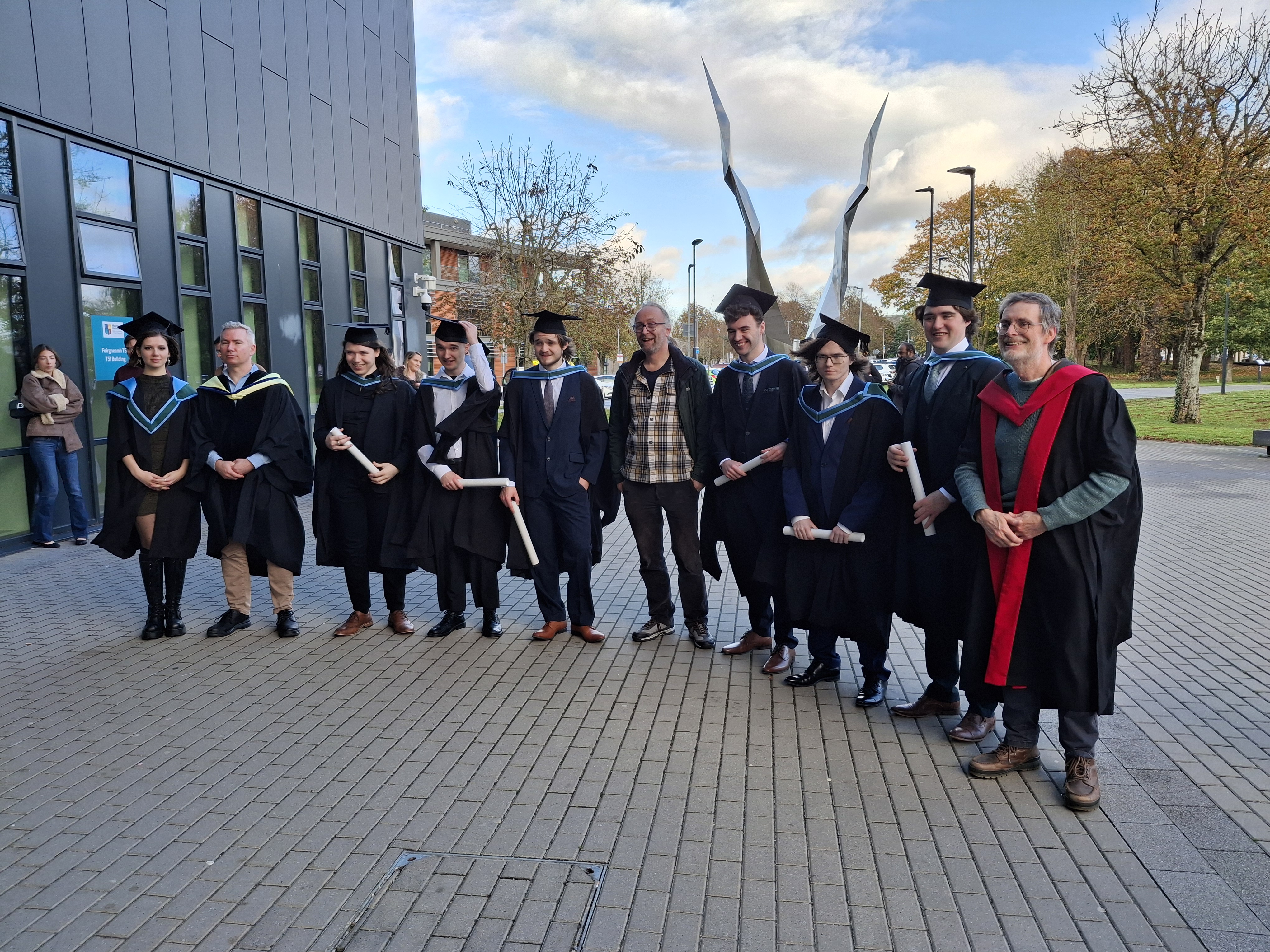
It’s quite a long article (65 pages) but nicely written and well worth reading, as it is full of information about recent advances as well as historical insights. Talking of which, there’s a picture on page 41 taken at a meeting in Durham in 1988 called The Epoch of Galaxy Formation that I attended while I was still a graduate student:

Richard Ellis himself is in the front row, left of centre with light-coloured trousers, checked shirt and hands in pockets. I’m in the picture too, but I’ll leave it up to you to find me!

A poll was held among the delegates at that meeting about various questions to do with galaxy formation. The majority opinions revealed by these votes nearly all turned out to be utterly wrong! That’s progress, I guess…

September in the Rain

Posted in Jazz with tags , , on September 1, 2025 by telescoper

I’ve been seeing the phrase vibe coding bandied about quite a lot these days and it always makes me think of Lionel Hampton. Since it’s now September and it’s raining outside, today it made me think of this recording of Lionel Hampton playing September in the Rain. How’s that for a link?

This track was recorded in Paris in 1953, an LP of which was released in 1956. I have a later issue of it. It features members of Hamp’s band, which was ona European tour at the time, alongside a number of local musicians. For a long time it puzzled me that among the musicians present was clarinettist Mezz Mezzrow whose style didn’t seem to fit. Eventually it was explained to me that Mezzy was the man who could be relied upon to supply appropriate smoking materials. This number however is chiefly Hamp on his own, on vibes (naturally), and frequently accompanying himself on vocals (sort of).

Government of Ireland Postgraduate Scholarships & Postdoctoral Fellowships

Posted in Biographical, Maynooth with tags , , on August 31, 2025 by telescoper
Close Up of Highlighting Specific Word Research in a Dictionary

While I remember, and before I get caught up in start-of-term things, I thought I would pass on news that two calls administered by Research Ireland will open on September 11th. These are the Government of Ireland Postgraduate Scholarships and the Government of Ireland Postdoctoral Fellowships. These are open to applications from candidates anywhere in the world.

You can find information about the Postgraduate Scholarships here and the Postdoctoral Fellowships here. The postdoctoral positions are for one or two years; postgraduate positions are for 2 years (Research Masters) or 4 years (PhD).

The application deadline is 23rd October 2025 and positions of both types are to start on 1st September 2026. You will need to contact possible supervisors at your planned host institute in advance of application so there isn’t much time.

Anyone interested in applying to hold one of these positions in Maynooth is welcome to contact me privately for advice or assistance. Given my rapidly approaching retirement, however, I am not able to act as nominated supervisor for postgraduate positions. I would happily support an applicant for a postdoctoral fellowship in the area of cosmology. There are of course many other potential supervisors both at Maynooth and elsewhere.

It’s That Time of Year Again

Posted in Biographical, Education, Maynooth with tags , , , on August 31, 2025 by telescoper

Today is the last day of August, which, according to my calculations, means that tomorrow is the first day of September. Last week the kids started to go back to school and some of course started for the first time. I think the schools vary in the timetable for new arrivals and returning students, but they’re basically all operating fully from tomorrow, Monday 1st September.

Universities start back a little later, though this also varies. In Maynooth, Orientation Week (for new students) begins on September 15th, and lectures commence for all years on September 22nd, which happens to be the day of the Autumnal Equinox. My first lecture of the new academic year is on that day. I don’t know how many students I’ll have in my class yet. It’s a 4th-year class, and those students don’t register for modules until Friday 12th September, at the end of a week that begins with new students starting to enrol on Monday 8th September.

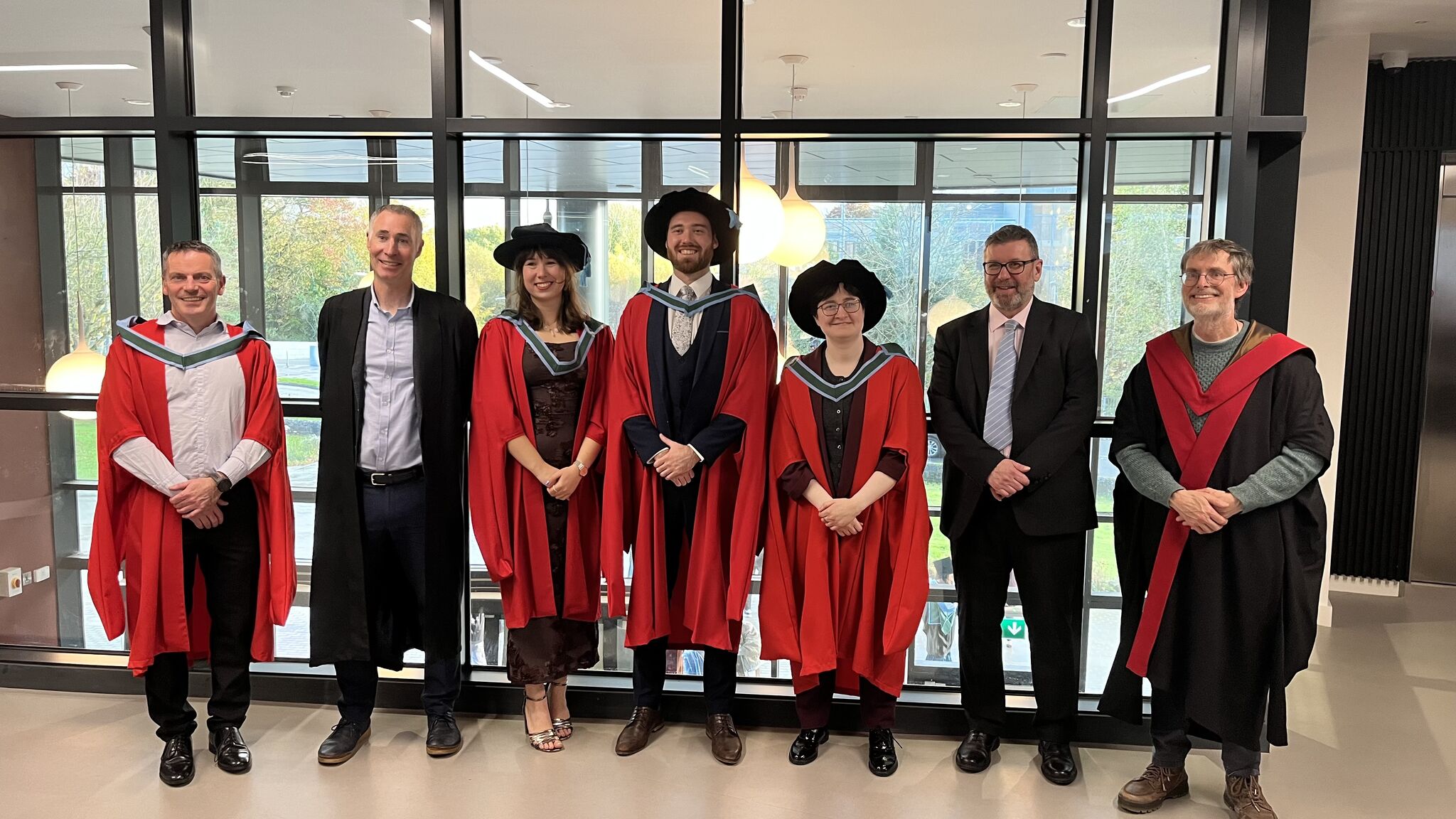
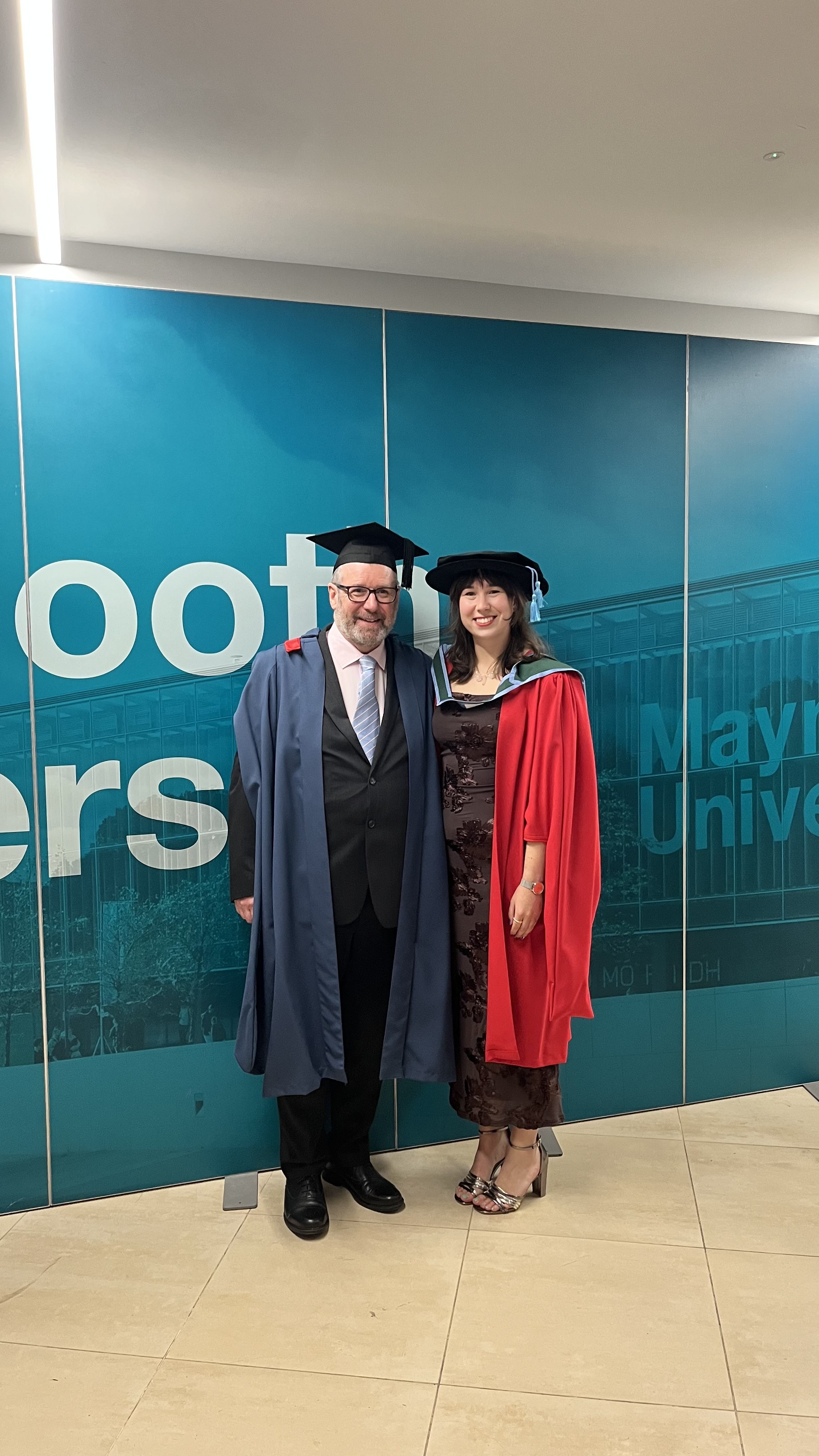
The first week of September will therefore be a bit quieter in the University than in the local schools. Next week sees a number of conferring ceremonies at which students who completed their studies with the examinations in May will receive their degrees. That includes a number of Physics students, who will graduate on Wednesday 3rd September. Unfortunately, when I tried to register to attend the ceremony, a few weeks ago, I was unable to because it was booked up so I’ll have to send my congratulations virtually. In any case, Conferring ceremonies at Maynooth are not what they used to be. Instead of the atmospheric surroundings of the Aula Maxima, they are now held in the soulless environnment of a lecture theatre. Instead of a nice buffet reception afterwards the graduates used to get, they now get a cup of tea in a paper cup and (if they’re lucky) a very small Danish pastry. It’s quite embarrassing actually. I wouldn’t be surprised if, in future, graduands were told to being their own sandwiches and a thermos flask. Anyway, a PhD student of mine will attend a conferring ceremony at the end of October. I’ll have to ensure I register on time for that one as I will be reading out the title of her thesis. Our first cohort of MSc students will graduate then too.

Weekly Update from the Open Journal of Astrophysics – 30/08/2025

Posted in OJAp Papers, Open Access, The Universe and Stuff with tags , , , , , , , , , , , , , , , on August 30, 2025 by telescoper

Once again it’s time for a summary of the week’s new papers at the Open Journal of Astrophysics. Since the last update we have published three new papers, which brings the number in Volume 8 (2025) up to 125, and the total so far published by OJAp up to 360.

The first paper to report this week is “Large-scale surveys of the quasar proximity effect” by Rupert Croft, Patrick Shaw & Ann-Marsha Alexis (Carnegie Mellon University; CMU), Nianyi Chen (Princeton), Yihao Zhou & Tiziana Di Matteo (CMU), Simeon Bird (UC Riverside), Patrick Lachance (CMU), and Yueying Ni (Harvard). This paper was published on Monday 25th August in the folder Cosmology and NonGalactic Astrophysics. It presents a CDM-based halo model of the quasar proximity effect, tested on quasar Lyman-alpha spectra from the ASTRID cosmological simulation, including self-consistent formation of quasar black holes and the intergalactic medium.

The overlay is here:


You can make this larger by clicking on it, as you can with all the overlays below. The officially accepted version of this paper can be found on the arXiv here.

The second paper this week, also published on Monday 25th August, but in the folder Astrophysics of Galaxies, is “Redshift evolution of Lyman continuum escape fraction after JWST” by Andrea Ferrara (Pisa), M. Giavalisco (UMass Amherst), L. Pentericci (Rome), E. Vanzella (Bologna), A. Calabrò (Rome) and M. Llerena (Rome). This paper is about the Attenuation-Free Model (AFM) for galaxies, in which radiation-driven outflows develop once the galaxy specific star formation rate exceeds a certain level, which is tested on data with positive results. The overlay is here:

You can find the officially accepted version on arXiv here.

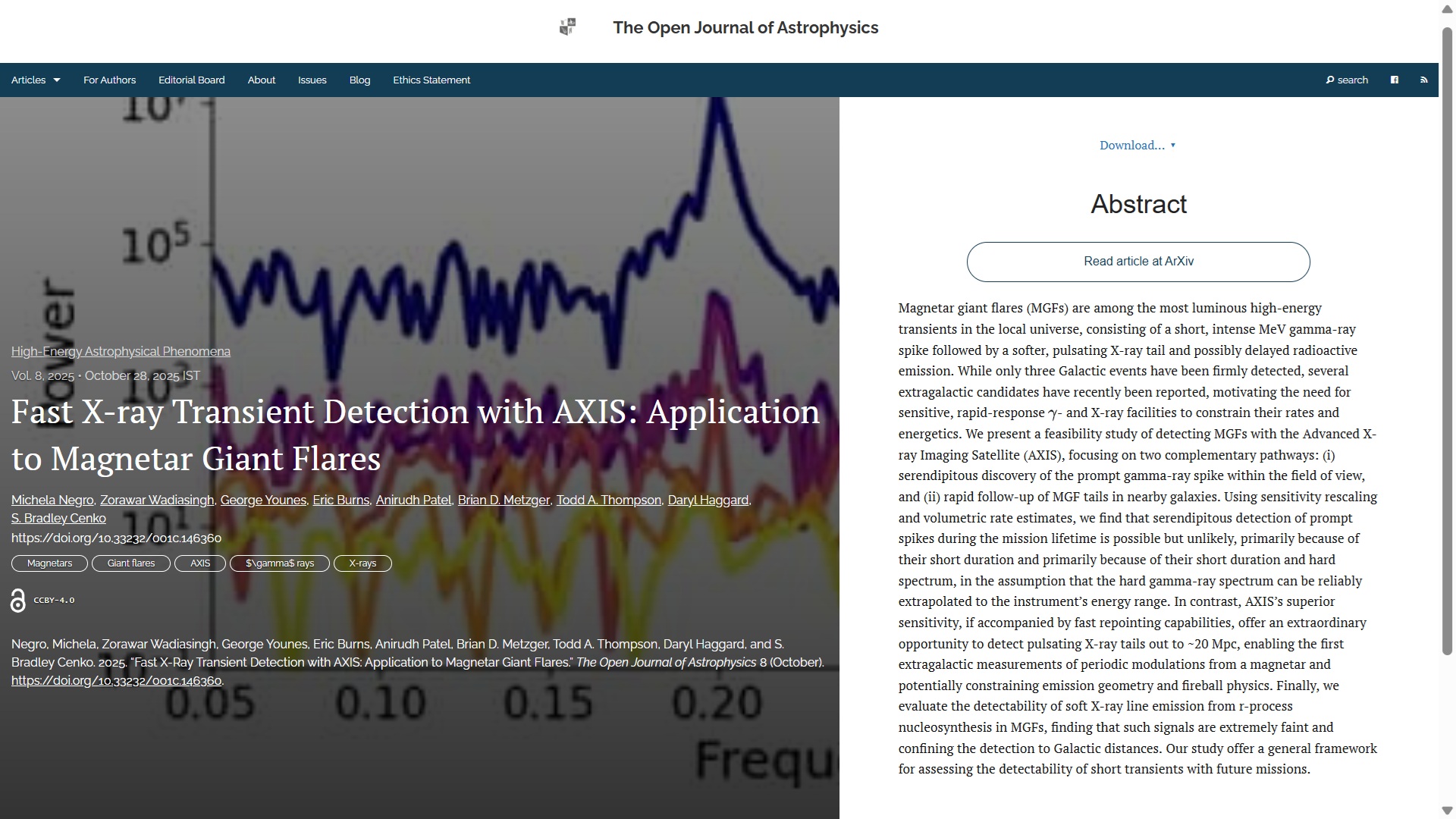
The third and final paper this week is “Primordial black holes in cosmological simulations: growth prospects for supermassive black holes” by Lewis R Prole, John A Regan, Daxal Mehta & Peter Coles (National University of Ireland, Maynooth) and Pratika Dayal (Groningen, NL). This one was published in Astrophysics of Galaxies folder on Thursday 28th August 2025. You can read more about this paper here: basically it studies the growth of primordial black holes in the early Universe using numerical simulations, with implications for the subsequent formation of massive black holes.

The overlay is here:

You can find the officially accepted version of this one on arXiv here.

And that’s all the papers for this week. It’s still a bit slow as we emerge from the summer vacations, but I expect things will start to pick up from now on.

Working for Elsevier…

Posted in Open Access with tags , on August 29, 2025 by telescoper

I found this on Mastodon and, for obvious reasons, couldn’t resist sharing it here:

Primordial Black Holes in Cosmological Simulations – Update

Posted in Maynooth, The Universe and Stuff with tags , , on August 28, 2025 by telescoper

Just time for a quick update about a paper that I posted about at the start of the summer, when it appeared on arXiv. At that time it had already gained a bit of traction in the media, e.g. here. Well, the paper is now published in the Open Journal of Astrophysics. Obviously, as an author I was conflicted so not involved in the editorial process.

Here is the overlay:

For those of you not in the field, there is currently a big mystery about how galaxies we have found at high redshift with JWST managed to acquire massive black holes so early in the Universe’s evolution. Black holes can grow quickly in a dense environment by accreting mass onto an initial seed, but what are the seeds? In this paper we investigate the possibility that they were primordial black holes. These form directly from fluctuations in the early Universe, as opposed to astrophysical black holes which form from stellar collapse. We don’t know exactly what mass primordial black holes would have nor how numerous they would be, but this paper uses high-resolution numerical experiments to investigate their effects if they do exist.

Here’s a pretty picture which is a zoom into 200 pc of the full simulation. I think 10pc counts as high resolution for a cosmological simulation! The blue circle shows the most massive PBH in the simulation, the green circle shows its nearest neighbour. The colour scale represents the number-density of dark matter particles.

For more details, read the paper!

A Day of Offerings

Posted in Education, Maynooth with tags , , , , , , , on August 27, 2025 by telescoper

Today (27th August) is the day that students across Ireland receive offers of places at Third-Level Institutions to start next month. The offers for all courses and all institutions are available on the official CAO website here; they are also widely available elsewhere, including this searchable list.

The official numbers for Maynooth are here. Minimum points required for Maynooth’s – and indeed Ireland’s – most important course, MH206 Theoretical Physics and Mathematics, are 520 this year, up a little from 513 last year. MH204 Physics with Astrophysics is 385, up two points on last year’s 383. MH201 General Science (of which Physics is a part) is on 352 points, up two from 350 last year. Just for comparison, the points for these courses from 10 years ago were: MH206 550; MH204 480; and MH201 435, all significantly higher than this year.

Maynooth’s biggest course (by student numbers) – and indeed the biggest course in Ireland reckoned that way – is the Omnibus Arts programme MH101 which has an entry level this year of just 300 CAO points. Ten years ago it was 390.

It seems the first-round entry points for most courses at Maynooth have not changed dramatically despite the reduction in Leaving Certificate grades this year after several years of artificial inflation over the Covid-19 years. Leaving Certificate results are just one factor in determining the CAO points for a particular course at a particular Institution. Overall the picture is rather complex. Across Ireland, points are up for about 50% of courses and down for about 42%. The CAO points needed for a course is largely a matter of demand versus capacity rather than academic performance. For the last few years Maynooth University has been recruiting more and more students, putting pressure on accommodation, teaching loads and campus space. This strategy will prevent any significant rise in CAO points for the foreseeable future. This is probably happening to some extent across the sector, though Maynooth has a more urgent need for more students: to pay for the legions of new managers it has appointed. Two new €100K managerial jobs have been advertised so far this week…

All this just concerns the first round of offers so things may change significantly over the next week or two. Students now have to decide whether to accept their first-round offer or try to change course. They have until next week to do this. Departments won’t know how many new students they have for a while yet.

Update: Thursday 28th August. Here is the traditional  Irish Times First Round Offers supplement.

Blu Tack Art

Posted in Art, Maynooth with tags , , on August 26, 2025 by telescoper

My attention was drawn today to this scuplture which is currently on display in the Department of Physics at Maynooth University. The artist and subject are unknown (to me) and the work is not dated, but the material is clearly Blu Tack, a putty-like pressure-sensitive adhesive commonly used to attach lightweight objects to walls, doors or other dry surfaces.