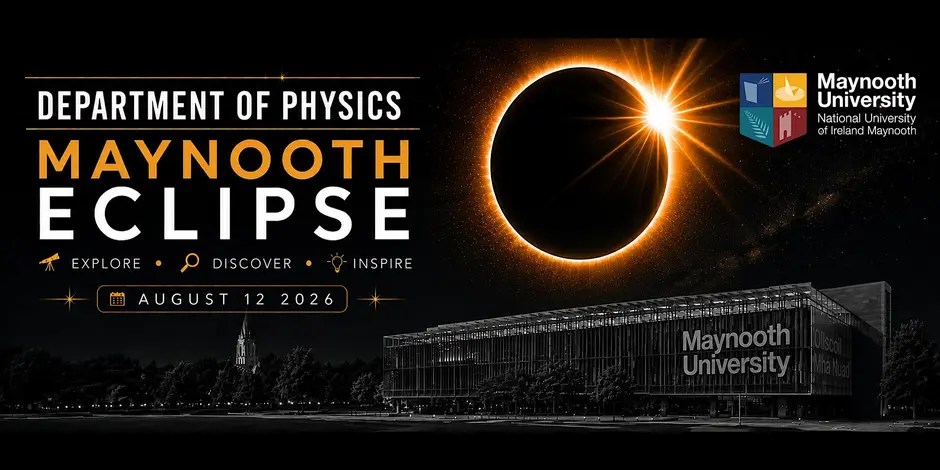
Here’s an invitation to people interested in astronomy to join staff from the Department of Physics at Maynooth University on Wednesday, August 12th 2026 from 5:30 pm to 8:30 pm for a special public celebration of one of the deepest solar eclipses visible from Ireland in decades. The next eclipse with > 90% obscuration of the Sun by the Moon won’t be seen again in Ireland until 2090, by which time I will have retired.
Experience the eclipse safely through:
eclipse viewing glasses
solar telescopes
live astronomy demonstrations
List of Solar Talks during the evening:
Dr. Emma Whelan – The Story of the Sun
Dr. Joshuah Heath – The Quantum Sun
Dr. Marcin Gradziel – (Electric) Power from the Sun. The good, the bad, and the glinty!
Dr. Michelle McCrystall – The star of the show: How the Sun drives our climate
Prof. Peter Coles – Einstein and the Eclipse (Who He? Ed.)
Dr. Patrick Kavanagh – Will our Sun go Supernova?
The evening will also include:
an immersive* astronomy show in our inflatable planetarium
hands-on arts and crafts activities for children
*especially if it rains
Maynooth University Staff can reserve a place here until June 14th, after which booking will be opened to the general public – I’ll repost this invitation with a link at that time.
Today, 1st June, has been (and indeed continues to be for a few hours) the June Bank Holiday (Lá Saoire i mí Mheitheamh) in Ireland. It is the equivalent of the usual May Bank Holiday in the UK in that both have their origin in the old festival of Whitsuntide (or Pentecost) which falls on the 7th Sunday after Easter. Because the date of Easter moves around in the calendar so does Whit Sunday, but it is usually in late May or early June. Pentecost was actually on Sunday 24th May this year. Here in Ireland the Bank Holiday is always on the first Monday in June whereas on the other side of the Irish Sea it is on the last Monday in May. This year the weather was better last Monday, but you can’t have everything.
Although I’m only at beginners’ level in Irish, the phrase Lá Saoire i mí Mheitheamh gives me another chance to bore you about it. It’s actually quite a straightforward phrase until you reach the last word. “Lá” means “day” and “Saoire” means “leave” or “vacation” so “Lá Saoire” means “holiday”; “i” is a prepositional pronoun meaning “in” and “mí” means “month”. So far so good.
The word for June, however, is Meitheamh (at least when it is in the nominative singular case). Irish is an inflected language, which means that words change form according to their grammatical function. As an Indo-European language, Irish is distantly related to Latin which has six grammatical cases for nouns (actually seven if you count the rarely used locative case). Irish has only four cases – there’s no ablative and, curiously, no distinction between nominative and accusative. That leaves nominative, dative, genitive, and vocative. The dative – used after simple prepositions – is only rarely distinct from the nominative so basically the ones you have to learn are the genitive and the vocative.
In Latin cases are indicated by changes to the end of a word, but in Irish they involve initial mutations. In the example of “mí Mheitheamh” meaning “month of June”, requiring the genitive form of “June”, the initial consonant “M” undergoes lenition (softening) to sound more like a “v”. In old Irish texts this would be indicated by a dot over the M but in modern orthography it is indicated by writing an “h” after the consonant. This is called a séimhiú (pronounced “shay-voo” ). Note the softened m in the middle of that word too but it’s not a mutation – it’s just part of the regular spelling of the word, as is the -mh at the end of Meitheamh. There’s also a softened “t” in the middle of Meitheamh which makes it vrtually disappear in pronunciation. Meitheamh is thus pronounced something like “Meh-hiv” whereas “Mheitheamh” is something like “Veh-hiv”.
As well as being Lá Saoire i mí Mheitheamh, today is also the start of Pride Month, so let me take the opportunity to say Bród sona daoibh a chairde!
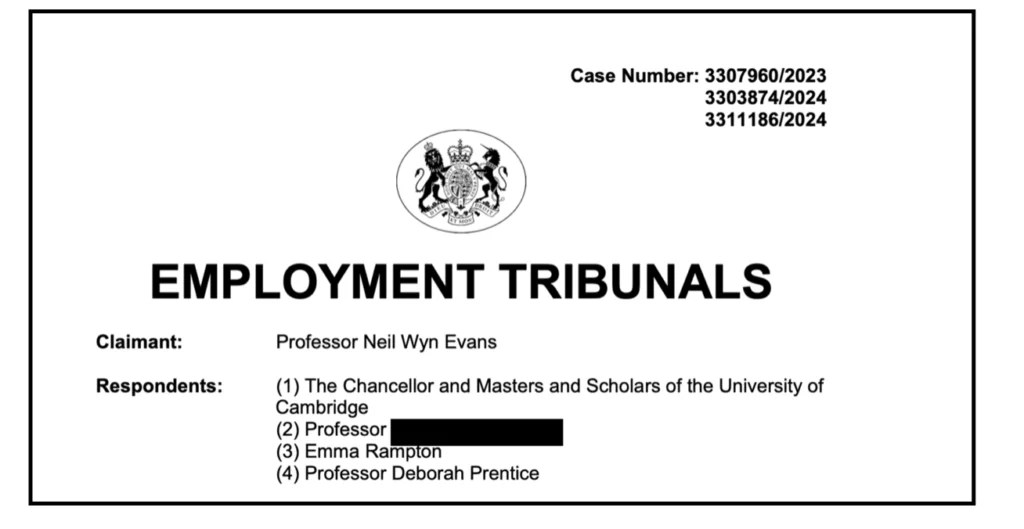
I only have time for a brief post here to point out that today saw the start of an Employment Tribunal in Bury St Edmunds in a case brought by Neil Wyn Evans relating to the Institute of Astronomy at Cambridge University. I gather the proceedings will take up to four weeks. For more details see here, where updates will be provided as the case continues.
I can’t comment further because the matter is sub judice.
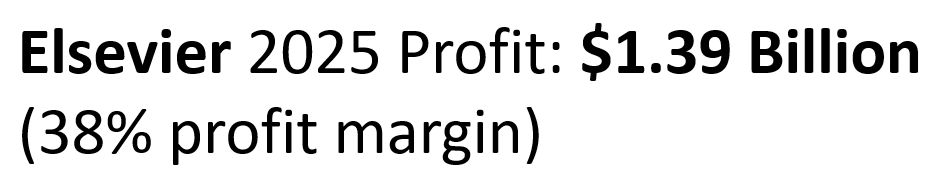
Meanwhile, one of the leading exponents of the Academic Publishing Racket, Elsevier, announced its profits for 2025:
(Taken from here.) That profit margin is higher than all the Big Tech companies. Higher education may be shrinking but Elsevier’s profits are not.
Despite the dire financial straits of universities in the UK and elsewhere, they continue to surrender money to this parasitic industry which is draining institutions of precious resources. I’m not saying that academic journal costs are the sole reason for the current meltdown but it does say something about the lack of imagination of University leaders that they continue wasting money on the “service” provided by commercial publishers like Elsevier.
Many of us have been boycotting Elsevier as individuals for many years, but it clearly isn’t working. Perhaps now University leaders will finally realise that the status quo is unsustainable and cut their institutional ties with the publishing industry for good. It won’t solve all their financial problems, but it’s the right thing to do.
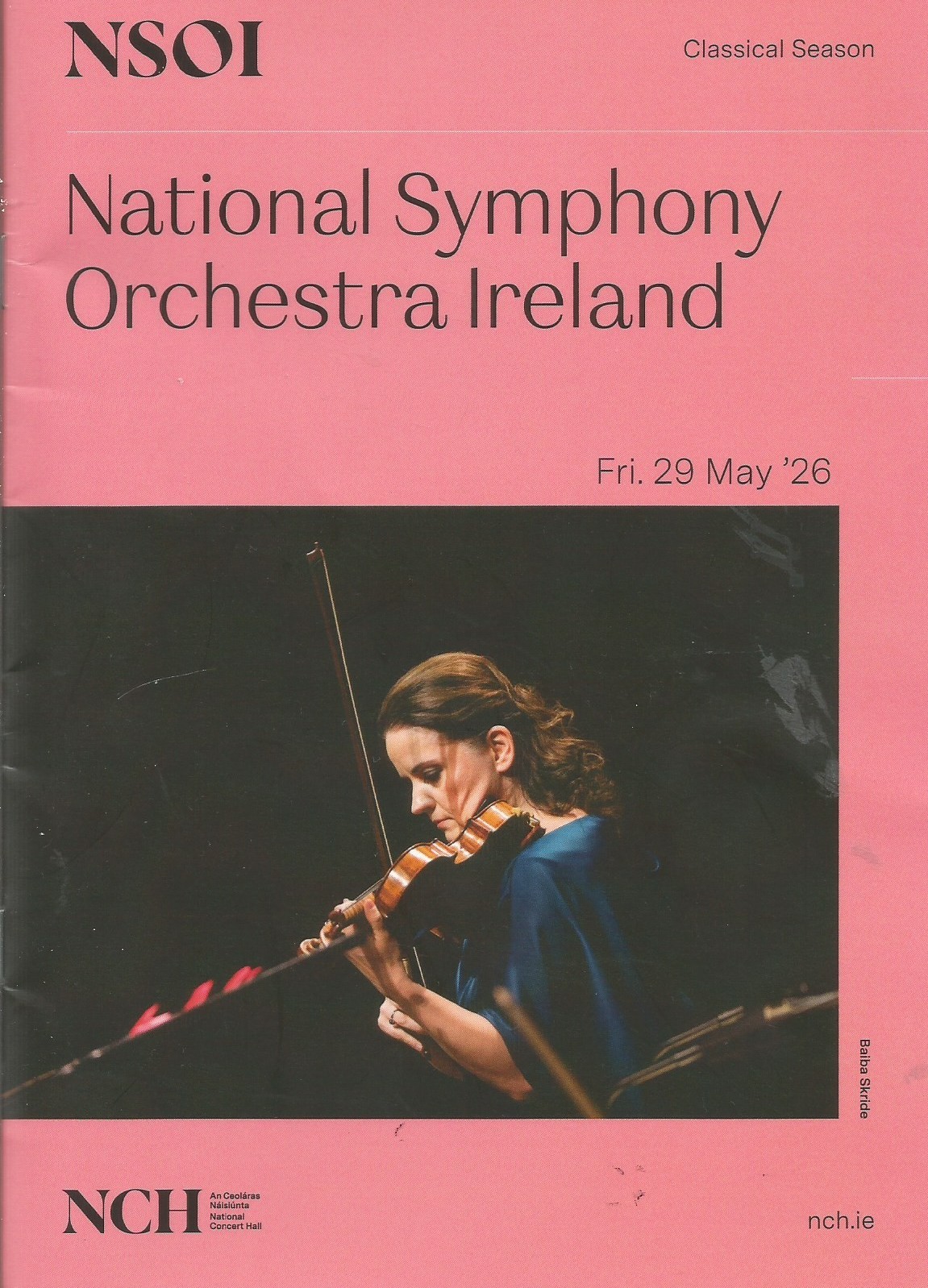
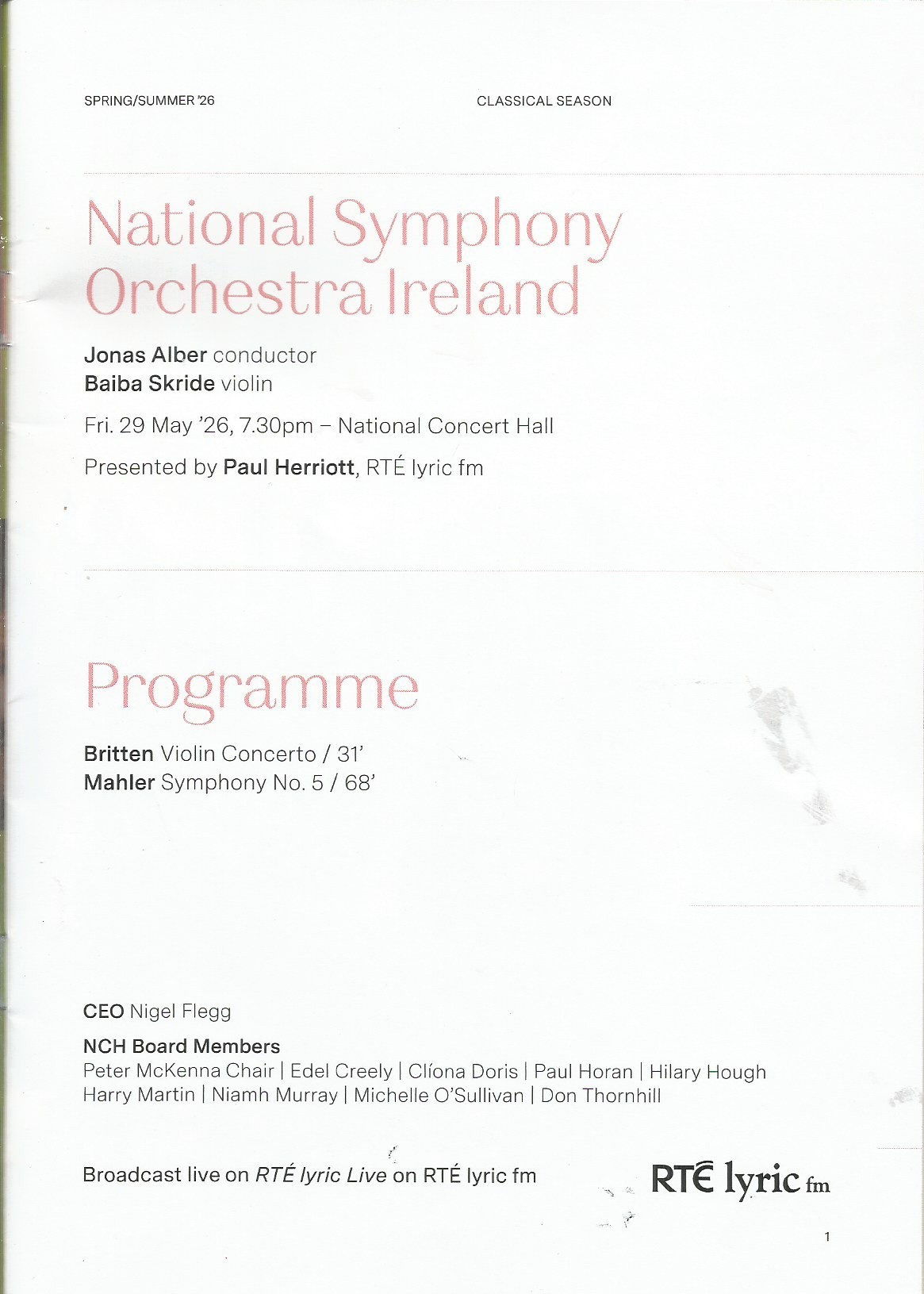
Having finished my exam marking the previous day and with a Bank Holiday weekend ahead, I had a spring in my step as I walked through a sunny Dublin yesterday evening for the season finale of concerts by National Symphony Orchestra Ireland of 2026. The guest conductor for the evening was Jonas Alber. As usual for the closing concert of the season there was a very full house. There were only two items on the menu, but it was a substantial feast, so much so that I only just made it back to Pearse after the concert for the train home!
The first piece was new to me – the Violin Concerto by Benjamin Britten. This was written in 1939 just after Britten moved to the United States. It’s an unusual piece that reminded me very much of Prokofiev, especially the second movement which is a very long scherzo. The third movement involves a Passacaglia (thematic variations played over a repeated bass pattern), rather reminiscent that deployed in the Opera Peter Grimes. Overall its atmosphere is tonally ambiguous, brooding and restless, with uneasy introspection sometimes giving way to sudden outbursts. It’s an absorbing piece which places strong demands on the soloist. Latvian violist Baiba Skride played superbly throughout, taking the feverishly virtuosic cadenzas in her stride.
After the wine break, much needed because of the warm weather we had Mahler’s Fifth Symphony. This work is best known for the 4th movement Adagietto but I’ve always felt that section fits rather uncomfortably with the rest of the composition. That’s not to say that I dislike the Adagietto, which I think is one of the most beautiful movements in all music, and regularly makes me shed a tear. I just think it’s a bit of a detour from the rest of the work. I suppose one should think of it as a sort of intermezzo, a restful interlude before the journey reaches its climax in the 5th movement Rondo which was played with electrifying passion last night.
Mahler’s Fifth Symphony veers across a vast emotional landscape. The conductor Bruno Walter described it as “passionate, wild, pathetic, buoyant, solemn, tender, full of the sentiments of which the human heat is capable, but still ‘only’ music”. Although by no means an atonal work, there isn’t really a clear tonal signature: at least five different keys are used and there are passages in which the key is ambiguous.
The first movement begins with a funeral march, introduced with a solo trumpet statement like a fanfare, followed by lyrical passages from the strings. The second movement is extremely tempestuous, contrasting moods of melancholy and frenzy, with the trumpet theme from the first movement returning. The third movement, a long Scherzo, is unexpectedly playful, with two thematic forms bouncing off each other. Then there’s the soulful longing of the Adagietto, beautifully played last night to a rapt audience and the joyful finale in an unambiguously major key. The Fifth is by no means Mahler’s longest symphonic work but it still lasts well over an hour. So gripping was the performance, however, that I didn’t look at my watch once.
This was a superb concert, with the large orchestral forces marshalled superbly by Jonas Alber. I have to mention the brass section and especially the trumpet of Darren Moore, who was brilliant.
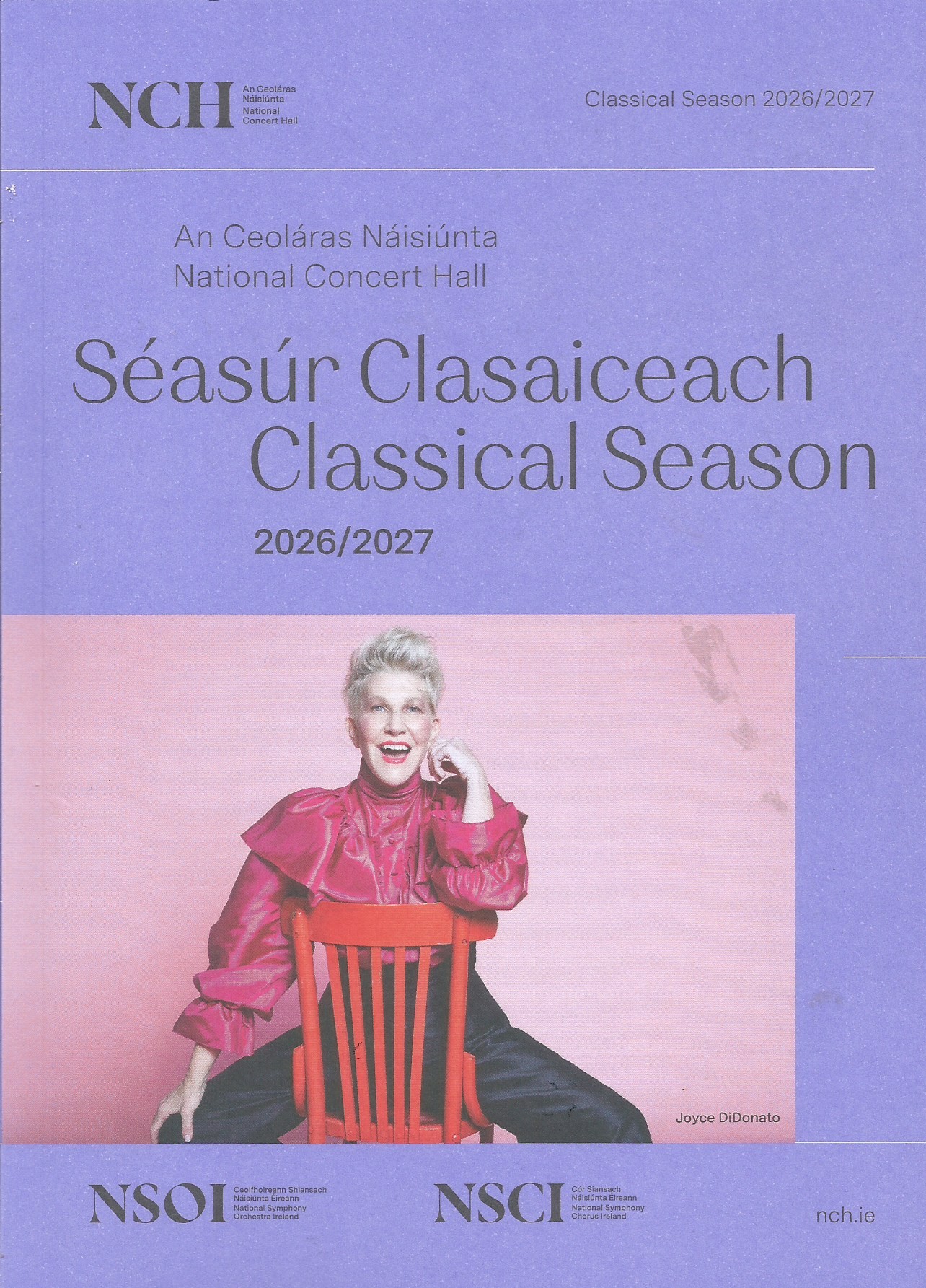
That may be the last concert of the 25/6 season, but the brochure for thr 26/7 season arrived through my letterbox on Friday morning.
There will be other music at the NCH over the summer, but the first of the regular series of Friday concerts will be on September 11th, when it will be Mahler again. Appropriately enough it will be a performance of his Symphony No. 2 “Resurrection”…
It’s Saturday once again, so it’s time for another update of activity at the Open Journal of Astrophysics. Since the last update we have published a further four papers, bringing the number in Volume 9 (2026) to 114 and the total so far published by OJAp up to 562.
I will continue to include the posts made on our Mastodon account (on Fediscience); these announcements also show the DOI for each paper.
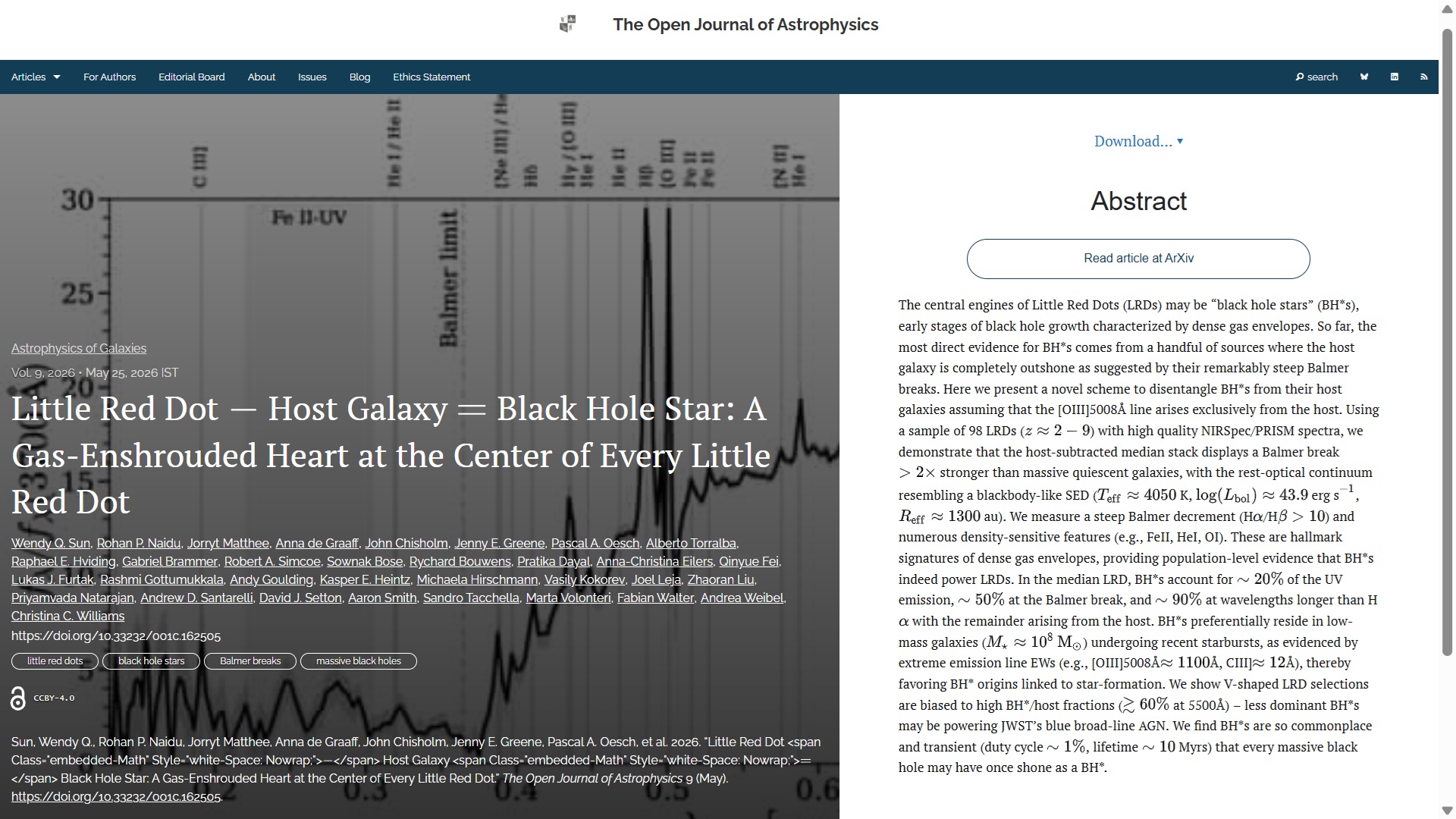
New Publication at the Open Journal of Astrophysics: "Little Red Dot – Host Galaxy = Black Hole Star: A Gas-Enshrouded Heart at the Center of Every Little Red Dot" by Wendy Q. Sun (MIT, USA) and 32 others from around the world.
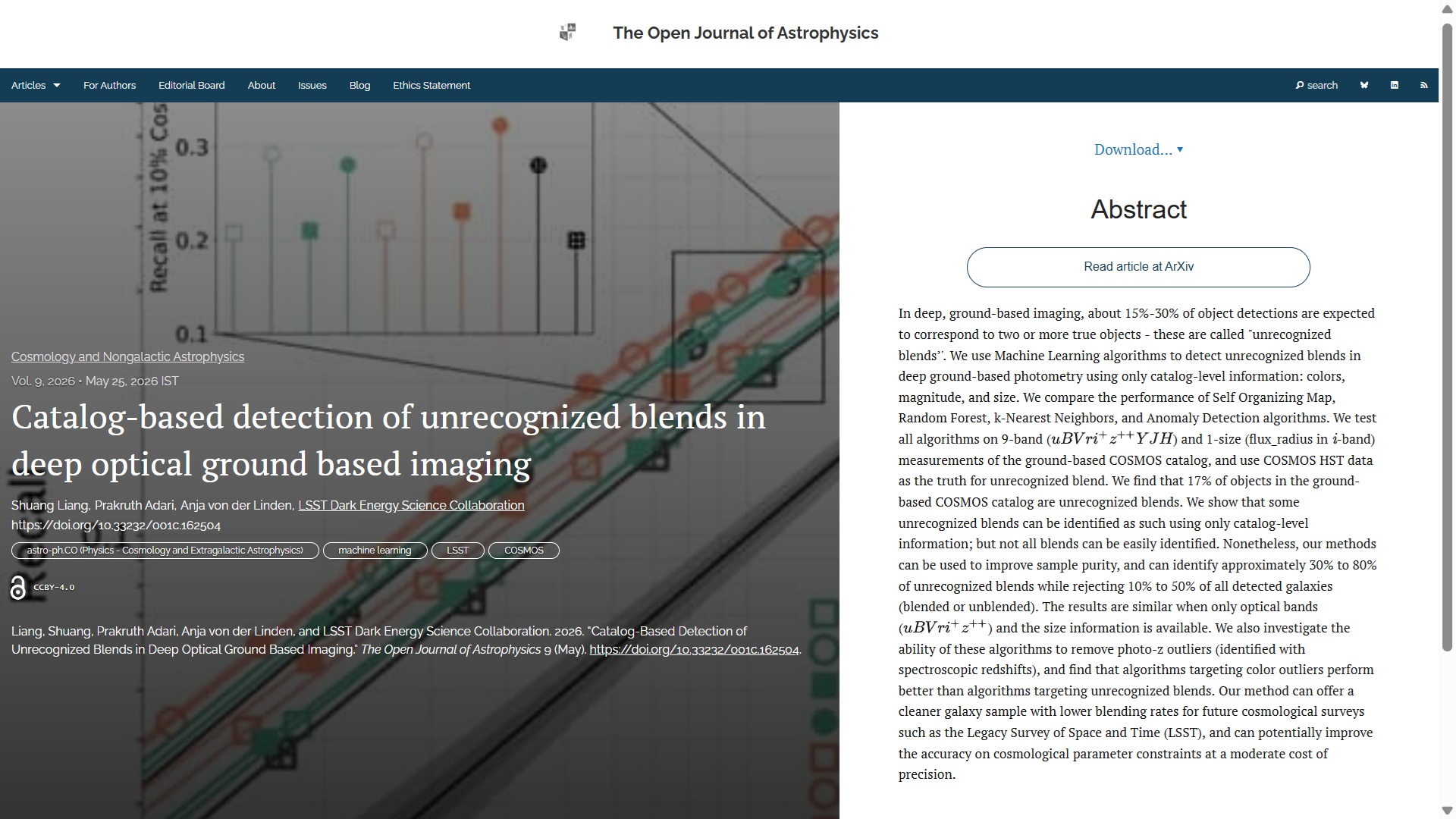
New Publication at the Open Journal of Astrophysics: "Catalog-based detection of unrecognized blends in deep optical ground based imaging" by Shuang Liang (Stanford U., USA) and Prakruth Adari & Anja von der Linden (Stony Brook U., USA) on behalf of the LSST Dark Energy Science Collaboration
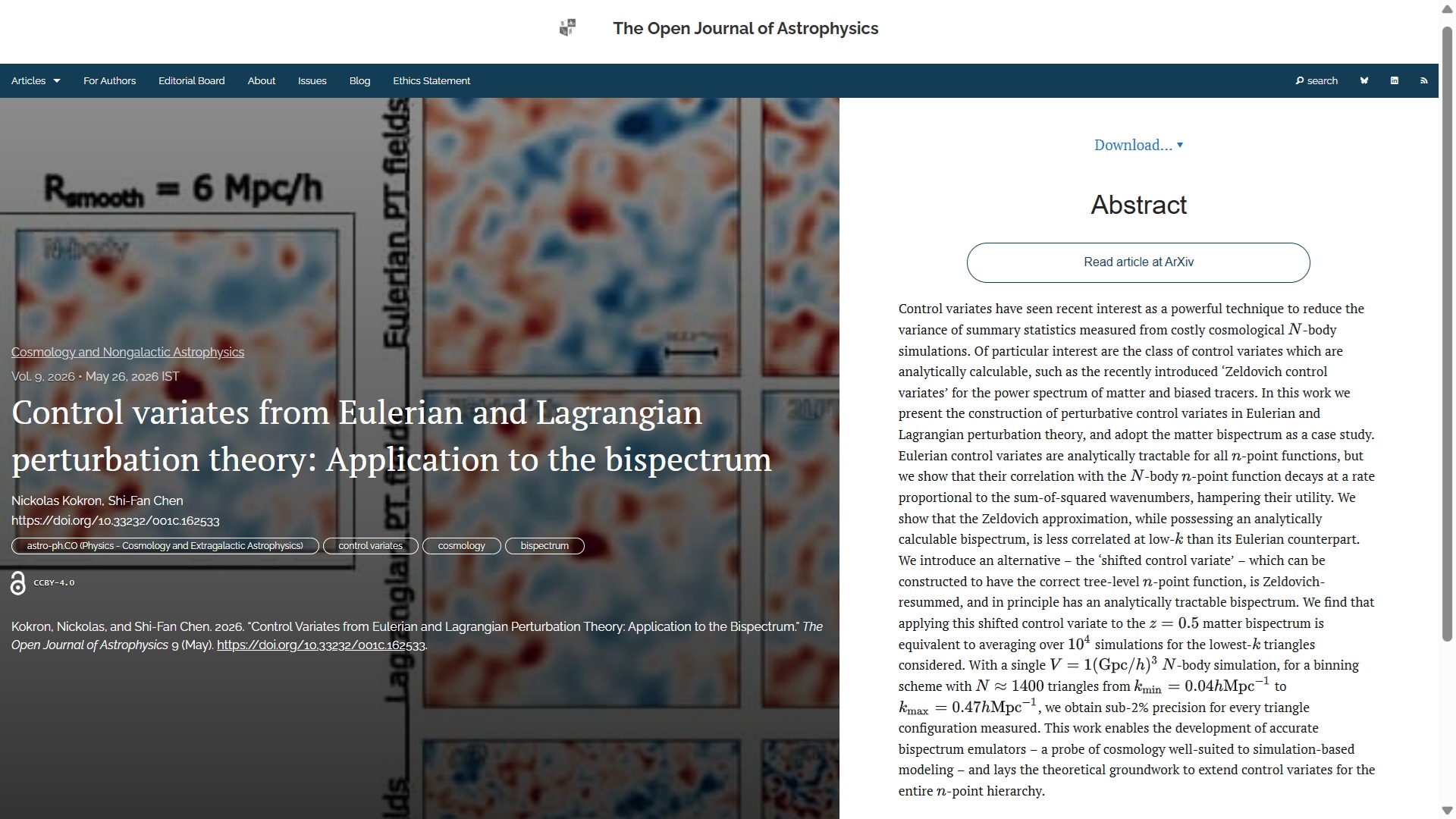
Next one up, the third paper of the week, published on Tuesday 26th May in the folder Cosmology and Nongalactic Astrophysics is “Control variates from Eulerian and Lagrangian perturbation theory: Application to the bispectrum” by Nickolas Kokron and Shi-Fan Chen (Institute for Advanced Study, Princeton, USA). This paper hexplores the use of control variates in cosmological simulations, introducing a new ‘shifted control variate’ that improves precision and enables accurate bispectrum emulators, aiding in cosmology modeling.
The overlay for this one is here:
The final, accepted version can be found on arXiv here and the Mastodon announcement is here:
New Publication at the Open Journal of Astrophysics: "Probing Dark Energy Microphysics with kSZ Tomography" by Julius Adolff, Selim Hotinli and Neal Dalal (Perimeter Institute, Canada)
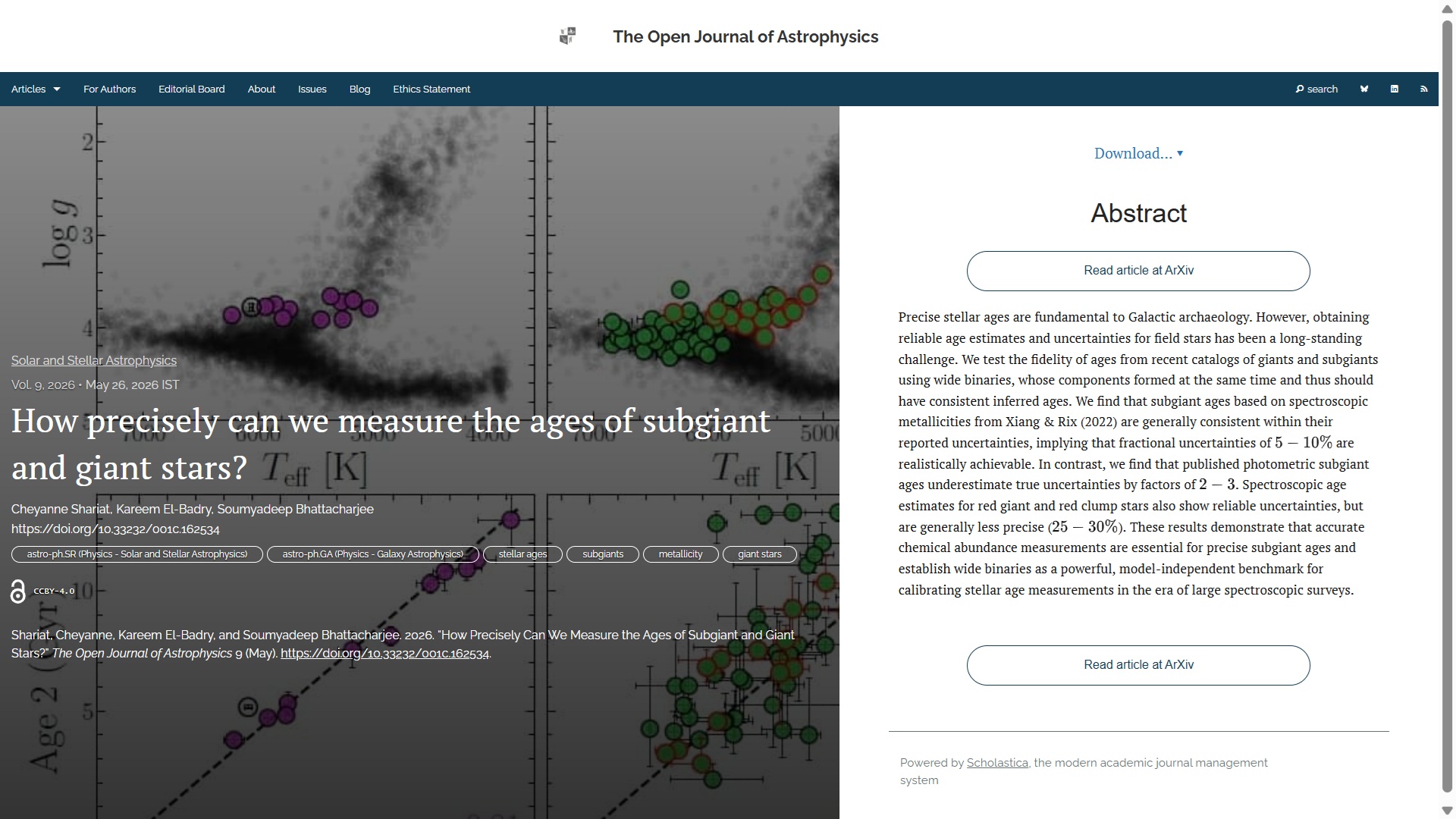
The fourth and final paper this week, also published on Tuesday 26th May is “How precisely can we measure the ages of subgiant and giant stars?” by Cheyanne Shariat, Kareem El-Badry and Soumyadeep Bhattacharjee (California Institute of Technology, USA). This article, published in the folder Solar and Stellar Astrophysics, is about testing the accuracy of stellar age estimates from recent catalogs, finding that spectroscopic metallicities provide reliable subgiant ages, while photometric ages underestimate uncertainties. Accurate chemical abundance measurements are essential.
The overlay is here:
The officially accepted version can be found on arXiv here and here is the Mastodon announcement:
New Publication at the Open Journal of Astrophysics: "How precisely can we measure the ages of subgiant and giant stars?" by Cheyanne Shariat, Kareem El-Badry and Soumyadeep Bhattacharjee (California Institute of Technology, USA)
People keep telling me that Newtonian Mechanics is simple. Here’s a demonstration of the apparently simple Double Pendulum that demonstrates very complicated behaviour.
P.S. I did not make the video – it can be found all over the interrnet. I am sharing it here for the education and entertainment of my readers, both of them.
P.P.S. The music is a track called “Swing Theory”…
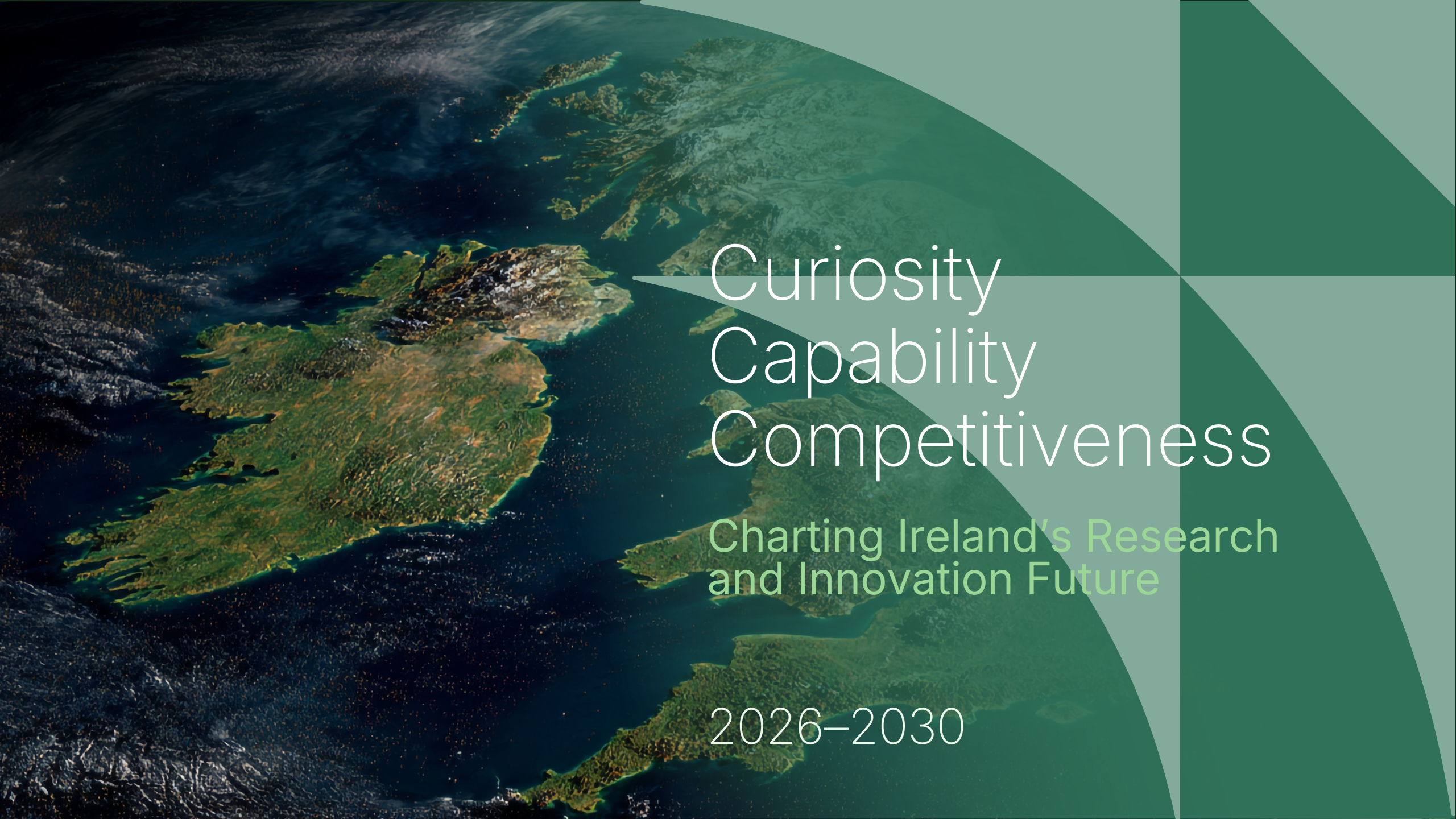
This post is to draw attention of Irish colleagues to an open letter going around about the “Strategy” recently publuished by Research Ireland (Taighde Éireann). I have signed it, as have over a thousand others, including many colleagues at Maynooth University. The opening paragraph of this letter reads:
We, the undersigned, are writing to express deep concern about the priorities within Taighde Éireann – Research Ireland’s recently published 2026-2030 strategy and programme plan that will guide the distribution of over €4.55 billion in public funds over the next five years. The new strategy is structurally, rhetorically and materially focused on commercially translatable research and economic impact rather than supporting bedrock, fundamental, discovery research and research for the public good. The disproportionate focus on industry interests instead of discovery research and the public interest marginalises the Arts, Humanities and Social Sciences (AHSS) and the fundamental sciences, and minimises research for social good and research that is truly innovative and ground-breaking.
You can read the rest of the letter, and also sign it if you are so inclined, here. The letter highlights the downgrading of Arts, Humanities and Social Sciences but is relevant to anyone in any discipline who believes in funding research as a public good, not just a means of channeling funding to the private sector.
When I arrived in Ireland in 2017 the thing that struck me immediately was that funding for basic or fundamental research – especially in the sciences – is extremely poor, and in some areas non-existent. That is still the case now. I was cautiously optimistic when Research Ireland was created from the merger of Science Foundation Ireland and the Irish Research Council, but the general thrust seems to be more of the same. Worse, some of the few valuable programmes (such as those for funding PhD students and postdoctoral researchers) are being completely dismantled.
For what it’s worth, I’ll repeat a view that I have shared previously on many occasions:
… “commercially useful” research should not be funded by the taxpayer through research grants. If it’s going to pay off in the short term it should be funded by private investors, venture capitalists of some sort or perhaps through some form of National Investment Bank. When the public purse is so heavily constrained, it should only be asked to fund those things that can’t in practice be funded any other way. That means long-term, speculative, curiosity driven research.
This is pretty much the opposite of the Research Ireland strategy. It wants to continue concentrating public funds in projects that can demonstrate immediate commercial potential. Taxpayer’s money used in this way ends up in the pockets of entrepreneurs if the research succeeds and, if it doesn’t, the grant has not fulfilled its stated objectives and the funding has therefore, by its own standards, been wasted.
My proposal, therefore, is phase out research grants for groups that want to concentrate on commercially motivated research and replace them with research loans. If the claims they make to secure the advance are justified, they should have no problem repaying the funds from the profits they make from patent income or other forms of exploitation. If not, then they will have to pay back the loan from their own funds (as well as being exposed as bullshit merchants). The loans could be made at very low interest rates and still save a huge amount of the current research budget. I suggest these loans should be repayable in 3-5 years, so in the long term this scheme would be self-financing. I think a large fraction of research in, e.g., the applied sciences and engineering should be funded in this way. I think it is wrong to nationalise the risk only to privatise the profits.
The money saved by replacing grants to commercially driven research groups with loans could be re-invested in those areas where public investment is really needed, such as purely curiosity-driven science. Here grants are needed because the motivation for the research is different. Much of it does, in fact, lead to commercial spin-offs, and when that happens it is a very good thing, but these are likely to appear only in the very long term. But just because this research does not have an immediate commercial benefit does not mean that it has no benefit. For one thing, it is subjects such as Astronomy and Particle Physics that inspire young people to get interested in science in the first place.
You don’t have to agree with this, however, to sign the letter.
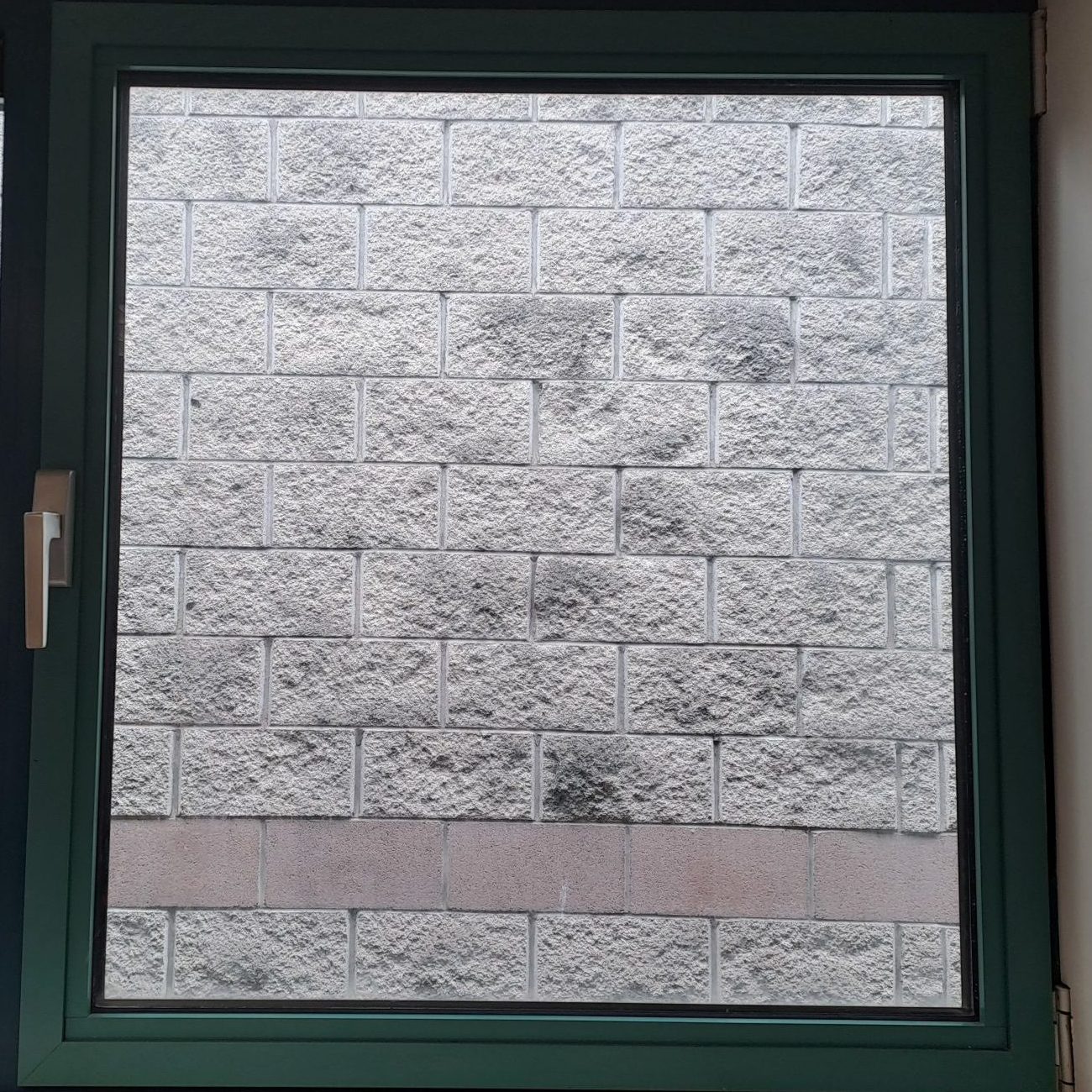
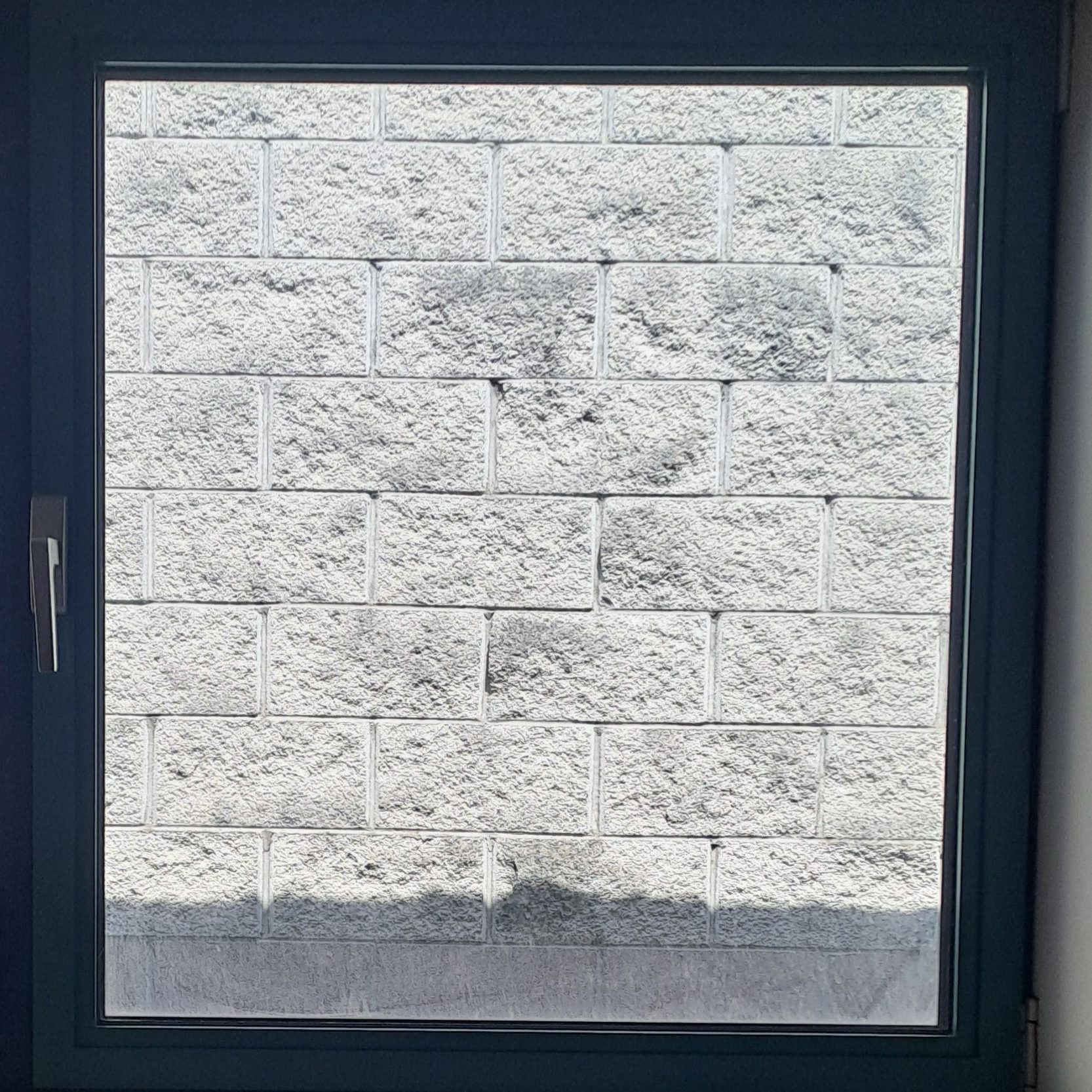
The spell of warm sunny weather has made a huge difference to the view from my office window:
Not SunnySunny
Well, what did you expect to see from a Maynooth University office window? Sydney Opera House perhaps? The Hanging Gardens of Babylon? Herds of Wildebeest sweeping majestically across …
The views presented here are personal and not necessarily those of my employer (or anyone else for that matter).
Feel free to comment on any of the posts on this blog but comments may be moderated; anonymous comments and any considered by me to be vexatious and/or abusive and/or defamatory will not be accepted. I do not necessarily endorse, support, sanction, encourage, verify or agree with the opinions or statements of any information or other content in the comments on this site and do not in any way guarantee their accuracy or reliability.