On Off Minor

Posted in Jazz with tags , , , , on May 19, 2018 by telescoper

One of the contributors to the `Out Thinkers’ event I went to a couple of weeks ago, Emer Maguire, talked about science and music. During the course of her presentation she mentioned one of the most common sets of chord changes in pop music, the I-V-vi-IV progression. In the key of C major, the chords of this progression would be C, G, Am and F. You will for example find this progression comes up often in the songs of Ed Sheeran (whoever that is).

These four chords include those based on the tonic (I), the dominant (V) and the sub-dominant (IV) – i.e. the three chords of the basic blues progression – as well as the relative minor (vi). The relative minor for a major key is a key with exactly the same notes (i.e. the same sharps and flats) in it, but with a different tonic. With these four chords (shuffled in various ways) you can reproduce the harmonies of a very large fraction of the modern pop repertoire. It’s a comfortable and pleasant harmonic progression, but to my ears it sounds a bit bland and uninteresting.

These thoughts came into my head the other night when I was listening to an album of music by Thelonious Monk. One of my `hobbies’ is to try to figure out what’s going on underneath the music that I listen to, especially jazz. I can’t really play the piano, but I have an electronic keyboard which I play around on while trying to figure out what chord progressions are being used. I usually make a lot of terrible mistakes fumbling around in this way, so my neighbours and I are grateful that I use headphones rather than playing out loud!

I haven’t done a detailed statistical study, but I would guess that the most common chord progression in jazz might well be ii-V-I, a sequence that resolves onto the tonic through a cadence of fifths. I think one of the things some people dislike about modern jazz is that many of the chord progressions eschew this resolution which can make the music rather unsettling or, to put it another way, interesting.

Here’s a great example of a Thelonious Monk composition that throws away the rule book and as a result creates a unique atmosphere; it’s called Off Minor and it’s one of my absolute favourite Monk tunes, recorded for Blue Note in 1947:

The composition follows the standard 32 bar format of AABA; the A section ends with a strange D sharp chord extended with a flattened 9th which clashes with a B in the piano melody. This ending is quite a shock given the more conventional changes that precede it.

But it’s the B section (the bridge) where it gets really fascinating. The first bar starts on D-flat, moves up to D, and then goes into a series of unresolved ii-V changes beginning in B-flat. That’s not particularly weird in itself, but these changes don’t take place in the conventional way (one each bar): the first does, but the second is over two bars; and the third over four bars. Moreover, after all these changes the bridge ends on an unresolved D chord. It’s the fact that each set of eight bars ends in mid-air that provides this piece with its compelling  sense of forward motion.

There’s much more to it than just the chords, of course. There are Monk’s unique voicings and playful use of time as he states the melody, and then there’s his improvised solo, which I think is one of his very best, especially in the first chorus as he sets out like a brave explorer to chart a path through this curious harmonic landscape..

Ed Sheeran, eat your heart out!

Citation Analysis of Scientific Categories

Posted in Open Access, Science Politics with tags , on May 18, 2018 by telescoper

I stumbled across an interesting paper the other day with the title Citation Analysis of Scientific Categories. The title isn’t really accurate because not all the 231 categories covered by the analysis are `scientific’: they include many topics in the arts and humanities too. Anyway, the abstract is here:

Databases catalogue the corpus of research literature into scientific categories and report classes of bibliometric data such as the number of citations to articles, the number of authors, journals, funding agencies, institutes, references, etc. The number of articles and citations in a category are gauges of productivity and scientific impact but a quantitative basis to compare researchers between categories is limited. Here, we compile a list of bibliometric indicators for 236 science categories and citation rates of the 500 most cited articles of each category. The number of citations per paper vary by several orders of magnitude and are highest in multidisciplinary sciences, general internal medicine, and biochemistry and lowest in literature, poetry, and dance. A regression model demonstrates that citation rates to the top articles in each category increase with the square root of the number of articles in a category and decrease proportionately with the age of the references: articles in categories that cite recent research are also cited more frequently. The citation rate correlates positively with the number of funding agencies that finance the research. The category h-index correlates with the average number of cites to the top 500 ranked articles of each category (R2 = 0.997). Furthermore, only a few journals publish the top 500 cited articles in each category: four journals publish 60% (σ = ±20%) of these and ten publish 81% (σ = ±15%).

The paper is open access (I think) and you can find the whole thing here.

I had a discussion over lunch today with a couple of colleagues here in Maynooth about using citations. I think we agreed that citation analysis does convey some information about the impact of a person’s research but that information is rather limited. One of the difficulties is that publication rates and citation activity are very discipline-dependent so one can’t easily compare individuals in different areas. The paper here is interesting because it presents an interesting table showing how various statistical citation measures vary across fields and sub-fields;  physics is broken down into a number of distinct areas (e.g. Astronomy & Astrophysics, Particle Physics, Condensed Matter and Nuclear Physics) across which there is considerable variation. How to best to use this information is still not clear..


When Log Tables aren’t Log Tables

Posted in Education, mathematics, Maynooth with tags , , , , , on May 17, 2018 by telescoper

Every now and then – actually more frequently than that – I reveal myself in Ireland as an ignorant foreigner. The other day some students were going through a past examination paper (from 2014) and I was surprised to see that the front cover (above) mentioned  `log tables’.

Now I’m old enough to remember using tables of logarithms (and other mathematical tables  of such things as square roots and trigonometric functions, in the form of lists of numbers) extensively at school. These were provided in this book of four-figure tables (which can now buy for 1p on Amazon, plus p&p).

As a historical note I’ll point out that I was in the first year at my school that progressed to calculators rather than slide rules (in the third year) so I was never taught how to use the former. My set of four-figure tables which was so heavily used that it was falling to bits anyway, never got much use after that and I threw it out when I went to university despite the fact that I’m a notorious hoarder.

Anyway, assuming that the mention of `log tables’ was a relic of many years past, I said to the group of students going through the old examination paper that it seemed somewhat anachronistic. I was promptly corrected, and told that `log tables’ are in regular use in schools and colleges throughout Ireland, but that the term is a shorthand for a booklet containing a general collection of mathematical formulae, scientific data and other bits of stuff that might come in useful to students; for an example appropriate to the Irish Leaving Certificate, see here. One thing that they don’t contain is a table of logarithms…

Students in Physics & Astronomy at Cardiff University are also given a formula booklet for use during examinations. I don’t remember having access to such a thing as an undergraduate, but I don’t object to it. It seems to me that an examination shouldn’t be a memory test, and giving students the basic formulae as a starting point if anything allows the examiner to concentrate on testing what matters much more, i.e. the ability to formulate and solve a problem. The greatest challenge of science education at University level is, in my opinion, convincing students that their brain is much more than a memory device…

International Day Against Homophobia, Transphobia & Biphobia

Posted in History, LGBTQ+ with tags , , , , on May 17, 2018 by telescoper

Today is May 17th, which means that it is International Day Against Homophobia, Transphobia and Biphobia. If you’re wondering why May 17th was chosen, it’s to commemorate May 17th 1990, which is when the World Health Organisation removed homosexuality from its list of “mental illnesses”.


Please remember at although attitudes in the UK are much more enlightened than they were only a few years ago, homophobic violence still happens with distressing frequency and in over 70 countries around the world being gay is still a criminal offence. Moreover, the rights we have won over the past 50 years could so easily be lost.


The theme for this year is “Alliances for Solidarity” so, even if you don’t identify yourself as LGBT+, then this should still be an important day for you. Here, for example, is a handy guide produced by Pride in STEM on how to be an ally:

The Absence, by R.S. Thomas

Posted in Poetry with tags , on May 16, 2018 by telescoper

It is this great absence
that is like a presence, that compels
me to address it without hope
of a reply. It is a room I enter

from which someone has just
gone, the vestibule for the arrival
of one who has not yet come.
I modernise the anachronism

of my language, but he is no more here
than before. Genes and molecules
have no more power to call
him up than the incense of the Hebrews

at their altars. My equations fail
as my words do. What resources have I
other than the emptiness without him of my whole
being, a vacuum he may not abhor?

by R.S. Thomas (1913-2000)

Funding Basic Research in Ireland

Posted in Politics, Science Politics with tags , , on May 15, 2018 by telescoper

I received an email the other day about a scheme run by Science Foundation Ireland. Among other things, the Technology Innovation Development Award is intended (among other things)

… enables researchers to demonstrate the technical feasibility of an applied research project directed toward the development of a new or innovative technology, product, process or service that has potential for further commercial development.

The thrust of this scheme is pretty typical of funding calls in Ireland, and it spurred me to go on a mini-rant.

It’s quite clear to me since arriving in Ireland that funding for basic research – especially in the sciences – is extremely poor. This is largely because of a high-level report published in 2012. This identified 14 priority areas of research that are most likely to give demonstrable economic and societal return, and where Ireland should focus the majority of competitive funding. Four criteria were used in selecting the 14 priority areas for future, competitively-awarded investment for economic objectives:

  1. the area is associated with a large global market or markets in which Irish-based enterprises already compete or can realistically compete;
  2.  publicly performed R&D in Ireland is required to exploit the area and will complement private sector research and innovation in Ireland;
  3.  Ireland has built or is building (objectively measured) strengths in research disciplines relevant to the area; and,
  4. the area represents an appropriate approach to a recognised national challenge and/or a global challenge to which Ireland should respond.

The `vast majority’ of SFI’s funding is directed towards the 14 areas so defined, leaving virtually nothing for anything else, an outcome which has dire implications for `blue skies’ research.

I think this is a deeply misguided short-term policy, which will have a strongly negative effect on science in Ireland in the medium to long term, especially because Ireland spends so little of its GDP on research in the first place.  On top of that it will mean that Ireland will miss out on a golden opportunity to capitalise on Brexit by encouraging European scientists disaffected by the hostile environment that has been created in Britain by its government’s xenophobic policies to relocate to Ireland. There’s simply no point in trying to persuade world-leading researchers to come to Ireland if insufficient funds are available to enable them to establish here; the politicians’ welcoming platitudes will never be enough.

As the Irish economy grows, I hope the Irish government can be persuaded to reverse this situation by investing more in basic research and being more pro-active about reaping the Brexit dividend. Perhaps now that I live here I can play some sort of a role in campaigning for that?

EXPLANATORY NOTE: By `Brexit dividend’, I mean the real dividend, i.e. that which will be experienced by EU countries after Britain gives up all the collaborations, trading opportunities and inward investment that it currently enjoys by virtue of its EU membership.

In the meantime I thought I’d fire an opening salvo by re-iterating a line of thought I had some time ago in the hope that it will provoke a bit of debate.

A while ago, in response to a funding crisis in the UK, I wrote  about using taxpayer’s money to fund research in universities:

For what it’s worth I’ll repeat my own view that “commercially useful” research should not be funded by the taxpayer through research grants. If it’s going to pay off in the short term it should be funded by private investors or venture capitalists of some sort. Dragon’s Den, even. When the public purse is so heavily constrained, it should only be asked to fund those things that can’t in practice be funded any other way. That means long-term, speculative, curiosity driven research. You know, science.

A similar thing was said in in the Times Higher, in a piece about the (then) new President of the Royal Astronomical Society:

Notwithstanding the Royal Academy of Engineering’s “very unfortunate” recent submission to the government spending review – which argued that the need to rebalance the UK economy required public spending to be concentrated on applied science – Professor Davies is confident he can make a good case for spending on astrophysics to be protected.

Research with market potential can already access funding from venture capitalists, he argued, while cautioning the government against attempting to predict the economic impact of different subjects.

This is pretty much the opposite of what Irish government thinks. It wants to concentrate public funds in projects that  can demonstrate immediate commercial potential. Taxpayer’s money used in this way ends up in the pockets of entrepreneurs if the research succeeds and, if it doesn’t,  the grant has effectively been wasted.

My proposal, therefore, is to phase out research grants for groups that want to concentrate on commercially motivated research and replace them with research loans. If the claims they make to secure the advance are justified, they should have no problem repaying it  from the profits they make from patent income or other forms of exploitation. If not, then they will have to pay back the loan from their own funds (as well as being exposed as bullshit merchants). In the current economic situation the loans could be made at very low interest rates and still save a huge amount of the current research budget for higher education. Indeed after a few years – suggest the loans should be repayable in 3-5 years, it would be self-financing. I think a large fraction of research in the applied sciences and engineering should be funded in this way.

The money saved by replacing grants  to commercially driven research groups with loans could be re-invested in those areas where public investment is really needed, such as pure science and medicine. Here grants are needed because the motivation for the research is different. Much of it does, in fact, lead to commercial spin-offs, but that is accidental and likely to appear only in the very long term. The real motivation of doing this kind of research is to enrich the knowledge base of the UK and the world in general.

In other words, it’s for the public good.  Remember that?

Most of you probably think that this is a crazy idea, and if you do please feel free to tell me so via the comments box.

It’s Mental Health Awareness Week Again

Posted in Mental Health with tags , , on May 14, 2018 by telescoper

image

This year the focus is on stress. Research has shown that two thirds of us experience a mental health problem in our lifetimes, and stress is a key factor in this. By tackling stress, we can go a long way to tackle mental health problems such as anxiety and depression, and, in some instances, self-harm and suicide.

For further information about how we can tackle stress and help improve our mental health see the Mental Health Awareness Week website.

Planck wins the Gruber Prize (and the Shaw Prize)

Posted in Science Politics, The Universe and Stuff with tags , , on May 13, 2018 by telescoper

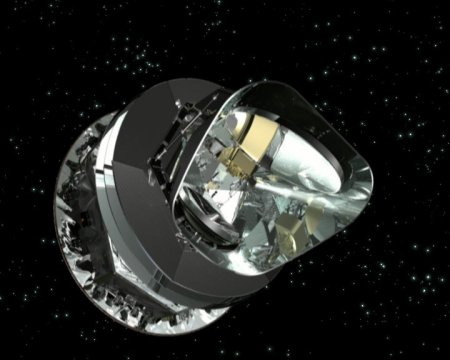
I forgot to mention last week that the 2018 Gruber Prize for Cosmology has been awarded to the Planck team, and its Principal Investigators Nazzareno Mandolesi and Jean-Loup Puget.

For more information about the award and the citation, see here.

This annual prize is worth $500,00; the two PIs will get $125,000 each and the rest divided among the team. I’m not sure whether this means the Planck Science Team (whose membership is listed here or the entire Planck Collaboration (which numbers several hundred people) but regardless of whoever gets the actual dosh, this award provides a good excuse to send congratulations to everyone who worked on this brilliant and highly successful mission!


UPDATE: 14th May 2018. Jean-Loup Puget has also been awarded the Shaw Prize for Astronomy.

100 Years of Feynman

Posted in Cute Problems, Education with tags , , , , , , on May 11, 2018 by telescoper

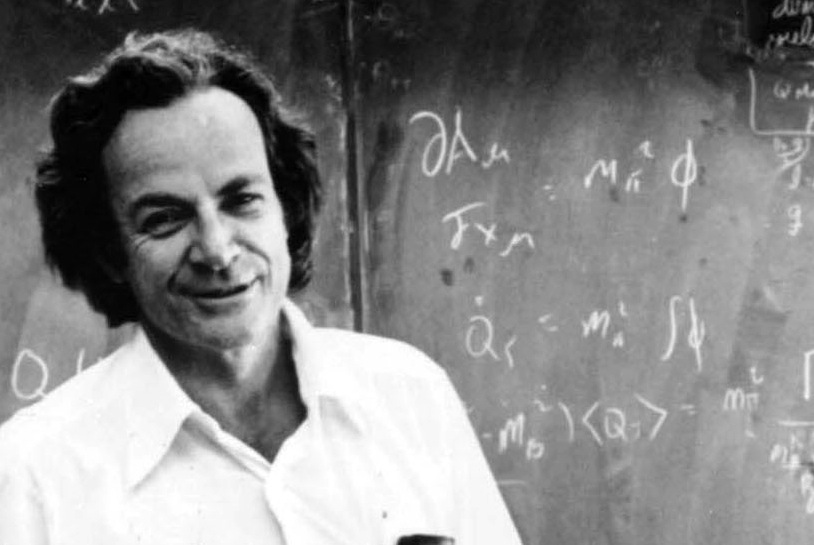
Today marks the centenary of the birth of Noble Prize-winning physicist, science communicator and bongo player Richard Feyman. It’s great to see so many articles about him today, so I was wondering how to do my own quick tribute before I head to London for the Royal Astronomical Society Annual General Meeting this afternoon.

With university exams coming up it seemed a good idea to celebrate Richard Feynman’s legacy by combining todays 100th anniversary with some tips (inspired by Feynman) about how to tackle physics problems, not only in terms of how to solve them but also how to present the answer in an appropriate way.

Richard-Feynman-cornellI began with Richard Feynman’s formula (the geezer in the above picture) for solving physics problems:

  1. Write down the problem.
  2. Think very hard.
  3. Write down the answer.

That may seem either arrogant or facetious, or just a bit of a joke, but that’s really just the middle bit. Feynman’s advice on points 1 and 3 is absolutely spot on and worth repeating many times to an audience of physics students.

I’m a throwback to an older style of school education when the approach to solving unseen mathematical or scientific problems was emphasized much more than it is now. Nowadays much more detailed instructions are given in School examinations than in my day, often to the extent that students  are only required to fill in blanks in a solution that has already been mapped out.

I find that many, particularly first-year, students struggle when confronted with a problem with nothing but a blank sheet of paper to write the solution on. The biggest problem we face in physics education, in my view, is not the lack of mathematical skill or background scientific knowledge needed to perform calculations, but a lack of experience of how to set the problem up in the first place and a consequent uncertainty about, or even fear of, how to start. I call this “blank paper syndrome”.

In this context, Feynman’s advice is the key to the first step of solving a problem. When I give tips to students I usually make the first step a bit more general, however. It’s important to read the question too. The key point is to write down the information given in the question and then try to think how it might be connected to the answer. To start with, define appropriate symbols and draw relevant diagrams. Also write down what you’re expected to prove or calculate and what physics might relate that to the information given.

The middle step is more difficult and often relies on flair or the ability to engage in lateral thinking, which some people do more easily than others, but that does not mean it can’t be nurtured.  The key part is to look at what you wrote down in the first step, and then apply your little grey cells to teasing out – with the aid of your physics knowledge – things that can lead you to the answer, perhaps via some intermediate quantities not given directly in the question. This is the part where some students get stuck and what one often finds is an impenetrable jumble of mathematical symbols  swirling around randomly on the page. The process of problem solving is not always linear. Sometimes it helps to work back a little from the answer you are expected to prove before you can return to the beginning and find a way forward.

Everyone gets stuck sometimes, but you can do yourself a big favour by at least putting some words in amongst the algebra to explain what it is you were attempting to do. That way, even if you get it wrong, you can be given some credit for having an idea of what direction you were thinking of travelling.

The last of Feynman’s steps  is also important. I lost count of the coursework attempts I marked this week in which the student got almost to the end, but didn’t finish with a clear statement of the answer to the question posed and just left a formula dangling.  Perhaps it’s because the students might have forgotten what they started out trying to do, but it seems very curious to me to get so far into a solution without making absolutely sure you score the points.  IHaving done all the hard work, you should learn to savour the finale in which you write “Therefore the answer is…” or “This proves the required result”. Scripts that don’t do this are like detective stories missing the last few pages in which the name of the murderer is finally revealed.

So, putting all these together, here are the three tips I gave to my undergraduate students this morning.

  1. Read the question! Some students give solutions to problems other than that which is posed. Make sure you read the question carefully. A good habit to get into is first to translate everything given in the question into mathematical form and define any variables you need right at the outset. Also drawing a diagram helps a lot in visualizing the situation, especially helping to elucidate any relevant symmetries.
  2. Remember to explain your reasoning when doing a mathematical solution. Sometimes it is very difficult to understand what students are trying to do from the maths alone, which makes it difficult to give partial credit if they are trying to the right thing but just make, e.g., a sign error.
  3.  Finish your solution appropriately by stating the answer clearly (and, where relevant, in correct units). Do not let your solution fizzle out – make sure the marker knows you have reached the end and that you have done what was requested. In other words, finish with a flourish!

There are other tips I might add – such as checking answers by doing the numerical parts at least twice on your calculator and thinking about whether the order-of-magnitude of the answer is physically reasonable – but these are minor compared to the overall strategy.

And another thing is not to be discouraged if you find physics problems difficult. Never give up without a fight. It’s only by trying difficult things that you can improve your ability by learning from your mistakes. It’s not the job of a physics lecturer to make physics seem easy but to encourage you to believe that you can do things that are difficult!


The Joy of Fecks

Posted in Television with tags , , , , , on May 10, 2018 by telescoper

One of the things I’ve noticed in the time I’ve spent in the Dublin area recently is that Irish people tend to swear a lot, and I mean a lot. On the other hand, the combination of an Irish accent and the imaginative way in which expletives are used makes this habit colourful rather than offensive.

Something I have discovered only relatively recently concerns the word `feck’ (as used frequently by Father Jack in the comedy documentary series Father Ted). I’ve always assumed that this word was simply an alternative form for the word `fuck’ and as such was an extremely offensive swear word. I have used it frequently in the Irish vernacular phrase “feckin’ eejit” (usually in the context of a British politician) assuming that it had that meaning.

However, I am reliably informed by Irish colleagues and Wikipedia – although I’m not sure whether either of those sources really counts as reliable – that `feck’ isn’t really the same as `fuck’ because it derives from a different root, and although it is an oath it is far less offensive. In fact, `feck’ is a word which is also in use in Scotland meaning force or value, from which we get the word `feckless’ meaning worthless, or something like `a large amount or quantity’.

In modern Irish slang, `feck’ can be used as a `minced oath’ (i.e as a euphemism for `fuck’, as one might say `eff off’ instead of `fuck off’) but it has a variety of other meanings, including `to steal’ or `to throw’. None of these other meanings relate directly to sexual intercourse. In summary, then, it seems that while `feck’ is undoubtedly rather vulgar, it is far less offensive than `the bad F-word’, i.e. `fuck’.

I hope this doesn’t give the impression that my opening statement – that Irish people swear a lot – is false. ‘The bad F-word’ is definitely in widespread use. All I’m saying is that `feck’ (a) isn’t the same word and (b) it’s not as offensive as you might have thought.

Here’s an explanation by the inestimable Mrs Doyle from Father Ted in which she discusses these issues in the context of modern Irish literature.

Now I think I’ll feck off home.