The Sad Tale of Veronica Lake

Posted in Film with tags , , , , , , on December 8, 2013 by telescoper

A few weeks ago I indulged myself by watching, during the same evening, a couple of class examples of Film Noir, The Glass Key and The Blue Dahlia . The first of these is based on the novel of the same name by Dashiell Hammett and the second has an original screenplay by Raymond Chandler. Both feature the same leading actors, Alan Ladd and Veronica Lake, The Glass Key being the first film featuring this pairing.

There’s a pragmatic reason why Paramount Studios chose Veronica Lake to star with Alan Ladd, namely her size. Alan Ladd was quite a small man, standing  just a shade under 5′ 5″ tall, and the casting directors consequently found it difficult to locate a leading lady who didn’t tower over him. Veronica Lake, however, was only 4′ 11″ and fitted the bill nicely:

Veronica Lake and Alan Ladd

Veronica Lake and Alan Ladd

It wasn’t just her diminutive stature that propelled Veronica Lake to stardom; she was also very beautiful and managed to project a screen image of cool detachment which made her a perfect choice as femme fatale, a quintessential ingredient of any Film Noir. She’s absolutely great in both the movies I watched, and in many more besides. Her looks and screen presence turned her into a true icon -a vera icon in fact- appropriately enough, because the name Veronica derives from that anagram. The cascade of blond hair, often covering one eye, became a trademark that later found its way into, for example, the character of Jessica Rabbit in the animated film Who Framed Roger Rabbit?

However, her success as a movie star was short-lived and Veronica Lake disappeared from Hollywood entirely in the 1950s. She was rediscovered in the 1960s working as a waitress in a downmarket New York bar, and subsequently made a film called Footsteps in the Snow but it disappeared without trace and failed to revitalize her career. She died in 1973.

So why did an actress of such obvious talent experience such a dramatic reversal of fortune? Sadly, the answer is a familiar one: problems with drink and drugs, struggles with mental illness, a succession of disastrous marriages, and a reputation for being very difficult to work with. Her famous screen persona seems largely to have been a result of narcotics abuse. “I wasn’t a Sex Symbol, I was Sex Zombie”, as she wrote in her biography. She appeared to be detached, because she was stoned.

It’s a sad tale that would cast a shadow over even over the darkest Film Noir but though she paid a heavy price she still left a priceless legacy. Forty years after her death, all that remains of her is what you can see on the screen, and that includes some of the greatest movies of all time.

Caught in the Middle

Posted in Education, Politics with tags , , , , on December 7, 2013 by telescoper

Academics these days are caught between a rock and a hard place.

On one side we have a government which seems not only malevolent but also utterly incompetent. I cite the recent example of the Department of Business Innovation and Skills, which has completely lost control of its budget, meaning that further cuts are likely to a higher education sector already struggling to cope with the instability generated by constant meddling from successive governments.

On the other we have our students, who are definitely getting a very raw deal compared with those of my generation. Most are justifiably  unhappy with the high level of fees they have to pay. Many also feel generally alienated by the way the country is run, for the benefit of the rich  at the expense of the young and the poor. Recent campus protests across the country are clearly a manifestation of this groundswell of resentment, although in some cases they have clearly been hijacked by extremist elements who will protest about anything at the drop of a hat just for the sake of it.

In between we have us academics, the vast majority of whom agree with the students  that UK higher education is in a complete mess and that the UK government is responsible. However, most of us also believe in the importance of universities as places of research, scholarship and teaching and want to carry out those activities as best we can for the benefit not only of our current students but for society as a whole.

So what should we academics who find ourselves caught  in the middle do?

Unsurprisingly, opinions differ and I don’t claim to speak for anyone but myself when I state mine. I think it’s the responsibility of academic staff to recognize the burden placed on our students by government and in the light of that do absolutely everything in our power to give them the best education we can. That means ensuring that as much of the money coming into universities from tuition fees goes directly towards improving the education of students – better teaching facilities, more and better trained staff and a better all-round experience of campus life. That is the reason that I did not participate in the recent strikes over pay: I absolutely refuse to take any action that would be in any way detrimental to the education of students in my School. Call me a scab if you wish. My conscience is clear. For me it’s not a matter of choice, it’s a matter of responsibility.

So what about the recent wave of student protests? Again, all I can do is give my own opinion (not that of my employer or anyone else) which is that I believe in the right to protest – as long as it’s peaceful – but targeting universities is short-sighted and counterproductive.  I’m sure that all the government is delighted that none of the latest protests have been in Whitehall, which is where the focus of complaint should be, but instead dissipated at arms length in a series of futile and divisive campus demonstrations.

And if one of these protests causes enough disruption that it succeeds in closing down a university for good – and don’t tell me that this government won’t allow that to happen – what good will that have done?

Haikus for the Day

Posted in Biographical, Poetry on December 6, 2013 by telescoper

Invited guest of
the Japanese Embassy
in Piccadilly

“A Symposium”
they call this. Lectures followed
by wine (hopefully)..

Astronomy and
Space Science unite nations.
One cosmos for all!

Smiley talks to Toby

Posted in Television with tags , , , , on December 5, 2013 by telescoper

Just time for a brief post as it has been a very long and stressful day (it’s probably best if I don’t try to explain why). I’m going to pour myself into a bottle of wine when I get home. For some reason I thought of this clip, from the TV series Smiley’s People, which I thought I’d share because I happened to watch the entire series on DVD at the weekend. I think it’s beautifully done.

Just to set the scene, the series (based on the novel of the same name by John Le Carré) is set a few years after Tinker Tailor Soldier Spy. Intelligence officer George Smiley (Alec Guinnness) is in retirement, as is his former colleague Toby Esterhase (Bernard Hepton) who has adopted the identity of a dodgy art dealer. Smiley is called back into action when a former agent by the name of Vladimir is murdered on Hampstead Heath en route to an appointment with British Intelligence (aka “The Circus”). Smiley is told to find out what happened and hush it up, but a combination of detective work and intuition leads him to the realization that he may, at last, have stumbled upon a way of bringing down his opposite number in Soviet Intelligence, the enigmatic Karla. This scene, wherein Smiley and Esterhase meet up for the first time since they parted company with the Circus marks the point where Smiley decides to ignore his instructions to bury the case and embark on one last operation in the hope that he can at last locate Karla’s Achilles Heel. To find out more, you’ll have to watch the series, which unfolds slowly, but brilliantly…


Bohmian Mechanics Explained

Posted in The Universe and Stuff with tags , , on December 4, 2013 by telescoper

Here’s a nice set of short videos about the de Broglie-Bohm theory which is a causal, deterministic, interpretation of Quantum Mechanics that can be thought of as a hidden variable theory. It’s a common misconception that hidden-variable theories are ruled out by experimental evidence (which is probably why they tend not to be discussed very much at undergraduate level) but this is not the case. What is true is that hidden variables have to be non-local, which many physicists consider too weird for comfort – but who’s to say that the Universe isn’t even weirder than we thought?

Service Complet

Posted in Biographical, Science Politics with tags , on December 3, 2013 by telescoper

Just time for a quick post from the London to Brighton train, having spent the day at my last ever “Plenary” meeting of the Astronomy Grants Panel of the Science and Technology Facilities Council which was held at the Institute of Physics. This meeting marks the end of the annual grants round; in January there’ll be a meeting to kick off next year’s business.

I’ve been on this panel for four years now, so I think I’ve done my bit. Time for some new blood to replace those of us who have been stood down.

Anyway I just want to say a big public thank you to the STFC staff, especially Kim, Diane, and Colin for doing their best to keep the panel members in order, as well as to Theory sub-Panel Chair Tom and overall Chair Andy who are also stepping down.

Better is the end of a thing than the beginning thereof. I refer to the day, not the AGP, because it began with a major wobbly in Victoria station on the way to the IOP but ended with a couple of pints and a nice chinwag in the pub round the corner..

MPS Beard of the Year: The Contenders!

Posted in Beards with tags , , on December 2, 2013 by telescoper

Nominations for the Inaugural Beard of the Year Poll at the School of Mathematical and Physical Sciences at the University of Sussex closed on Friday 29th November. We now move to the final phase of the competition, with a public vote. I’m afraid I had to rule out some of the nominees because no photographic evidence was supplied. I also have a sneaking suspicion that some of those who made the short list may not be entirely authentic. Please make your own mind up when casting your vote.

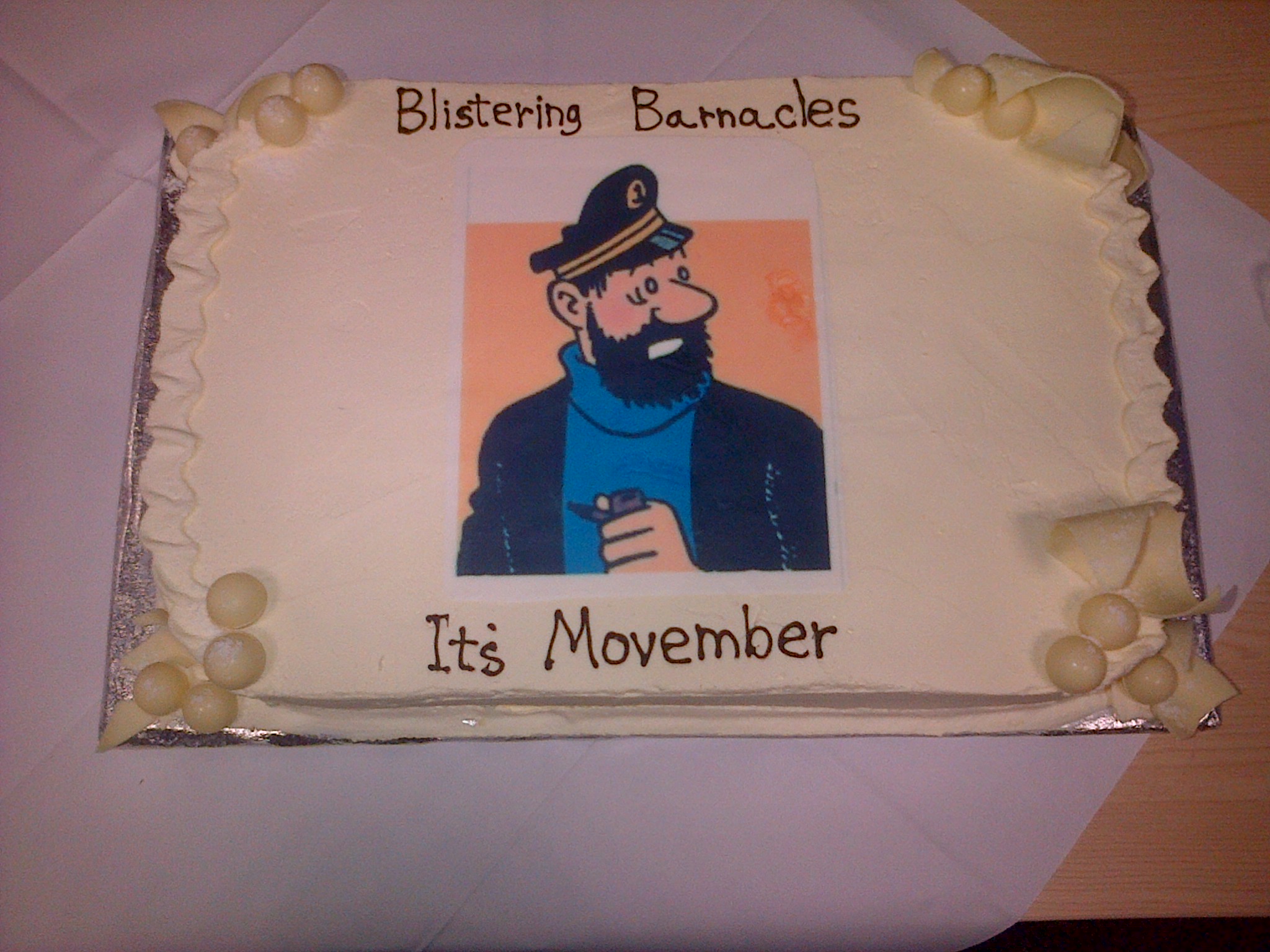
Before introducing the contestants, I’d like to say a big public thank you to our caterers, Chartwells, for producing this lovely cake for a  little “Movember” event we had in the School on Friday afternoon:

IMG-20131129-00226

The purpose of “Movember” is to raise awareness about testicular and prostate cancer, and mental health issues. We’ve gone a bit further and gone for a fully bearded version of the event, but in any case I hope that this bit of fun will at least remind blokes (who are notoriously bad at looking after themselves) to check our their bits every now and again. In any case always remember that facial hair is not just for Movember, but for life…

Anyway, to the contenders (in no particular order)

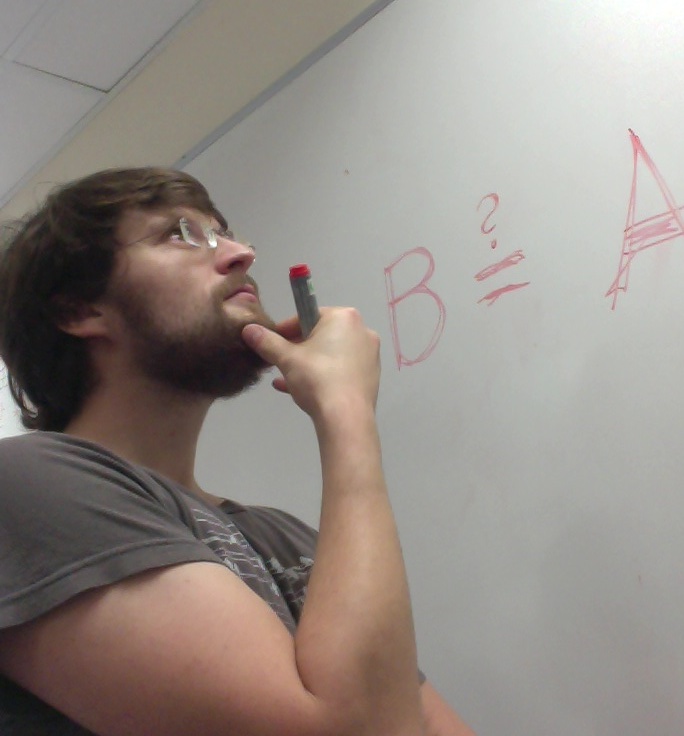
William Watson

Beard A: William Watson

Tomas Navickas

Beard B: Tomas Navickas

Beard C: Thomas Northam

Beard C: Thomas Northam

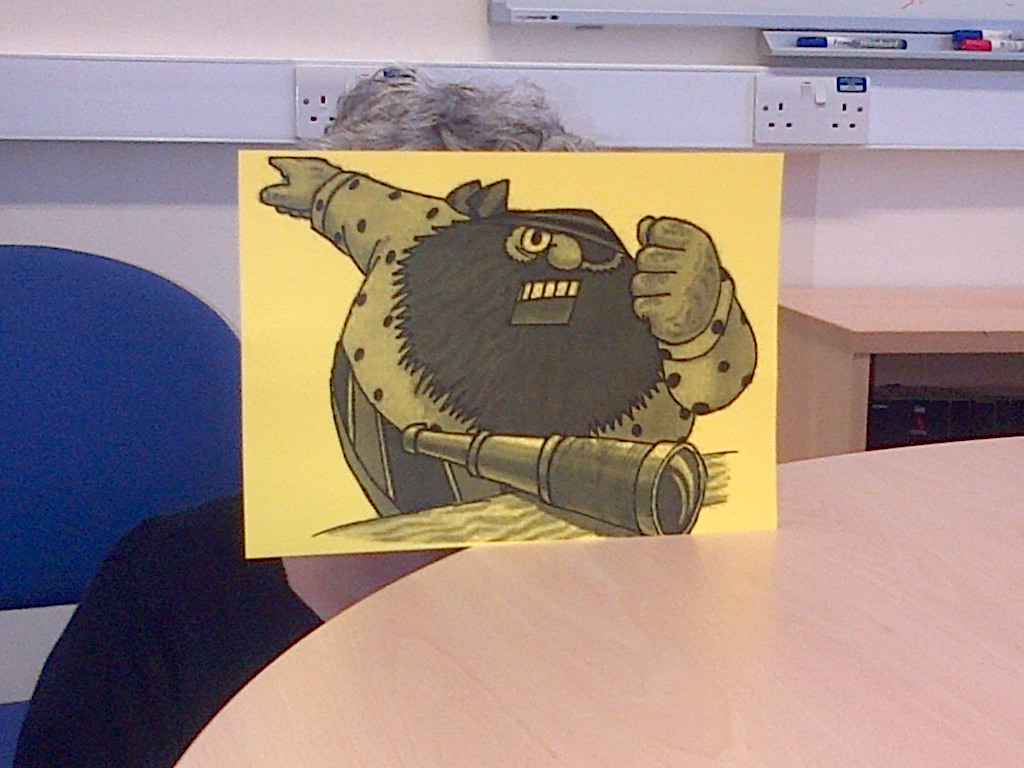
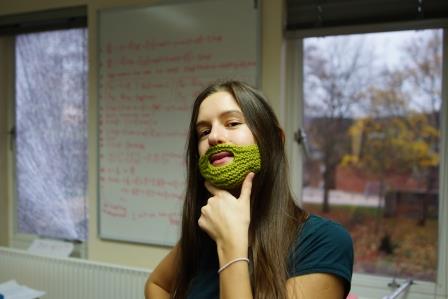
Beard D: Miss Lemonbeard

Beard D: Miss Lemonbeard

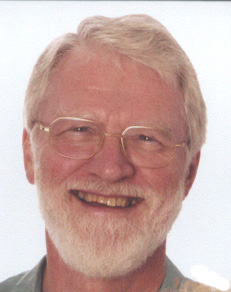
Beard E: Robert C Smith

Beard E: Robert C Smith

Beard F: Peter Beard(sle)y

Beard F: Peter Beard(sle)y

Beard G: Nathan Udy

Beard G: Nathan Udy

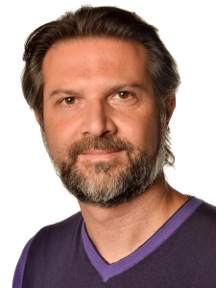
Beard H: Leonidas Christodoulou

Beard H: Leonidas Christodoulou

Beard I: Mateja Gosenca

Beard I: Mateja Gosenca

Beard J: Konstantin Blyuss

Beard J: Konstantin Blyuss

Beard L: Aurel Schneider

Beard L: Aurel Schneider

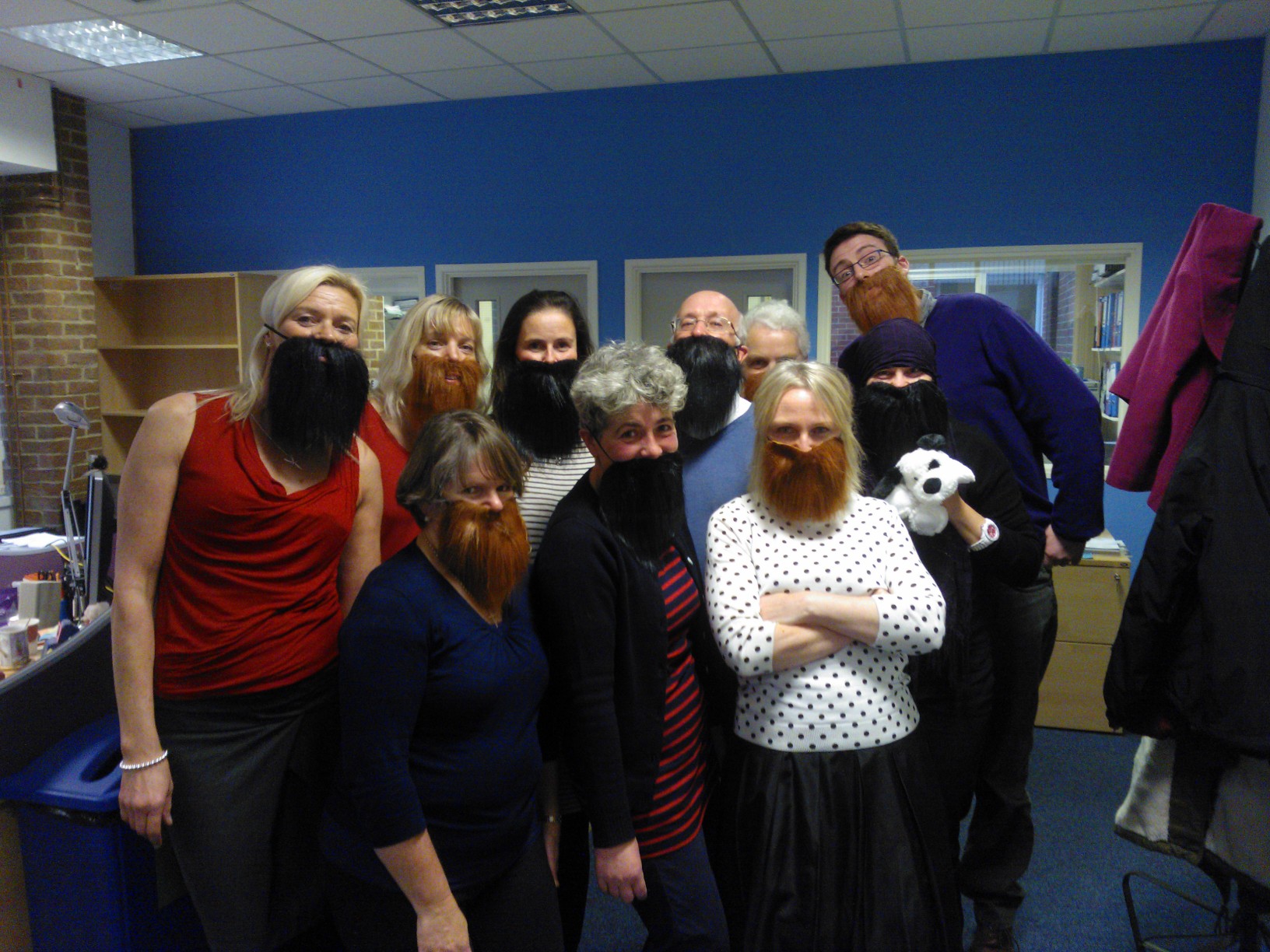
Beard M: Team Beard!

Beard M: Team Beard!

Beard N: Istvan Kiss

Beard N: Istvan Kiss

Beard O: Fabrizio Salvatore

Beard O: Fabrizio Salvatore

Beard P: Jan Schroder

Beard P: Jan Schroder

Beard Q: Leon Baruah

Beard Q: Leon Baruah

Now you have seen all the choices, please vote here:

The winner will be announced on Wednesday 11th December.

Statistical Challenges in 21st Century Cosmology

Posted in The Universe and Stuff with tags , , on December 2, 2013 by telescoper

I received the following email about a forthcoming conference which is probably of interest to a (statistically) significant number of readers of this blog so I thought I’d share it here with an encouragement to attend:

–o–

IAUS306 – Statistical Challenges in 21st Century Cosmology

We are pleased to announce the IAU Symposium 306 on Statistical Challenges in 21st Century Cosmology, which will take place in Lisbon, Portugal from 26-29 May 2014, with a tutorial day on 25 May.  Apologies if you receive this more than once.

Full exploitation of the very large surveys of the Cosmic Microwave Background, Large-Scale Structure, weak gravitational lensing and future 21cm surveys will require use of the best statistical techniques to answer the major cosmological questions of the 21st century, such as the nature of Dark Energy and gravity.

Thus it is timely to emphasise the importance of inference in cosmology, and to promote dialogue between astronomers and statisticians. This has been recognized by the creation of the IAU Working Group in Astrostatistics and Astroinformatics in 2012.

IAU Symposium 306 will be devoted to problems of inference in cosmology, from data processing to methods and model selection, and will have an important element of cross-disciplinary involvement from the statistics communities.

Keynote speakers

• Cosmic Microwave Background :: Graca Rocha (USA / Portugal)

• Weak Gravitational Lensing :: Masahiro Takada (Japan)

• Combining probes :: Anais Rassat (Switzerland)

• Statistics of Fields :: Sabino Matarrese (Italy)

• Large-scale structure :: Licia Verde (Spain)

• Bayesian methods :: David van Dyk (UK)

• 21cm cosmology :: Mario Santos (South Africa / Portugal)

• Massive parameter estimation :: Ben Wandelt (France)

• Overwhelmingly large datasets :: Alex Szalay (USA)

• Errors and nonparametric estimation :: Aurore Delaigle (Australia)

You are invited to submit an abstract for a contributed talk or poster for the meeting, via the meeting website. The deadline for abstract submission is 21st March 2014. Full information on the scientific rationale, programme, proceedings, critical dates, and local arrangements will be on the symposium web site here.

Deadlines

13 January 2014 – Grant requests

21 March 2014 – Abstract submission

4 April 2014 – Notification of abstract acceptance

11 April 2014 – Close of registration

30 June 2014 – Manuscript submission

The World’s Oldest Professor?

Posted in Education with tags , , , on December 1, 2013 by telescoper

Yesterday I was sitting at home listening to the radio when someone used the phrase “The World’s Oldest Profession”. Naturally, that made me think of those such as myself who Profess for a living (although that’s apparently not what the original expression applies to). Anyway, that idle thought made me wonder whether there is, in the Guinness Book of Records or elsewhere, a recognized holder of the title World’s Oldest Professor?

A short tweet about this elicited one suggestion: Professor Ephraim Engleman of the University of California at San Francisco who is an extremely distinguished Professor of Rheumatology and is still active at the age of 102. Blimey. That’s going to be a pretty though record to beat, but I thought I’d post about it to see there are any other contenders for (a) the world’s oldest professor in any discipline and (b) the world’s oldest professor in physics and astronomy?

Suggestions through the comments box please.

P.S. Apart from anything else, Prof. Engleman’s inspirational example has made me feel guilty for moaning about the advancing years at the tender age of 50; he’d reached my current age before I was even born!

Farewell to Araucaria

Posted in Crosswords with tags , on December 1, 2013 by telescoper

I was just thinking this morning that it’s been a while since I posted about crosswords, and then an email arrived from Prof. Monica Grady pointing out the sad news of the passing (on Tuesday, 26th November, at the age of 92) of Johh Galbraith Graham, better known to crossword fans as Araucaria of the Guardian. I had missed the announcement of his death because I’ve just been too busy recently to look at the papers except at weekends.

For those of you not aware, the pseudonym Araucaria is the “Monkey Puzzle ” tree. Those of you who were aware already of that, I’ll add that another name for this tree is “Chile Pine” whence John Graham formed the anagram CINEPHILE, under which pseudonym he also set puzzles in the Financial Times for many years. Not a lot of people know that.

John Graham was an undoubted genius as a crossword setter, one of the few whose clues have made me laugh out loud when working out the solution not only because of their cleverness but also because of the wonderful sense of humour with which they were composed. His clues didn’t always abide by the strict conventions laid down by the father of the crossword puzzle, Derrick Somerset MacNutt (aka Ximenes) but he was a compiler whose transgressions in this regard were easy to forgive when so many of his clues were so brilliant.

Here’s a nice video made about a year ago featuring the man himself talking about the art of crossword setting:

I switched from the Guardian to the Independent some time ago so haven’t done any of Araucaria‘s recent puzzles – my only regret for having switched allegiances, as it happens. I’ve actually won prizes from the weekend Independent competition over twenty times subsequently, which has given me a steady supply of dictionaries. More importantly I do find their crosswords generally more challenging and more entertaining than the Guardian‘s. But the irreplaceable Araucaria was in a class on his own. Having given so much pleasure to so many people for such a long time, he has certainly earned his status as national treasure.

Rest in peace John Galbraith Graham (1921-2013).