The publishers sent me a copy of this book Introduction to Entropy – The Way of the World by Jonathan Allday and Simon Hands. Here are some thoughts on it.
The conventional way of teaching physics at an introductory level is to develop the subject in thematic strands – classical mechanics, electromagnetism, quantum mechanics and so on – and reinforce the resulting structure with a cross-weave of methods – experimental, mathematical or computational – to show how the discipline as a whole is bound together by the interplay between these two. Some approaches emphasize the themes, others the methods but generally the layout is a criss-cross pattern of this sort, embedded within which are various concepts which we encounter on the way.
This book by schoolteacher Jonathan Allday and particle physicist Simon Hands is provides a valuable alternative approach in that it focusses on neither themes nor methods but on a particular concept, that of entropy. This is an interesting idea because it allows the reader to follow a direction more-or-less orthogonal to the conventional approaches. It is especially interesting to deal with entropy in this way because it is a concept that is familiar on one level – even Homer Simpson knows what about the Second Law of Thermodynamics! – but very unfamiliar when it comes to its detailed application, for example in quantum mechanics.
Guided by the concept of entropy, the authors take us on a journey through physics that has three main stages. The first is fairly mainstream in undergraduate courses, from classical thermodynamics to statistical mechanics, with applications and basic ideas of probability and statistics introduced along the way. The second, more technical, leg takes us through the idea of entropy in quantum mechanics and quantum information theory. The final part of the excursion is much freer ramble through more speculative terrain, including the role of entropy in biology, cosmology and black holes. This final section on life, the universe, and (almost) everything, addresses a number of open research questions. The authors stop to point out common errors and misconceptions at various points too.
This is an interesting and engaging book to anyone with an undergraduate education in physics, or above, who wants to understand the concept of entropy in all its manifestations in modern physics. It covers a great deal of territory but the narrative is coherent and well thought-out, and the material is very well organized and presented.
The dust is now settling on the 2024 General Election which took place on Friday. Counting didn’t start anywhere until the following morning, so in the absence of any actual results the Saturday newspapers were full of articles by Phil Space, most of them based on an exit poll that turned out not to be very accurate. It soon become clear what was going to happen. The Single Transferable Vote system does mean that counting takes a while – one constituency (Cavan-Monaghan) is yet to declare as I write this – but it is much fairer than the system used in the UK and the process is fascinating to follow. Since moving to Ireland 7 years ago, I think my two favourite spectator sports are hurling and election counts, though the former happens at a considerably faster pace than the latter!
I’ll begin with my own constituency, Kildare North, which returned 5 TDs. The chosen five are James Lawless (FF), Réada Cronin (SF), Aidan Farrelly (SD), Naoise Ó Cearúil (FF) and Joe Neville (FG). The big surprise was that Fine Gael grandee Bernard Durkan lost his seat to a younger colleague, the strategy of fielding three candidates backfired on him. At one stage it even looked like all three might be eliminated, which would have been very amusing, but it was not to be.
A surprise at least to me, though a lesser one than the defeat of Bernard Durkan, is that Aidan Farrelly won for the Social Democrats. Catherine Murphy (SD) was top of the poll last time but has now retired. There was no guarantee that Aidan Farrrelly would hold onto Catherine Murphy’s personal following, especially since a former Social Democrat turned Independent stood against him. In the end, however, Farrelly was elected quite comfortably, although with a smaller share of the vote than Catherine Murphy had achieved.
Of the two FF candidates elected, James Lawless and Naoise Ó Cearúil, the fomer is more familiar; the latter was elected to the County Council this summer and will be a new arrival in the Dáil. The Kildare North constituency has one extra TD this time because of population growth, and it went to FF who ended up with the most TDs nationally.
The successful Sinn Féin candidate was the incumbent Réada Cronin.
The wooden spoon for Kildare North went to Sean Gill of the Centre Party of Ireland, an ironic name for what is far-right splinter group of FG previously known as Renua. He received a majestic 67 votes and was eliminated on the first round. In fact, far-right candidates did very poorly not only in Kildare North but nationally. That’s a relief.
One of the fascinating things about the coverage of the election has been to see how people use their preferences. Voting is a much more nuanced thing here that it has ever been allowed to be in the UK by the electoral system there. Some of the transfers are very hard to fathom. I noticed in Kildare North, for example, that some voters put the left-wing People Before Profit first then Fine Gael second, skipping over the whole spectrum in between. I don’t understand that choice, but then I don’t have to. Folk are perfectly entitled to use their vote whichever way they wish. That’s how it works. It’s called democracy.
The big three parties look set to finish on FF 48, SF 39 and FG 38. This means that FG+FF add up to 86, which is two short of a majority. The overall outcome of the election will therefore be the Same Old Same Old government, a coalition of the two right wings of the Property Party, possibly with a smaller party to make up the numbers and to be contemptuously discarded at the next election. That fate befell the Green Party, part of the outgoing coalition, which lost 11 of its 12 TDs this time round. Labour and the Social Democrats are both on 11 TDs. Will one of them walk into the trap, or will some Independents be enough?
Incidentally, the only prediction I made in my earlier post about this election, turned out to be incorrect. I was confident that there would be more Independent TDs than last time. In fact there are fewer (16 versus 20). Though the predominantly rural, right-wing Independent Ireland won 4 seats, it is a party so its TDs are not Independent, if you see what I mean.
The State of Irish Politics (detail from Impossible Stairs by M.C. Escher)
Sinn Féin once again failed to break the deadlock of FFG government. They have done reasonably well in terms of seats, but their share of the vote fell by about 5% since the 2020 Election but in between then and now had risen to over 30%. only to fall back recently. I suspect the party leaders will be privately relieved at where they ended up, given that a few weeks ago things looked likely to be much worse for them.
Whatever the complexion of the final coalition, it seems clear to me that we’re in for five more years of housing crisis, crumbling infrastructure, under-investment in education and public services. I don’t know what it will take for a change of government to take place. Perhaps the next (inevitable) financial crash? Or perhaps not even that. Ireland is very set in its ways, politically speaking.
It has been remarked that this election has bucked two global trends. One is the rise of the far-right, whose failure is something I am very happy about. The other is anti-incumbent feeling. I’m much more ambivalent about that because in my opinion change is long overdue. Apparently the electorate were unconvinced that change of government would really make things better here.
P.S. The turnout – just under 60% – was the lowest it has been in a General Election in Ireland since 1923. I find it saddening that 40% of those eligible did not even bother to vote.
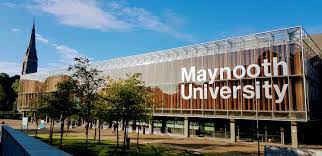
Maynooth University Library, home of the famous cat
As the count continues in the General Election in Ireland, the result of which seems likely to be the same old government, I am reminded that today is 1st December 2024, which means that it’s seven years to the day since I started work at Maynooth University. Despite the frustrations I’m still happy I made the move all that time ago.
One big change that has happened over the last year is that the Department of Theoretical Physics that I joined in 2017 no longer exists. It has now been subsumed into a new Department of Physics alongside the old Department of Experimental Physics. This is something that should have happened years ago, and should also have been handled in a better way. As it is, The Merger really just involved merging the two budgets with little thought given to how the new Department would function. As a result it still operates largely as two separate sub-Departments. Any benefits of the reorganization have therefore yet to accrue. The good side of this is that Senior Management seems to have lost interest in pushing us around, and it’s now up to the new Department to self-organize. I suppose in due course there will be changes, but in due course I will have retired.
When I wrote last year on the occasion of the sixth year of my appointment at Maynooth, I complained that the University had still not fulfilled the terms of my employment contract. With The Merger, members of the former Department of Theoretical Physics now have access to the technical support previously enjoyed by the Department of Experimental Physics so I suppose that particular ticket is closed. This blatant disregard for written contractual terms demonstrates, however, why I have so little trust in the University management. In that vein, it still concerns me that my contract says that I am employed by the Department of Theoretical Physics. Legally, does it matter that I am employed to work in an entity that doesn’t exist?
The thing I’m probably most proud of over the past seven years is, with the huge help of staff at Maynooth University Library, getting the Open Journal of Astrophysics off the ground and attracting some excellent papers. This year has seen yet more significant growth, with submissions and publications more than doubling this year, after an increase of a factor of three the year before. We’re still smaller than many of the mainstream astrophysics journals, but we’re still growing.
Anyway, I continue to enjoy the teaching, though doing two new modules in a term, plus an undergraduate project, plus supervising three PhD students, is quite a lot of work for an old man. That reminds me I have some correcting to do…
After a gap of a few weeks due to other commitments, last night I went to the National Concert Hall in Dublin to see and hear another programme of music performed by the National Symphony Orchestra. Unusually for these Friday evening concerts by the NSO, it wasn’t broadcast live or even, judging by the absence of microphones on and over the stage, recorded. I suppose that might have been for some contractual reason.
Tyhe conductor for this performance was Patrik Rinborg, from Sweden. The first thing that struck me about him was that he is very tall – his was a towering presence on the podium. Looking through my back catalogue I find I attended a performance of the Dvořák Requiem conducted by him back in January 2020, not long before the pandemic struck.
The first piece, Everything was asleep as if the universe was a vast mistake by Judith Ring, received its performance in January 2023. The title is from a translation of a quite by Fernando Pessoa. I found this piece quite interesting, especially the changes of colour and energy, but spoilt a little for me by the repeated short sliding phrases coming from the trombones, which I thought sounded rather lavatorial and therefore jarring in the context of the work. Anyway, Judith Ring was in the audience last night and came up on stage at the end of the performance to great applause.
The second work was a perennial favouite in the concert hall, the Cello Concerto in B minor by Antonín Dvořák. I think most people, if asked to name half-a-dozen great works for cello and orchestra would put this one on their list. Last night’s soloist was Camille Thomas, resplendent in a glamorous purple frock, who played beautifully. Her body language was interesting even when she wasn’t playing, sometimes leaning back with her arms by her sides as if transported by the music, and sometimes turning around to look at the orchestra to encourage them. She got a well-deserved ovation at the end, and did a solo encore in the form of a piece called Song of the Birds by Pablo Casals.
After the wine break we returned for Symphony No. 5 in E minor, Op. 64 by Pyotr Ilyich Tchaikovsky. In advance of the concert I had this muddled up with the Manfred Symphony, which I have heard live before. That was indeed the fifth symphony that Tchaikoksky composed, but is not counted among the numbered symphonies. I hadn’t previously heard a full performance of the Symphony No. 5 we heard last night, so I came to it relatively fresh. Things to note about it are distinct shifts in tonality through the four movements, and a single motif repeated throughout in different forms. It did make me think of the Symphony No. 7 “Leningrad” by Shostakovich who seems to have borrowed the idea for the “invasion” theme of the first movement.
I enjoyed the performance a lot – it was played with much vigour and nuance by the NSO – but at a first hearing I’m not a huge fan of the piece. It’s a bit less than 50 minutes long and by the end I was very bored with the motif. I wasn’t as uplifted by the final movement, where it reaches resolution in E Major, as I think I was supposed to feel as I thought it very brash and unsubtle.
Anyway the audience responded with generous applause at the end of this concert, which was quite a long one (partly because of the encore). For one thing that meant I had much less time to wait for my train back to Maynooth than usual.
It’s Saturday morning once again so it’s time for the usual weekly update of publications at the Open Journal of Astrophysics. This week’s report will be short because, like last week, there is only one paper to report this week, being the 106th paper in Volume 7 (2024) and the 221st altogether. It was published on Thursday 28th November 2024. We have some more papers in the publishing pipeline, which I thought might appear, but they didn’t come out this week possibily because of the Thanksgiving holiday in the USA.
Anyway, The title of the latest paper is “Growth of Light-Seed Black Holes in Gas-Rich Galaxies at High Redshift” by Daxal Mehta, John Regan and Lewis Prole (all of the National University of Ireland, Maynooth*. This paper presents a discussion of the rate of growth of black holes in the early Universe on the basis of simulations run using the Arepo code.
Here is the overlay of the paper containing the abstract:
You can click on the image of the overlay to make it larger should you wish to do so. You can also find the officially accepted version of the paper on the arXiv here.
That’s all for this week – tune in next Saturday for next week’s update!
*The authors being from Maynooth, I of course recused myself from the editorial process for this article.
This morning I noticed that the Google Doodle was reminding me to vote, so I took a detour on the way to work and exercised my franchise. I don’t have much optimism about the outcome, as I think we’re likely to end up with the same old same old, but at least I’ve had my little say.
Regardless of the likely outcome, I do enjoy voting in person. I don’t understand people who can’t be bothered, especially when there is an electoral system such as Ireland’s that allows a spread of political opinions to be represented. In my constituency there is a spectrum from far left to far right, though those most likely to win are the place everyone now calls Centre, but which to me is on the right. The two main parties in Ireland are really just one party, the Property Party, and it has two right wings (called FF and FG).
The polling station at the Presentation Girls School wasn’t busy when I voted, and the staff there were very friendly and helpful. The ballot paper was quite big – it had to be to accommodate sixteen names and photographs. Fortunately the weather has turned mild again so turnout should be reasonable. Polls stay open until 10pm and counting doesn’t start until tomorrow. I’ve plenty of other things with which to occupy myself for the rest of the day, including some coursework to be graded, a lecture to give, and later this evening, a concert to attend.
Today friend of mine send me a message pointing out that in order to save money the University of Sussex is planning to make about 300 staff redundant; you can see an article about it in the Times Higher here. For the time being it seems the plan to make these savings via a voluntary severance scheme. I don’t know whether academic and administrative staff will be treated equally, either.
This is grim news. I worked at Sussex from 2013 until 2016 when I resigned my post as Head of School of Mathematical and Physical Sciences. I took that decision largely for personal reasons but there were professional reasons too. From 2013 the University had embarked on an ambitious growth plan based on buoyant student numbers and the fee income generated thereby. Staff numbers grew too, to cope with the increased demand for teaching. Unfortunately the management was unable to match this with real improvements in infrastructure, largely due to the disastrous outsourcing of campus estates and services. Many promises made to me as Head of School by Senior Management were broken. I wasn’t the only Head of School to compain of this, either. Although things were still going relatively well when I left in 2016, and I was optimistic for the future of the School then, there were severe risks to its financial stability if student recruitment dived. Sadly, that’s exactly what happened. Falling student numbers – especially from overseas – left the institution very vulnerable, especially since the fee per student did not change. That problem was exacerbated by a burst of inflation. AlthoughIt has clearly been a very difficult time for the University of Sussex, largely due to national and international forces beyond its control, but exacerbated by ineffective, and at times incompetent, institutional management. It should be said also that many University leaders enthusiastically embraced the fees-based system that has led their institutions where they are now, though most of them have now departed and left others to carry the can.
It worries me that Maynooth University is also trying to grow very quickly, without adequate investment in infrastructure especially teaching. It isn’t increasing the number of academic staff much either, preferring to hire more and more managers; yet another such position was advertised this week. I don’t know whether Maynooth’s financial trajectory will follow that of Sussex. The funding environment is very different in Ireland compared to the UK, so it may not. It is clear that the enviroment for education and research here is being steadily degraded by the current leadership.
Anyway, when I saw the announcement about Sussex, I checked other Universities I’ve worked in over the years. There’s a list here. It seems that while there are particular factors at play at Sussex, there are similar difficulties across the Board. Cardiff University has a deficit of £35 million and the VC has refused to rule out compulsory redundancies there. I’m not sure how this is all affecting the School of Physics & Astronomy. Nottingham University, where I worked from 1999 to 2007, has deficit of £30 million, in response to which it has opened a voluntary severance scheme, introduced hiring freezes, cut non-pay budgets, and refused to renew 500 fixed-term contracts.
There certainly are cold winds blowing across the University landscape in the United Kingdom, and there is no sign of any respite. This is just the start.
We’re in Week 9 of teaching in the Autumn Semester at Maynooth University, which means we’ve got one eye on the forthcoming Examination Period, which starts on 10th January 2025. Examination papers have already been prepared in draft form, and are now being checked ahead of printing. A draft examination timetable has also been released to staff, but not yet to students in case it has to be revised because of clashes.
I’m still on schedule with both my modules to finish the actual content in time to do use the last week for revision classes, going through past examination papers and generally helping the students prepare for the ordeals of January. There is a continuously-assessed component of both my modules, which counts 20% of the overall grade. One purpose of these assignments is to give the students some practice at the sort of problems they might encounter in the examinations: if they can do the assignments, they shouldn’t be too fazed by the examination questions. The purpose of the coursework is not just about passing examinations, however. I think the only way really to learn about mathematical physics is by doing it; the coursework is at least as important as the lectures and tutorials in terms of actually learning the subject. I think that modern higher education involves drastic over-assessment. Too much emphasis on grades and scores can be detrimental to real learning, but assessment that is formative can be extremely beneficial. Continuous assessment provides a way to give feedback to students on how they are doing, and to lecturers on how well the message is getting across; giving grades to such coursework is really just an incentive to the students to do it. It’s not primarily intended to be summative.
Anyway, back to examinations. One big difference between our examinations in Theoretical Physics in Maynooth and those at other institutions at which I’ve taught (in the UK) is that most of the papers here offer no choice of questions to be answered. Elsewhere it is quite common to find a choice of two or three questions from four or five on the paper. In my module on Differential Equations and Complex Analysis, for example, there are four questions on the examination paper and students have to do all of them for full marks.
One advantage of our system is that it makes it much harder for students to question-spot in the hope that they can get a good grade by only revising a fraction of the syllabus. If they’re well designed, a few longish questions can cover most of the syllabus for a module, which they have to in order to test all the learning outcomes. To accomplish this, questions can be split into parts that may be linked to each other to a greater or lesser extent in order to explore the connections between different ideas, but also sufficiently separate that a student who can’t do one part can still have a go at others. With such a paper, however, it is a dangerous strategy for a student to focus only on selected parts of the material in order to pass.
As an examiner, the Maynooth style of examination also has the advantage that you don’t have to worry too much if one question turns out to be harder than the others. That can matter if different students attempt different questions, as students might be penalized if they chose a particularly hard one, but not if everyone has to do everything.
But it’s not just the number of questions that’s important, it’s the duration. I’ve never felt that it was even remotely sensible for undergraduate physics examinations to be speed tests, which was often the case when I was a student. Why the need for time pressure? It’s better to be correct than to be fast, I think. I always try to set examination questions that could be done inside two hours by a student who knew the material, including plenty of time for checking so that even a student who made a mistake would have time to correct it and get the right answer. If a student does poorly in this style of examination it will be because they haven’t prepared well enough rather than because they weren’t fast enough.
Just a quick post to draw your attention to a blog post by eminent pyschologist Dorothy Bishop, who has just taken the decision to resign as a Fellow of the Royal Society in protest at that institution’s refusal to strip Elon Musk of the status of FRS he was awarded in 2018.
Here’s an excerpt from the post:
For many scientists, election to the Royal Society is the pinnacle of their scientific career. It establishes that their achievements are recognised as exceptional, and the title FRS brings immediate respect from colleagues. Of course, things do not always work out as they should. Some Fellows may turn out to have published fraudulent work, or go insane and start promoting crackpot ideas. Although there are procedures that allow a fellow to be expelled from the Royal Society, I have been told this has not happened for over 150 years.
The post – which is very well written – goes on to explain why Musk is unfit to hold the title FRS and why attempts to expel him have stalled. I suggest you read it all.
I’m not a Fellow of the Royal Society, and will never be elected such, but it beats me why any self-respecting scientist would want to be a member of the Elon Musk Fan Club anyway.
This evening I happened across a reminder that today is the centenary of the birth of saxophonist and composer Paul Desmond, who was born on November 25th 1924. Paul Desmond is best known for his work with Dave Brubeck’s quartet from 1951 to 1967, and particularly as composer of their smash hit Take Five. He didn’t only work with Brubeck, though. He made fine recordings with Chet Baker and Gerry Mulligan amongst others. His gentle tone and lyrical phrasing on alto saxophone were instantly recognizeable and very typical of the West Coast style of cool jazz, and on alto saxophone was instantly recognizeable. Never a speed merchant in the Charlie Parker tradition, Desmond fell out with Brubeck’s drummer Joe Morello who would often set the tempo, especially on Take Five, too fast in live performances, so I thought I’d pay my little tribute by playing a less familiar number, the Japanese-influenced Koto Song on which Paul Desmond plays very beautifully.
The views presented here are personal and not necessarily those of my employer (or anyone else for that matter).
Feel free to comment on any of the posts on this blog but comments may be moderated; anonymous comments and any considered by me to be vexatious and/or abusive and/or defamatory will not be accepted. I do not necessarily endorse, support, sanction, encourage, verify or agree with the opinions or statements of any information or other content in the comments on this site and do not in any way guarantee their accuracy or reliability.




 In the Dark