Premiership Final Results and Classification of Honours

Posted in Education, Football with tags , on May 25, 2025 by telescoper

Now all the final results are in and validated, the Board can now proceed to the classification of Honours for the 2024/25 English Premier League.

There were 20 candidates, no absences, and no extenuating circumstances recorded.

As Chair, I will remind you of the regulations as we go through. Fortunately, as was the case last year, matters are relatively straightforward.

Looking at the last column we can see straight away that the top three all get first-class honours, the same as last year although the performance of the top candidates was not as impressive. Liverpool finished top of the class, followed by Arsenal and Manchester City. Chelsea finish with the top 2.1, the External Examiner having decided not to recommend they be rounded up. They may however still win a prize if they pass a special test next week in the form of the Europa Conference Legue final. Despite a disappointing last paper, Newcastle United finish in 5th place. They also collected a prize in the form of the Caribou Cabibbo Calabi-Yau League Cup. The top five all go on to further study in the UEFA Champions League next year.

I must draw your attention to the peculiar case of Tottenham Hotspur, who finished in 17th place, on 38. This is technically a fail, but the rules allow a pass by compensation in such a situation. Moreover, after their success in the Europa Conference League final over Manchester United, Tottenham also qualify for the Champions League next year.

Aston Villa, Nottingham Forest and Brighton & Hove Actually also get upper second-class honours. Villa go into the Europa Cup along with Crystal Palace who only got a 2.2 (lower-second, with 53%) but go through by virtue of winning the FA Cup. Nottingham Forest, in 7th place, have to go into the Europa Conference League playoffs.

Bournemouth, Brentford and Fulham are also in the range for a 2.2 but failed to secure places in Europe for next season.

Everton, West Ham, Manchester United and Wolverhampton Wanderers all get third-class degrees.

The bottom three (Leicester, Ipswich and Southampton) all fail outright and must take at least a year out before trying again.

(I think may have been spending too long recently marking examinations…)

Weekly Update from the Open Journal of Astrophysics – 24/05/205

Posted in OJAp Papers, Open Access, The Universe and Stuff with tags , , , , , , , , , , , , , , , , , on May 24, 2025 by telescoper

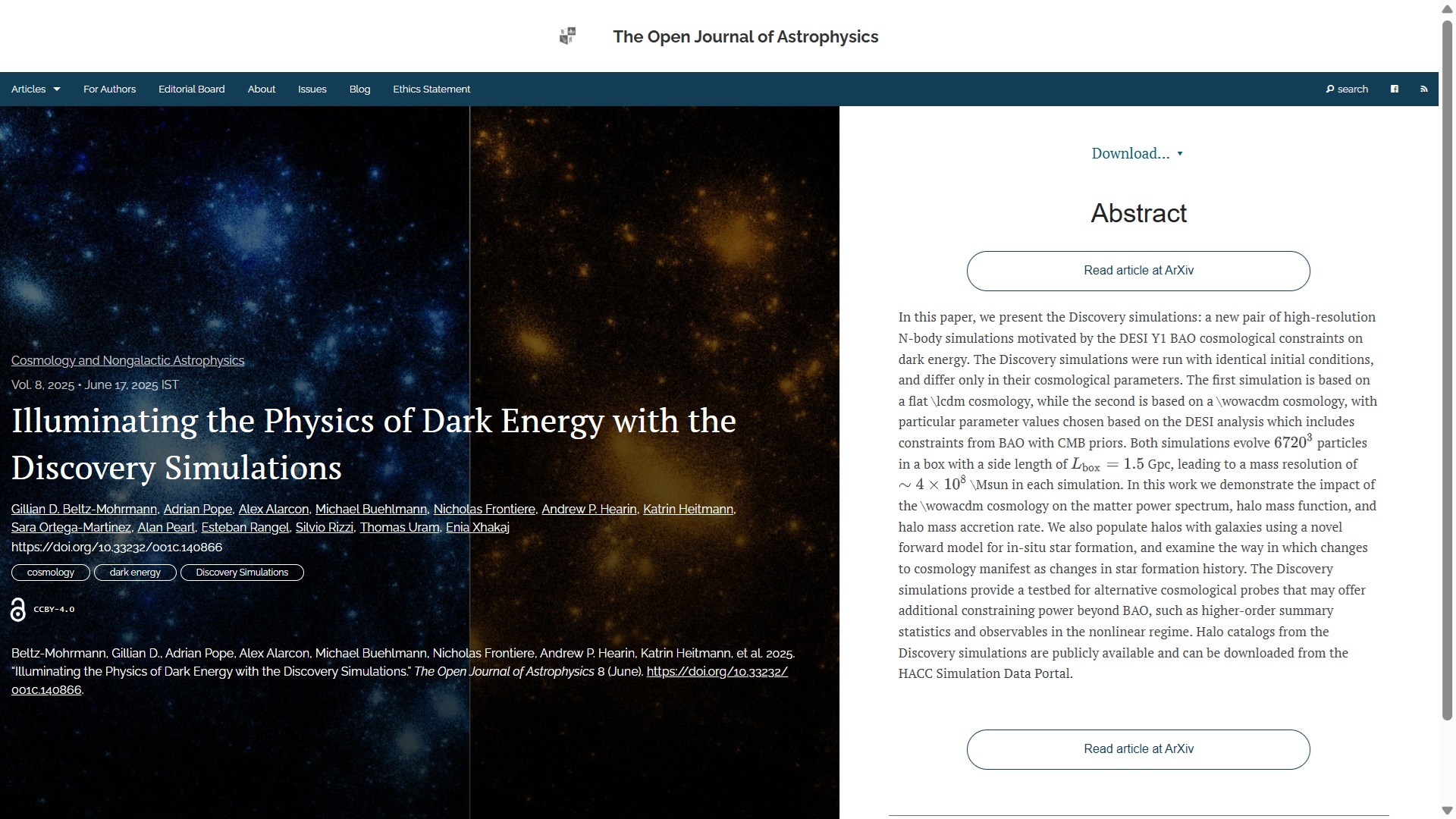
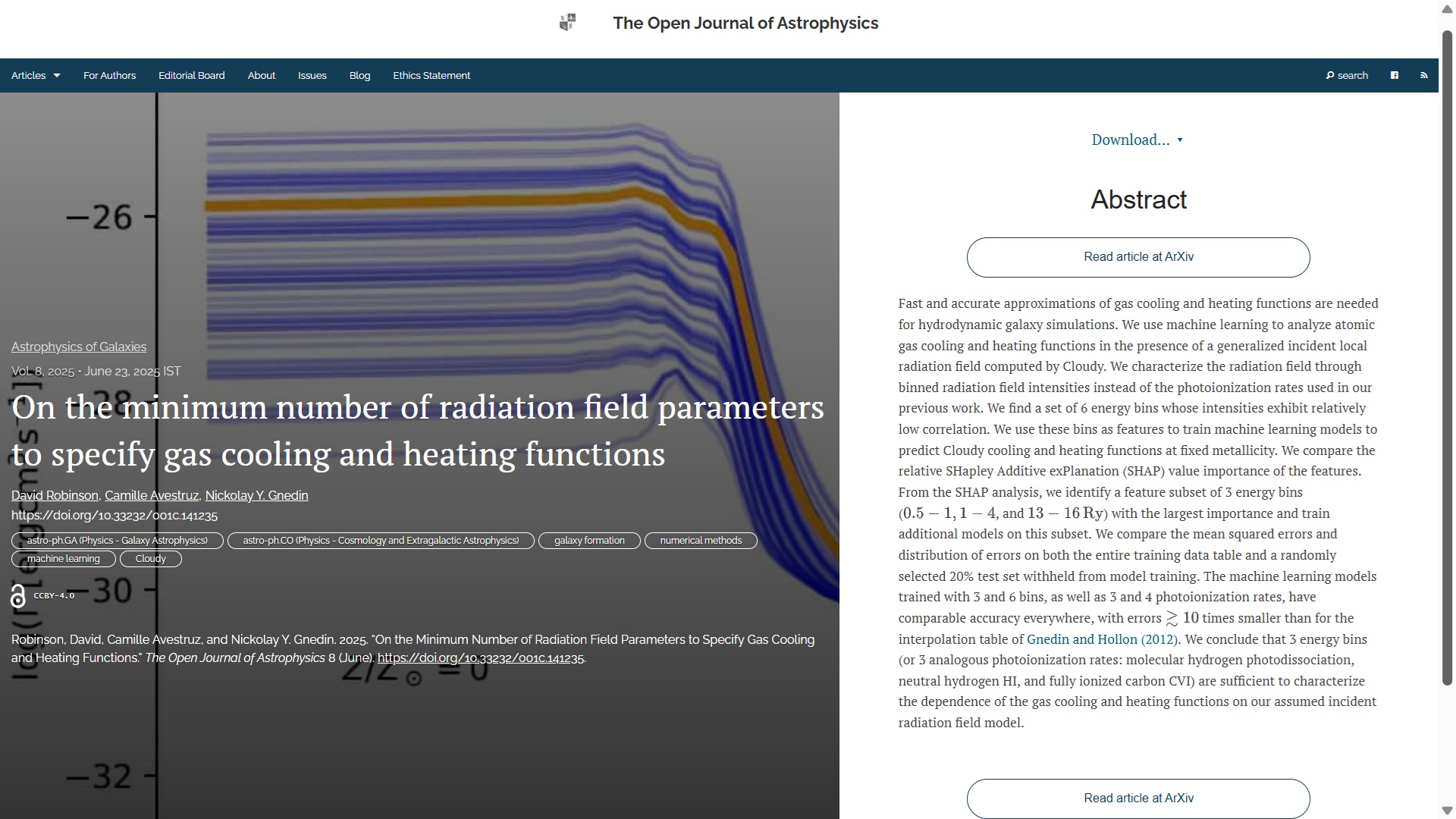
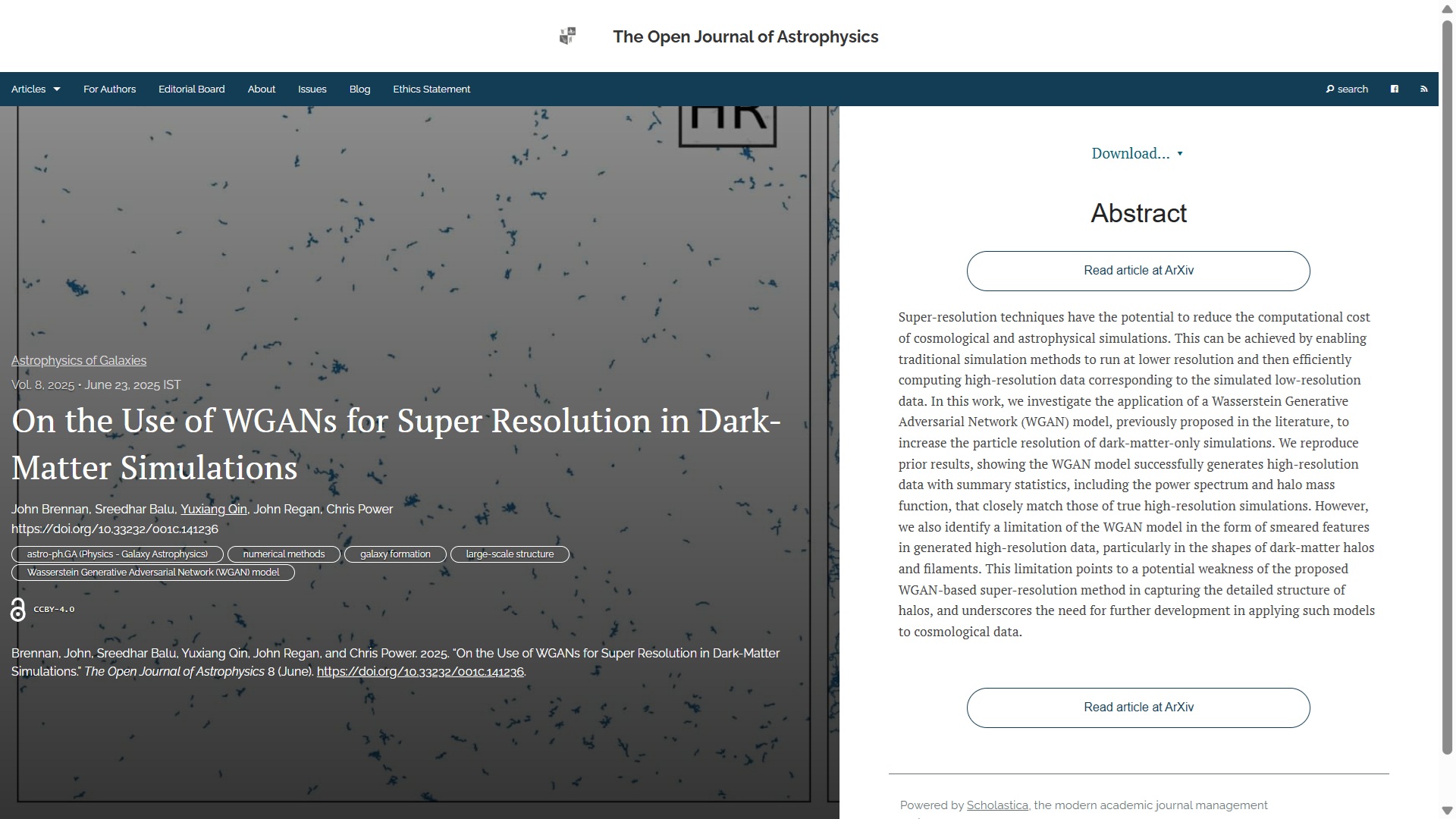
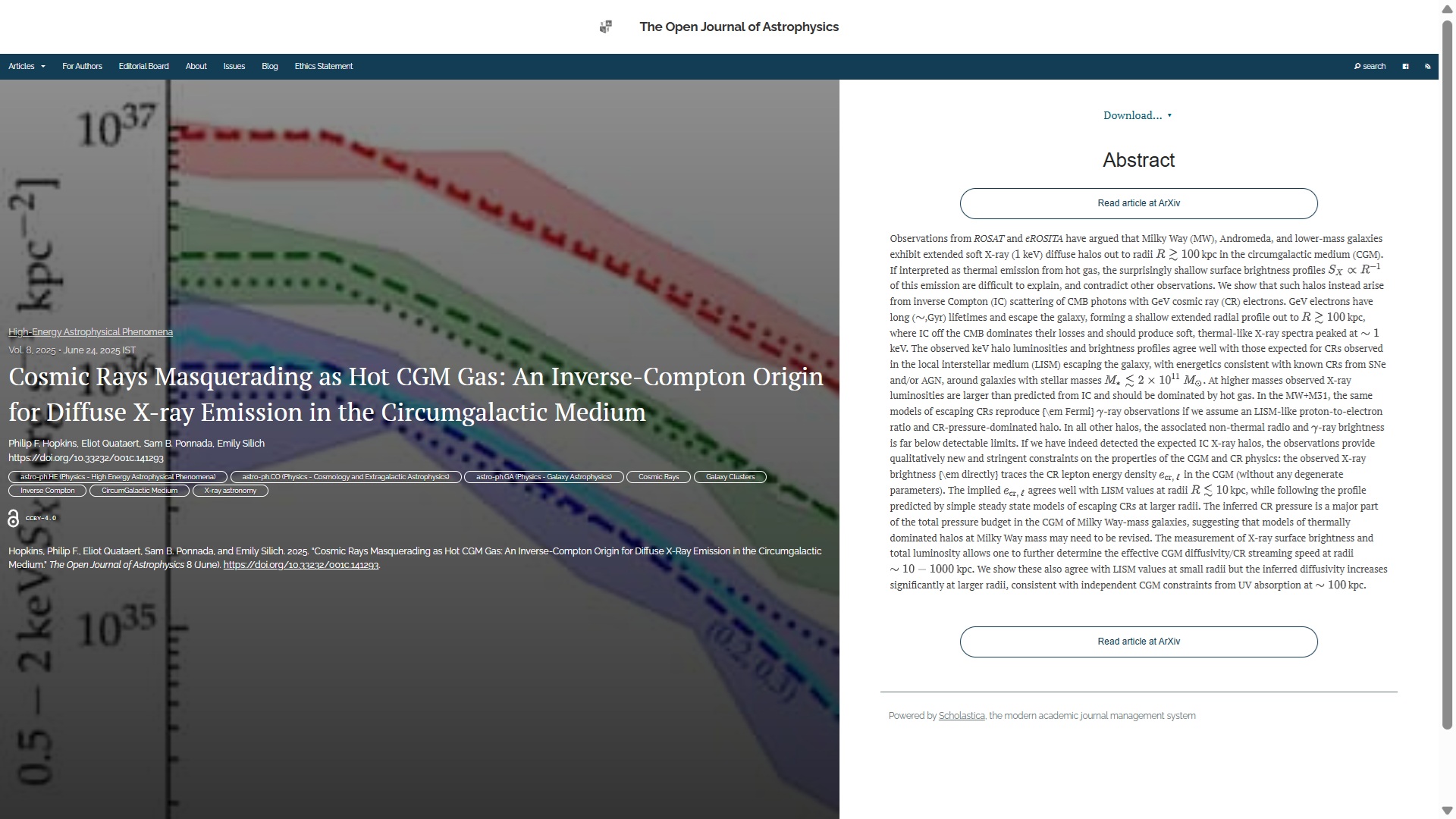
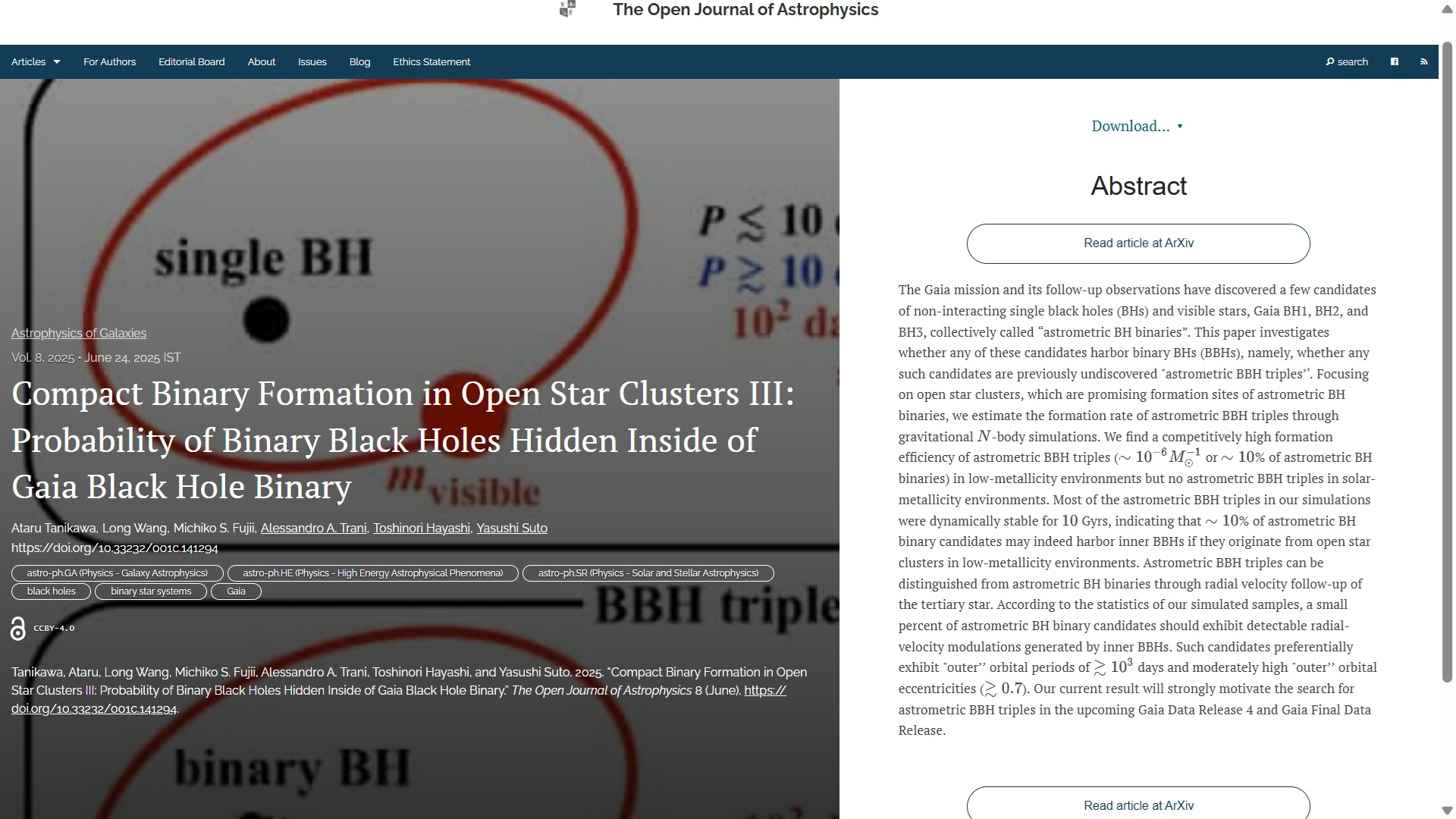
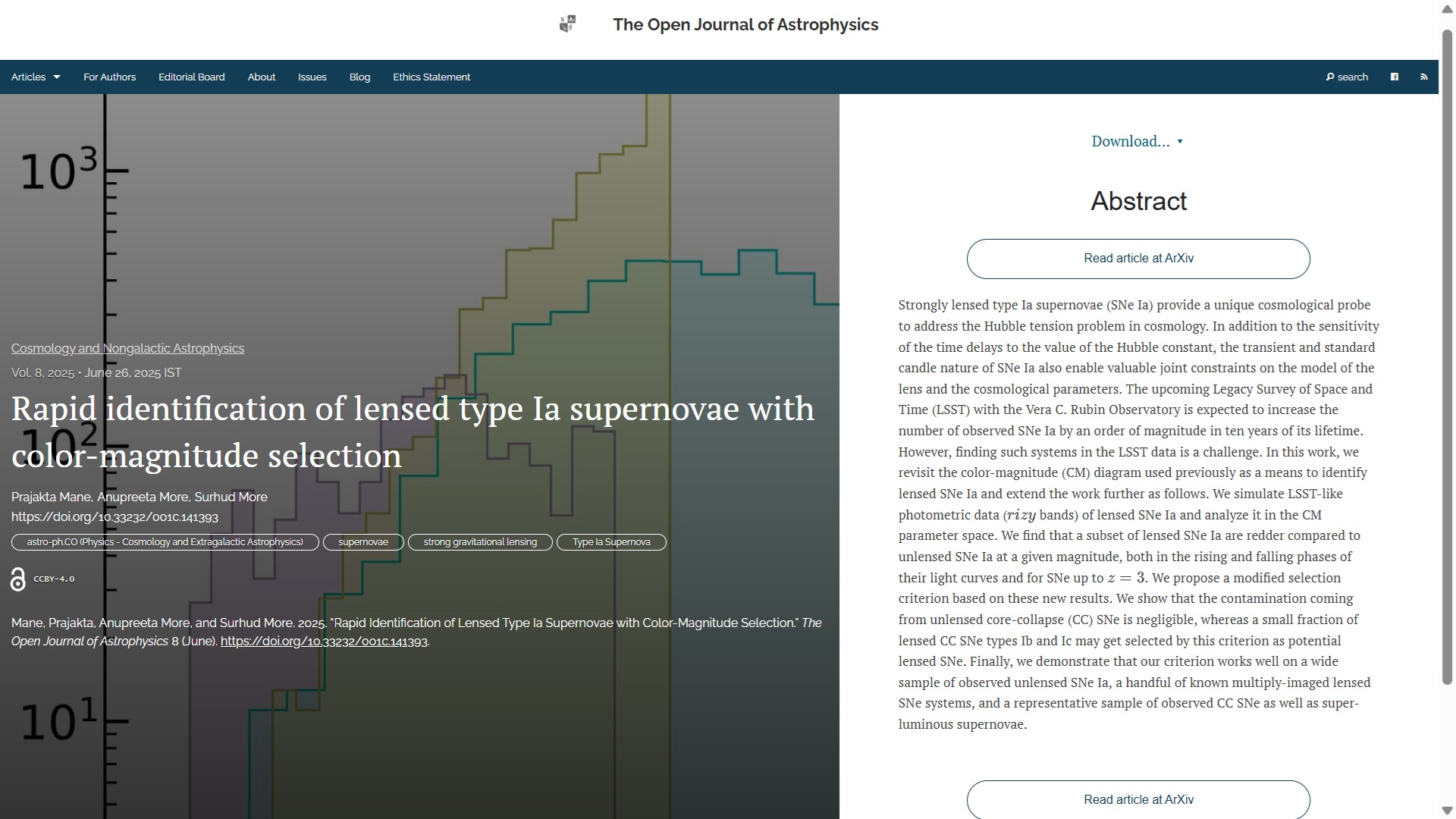
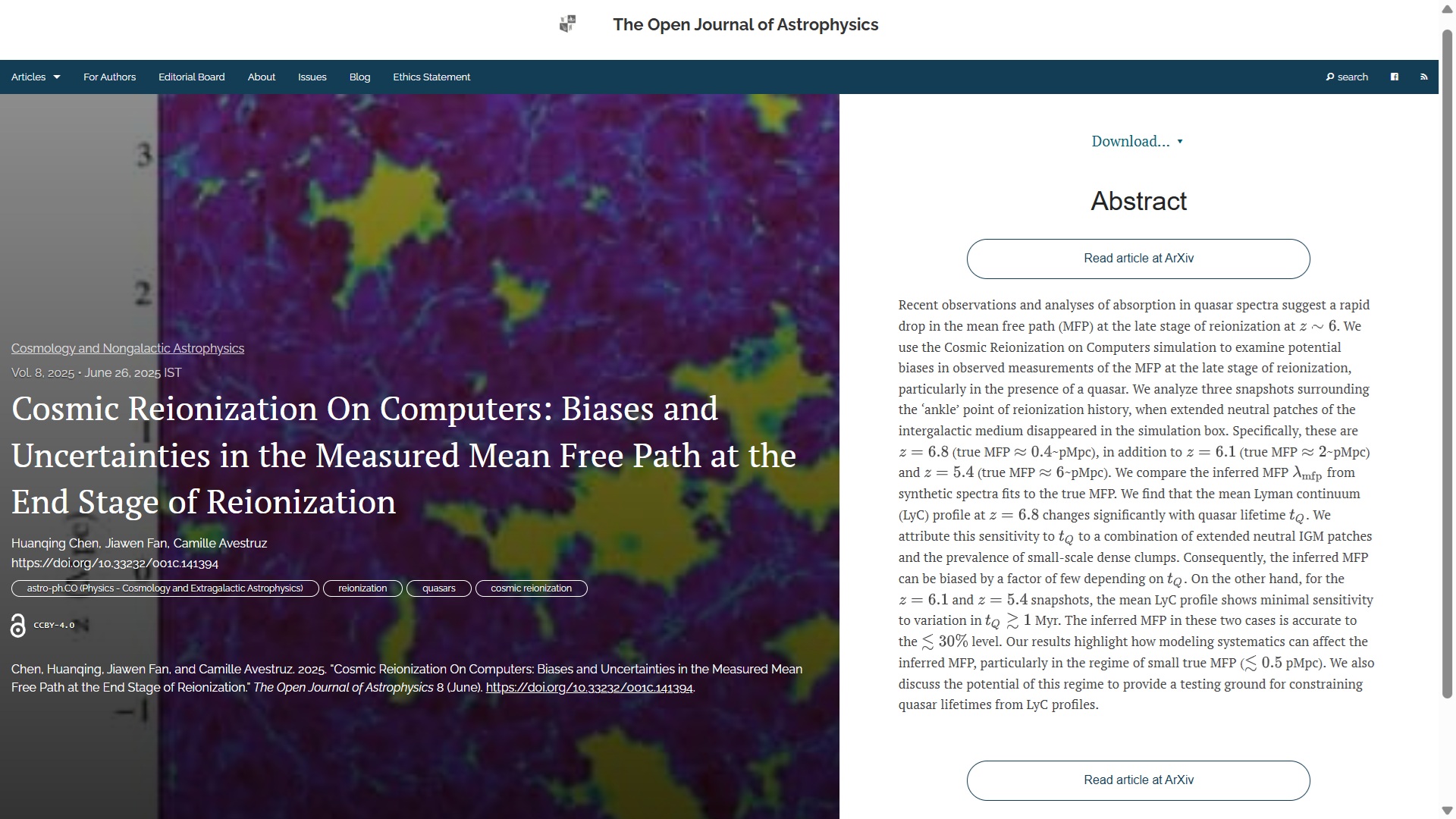
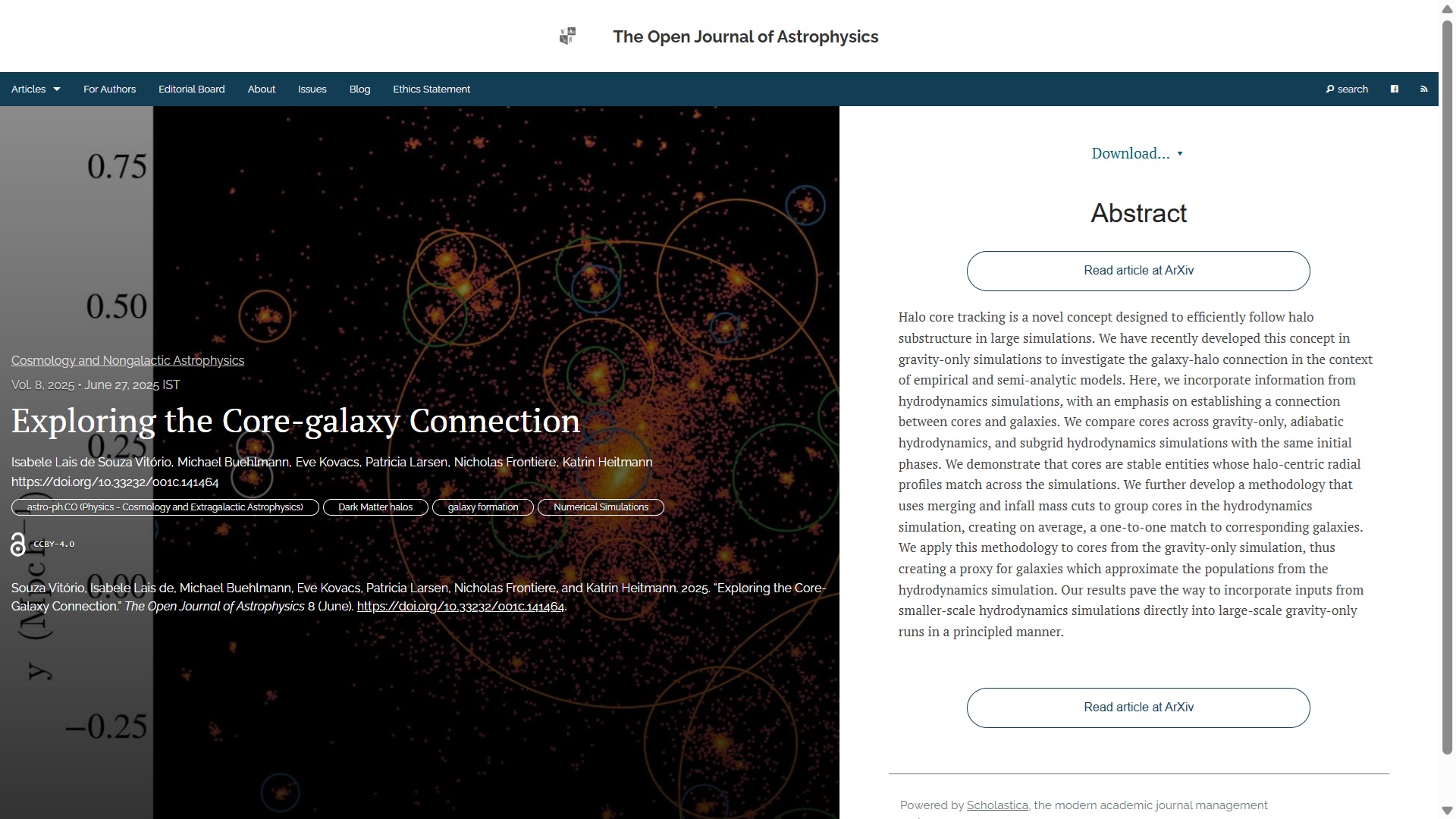
It’s  time once again for the regular Saturday update of papers published during the past week at the Open Journal of Astrophysics. Since the last update we have published three new papers, which brings the number in Volume 8 (2025) up to 62 and the total so far published by OJAp up to 297.

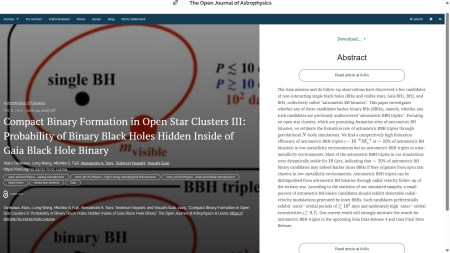
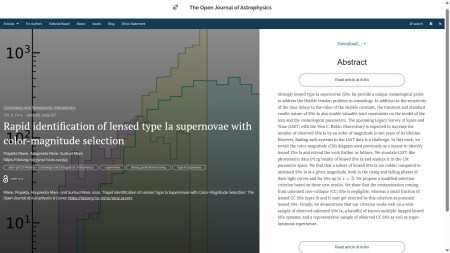
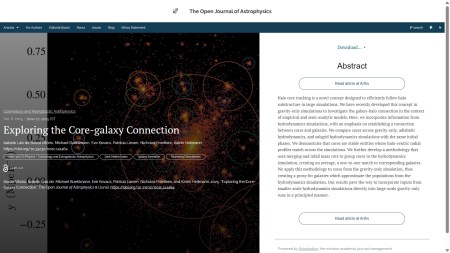
In chronological order of publication, the three papers published this week, with their overlays, are as follows. You can click on the images of the overlays to make them larger should you wish to do so.

The first paper to report is: “Jet-shaped filamentary ejecta in common envelope evolution” by Ron Schreier, Shlomi Hillel and Noam Soker (Technion, Haifa, Israel). This paper, which was published on Monday May 19th 2025 in the folder High-Energy Astrophysical Processes, presents three-dimensional hydrodynamical simulations of common envelope evolution of a neutron star inside the envelope of a rotating red supergiant with Rayleigh-Taylor instabilities forming filamentary ejecta.

The overlay is here:

You can find the officially accepted version on arXiv here.

Second one up is “Weighing The Options: The Unseen Companion in LAMOST J2354 is Likely a Massive White Dwarf” by M. A. Tucker, A. J. Wheeler & D. M. Rowan (Ohio State University, USA) and M. E. Huber (U. Hawaii, USA). This paper was published on Tuesday 20th May 2025 in the folder for Solar and Stellar Astrophysics. It discusses a spectroscopic study of the binary system LAMOST J235456.73+335625 (J2354) with a discussion of the implications for the nature of the dark component.

The overlay is here:


You can find the officially-accepted version of the paper on arXiv here.

The third and last paper of the week, published on Thursday May 22nd 2025, also in the folder Solar and Stellar Astrophysics, is “How to use Gaia parallaxes for stars with poor astrometric fits” by Kareem El-Badry (Caltech, USA).  This paper presents a method for extracting reasonable estimates of stellar parallaxes from Gaia data when the overall astrometric solution is unreliable due to errors and noise

Here is the overlay:

You can find the officially accepted version of this paper on arXiv here.

That’s all the papers for this week. Looking at the publishing workflow, I expect we will pass the 300 mark next week. We’ll see when I post the next update next Saturday.


Getting there…

Posted in Biographical, Maynooth, The Universe and Stuff with tags , , on May 23, 2025 by telescoper

Despite having to take time out today to attend an Emergency Meeting of IFUT (about matters which may or may not be public soon), my marking duties are about halfway done and roughly on schedule. For one module, I have 60% of the assessment scores for 32 students and, for the other, about 40% of the assessment for 23 students. I make that about 51.6 of the total. The last piece of the puzzle won’t arrive on my desk until Wednesday morning, by which time I hope to have completed 100% of the 32, leaving just 60% of the 23, amounting to about 16.7% of the total, to be done in the second half of next week. I hope this clarifies the situation.

Meanwhile the weather has taken a turn for the worse, no doubt because of the imminent Bank Holiday weekend in the UK. Monday 26th is a holiday there. In Ireland, the next holiday is on Monday June 2nd, Lá Saoire i mí an Mheithimh See if you can pronounce that! Next Friday (30th May) is the day of the season finale of the National Symphony Orchestra at the National Concert Hall, which is Mahler’s 9th Symphony. I hope I’ll be finished marking in time for that so I can relax over the holiday weekend after what will have been a very hectic week and take some time off the following week to do a bit of travelling to attend to some personal matters.

Next week will start off, however, with the PhD viva of one of my students. I won’t be attending the actual examination, of course, but will be there for the subsequent formalities. It’s a distraction from grading, but a nice one.

Physics & Theoretical Physics Undergraduate Final Examinations from 1985

Posted in Biographical, Education with tags , , on May 22, 2025 by telescoper

It is May 22nd 2025, so it’s 40 years to the day since started my final examinations in Physics and Theoretical Physics in the Natural Sciences Tripos at Cambridge University. These examinations concluded what was called Part II, the third and last year of a course which started out with four subjects (Part IA), then three (Part IB) I did double-physics and mathematics for IB.

The first paper of Part II was actually Paper Zero, an essay paper which I have already posted here. The five other papers are below; all six (including Paper Zero) were of three hours’ duration. You will see that Paper 4 is a very big one, because it contains questions pertaining to many options but each student did only a few. Unlike most of the theoretical physics students in my year I offered a theoretical project in lieu of part of Paper V, which means I was spared another three-hour paper. My project, incidentally, was on the computer simulation of a laser. My “prepared essay” was also on lasers Kilohertz and picoseconds in laser physics.

Looking at the papers I find a few things are different from what we do nowadays.

One is that Paper I was a general paper, with questions about random bits of physics. Most university physics courses these days do not have such papers (although I know of at least one that does…).

Another is that the course was not really modular. Each paper covered several different topics: Paper 2 for example covers Solid State Physics, Statistical and Thermal Physics and Electromagnetism; Paper 3 is Quantum Physics, Nuclear Physics and Particle Physics. In most modern university courses each of these would have a separate examination.

Other than that, some of the content (e.g. electromagnetism) is close to what you would find nowadays but in some areas (particle physics, for example) the 1985 paper is extremely dated.

As for the level difficulty, I can’t really comment. Take a look a the papers and decide for yourself!

(There is supposed to be a PDF preview, but it seems not to work on many web browsers, so You may hev to download the paper to view it.)

Comments are welcome through the box below.

Operation Marking Garden

Posted in Biographical, Education, Maynooth with tags , , on May 21, 2025 by telescoper

Posts will be a little thin for the next ten days or so here as I am preoccupied with correcting examinations and other assessments. I am spending most of the time doing that at home to avoid interruptions. I’ve also taken the opportunity afforded by this fine spell to do some laundry which I can peg out to dry outdoors. I think this is called multi-tasking. Fortunately (barring yesterday’s thunderstorms), the weather has been nice enough to do the marking outside, in my little garden.

Yesterday evening’s thunderstorms

A few years ago I posted an item about red valerian which grows in profusion around here on verges and embankments. Red valerian (aka spur valerian, kiss-me-quick, fox’s brush, devil’s beard & Jupiter’s beard among other names) is not to be confused with True Valerian, which has white (or very pale pink flowers). I mentioned in that post It’s red valerian (aka spur valerian, kiss-me-quick, fox’s brush, devil’s beard & Jupiter’s beard among other names). I mentioned in that post that I’d like to have some in my garden. Well, it seems that the seeds I planted have grown, perhaps spurred on by the rain yesterday evening:

red valerian

It’s not exactly a profusion, but it’s a start.

UPDATE: 31/05/25 On my way into Dublin by train I saw Red Valerian and True Valerian together by the railway tracks.

Anyway, I spent this morning marking until I remembered a couple of things I had to do on campus. That’s only 20 minutes’ walk for me so I went there at lunchtime, getting a haircut on the way. I stayed for lunch in Pugin Hall and then came back to continue with my correcting duties.

When I took a break for tea I suddenly remembered (for some reason) that the debit card on my UK bank account was about to expire and I hadn’t updated the address since I sold my house in Cardiff. Strangely, I couldn’t update my details online but instead had to use the telephone banking service. One can change to another address in the UK using the online banking app, but can’t do that if you’re moving abroad. Although it took longer to do than I had anticipated it might, the person I spoke to was very helpful. Fortunately they hadn’t yet despatched a replacement card and/or PIN so all was well.

So there you are. Another exciting day in the life of an academic has passed.

R.I.P. Jayant Narlikar (1938-2025)

Posted in Biographical, R.I.P., The Universe and Stuff with tags , , , , , , on May 20, 2025 by telescoper
Professor Jayant Vishnu Narlikar (1938-2025)

I heard this morning of the death at the age of 86 of renowned Indian cosmologist Jayant Vishnu Narlikar. I understand he died peacefully in his sleep in Pune after a brief illness.

Scientifically, Jayant Narlikar is probably best known for his work with Fred Hoyle on a conformal gravity theory and as an advocate of the Steady State theory of cosmology. In India however his fame extended far beyond the world of research, as an educator and science popularist, as well as Founder-Director of the Inter-University Centre for Astronomy and Astrophysics (IUCAA) in Pune. Those who met him – as I was lucky enough to do – will also remember him as a kind and gracious man, and a self-effacing inspirer of young scientists. During my visit I gave a talk there, which Narlikar attended, and we had a very nice conversation afterwards from which I learnt a huge amount.

The Directorship at IUCAA came with a house which had a very nice lawn, on which I remember playing croquet with Donald Lynden-Bell and others, but that’s another story. Another random thing I remember is that I remember is that Narlikar’s username on the IUCAA email system was “jvn” and he was often referred to informally by that name.

Although he never really abandoned the Steady State cosmology, despite the weight of evidence in favour if the Big Bang, it is to Narlikar’s great credit that he didn’t try to impose his own scientific ideas on those working at IUCAA. In fact he assembled an excellent group of cosmologists and astrophysicists and encourage them to do whatever they liked.

I first visited IUCAA in 1994 to work with Varun Sahni. In those days Westerners mainly went to Pune to visit an ashram (usually the one run by the guru Rajneesh). I remember when I arrived on the train from Mumbai and tried to get a taxi to the IUCAA campus, the driver asked me “which ashram?” I had long hair and a beard at that time, so I looked a potential hippy. I said, “No ashram. Professor Narlikar”. He knew exactly where to take me; “Narlikar” was a household name in India, where the newspapers are awash with tributes today (e.g. here) and where his loss will be keenly felt.

Rest in peace Jayant Narlikar (1938-2025)

A galaxy at redshift z=14.44?

Posted in OJAp Papers, The Universe and Stuff with tags , , , , , on May 19, 2025 by telescoper

This morning’s arXiv mailing presented me with a distraction from examination marking in the form of a paper by Naidu et al. with this abstract:

This paper has been submitted to the Open Journal of Astrophysics. In the relatively recent past, papers like this about record-breaking galaxies would normally be submitted to Nature so perhaps we’re at last starting to see a change of culture?

I usually feel a bit conflicted in situations when a paper has been submitted for editorial review there. In this case I am posting it here for two reasons: one is that I am not the Editor responsible for this paper; the other is that the arXiv submission specifically says

Submitted to the Open Journal of Astrophysics. Comments greatly appreciated and warmly welcomed!

In order to generate flagging it here to encourage people to comment, either through the box below or by contacting the authors.

For reference, here is the key plot showing the spectrum from which the redshift is determined. It is rather noisy, but the Lyman break seems reasonably convincing and there are some emission lines that appear to offer corroborative evidence:

You might want to read this article (another OJAp paper) which contains this plot showing how galaxies at redshift z>10 challenge the standard model:

Please read the paper and comment if you wish!

Litotes – Paul Muldoon

Posted in Poetry with tags , , , on May 18, 2025 by telescoper
Though it wasn’t until 411 BC he took up the oar
in the Peloponnesian War
against “man-loosening” Lysander,

our hero was not unknown
to Thucydides, who’d evenhandedly intone
“What’s sauce for Aegeus is sauce for the gander.”

Despite his background
being less than sound,
he nonetheless managed to drive a phaeton

through the Spartan ranks
or, on more than one occasion, an oar-bank.
If his circumstances were quite often straitened

he couldn’t say no
to manning up and having a go
at the slightest hint of an old school oligarchy.

No scanty there, then?
Faced with the very same problem time and again
he would resort to being snide or snarky

and immediately made a dent
in it. It was no small accomplishment
that he somehow managed to claim kin with Nestor

and, since he was far
from the sharpest ray in the earthstar,
was quite likely an ancestor

of the not exactly inspiring Greek
who would eke
out an existence in the precincts of the Abbey

where he’d been married sword in hand, ye Gads,
turning out to be not half bad
or, as Thucydides would have it, “None too shabby.”

by Paul Muldoon (b. 1951).

I recently discovered the poetry of Paul Muldoon who, as once described in the New York Times, “… takes some honest-to-God reading. He’s a riddler, enigmatic, distrustful of appearances, generous in allusion, doubtless a dab hand at crossword puzzles.” This poem is from Joy in Service on Rue Tagore (2024), which is published by Faber & Faber.

International Day Against Homophobia, Biphobia and Transphobia

Posted in History, LGBTQ+ with tags , , , on May 17, 2025 by telescoper

Today is May 17th, which means that it is International Day Against Homophobia, Transphobia and Biphobia. If you’re wondering why May 17th was chosen, it’s to commemorate May 17th 1990, which is when the World Health Organisation removed homosexuality from its list of “mental illnesses”.


Attitudes in many places are more enlightened than they were decades ago. Next week, for example, sees the 10th anniversary of the equal marriage referendum in Ireland.  But the rights we have won  could easily be  (and indeed are being ) lost if we do not defend them.


The theme for IDAHOBIT2025  is “The Power of Communities”, shown above in Irish. Even if you are not a member of our community we still need your support. Here is a useful guide I posted a few years ago about how to be a good ally.

Weekly Update from the Open Journal of Astrophysics – 17/05/2025

Posted in OJAp Papers, Open Access, The Universe and Stuff with tags , , , , , , , , , , , , on May 17, 2025 by telescoper

It’s a lovely Saturday morning in May, and it’s time for the weekly  update of papers published at the Open Journal of Astrophysics. Since the last update we have published four new papers, which brings the number in Volume 8 (2025) up to 59 and the total so far published by OJAp up to 294.

In chronological order of publication, the four papers published this week, with their overlays, are as follows. You can click on the images of the overlays to make them larger should you wish to do so.

The first paper to report is: “Multi-Phase Thermal Structure & The Origin of the Broad-Line Region, Torus, and Corona in Magnetically-Dominated Accretion Disks” by Philip F. Hopkins (Caltech, USA). This was published on Monday May 12th in the folder Astrophysics of Galaxies. It presents simple accretion disk model that predicts the properties of many features including the dusty torus, broad-line region, continuum emission and coronal gas.

The overlay is here:

You can find the officially accepted version on arXiv here.

Second one up is “Sparsity covariance: a source of uncertainty when estimating correlation functions with a discrete sample of observations in the sky” by Pierre Fleury (U. Montpellier, France). This one was published on Tuesday 13th May 2025 in the folder Cosmology and NonGalactic Astrophysics.  This paper presents a discussion of the uncertainty in cosmological observables caused by discrete sampling and a method to compute the covariances resulting from this.

The overlay is here:

You can find the officially-accepted version of the paper on arXiv here.

The third paper of the week, published on Wednesday May 14th 2025,  is “Dark Matter Particle Flux in a Dynamically Self-consistent Milky Way Model” by Lucijana Stanic, Mark Eberlein, Stanislav Linchakovskyy, Christopher Magnoli, Maryna Mesiura, Luca Morf, Prasenjit Saha (University of Zurich, Switzerland) and Eugene Vasiliev (University of Surrey, UK). This one presents a study of the behaviour of dark matter in an anisotropic model for the Milky Way halo with implications for particle detection rates. It is in the folder Astrophysics of Galaxies.

Here is the overlay:

You can find the officially accepted version of this paper on arXiv here.

The last paper published this week is “Too fast to be single: Tidal evolution and photometric identification of stellar and planetary companions” by Ilay Kamai and Hagai B. Perets (Technion, Haifa, Israel). This one was published on Friday 16th May 2025 in the folder Solar and Stellar Astrophysics. It presents an analysis of the rotation of stars observed in the Kepler field to identify non-single systems with high spin rates resulting from tidal effects.

Here is the overlay:

The official published version can be found on the arXiv here.

That’s all the papers for this week. I’ll post another update next week.