Four New Publications at the Open Journal of Astrophysics

Posted in OJAp Papers, Open Access, The Universe and Stuff with tags , , , , , , , , , , , , , , , , , , on July 27, 2024 by telescoper

It’s Saturday morning, so once again it’s time for an update of activity at the Open Journal of Astrophysics. This week we have published another batch of four papers, the same number as last week, which takes the count in Volume 7 (2024) up to 64 and the total published altogether by OJAp up to 179.

Before announcing the week’s papers I’ll add three other updates you might find interesting:

  1.  When I looked at NASA/ADS this morning to help construct this post I saw that papers published in OJAp have now garnered over 2500 citations between them;
  2. We had a good response to our recent call for new members of the Editorial Board and have added four new members here;
  3. Last week we received a significant (unsolicited) cash donation from a higher education institution based in Europe to help with our work in Diamond Open Access. If any other organizations or individuals would like to do similar then please contact me!

Now, in chronological order, the four papers published this week, with their overlays, are as follows. You can click on the images of the overlays to make them larger should you wish to do so.

First one up is: “Widespread disruption of resonant chains during protoplanetary disk dispersal by Bradley M S Hansen (UCLA), Tze-Yeung Yu (UCLA) and Yasuhiro Hasegawa (JPL), all based in California, USA.  The paper presents a discussion of the effect of a dispersing protoplanetary disk on the evolution of low-mass planets around a Solar mass star.  It was published on 21st July 2024 and is in the folder marked Earth and Planetary Astrophysics.

Here is a screen grab of the overlay, which includes the abstract:


You can find the officially accepted version of the paper on the arXiv here.

The second paper to announce is “Using A One-Class SVM To Optimize Transit Detection” by Jakob Roche of the University of South Florida, also in the USA (but not in California). This articles discusses the advantages of One-Class Support Vector Machines (SVMs) over Convolutional Neural Networks (CNN) in the context of exoplanet detection. Its in the folder called Instrumentation and Methods for Astrophysics and was published on 25th July 2024.

You can see the overlay here:


The accepted version of this paper can be found on the arXiv here.

The next paper, also published on 25th July 2024, is in the folder marked High-Energy Astrophysical Phenomena. Its primary classification on arXiv is General Relativity and Quantum Cosmology (gr-qc), but it is cross-listed on astro-ph so we considered it for publication and had it refereed, with favourable results. It is entitled “What no one has seen before: gravitational waveforms from warp drive collapse” and is by Katy Clough (QMUL, UK), Tim Dietrich (Potsdam, Germany) and Sebastian Khan (Cardiff, UK).  Looking at the title of this paper you might be tempted to dismiss it on the grounds that warp drives are the stuff of science fiction (which they are), but this paper is really a rigorous technical study of the dynamical evolution and stability of spacetimes that violate the null energy condition, inspired by the idea of a warp drive.

Here is the overlay:


You can find the full text for this one on the arXiv here.

Last, published on 26th July 2024, we have a paper with the title “A study of gamma-ray emission from OJ 287 using Fermi-LAT from 2015-2023” by Vibhavasu Pasumarti and Shantanu Desai of the Indian Institute of Technology, Hyderabad, India. It is an investigation of the properties of gamma-ray emission from OJ287 (a BL Lac object) using the Fermi Large Area Telescope (LAT).  This one is also in the folder marked High-Energy Astrophysical Phenomena; here is the overlay

You can find the officially accepted version of this paper on the arXiv here.

That’s all for this week. Stay tuned for another update next week.
Ireland’s First Olympic Medal

Posted in Art with tags , , , on July 26, 2024 by telescoper

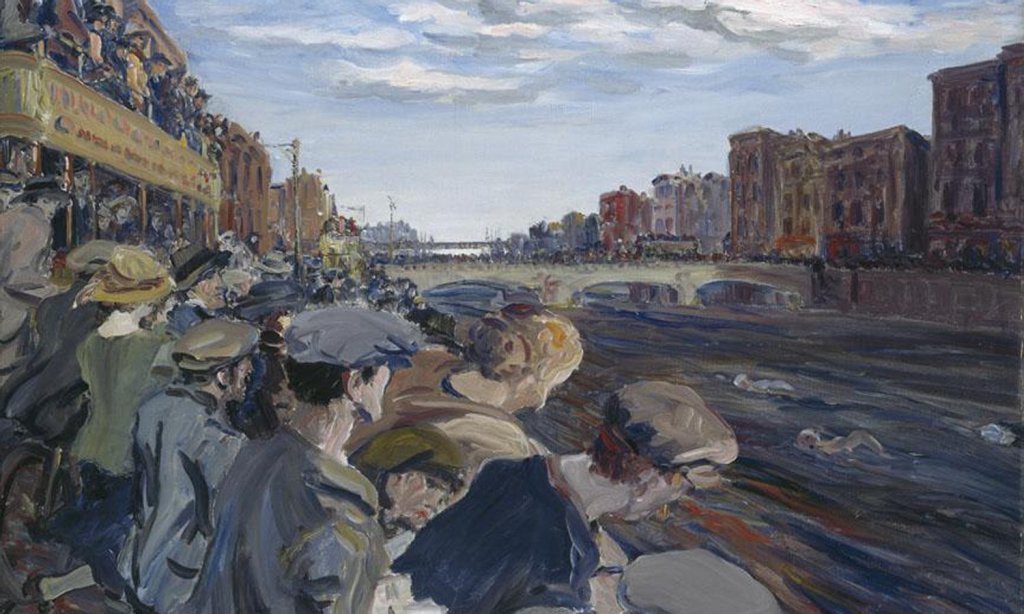
Ahead of the opening ceremony of the 2024 Paris Olympic Games, I thought I’d post a reminder of Ireland’s first ever Olympic medal. A silver medal was awarded to Ireland at the 1924 Olympic Games for this painting by Jack Butler Yeats, brother of the poet William Butler Yeats:

The Liffey Swim, by Jack B. Yeats (1923, 61cm x 91cm, oil on canvas)

Ireland only gained independence in 1922 so 1924 was the first Olympics at which Ireland competed as a separate nation. It may surprise you to learn that art competitions were a part of the Olympic Games from 1912 until 1948, as were competitions in music and literature. The 1924 Gold Medal for painting was won by an artist from Luxembourg called Jean Jacoby who specialized in sporting themes.

Although it was a style Yeats only started to experiment with around 1920, The Liffey Swim (which you can see in the National Gallery of Ireland) is clearly an Expressionist work – the unusual colour palette and texture of the paint are characteristics of that movement – but it also serves as an interesting bit of social history. The Liffey Swim is a regular event in Dublin (except during the Covid-19 pandemic) but only began in 1920 so it was fairly new when Yeats painted it. He captures the excited atmosphere surrounding the event by placing the viewer in the middle of a huge crowd struggling to get a good view, with the swimmers only shown in cursory detail. You see far more of the spectators than you do of the race!

R.I.P. Peter Thomas (1961-2024)

Posted in R.I.P. with tags , , , , , on July 25, 2024 by telescoper

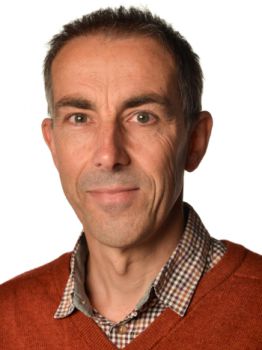
Once again I have to use this blog to pass on some very sad news. Professor Peter Thomas of Sussex University passed away last weekend at the age of 62.

Peter Thomas (left) joined the University of Sussex as a lecturer in the Astronomy Centre in 1989 and remained there for his entire career. I know from my own time as Head of School that he was an excellent colleague. who made huge contributions to the University and indeed to his research discipline of cosmology.

Peter studied Mathematics at Cambridge University, graduating in 1983 and then did Part III (also known as the Certificate of Advanced Study) which he obtained in 1984. He stayed in Cambridge to do a PhD in the Institute of Astronomy under the supervision of Andy Fabian on Cooling Flows and Galaxy Formation, which he completed in 1987. He then spent a couple of years in Toronto as a Postdoctoral Fellow at the Canadian Institute for Theoretical Astrophysics (CITA) before taking up his lectureship at Sussex in 1989. His main research interests were in in the areas of galaxy formation, including numerical and semi-analytic models, and computer simulations of the formation of clusters of galaxies.  He was a widely known and very highly respected researcher in the field of theoretical cosmology and extragalactic astrophysics.

I was a PDRA in the Astronomy Centre at Sussex when Peter joined in 1989; he was Professor in the Department of Physics & Astronomy when I returned there as Head of School of Mathematical and Physical Sciences in 2013, a position he himself subsequently held. He was a much-valued member of staff who made huge contributions to the Astronomy Centre, the Department of Physics & Astronomy, the School of Mathematical and Physical Sciences, and the University of Sussex as a whole. I also remember him as a colleague on various panels for PPARC and then STFC on which he served diligently.

Having known Peter for 35 years, and being of similar age, it was a shock to hear that he passed away. I understand that he had been suffering from cancer for over a year. I send my deepest condolences to his family, friends and colleagues. I understand that his funeral will be a private family affair, but there will be a more public occasion to celebrate his life at a later date.

Banning Non-Disclosure Agreements in Sexual Harassment Cases

Posted in Harassment Bullying etc with tags , , , , , on July 24, 2024 by telescoper

This morning I saw a news item that describes a new law in Ireland that would ban the use of Non-Disclosure Agreements (NDAs) in sexual harassment cases. The law is being considered by Cabinet today but, with the summer recess imminent, the earliest the legislation can be passed through the Oireachtas is in the autumn, after the Dáil returns. That is unless a General Election intervenes.

The legislation will amend the Employment Equality Act to state that an employer shall not enter an NDA with an employee where the employee has made allegations of discrimination, harassment or sexual harassment.

Such agreements have been used quite frequently to prevent victims of harassment from speaking publicly about their experiences thus enabling harassers to move elsewhere without anyone knowing what they had done. This ploy is also seen by Management as a way of preventing reputational damage, although it does not seem to me to be a good way of doing that as the truth has a way of coming out anyway and the effect of hiding the misconduct when it does causes more reputational damage than the harassment itself.

This reminds me of things I wrote a while ago in connection with a case at Leiden University where the Management decided not to name a professor involved in such a case (who was subsequently identified as Tim de Zeeuw). I thought this was a nonsense, for at least two reasons. The first is that I think someone who has behaved in such a way should be named as a matter of principle, so that potential collaborators and future employers know what he has done. In previous posts on this topic I had defended confidentiality (e.g. here) during an investigation, but I still think that once it has been decided that a disciplinary offences have been committed there should be full disclosure.

The second is that failing to identify the individual concerned led to a proliferation of rumours inside and outside Leiden (none of which I am prepared to repeat here). As a result, the finger of suspicion was pointed at the wrong people until the name of the abusive Professor is revealed. That made for a very difficult working environment for everyone concerned.

Of course the new law, when passed, will only apply to cases in Ireland. In Astronomy, as in many other parts of academia, there is a great deal of international mobility. The new legislation would not prevent someone who has engaged in such misconduct in, for example, the United Kingdom applying for a job in Ireland without this coming to light. One could hope that other countries follow suit, but the wheels of the legislature are known to turn quickly in any country that I know of.

Finally, I think it’s an important question whether or not this legislation is retroactive. If it is, and past NDAs are declared null and void then it will blow open many cases. I can imagine rather a lot of people getting rather nervous at this prospect…

An Irish Heatwave

Posted in Uncategorized on July 23, 2024 by telescoper

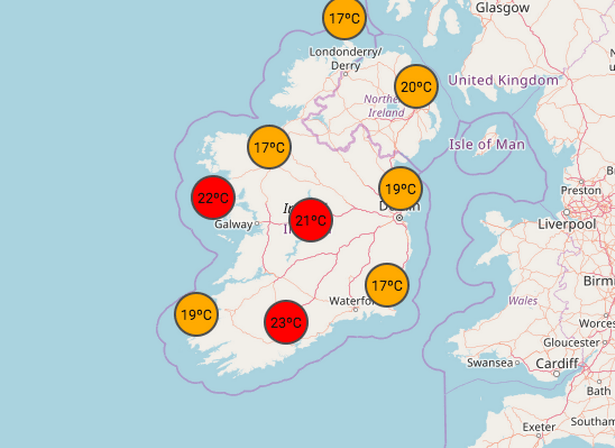
I like the helpful way that Irish weather forecasts warn the public that a summer heatwave is on the way by showing the regions of excessively high and potentially dangerous temperatures in red, like this:

The Cause of Academic Anomie

Posted in Covid-19, Education, Maynooth with tags , , , on July 22, 2024 by telescoper

I thought I’d share a paper entitled Academic anomie: implications of the ‘great resignation’ for leadership in post-COVID higher education, which presents a new study of 167 academics who quit UK academia, finding they often blame the declining quality of academic management. The abstract is here:

The full paper can be found here (Open Access). In case you weren’t aware the word anomie according to Durkheim, being a state of “normlessness”, in general means the lack of social cohesion and solidarity that often accompanies rapid social change. I’d say there’s a lot of that about these days.

The study relates directly to UK universities, many of which are struggling and some of which are on the verge of collapse as a result of several factors, not just those stemming from the Covid-19 pandemic. One of the surprising (and depressing) things about Ireland is that the people in charge of third level education here seem to be determined to repeat here the terrible decisions being taken across the Irish sea despite all the evidence of the damage they have done in the UK. Many of the comments made by individuals mentioned in the paper will definitely resonate with colleagues in Maynooth.

This bit particularly caught my eye:

All too often dangerous managers simply skip from one university to the next causing havoc wherever they go. (RS2 – Male, former Senior Lecturer, pre-1992 institution)

Tell me about it!

The All-Ireland Hurling Final

Posted in GAA, Maynooth with tags , , , , , on July 21, 2024 by telescoper

No prizes for guessing what I’ll be watching this afternoon. Today’s the day of the All-Ireland Senior Hurling Championship Final at Croke Park, between Clare and Cork. The weather isn’t too bad; it’s overcast and a bit cool but there’s no rain forecast and it’s not windy. I’m hoping for a good match.

Clare (An Clár) versus Cork (Corcaigh) is not the final I would have predicted before the semi-finals. I thought Limerick and Kilkenny would be the finalists but that just goes to show how little I know. Cork are favourites with the bookies, by the way (4/7 on Cork, 11/8 against Clare) despite the fact that Clare of won the last two encounters between these teams.

If you’ve never been in Ireland for this occasion you won’t realize what a huge event it is. The atmosphere on this very special day is very much like it used to be in England for the FA Cup Final when I was a kid and the build-up just as long, with constant references on both radio and TV. Maynooth is on the railway line going through Croke Park so we see a lot of supporters in their team colours heading to the match. County Clare (which is in the West of Ireland, straddled by Limerick to the South and Galway to the North) is a bit closer to us than County Cork, which perhaps accounts for the preponderance of blue and gold over red and white.

You can watch the whole game live on BBC2 if you’re in the UK. Throw-in is at 3.30pm.

Update: The attendance is 82,300.

Update: HT score Clare 1-12 Cork 1-12. It’s been a much more open game than I expected. Cork started out the stronger team, finding lots of space in the Clare half and shooting very accurately. Robert Downey scored a memorable goal at which point it looked like Cork might overrun Clare, but that didn’t happen and as the half drew to a close Clare became more confident. It’s all square and poised for an exciting second half.

Update: FT score Clare 3-21 Cork 1-27. What an epic game this is! All square on points after Clare conceded a silly free in the dying seconds to allow Cork to equalize. We go to extra time!

Update: Final Score Clare 3-29 Cork 1-34. Drama to the last second, a long free from the Cork goalie lands in the area but Robbie O’Flynn’s shot to tie the game goes agonizingly wide. Clare are the All-Ireland Champions by one-point. What a breathtaking match. Hats off to both teams for serving up a classic! I wouldn’t have complained if it had gone to a replay though…

Here is a clip of Clare’s amazing 3rd goal, scored by Tony Kelly…

Royal Society/SFI University Research Fellowships

Posted in Maynooth, The Universe and Stuff on July 20, 2024 by telescoper

I just realized that I had forgotten to give notice of an important scheme run jointly between the  Royal Society and Science Foundation Ireland that gives early career researchers in Ireland access to University Research Fellowships. In previous years I’ve passed this on ahead of the opening of the scheme, but it is already open. In fact there was a Zoom webinar for Irish applicants on 17th July, which has now passed. The deadline is not until 10th September, however, so there is time to apply.

This scheme provides eight years of research funding and has proved to be a stepping stone to their first permanent academic position for a great many scientists. Here are a couple of items about the eligibility and duration.

Eligibility:  The scheme is open to early career Post Doctoral Researchers with between 3-8 years of actual research experience since their PhD (date on which the degree was approved by board of graduate studies) by the closing date.  You cannot apply if you hold a permanent post in a university.

Funding and Duration:  Once upon a time this scheme provided funding of the research fellow’s salary and research expenses for an initial period of 5 years with the possibility to apply for a further 3 years.  A couple of years ago this changed, however, and applicants are now asked to provide a proposal for a project lasting eight years which is subject to a mid-term review.

Key Dates: Applications need to be in by 3pm 10th September 2024 at 3pm UK time.

For further details and further developments see here.

The scheme covers a wide range of disciplines. including physics and astronomy. Of course if you want to do cosmology, either observational or theoretical, the best place  to do it in Ireland is here in Maynooth but we also do, e.g. condensed matter theory and particle physics.

The deadline is not far off,  so please get cracking. You will need to get a statement of support from the relevant Head of Department at your chosen institution, so you need to make contact with your prospective host as soon as possible.

Four New Publications at the Open Journal of Astrophysics

Posted in OJAp Papers, Open Access, The Universe and Stuff with tags , , , , , , on July 20, 2024 by telescoper

This week we have published four papers at the Open Journal of Astrophysics, which I now present to you here. These four take the count in Volume 7 (2024) up to 60 and the total published altogether by OJAp up to 175. It is gratifying to see the range of high-quality papers published steadily increasing. We are getting several papers submitted every day now.

In chronological order, the four papers published this week, with their overlays, are as follows. You can click on the images of the overlays to make them larger should you wish to do so.

First one up is: “A population of neutron star candidates in wide orbits from Gaia astrometry” by Kareem El-Badry (Caltech, USA) and 12 others based across the world.  The paper presents  a spectroscopic study of neutron star candidates identified using GAIA astrometry to be in wide binary orbits around main sequence stars,  was published on 15th July 2024 and is in the folder marked Solar and Stellar Astrophysics. For more information about this one, see here.

Here is a screen grab of the overlay, which includes the abstract:


You can find the officially accepted version of the paper on the arXiv here.

The second paper to announce is “Systematic Effects in Galaxy-Galaxy Lensing with DESI” and was written by Johannes Ulf Lange (University of Michigan, Ann Arbor, USA) and 58 others, again distributed internationally.  This one reports a study of systematic effects (such as incompleteness and intrinsic alignment) on galaxy-galaxy lensing results from the Dark Energy Spectroscopic Instrument (DESI) survey. This one is in the folder called Cosmology and NonGalactic Astrophysics and was published on 16th July 2024.

You can see the overlay here:


The accepted version of this paper can be found on the arXiv here.

The next paper is also in the folder called Cosmology and NonGalactic Astrophysics.  It is entitled “Unleashing cosmic shear information with the tomographic weak lensing PDF” and is by by Lina Castiblanco (Newcastle Univresity, UK), Cora Uhlemann (Bielefeld University, Germany), Joachim Harnois-Déraps (Newcastle University, UK) and Alexandre Barthelemy (Ludwig-Maximilians-Universität, Germany). This one was published on 17th July 2024.

Here is the overlay:


You can find the full text for this one on the arXiv here.

Last but by no means least, published on 18th July 2024, we have a paper  entitled “When to interfere with dark matter? The impact of wave dynamics on statistics“. The primary classification for this one is again Cosmology and Nongalactic Astrophysics and it discusses the imprint of wave-mechanical behaviour, perhaps associated with ultra-light scalar field dark matter on the statistical properties of large-scale structure. The authors are Alex Gough (Newcastle University, UK) and Cora Uhlemann (Bielefeld University, Germany; who also featured in the author list of the previous paper). This is a paper close to my own interests, but because I know both authors well and was the PhD examiner of the first author I thought it best to recuse myself from an editorial role on this one.


You can click on the image of the overlay to make it larger should you wish to do so. You can find the officially accepted version of the paper on the arXiv here.

It did look likely at one stage that we might publish a paper every day last week, but the final version of one other paper didn’t make it onto arXiv in time to be announced on Friday so I will publish that one on Monday.

Murder before Evensong by The Reverend Richard Coles

Posted in Literature, Television with tags , , , , , , , , on July 19, 2024 by telescoper

The Reverend Richard Coles (no relation), former Communard, ordained priest, broadcaster and TV celebrity recently turned his hand to writing murder mysteries. I bought his first crime novel, Murder Before Evensong, featuring Canon Daniel Clement, a couple of years ago but only got around to reading it recently. It caught my eye for two reasons, one that I am quite partial to whodunnits, and the other that I read and enjoyed the first volume of the author’s autobiography, Fathomless Riches, which showed him to be a very good writer.

As you might have guessed, Murder Before Evensong, is a kind of homage to the old-school Agatha Christie village murder typical of the Miss Marple stories. Murder at the Vicarage came immediately to mind when I first saw the book, but the story is not set so far in the past – more eighties than thirties. Richard Coles is also far wittier than Agatha Christie, with a definite touch of PG Wodehouse in his style. When I got into the book it reminded me very much of the original Midsomer Murders novels written by Caroline Graham, which I think are excellent; with somewhat whimsical plots, and populated with somewhat eccentric characters; the long-running TV series has long since run out of ideas, and is now tired and formulaic, but the books on which it is based are very good indeed. Like the original Inspector Barnaby stories, Murder Before Evensong is very funny in places, but less of a parody and more of an affectionate tribute to the genre. Coles also writes movingly about grief, and its effect on a close-knit rural community, no doubt informed by his own personal life and experiences as a parish priest. Canon Clement obviously has a lot of Richard Coles in him, including a love of dachsunds.

It’s difficult to review a murder mystery without giving a way the plot, so I’ll just say that it is well constructed. I narrowed the list of possibilities down to two very early on, and was proven right, but I didn’t really get the motive right.

Anyway, it’s an enjoyable read and recommended for enthusiasts. I gather that more Canon Clement stories are on the way. That reminds me of a line in an episode of Midsomer Murders, when Barnaby is joined by a new Detective Sergeant, just up from London, who is immediately plunged into the investigation of a killing spree. He turns to his Chief Inspector and says words to the effect of ‘For a small village there are a lot of murders around here’ to which Barnaby raises an eyebrow and says ‘Yes, that has been remarked upon…’